MKSAP Audio Companion App

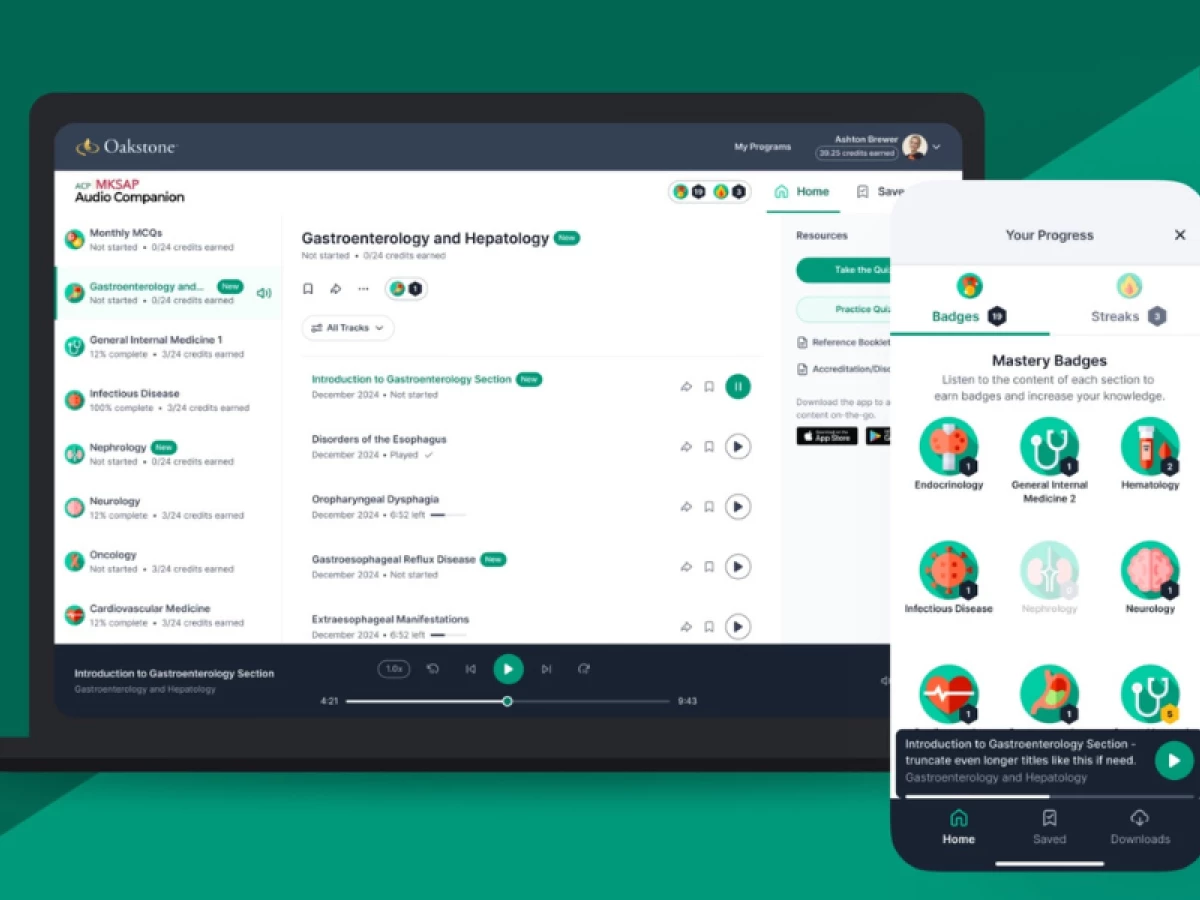
Industry Insight: According to Global Market Insights, the global mobile learning market was valued at $58.7 billion in 2023 and is expected to grow at a CAGR of over 16% through 2032. This expansion highlights the need for UX strategies that use interaction, feedback loops, and motivation cues to keep learners engaged and aligned with how people now expect to learn.
Key Insights for Brands:
- Gamified progression systems boost engagement and learning retention
- Cross-platform consistency ensures physicians can learn seamlessly across devices
- Streamlined navigation and hierarchy enhance usability for busy professionals
Human-Centered Design for a Demanding Audience
While reviewing LunarLab’s MKSAP Audio Companion App, one thing that immediately stood out was its empathy for its users.
Medical professionals lead fast-paced, high-stakes lives, and this design clearly understands that reality. LunarLab made the experience intuitive, accessible, and cognitively effortless.
The medical app's home dashboard organizes topics by specialty, progress status, and completion credits. This structured flow allows users to monitor achievements and stay on top of their CME requirements with minimal effort.
As a reviewer, I appreciate how every visual choice of this supports the end-user’s mental model, a hallmark of effective UX design.
Need install momentum? See why apps that don’t stop at downloads win.
Gamification as a Learning Engine
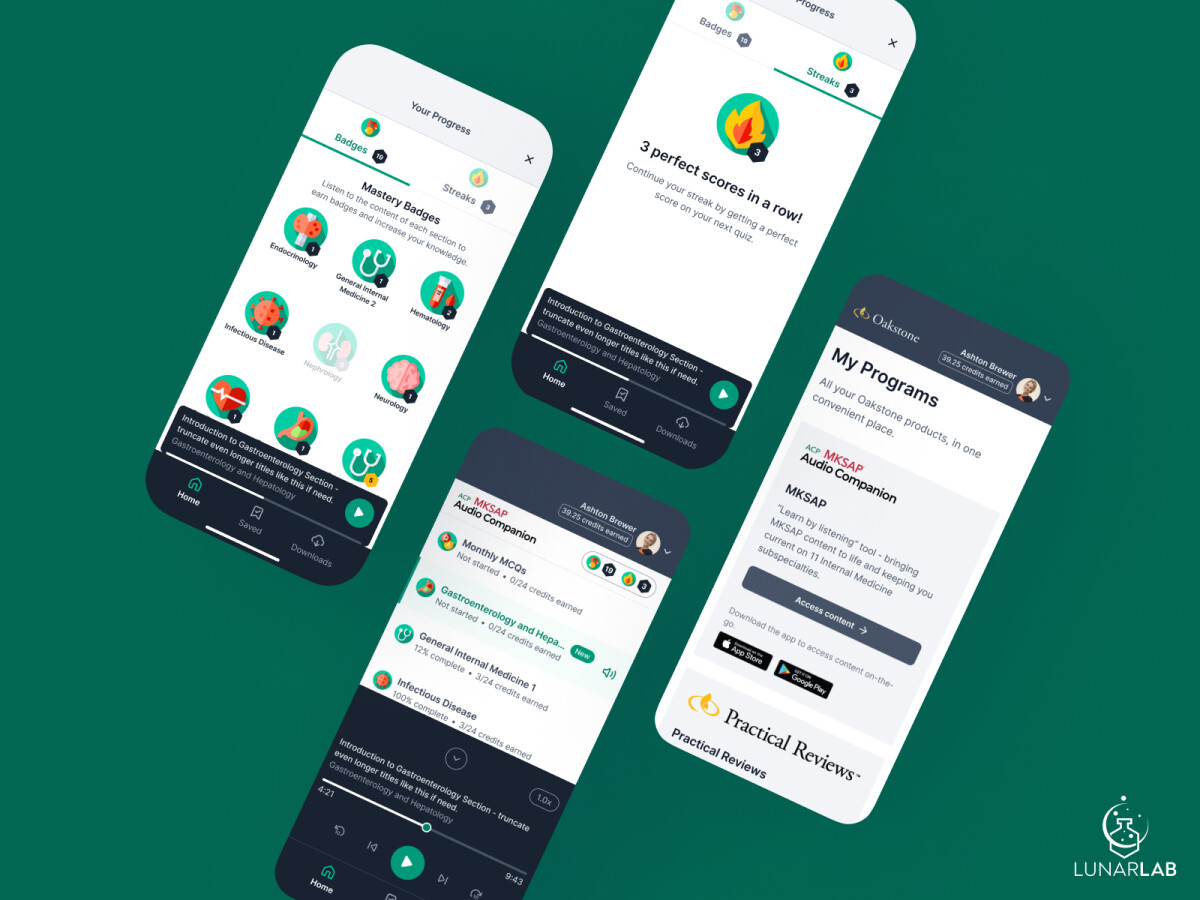
Gamification isn’t new, but LunarLab’s execution of it in a professional education context is exceptional.
Inspired by successful learning apps like Duolingo, the MKSAP Audio Companion integrates badges, streaks, and progress bars to motivate consistent use.
These elements reward learners for incremental milestones, learning badges for mastering topics or maintaining listening streaks.
This approach capitalizes on behavioral design principles supported by Bunchball Research, which show that incorporating game-like feedback loops can increase engagement and knowledge retention by up to 50%. In MKSAP’s case, gamification transforms professional education into a rewarding, repeatable experience that respects both time and ambition.
Can design really move the bottom line? Discover how immersive experiences drive ROI.
Audio-First Experience with Intuitive Interaction
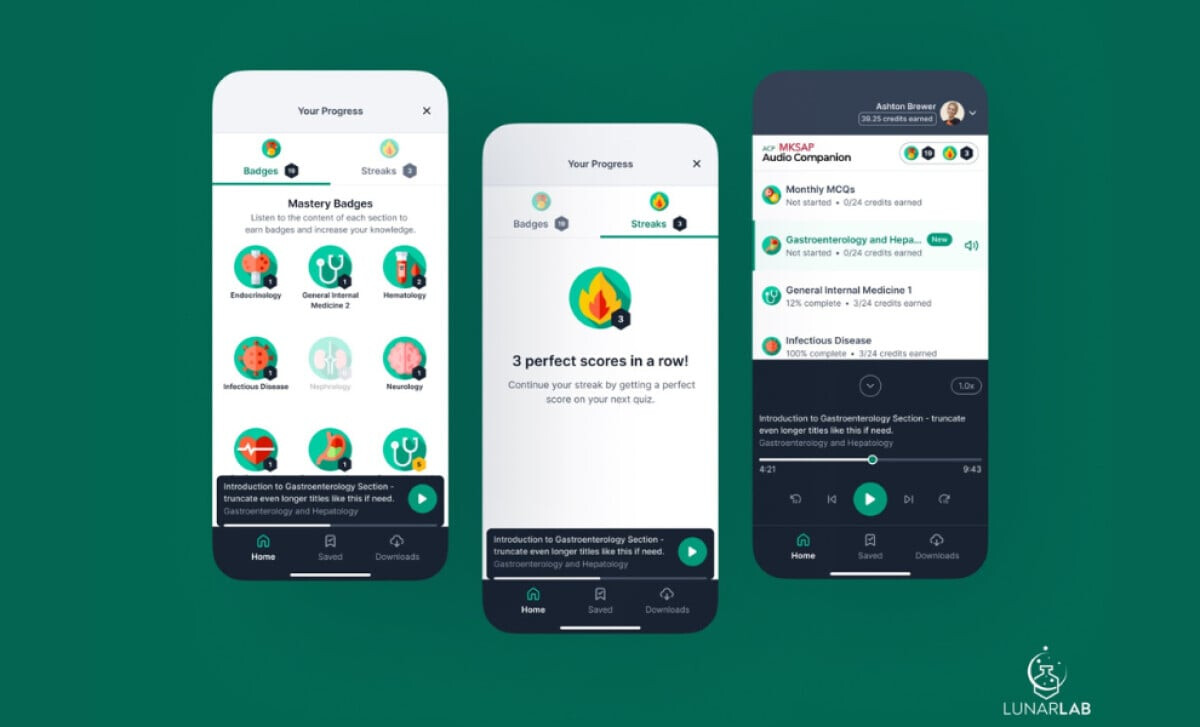
As someone who’s analyzed countless educational interfaces, I find LunarLab’s audio UX particularly well-considered.
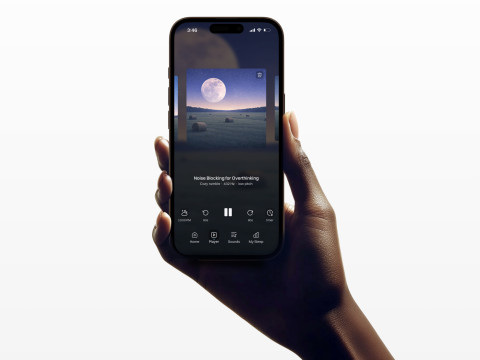
Playback controls are large and accessible, designed for one-handed use during commutes or between consultations. The ability to download and resume sessions seamlessly makes this app ideal for physicians on the move.
A sticky audio player fixed at the bottom of the screen also enables users to browse content without interrupting playback.
By prioritizing function over form, LunarLab created a listening experience that complements a clinician’s daily rhythm.
Visual Hierarchy and Progress Mapping
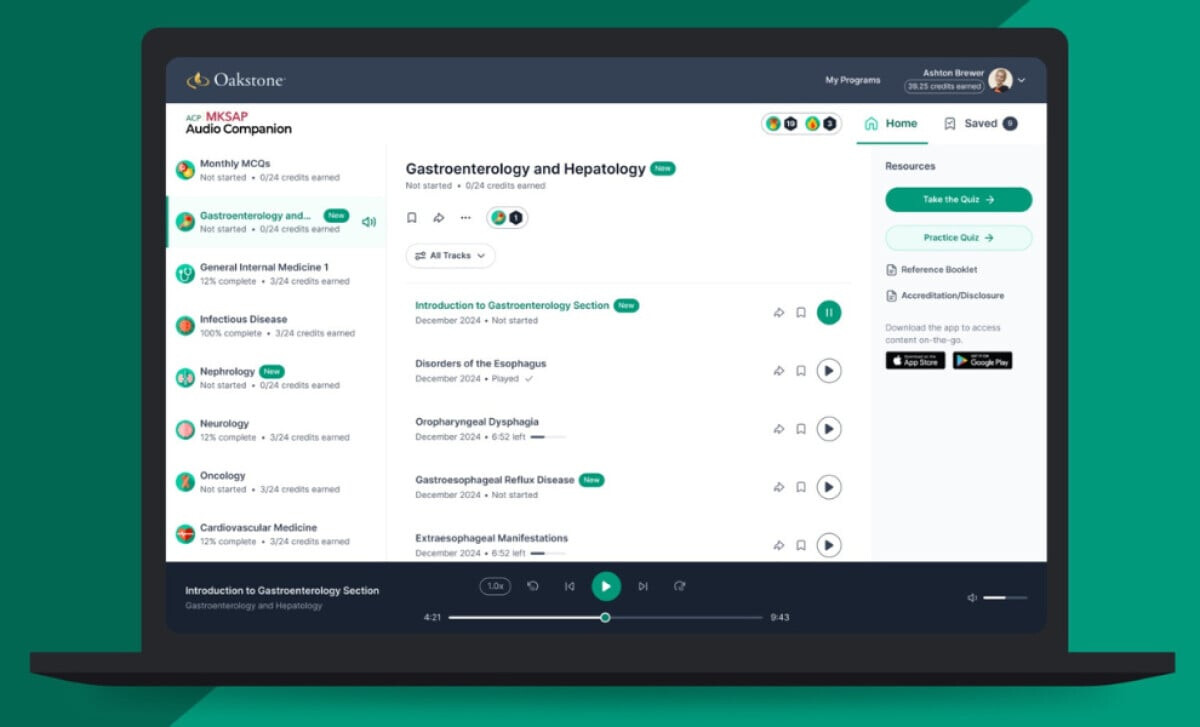
“[The app's] progress mapping interactions create a learning environment designed for busy people in today's world of multi-tasking.”
-Design Awards Jury Panel
LunarLab’s interface feels clean, but not sterile. Visual hierarchy is established through careful typography, restrained color use, and clear iconography. Distinct progress indicators and contextual prompts ensure that learning feels continuous rather than fragmented.And to increase long-term usage and satisfaction, users can:
- Unlock monthly Q&A content
- Earn badges after completing content within sections
- Build listening streaks
With these enhancements, the MKSAP Audio Companion App becomes a dynamic learning environment that aligns with the behaviors and goals of its users.
According to a Statista study, the average Android app retains just 2.1% of users, while iOS apps retain around 3.7%. Apps like the MKSAP Audio Companion app are focused on using timely engagement tactics to keep users coming back.

What Agencies Can Learn from LunarLab
Looking at LunarLab’s work on the MKSAP Audio Companion App, I see more than a digital product. I see expertise in designing for motivation, usability, and context, particularly in high-stakes industries like medicine.
1. Design for context, not just content
LunarLab recognized that their users weren’t typical app consumers, they were physicians balancing time, stress, and ongoing learning. Designing for this context led to simplified navigation and responsive interactions tailored to real-world use.
2. Use gamification strategically
The inclusion of streaks, badges, and progress milestones is behavioral. LunarLab used these mechanics to build positive user habits while maintaining professionalism. Agencies should treat gamification as a behavioral design tool, not an aesthetic trend.
3. Prioritize accessibility in audio UX
Designing an audio-focused app requires rethinking traditional interaction patterns. LunarLab’s intuitive playback controls, offline access, and seamless device syncing demonstrate how accessibility enhances usability and user trust.
4. Integrate data-driven motivation
LunarLab’s design choices align with behavioral data proving that structured rewards improve learning engagement.
According to TalentLMS, 83% of learners say they feel more motivated when training is gamified. This data-backed approach ensures creative choices serve measurable outcomes.
As a design critic, I view LunarLab’s work on MKSAP as a benchmark in professional learning design. It perfectly balances sophistication with usability. It's proof that empathy and rigor can coexist in digital education.
About DesignRush Featured Designs
At DesignRush, we review hundreds of agency projects each month. The featured works stand out for originality, usability, and brand impact.
The most compelling projects advance to become Monthly Design Awards winners, gaining industry recognition.

Visit our Agency Directory for the Top App Design Companies, as well as:

About the Designer