
Your work is brilliant, there’s no doubt about it. But is your portfolio website doing its job?
After reviewing about 100 portfolio sites, I’ve found that the best ones operate on two levels: stunning, memorable visuals, first and foremost, and an emphasis on guiding visitors toward a clear conversion goal, like scheduling a call or requesting a quote.
To curate this list, I looked beyond the quality of the work itself and prioritized sites that tell more through their case studies.
I also considered technical performance, like how fast a visitor can see the work and how well the site is optimized to get a response from a potential client.
This curation process led me to the 15 portfolio websites on this list, each a standout in its creative field.
My hope is that you’ll study the principles that make them so effective and apply their thinking to your own work, which is far more valuable than just copying a layout.
Portfolio Website Examples: Key Points
- Your portfolio must make an instant connection: Visitors form an opinion in just 50 milliseconds. A website that’s authentically “you” projects confidence and communicates what you can do within that tiny window
- A portfolio's design directly builds client trust: About 50% of consumers judge a business by its website. A professional website design proves your quality before a client even reads your case studies.
- Curated projects demonstrate your value: Including varied projects can increase interview requests by 50%. Your portfolio should feature only your best work across varied applications and industries to attract the specific clients you want.
The Anatomy of the Best Portfolio Websites
From my experience, I can tell you that a portfolio website is your hardest-working employee. It operates 24/7 as your salesperson, brand manager, and archive.
It’s your single best opportunity to prove your value and control your professional narrative before you ever speak to a potential client.
Standing out in this crowded space is more important than ever, as the creative industries market is projected to reach USD 3027.7 billion in 2025.
However, the most effective portfolios I’ve seen, regardless of the creative field, all share a similar anatomy. They are built with a clear understanding of both the user's needs and their own business goals.
Below is a breakdown of the essential components that are common across the best modern website designs and make them work so well.
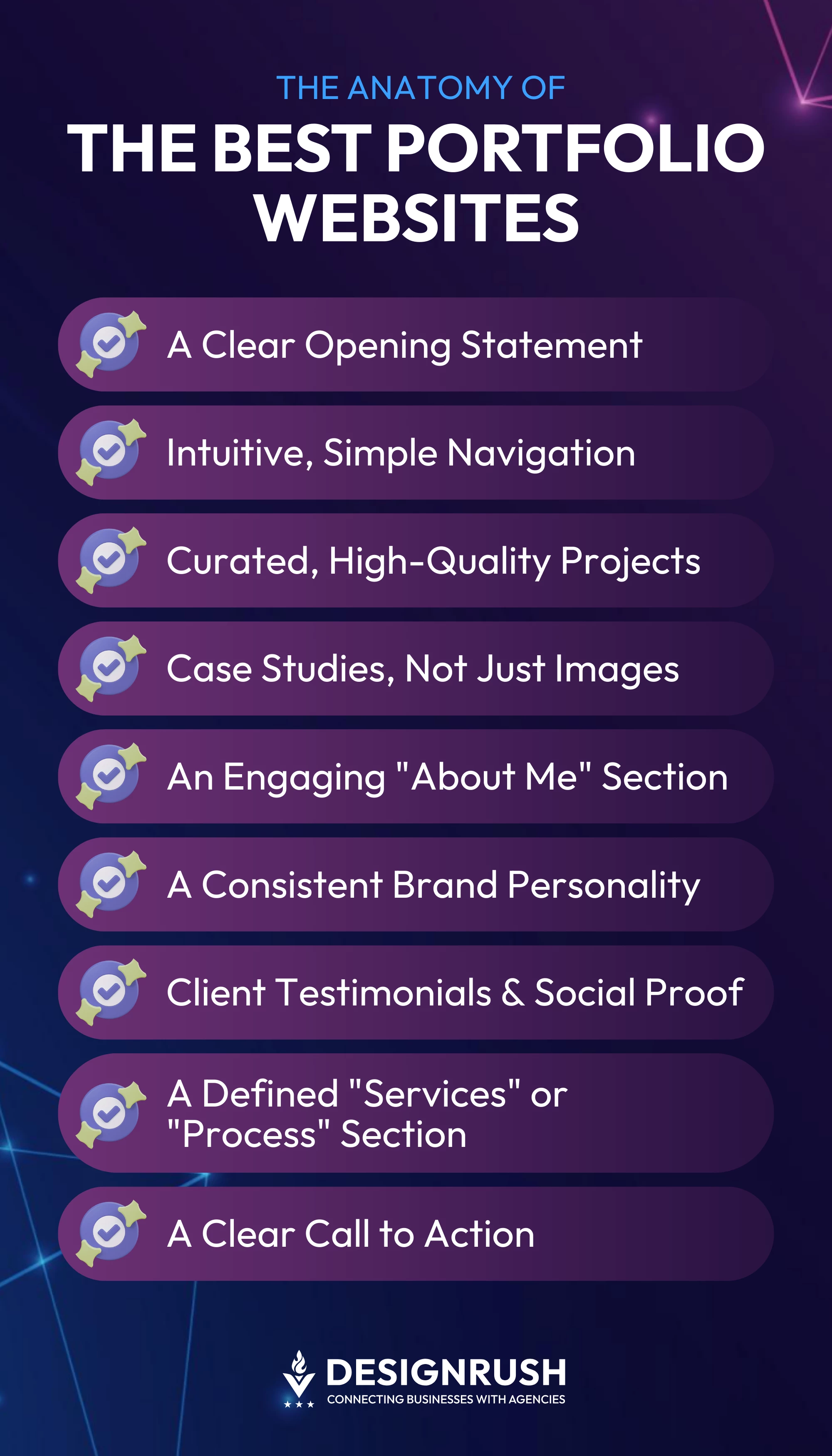
Business Purpose | |
A Clear Opening Statement | You have to instantly orient the visitor. For example, a clear headline like "Brand Identity for Food & Beverage" immediately confirms they're in the right place. |
Intuitive, Simple Navigation | Can a new client find your best work in two clicks? Simple menus—like Work, About, Contact—respect a visitor’s time and project professionalism. You can even do a one-page website! |
Curated, High-Quality Projects | This proves you understand your own value. Instead of showing 20 multiple average projects, feature the 5 that will attract the clients you actually want. |
Case Studies, Not Just Images | This is how you demonstrate true expertise. Briefly outlining the problem, your process, and the result shows clients how you think, not just what you make. |
An Engaging "About Me" Section | Clients hire people. You can add a professional photo and a short bio to make sure your portfolio doubles as a digital resume. |
A Consistent Brand Personality | Your portfolio's design is its own best case study. Your choice of logo, typography, and color palette shows off your skills before a visitor even clicks on a project. |
Client Testimonials & Social Proof | Social proof is the fastest way to build trust. A strong quote (with accompanying credentials) reduces risk for new clients. |
A Defined "Services" or "Process" Section | This answers a client's key questions before they even ask. Clearly defining your services, typical timelines, and process qualifies leads and sets professional expectations. |
A Clear Call to Action | This element's job is to turn a passive browser into an active lead. A well-placed button like "Schedule a Discovery Call" tells visitors exactly what to do next. |
Flawless Technical Performance | A slow or buggy site signals a lack of professional care. Your site must be mobile-responsive and load in under two seconds to prove your attention to detail. |
1. Davide Mascioli: Best Portfolio Website Examples For Art Direction
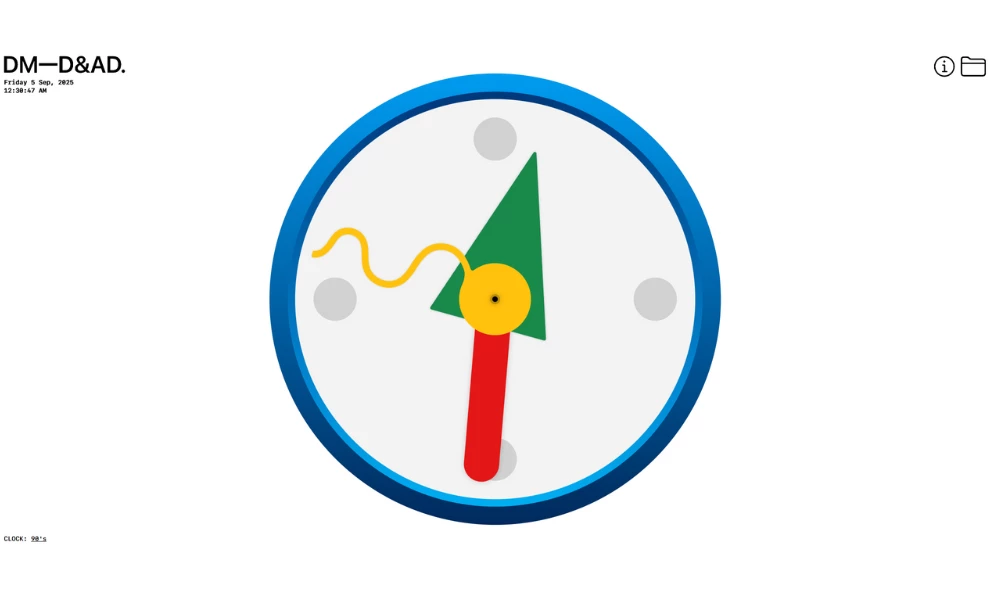
- Standout Feature: The site's radical simplicity.
- Key Takeaway: You don't always need to follow a conventional portfolio structure. If your work is visually strong, a bold, simple presentation can be far more effective than a complex but generic one.
The homepage is just a custom-designed, interactive clock that changes styles on every refresh. The rest of the site consists of only two other sections: a hyper-condensed info page and a full-bleed grid of his work.
This approach projects immense confidence. It forces a visitor to judge him on his taste alone, which is exactly what an art director is hired for.
This immediate impact is crucial, as research shows that designers have only 50 milliseconds to make a good first impression, a window Mascioli’s design uses to its full advantage.
The hyper-efficient info page respects a busy creative director's time, providing every key detail—from awards to contact info—on a single screen without any extra clicks.
2. Derrick Kean: Best Web Portfolio Examples for Lettering
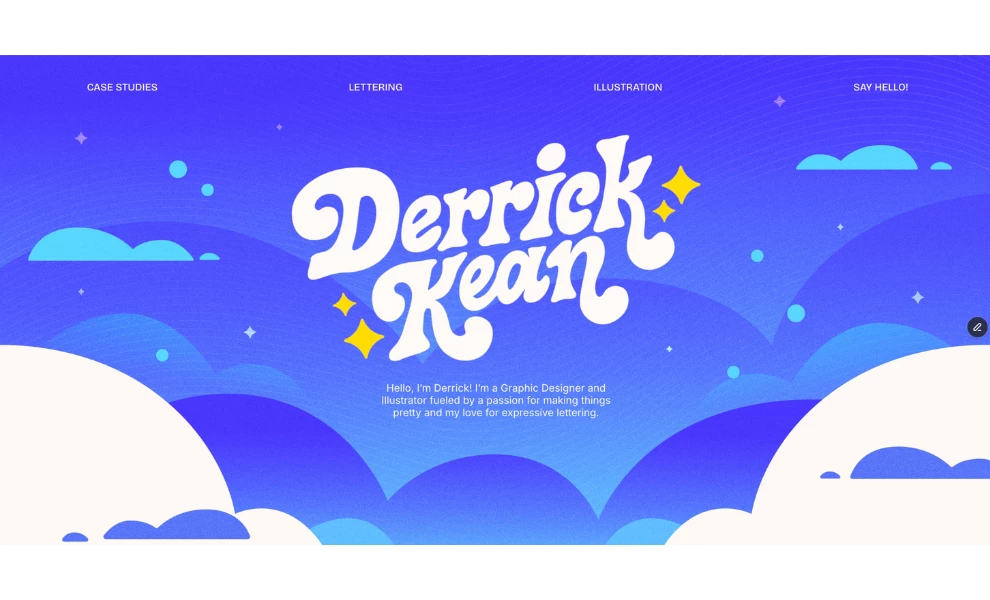
- Standout Feature: The portfolio's incredibly in-depth case studies, which reveal the entire creative process from initial sketches to final execution.
- Key Takeaway: Sharing your thought process and early sketches builds more trust than a perfect final image alone.
Right off the bat, Derrick Kean’s portfolio uses its hero section as a perfect proof-of-concept. It replaces a generic headline with a piece of custom lettering that immediately demonstrates his artistic style and capabilities.
However, his in-depth case studies are the main event. They go beyond a simple project brief to show his entire thought process, from early sketches and logo drafts to final designs.
Crucially, he also includes musings on his failures and setbacks, a rare and confident move that not all the best portfolio website examples show.
This level of transparency builds immense client trust. It proves he is a thoughtful designer who can navigate a project from a simple idea to a polished final brand.
3. Saulo De Castro: Best Website Portfolio Examples for Animation
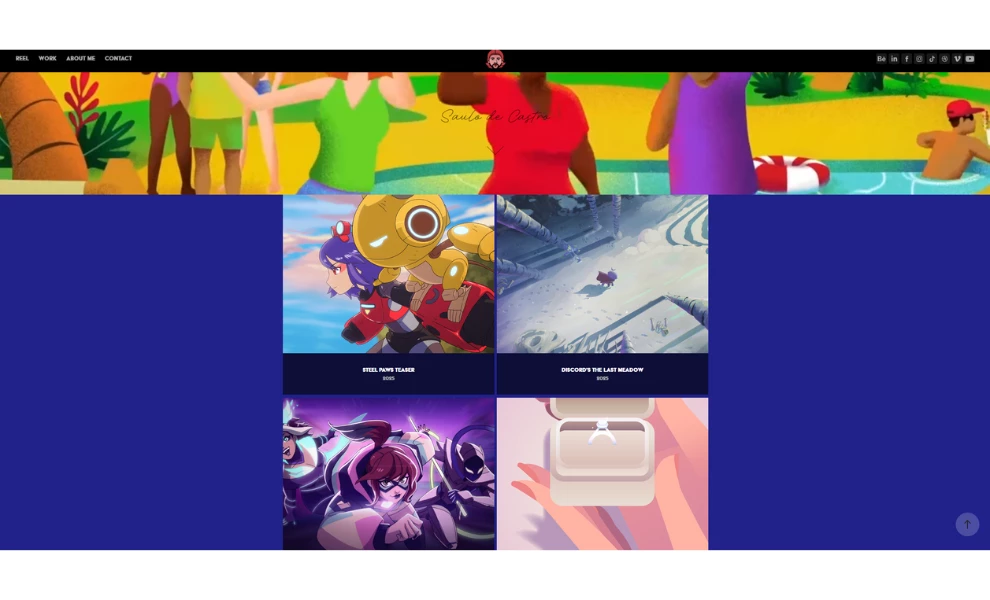
- Standout Feature: The website presents the artist's showreel immediately upon loading.
- Key takeaway: Your showreel is your most persuasive tool in motion-based fields, so lead with it to make a confident first impression.
Saulo de Castro's portfolio gets straight to business. The site loads directly to his showreel and places his powerful animation work front and center for any visitor.
The minimal design uses a deep blue background, which makes the colorful visuals the main focus.
Clean navigation leads to a "Work" page, topped with its own animated header, where an extensive portfolio of projects dating back to 2017 is organized in a clean grid.
This "reel-first" method shows a deep understanding of the animation industry. It respects the time of producers and creative directors who need to see motion work immediately.
4. Martin Moll: Best Web Portfolio Examples for Filmmaking
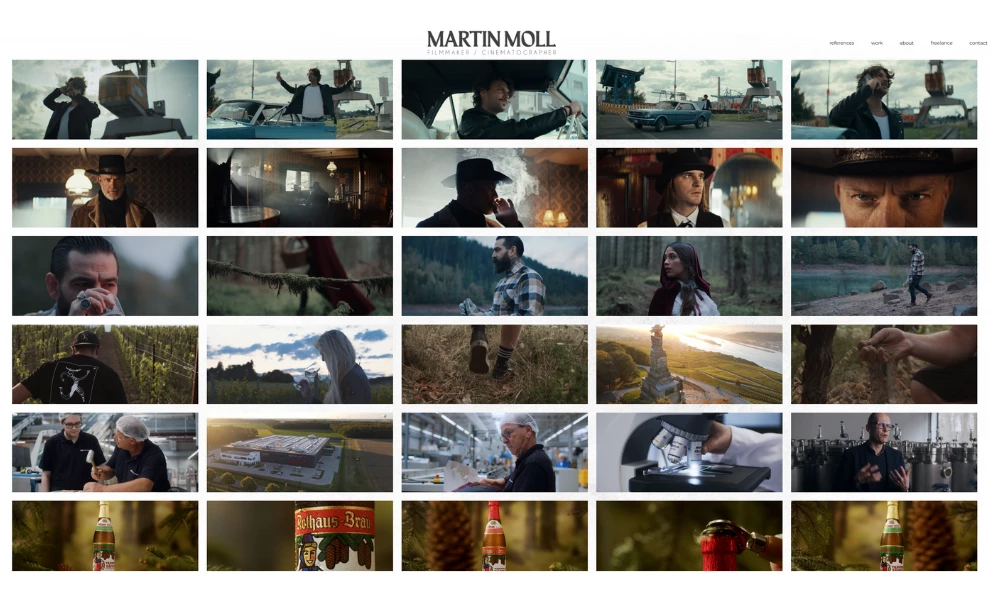
- Standout Feature: The site's brilliant two-tiered structure, which first presents a grid of striking film stills before revealing the full, playable videos as you scroll.
- Key Takeaway: You can showcase your filmmaking style instantly with a gallery of your best static shots; this allows a visitor to assess your aesthetic before committing to watch a full video.
Martin Moll’s portfolio immediately offers a curated grid of beautiful film frames. This gallery acts as a visual summary of his compositional skill and cinematic eye.
As you scroll down the page, the static images then transition seamlessly into the full, playable videos for a deeper look at his work.
This two-step approach is perfectly suited for a busy producer, director, or client. It allows them to quickly assess his aesthetic from the stills and then effortlessly continue scrolling to see that style in motion.
5. Dave Holloway: Best Portfolio Websites for Web Design
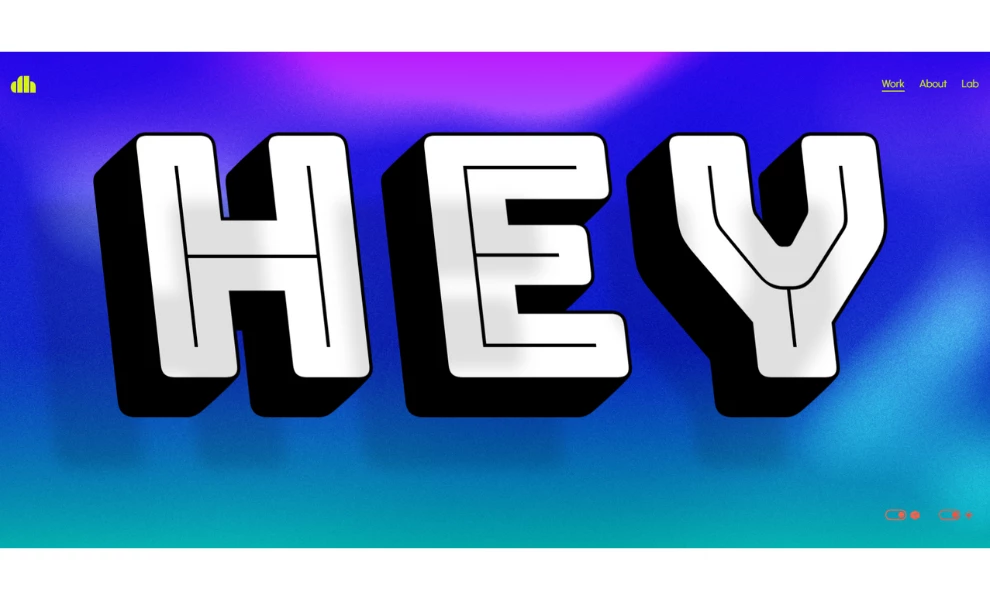
- Standout Feature: The entire website is an interactive demonstration of his web design and development skills.
- Key Takeaway: When you are a technical creative, your portfolio's functionality is your strongest case study because the user experience itself proves your expertise.
Dave Holloway’s portfolio greets you with a single, playful word that tilts and skews in response to your cursor. This immediate interactivity demonstrates his design skills before you even scroll.
Further down the page, a seamless horizontal carousel of his projects appears. The smooth scrolling animations offer a fluid way to browse a large body of work without leaving the homepage.
This is a smart choice, as portfolios containing varied work samples can increase interview requests by up to 50%.
This method immerses a potential client in his capabilities and allows visitors to feel his command of motion and user experience firsthand, which is a powerful form of proof.
6. Spencer Gabor: Best Portfolio Websites for Illustration
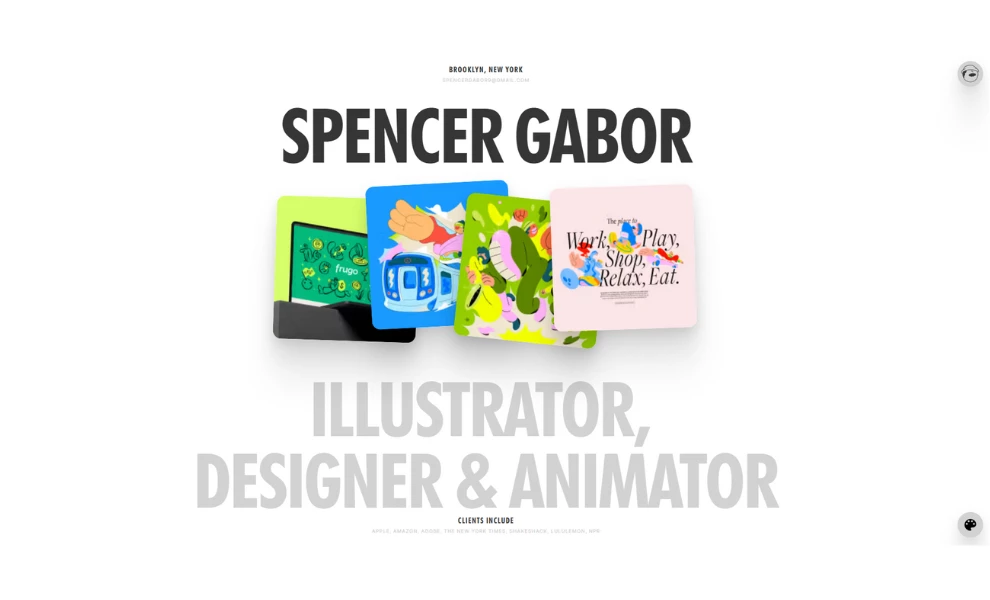
- Standout Feature: The site's playful interactivity.
- Key Takeaway: The best interactive website designs ensure that their sites are fun to browse as it is to look at.
Spencer Gabor’s portfolio presents his illustrations in a clean, uniform grid. The site comes alive on interaction, with each project card tilting and shifting in a 3D parallax effect that follows your cursor.
This playful personality extends to the smallest details. The main navigation is a cute, illustrated character icon whose eyes dart back and forth when you hover over it.
These interactive elements are a brilliant extension of his brand as a Brooklyn-based illustrator. They show clients that he can create a delightful user experience in addition to his bold, colorful illustration work.
7. Hanson Wu: Best Portfolio Websites Examples for UI/UX Design
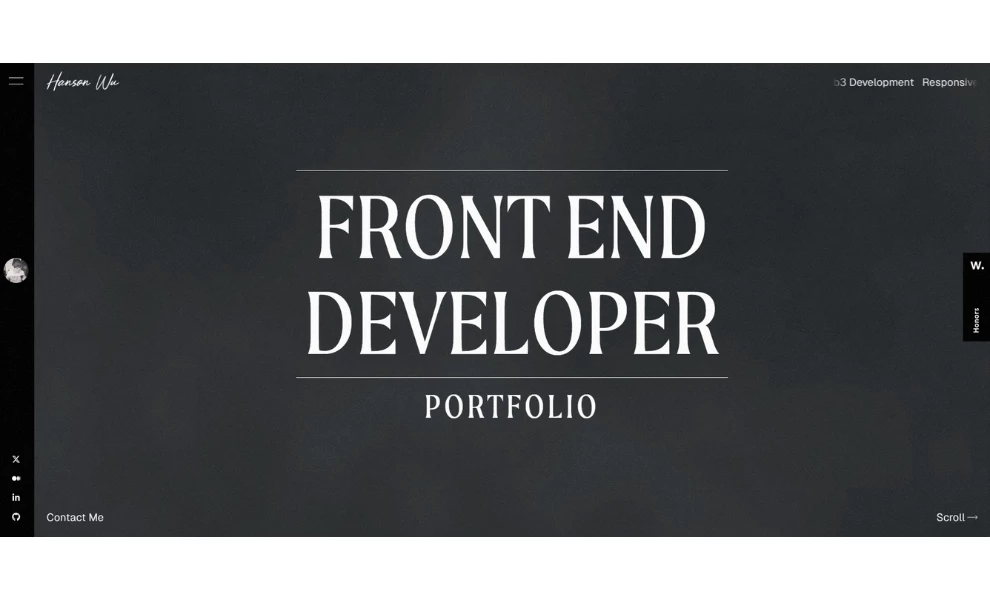
- Standout Feature: The site's unconventional horizontal scrolling creates a memorable and book-like user journey from left to right.
- Key Takeaway: A unique navigation pattern, when flawlessly executed, can be your most powerful portfolio piece because it demonstrates your design skill and confidence.
Hanson Wu’s portfolio forgoes the typical vertical scroll for a horizontal journey. A subtle grain texture on the dark background adds a layer of depth to the experience.
The layout is anchored by a fixed navigation bar on the left. Then, perpetually scrolling vertical headers act as a dynamic guide while you browse the sections.
This structure demonstrates his ability to create an unconventional user experience that remains intuitive, guiding the visitor to a clear call to action at the end. This makes it one of the strongest UX portfolio examples available.
8. Freddie Braun: Best Portfolio Website Example for Writing
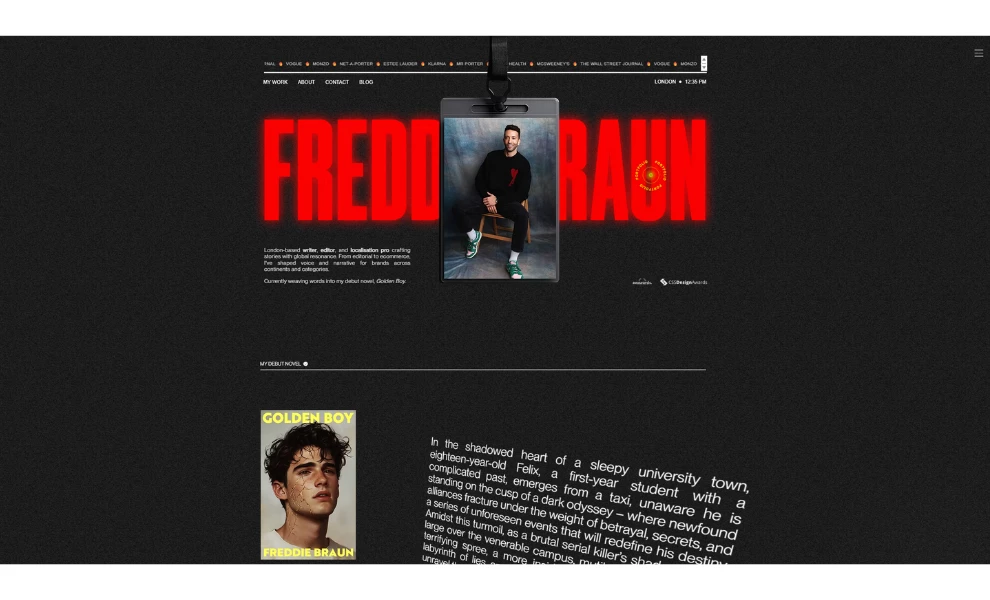
- Standout Feature: The site's creative hero section and powerful social proof.
- Key Takeaway: A writer's portfolio should be a story in itself. Structure your site to guide a potential client through who you are, what you're passionate about, and why they should trust you.
Freddie Braun’s website makes a memorable first impression with its hero section.
His name appears in huge, bright red letters behind a photo of him styled like a professional ID badge, a clever way to introduce him as a London-based writer and "localisation pro."
The clean, single-page scroll tells a clear story about his capabilities. It moves from his professional identity to a synopsis for his debut novel, "Golden Boy,” to testimonials from brands like Vogue and Klarna. This places powerful social proof front and center.
9. Bazil: Best Portfolio Websites for Photography
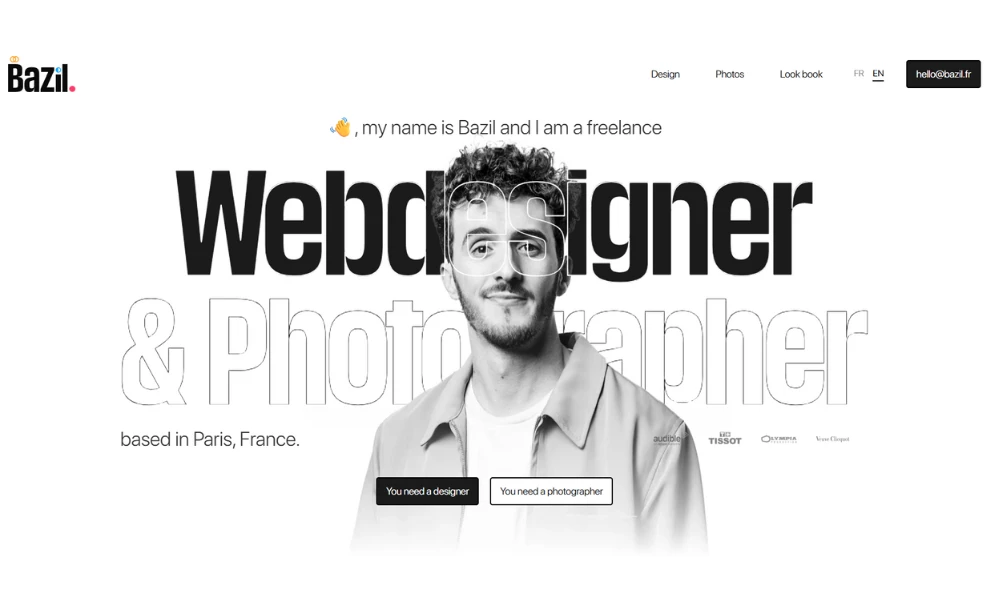
- Standout Feature: Immediately splits visitors into two distinct user journeys: one for design and one for photography.
- Key Takeaway: Guide potential clients to the exact work they need to see from the very first click.
Bazil’s portfolio opens with a clear choice for the visitor laid over a photo of himself: “You need a designer” and “You need a photographer.”
This click immediately takes you to a curated page for that specific service. The photography section, for example, greets you with the headline “Your brand image is in safe hands” and a bold promise to deliver photos within 48 hours.
This structure qualifies the visitor, states a clear business benefit, and then provides immediate proof of quality with a clean grid of work for clients like Krug and Land Rover.
10. Loona Messal: Best Web Portfolio Examples for Art
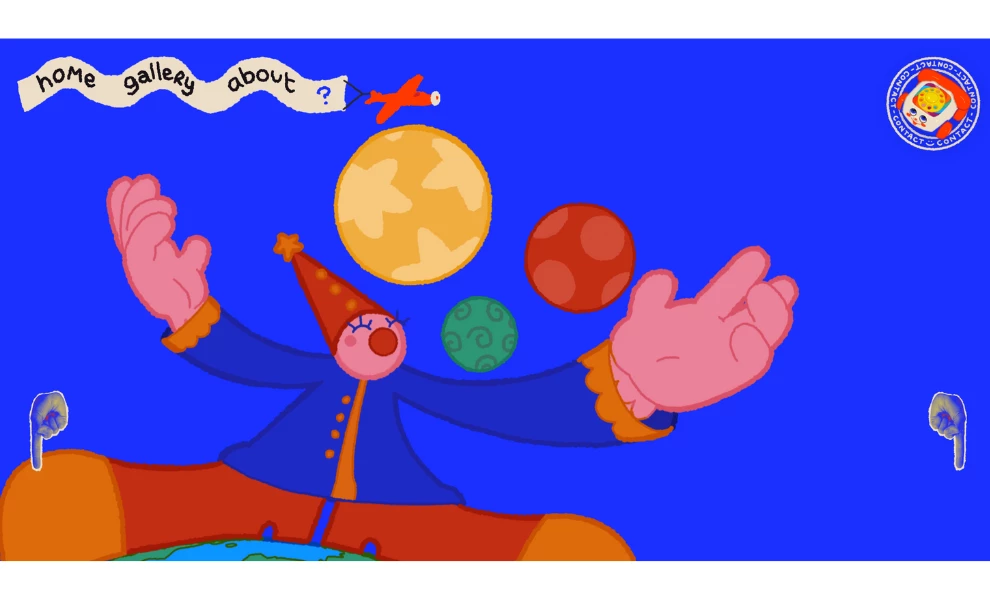
- Standout Feature: The site's complete immersion in whimsy.
- Key Takeaway: For a purely artistic portfolio, you can abandon conventional web design entirely; let your website become an immersive extension of your unique creativity
A 2020 Adobe study found that 59 percent of global consumers crave beautiful design over simplicity, and Loona Messal’s portfolio is one such vibrant, living illustration.
Every element on the screen, from the juggling clown on the homepage to the navigation links, is in a state of soft, perpetual motion.
The user interface is completely integrated into the artwork, such as hand-drawn clouds. Meanwhile, the navigation menu features playful, unconventional links that deepen the site's whimsical personality.
This approach is a perfect reflection of her artistic brand. It shows a potential client not just what she can draw, but that she can build an entire, immersive world filled with character and charm.
11. Gobrandia: Best Portfolio Websites Examples for Packaging Design
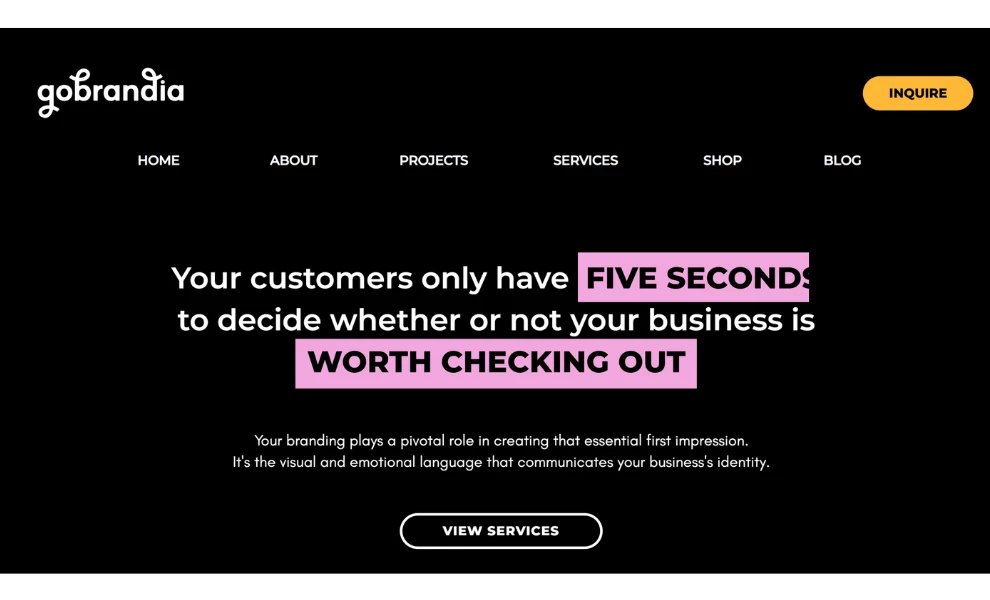
- Standout Feature: The large, detailed project visuals and a dedicated section for authentic client testimonials.
- Key Takeaway: You can build immediate trust by pairing your high-quality work with prominent social proof.
The Gobrandia portfolio, run by a single designer, presents a clean and professional agency-style front.
It makes maximum use of the screen space, with large, high-resolution image blocks that showcase the details of the packaging and branding work.
This visual confidence is supported by a robust testimonials section. Including photos and titles of the clients makes their praise feel authentic and builds a strong connection with prospective customers.
According to research, 50% of consumers form their impression of a business based on its website design, making Gobrianda’s approach a highly effective sales tool.
A potential client is first drawn in by the quality of the design work, and their confidence is then solidified by seeing genuine feedback from other happy business owners.
12. Daniel Sun: Best Website Portfolio Examples for Branding
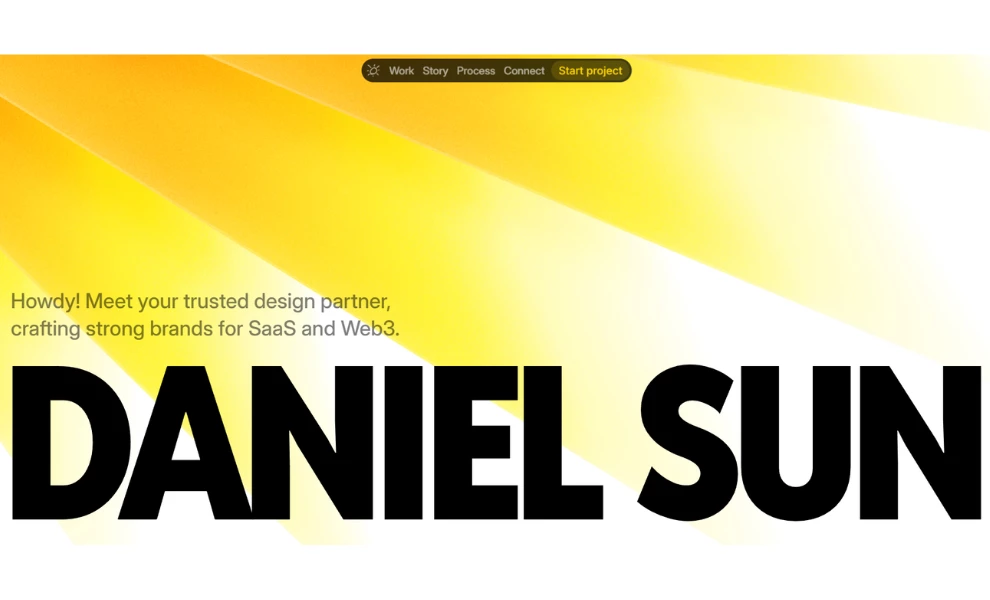
- Standout Feature: The site's clever and consistent branding.
- Key Takeaway: Your portfolio is your first and most important branding project; find ways to create a memorable and cohesive theme.
Daniel Sun’s portfolio is a masterclass in personal branding. Animated sunrays sweep across the page as you scroll, a clever and memorable visual pun on his last name!
This theme is reinforced by a confident and humorous brand voice. Witty headlines and playful notes on the contact button make the experience feel approachable and unique.
For a branding professional, this approach is the ultimate proof of skill. It shows prospective clients that he can build a compelling brand for them because he has already built one for himself.
13. Peggy Gou: Best Portfolio Website Examples for Music
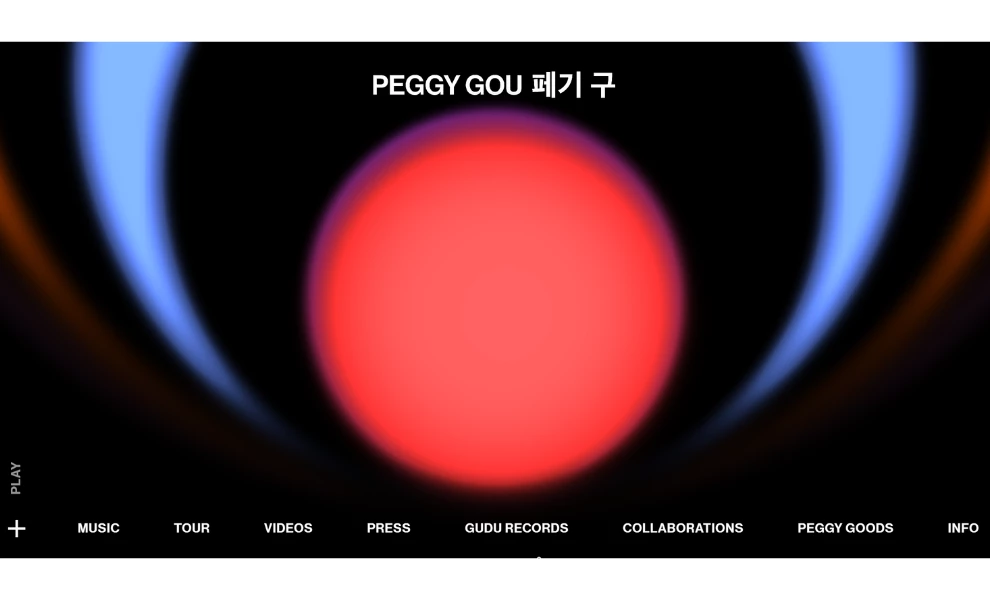
- Standout Feature: The site's frictionless, gallery-style layout that allows visitors to immediately listen to any track.
- Key Takeaway: For an experiential portfolio like music, your primary goal is to get the user to listen; design your site to remove all friction between the visitor and the play button.
Peggy Gou’s website functions like a clean, interactive record collection. The page immediately presents a full-screen grid of her music releases and uses the vibrant album art as the primary visual hook.
A single click on any cover opens a media player in a lightbox overlay. This allows a visitor to watch a video or listen to a song without navigating to a new page, which encourages further exploration.
This design is incredibly efficient for fans and industry professionals alike. It provides an immediate overview of her work and makes listening to any track a seamless, one-click process.
14. Lee Porter: Best Website Portfolio Examples for Graphic Design
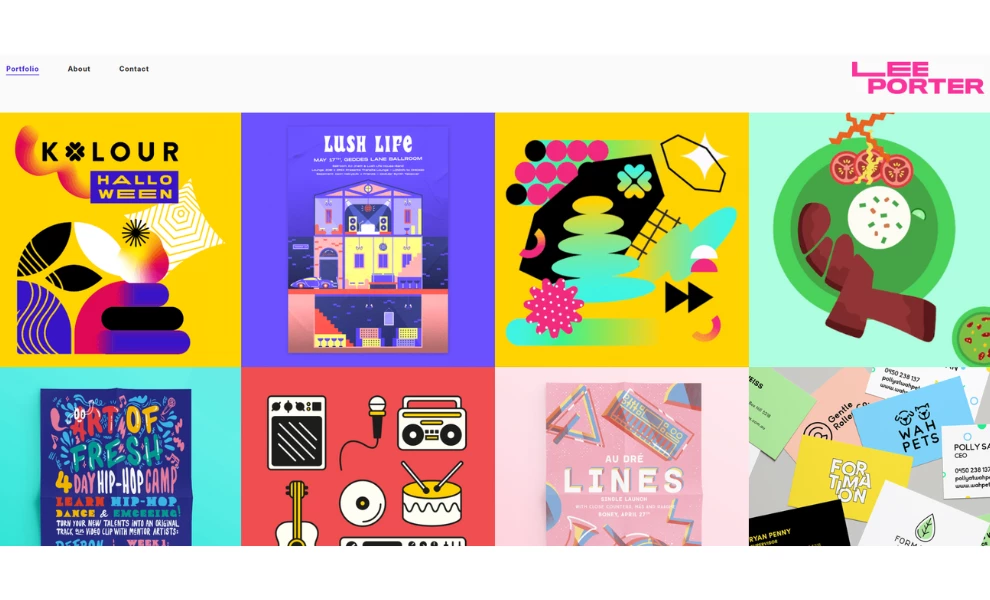
- Standout Feature: The site's energetic grid that’s animated to show each piece in a project, creating a feeling of constant motion.
- Key Takeaway: Your website's layout can be a powerful extension of your artistic style, so make the browsing experience feel like your work.
Lee Porter’s portfolio immediately presents a blast of color and energy. The homepage is a maximalist grid of his work that dynamically shifts to the next image in the project.
This feeling of movement is reinforced by the small details. His personal logo in the top corner is in a state of constant, subtle animation, which makes the entire brand feel cohesive and alive.
This approach is a perfect filter for his ideal clients. The energetic browsing experience immediately signals his specialty in bold, motion-centric graphic design and attracts brands looking for that specific style.
15. Jay van Hutten: Best Portfolio Websites for Game Design
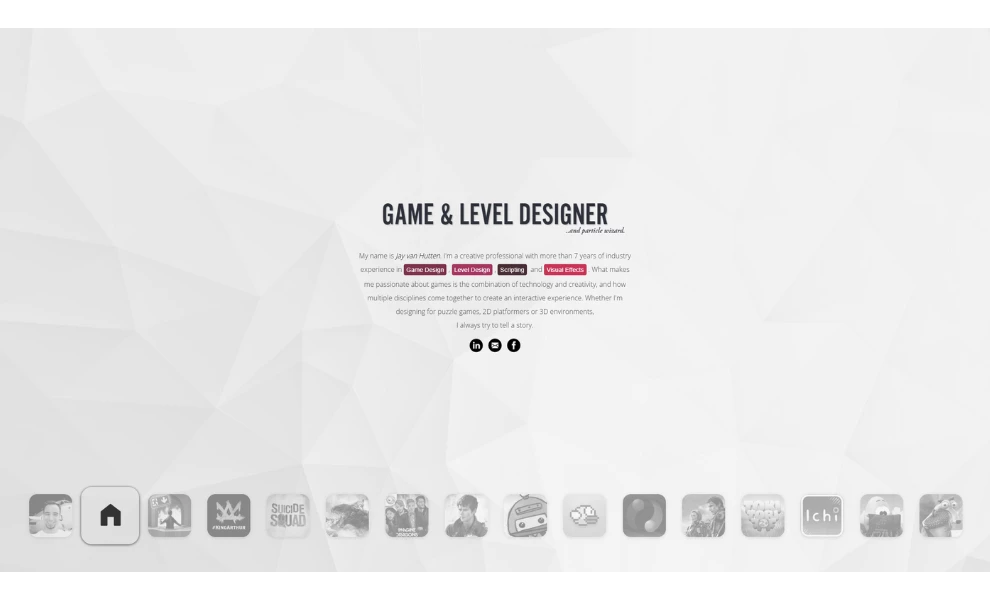
- Standout Feature: The site's clever navigation system, which uses a dock of app-style icons for each project.
- Key Takeaway: Your portfolio's user interface can be a powerful branding tool; adopt a navigation style that is familiar and thematic to your specific industry.
Jay van Hutten’s portfolio immediately stands out with its unique navigation. A dock of glossy, app-style icons for each project sits at the bottom of the page and is colored-in on hover.
Each project page is a perfect case study for a game designer. It pairs a large video of the gameplay in action with a clear, bulleted list of his specific contributions, like level design or puzzle mechanics.
This approach works because the entire portfolio feels like a piece of polished software. The intuitive, dock-style navigation is thematic to his industry and provides the exact details a hiring manager needs to see.
5 Ways to Improve Your Portfolio Today
Improving your portfolio doesn't always mean a complete overhaul. From what I’ve seen, a few small, focused changes can have a major effect on how potential clients perceive your work. Here are a few things you can do right now to make your site more effective.
- Rewrite your opening statement. Change your headline from what you are to what you do for your clients. "I am a graphic designer" is a fact; "I build brand identities for startups" is a solution. Be specific.
- Add a clear call to action. Don't make a visitor hunt for how to hire you. Add a prominent button on every page with a clear directive, like "Schedule a Discovery Call" or "View My Services."
- Remove your weakest project. Your portfolio is only as strong as its weakest piece. Go to your work gallery right now and remove the one project you are least confident in. This single action instantly raises the average quality of your entire portfolio.
- Add a client testimonial to your homepage. Email your happiest past client today and ask for a one-sentence quote about their experience working with you. Adding this social proof to your homepage immediately builds trust.
- Check your site on your phone. Data shows that 38% of users will stop interacting with a poorly designed mobile website, meaning a bad first impression can be the last. Open your portfolio on your phone and try to navigate it. If the experience is confusing or broken, you are losing clients.
Pro Tip: Perfect your favicon! That little icon in the browser tab keeps you recognizable when a client has 20 tabs open. |
While these quick fixes are valuable, a truly effective portfolio is built on a solid foundation. If your site still isn't getting the results you want after making these changes, it's time to step back and re-examine your approach with a few bigger-picture questions.
- Are you thinking like a business owner? The purpose of your portfolio is to solve a client's problem, not just to display your art. Reread your project descriptions. Do they explain the business goal and the results you achieved, or do they only describe your creative process?
- Is your portfolio for your ideal client? Many portfolios are designed to please the creator, not the customer. Define exactly who you want to hire you, and then brutally edit your portfolio to appeal only to that person. Remove any project that doesn't speak their language.
- Are you treating your portfolio like a product? Even the top website design companies know that a great website is never truly "finished." Like any product, it needs to be updated and improved over time. Install simple analytics to see which projects people view most, or ask a trusted colleague to point out where the experience is confusing.
Portfolio Website Examples: The Bottom Line
As these portfolio website examples show, there is no single formula for success. The stark minimalism of Davide Mascioli and the playful immersion of Loona Messal are worlds apart.
Yet, both work because they are authentic and confident extensions of the artists themselves.
This brings us back to the first question I asked: is your portfolio doing its job?
Each of these web portfolio examples succeeds because it answers with a clear yes. They all blend a unique creative vision with a clear business purpose. And that’s what turns their site into their hardest-working asset.
Ultimately, the best advice I can give is this: stop thinking about what a portfolio should look like and build the one that is true to you.
The best portfolio websites are more than a record of your past jobs. They are a declaration of the work you want to attract next.

Our team ranks agencies worldwide to help you find a qualified partner. Visit our Agency Directory for the Top Web Design Companies, as well as:
- Best Website Designs
- Best App Designs
- Best Logo Designs
- Best Print Designs
- Best Packaging Designs
- Best Video Designs
Portfolio Website Examples: FAQs
1. Should I use a template site or build a custom portfolio?
From my experience, it depends on what stage you're at. Template sites like Squarespace or Wix are fantastic for getting a professional-looking portfolio online quickly and affordably. I advise starting there. Invest in a fully custom site later, when your business is established and you need a unique brand experience that a template can't offer.
2. How important is my domain name?
It’s your digital address, so it’s very important for your brand. A professional and easy-to-remember domain builds credibility. I always recommend securing YourName.com if it's available. If not, a simple variation like YourNameCreative.com or YourName.design works well. Avoid numbers and hyphens, as they can feel less professional.
3. Do I still need a separate PDF portfolio?
Yes, I believe you do. Your website is a public, general showcase of your best work. A PDF portfolio is a private, curated document that you can tailor to a specific job application or a potential client's unique needs. It shows you've done your research and allows you to present only the most relevant work for that opportunity.