
There's no shortage of AI software to choose from. To make the search easier, we've rounded up the best AI tools to cover almost every part of a modern business.
Best AI Platforms: Key Findings
- ONLYOFFICE Docs, Microsoft 365 Copilot, and Google Workspacewith Gemini each put an assistant inside the editor, and they differ on where your files sit and which model reads them.
- Testim writes tests from plain language, Visily turns a screenshot into an editable wireframe, and Optmyzr runs bid and budget changes across four ad platforms.
- Perplexity, Chatbase, StoryChief, Uizard, Visily, Playwright, and the community build of ONLYOFFICE Docs all run at no cost before you commit budget.
Where To Start: AI Readiness Before Tool Selection
Where do you start with an AI strategy?
Before you compare AI platforms for business, run a short readiness assessment.
It takes an afternoon, and it changes what you shortlist. The best AI for business is rarely the most capable model on the market. It's the one pointed at a job you actually repeat.
- Audit where the time actually goes. List the recurring tasks your team repeats weekly, then mark the ones that are high-volume, rule-bound, and low-judgment. Those are your first candidates. Tasks that need commercial judgment or carry legal risk belong at the bottom of the list.
- Check your data before your tools. Most AI business tools read something you already own: a CRM, a document store, a financial model, a codebase. If that data is inconsistent or scattered, the tool inherits the mess. Fix the source first and the pilot gets a fair test.
- Pick specialized over general for defined jobs. Across every category below, tools built for one business problem outperform general-purpose assistants on that problem. A general assistant makes a good second tool and a poor first one.
- Set a number before you buy. Hours saved, cost per asset, response time, forecast accuracy. Pick one metric per pilot and measure against the process you run today.
- Resist stacking. Buying four overlapping AI solutions for business costs more than one that covers 90% of the job, and it splits your data across four vendors. Consolidate where the overlap is real.
How We Chose and Tested These AI Tools
We reviewed these 25 AI tools in 2026. Marija Naumovska and the DesignRush in-house team assessed each platform against vendor documentation, published plan limits, and verified user reviews on Capterra, then ran hands-on tests wherever a free tier or trial made that possible.
We judged every tool on five things: whether it owns a named job better than a general assistant does, how much editing the output needs, whether it connects to software you already run, what the cheapest paid plan actually unlocks, and how quickly a new user gets productive.
Prices were checked on each vendor's own pricing page at the time of writing.
| Criterion | Weight | What it measures |
| Fit to a named job | 30% | Whether the tool solves one business problem better than a general-purpose assistant, and how much of that job it covers |
| Output quality | 25% | How usable the results are before a human edits them, tested on everyday tasks rather than vendor demos |
| Workflow integration | 20% | Whether the tool connects to your CRM, CMS, storage, or development stack without manual exports |
| What the entry price covers | 15% | What the cheapest paid plan unlocks, the billing basis, and what the bill does as seats or usage grow |
| Adoption and reviews | 20% | Time to first useful output, weighed against the Capterra review base |
AI Document Collaboration & Office Productivity
Documents are where most employees meet AI first.
Every suite here puts an assistant inside the editor, so the differences that matter are structural: where your files live, which model reads them, and whether the editor works inside the platform your team already uses.
1. ONLYOFFICE Docs: Best for Embedded Document Editing & Self-Hosted AI
For companies that want document editing inside their existing CRM, DMS or project tool, and want to pick which AI model sees their files.
ONLYOFFICE Docs is a set of online editors for text documents, spreadsheets, presentations, forms, and PDFs that you host yourself and wire into another platform.
The editors are built on OOXML, so a DOCX or XLSX opens with its formatting intact and goes back out clean.
What sets it apart from Google Workspace and Microsoft 365 is where it lives.
It connects directly into dozens of popular self-hosted and cloud platforms (monday.com, Dropbox, WordPress, etc.) using pre-built connectors. Just add the editors to the software your team already opens every morning, and nobody migrates into a second suite.
Pros:
- Embeds into 50+ platforms so documents stay inside your main system, with no separate office suite to open
- Built on OOXML, so DOCX, XLSX, and PPTX files keep their formatting without a conversion step
- AI plugin is free and opt-in, connects to no model by default, and runs on your own API keys, including local models in the web and desktop editors
- Self-hosted, private cloud, and white-label options, with source published under AGPL v3
Cons:
- Self-hosting needs your own servers plus staff time for updates, which adds cost beyond the licence
- No SOC 2 attestation and no ISO 27001 certification for ONLYOFFICE Docs as a standalone product
- AI usage is billed separately by whichever provider you connect
- Enterprise licensing is priced by simultaneous connections, so size concurrent editing before you buy
ONLYOFFICE publishes more than 50 connectors, covering Odoo, Jira, Confluence, Redmine, Strapi, Nuxeo, ownCloud, Nextcloud, Moodle, Pipedrive, Trello, and WordPress.
We tried the Odoo and Jira ones, and in both the file opens in a co-editing session attached to the record it belongs to, with comments and version history kept on the platform side.
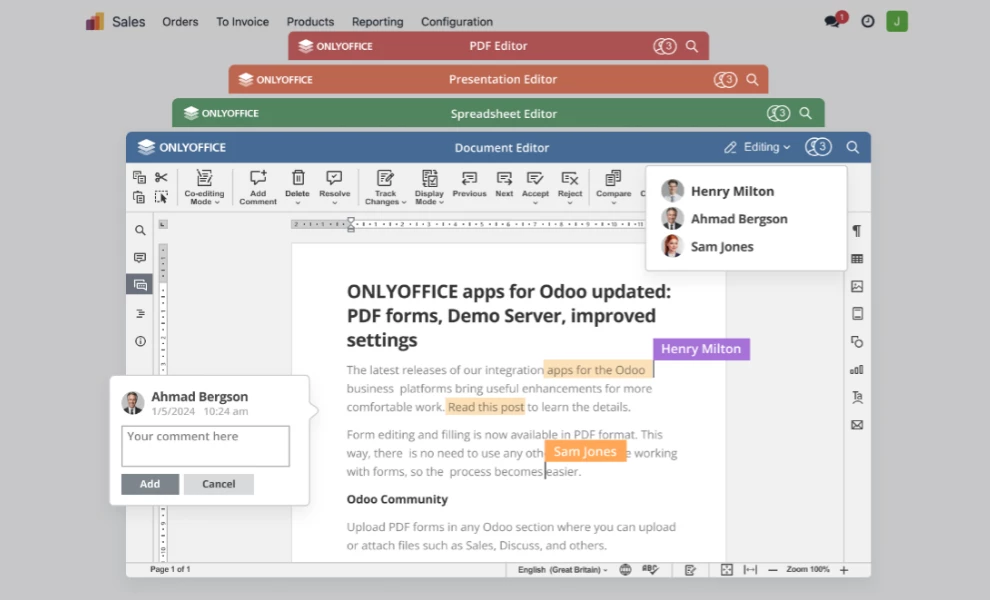
That setup solves a specific headache, as ONLYOFFICE Commercial Director Galina Goduhina explained:
"Users have to switch between different tools, usually their main platform and an office suite, to create, edit and update their documents.
Consequently, they have to upload all their docs to their platform again and again and keep track of each new version if they share files with their colleagues."
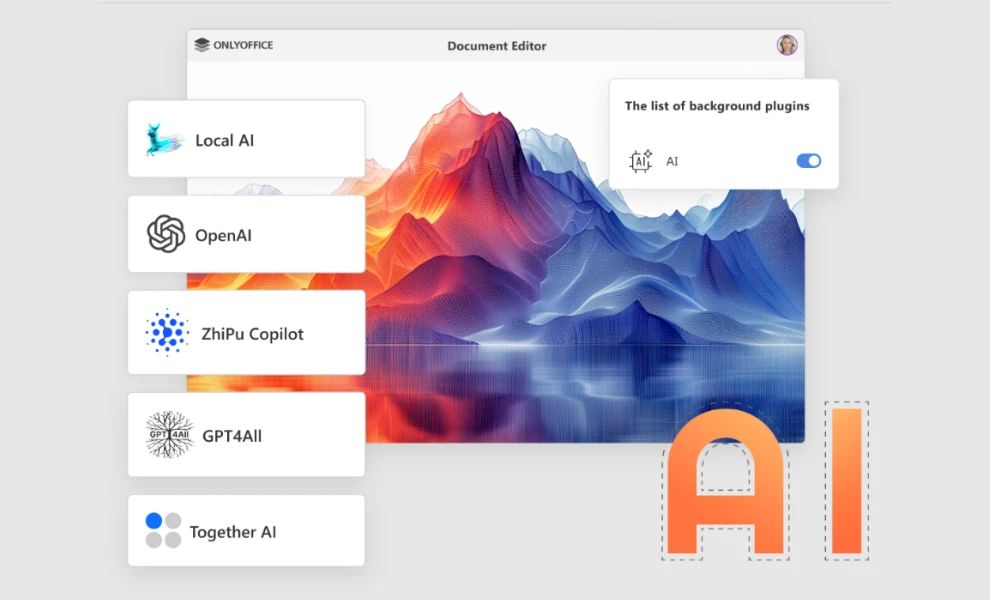
The AI side is unusual. The editors ship with an AI plugin that arrives switched off and connected to nothing. You enable it from the Plugins tab, add a provider, then paste in an API key you sourced yourself.
The plugin costs nothing, and your token spend goes straight to OpenAI, Anthropic, Mistral, or whoever you picked, at their rates. Connect a model and an AI tab appears across all four editors, carrying a chatbot, summarization, translation, grammar checking, and custom assistants.
You can assign different models to different jobs, so one handles chat while another takes OCR or image generation, and Ollama, GPT4All, and LM Studio all sit in the provider list for local models.
We asked Goduhina why the plugin ships empty when competitors bundle a model:
"This approach gives users total control over their AI integration. They can decide if they need AI assistance or not... Another advantage is the ability to connect several AI models at once and use them for specific tasks, such as image generation or OCR.
Finally, it's possible to connect local AI models, keeping total control over data residency and processing."
The catch is infrastructure. Self-hosting means servers, patching, and someone on staff who owns the deployment, which the vendor names as a real cost for IT teams to plan around.
Pricing
- Community Edition: Free, uncapped
- Docs Enterprise: From $1,500, with a 50-connection on-premises configuration listed at $2,100
- Docs Developer (for embedding into a product you sell, white label included): From $3,500
- AI plugin: Free. You pay your chosen AI provider directly for usage
What Users Say
ONLYOFFICE Docs holds 4.5 out of 5 across 105 reviews on Capterra.
Reviewers return most to format fidelity, calling it the alternative that reads and writes Word, Excel, and PowerPoint files most accurately, alongside speed, low resource use, and a free, self-hostable suite.
Two complaints recur: Formatting can shift when importing Google Docs files, and heavily designed Office documents sometimes need cleanup.
A few also find the interface heavy and closely modelled on Word, and note that advanced PDF editing trails dedicated tools.
Other Notable Features
- Free community build, plus desktop apps for Windows, Linux, and macOS and mobile apps for iOS and Android
- Three levels of encryption: at rest, in transit, and end-to-end
- Custom assistant functions saved to the toolbar from your own prompts
- Different AI models assignable to different tasks, including chat, translation, and OCR
- Conversion to Markdown, HTML, and e-book formats
2. Microsoft 365 Copilot: Best for Teams Already Running Word, Excel, and Teams
For organizations on Microsoft 365 that want an assistant reading their own tenant data inside the apps they already open.
Copilot works inside Word, Excel, Outlook, PowerPoint, and Teams, and its advantage is access.
It reads your mail, files, and meetings through Microsoft Graph, so a prompt like "summarize what we agreed with this client last quarter" pulls from real company records instead of a pasted excerpt.
Pros:
- Reads your own tenant data across mail, files, calendars, and meetings
- Works inside the desktop apps, not only a browser tab
- Meeting recap, action items, and follow-up drafting built into Teams
Cons:
- Priced as a per-seat add-on on top of a qualifying Microsoft 365 licence, so the real cost is two line items
- Value drops sharply if your documents live outside SharePoint and OneDrive
- Output quality varies by app, and Excel results need checking before they reach a model
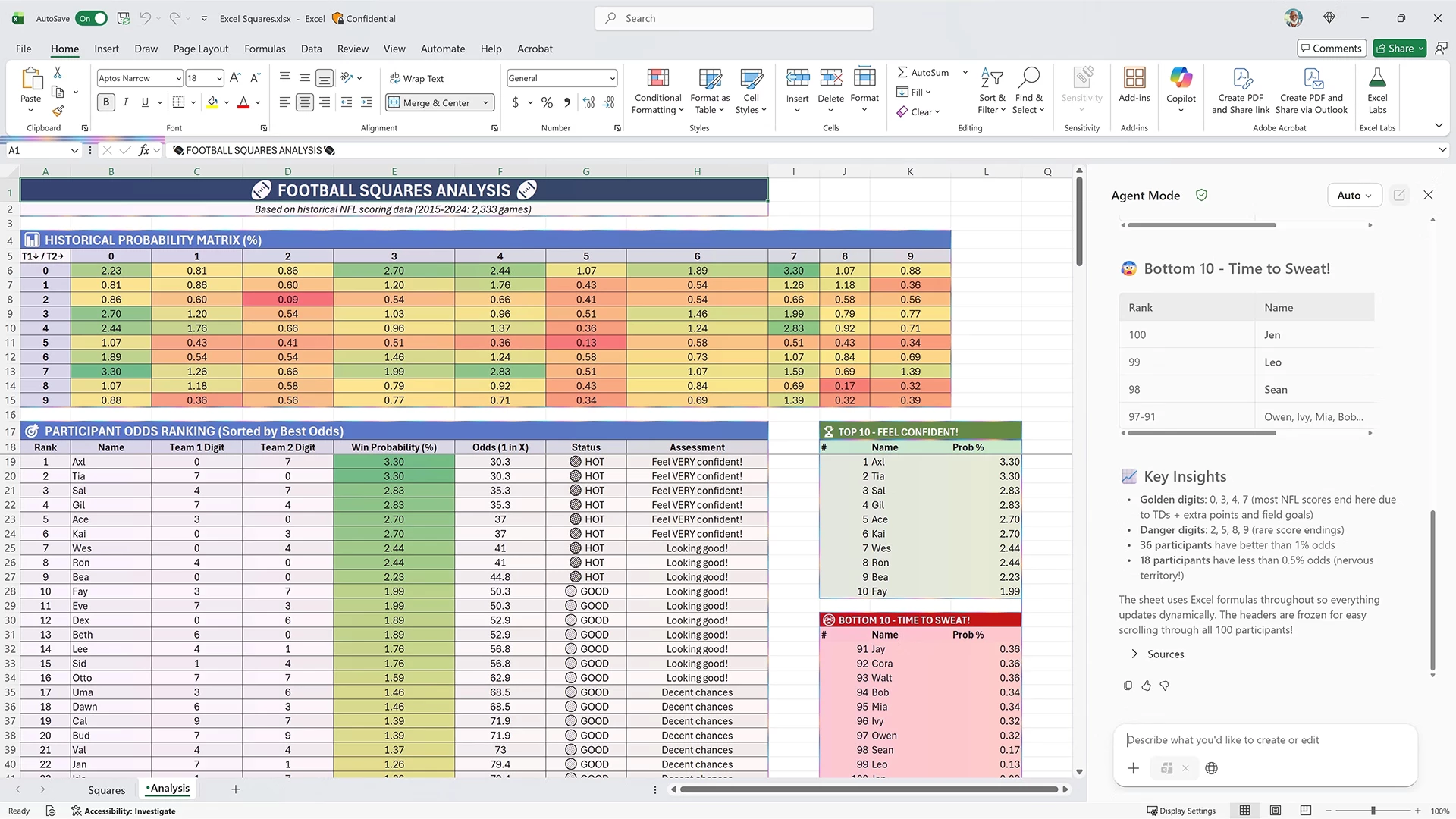
Excel is where the gap with general assistants shows most.
Copilot writes formulas against your actual sheet structure, builds PivotTables, and explains what a model is doing, which matters for finance teams that cannot paste data into a public chatbot.
Pricing
- Microsoft 365 Copilot: around $30 per user/month on an annual term, on top of an eligible Microsoft 365 plan
- Microsoft 365 Copilot Business: reported at $21 per user/month, with promotional rates for smaller organizations
- Copilot Chat included with Microsoft 365 plans at no extra cost
What Users Say
Capterra reviewers value Copilot’s integration with Microsoft 365, particularly access to OneDrive files and information from Outlook and Teams.
Users highlight convenient information retrieval, personalized meeting notes, and agents that help with recurring tasks.
Feedback is less positive on consistency and complex work.
One reviewer reports that Copilot struggles with challenging tasks, while another says it does not reliably connect information between Outlook and Teams. Others mention overly long answers, occasional inaccuracies, and subscription costs.
Other Notable Features
- Enterprise identity, data residency, and admin controls already in place for Microsoft customers
- Copilot inherits existing Microsoft 365 permissions, so it surfaces only what a user can already open
- PivotTable building and formula explanation inside Excel
- Copilot Studio for building custom agents on the same tenant data
3. Google Workspace with Gemini: Best for Browser-First Teams That Want AI Included
For distributed teams working in Gmail, Docs, and Drive that would rather not negotiate a separate AI license.
Google folded Gemini into Workspace plans in January 2025 instead of selling it as an add-on, raising base plan prices and giving every user on the plan access to the side panel in Gmail, Docs, Sheets, Slides, and Drive.
For a company already paying for Workspace, the incremental cost of AI is zero.
Pros:
- Gemini included from Business Standard upward with no separate AI licence or seat minimum
- Works across Gmail, Docs, Sheets, Slides, Drive, and Meet from the same side panel
- No client installation, so it runs on any device with a browser
Cons:
- Spreadsheet and data analysis support trails Copilot in Excel
- Your documents have to live in Google's cloud, which rules it out for teams with data residency requirements
- Files stay in Google formats unless you export, which adds friction when partners work in Office
The assistant drafts and rewrites in Docs, summarizes long mail threads in Gmail, generates images in Slides, and answers questions about files in Drive.
Sheets support is lighter than Excel with Copilot, which is the trade you make for the pricing.
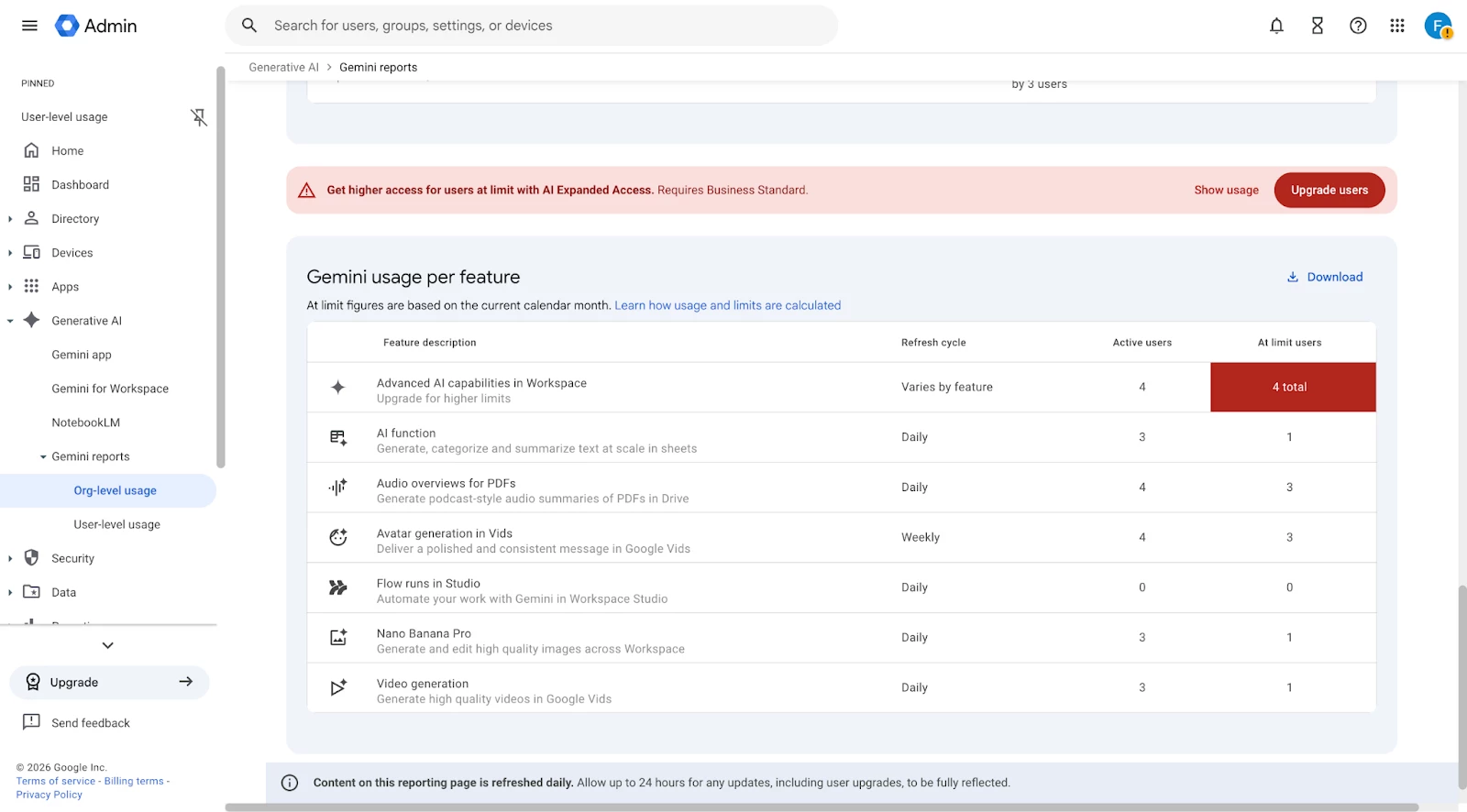
Admins can track Gemini usage by app and feature in the Google Admin console, including how many users engage with tools such as content generation and summarization, and how often they use them.
Pricing (per user/month, annual billing)
- Business Starter: around $7
- Business Standard: around $14
- Business Plus: around $22
- Gemini included on Business Standard and above
What Users Say
TrustRadius reviewers describe Gemini as useful for researching issues, analyzing data, and capturing meeting notes and action items.
One sales manager particularly praises its meeting transcription, while an IT administrator reports spending less time on research and breaking down complex ideas.
Complaints about the broader Workspace experience include hard-to-find admin settings, unclear documentation about plan restrictions, and limited advanced spreadsheet functionality.
Other Notable Features
- Lower total cost per seat than Microsoft 365 plus a Copilot add-on
- Image generation inside Slides and Vids
- Gemini app access included alongside the in-app side panel
- Enterprise data protection commitments published for Workspace AI features
AI Marketing & Website Automation
These are our picks for marketing teams looking to automate content, campaigns, and website management.
1. Angie: Best for WordPress Website Management
For agencies and businesses managing WordPress sites that want to automate maintenance, content updates, and custom development tasks.
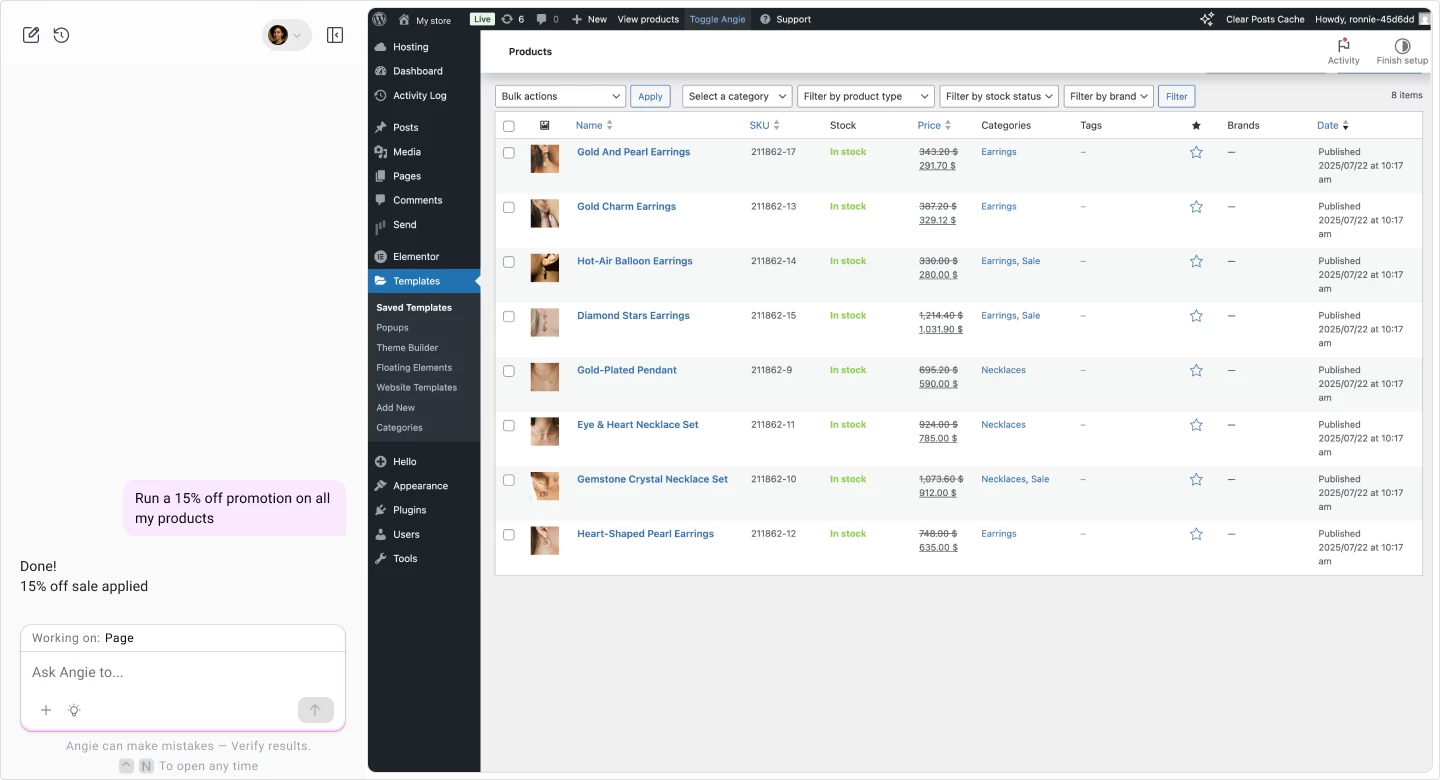
Angie is Elementor's AI assistant for WordPress. During our review, we found that it can build Elementor widgets, update WooCommerce stores, create custom post types, troubleshoot site issues, and perform bulk actions using simple prompts.
Pros:
- Creates Elementor widgets, WordPress snippets, calculators, quizzes, custom 404 pages, and other interactive web experiences
- Handles bulk WooCommerce updates, metadata changes, redirects, and other site-wide maintenance tasks
- Understands your site's plugins, themes, custom fields, and content structure automatically
Cons:
- Still in beta, so features continue to evolve
- Complex workflows may occasionally require manual review or additional prompting
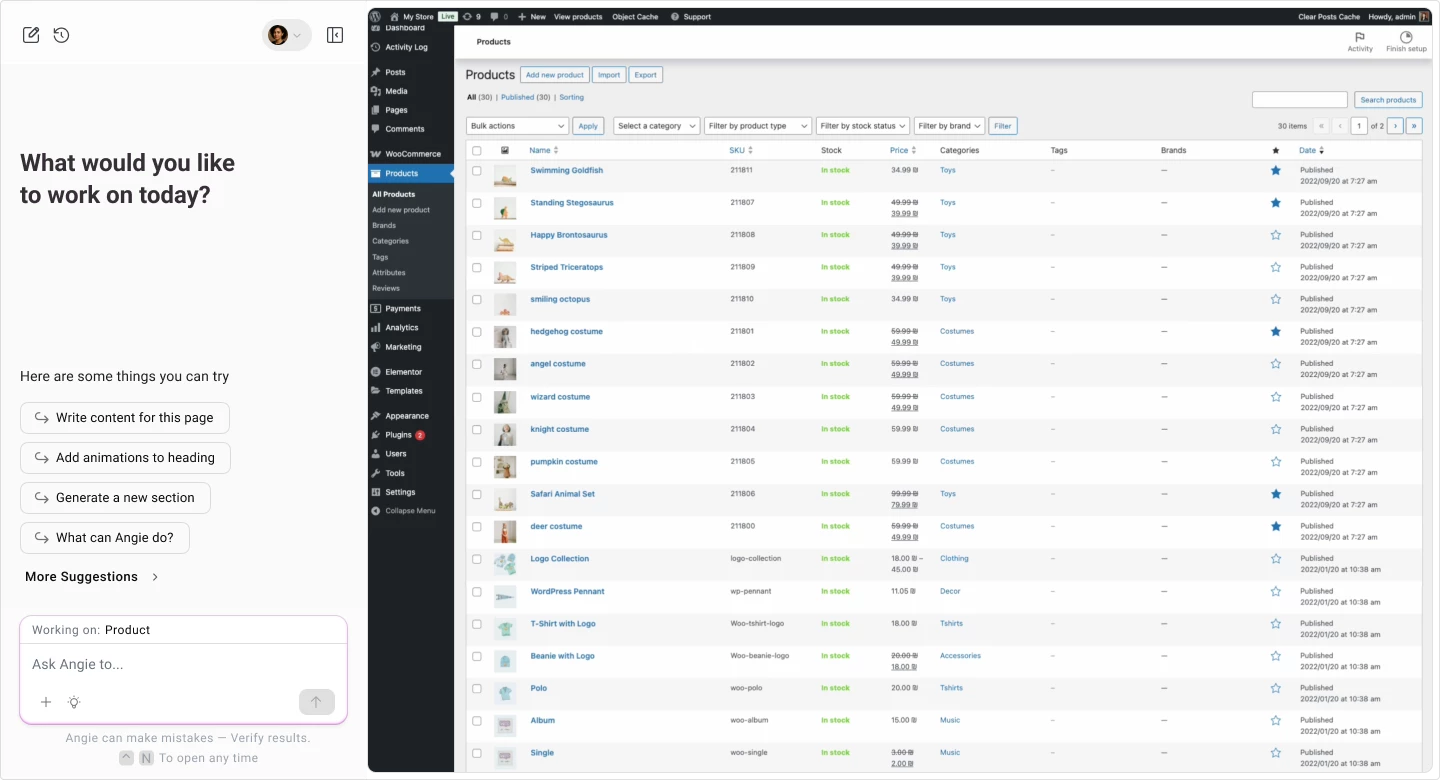
Another feature we appreciated is that Angie works within your existing WordPress environment.
It recognizes your plugins, themes, content structure, and Elementor components without requiring additional setup, while its sandbox lets you review changes before they go live.
Pricing
- Free (Beta)
What Users Say
Angie carries a small but candid review base. On the WordPress.org plugin listing, reviewers credit it with generating full landing pages and custom widgets from a prompt and with picking up site context on its own, and Elementor reported roughly 9,000 active installations while the plugin was still in beta.
The recurring criticism is reliability at this stage. Reviewers describe Angie stalling on simple tasks, and one early tester reported it explaining how to do a job instead of doing it.
Independent WordPress coverage has also flagged credits consumed by failed sessions, so back up a site before handing over write access.
Other Notable Features
- Test Mode for previewing generated widgets and snippets before publishing.
- Code revision history for reviewing changes and restoring earlier snippet versions.
- Cloud Library for saving and reusing snippets and widgets across connected sites.
- Community Library with prebuilt snippets from other Angie users.
- Custom WordPress admin dashboards, settings panels, and content types.
2. Typeface: Best for Enterprise Marketing Operations
For enterprise marketing teams coordinating content production, campaign execution, and brand governance across multiple channels.
Typeface brings campaign planning, AI content creation, approvals, and publishing into a single workspace.
As we explored the platform, it became clear that one of the biggest advantages is keeping marketers, designers, and reviewers aligned on the same brand guidelines throughout the entire process.
Pros:
- AI agents for email, web, image, video, and advertising workflows
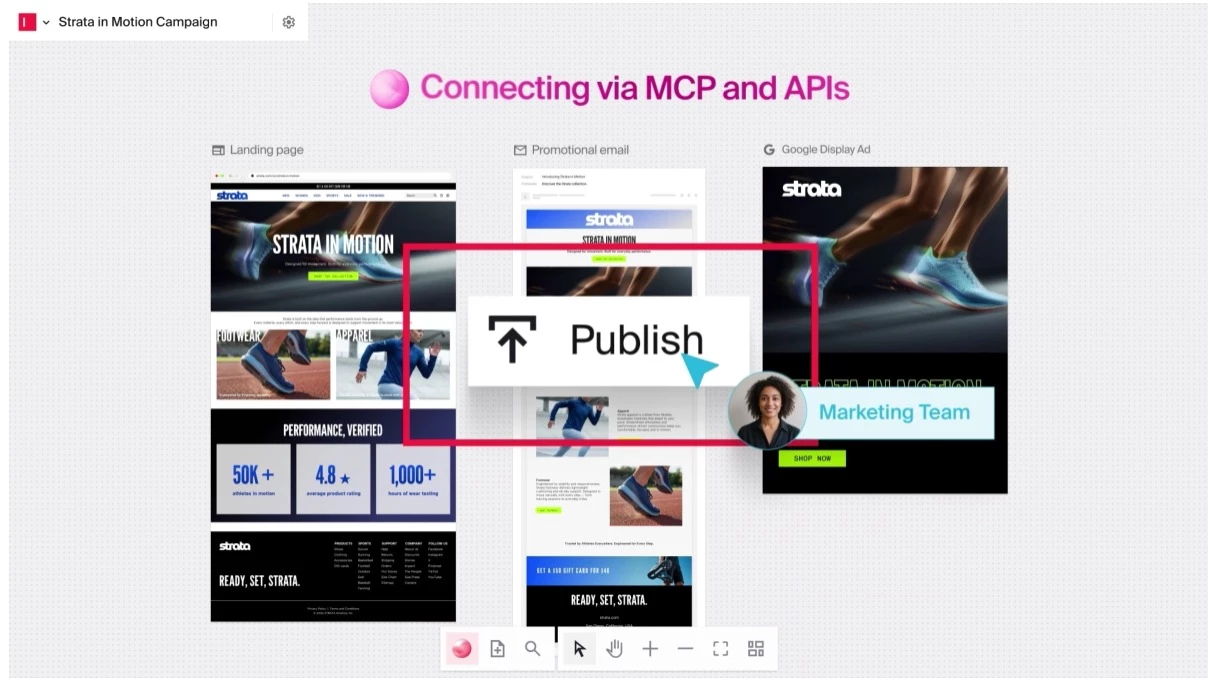
- Shared workspace for campaign planning, collaboration, reviews, approvals, and publishing
- Brand-aware content generation grounded in approved assets, guidelines, and audience context
Cons:
- Designed primarily for enterprise organizations, making it less ideal for smaller teams
- Implementation requires planning and onboarding to get the most value from the platform
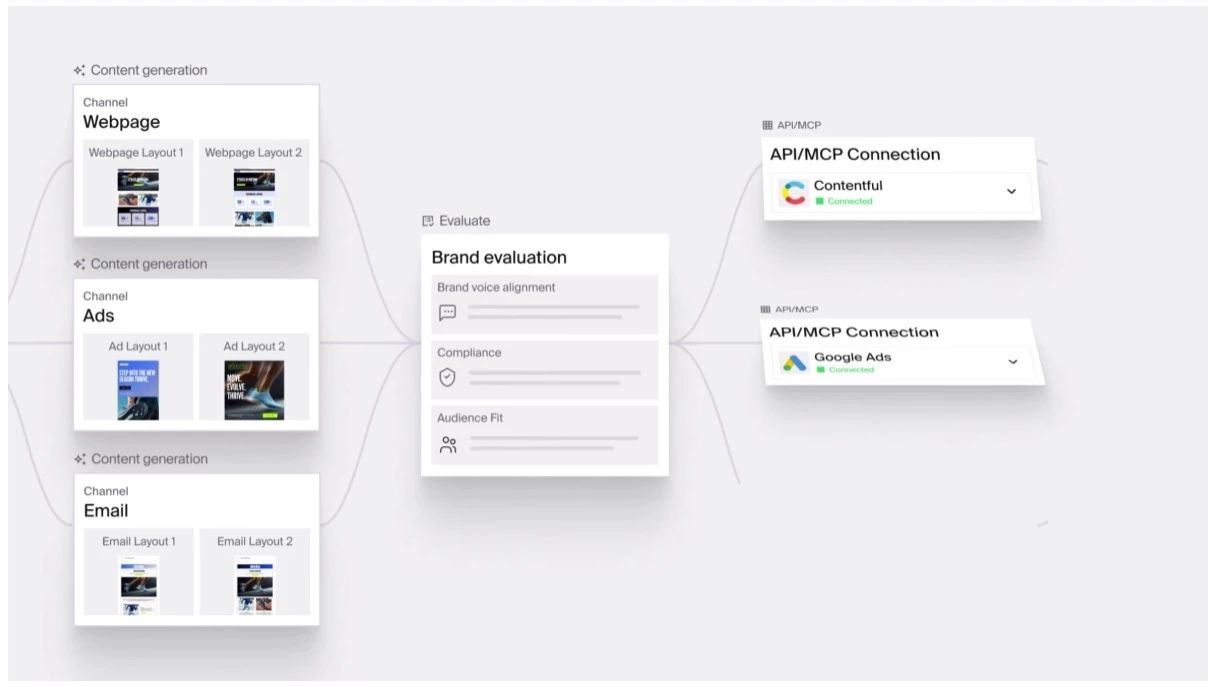
Brand consistency is built into every stage of the workflow.
You can create reusable AI agents, integrate existing marketing tools via APIs and MCP, and apply governance controls to scale content production without sacrificing quality or compliance.
Pricing
- Custom pricing (Contact sales)
What Users Say
Independent user feedback is limited. SourceForge lists one review from a brand manager, who reports difficulty generating content that matched the company’s brand voice, limited integrations, and a frustrating interface and support experience.
Other Notable Features
- Custom agent creation for reusable marketing workflows.
- Multiple foundation models for different content and creative tasks.
- Campaign performance feedback that informs future content recommendations.
- Enterprise connections through APIs, MCP, webhooks, and native integrations.
- Role-based access controls and audit logs for changes and approvals.
AI Sales, CRM & Lead Engagement
These are our picks for managing customer relationships, automating sales workflows, and using AI to engage prospects and customers throughout the buying journey.
1. Nutshell: Best for AI-Powered CRM & Lead Management
For teams that want to organize leads, automate follow-ups, and spend less time on CRM admin.
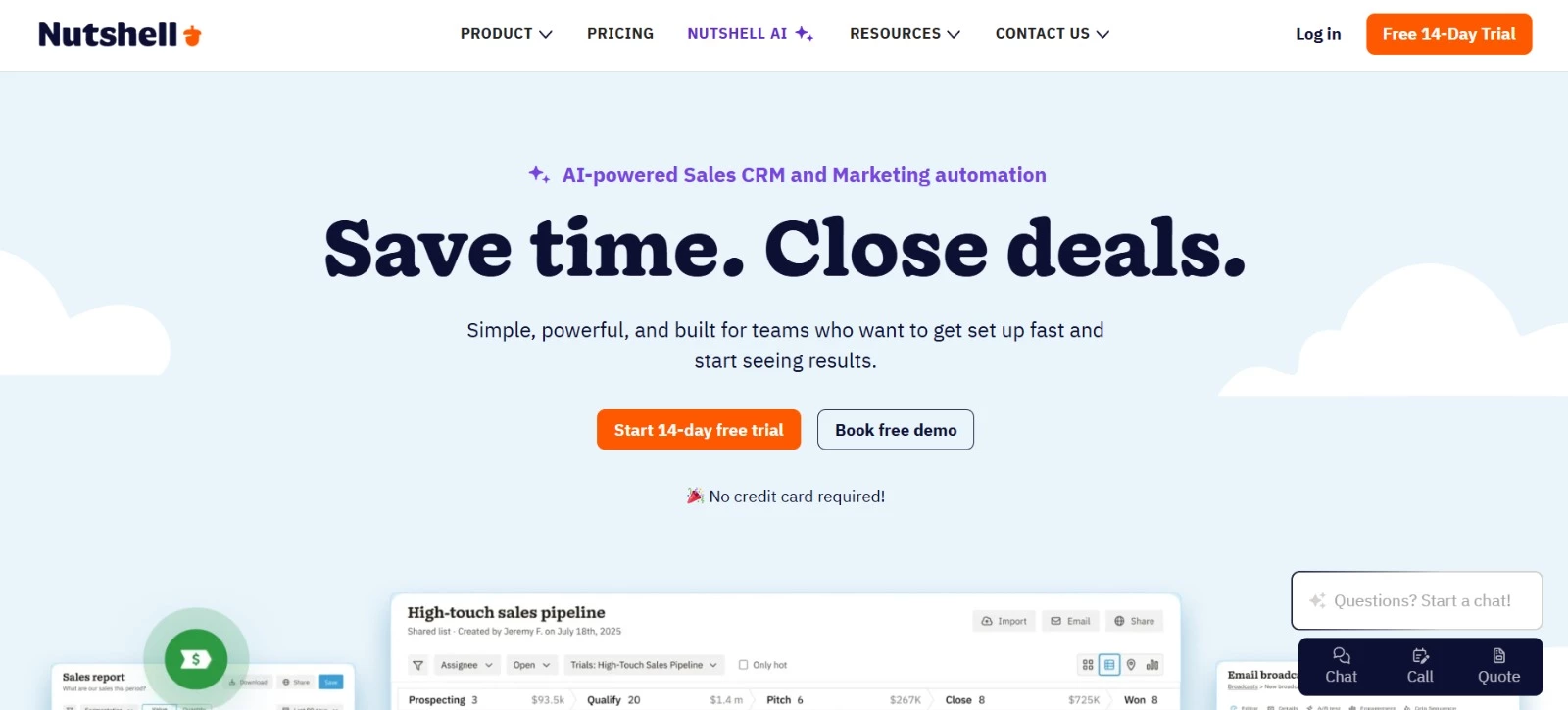
Nutshell combines CRM, email marketing, pipeline management, and AI features into a single platform. As we explored it, we appreciated how little setup was required before it started adding value.
Email sync, meeting notes, lead timelines, and automations all fit naturally into the sales workflow.
Pros:
- AI-generated meeting, call, and timeline summaries
- Sales automation with lead routing, follow-ups, and pipeline management
- Built-in email marketing, web forms, landing pages, and chatbot
Cons:
- Users say advanced enterprise customization is more limited than some larger CRM platforms
- Teams with highly specialized outbound sales workflows may need additional integrations
The AI features are designed to keep deals moving rather than replace sales reps.
Timeline summaries, meeting transcriptions, follow-up suggestions, and AI-generated emails reduce repetitive work, while visual pipelines make it easy to see what needs attention next.
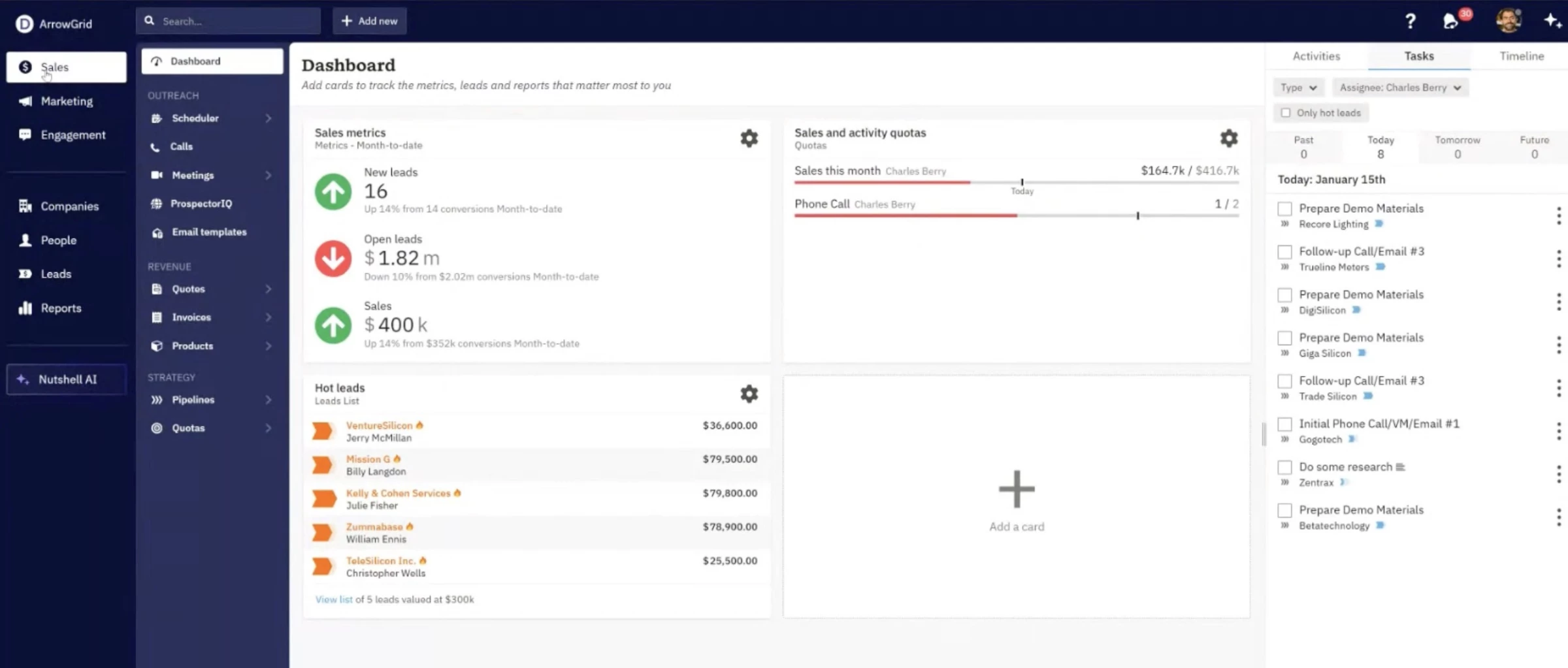
For growing sales teams, such a balance between automation and simplicity is what makes Nutshell stand out.
Pricing
- Foundation: $13/user/month (billed annually)
- Growth: $25/user/month
- Pro: $42/user/month
- Business: $59/user/month
- Enterprise: $79/user/month
Get started with Nutshell’s free 14-day trial – no credit card required.
What Users Say
Nutshell rates 4.4 out of 5 across 618 reviews on Capterra.
Ease of use is the dominant theme by a wide margin, with one reviewer describing full setup in under a day and no tutorials needed.
The AI Notetaker and automatic call logging draw specific praise as practical rather than decorative, and reviewers single out support as fast and reachable by a human.
Reporting is the most common gap. Reviewers want deeper, more flexible reports as their needs grow, and flag limits in the built-in web forms and tracking.
Capterra reviewers also report occasional bugs and performance hiccups, and several note that add-ons for email marketing, proposals, prospecting, and SMS are billed separately, so the real cost can run above the headline per-seat rate.
Other Notable Features
- Sales reporting and activity tracking to monitor team performance.
- Two-way email and calendar sync with Gmail and Outlook.
- Meeting scheduler with shareable booking links and round-robin scheduling on higher plans.
- Quotes, invoices, and contracts with document tracking and e-signatures.
- Contact enrichment and website visitor identification for discovering potential buyers.
2. Chatbase: Best for AI Customer Support Agents
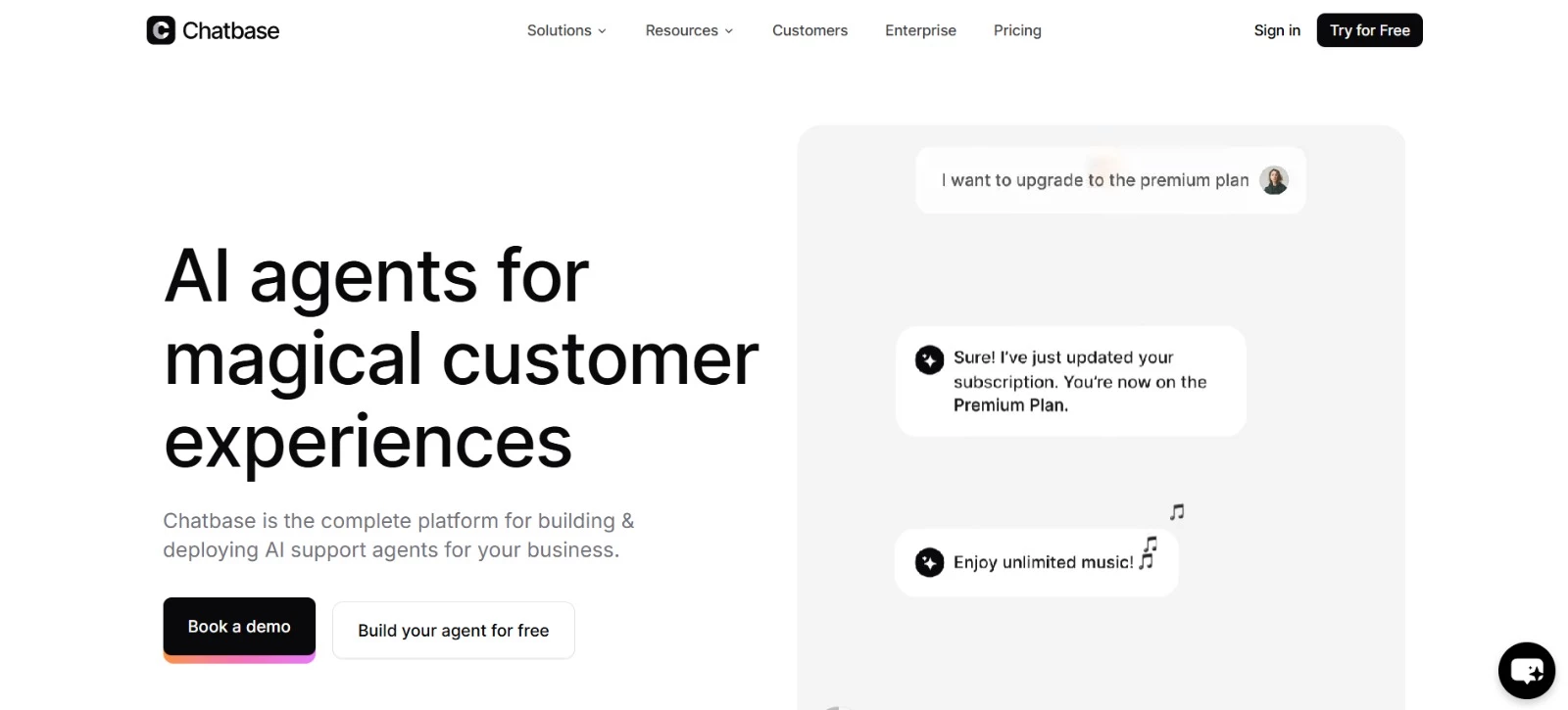
Chatbase focuses on helping companies build AI agents that do more than answer FAQs.
During our review, we found that they can connect to business systems, retrieve real-time information, update customer accounts, process common requests, and hand conversations to human agents whenever needed.
Pros:
- AI agents trained on company knowledge and connected to real-time business data
- Workflow automation for tasks such as subscription updates, refunds, bookings, and account management
- Omnichannel deployment across website chat, WhatsApp, Slack, Messenger, email, and more
Cons:
- Advanced features, higher message limits, and enterprise capabilities require higher-tier plans
- Some users would like more configuration options for certain chatbot behaviors and workflows
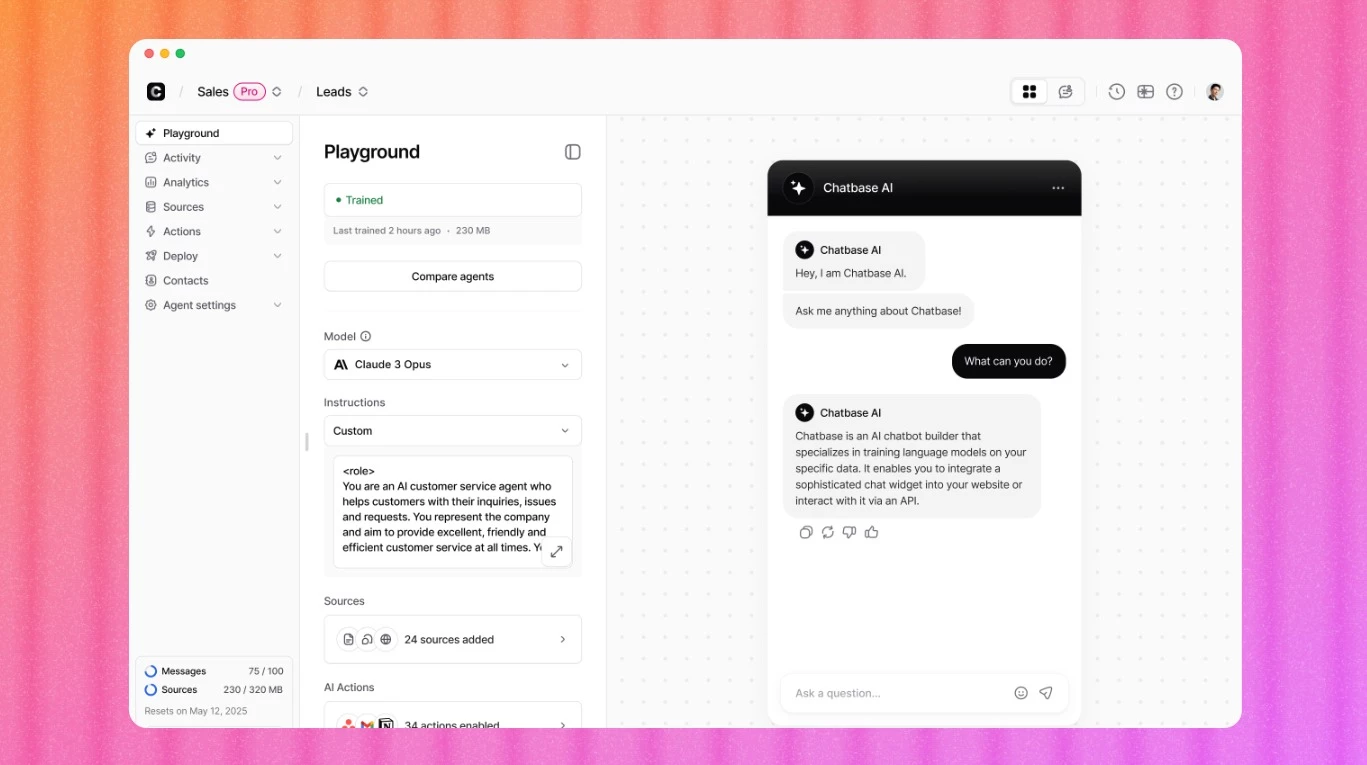
Another capability we liked is the level of control businesses have over the customer experience.
You can train agents on your own content, connect tools like Salesforce, Zendesk, Slack, Stripe, and WhatsApp, set guardrails for sensitive topics, and monitor conversations with detailed analytics. And you can do all this without building everything from scratch.
Pricing
- Free
- Hobby: $32/month (billed annually)
- Standard: $120/month
- Pro: $400/month
- Enterprise: Custom pricing
What Users Say
Trustpilot reviewers praise Chatbase’s quick setup, intuitive interface, and responsive support. One consultant managing agents for a retail client highlights easy customization and an API that supports automated quality tests, conversation syncing, and credit monitoring.
Feedback is less positive on billing transparency and troubleshooting. Reviewers report concerns about changing plan terms, add-ons, and cancellation charges.
Support experiences also vary: many describe quick, helpful responses, while one reports slow replies and extensive manual troubleshooting.
Other Notable Features
- Built-in helpdesk for human handoff and ticket management within the same conversation.
- Conversation analytics covering topics, sentiment, resolution rates, and escalations.
- Playground for testing different AI models and agent settings before deployment.
- Interactive widgets for presenting information beyond plain-text responses.
- SOC 2 Type II auditing, data encryption, and verified user variables for secure access to customer data.
AI SEO & AEO Tools
Search is changing quickly, and marketers now have to optimize for more than Google's results page.
These tools help with traditional SEO and improve the chances of being cited by AI search engines and assistants.
They make it easier to create pages that people and AI systems can find, understand, and reference.
1. Perplexity AI: Best for AI Search & Research
For marketers, researchers, and business teams that need reliable, source-backed information for research, competitive analysis, and decision-making.
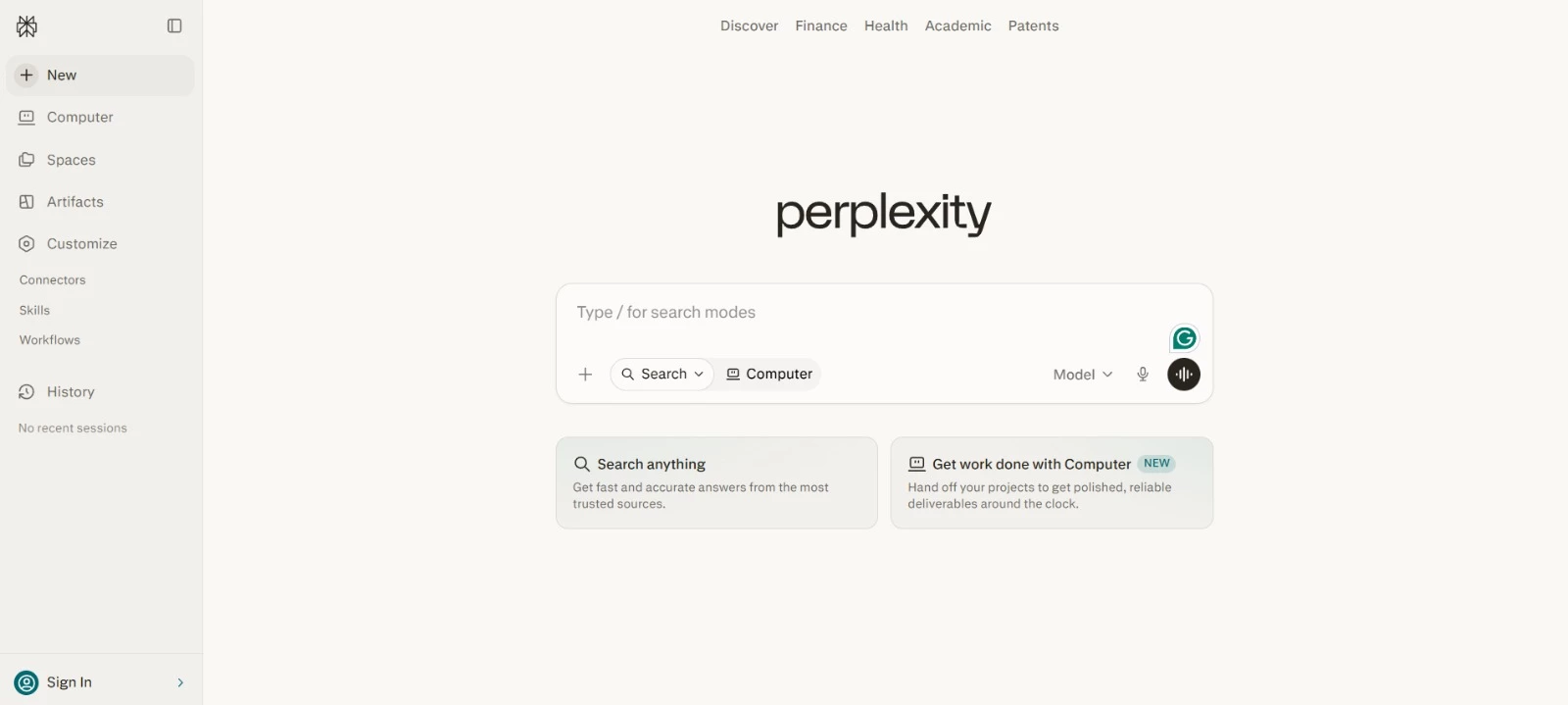
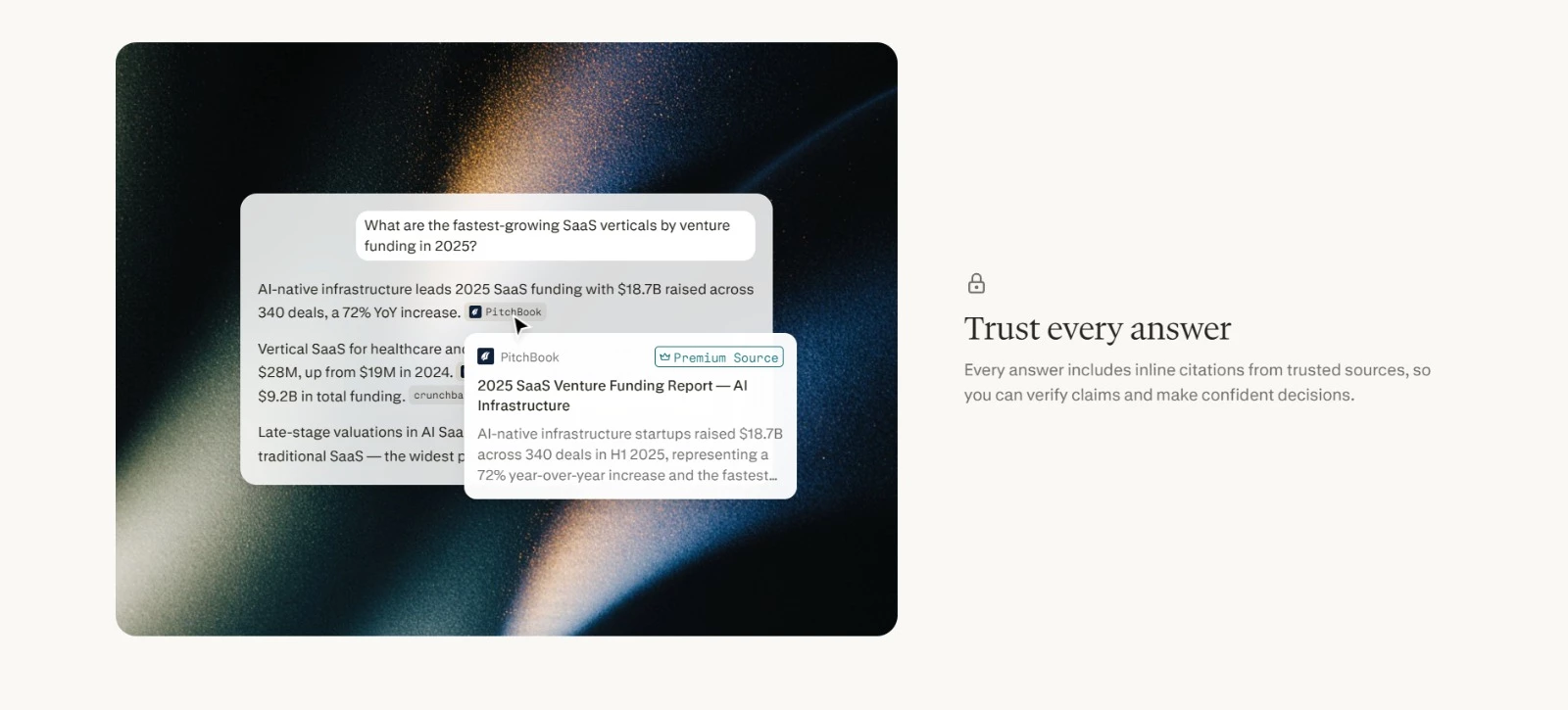
Perplexity is built to research topics using current web data and verified sources. Every response contains inline citations, making it easy to trace information back to the source publication without leaving the conversation.
Pros:
- AI search with real-time web results and inline citations
- Deep Research for multi-step reports and analysis
- Access to GPT-5.2, Claude Sonnet 4.6, Gemini 3.1 Pro Thinking, Sonar 2, and other leading AI models
Cons:
- Advanced research, premium AI models, and higher usage limits are reserved for Pro and Max plans
- Some users would like more predictable credit usage for intensive research sessions and agent-based workflows
We used it to compare software, verify statistics, research competitors, and explore unfamiliar industries.
Access to multiple AI models, Deep Research, document analysis, and Computer makes it useful for quick questions and more involved research projects.
Pricing
- Free
- Pro: $17/month (billed annually)
- Max: $167/month (billed annually
What Users Say
Perplexity holds 4.2 out of 5 across 35 reviews on Capterra. Reviewers value its quick answers, accessible interface, and linked sources, describing it as useful for researching technical topics and combining information into concise explanations.
Criticism centers on inconsistent answers and customer support.
Some users report hallucinations or responses that need further source checking, while others describe subscription-access problems and long waits for help. One reviewer also wants better organization for saved conversations and search history.
Other Notable Features
- File uploads for analyzing PDFs, spreadsheets, and other documents.
- Projects for organizing shared files, instructions, conversations, and ongoing research.
- Computer for completing multi-step research, analysis, coding, and content creation tasks.
- Connectors for working with information from tools such as Google Drive, Slack, and Notion.
- Reusable Skills and scheduled automations for recurring research and reporting workflows.



2. Ahrefs’ AI Content Helper: Best for SEO & AI Visibility Optimization
For marketers who want to improve search rankings while increasing their visibility in AI-generated answers.
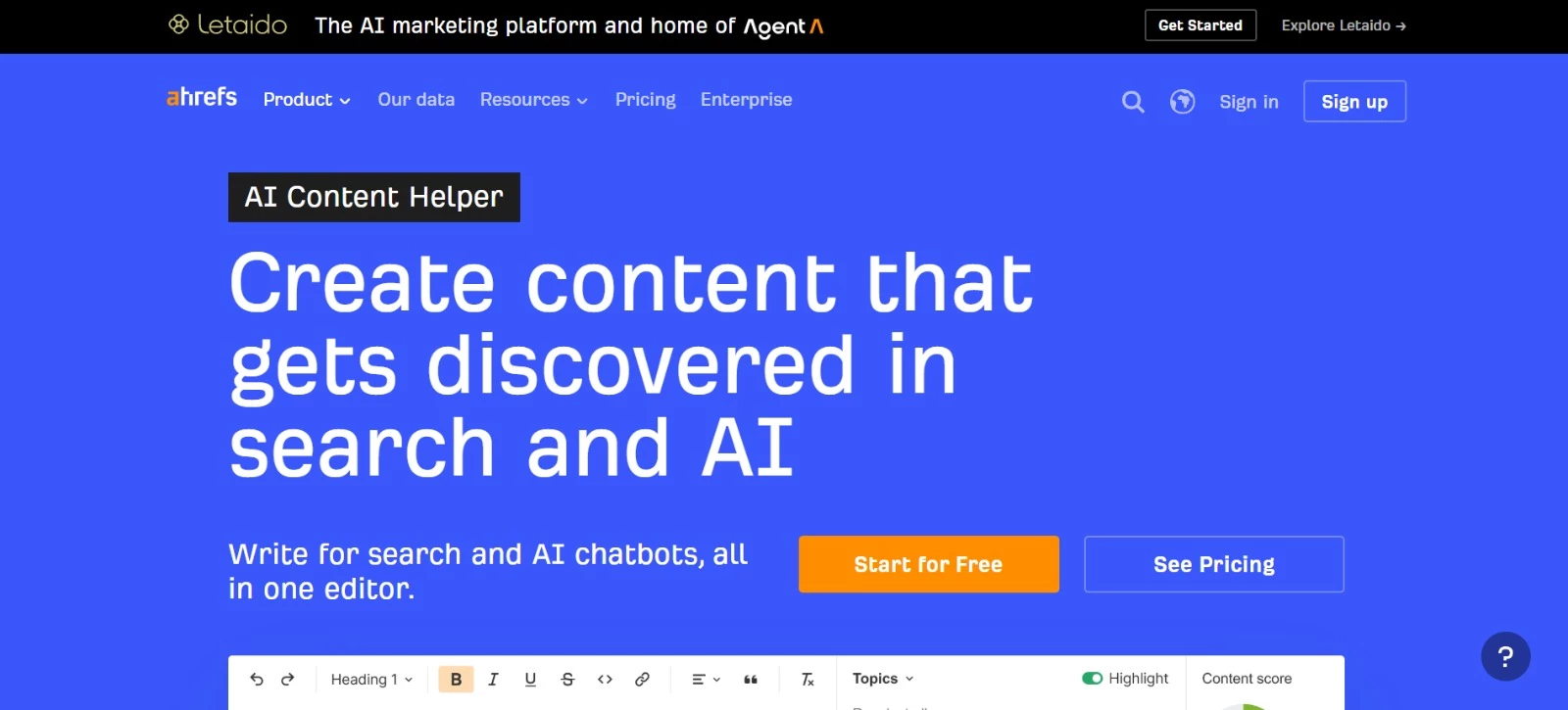
Ahrefs has grown into more than a traditional SEO platform. Now, it includes the AI Content Helper to optimize pages that perform well in search results and are more likely to be cited by AI assistants.
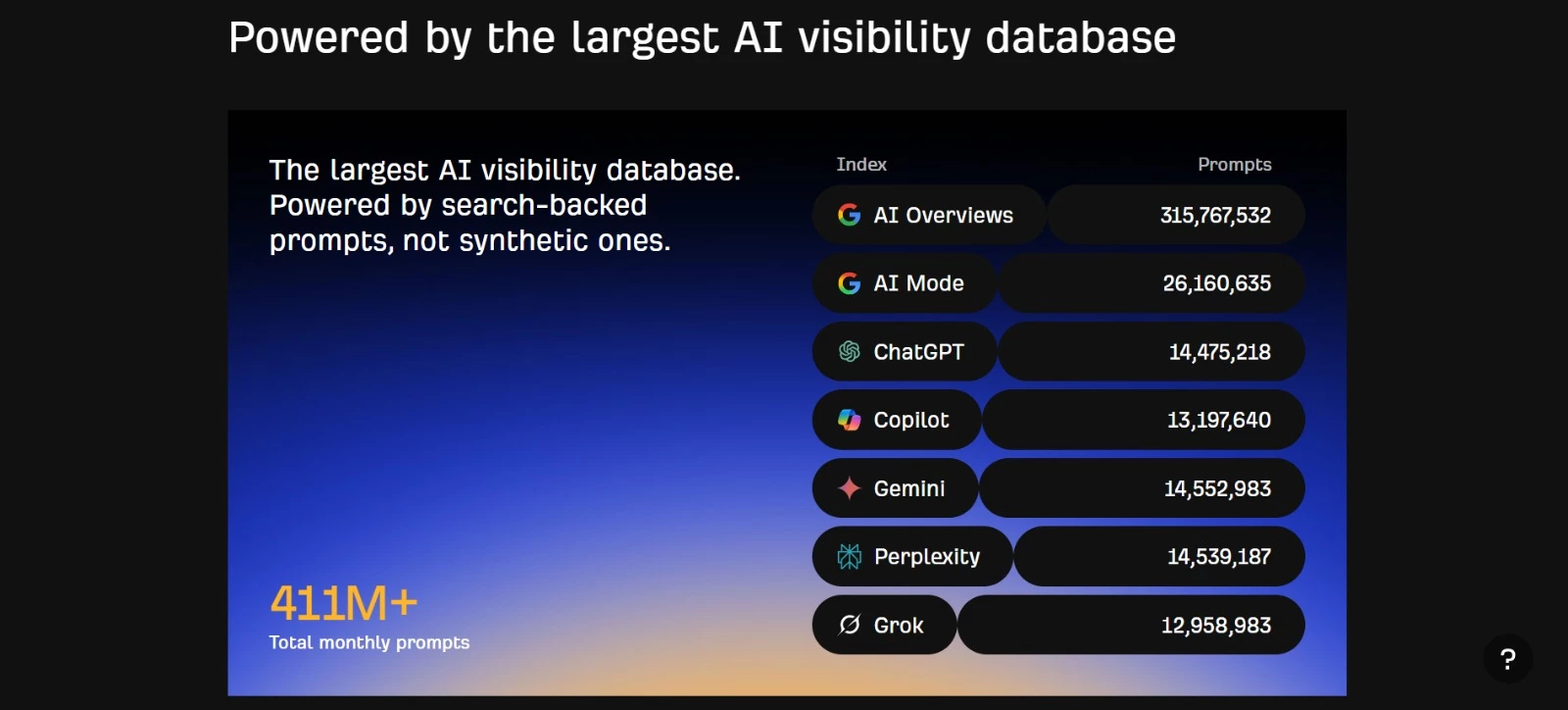
It also offers a free AI Visibility Checker that shows how often your brand appears in ChatGPT, Google AI Overviews, Gemini, Perplexity, Copilot, and other AI search experiences.
Pros:
- AI Content Helper with topic coverage, content scoring, and optimization recommendations
- Free AI Visibility Checker for tracking brand mentions in ChatGPT, Google AI Overviews, Gemini, Perplexity, Copilot, and more
- Keyword research, backlink analysis, site audits, rank tracking, and competitor research
Cons:
- AI Content Helper is designed primarily for optimizing existing content and not generating long-form articles from scratch
- Businesses that only need AI content optimization may find more specialized tools at a lower price point
Its recommendations are based on what's already ranking, which makes the optimization process much more focused.
The editor reviews top-ranking pages, identifies topical gaps, suggests related terms, and scores your draft as you write.
It also helps refine titles, headings, and meta descriptions before you publish, so it’s easier to improve organic performance.
Pricing
- From $99/mo
- AI Visibility Checker: Free
What Users Say
Users consistently praise Ahrefs for the depth of its SEO data, especially backlink analysis, keyword research, competitor research, and content planning.
It's the dataset reviewers trust when a decision has budget attached.
Cost is the main drawback. Several reviewers say Ahrefs feels expensive for smaller teams, particularly once usage limits, credits, and lower-plan restrictions come into play.
The AI-answer tracking in Brand Radar is also a separate purchase on top of a base subscription, which surprises buyers who expect it bundled.
Other Notable Features
- AI search-intent grouping and keyword translation for multilingual research.
- AI Content Helper for content scoring and identifying topic gaps against competing pages.
- Site Audit for detecting technical and on-page SEO issues.
- Rank Tracker for monitoring Google rankings across locations, desktop, and mobile.
- Brand Radar for tracking AI brand mentions, competitor visibility, and content opportunities.
AI Content Marketing & Optimization Tools
These tools cover every stage of the content marketing process, with AI built into planning, writing, optimization, publishing, and performance tracking.
1. StoryChief: Best for AI Content Operations & Multi-Channel Publishing
For marketing teams and agencies that want to plan, create, optimize, publish, and measure content from one workspace.
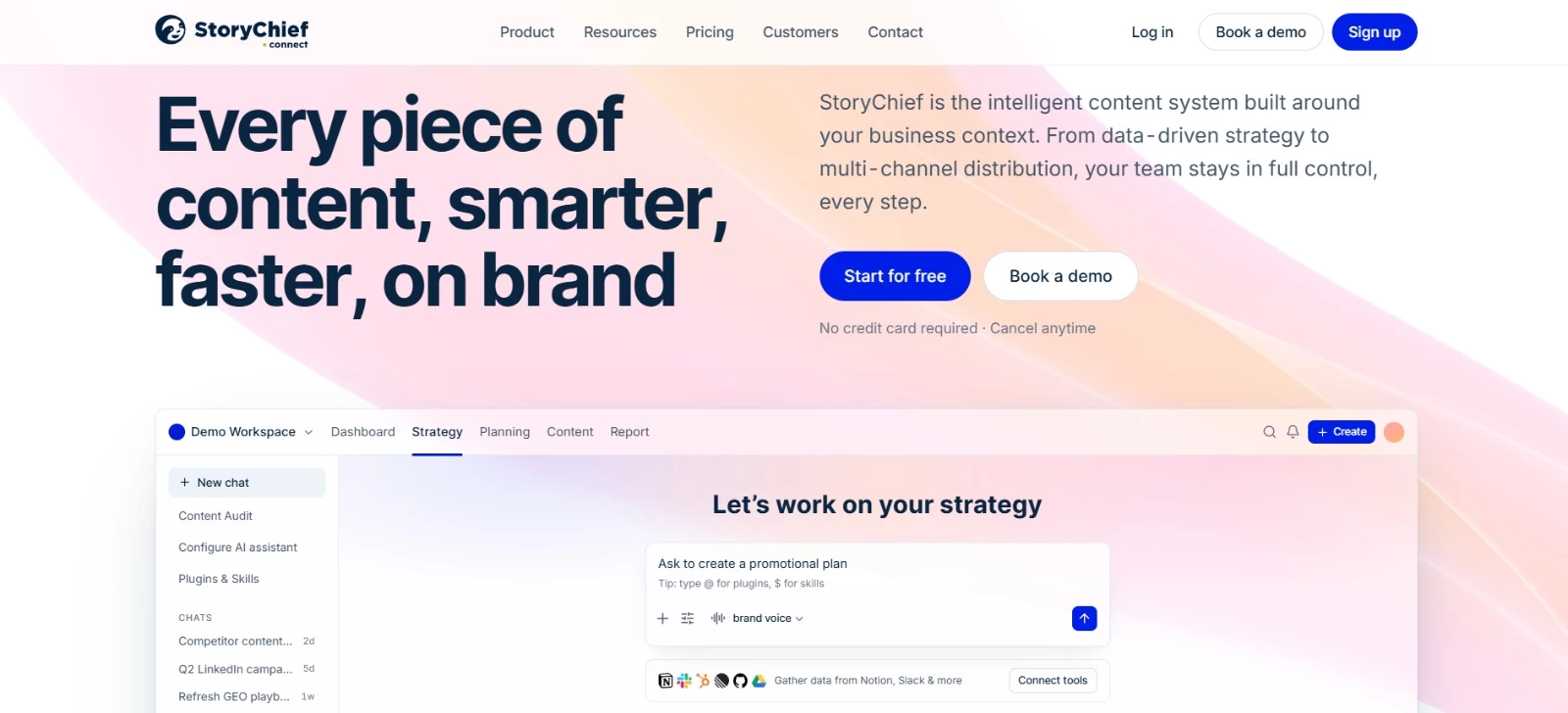
StoryChief is designed to keep the entire content workflow in one place. Strategy, briefs, writing, approvals, publishing, and reporting all happen inside the same platform, with AI helping throughout the process.
Pros:
- AI-powered content planning, briefs, drafting, and repurposing
- SEO, GEO, and AEO publishing workflow with optimization recommendations
- Multi-channel publishing to websites, social media, newsletters, and CMS platforms
Cons:
- The feature set is extensive, so new users may need time to get comfortable with the workflow
- Advanced reporting, SEO capabilities, and higher AI credit limits require Team Editorial or Enterprise plans
What caught our attention is how much manual coordination it removes.
The platform can turn CRM data, customer feedback, SEO insights, and competitor research into content ideas, generate structured briefs, draft articles, repurpose approved content for different channels, and track performance after publication.
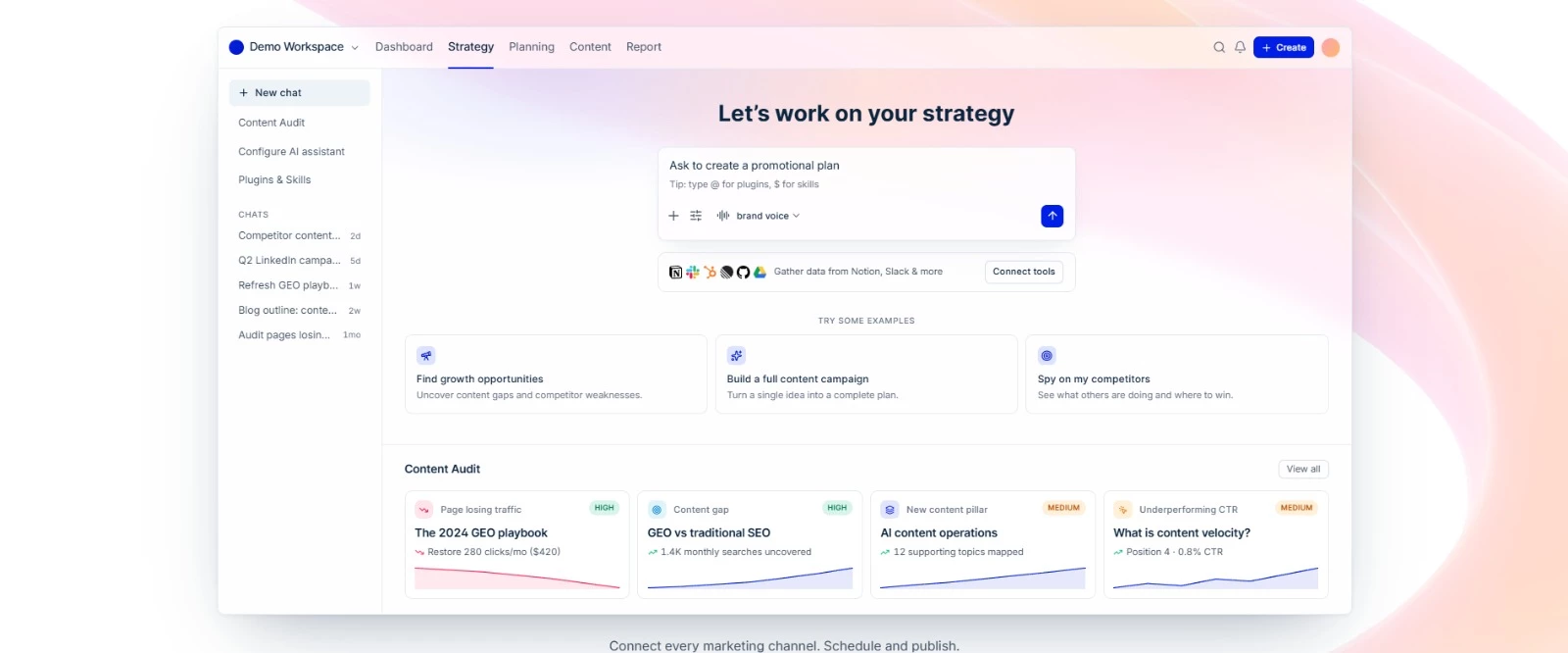
It also supports SEO, GEO, and AEO workflows, making it easier to create content that's ready for traditional search engines and AI-powered search experiences alike.
Pricing
- Free
- Team Social: $34/user/month (billed annually)
- Team Editorial: $81/user/month (billed annually)
- Enterprise: Custom pricing
What Users Say
StoryChief holds 4.7 out of 5 across 129 reviews on Capterra. Reviewers praise its shared editing environment, SEO and readability feedback, and publishing integrations.
Agency users particularly value inviting clients to comment and approve content without exchanging files or maintaining separate email threads.
Drawbacks include a learning curve, occasional editing bugs, and restrictions on entry-level plans. One reviewer reports weaker SEO assistance for Korean and Mandarin content.
Several detailed reviews predate the current platform, so buyers should verify these limitations during a trial.
Other Notable Features
- Editorial calendar with assignments, deadlines, and filtered views.
- Client approval flows, external preview links, and restorable version history.
- Multichannel publishing and social scheduling with UTM tracking.
- Performance reports for individual articles, social posts, and publishing channels.
- Google Search Console integration for identifying declining traffic and content gaps.
2. Jasper AI: Best for AI-Powered Writing & Brand Consistency
For marketing teams, agencies, and enterprises that need on-brand content for campaigns, SEO, GEO, and multi-channel marketing.
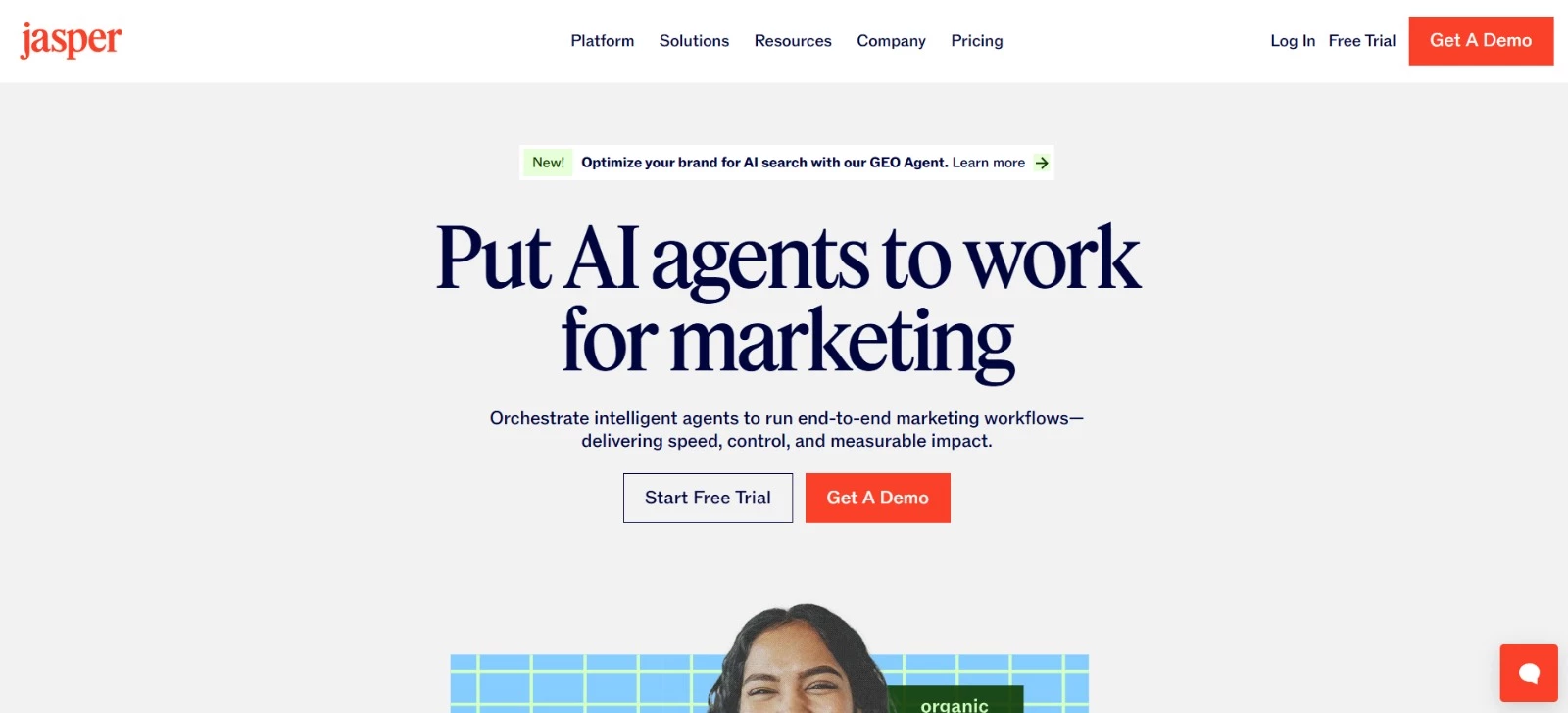
Jasper has evolved from a standalone AI writer into a marketing platform. It helps teams research topics, generate briefs, draft content, optimize for SEO and GEO, repurpose assets, and keep everything aligned with brand guidelines.
Pros:
- AI Agents for SEO, GEO, research, personalization, and campaign creation
- Jasper IQ with Brand Voice, Style Guides, Audiences, and company knowledge
- Content Pipelines for briefs, drafting, and content repurposing
Cons:
- The subscription cost is higher than that of many AI writing tools, especially for smaller teams
- AI-generated drafts can still be repetitive or require fact-checking before publication
- What impressed us most was how much context Jasper carries into every draft.
With Jasper IQ, teams can store brand voices, style guides, audiences, and company knowledge, while Content Pipelines and purpose-built AI Agents help produce articles, emails, landing pages, social posts, and campaign assets with far less manual work.
It also includes dedicated agents for SEO, GEO, personalization, research, translations, and campaign creation, which can be useful for marketing teams producing large volumes of content.
Pricing
- Pro: $59/user/month (billed annually)
- Business: Custom pricing
- 7-day free trial
What Users Say
Users like Jasper for speeding up content production, reducing writer's block, and keeping marketing content consistent across blogs, emails, ads, and social posts.
Teams publishing at volume are the ones who report the clearest return.
Its main drawbacks are pricing and the need for human editing, especially for fact-heavy, nuanced, or highly creative content.
Per-seat billing also adds up for larger teams, and Jasper does not track AI visibility at any tier, so most teams pair it with a separate tracker.
Other Notable Features
- Canvas workspace for organizing campaign assets, editing together, and leaving comments.
- Jasper IQ for applying brand voice, company knowledge, and audience context across content.
- Custom Style Guides for enforcing terminology, punctuation, and formatting rules on Business plans.
- Chrome and Edge extension for AI writing assistance within other web applications.
- No-code agent builder, API access, and integrations for custom marketing workflows.
AI Advertising, PPC & Conversion Optimization
These tools cover two essential parts of paid advertising:
1. Optmyzr: Best for AI-Powered PPC Optimization
For agencies and marketing teams managing large advertising budgets.
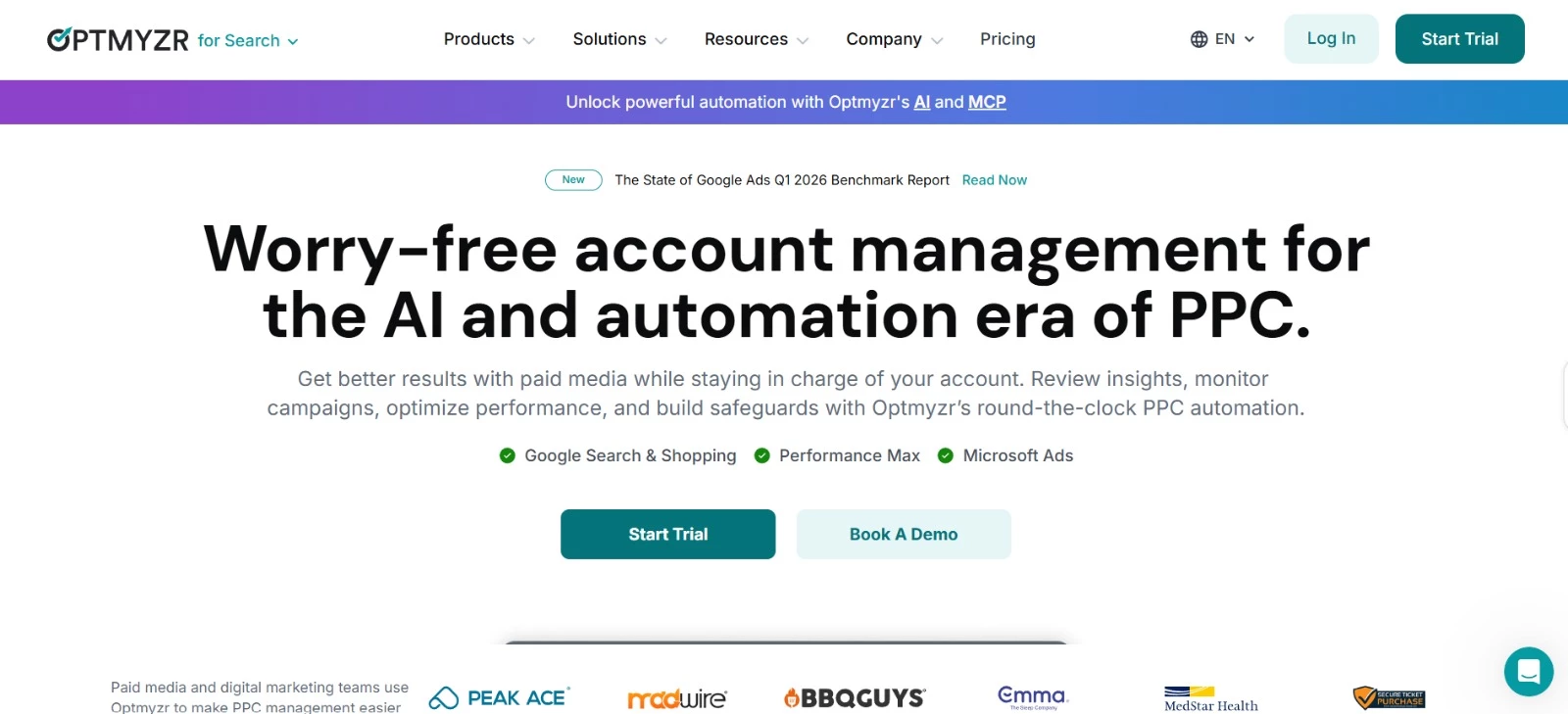
Optmyzr has a clear audience: teams managing enough PPC campaigns for optimization to become a daily maintenance job.
Budget changes, bid adjustments, search term reviews, reporting, account audits, Performance Max monitoring, and feed management can all be automated, leaving marketers with more time to focus on campaign strategy.
Pros:
- AI-powered bid optimization, budget management, and campaign recommendations
- Automated PPC audits, reporting, alerts, and customizable rule engine
- Cross-platform management for Google Ads, Microsoft Ads, Amazon Ads, and Meta
Cons:
- The platform is built for campaign management, so you'll likely need a separate tool for generating creatives and copy
- The monthly subscription may be difficult to justify for freelancers or businesses managing only a handful of campaigns
The platform gives users a surprising amount of control over that automation. AI recommendations are only one part of the experience.
Custom rules, scheduled reports, benchmarking, account health monitoring, cross-platform dashboards, and MCP integration for ChatGPT and Claude make it easy to adapt Optmyzr to different clients, account structures, and internal processes.
Pricing
- Essentials: $209/month (up to 25 accounts)
- Premium: $272/month (unlimited ad accounts)
- Enterprise: Custom pricing
What Users Say
Optmyzr holds 4.7 out of 5 across 184 reviews on Software Advice. Reviewers praise its automation, account audits, and reporting for reducing routine PPC work.
Managing multiple accounts in one place and responsive customer support also draw positive feedback.
Some reviewers find the platform expensive, while others say its extensive tools feel overwhelming initially.
Understanding how reports and optimization features work together takes time, even for users who find the automation valuable.
Other Notable Features
- Shopping and Performance Max campaign management with automatic merchant-feed synchronization.
- Budget pacing, spend projections, and alerts for accounts at risk of overspending or underspending.
- White-label reports and shareable dashboards with scheduled delivery and AI-generated performance summaries.
- Sidekick AI assistant for analyzing performance, explaining account changes, and creating optimization strategies.
- MCP integration with ChatGPT and Claude for retrieving PPC data and generating or executing Rule Engine strategies.
2. AdCreative.ai: Best for AI Ad Creative Generation
For marketers, agencies, and eCommerce brands that need to produce and test large numbers of advertising creatives.
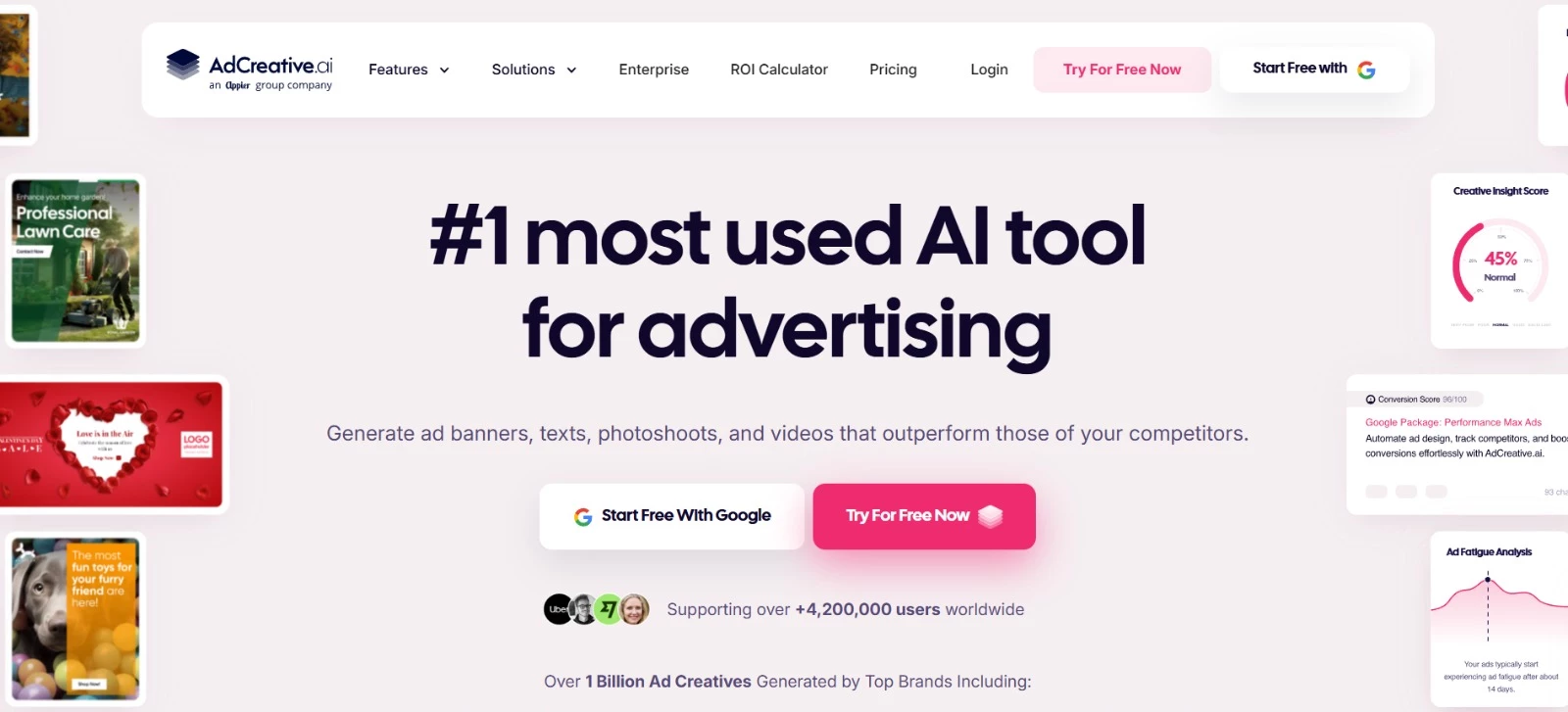
Launching effective campaigns often comes down to testing enough variations to find what resonates.
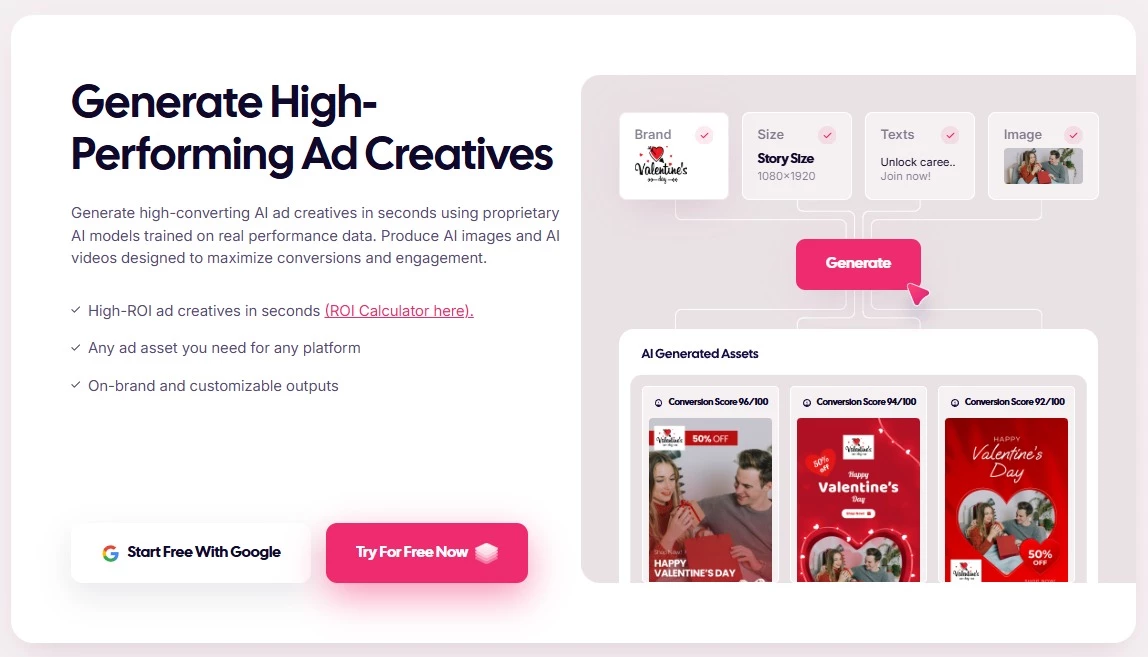
AdCreative.ai speeds up that process with AI-generated ad designs, copy, product photos, videos, and creative scoring, so that you can prepare dozens of campaign assets in a fraction of the usual time.
Pros:
- AI-generated display ads, social creatives, product photos, and ad copy
- Creative Scoring and Creative Insights for performance prediction
- Competitor Insights and Compliance Checker
Cons:
- AI-generated creatives may still require manual refinement to align with a brand's visual identity
The platform places as much emphasis on evaluating creatives as on producing them.
Predictive scoring, competitor research, compliance checks, buyer personas, and Creative Insights provide extra context when selecting which ads to launch.
Pricing
- Starter: $20/month
- Professional: $125/month
- Ultimate: $500/month
- Enterprise: Custom pricing
What Users Say
Trustpilot reviewers frequently praise AdCreative.ai’s support team for answering questions, guiding them through the platform, and resolving account issues.
Positive feedback includes help with ad creation and quick responses to cancellation or subscription requests.
Billing attracts the strongest criticism. Several reviewers report unexpected charges after trials or renewals and long waits for promised refunds.
Other Notable Features
- AI-generated product videos, fashion clips, and UGC-style videos from uploaded images.
- Custom templates for generating creative variations across different ad sizes and formats.
- AI-generated buyer personas based on website data, including audience demographics, behaviors, and interests.
- Creative Utility Suite for background removal, image enhancement, and upscaling.
- Instant Ads for generating ad creatives directly from a webpage URL.
AI Email Marketing & Lifecycle Automation
AI is changing how marketers build email campaigns, replacing repetitive manual work with smarter segmentation, personalized messaging, and automated customer journeys.
Here are the tools that make that possible:
1. MailChimp AI: Best for AI Email Marketing & Campaign Automation
For small businesses, marketers, and growing teams that want to automate customer communication without adding unnecessary complexity.
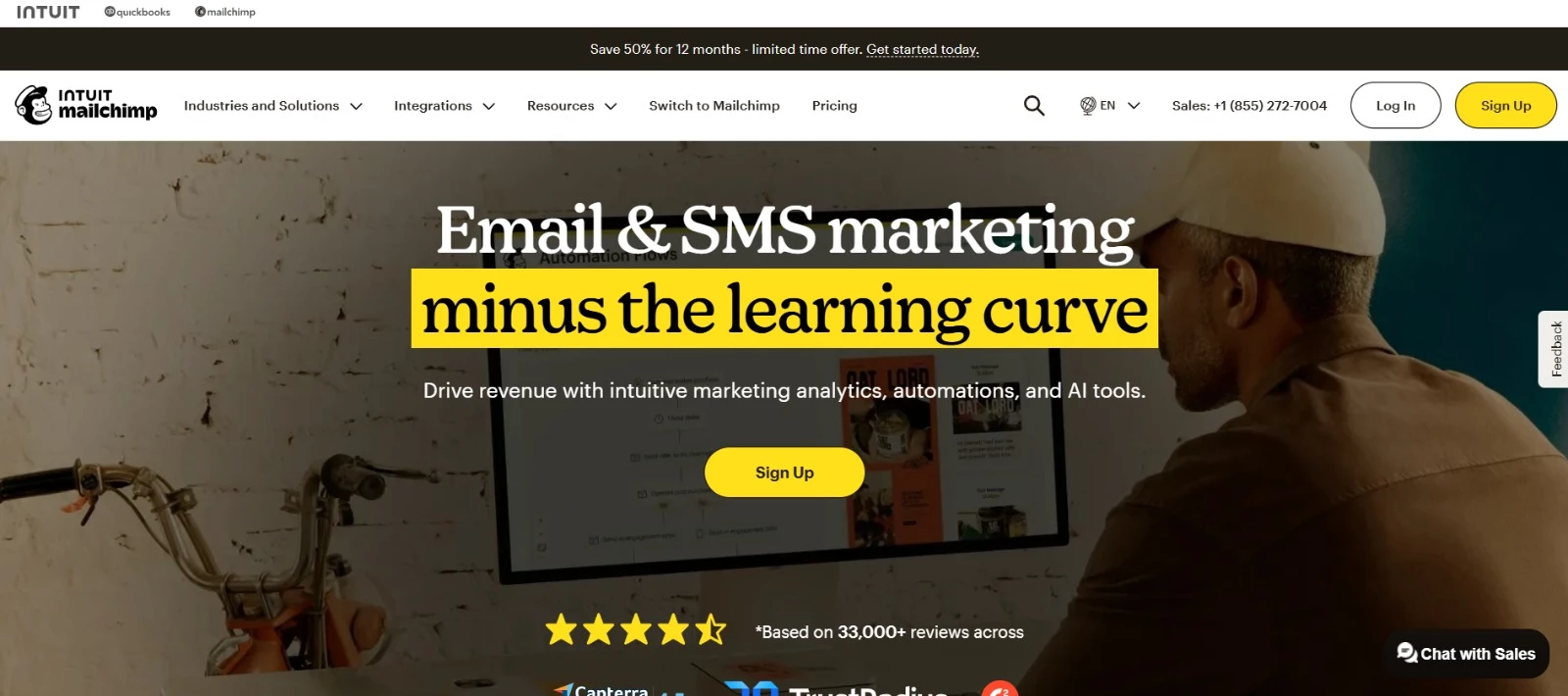
Mailchimp makes email marketing approachable while still offering enough automation to support growing businesses.
AI now plays a larger role across the platform, assisting with email copy, subject lines, audience segmentation, send-time optimization, product recommendations, and customer journeys.
Pros:
- AI-generated email copy, subject lines, and content suggestions
- Customer Journey Builder with pre-built automation flows
- Predictive segmentation, send-time optimization, and product recommendations
Cons:
- Generative AI features aren't available on the Essentials plan, and more advanced automation and reporting capabilities require Standard or Premium
Rather than expecting users to build every workflow from scratch, Mailchimp provides ready-made automation for common marketing scenarios.
Welcome emails, abandoned cart reminders, post-purchase follow-ups, and re-engagement campaigns can be launched quickly, and predictive analytics can identify subscribers most likely to purchase, engage, or churn.
Combined with A/B testing and hundreds of integrations, the platform offers plenty of room to expand as email programs become more sophisticated.
Pricing
- Essentials: $13/month
- Standard: $20/month
- Premium: $350/month
What Users Say
Reviewers on Capterra point to the drag-and-drop editor, the template library, and how fast a non-specialist can send a competent campaign. The ready-made automations and free tier keep small businesses on the platform.
Two complaints dominate. Billing counts contacts rather than sends, so reviewers report paying for unsubscribed and inactive contacts unless they prune lists by hand.
The second is that standard-seeming features, including generative AI and the deeper automation and reporting, sit above the entry plan, so the advertised price rarely reflects what a growing list costs.
Other Notable Features
- A/B testing for subject lines, content, and send times, plus multivariate testing on Standard plans and above.
- Predictive segmentation and behavioral targeting based on customer engagement and purchase history.
- Send time optimization that recommends delivery windows based on historical engagement patterns.
- Landing pages and customizable signup forms for collecting contacts and promoting products.
- Integrations that sync customer data and events from external tools to personalize campaigns.
2. Customer.io: Best for AI-Powered Customer Lifecycle Automation
For SaaS companies, product teams, and businesses that rely on behavioral data to personalize customer journeys across multiple channels.
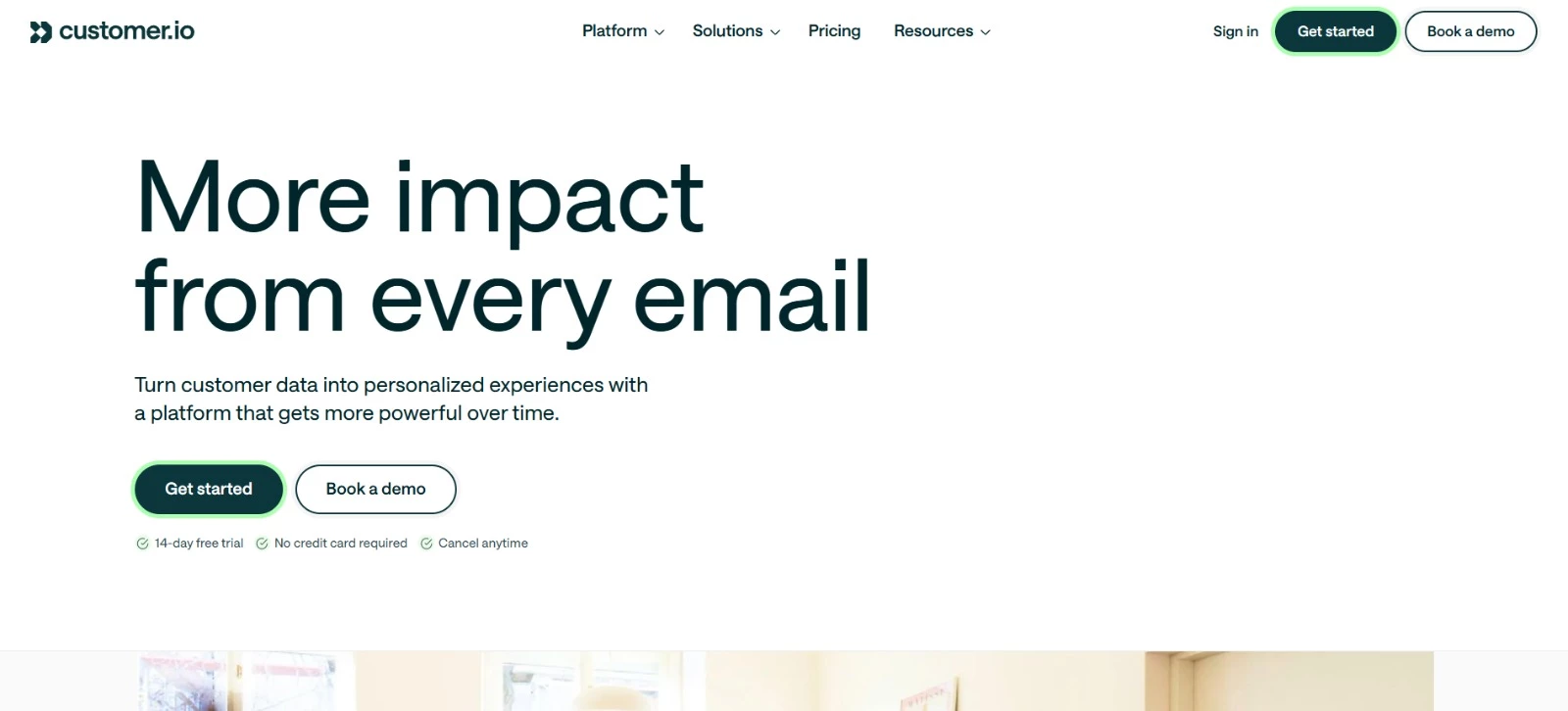
Customer.io treats email as one part of a much larger customer engagement platform.
Every message, workflow, and audience is built around first-party data, allowing campaigns to respond to customer behavior in real time rather than following fixed schedules.
Pros:
- AI Agent with LLM actions, content suggestions, and workflow assistance
- Visual customer journey builder with real-time behavioral automation
- AI-powered segmentation, personalization, and audience recommendations
Cons:
- Pricing is higher than traditional email marketing platforms
- Teams without an existing customer data strategy may not fully leverage the platform's personalization and automation capabilities
Its newer AI capabilities are woven into the platform instead of existing as standalone writing tools.
AI can suggest content, generate translations, build reusable design styles, recommend audience segments, assist with personalization, and support journey creation through LLM-powered actions and the platform's AI Agent.
Combined with visual workflow automation, cross-channel messaging, and extensive data integrations, Customer.io is well suited to teams managing complex customer lifecycles.

Pricing
- Essentials: Starts at $100/month
- Premium: Starts at $1,000/month
- Enterprise: Custom pricing
What Users Say
Reviewers praise its behavioral targeting, visual workflows, and flexibility across email, SMS, push, and in-app messaging. Several also highlight the API, webhooks, and ease of connecting the platform to their own applications.
Some users find campaign configuration, message searches, and template editing unintuitive. Others say contact-based billing becomes expensive as their audience grows, including when profiles remain inactive.
Support feedback varies, with some praising quick assistance and others wanting better service for smaller teams.
Other Notable Features
- Multichannel automations and transactional messages for password resets, order receipts, and other customer updates.
- Liquid personalization for dynamically adapting message content to customer attributes and event data.
- A/B testing, random cohort branches, and conversion goals for evaluating campaign performance.
- Design Studio with reusable email components, collaborative reviews, approvals, and accessibility checks.
- Data warehouse sync, reverse ETL, and ad audience synchronization for activating customer data across tools.
AI Branding, Design & Visual Identity
The AI tools below help create visual identities faster, pairing design generation with brand assets, guidelines, and marketing materials that stay consistent across channels.
1. Fiverr Logo Maker: Best for AI Logo Creation
For startups, entrepreneurs, and small businesses looking for a professional logo without hiring a designer.

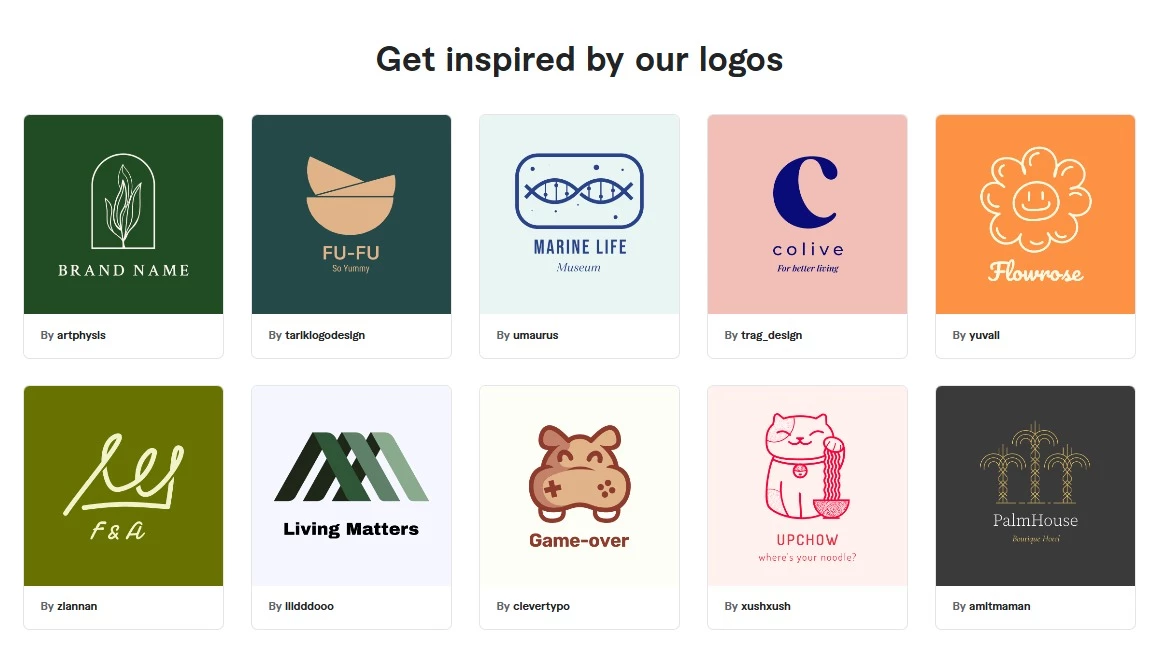
Fiverr Logo Maker combines AI-generated concepts with a library of professionally designed templates.
Pros:
- AI-generated logo concepts based on industry, style, and brand preferences
- Logo customization with editable fonts, colors, icons, and layouts
- Brand guidelines and commercial usage rights
Cons:
- Essential and Professional plans include limited revisions, with unlimited edits reserved for the top tier
- Designs are template-based, so brands looking for a highly distinctive visual identity may eventually outgrow the platform
After you answer a few questions about your business, industry, and preferred visual style, the platform generates multiple logo directions that you can customize before purchase.
The editing experience keeps things simple without feeling restrictive. Fonts, colors, layouts, icons, and spacing can all be adjusted, and every purchase includes commercial rights together with assets sized for websites, social media, presentations, and print.
Higher-tier plans also unlock editable vector files, brand guidelines, and additional revisions for businesses planning to evolve their identity over time.
Pricing
- Essential: $30 (one-time)
- Professional: $60 (one-time)
- Unlimited: $90 (one-time)
What Users Say
Reviewers name speed, the breadth of starting options, and designs that come from professional designers rather than being generated from nothing.
Several describe going in to hire a freelancer and buying the self-serve logo instead.
Other Notable Features
- High-resolution PNG downloads with transparent-background and grayscale versions across all packages.
- Editable SVG vector files and website favicons in Professional and Unlimited packages.
- Social media kits with logo assets sized for profile pictures and banners on major platforms.
- PDF brand guidelines covering logo colors, typography, and visual assets in Professional and Unlimited packages.
- Post-purchase editing with one additional variation on Professional or unlimited revisions on Unlimited.
2. uBrand: Best for AI Brand Identity Creation
For entrepreneurs, agencies, and marketing teams building a complete brand.
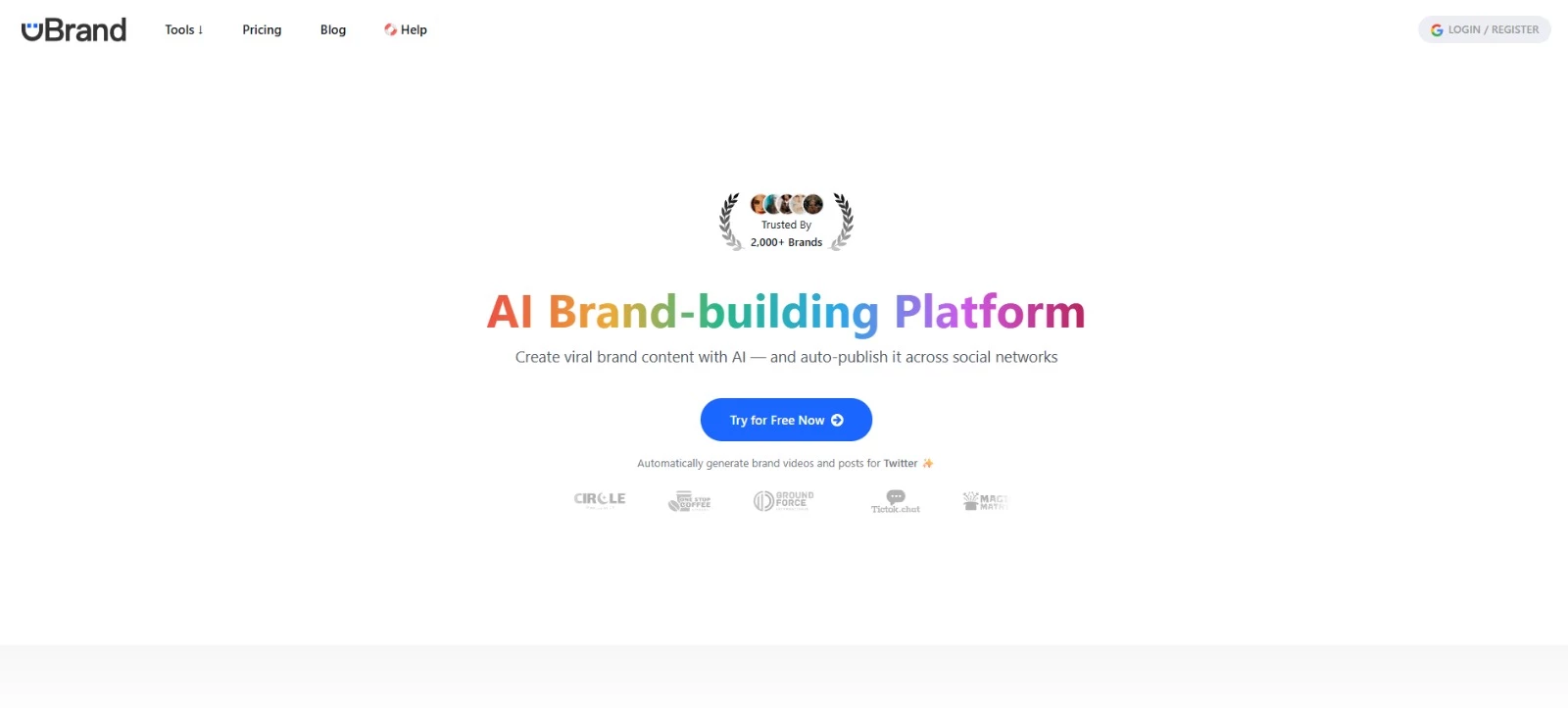
A logo is only one piece of a brand, and uBrand is designed with that broader goal in mind.
Pros:
- AI logo generator with complete brand identity kits
- Brand guidelines, mission, values, and tone-of-voice generation
- AI-powered social media content and branded marketing assets
Cons:
- Advanced collaboration and multi-brand management are reserved for higher-tier plans
After generating or importing a logo, the platform expands it into a cohesive visual identity that includes brand guidelines, marketing assets, social media content, mockups, and supporting brand materials.
AI can assist with brand positioning, mission statements, values, tone of voice, and audience profiles, while built-in asset management keeps logos, templates, and creative files organized in one workspace.
If you’re managing several brands, you can collaborate within the same account.
Pricing
- Solo: $19/month
- Pro: $29/month
- Agency: $149/month
What Users Say
uBrand has too little verified review coverage on the major B2B platforms to summarize responsibly, so we haven't attributed sentiment to a base that doesn't exist at scale.
The available feedback comes mainly from vendor testimonials and AI tool directories, a lower evidence standard than the rest of this list.
Test it against your own brief first. The Solo plan at $19 is low enough to evaluate output quality, brand guideline generation, and the asset manager on a real project, a better read than any aggregate score here.
Other Notable Features
- Dedicated brand asset libraries with smart labels for organizing logos, fonts, images, videos, and templates.
- Online previews for more than 30 file formats to simplify finding and reviewing brand resources.
- Branded business cards, email signatures, themes, and presentation materials through its Brand Tools collection.
- Shareable asset links and team collaboration, with member invitations available on Pro and Agency plans.
- Agency dashboard for managing multiple client brands with separate access controls for each brand.
AI Video Generation & Editing
The tools below cover generating AI video and editing it for production:
1. Runway: Best for AI Video Editing & Creative Production
For creative teams, agencies, and marketers producing social content or commercial campaigns.

Runway brings AI video generation, editing, image creation, audio tools, and production features into one platform.
It gives creators access to several leading AI systems, in addition to its own, so the workflow stays in one place even when projects require different capabilities.
Pros:
- Runway Gen-4.5 alongside models including Google Veo, Kling, Seedance, FLUX, and others
- AI video generation, editing, background replacement, object removal, and upscaling
- Storyboards, lip sync, character animation, camera controls, and style transfer
Cons:
- Credit-based pricing can add up quickly for long or high-volume video projects
- The platform offers a wide range of creative tools, so new users should expect more setup and experimentation than with simpler AI video generators
A product shot can become a lifestyle scene, distracting objects disappear with a prompt, footage can be restyled frame by frame, and videos can be expanded, upscaled, or translated without rebuilding the project from scratch.
Teams working across social campaigns, product launches, advertisements, or branded content have enough flexibility to move from concept to final edit with editing, visual effects, storyboarding, lip sync, and asset management available throughout the process.
Pricing
- Free
- Standard: $12/month
- Pro: $28/month
- Max: $76/month
- Enterprise: Custom pricing
What Users Say
Runway holds 4.4 out of 5 across 19 reviews on Product Hunt. Reviewers praise realistic short clips, cinematic effects, and flexible tools for developing concepts, ads, and experimental footage.
First-frame references draw specific praise for helping establish a clip’s visual style and mood.
The main complaints concern inconsistent results, pricing, and the learning curve.
Users describe prompts changing unintended details, repeated generations consuming time and credits, and difficulty choosing the right model. Some also report slow generation.
Other Notable Features
- Runway Agent for planning, generating, and assembling videos with audio through a conversational interface.
- Act-Two performance capture for animating characters from recorded performance videos.
- Reference media controls for guiding generations with uploaded images, video, and audio, depending on the model.
- Aleph 2.0 and Edit Studio for editing existing footage, including localized changes in clips up to 30 seconds.
- Node-based Workflows for reusable creative pipelines that teams can publish as API endpoints.
2. Google Veo 3: Best for AI Video Generation
For marketers, creative teams, and filmmakers who want AI-generated footage without spending hours refining prompts.

Realism is what separates Veo from most AI video generators. Faces stay consistent across shots, camera movement feels deliberate, and lighting reacts naturally to the environment.
The addition of synchronized dialogue, ambient sound, and effects makes clips feel like finished productions.
Pros:
- Text-to-video, image-to-video, and video-to-video generation
- Native dialogue, ambient audio, and sound effects
- Consistent characters, realistic motion, lighting, and physics
Cons:
- Longer or higher-resolution videos increase generation costs
Creative control is another area where Veo stands out. Text prompts, reference images, and existing videos can all guide the final output, and camera angles, aspect ratios, resolution, and clip duration remain adjustable throughout the process.
Developers can also access the models through Google AI Studio and the Gemini API, making Veo suitable for both standalone content creation and custom applications.
Pricing
- Google AI Studio: Free
- Google AI Pro: $19.99/month
- Google AI Ultra: $249.99/month
- API pricing based on usage
What Users Say
Reviews on Product Hunt praise Veo’s realistic video output, physics, lighting, and camera movement.
SourceForge adds a more qualified perspective: one reviewer praises natural motion and precise camera work but says getting the desired result requires detailed prompts, with controls that can overwhelm beginners.
Other Notable Features
- Prompt-based camera direction for controlling framing, shot composition, and camera movement.
- Up to three reference images and first-and-last-frame inputs for guiding Veo 3.1 generations.
- Video extension for continuing previously generated Veo clips on supported models.
- Landscape and portrait formats, with output up to 4K depending on the model and generation settings.
- Gemini API access for integrating video generation into applications and automated production workflows.
AI eCommerce & Retail Intelligence
Your choice comes down to where you need AI most. Clerk.io specializes in search, recommendations, and merchandising, while Shopify Sidekick serves as an AI assistant inside the Shopify ecosystem.
1. Clerk.io: Best for AI Product Recommendations & Merchandising
For online retailers and eCommerce brands that want to personalize shopping experiences across search, recommendations, email, and chat.
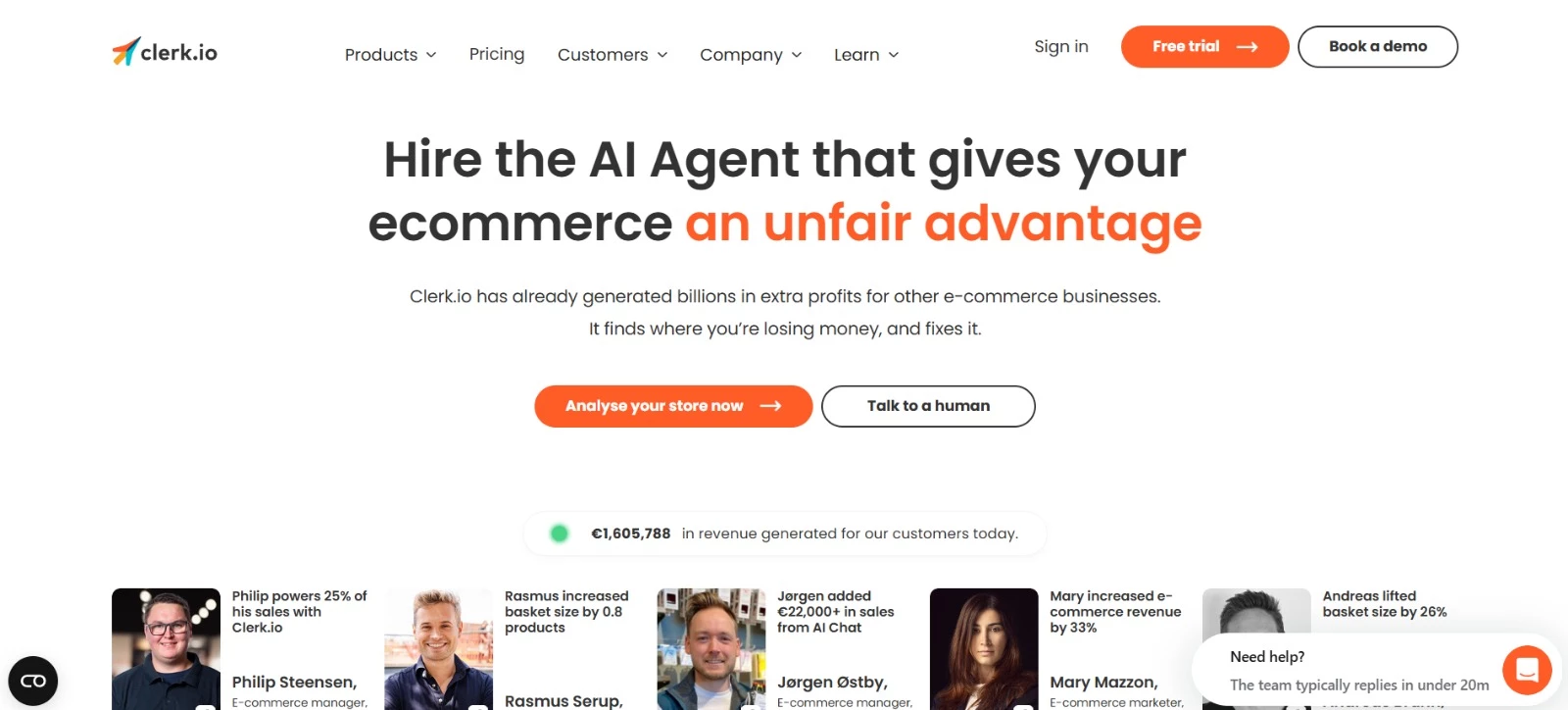
Clerk.io uses customer behavior to decide which products shoppers see throughout an online store.
Search results, recommendations, email campaigns, and AI chat all draw from the same data, so product discovery stays relevant from the first visit through repeat purchases.
Pros:
- AI-powered search with typo correction, synonym recognition, and behavioral ranking
- Product recommendations, cross-selling, upselling, and merchandising controls
- AI chat, personalized email campaigns, and audience segmentation
Cons:
- Pricing is modular, so costs increase as additional products and usage are added
Search goes beyond keyword matching by recognizing misspellings, synonyms, browsing history, previous purchases, cart activity, seasonal trends, and popular products.
In our testing, searches continued to return relevant products even when we used incomplete queries, common spelling mistakes, or broader product terms.
The platform also includes merchandising controls, audience segmentation, and automated campaigns for abandoned carts, post-purchase follow-ups, and customer re-engagement.
Pricing
- Search: From $119/month (10k monthly searches)
- Recommendations: From $119/month (100k monthly recommendations)
- Chat: From $119/month (100 monthly conversations)
- Email: From $119/month (10k monthly opened emails)
- Audience: From $119/month (10k monthly active subscribers)
What Users Say
Clerk.io holds 4.7 out of 5 across 20 reviews on Capterra.
Merchants praise responsive support, straightforward customization, and product recommendations that help increase conversions and basket sizes. Developers also appreciate the documented API for more advanced integrations.
Cost and implementation draw criticism. Some reviewers describe the pricing as expensive, while one merchant reports Magento 2 bugs that prevented connection for almost three weeks, followed by unsuccessful troubleshooting.
Other Notable Features
- Search typo correction, synonym matching, and dynamic filters help shoppers find relevant products.
- Merchandising controls adjust search rankings around margins, popularity, and inventory.
- Predictive audience segments identify likely purchases and group customers by lifecycle stage.
- Multilingual AI chat answers product, stock, delivery, and sizing questions using live store data.
- Search and recommendation analytics track shopper behavior, conversions, and revenue impact.
2. Shopify Sidekick: Best for AI Store Management & Shopify Assistance
For Shopify merchants who want an AI assistant built directly into their store.

During our testing, we used Sidekick to generate product descriptions, answer questions about store performance, suggest design changes, and create pages from simple prompts without leaving the Shopify admin.
Pros:
- AI assistant with access to Shopify store data and admin tools
- Product descriptions, email copy, blog posts, and page generation
- Performance insights, ShopifyQL queries, and business recommendations
Cons:
- Available only to Shopify merchants
- Some advanced capabilities vary by Shopify plan and feature rollout
It also works with your store's own data. Inventory, customers, orders, reports, and ShopifyQL queries are all available through the assistant, so routine tasks require fewer clicks and less menu navigation.
Recent updates added support for creating customer records and companies, as well as broader workflow automation within Shopify.
Pricing
- Included with all Shopify plans
- Basic: $29/month
- Grow: $79/month
- Advanced: $299/month
- Plus: From $2,300/month
What Users Say
Merchants reviewing Shopify’s mobile app on Apple’s App Store specifically praise Sidekick for helping them develop their stores and work through unfamiliar tasks.
One reviewer describes it as valuable for resolving store issues, while acknowledging that its guidance sometimes leads to unnecessary detours.
Feedback on Trustpilot highlights frustration with execution: one merchant reports spending two hours trying to link a button to a product without success.
Other Notable Features
- Plain-language report creation generates ShopifyQL queries, charts, and downloadable data exports.
- Sidekick Pulse surfaces proactive recommendations on the Shopify admin home page.
- Saved skills turn frequently used prompts into reusable shortcuts.
- Custom app generation builds tools for managing your store from everyday instructions.
- Voice mode and screen sharing let merchants get assistance beyond text chat.
AI Web, UI & Product Design
These AI tools generate wireframes, prototypes, and editable layouts from prompts, screenshots, or sketches, helping teams validate ideas long before development begins.
1. Uizard: Best for AI Product Design & Prototyping
For product teams, startups, founders, and marketers who want to turn ideas into interactive prototypes faster.
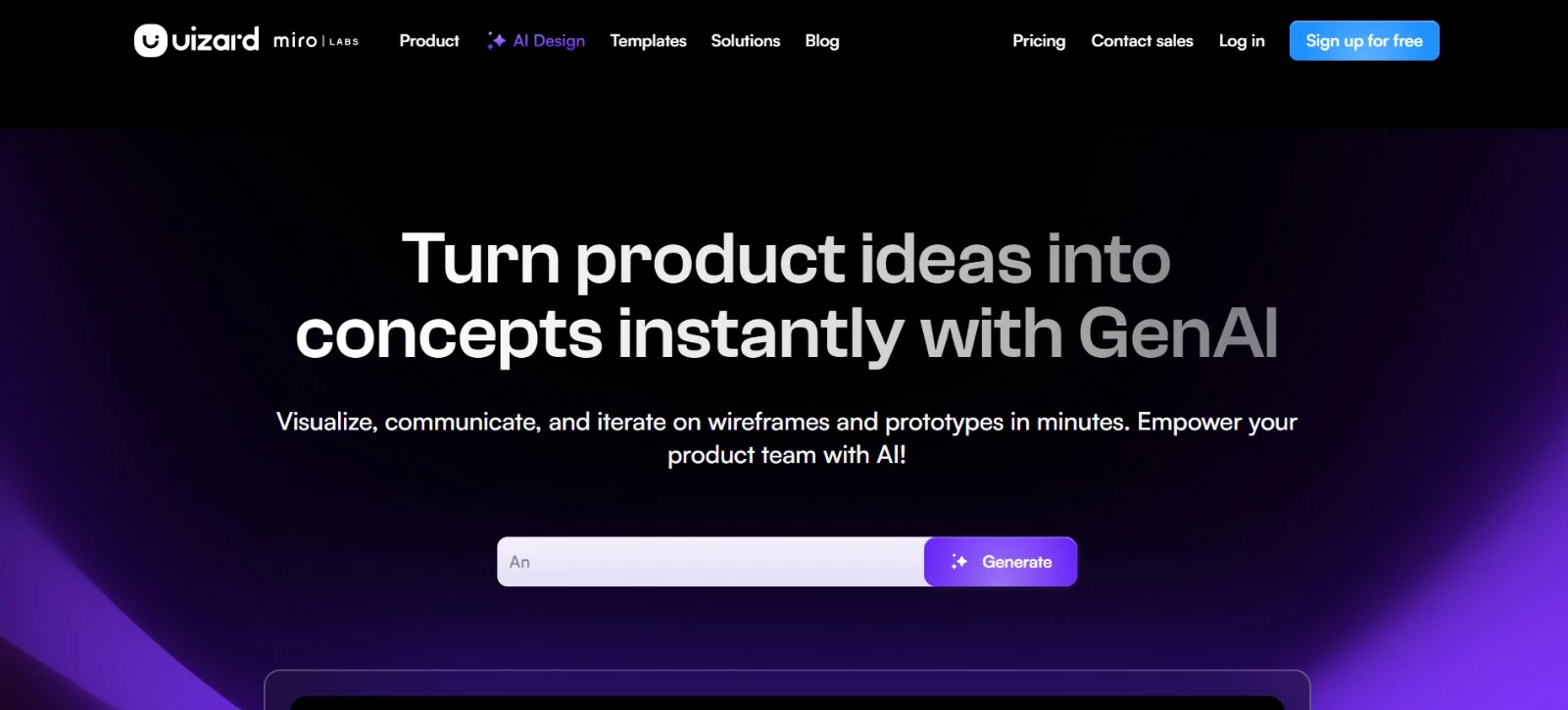
We tested Autodesigner 2.0 with a few product concepts and also uploaded screenshots to compare the results.
In both cases, the generated layouts were editable, so adjusting sections, replacing components, and refining the design took only a few clicks.
Pros:
- Autodesigner 2.0 for text-to-UI generation
- Screenshot Scanner and Wireframe Scanner for editable mockups
- Interactive prototypes with multi-screen projects
Cons:
- Higher AI generation limits and advanced collaboration features require Business or Enterprise plans.
The platform supports several ways to start a project. A short prompt can generate an interface from scratch, while Screenshot Scanner and Wireframe Scanner convert existing designs or hand-drawn sketches into editable mockups.
Combined with interactive prototypes, shared workspaces, and a large template library, Uizard makes it easy to move from an initial concept to something ready for feedback or user testing.
Pricing
- Free
- Pro: $12/month
- Business: $39/month
- Enterprise: Custom pricing
What Users Say
Uizard holds 4.6 out of 5 across 193 reviews on Capterra.
Users praise its approachable editor, quick prototyping, and ability to turn hand-drawn sketches into digital designs. Founders and beginners describe creating mockups they can share for feedback before starting development.
The main frustrations involve design flexibility and exports. Reviewers request more templates, finer control over elements, and additional export options, particularly for moving work into Figma.
Some also find the subscription expensive for occasional use.
Other Notable Features
- Screenshot Scanner converts existing app and website screenshots into editable mockups.
- Wireframe Scanner digitizes hand-drawn sketches for further editing.
- Focus Predictor generates attention heatmaps to estimate where users will look.
- Theme Generator applies a new visual style across a project.
- Interactive prototype sharing lets stakeholders explore screen flows and provide feedback.
2. Visily: Best for AI Wireframing & UI Planning
For founders, product managers, marketers, and teams that need to turn ideas into wireframes without design experience.
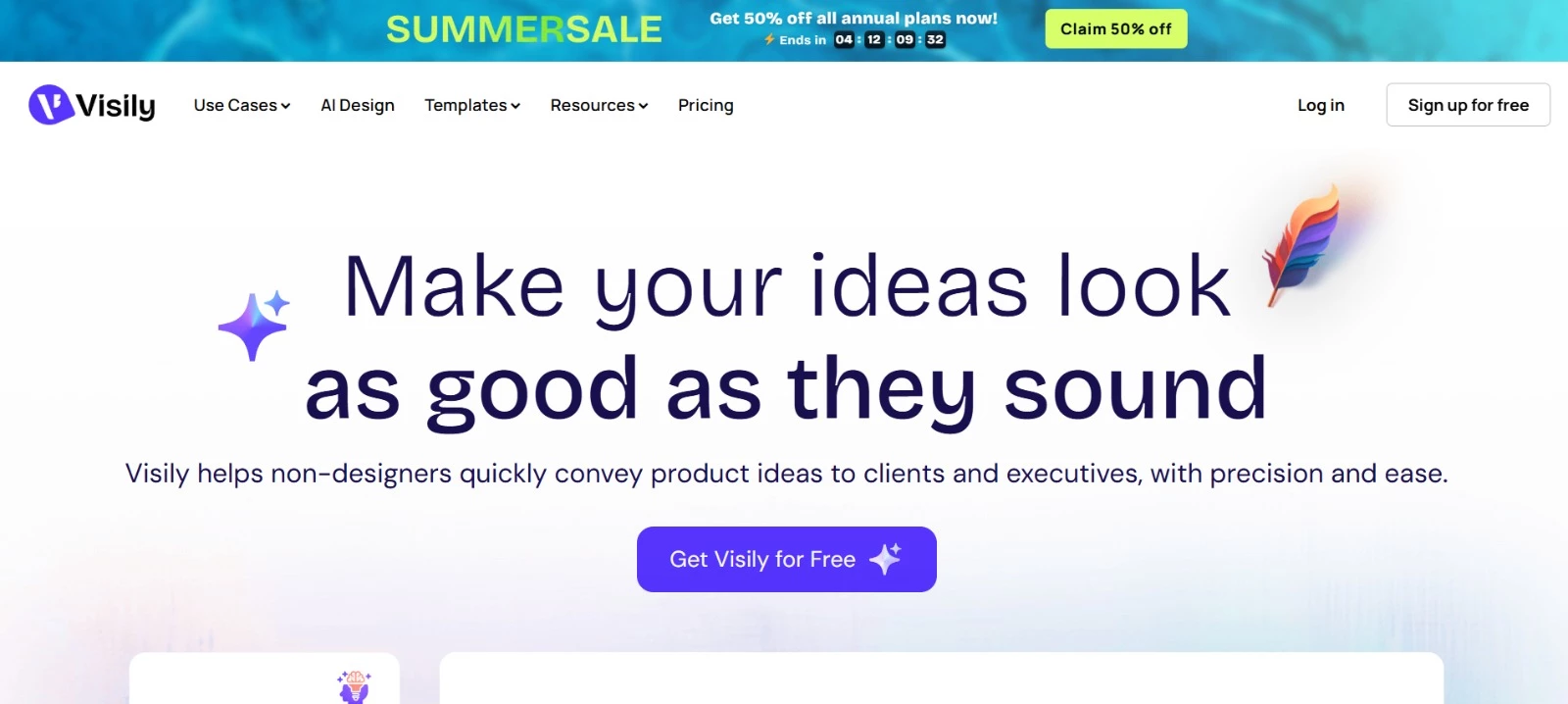
Visily is built for the earliest stage of product design, when ideas still exist as notes, screenshots, sketches, or rough concepts.
We tried several options, including text prompts and existing website screenshots, and the platform consistently turned them into editable wireframes that were easy to refine.
Pros:
- AI text-to-wireframe and screenshot-to-wireframe generation
- Diagram-to-UI conversion and Smart Components
- Figma import and export, code export, and MCP server support
Cons:
- Advanced collaboration, AI credits, and security features are reserved for paid plans
Its AI tools cover far more than text-to-design. Screenshots, flowcharts, templates, and hand-drawn concepts can all become UI layouts. Smart Components and premade themes help keep screens consistent across larger projects.
Once the structure is in place, the editor supports collaboration, comments, prototyping, and sharing from the same workspace.
For teams that need to communicate product ideas quickly, Visily removes much of the manual work without introducing the learning curve of traditional design software.
Pricing
- Starter: Free
- Pro: $11/editor/month
- Business: $29/editor/month
What Users Say
Reviewers praise its approachable interface, quick wireframing, and usefulness for explaining ideas to stakeholders.
Designers also appreciate switching between low- and high-fidelity layouts, while long-term users highlight a team that responds to feedback.
Customization and AI credits draw criticism. Some reviewers say complex layouts need manual cleanup and that precise design adjustments take extra effort.
One designer reports exhausting the free plan’s AI allowance after a day of work, limiting further evaluation.
Other Notable Features
- Figma integration transfers screens and elements as editable designs on paid plans.
- React, Vue, and HTML export provides a development starting point on Pro and Business plans.
- Inspect mode displays measurements, CSS details, and assets for developer handoff.
- A Chrome extension captures website screenshots for use in design projects.
- Saved components let teams reuse interface elements across mockups for greater consistency.
AI Software Testing & QA
These AI testing tools help teams automate test creation, improve test reliability, and speed up software releases.
1. Testim: Best for AI Test Automation
For QA teams, engineers, and enterprise software teams automating web, mobile, and Salesforce testing.
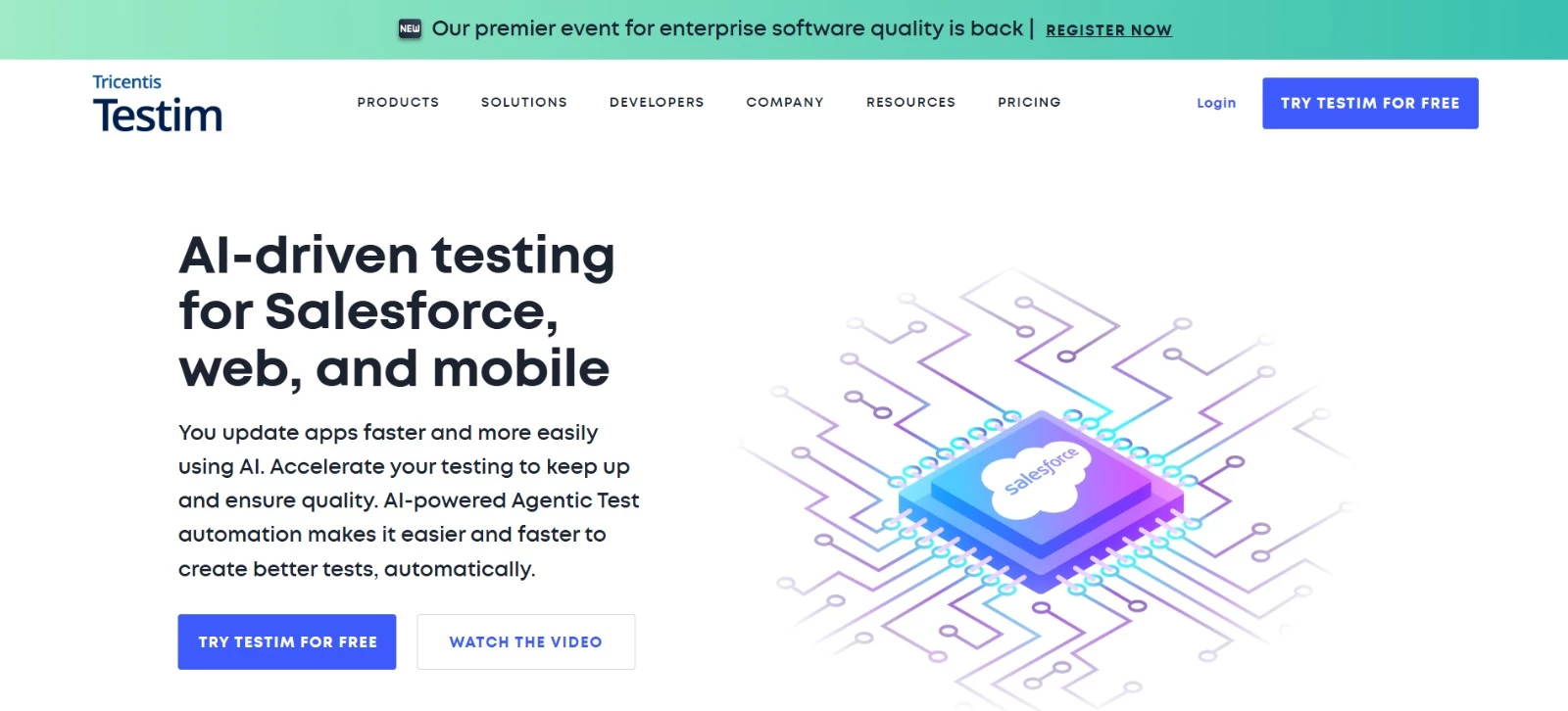
We tested Testim's AI-assisted test creation and authoring workflow using a few common user journeys.
Describing a test in natural language generated a usable starting point, while the recorder automatically captured interactions that we could edit before running the test.
Pros:
- AI-generated tests from natural language prompts
- AI-powered smart locators with self-healing test maintenance
- Low-code recorder alongside code-based workflows
Cons:
- Smaller teams can get started with the Community plan, but larger organizations will need an Enterprise subscription for advanced management features
Beyond test creation, Testim focuses on keeping automated tests stable over time. AI-powered smart locators adapt to interface changes, helping reduce broken tests without constant manual maintenance.
The platform also includes root cause analysis, activity logs, and TestOps features for managing larger testing pipelines.
Support for web, mobile, and Salesforce applications makes it suitable for teams running multiple products within the same workspace, while low-code authoring enables testers to contribute without writing every test from scratch.
Pricing
- Community: Free
- Enterprise: Custom pricing
What Users Say
Users praise its recording and visual editing tools for helping manual testers contribute to automation, while developers can add JavaScript for more complex scenarios. Support also earns strong feedback for onboarding and troubleshooting.
Failure analysis draws criticism. Reviewers want more detailed execution logs and clearer error messages, with some describing extra debugging steps.
Individual users also report interface slowdowns when organizing large suites and dynamic elements that require manual locator adjustments.
Other Notable Features
- AI-powered Smart Locators adapt to changing element attributes to reduce test maintenance.
- Reusable step groups let teams share common actions across tests.
- Data-driven testing runs scenarios with different inputs and boundary conditions.
- Parallel execution checks application behavior across browsers and device configurations.
- Testim Copilot generates custom JavaScript test steps from natural-language descriptions.
2. Playwright: Best for AI-Assisted End-to-End Testing
For developers and QA teams building reliable cross-browser tests with modern AI coding workflows.
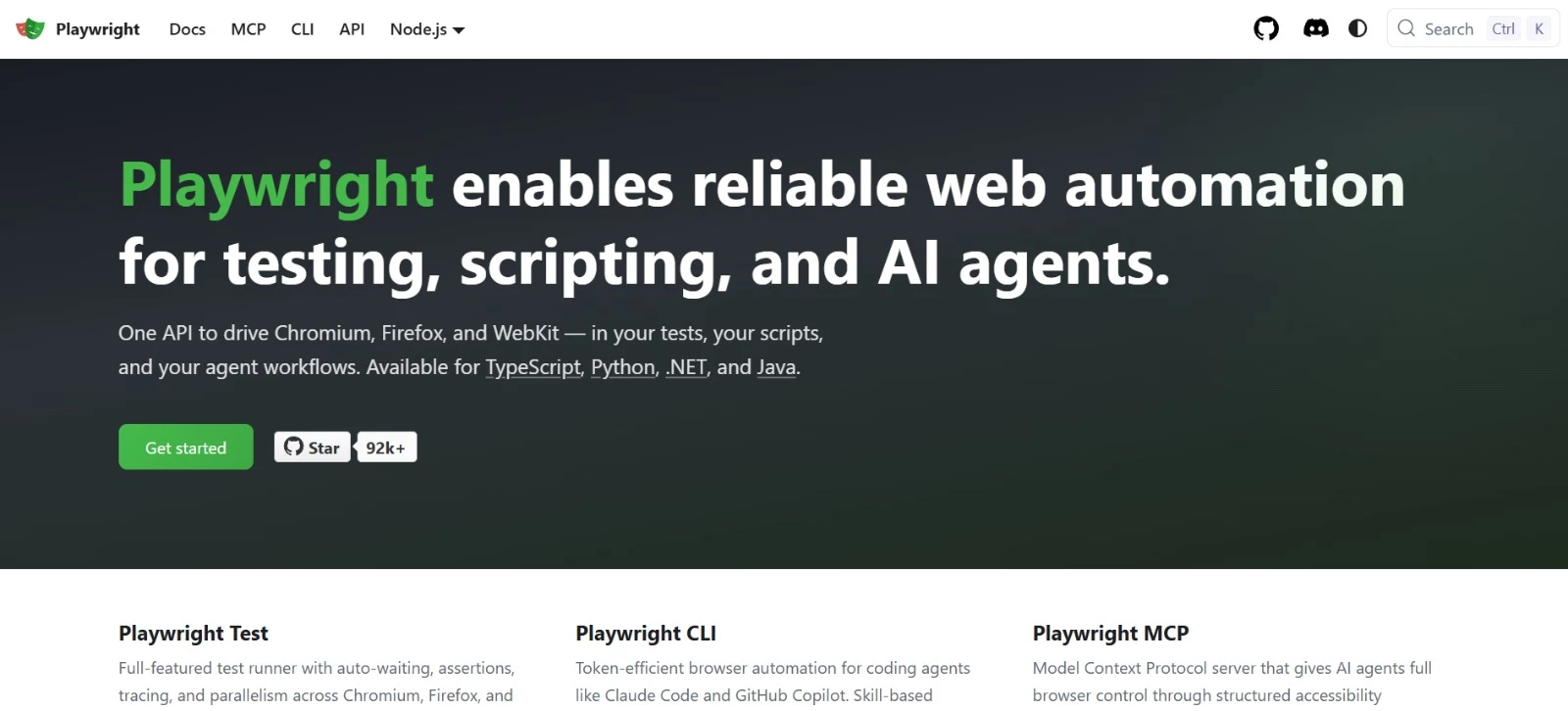
We used Playwright's built-in code generation and explored its AI-focused tooling, including the CLI and MCP server.
Recording interactions provided a solid test foundation, and the generated code was easy to refine rather than rewrite from scratch.
Pros:
- Cross-browser testing for Chromium, Firefox, and WebKit
- Auto-waiting, resilient locators, and parallel test execution
- Test generator, Trace Viewer, and VS Code extension
Cons:
- May require programming knowledge, making it less accessible for non-technical QA teams
Playwright supports Chromium, Firefox, and WebKit through a single API, making it straightforward to validate the same user flow across browsers.
Auto-waiting, resilient locators, parallel execution, and the Trace Viewer help reduce flaky tests while making failures much easier to investigate.
Its newer AI features also make Playwright a good fit for developer workflows. The CLI is designed for coding assistants such as GitHub Copilot and Claude Code, while the MCP server gives AI agents structured browser access for testing and automation tasks.
Pricing
- Open source: Free
- Cloud testing: Inquire
What Users Say
TrustRadius reviewers praise Playwright for automating critical user journeys and integrating regression tests into CI/CD pipelines.
Engineers highlight its documentation, community, and ability to catch bugs before they reach manual QA. The platform scores 8.6 out of 10.
The feedback also highlights maintenance and reporting limits. One reviewer reports that managers can interpret more easily and notes that frequently changing features require ongoing test updates.
Another flags the lack of native mobile app testing, which means teams need a separate framework for that coverage.
Other Notable Features
- Test Generator records browser actions and converts them into test code.
- Trace Viewer combines screenshots, DOM snapshots, network requests, and logs to investigate failures.
- Isolated browser contexts keep tests independent while allowing reuse of saved authentication state.
- Test sharding distributes large suites across multiple machines to shorten CI runs.
- A VS Code extension supports test generation, execution, and debugging directly in the editor.
All 25 AI Tools Compared
The table below lines up every tool in this guide by job, strength, limitation, and entry price, so you can shortlist the best AI platforms for business without scrolling back through the sections.
Tool | Best for | Main pros | Main cons | Pricing |
Document collaboration inside your own platform | Embeds into 50+ platforms, OOXML-native, self-hosted or white label | Self-hosting needs your own servers and IT staff | Free community build, Enterprise from $1,500 | |
Teams already on Microsoft 365 | Reads your own tenant data inside Word, Excel, and Teams | Per-seat add-on on top of a qualifying licence | ~$21–$30/user/mo add-on | |
Browser-first teams | Gemini included with no separate AI licence | Files must live in Google's cloud | From ~$7/user/mo | |
WordPress website management | Builds widgets and bulk edits inside your existing WordPress install | Still in beta, complex workflows need manual review | Free (beta) | |
Enterprise marketing operations | Brand governance across the full campaign workflow | Enterprise-only fit, needs onboarding | Custom | |
AI-powered CRM and lead management | Fast setup, AI summaries that keep deals moving | Thinner enterprise customization | From $13/user/mo | |
AI customer support agents | Agents that complete actions, not just answer | Higher limits and features on upper plans | Free, paid from $32/mo | |
AI search and research | Inline citations on every answer | Best models are Pro and Max only | Free, Pro $17/mo | |
SEO and AI visibility | Recommendations grounded in what already ranks | Optimizes existing content, does not draft | From $99/mo | |
Content ops and multi-channel publishing | Whole content workflow in one workspace | Wide feature set, slower to learn | Free, paid from $34/user/mo | |
AI writing and brand consistency | Brand voice and knowledge carried into every draft | Costs more than most AI writing tools | From $59/user/mo | |
AI-powered PPC optimization | Rule engine plus automation across four ad platforms | No creative generation | From $209/mo | |
AI ad creative generation | Generates and scores creative in volume | Output needs brand refinement | From $20/mo | |
Email for small businesses | Ready-made automation flows | No generative AI on Essentials | From $13/mo | |
Lifecycle automation | Real-time behavioral journeys on first-party data | Needs a data strategy to pay off | From $100/mo | |
AI logo creation | Commercial rights and print-ready files included | Template-based, limited revisions below top tier | From $30 one-time | |
AI brand identity | Full identity kit, not just a logo | Multi-brand features on higher tiers | From $19/mo | |
AI video editing and production | Multiple models inside one editing workspace | Credit costs on long projects | Free, paid from $12/mo | |
AI video generation | Realistic motion with native audio | Costs rise with length and resolution | Free in AI Studio, Pro $19.99/mo | |
Product recommendations and merchandising | One behavioral dataset across search, email, and chat | Modular pricing stacks up | From $119/mo per module | |
Shopify store management | Reads your live store data | Shopify merchants only | Included with Shopify plans | |
Product design and prototyping | Editable output from prompts or screenshots | Generation limits on lower tiers | Free, Pro $12/mo | |
Wireframing and UI planning | Turns screenshots and sketches into wireframes | Advanced features on paid plans | Free, Pro $11/editor/mo | |
AI test automation | Self-healing locators cut test maintenance | Enterprise plan needed for advanced management | Free Community, Enterprise custom | |
End-to-end testing | Cross-browser coverage through one API, MCP server included | Needs programming knowledge | Free |
How To Choose the Best AI Software for Your Business: A Checklist
With hundreds of AI platforms on the market, choosing the right one often comes down to how well it fits your existing workflows.
Before committing to a subscription, evaluate each tool using these criteria:
- Start with your use case
Choose software that solves a specific problem, whether that's creating content, automating tests, designing interfaces, or managing customer support. General-purpose AI assistants rarely replace specialized tools.
- Decide between suite AI and standalone AI
This is the choice most teams get wrong first. Goduhina makes the case for keeping AI in the editor:
"The biggest advantage of an AI-powered office suite is that you don't need to switch between tools to get your work done.
You use your AI assistant right inside your document, so your workflow is seamless. You perform all actions under the same interface.
When using a standalone AI tool, you have to perform a lot of copy-paste operations and switch between interfaces, which breaks your workflow and reduces your productivity."
- Check integrations first
The best AI tools connect with the software you already use, such as your CRM, CMS, project management platform, cloud storage, or development stack.
Strong integrations reduce manual work and speed up adoption.
- Understand the pricing model
Look beyond the advertised starting price. Platforms may charge per user, per AI credit, per API usage, per storage, or per generated asset. Make sure the pricing still makes sense as your team grows.
- Review security and data policies
If you'll upload business or customer data, confirm how it's stored, whether it's used for model training, and whether the vendor offers security certifications such as SOC 2 and GDPR compliance.
- Ask whether the model can run on your own hardware
For some buyers this decides the shortlist. As Goduhina explains:
"For a regulated customer, running the AI model on their own hardware changes mainly the data residency and sovereignty.
Prompts, documents and outputs stay inside their controlled IT environment (no data is shared with third parties)."
Government, defense, financial services, healthcare, critical infrastructure, and export-controlled manufacturing ask for this most often.
- Evaluate ease of adoption
A powerful platform delivers little value if your team struggles to use it.
Consider the learning curve, documentation, onboarding resources, and how quickly new users can become productive.
- Run a pilot before committing
Test the tool on one recurring workflow for a few weeks, compare the results with your current process, and involve the people who will use it daily before rolling it out across the business.
AI Adoption: Pitfalls To Avoid
Most failed AI rollouts fail for the same handful of reasons, and none are about model quality.
- Connecting an LLM to internal documents without preparation. Match the model to the job first, since some are strong at text and reasoning but lack OCR or image generation. Supervise the workflows too, with clear use cases and a shared sense of which tasks go to AI and which actions it's allowed to take.
- Trusting AI answers on facts. Models handle translation, summarization, rewriting, and formatting well. Look-ups and factual questions are where they go wrong, and the confident tone holds whether or not the answer is right, so anything a model retrieves needs a second source.
- Buying too many overlapping tools. Four platforms that each do 60% of the job cost more than one that does 90%, and they fragment your data. Consolidate where the overlap is real.
- Skipping training. Untrained staff use a fraction of what you bought. Budget onboarding time alongside the subscription.
- Ignoring how the bill scales. Credit- and usage-based pricing looks cheap at pilot volume and rarely stays that way. Model the cost at full rollout before you sign.
- Automating judgment work. Legal agreements, contracts, and financial numbers need a human in the loop. Use AI for the draft and keep the review.

Our team ranks agencies worldwide to help you find a qualified partner. Visit our Agency Directory for the top AI companies, as well as:
- Top AI App Development Companies
- Top AI Web Design Companies
- Top AI Marketing Companies
- Top AI Market Research Companies
- Top AI Companies in Seattle
Our design experts also recognize the most innovative design projects across the globe. Given the recent uptick in AI tools usage, you'll want to visit our Awards section for the best & latest in AI website designs.