
Key Findings
- Focusing on a well-defined market segment can significantly boost your outreach effectiveness, with data showing that companies that target specific industries see 10-25% higher revenue.
- Running multi-channel campaigns leads to a 31% increase in leads compared to single-channel efforts, making it critical to incorporate multiple platforms into your prospecting strategy.
- Sending a follow-up email boosts reply rates by 49%, underscoring the importance of persistence in prospecting to convert cold leads.
In this guide, we lay out exactly how to build a prospecting engine that scales with your agency — from defining who you want to work with to creating outreach that actually converts.
1. Know Who You’re Targeting
You can’t sell to everyone — and you shouldn’t try. The tighter your targeting, the stronger your positioning, and the more effective your outreach will be. A vague prospect list wastes time and drains energy. Instead, hone in on exactly who you’re trying to reach and why they’re a fit for your agency.
Here’s how to do it.
Niche Down First
Casting a wide net won’t guarantee better results. Instead, it’ll just dilute your message. Businesses that tailor their offerings to customer segments generate, on average, 10-15% higher revenue than those that fail to do so.
Start by narrowing your focus to a well-defined market segment where your expertise gives you a competitive edge.
- Industry (e.g., direct-to-consumer (DTC) beauty, SaaS, healthcare)
- Company size (startup, mid-market, enterprise)
- Budget range (What’s your minimum engagement worth?)
- Common pain points (Lack of bandwidth? Performance plateau?)
Create an Ideal Customer Profile (ICP)
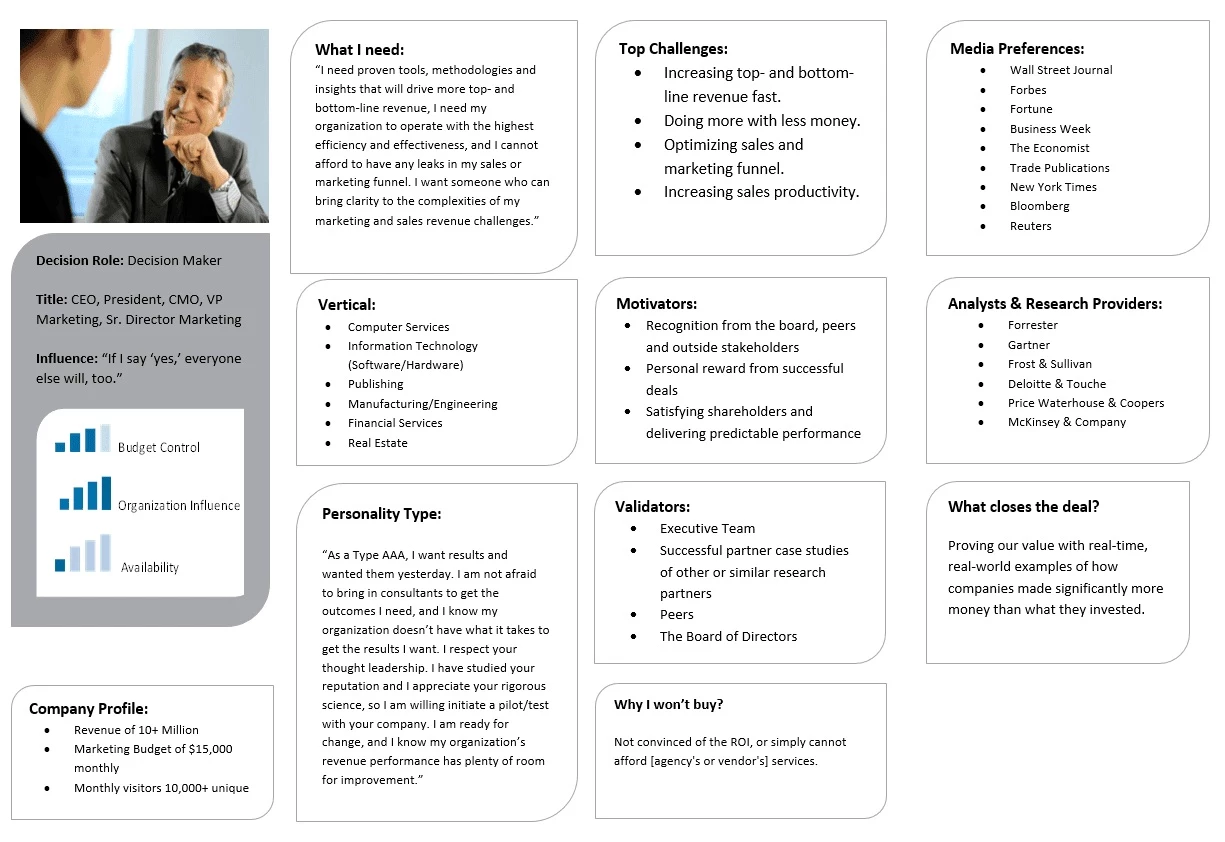
Your ideal customer profile (ICP) defines the characteristics of the companies you want to target, including details like industry, size, location, budget, and key needs.
Here’s an example ICP:
Mid-market eCommerce brands ($5M–$50M in revenue) with an in-house marketing team and a need for conversion-focused creative.
Define Buyer Personas
Once you’ve identified the type of company, narrow your focus to the actual decision-makers within it by creating detailed buyer personas that reflect their goals, challenges, and motivations.
An example buyer persona would be this:
“Lisa, Director of Marketing” is overwhelmed managing vendors, needs better performance reporting, and is under pressure to scale return on ad spend (ROAS).
With a strong ICP and clear personas, your outreach becomes significantly more focused and therefore effective.
2. Pick the Right Channels
Your goal should be to connect with prospects where they are most active — whether that’s in their inbox, on LinkedIn, at industry events, through a quick call, or the right combination of them all.
Before you decide what to say, you need to know where you’re saying it. That’s because different platforms come with different audience expectations, formats, and constraints, so identifying the right channel should come first.
- Email: With 83% of B2B marketers making it a top priority, it’s safe to say email is still thriving in B2B outreach.
- LinkedIn: Great for relationship-building, especially with mid-level to senior roles.
- Events: Effective for enterprise or high-touch industries.
- Cold Calls: Underrated — great for fast feedback or breaking through noise.
- Referrals: Low-hanging fruit, but often underused. Ask your best clients!
How to prioritize:
Start with 2–3 core channels based on:
- Where your prospects are active
- Your internal bandwidth and skill set
- Your target deal size (bigger deals often require more touchpoints)
Here’ an example of an omni-channel strategy:
Day 1 – Cold Email
Day 3 – LinkedIn Connect + DM
Day 5 – Follow-up email with a case study
Day 8 – Cold Call
Day 12 – Final nudge: "Should I close the loop?"
And don’t be afraid, you’re not spamming — you’re staying visible and valuable. It’s worth noting that companies that run multi-channel campaigns see a 31% increase in leads compared to single-channel campaigns, according to recent data from Sopro.
3. Craft Messaging That Converts
Most agencies struggle not because they can’t reach prospects but because their messaging falls flat.
The best outreach meets people where they are: in the middle of a business challenge, under pressure to deliver results, and trying to cut through their own cluttered inbox. And your message should help them solve a problem, not just introduce your agency.
Personalization at Scale
Use smart data (industry, recent funding, job posts) to target your outreach efforts. It doesn’t need to be complicated, just show that you’ve done your homework.
What you shouldn’t do is:
- Talk only about your agency
- Write long, bloated intros
- Ask for too much too soon
- Sound like a template bot
Remember, the goal is to start a conversation, not sell in the first message.
Messaging Frameworks (Across Channels)
Great outreach starts with structure. A proven messaging framework gives you a solid starting point and frees you to focus on personalization and tone. Here are a few templates to guide you through the channels that matter most.
Cold Email Template:
Subject: [Their Brand] x [Your Agency] – Quick Idea
Hi [First Name], Noticed [trigger: e.g., "you just launched a new product"].
We worked with [similar company] to [outcome: e.g., “cut CAC by 22% with performance creative”].
I had a quick idea for how you could [benefit]. Want me to send it over?
— [Your Name]
LinkedIn DM Template:
Hey [First Name], saw what you’re doing at [Company]—impressive work in [area].
Curious — have you explored [service you offer]?
Happy to share how we helped [similar brand] [achieve result]. Let me know if it’s useful.
Cold Call Opener:
“Hey [Name], it’s [Your Name] from [Agency]. We helped [peer company] [solve pain point].
I know I’m calling out of the blue. Just wanted to see how you’re currently handling [challenge] — got a minute?”
4. Build a Prospecting Cadence That Works
Timing matters. Most replies don’t come from the first message — they come after the second or third. A consistent outreach cadence helps you stay top-of-mind without being pushy, while giving you more chances to provide value.
In fact, according to Belkin’s findings, the first follow-up email is the most effective — boosting the reply rate by 49%. That single nudge often makes the difference between being ignored and a conversion. It’s a clear reminder that persistence, when done right, pays off.
What Makes a Great Cadence?
- Multiple touches over 2–3 weeks
- Different formats (text, video, voice)
- Value added with each step (not just “bumping this up”)
Sample Prospecting Flow: Build Momentum Over Time (Email + LinkedIn)
A successful outreach sequence is about building trust and curiosity with each step, not just timing. Here's how you can guide cold prospects toward a conversation with a five-touch sequence:
- Day 1 – lead with value: Start with a cold email that highlights a quick win or relevant insight. Keep it brief, specific, and benefit-driven.
- Day 3 – add a personal touch: Send a LinkedIn connection request with a short note referencing something timely or relevant to their role or company.
- Day 5 – share something useful: Follow up via email with a case study, insight, or content piece tied to their pain point. This builds authority without being pushy.
- Day 8 – switch up the format: Try a quick voice note on LinkedIn or maybe a cold call — something that breaks the pattern and re-humanizes the outreach.
- Day 12 – close the loop: If there’s been no response, send a final polite but direct message. Ask if the timing’s off or if you should circle back later.
What To Track
- Open and reply rates: Track how many prospects are opening your messages and how many are actually responding — these are your first signs of success.
- Positive response rate: Measure how many of your replies are interested or willing to talk further, not just polite rejections or unsubscribes.
- Time to first meeting: Monitor how long it takes from initial outreach to booking a call. This helps you understand the efficiency of your cadence.
- Channel-specific performance: Compare results across email, LinkedIn, calls, and other platforms to see which channels are driving the most engagement.
Use the data to test and optimize — but don’t change everything at once. If you test everything at the same time, you won’t know which change actually moved the needle. Test one element at a time so you can pinpoint what’s working and build on that.
5. Use Content to Warm Up Cold Prospects
Content turns cold outreach into warm opportunity. Sharing relevant case studies, insights, or POV content positions your agency as an expert and gives prospects something useful instead of just another sales message.
Content Assets That Work
- Case studies tied to their pain points
- Blog posts or point of view (POV) pieces with clear insights
- Breakdown of performance wins for similar brands
Content-First Email Template
A well-timed email with valuable content can make all the difference. Here’s what that might look like in practice.
Subject: Thought you’d find this useful
Hey [Name],
We just published a quick breakdown on how [Client] improved [metric] with [your service].
Thought it might be relevant given [industry trigger].
Want me to send over the details?
Build Authority, Even Before They Reply
Post regularly on LinkedIn. Share how you think, not just what you offer. Let prospects warm up to your agency before they even hear from you directly.
For most agencies, that means aiming for 2–4 posts per week with a mix of thought leadership, behind-the-scenes insights, client wins, and industry takes. Mornings (Tuesday to Thursday) typically see the best engagement in B2B, but consistency matters even more than timing.
6. Build a Scalable, Compliant, and Human Prospecting Engine
You need more than good messaging to scale your prospecting effectively. You also need the right systems behind it. Let's look at the tools, compliance practices, and deliverability tactics that help you stay efficient, legal, and human as you grow.
- Set up the right tools and tracking
- Respect compliance and opt-out preferences
- Warm up your domains before scaling outreach
- Keep it human (even when it’s automated)
Set Up the Right Tools and Tracking
Prospecting is part creativity, part system. The right technology helps you scale your efforts, track performance, and stay organized (without losing the human touch). Think of tools as your team’s co-pilot, not a replacement.
Here are the must-have tools to get this right.
- Stay organized with a reliable CRM
- Use email outreach tools to automate and personalize at scale
- Improve prospect targeting with enriched data
- Optimize performance through real-time tracking
Stay Organized with a Reliable CRM
A CRM like Close or Pipedrive is your command center for prospecting. It helps you organize leads, track deal stages, log interactions, and manage follow-ups, all in one place. Choose a platform that integrates easily with your other tools and matches your team’s workflow.
Choose a CRM that integrates with your outreach tools and fits your workflow. Look for features like:
- Visual pipelines to track deal progression
- Custom fields to align with your ICP
- Tags and filters to segment leads by industry, funnel stage, or engagement level
Use Email Outreach Tools to Automate and Personalize at Scale
Tools like Smartlead or Lemlist let you automate cold email campaigns without losing the personal touch. You can schedule multi-step sequences, use dynamic fields for personalization, and monitor metrics like open and reply rates to see what’s working.
To boost engagement:
- Test different subject lines and CTAs (A/B testing).
- Include rich formatting, like videos or images, where appropriate.
- Keep emails short, value-driven, and relevant to the recipient.
Improve Prospect Targeting with Enriched Data
Great outreach needs great data. Data enrichment platforms like Apollo or Clay help you build lists of verified contacts, enriched with insights like company size, funding status, tech stack, and recent job postings.
Use this data to:
- Refine your targeting and personalize outreach
- Prioritize leads based on engagement potential
- Create smarter segments for higher response rates
Optimize Performance Through Real-Time Tracking
Tracking and analytics tools like Mixmax and Mailtrack show you what happens after you hit send. You’ll know who opened your email, who clicked your links, and when they engaged.
Use these insights into email activity to:
- Pinpoint what’s resonating (and what’s not)
- Adjust your cadence and messaging for better performance
- Improve efficiency by doubling down on the highest-converting touchpoints
Respect Compliance and Opt-Out Preferences
Cold outreach doesn't mean you should ignore basic respect (or the law). Always include a clear and easy way for recipients to opt out of future emails. This a requirement under regulations like CAN-SPAM, GDPR, and CASL, but it also helps protect your sender reputation.
No need for a bulky unsubscribe footer, a simple line like “Let me know if you'd prefer I don’t follow up” or a hyperlink saying “Unsubscribe here” is enough. Making it difficult to opt out is more likely to get you marked as spam, which hurts your overall deliverability.
Warm Up Your Domains Before Scaling Outreach
Speaking of deliverability, before sending large volumes of cold emails, it’s essential to “warm up” your domain. This means gradually increasing the number of emails you send from a new domain or subdomain to build a positive sender reputation with email providers. Suddenly blasting hundreds of emails from a fresh address will quickly land them in spam folders.
Start by sending low-volume, high-quality messages to engaged recipients (e.g., team members or test addresses), then gradually scale up over a few weeks. Many email outreach tools (like Instantly or Smartlead) have built-in warm-up functions that automate this process.
Keep It Human (Even When It’s Automated)
It’s fine to automate cadences and data gathering but write messages like a real person. Always test for tone and relevance before turning anything into a template.
Use separate sending domains for outbound: Protect your main domain’s reputation by running cold outreach from a variation (like hello@youragency.co instead of hello@youragency.com) in case of deliverability issues.
Keep bounce rates below 5%: A high bounce rate (check the benchmark for your industry) signals to email providers that you're sending to bad or outdated addresses, which can tank your sender reputation and land future emails in spam.
7. Train Your Team and Iterate
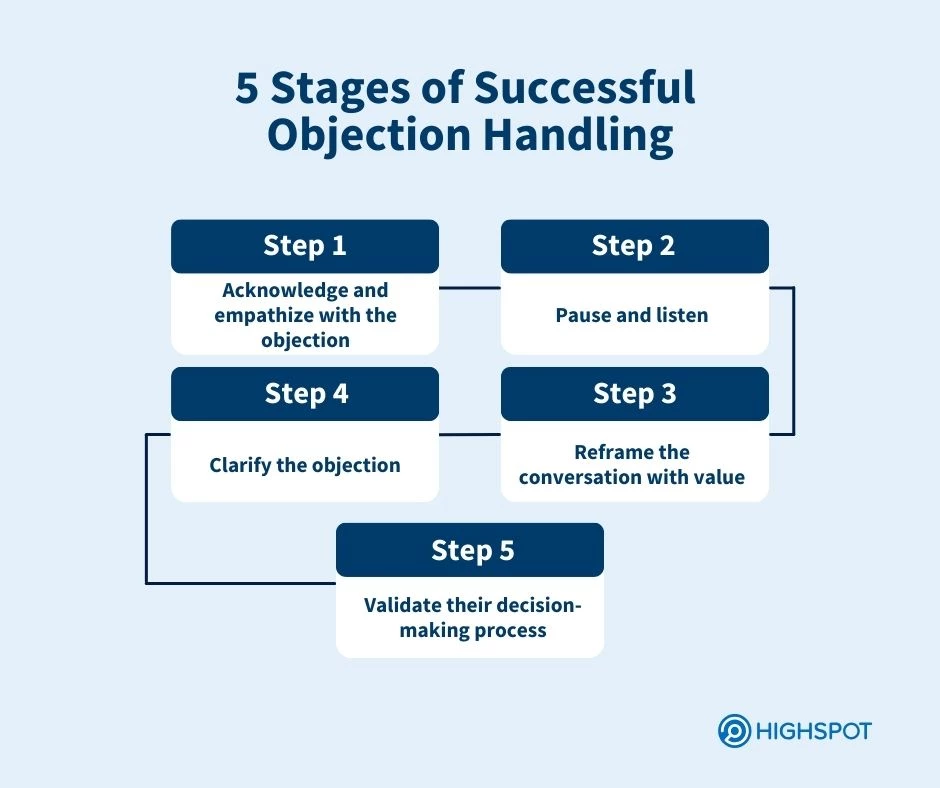
Even the best processes fall apart if those executing them don’t know what they’re doing. It’s vital to adequately train your team in messaging, cadence, and objection handling. This creates the foundation for scalable, repeatable outreach.
Equip your team with:
- Proven scripts and message templates
- Objection handling frameworks
- Ongoing feedback and teardown sessions
- Defined KPIs (meetings booked, positive replies, close rate)
Build a feedback loop:
Hold weekly stand-ups or debriefs to keep your team aligned and continuously improving. Use the stand-ups to review top-performing messages, identify what’s working, and share insights across the team. You can also celebrate small wins to keep up morale. But when something isn’t landing, be sure to course-correct ASAP.
The Ultimate Agency Prospecting Playbook: Final Words
The agencies that win at outbound don’t just send better messages — they build better systems. They know exactly who they’re targeting, show up consistently, and measure what matters. And above all, they treat prospecting as a long-term investment, not a short-term fix.
If you’re ready to turn cold outreach into consistent deal flow, don’t go it alone. Whether you're looking to build your first outbound engine or optimize one that’s underperforming, there are agencies and consultants who specialize in this.
Our team ranks agencies worldwide to help you find a qualified partner. Visit our Agency Directory for the top business consulting companies, as well as:
- Top Small Business Consulting Firms
- Top Startup Consulting Firms
- Top HR Consulting Firms
- Top Software Consulting Companies
- Top IT Consulting Companies
Our design experts also recognize the most innovative design projects across the globe. With a growing wave of fresh branding, be sure to explore our Awards section.
The Ultimate Agency Prospecting Playbook FAQs
1. Should founders be doing the prospecting themselves?
In early-stage agencies, yes. Founders often get better response rates because prospects see them as decision-makers. As you grow, however, you should document your process and gradually hand it off.
2. How do I know if my offer is resonating?
If your open and reply rates are decent but positive replies and conversions are low, your offer or positioning may not be aligned with the prospect’s priorities. Test different pain points and value propositions to refine your approach.
3. How do I re-engage old prospects who went cold?
Use a “breakup” email with a lighter tone or follow up months later with new value — a recent case study, article, or relevant win, for example.
4. Can I outsource prospecting to a freelancer or lead gen agency?
You can — but be cautious. Outsourcing can save your business time, but it only works well when you’ve already dialed in your ICP, messaging, and offer. Otherwise, you risk burning through leads with generic outreach.