
Traditional go-to-market strategies aren’t cutting it anymore. For manufacturers, the pressure is on to modernize, reach today’s buyers where they are, and stay competitive in a digital-first world.
Digital Marketing for Manufacturers: Key Points
- Through multichannel content, blog strategy, and eCommerce investment, Caterpillar exceeded $2B in online revenue, with a 3-year goal to grow that by another 50%.
- GE used LinkedIn Sponsored and InMail to generate 1,700 leads and $1M+ in business, achieving a 13% open rate and 5.75% interaction rate on content ads, far above B2B benchmarks.
- Powerhouse Boiler grew revenue by 74% and increased organic B2B leads by 190% in one year by transforming its site into a knowledge hub with SEO-driven content and calculators.
Why Digital Marketing Is Now Critical for Manufacturers
Related Articles:
1. How To Create a Successful SEO Content Strategy
2. Top Marketing Statistics for 2025
3. Content Marketing KPIs To Track
4. AI in Digital Marketing
Strategic Digital Marketing Tactics for Manufacturing Brands
Modern manufacturing marketing is all about precision.
These proven digital tactics help you reach the right buyers, speak their language, and guide them through long, complex sales cycles.
- SEO for specification-driven search
- LinkedIn and paid media for B2B precision
- Content marketing that converts technical audiences
- Email automation for long B2B sales cycles



1. SEO for Specification-Driven Search
Industrial buyers often search by very specific terms, such as model numbers, industry standards, and part specifications, when looking for products.
Capturing this high-intent traffic is where search engine optimization (SEO) shines:
- Optimize product pages with technical detail and schema. Include CAD drawings, spec sheets, part numbers, certifications, and application data on your pages so that search engines index this content.
- Build a content hub around industry-specific terms. For example, create blog articles, FAQs or white papers targeting phrases like “ISO 9001 certified cable assembly.” By addressing niche questions and keywords that engineers ask, you become a go-to resource.
- Leverage the power of part numbers and datasheets in SEO. Make sure product model numbers and technical names are present in page titles and headings. Track search visibility for these terms and related engineering keywords.
2. LinkedIn and Paid Media for B2B Precision
When it comes to B2B targeting, LinkedIn is unmatched for reaching decision-makers in industrial companies.
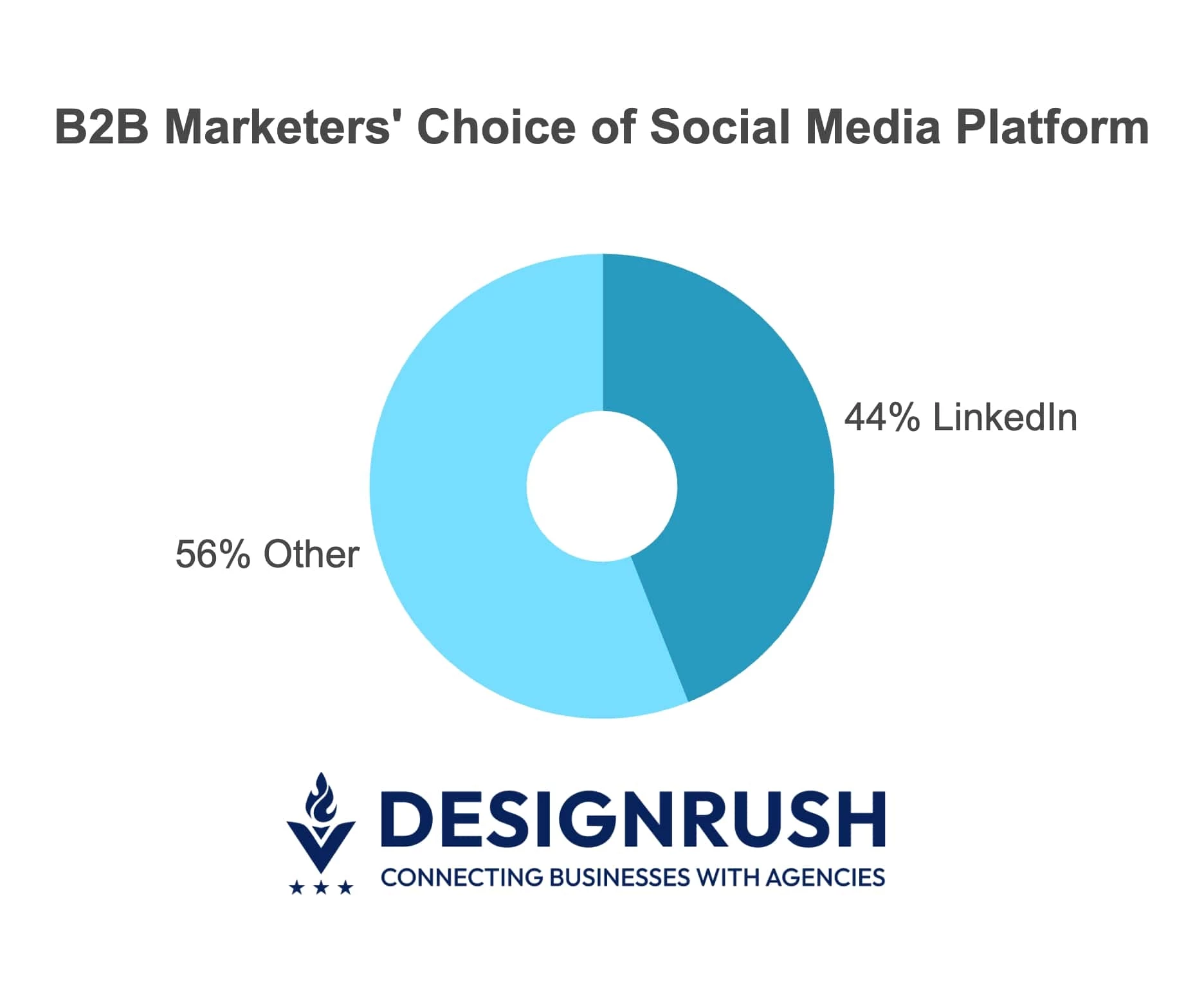
In fact, 44% of B2B marketers name LinkedIn as the most effective social media platform for their needs.
How can manufacturers leverage it?
- Target by job title, industry, and skills. LinkedIn’s ad platform lets you pinpoint roles like “Maintenance Manager,” or “Procurement Director” at specific types of companies. This ensures your ads reach the exact people who influence purchasing.
- Use LinkedIn Lead Gen Forms to capture RFQ-ready contacts. These ads allow prospects to submit their name, email, company, etc. with one click, which is very useful for quickly collecting leads such as engineers downloading a spec sheet or managers wanting a demo.
- Retarget interested prospects with Google Ads or display ads. After someone visits your site or engages with your LinkedIn content, you can use remarketing ads on the Google Display Network to stay top-of-mind.
3. Content Marketing That Converts Technical Audiences
Technical buyers crave specificity and utility, not marketing fluff.
In manufacturing, B2B content marketing works best when it educates and enables the target audience (engineers, plant managers, etc.).
Effective industrial content includes:
- In-depth white papers and guides: e.g. a guide detailing “5 Ways to Improve Cleanroom Production” or a white paper breaking down use-cases by industry for your product line. Such content positions your brand as a knowledge leader and gives prospects confidence in your expertise.
- CAD file libraries and ROI calculators as gated assets: Offering downloadable 3D CAD models of your components or interactive calculators in exchange for an email is a great way to attract design engineers and procurement officials.
- Video demos and virtual factory tours: A video demo of a machine on a factory floor, or a 3D animation of your product in operation, can communicate value more effectively than brochures.
JB Floyd, President of LeadValets, offers some insightful advice on this: “To start, truly knowing your audience is crucial. It's about understanding their needs and speaking their language while still highlighting the technical specs they require.”
4. Email Automation for Long B2B Sales Cycles
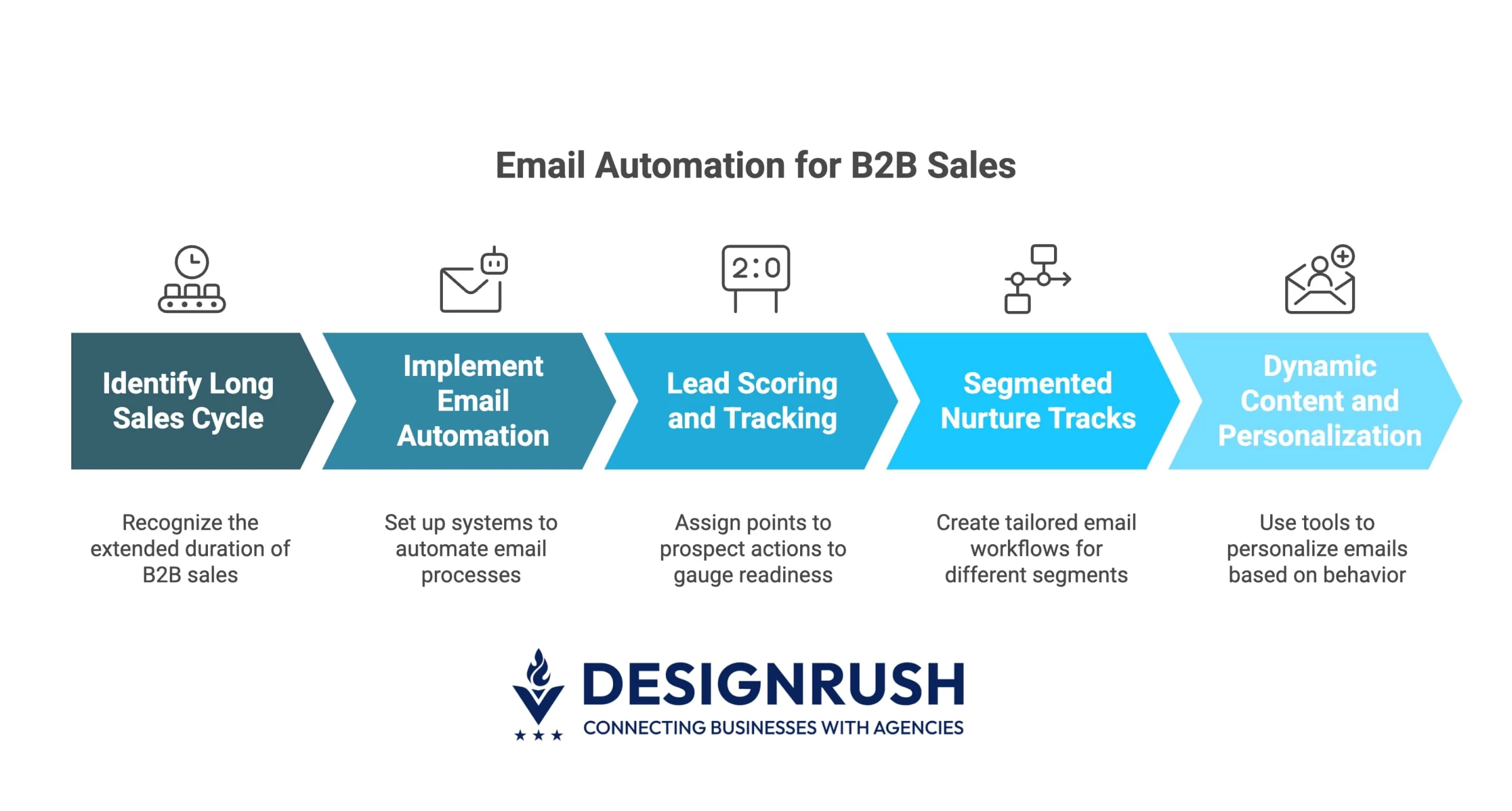
Manufacturing sales cycles can range from 6 to 18+ months, given the high stakes and technical evaluations involved.
Email automation is essential for nurturing prospects over this long journey and keeping your brand in the conversation.
Key tactics include:
- Lead scoring and behavior tracking. Assign point values to prospect actions – e.g. visiting a product page (+5 points), downloading a spec sheet (+10), attending a webinar (+15). When a lead’s score crosses a threshold, it signals they’re sales-ready.
- Segmented nurture tracks. Set up different email workflows for different segments: for example, one series of drip emails for automotive industry prospects, another for food & beverage industry prospects, or segments by job role. Tailoring the content by segment greatly increases relevance and engagement.
- Dynamic content and personalization. Use automation tools to personalize emails with each lead’s name, company, and even behaviors. For instance, if a prospect previously downloaded a white paper on “Automation Robotics,” your next email can automatically include a relevant case study on robotics integration.
As Leslie Licano, Co-Founder and CEO of Beyond Fifteen Communications, puts it: “It’s about deploying the right mix of strategies and tactics to transform those blink-of-an-eye moments into omnichannel marketing campaigns that build enduring brand recognition, bolster credibility, and generate strong marketing-qualified leads.”
These proven digital tactics help you speak your audience’s language and guide them through long, complex sales cycles with confidence.
Case Studies: Manufacturing Firms Winning Digitally
Manufacturing companies across various sectors are embracing digital marketing and seeing tangible results.
From heavy equipment giants to niche industrial firms, these case studies show how strategic use of SEO, content marketing, social media, and automation can dramatically boost leads, inquiries, and revenue.
- Caterpillar: Driving online sales and customer engagement
- Powerhouse Boiler (Atlas Copco): Content marketing fueling growth
- Fisher Tank: Traditional manufacturer goes inbound for big gains
- General Electric: Thought leadership and engagement at scale
Caterpillar: Driving Online Sales and Customer Engagement
Caterpillar, a globally recognized heavy equipment manufacturer, has successfully leveraged digital channels in 2022 to better serve customers and drive sales.
Known for its traditionally conservative culture, Caterpillar transformed its marketing by embracing blogs and social media to connect with its blue-collar customer base.
Caterpillar’s Digital Strategy

A strong multichannel strategy, including an industry-leading blog community and active Facebook, X, and YouTube presence, helped Caterpillar engage customers in real time.
Crucially, the company invested in eCommerce and personalized digital content to capture parts sales online, complementing its dealer network.
Results Achieved
- Caterpillar surpassed $2 billion in online parts sales in 2022 and set a goal of increasing online parts revenue by a further 50% within three years.
Powerhouse Boiler (Atlas Copco): Content Marketing Fueling Growth
Powerhouse Boiler Equipment, a family-owned boiler manufacturer and rental firm, illustrates how even mid-sized manufacturers can leverage content and SEO for explosive growth.
Powerhouse Boiler’s Digital Strategy
artnering with a digital agency to modernize its marketing, Powerhouse invested in educational content (blogs, guides, tools) and search optimization to reach customers beyond its traditional word-of-mouth base.
Results Achieved
- By turning its website into a boiler knowledge hub (with how-to articles, case studies, and even boiler sizing calculators), Powerhouse achieved a 190% increase in organic B2B leads within a year of the content marketing rollout.
- Over four years, the company’s revenue grew from $23 million to $40 million (a 74% increase), largely credited to its expanded digital marketing (consistent content expansion, SEO, and targeted paid promotions).
- The site secured 125 keywords in top 3 Google positions, doubling the conversion rate of organic visitors into leads year-over-year.
Fisher Tank: Traditional Manufacturer Goes Inbound for Big Gains
Fisher Tank Company, a US manufacturer of large industrial storage tanks, proved that even a very traditional B2B business can win big with inbound marketing.
After 60+ years of relying on cold calls and referrals, Fisher Tank decided to “spruce up” its web presence and offer valuable online content.
Fisher Tank’s Digital Strategy
The company launched a blog, promoted content via social media, and provided free downloadable resources for engineers and facility managers – a bold move in an industry that had been mostly offline.
Results Achieved
- Website traffic climbed by 119%, and traffic from social media spiked by an astounding 4,800% after Fisher Tank began actively sharing content on platforms like LinkedIn and industry forums.
- The company saw a 3,900% increase in lead conversions (e.g. visitors filling out contact forms or downloading specs) and a 500% increase in quote requests for new tank projects.
- Within the first year of its digital campaign, Fisher Tank generated roughly $3.4 million in new qualified sales opportunities attributable to inbound marketing.
General Electric: Thought Leadership and Engagement at Scale
General Electric (GE), one of the world’s largest industrial manufacturers, has made digital marketing a centerpiece of its brand strategy.
GE’s Digital Strategy
GE ran targeted content campaigns on LinkedIn using Sponsored Content ads and InMail, focusing on industries like energy and healthcare.
Results Achieved
- An average 5.75% interaction rate on content ads, yielding over 1,300 content downloads by interested professionals.
- GE’s LinkedIn Sponsored InMail messages achieved open rates as high as 13% – unusually high for B2B email outreach.
- One GE content campaign leveraging mixed media (white papers, infographics, webinars) generated 1,700 leads and $1 million in new business for a B2B software offering.
A Digital Maturity Model for Manufacturers
Now comes the big question: Are you really ready for this?
To help prioritize investment and execution, manufacturers can use a four-stage digital marketing maturity model.
Identify your current stage to determine where to focus next:
Maturity Stage | Characteristics | Strategic Focus |
Stage 1: Legacy | Reliant on trade shows; minimal web presence; few online leads. | Establish a modern website; basic SEO for visibility. |
Stage 2: Reactive | Sporadic content; no CRM or automation; online efforts ad-hoc. | Set up a lead funnel — implement lead capture forms, CRM integration, and regular content updates. |
Stage 3: Proactive | Consistent SEO and some paid ads; beginning automation (email, CRM); tracking KPIs. | Multi-channel alignment (SEO, PPC, email, social); lead scoring and segmentation to qualify and nurture leads. |
Stage 4: Predictive | Integrated CRM with analytics; personalization at scale; data-driven decisions. | AI-driven insights (e.g. predictive lead scoring); Account-Based Marketing (ABM); content for IIoT and emerging trends. |
Understanding your stage helps pinpoint the next digital investments.
For example, a Stage 1 firm might start with a website overhaul and SEO for product keywords, whereas Stage 4 companies push into AI-driven personalization or advanced eCommerce experiences.
What’s Next: Future-Proofing Industrial Marketing
We’ve done all the work, but if the solution isn’t future-proof, it won’t hold up for long.
Looking ahead, a wave of emerging technologies and trends is set to transform how industrial buyers and sellers connect and do business:
- Predictive analytics for lead scoring
- Artificial intelligence in the sales process
- Interactive 3D product configurators
Predictive Analytics for Lead Scoring
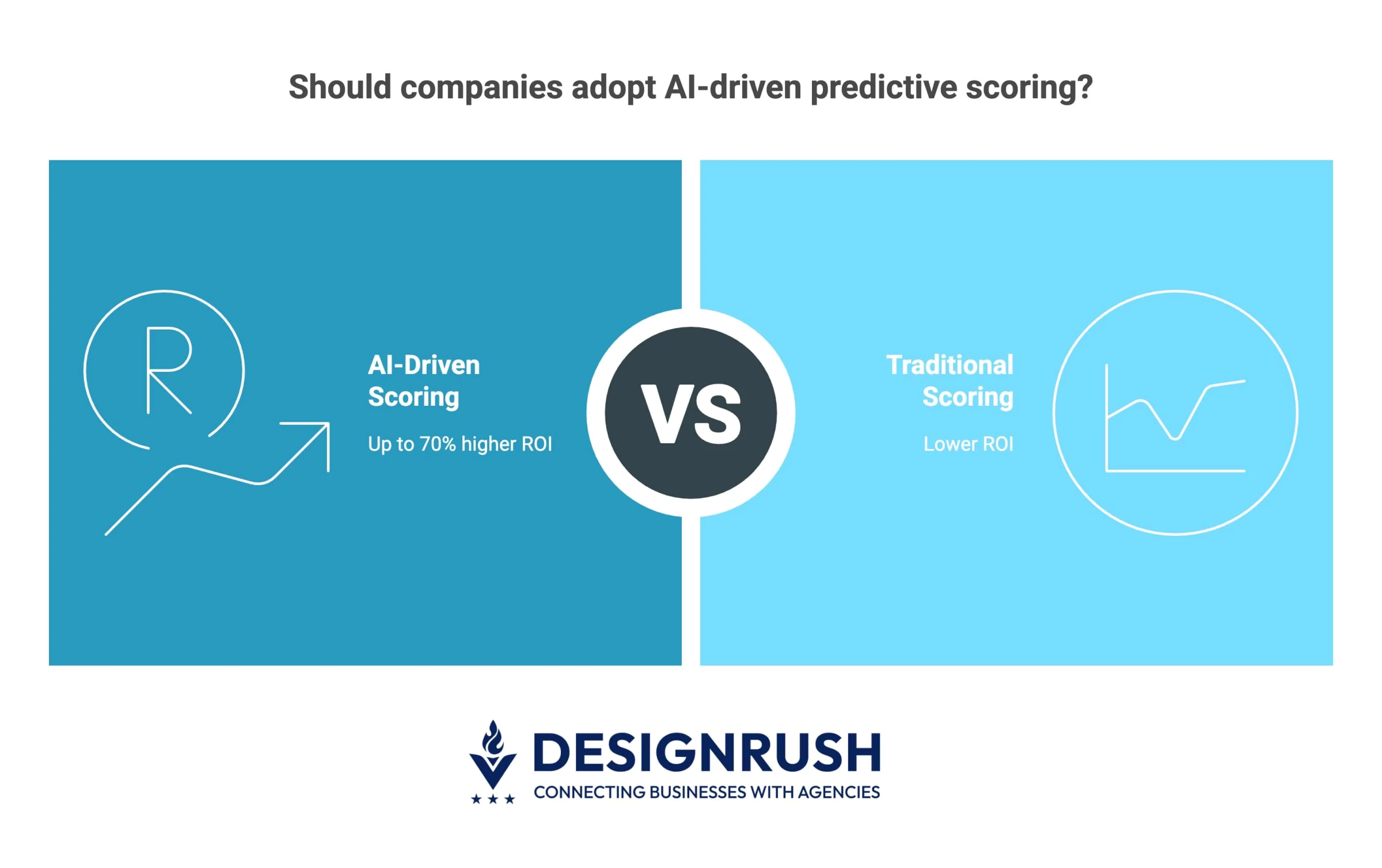
Instead of manually assigning points, advanced manufacturers are leveraging machine learning on CRM data to predict which leads are most likely to convert.
These predictive lead scoring models consider thousands of data points (website clicks, email opens, firmographics, past purchase history, etc.) and output a conversion probability.
This improves close rates by focusing sales effort where it truly counts.
Companies employing predictive scoring have seen significant efficiency gains — one report noted up to 70% higher lead-to-deal conversion ROI for businesses that adopted AI-driven scoring.
Artificial Intelligence in the Sales Process
According to Floyd, "The next big innovation in digital marketing for manufacturing companies will likely be the integration of AI and ML."
AI is already being used to analyze buyer behavior and make smart recommendations.
For example, AI-driven configurators can suggest optimal product configurations based on a customer’s requirements, essentially generating spec recommendations that speed up the quote process.
Faster speed-to-quote means higher win rates.
Interactive 3D Product Configurators
These online tools allow prospects to virtually build or customize a product (for instance, designing a hydraulic cylinder by selecting bore size, stroke, materials, etc.), and then download the CAD model or get an instant quote.
Such deep product engagement not only delights prospective customers but also yields invaluable data on their specific needs.
Final Thoughts: The Time to Digitize Is Now
Whether you’re a manufacturer looking to scale up growth or an agency looking to break into a high-potential niche, the path forward is clear: digital.
By investing in the right strategies and tools, even traditional B2B companies can build a scalable, data-driven marketing engine that fuels sales performance for years to come.
The time to act is now. Those that move quickly to modernize their marketing will capture market share and establish themselves as industry leaders. Those that don’t simply risk falling behind.

Our team ranks agencies worldwide to help you find a qualified partner. Visit our Agency Directory for the top digital marketing companies, as well as:
- Top Manufacturing Marketing Agencies
- Top Manufacturing SEO Agencies
- Top Manufacturing Consulting Firms
- Top Manufacturing Software Development Companies
- Top Industrial Design Companies
Our design experts also recognize the most innovative design projects across the globe. Given the recent uptick in web design, you'll want to visit our Awards section for the best & latest in manufacturing website designs.
Digital Marketing for Manufacturers FAQs
1. Which digital channels work best for manufacturers?
SEO helps capture spec-based searches like part numbers. LinkedIn is great for targeted B2B outreach by role and industry. Email automation nurtures long sales cycles, while Google PPC ads offer quick visibility. Industry directories and webinars can also work, just focus on where your buyers spend time online.
2. How fast can manufacturers see ROI from digital efforts?
Timelines vary by channel. SEO takes 3–6 months, though niche markets may see faster results. Paid ads can deliver leads within 30–60 days. Email automation gains traction over time but can revive old leads in the first month or two. Set clear metrics like CPL or MQLs to track progress.
3. Can small manufacturers really benefit from digital marketing?
Small and mid-sized manufacturers often see quick digital ROI. Niche SEO can rank you high with minimal effort, and a small LinkedIn budget can reach exactly the right buyers. Plus, smaller teams are more agile and able to pivot and publish faster than big firms.