
Where your audience scrolls, shops, and taps matters. From app development to ad targeting, knowing who’s using what (and why) can shape your entire mobile strategy. In this article, we dive into the latest iPhone vs. Android statistics to help you market smarter, build better, and invest where it counts.
iPhone vs. Android: Key Points
- iPhone leads in affluent markets like the US and Europe, while Android dominates in emerging economies. Tailor your app and ad strategies based on the platform's regional strengths.
- Both platforms show loyalty, but Android users tend to stay due to affordability, while iPhone users are drawn to design and ecosystem perks.
- iOS users spend significantly more on in-app purchases and subscriptions, making iOS the preferred platform for monetized apps.
Global Market Share Insights and Implications
Understanding the market share between these two devices is essential for any business looking to optimize their mobile strategy. Let's dive into how the smartphone market looks globally and what businesses should think about when planning their campaigns.
Market Share Overview
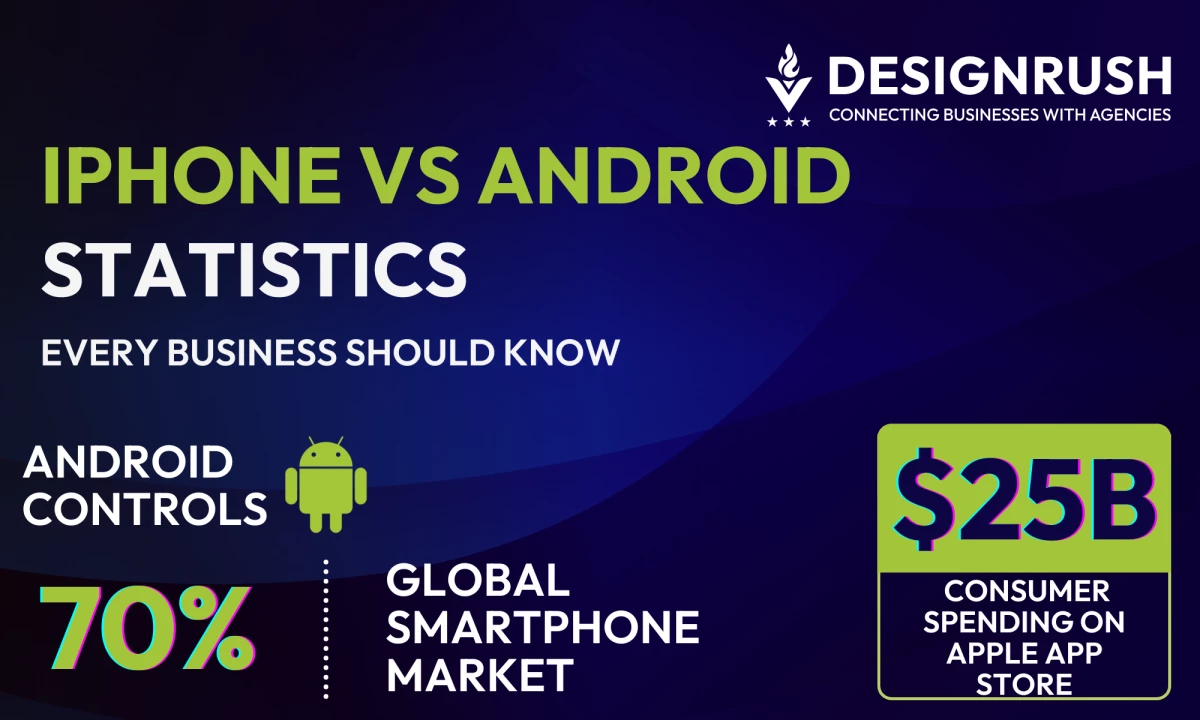
While Android controls roughly 70–75% of the global smartphone market, the real story lies beneath the surface, especially for businesses aiming to fine-tune their mobile strategies. In high-income countries like the USA, iPhone now commands a slim majority. This means your app design, ad formats, and customer experience strategies should shift depending on where your customers are.
Actionable Advice for Businesses
- Segment your mobile strategy by region. For USA, UK, and affluent European customers, optimize for iOS first — this includes everything from app development to paid media buys.
- In price-sensitive markets like India or Southeast Asia, Android-first is non-negotiable. Your user experience, app performance, and marketing creatives should cater to a broader range of device capabilities and price tiers.
- Consider dual-platform strategies in transitional markets like Europe and China, where platform splits are more balanced. Use A/B testing by OS to understand which audience segments convert better and adapt your spend accordingly.
Here are a few key stats that highlight just how dramatically mobile market share varies by region — and why it matters:
- Market share varies dramatically by region. In the United States and other affluent markets, iPhones now constitute over half of smartphones, whereas Android overwhelmingly leads in emerging economies.
- This duopoly has persisted for the last decade, with Android’s global share peaking around 80% in the late 2010s and gradually dipping as iPhone adoption grows in key regions.
- Europe presents a more Android-heavy mix (~65% Android vs ~35% iOS).
- Countries like the UK bucked the trend for a while with a slight iPhone majority in September 2024 but returned to Android two months later.
- In China, Android (including Android-based forks like Huawei’s HarmonyOS) holds roughly three-quarters of the market, while iOS captures about one-quarter.
- India is an extreme case – Android accounts for about 95% of smartphones in use, with iPhones around 5%.



User Demographics
In the USA, nearly 8 in 10 adults aged 18–34 use iPhones, and their average income is around $53,000 which is 43% higher than Android users. Globally, the trend persists among wealthier young users. For brands targeting affluent, style-conscious, or early-adopter audiences, iOS should be the go-to platform.
Actionable Advice for Businesses
- Target iOS users for premium product launches, lifestyle campaigns, and influencer-driven content. This group skews younger and wealthier, especially in affluent markets.
- If your product appeals to a mass market across income levels, Android gives you a broader reach, especially in global markets.
- Keep gender dynamics in mind — especially in segments like fashion or wellness, where iOS’ female-skewed base may align better with your core customers.
These numbers show just how strong the demographic divide is between iPhone and Android users, especially when it comes to age and income:
- In the US, Gen Z and young millennials overwhelmingly prefer iPhones — about 79% of Americans aged 18–34 use iPhones.
- Globally, a similar pattern holds among affluent youth, though Android remains the majority for Gen Z and Millennials worldwide, i.e.~57% of Gen Z globally on Android vs 31% on iPhone.
- There is also a slight gender skew: women are somewhat more likely to use iPhones, whereas men are a bit more represented among Android users.
Customer Loyalty and Cross-Platform Switching Behavior
Understanding how loyal users are to their respective platforms, and what drives them to switch, can offer powerful insights for your retention and conversion strategies.
iPhone vs. Android Retention Trends
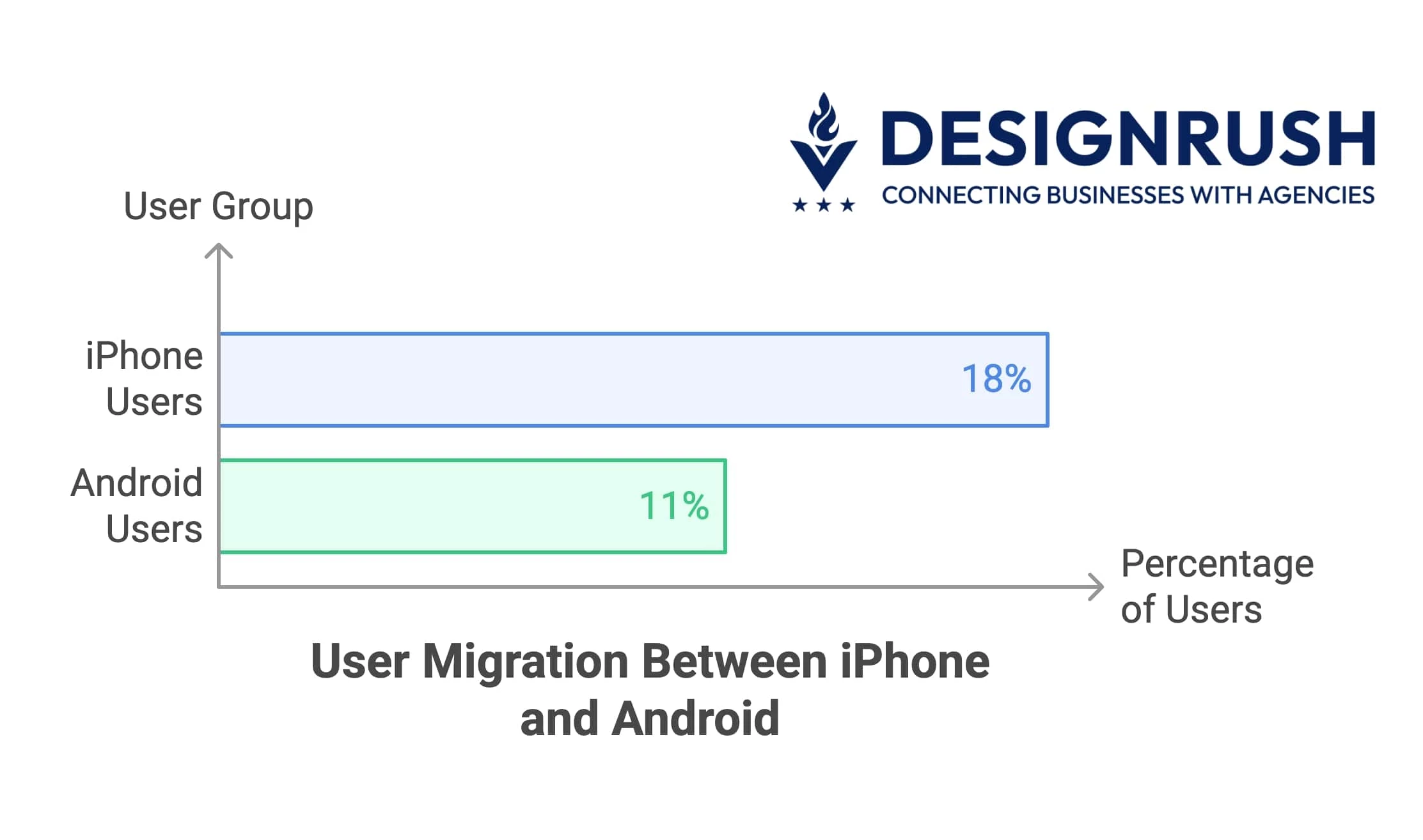
Now, this one flips the common narrative. While Apple’s ecosystem is famously "sticky," Android’s broader device options, affordability, and growing feature parity are keeping more users on board, as Neontri claims. For businesses, it’s not just about brand loyalty; it’s more about what users feel they get out of the platform.
Actionable Advice for Businesses
- Don’t assume iPhone users are guaranteed repeat customers. Android loyalty is strong, especially in regions where price sensitivity drives decisions.
- If your app or product is tied to long-term usage, don’t ignore Android-first users — they may actually stick around longer.
- Use switching trends to inform upgrade offers and loyalty campaigns. For example, emphasize value-for-money when targeting iPhone users with Android alternatives, and highlight ecosystem perks when trying to win Android users over to iOS.
- Adapt messaging by motivation:
- For Android users: stress pricing, choice, and long-term value.
- For iPhone users: focus on UX, design, and exclusivity.
What the data shows is that loyalty isn’t always about status; what really keeps people around is the value and flexibility they get:
- 52% of Android users reported they were likely to switch to Apple's mobile operating system iOS for better functionalities.
- Neontri also claims that 16.8% of iOS users would consider switching to Android for stronger AI features.
- According to CIRP, Android has about 91% customer retention rate vs. 86% for iOS.
- A 2023 survey of US consumers highlighted that user experience and ecosystem pull some Android users to iPhone, while affordability and device choice pull some iPhone users to Android. Specifically, 14% of those who moved from Android to iOS said the iPhone offered a better user experience, whereas only 4% of switchers from iOS to Android felt they got a better experience on Android.
- The same survey states that 29% of ex-iPhone users who switched to Android did so for better pricing or value, compared to only 11% of Android-to-iPhone switchers citing price as a factor.
App Usage Patterns
Here’s an important trend we’re seeing in behavior: iPhone users are not just more affluent; they’re significantly more willing to spend on apps, subscriptions, and in-app purchases. If you’re monetizing through digital services, iOS is your primary revenue engine.
Statista found out that the Apple App Store consistently registers higher revenues than its main competitor, the Google Play Store. During the second quarter of 2024, the Apple App Store generated approximately $25 billion dollars in consumer spending on in-app purchases, subscriptions, and one-time payments.
Actionable Advice for Businesses
- Prioritize monetization features on iOS first. Whether you’re launching a paid app, subscription service, or in-app upsell, iOS users are more likely to convert.
- Segment user engagement strategies by OS. Android users might need more freemium options, value-based messaging, or broader distribution tactics via alternative app stores.
- Focus user acquisition spend on iOS in high-income markets like the US, China, and Japan, where App Store revenue is highest and consumer willingness to pay is proven.
- Don’t ignore Android’s scale, but don’t expect equal revenue behavior. Leverage Android for reach, and iOS for revenue.
These statistics underscore just how much more iPhone users spend, giving iOS a clear lead when it comes to monetization:
- The same Statista study found that during the first half of 2024, the United States was the largest market for iOS, as users in the country spent approximately $6.5 billion on the Apple App Store. China and Japan followed, with consumers spending $4.6 billion and $1.73 billion, respectively.
- When compared to iOS apps on the Apple App Store, Android apps have fewer download barriers and can be obtained by users across alternative app marketplaces as well as via the open web.
- About 86% of photographers favor iPhones for non-professional photography over Android smartphones.
- Android offers more app categories – 33 vs. 24 on iOS – and a greater variety of device form factors.
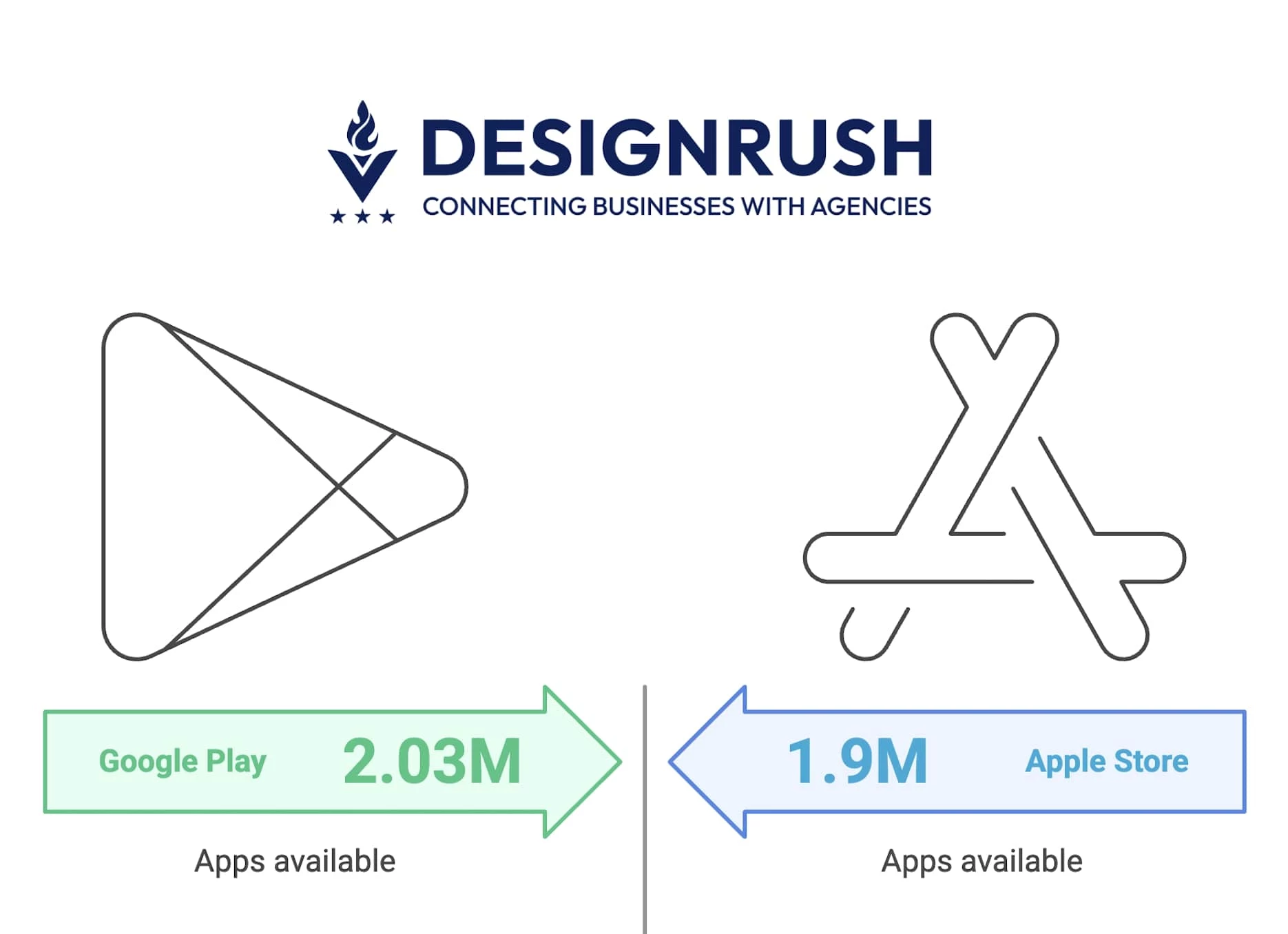
- As of June 2025, the Google Play Store hosts around 2.03 million apps, while the Apple App Store offers roughly 1.9 million.
- The same research found that Apple App Store has 1.96 million apps available for users to download.
- In online shopping, both platforms are important, but iOS users often drive a slightly larger share of revenue relative to their numbers. Invesp found no significant difference in raw mobile conversion rates in 2024, i.e. roughly 1.8–1.9% of mobile website visits convert to purchases on each OS.
Customer Satisfaction Insights
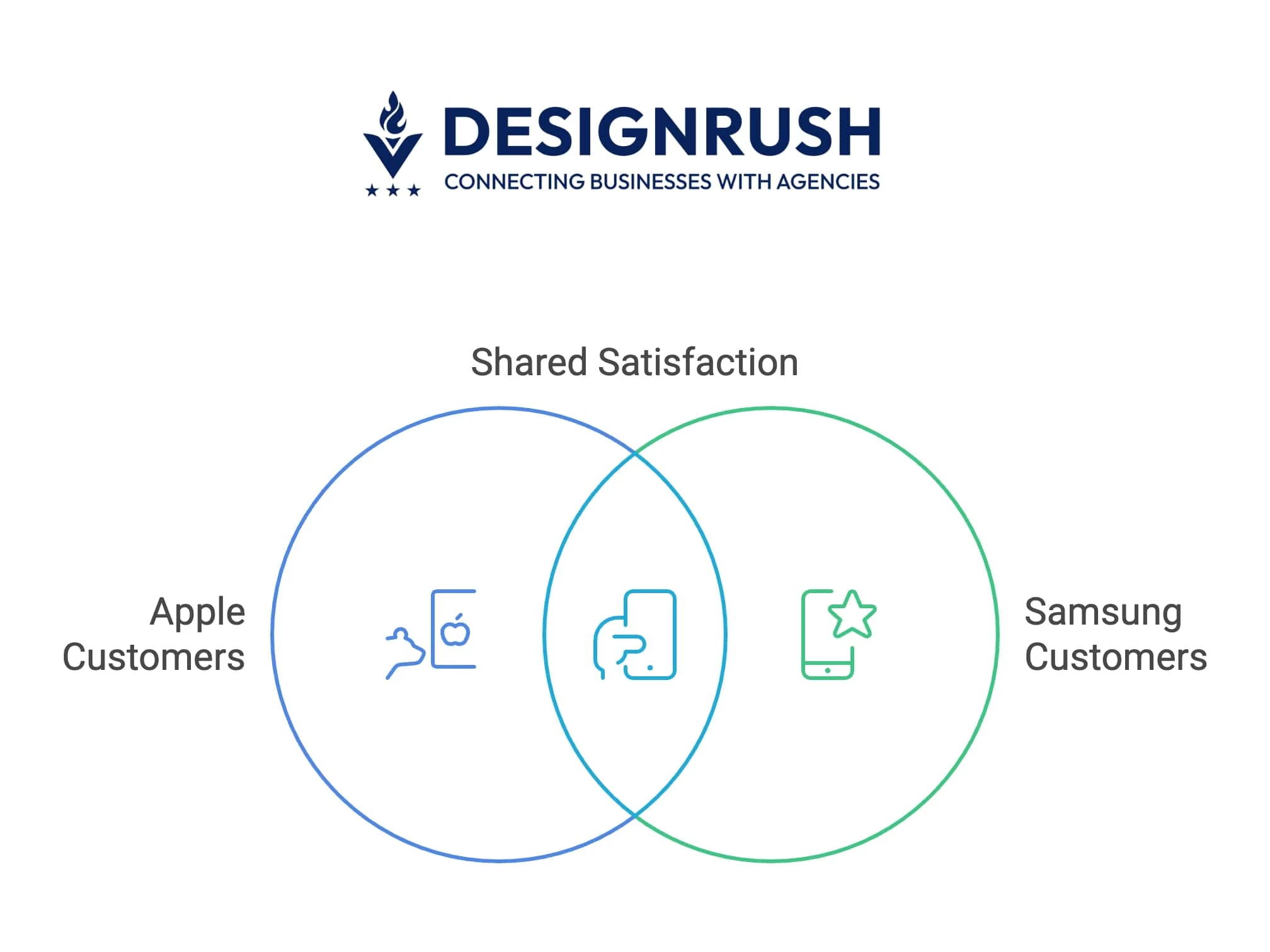
While customer satisfaction scores are tied, as Apple and Samsung both scored 82/100 in a 2024 American Customer Satisfaction Index survey, long-term device retention tells a deeper story about brand trust and product lifespan. iPhone users aren’t just happy — they’re committed.
For businesses, it means you can expect more consistency and loyalty from iOS users in the long run.
Actionable Advice for Businesses
- Prioritize retention strategies on iOS as those users are more likely to stay in your ecosystem. Think long-term: subscriptions, memberships, or loyalty programs will likely perform better among iPhone users.
- Consider device lifespan in UX and app development. iPhones may remain in use longer, so ensure backward compatibility with older iOS versions to keep engaged users onboard.
- If developing wearables or integrations, tap into iPhone users’ deep Apple ecosystem loyalty.
- For Android, tailor offers around upgrade cycles and variety. With shorter device retention, Android users may be more open to trying new apps or services with each new device.
While the satisfaction scores may be similar, iPhone users tend to stay loyal longer and are more invested in the Apple ecosystem:
- The same customer satisfaction survey says that both greatly outscored other manufacturers’ Android devices (Google’s Pixel scored in the 70s).
- Samsung smartwatch satisfaction (83 points) outpaces Apple by 3 points after promises of the Apple Watch Ultra 3 shifted from 2024 to late 2025.
- 61% of iPhone buyers had their previous iPhone for two years or more, compared to 43% of Android owners. Furthermore, 29% of iPhone owners had their last device for three years or more, while only 21% of Android owners could say the same.
- 79% of iPhone users who own a smartwatch, or a fitness tracker, use an Apple watch vs. just 22% of Android users.
Ad Targeting and Performance Across Platforms
When it comes to advertising, iOS and Android perform differently. Understanding these differences is valuable for optimizing ad spend and user acquisition.
Advertising Performance
Now, this is a wake-up call for performance marketers: iOS users don’t just click more, but they also spend more. Despite higher ad costs on iOS, brands are doubling down because the returns are significantly stronger. If you’re focused on profitability per user, iOS is where your ad dollars should be working hardest.
Actionable Advice for Businesses
- Prioritize iOS for high-value customer acquisition, especially if your app uses a subscription model or in-app monetization.
- Be prepared to pay more per click on iOS but know that the ROI is likely worth it. Factor higher average revenue per user (ARPU) into your customer acquisition cost (CAC) thresholds when scaling paid campaigns.
- Invest in premium ad creatives for iOS users, where click-through rates are roughly double those on Android. This audience responds well to polished, high-quality placements.
- Don’t abandon Android, just adjust your goals. Lower CPI and slightly higher install conversion rates on Android make it ideal for scale or awareness-focused campaigns.
- Run A/B tests by OS to fine-tune creative, messaging, and landing pages. The economics and behavior differ significantly between platforms.
Here’s some compelling data showing why brands often pay a premium to target iOS users, and why it usually pays off:
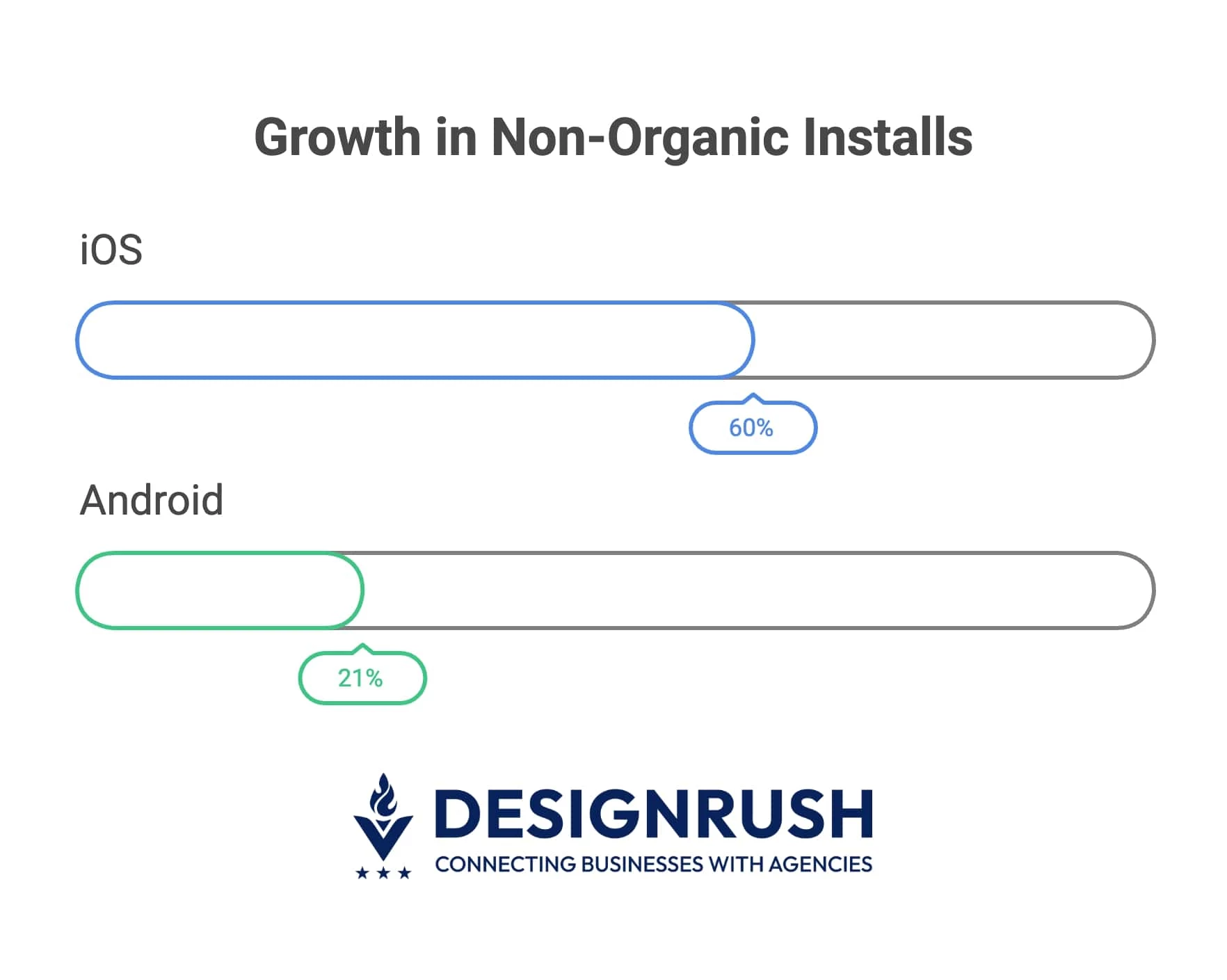
- According to AppsFlyer report, there was a 60% YoY surge in iOS non-organic installs (NOIs) in Q4 2023. Economic recovery and confidence in measurement drove up ad spend and consequently marketing-driven installs on iOS, while Android NOIs grew by 21% driven by a drop in CPI.
- The same report says this reflects the higher ROI per user on iOS — advertisers increased iOS app-install ad spend by over 43% year-over-year, while cutting Android spend by 18%.
- AppsFlyer also states that mobile ad CTR tends to be higher on iOS. For example, premium in-app ads on iOS see roughly double the click-through rate of those on Android (~3.2% vs. 1.6%).
- Advertisers do pay a premium for iPhone eyeballs. The average cost-per-click on mobile is about $1.20 on iOS.
- In the first half of 2024, AppTweak found that the average conversion rate across categories in the US was 25% on the App Store and 27.3% on Google Play. The average install rate across all categories on the App Store was 3.8%.
- On mobile eCommerce websites, checkout conversion rates are also similar (~1.88% on iPhone vs 1.8% on Android).
- AppsFlyer found out in The State of App Monetization 2024 report that iOS users tend to spend more once converted. For instance, in subscription-based apps iOS users generated about 5× higher ARPU than Android users ($8.39 vs $1.54 on average).
- The same report states that even in ad-supported free apps, iOS ARPU has been recorded as roughly double Android’s ($0.77 vs $0.35).
Comparing iPhone and Android Interaction Trends
As push notification opt-ins decline and click-through rates shrink, email remains a powerful tool, particularly for iOS users. While Android dominates push reach and responsiveness, iPhone users are far more likely to engage with email content. This gives businesses a critical opportunity to rethink their messaging mix.
Actionable Advice for Businesses
- For iOS audiences, prioritize email as a primary communication and conversion channel. Their higher open rates mean your message is far more likely to be seen in inboxes than via push.
- For Android users, double down on well-timed, personalized push notifications.
- Run lifecycle marketing with platform-specific channels in mind:
- iOS = email-heavy, minimal push unless opt-in is secured
- Android = more aggressive push strategy, complemented by SMS or app inbox
- Use triggered or contextual notifications across both platforms.
- Adjust your onboarding flows to encourage opt-in on iOS.
These numbers illustrate how messaging effectiveness depends on the platform:
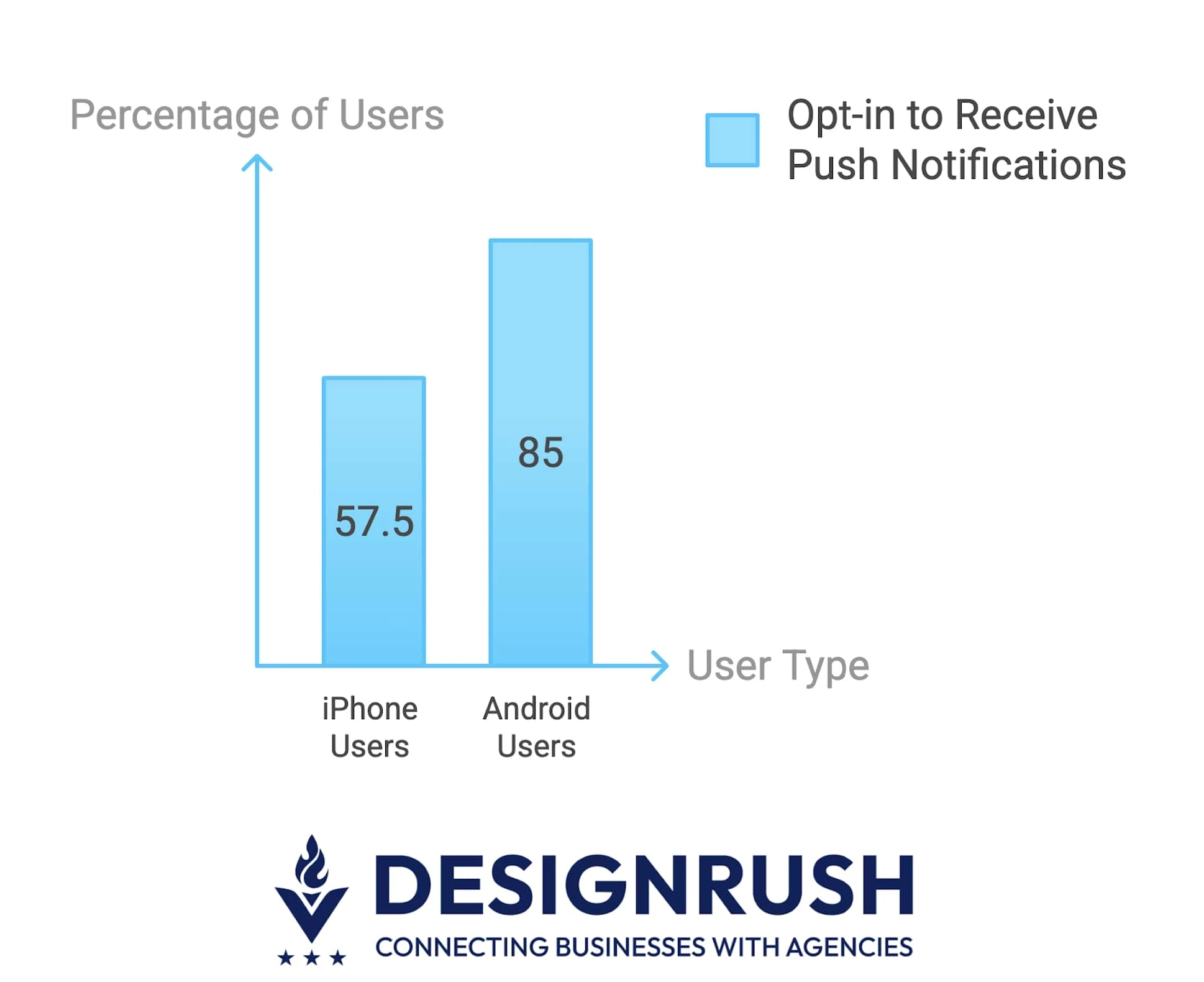
- Batch found out that because iOS requires explicit user consent, only about 55–60% of iPhone users opt in to receive push notifications, compared to ~85% of Android users who receive them by default.
- The same Batch findings state that Android’s opt-in rate has declined from ~92% to 85% after Android 13 began prompting users, but it remains much higher than iOS’s opt-in.
- Android users have historically been more responsive to push notifications than iOS users. Average push notification click-through rates on Android are around 5.3%, roughly double the ~2.7% CTR on iOS.
- Batch also found out that highly targeted pushes can perform well on both platforms — for example, one study noted triggered (contextual) notifications in certain sectors achieved 20–27% open rates on both Android and iOS.
- Mobile email engagement skews heavily toward Apple devices. An estimated 28.4% of all email opens occur on iPhones (and another ~9% on iPad), whereas only about 2.3% of opens happen on Android phones.
Insights into Social Media Behaviors
Platform preferences and influencer engagement differ between iOS and Android users, impacting marketing strategies.
Social Media Platform Preferences
For marketers targeting Gen Z in high-income markets, iPhones are a social currency. This dominance shapes everything from influencer reach to which features (like iMessage or FaceTime) can make or break a campaign’s viral potential. If you want to build buzz, build for iOS first.
Actionable Advice for Businesses
- Focus iOS-first in youth-targeted markets like the US, UK, Japan, and Australia. These audiences drive early adoption and trend amplification on iPhones.
- Leverage iMessage marketing creatively. Sticker packs, custom iMessage apps, or shareable content formats can spread virally in tightly knit iOS social circles.
- For global reach, build Android resilience. In regions like India, Africa, and Latin America, campaigns should be optimized for varied device specs, lower bandwidth, and Android app behaviors.
- Test region-specific app features or campaign formats. What works in New York or Tokyo won’t necessarily translate to Lagos or São Paulo.
The data below shows just how dominant iPhones are among teens and young adults in high-income countries, especially when it comes to peer-to-peer sharing and social status:
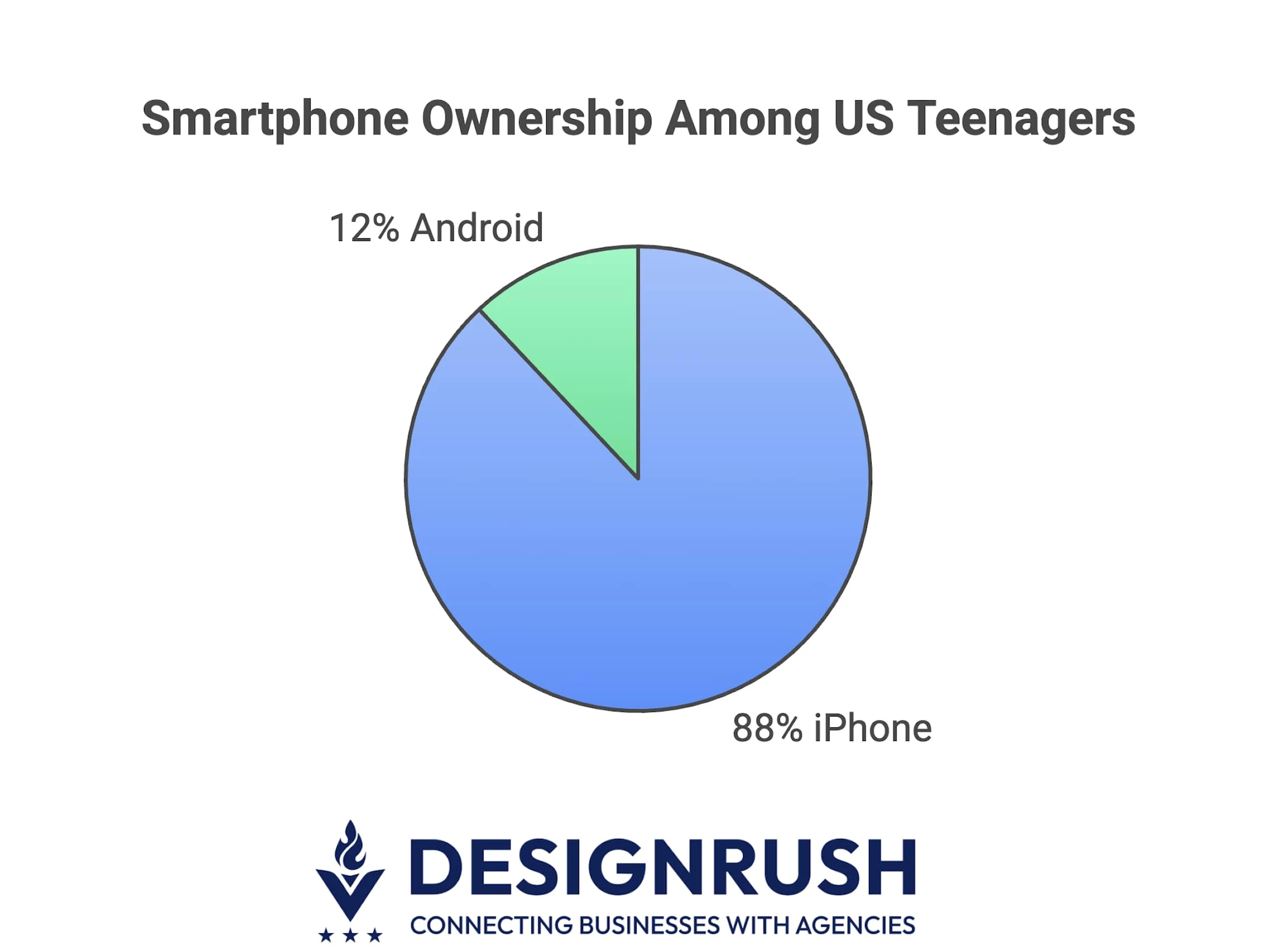
- 88% of US teens own an iPhone and a similar percentage expect their next phone to be an iPhone.
- iMessage (with features like Animoji, Memoji stickers) is a key channel for peer-to-peer sharing among iPhone users; some marketing campaigns have leveraged iMessage apps or sticker packs to go viral within iOS.
Influencer Engagement on iPhone vs. Android
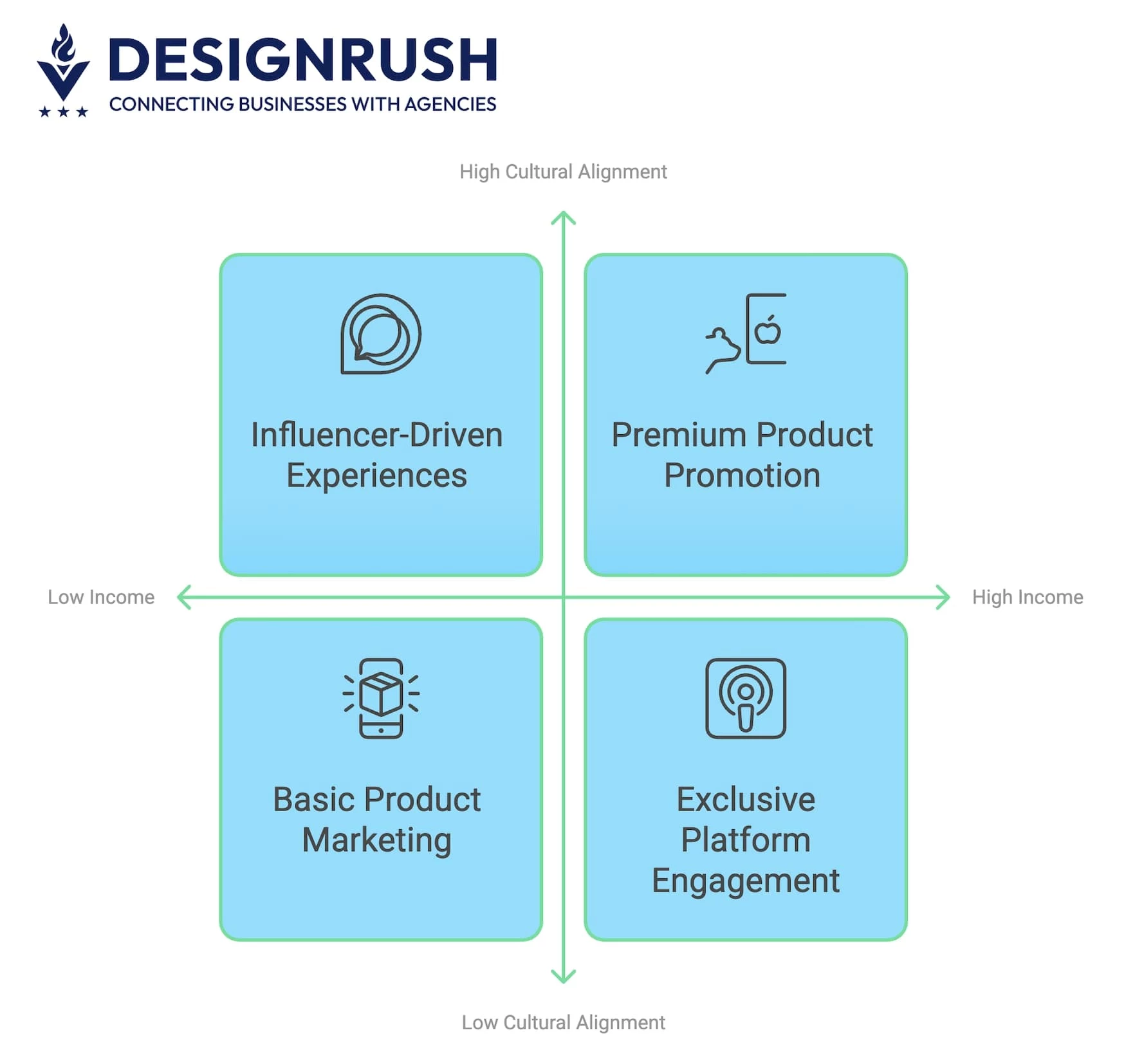
For brands looking to sell premium products or elevate their positioning, iOS users are fertile ground. Their higher average income, cultural alignment with exclusivity, and preference for platforms like Apple Podcasts make them especially receptive to curated, influencer-driven experiences.
On the other side, Android users bring massive scale and regional diversity, making them ideal for value-driven or utility-first influencer campaigns.
Actionable Advice for Businesses
- Segment influencer campaigns by platform and audience profile:
- Use iOS-targeted influencers (especially those on Instagram or Apple Podcasts) to push luxury, fashion, wellness, or tech-forward products.
- Target Android audiences through YouTube, WhatsApp forwards, or regional creators for broader reach and value-centric messaging.
- Leverage creator bias in your favor. Many influencers prefer iPhones for content creation due to superior cameras and tools, so product placements on iOS may feel more natural and visually polished.
- Test exclusive launches (like an iOS-first app, product drop, or code) to generate FOMO among premium buyers and then follow with Android-friendly versions to scale up.
These stats reflect how iOS and Android shape different types of influencer campaigns, from aspirational and polished to broad and practical:
- iPhone users, who generally have higher incomes in many countries, might be more responsive to aspirational lifestyle influencers and luxury brand partnerships, since those align with iOS’s premium positioning.
- Android users, with a broad demographic spread, as seen in the global market share statistics, might engage more with influencers offering practical value, deals, or regional content.
- Another trend is that many social influencers themselves prefer iPhones for content creation (due to camera quality and creator tools on iOS), which sometimes leads to subtle biases — e.g., an influencer might showcase an iPhone in content or release an exclusive iPhone app for their community first.
Strategic Forecast on the Future of Mobile Platforms
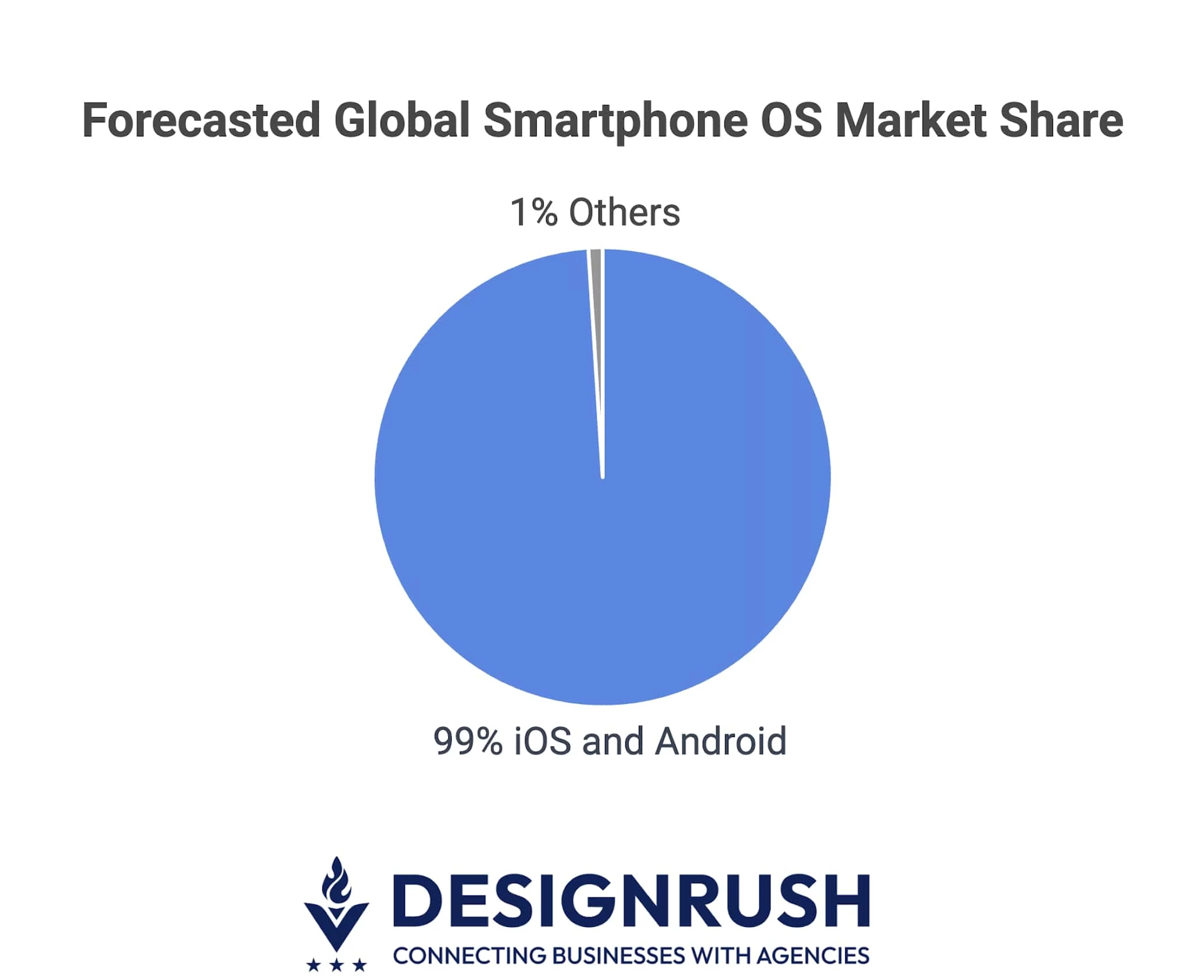
This duopoly isn’t going anywhere. Even with rising players like Huawei’s HarmonyOS in China or experimental formats like foldables, no third platform has cracked the global market since Android and iOS locked it down over a decade ago.
For businesses, there’s no real need to focus on anything other than these two platforms right now, but understanding how they’ll change over time can unlock big opportunities.
Actionable Advice for Businesses
- Optimize your digital strategy around iOS and Android exclusively. Any investment in alternate platforms (like HarmonyOS or niche OS forks) should be hyper-regional.
- Future-proof with AI readiness. Apple’s focus on privacy-preserving, on-device AI could become a huge differentiator for security-conscious brands, while Android’s real-time AI integrations offer smarter personalization at scale.
- Start testing for ecosystem convergence. Products or experiences that integrate with Apple’s upcoming AR glasses or foldables from Android OEMs will likely define the next wave of innovation.
- Capitalize on replacement cycle shifts. With consumers holding on to phones for 3+ years, retention matters more than ever. Loyalty-building content, app updates, and service-based upsells should become a bigger part of your mobile strategy.
- Target by generational and regional growth. In North America and Europe, as Gen Z and Gen Alpha age into purchasing power, iOS share may climb higher. In emerging markets, Android’s affordability and variety will continue to dominate.
The following numbers confirm what most analysts agree on: the iOS–Android duopoly isn’t just stable; it’s shaping the future of mobile innovation.
- Both platforms are so entrenched, with billions of active devices combined, no third platform is expected to challenge them globally in the near term. Even Microsoft and Blackberry failed in the past, and while Huawei’s HarmonyOS is rising in China, its international impact is limited so far. So, experts foresee iOS and Android collectively maintaining >99% share of smartphones worldwide.
- If Apple continues to execute well in emerging markets (possibly with strategies like cheaper models or local manufacturing), we could see iOS inch upward to maybe 30%+ of global share in a few years, from ~27% now. But Android is likely to remain the majority by volume given its stronghold in populous, price-sensitive regions.
- Regionally, North America and Western Europe might see further tilts toward iPhone. The USA already crossed a milestone in 2022 where iPhones (active installed base) made up over 50% of all smartphones in use.
- Some analysts think that as older generations, who may be on Android or feature phones, are replaced by younger, iPhone-loving generations, the installed base in affluent countries will keep shifting toward Apple.
- The next wave of devices could blur lines between platforms or create new battlegrounds. For instance, foldable smartphones (all currently Android) might eventually prompt Apple to release a foldable iPhone or a new device category that challenges high-end Android flagships.
- Apple’s forthcoming AR glasses or VR headset will likely integrate with iOS and could create a halo effect for the iPhone (similar to how Apple Watch further locked people into iPhones).
- AI Integration is another future focus: Google is embedding AI features (like the new Google Assistant with Bard AI, Pixel’s AI photo editing, etc.) deeply into Android; Apple is more conservative but could leverage its powerful chips for on-device AI that keeps data private.
- Bank of America (BAC) analyst Wamsi Mohan predicted that “AI-enabled ‘intelli-phones’” might be a frontier where Apple could actually gain share if they lead in AI integration without compromising privacy.
- The smartphone market globally is nearing saturation; replacement cycles have lengthened (people upgrading less frequently as we observed in the statistics above, now perhaps 3+ years on average). This means both Apple and Android original equipment manufacturers (OEMs) need to maximize value from existing users.
IPhone vs. Android: Final Thoughts
Given the behavioral and demographic differences between iPhone and Android users, it’s important to approach mobile app development with a clear platform strategy.
If your audience skews affluent or trend-driven, prioritize iOS. If you're aiming for scale in price-sensitive regions, Android is essential.
A cross-platform approach often makes sense for broader reach and efficiency.
For businesses without in-house expertise, working with a reputable mobile app development agency can help translate strategy into a polished, high-performing product.

Our team ranks agencies worldwide to help you find a qualified partner. Visit our Agency Directory for the top app development companies, as well as:
- Top Hybrid App Development Companies
- Top Cross-Platform App Development Companies
- Top Android App Development Companies
- Top iOS App Development Companies
- Top App Developers In San Francisco
Our team also highlights award-winning work on the Design Awards page, so be sure to check it out for the best and latest in app design.
iPhone vs. Android FAQs
1. Which platform should my business prioritize?
It depends on your target market. If you're focusing on affluent or younger consumers, iOS may be the better choice. For broader reach, especially in emerging markets, Android should be prioritized.
2. How should I approach app development for both platforms?
Consider developing with regional differences in mind. For high-income countries, prioritize iOS. In regions like Southeast Asia and India, focus on Android’s diverse range of devices and lower price points.
3. Are there significant differences in app monetization between iOS and Android?
Yes. iOS users are more likely to spend on in-app purchases, subscriptions, and paid apps. Therefore, if your app’s revenue model is based on these, iOS should be your primary focus.