
Influencer marketing has matured. Here’s how brands are using it to build trust, drive sales, and stay culturally relevant.
Influencer Marketing Campaigns: Key Findings
- Influencer marketing delivers an average return of $5.78 for every $1 spent, with performance-driven campaigns often exceeding that benchmark.
- Brands that integrate influencers into product launches and affiliate structures see stronger attribution, lower CPAs, and faster sales velocity.
- Micro- and niche creators frequently outperform larger influencers in engagement and trust, making audience alignment more valuable than sheer reach.
Learning From Successful Influencer Marketing Campaigns
1. Micro-Influencer Marketing
2. Influencer Marketing Tools
3. Social Media Marketing Trends
Learning about the campaigns that actually worked (and why) gives you a practical blueprint for your own growth strategy.
These brands treat influencer marketing as a sophisticated growth channel that blends brand storytelling, performance marketing, community-building, and product innovation.
The industry is reach a value of approximately $26.5 billion in 2026, up from $22.2 billion in 2025, and is projected to pass $31 billion in 2027, with businesses earning an average of $5.78 for every $1 spent on influencer marketing.
High-performing brands often report even stronger returns.
But to see real results, don’t try to simply hop on the influencer bandwagon without understanding the landscape. First, you need to know what kind of campaign to run.
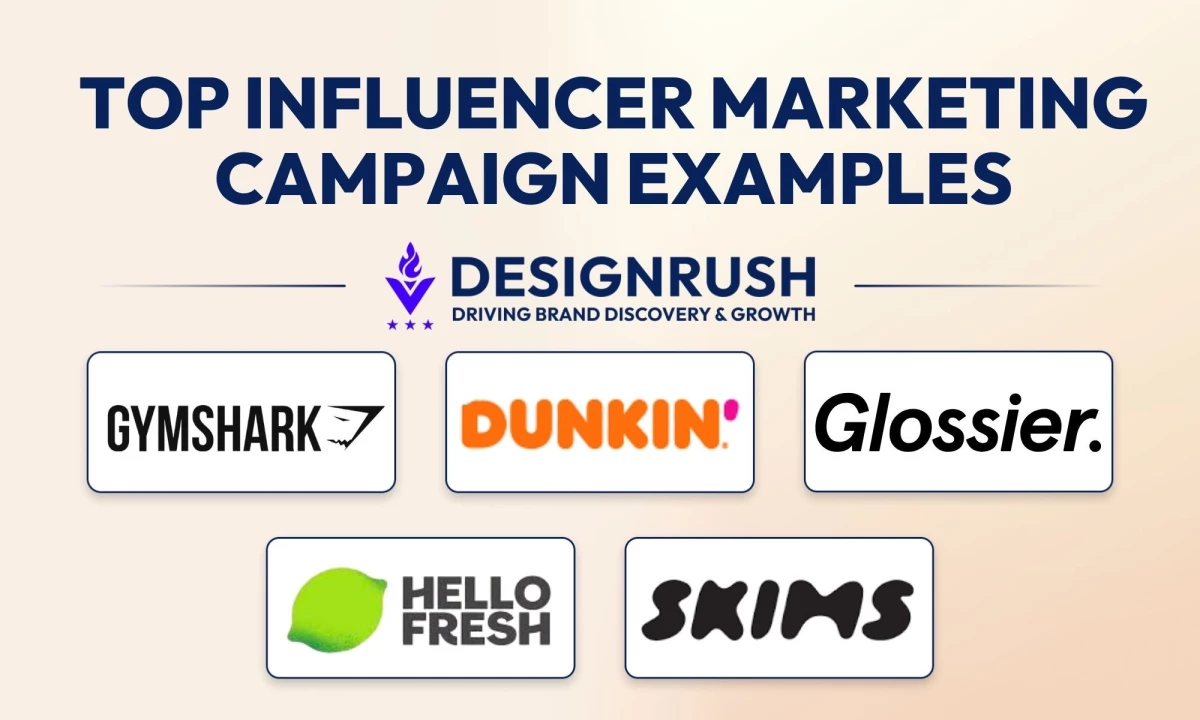
5 Campaigns That Show How Influencer Marketing is Done
The five campaigns below show different strategic approaches to structure, creator choice, and execution lead to tangible business outcomes.
- Dunkin’: Co-creation that drove retail sales
- Gymshark: Ambassador marketing that built a billion-dollar brand
- Glossier: Micro-influencers that boosted trust and conversion
- HelloFresh: Affiliate influencers with trackable ROI
- SKIMS: Influencer-led drops that sold out fast
1. Dunkin’: Co-Creation That Drove Retail Sales
Dunkin' partnered with Charli D'Amelio at the height of her TikTok growth to launch “The Charli,” a custom cold brew drink based on her personal order.
What made this campaign effective was the fact Charli was already organically posting about Dunkin’ before the partnership. That meant the partnership reinforced an existing narrative rather than manufacturing one.
The results were immediate. The launch drove a reported 57% spike in app downloads and a 20% increase in cold brew sales, proving the collaboration translated directly into measurable retail performance. The partnership later expanded into additional product launches.
Why this worked:
- The product was native to the influencer’s real behavior.
- The campaign bridged TikTok virality with in-store retail.
- It transformed influence into a physical SKU — measurable revenue, not just impressions.
Influence turned into SKUs: If you’re considering co-creation, choose influencers who already love your product. Authenticity reduces friction and boosts conversion.
2. Gymshark: Ambassador Marketing That Built a Billion-Dollar Brand
View this post on Instagram
From its early days, Gymshark invested in fitness YouTubers and Instagram athletes, turning them into long-term ambassadors. These were ongoing relationships supported by events, product drops, and community-building experiences.
The outcome? With influencer marketing as its core, Gymshark grew into a billion-dollar valuation company with annual sales rising into the hundreds of millions and a social following in the tens of millions worldwide.
Ambassador marketing worked because:
- Creators showcased products in real training environments, turning workouts into continuous product demonstrations rather than one-off ads.
- Long-term partnerships created repeated exposure across YouTube and Instagram, reinforcing credibility and accelerating purchase intent.
- Offline pop-ups and Gymshark expos helped to convert digital followers into community members.
Compounding creator equity: Ambassador programs outperform one-off sponsorships when your product benefits from ongoing use and demonstration.
3. Glossier: Micro-Influencers That Boosted Trust and Conversion
Glossier didn’t scale through celebrity endorsements or heavy paid media. Instead, it operationalized everyday customers as a distributed influencer network. Among polished ads, audiences see real skin, real feedback, and real results.
The brand consistently reposts user photos, reviews, and routines, turning buyers into advocates. And this isn’t random UGC either, but curated social proof at scale. Customers see people who look like them using products in real-life contexts.
View this post on Instagram
Micro-influencers (often 10k–100k followers) tend to deliver significantly higher engagement rates, often around 3–6% compared to 1-3% for macro influencers.
Higher engagement means more comments, saves, and conversations: all signs that influence purchase intent.
For Glossier, that translated into:
- Lower customer acquisition costs compared to traditional advertising
- Higher trust at the point of decision
- A compounding referral effect as customers became repeat content creators
Glossier surpassed $100 million in revenue within a few years and achieved unicorn status in 2019, with peer-driven advocacy reportedly accounting for the majority of early sales momentum.
Trust scales through relatability: When purchase decisions depend on authenticity (beauty, skincare, health), micro-influencer density can outperform macro reach in both engagement and conversion efficiency.
4. HelloFresh: Affiliate Influencers With Trackable ROI
@anasofiafehn Saving time this new year and cooking fresh and delicious home cooked meals with @HelloFresh US. A quick lunch featuring Bavette Steak, Crispy Roasted Potatoes, and a Mixed Greens Salad! #HelloFreshPartner#HelloFresh♬ original sound - Ana Sofia Fehn
HelloFresh took influencer marketing from a brand awareness tactic to a performance-driven acquisition channel.
It did so by embedding creators into measurable paid media workflows. Instead of one-off sponsored posts, the brand integrated influencers directly into Branded Content Ads that could be scaled and optimized like paid social.
HelloFresh structured creator partnerships around trackable links, attribution tools, and paid amplification workflows. This meant every creator could be evaluated on real business outcomes — not just impressions or likes.
Key elements of the strategy included:
- Branded Content Ads: Creator-produced social posts were transformed into paid ads targeted at precise audiences based on interests, demographics, and purchase behavior, expanding reach beyond organic followers.
- Audience-Centric Targeting: By layering creator content with paid media targeting, HelloFresh reached new customer segments efficiently rather than relying solely on broad paid placements.
- Performance Measurement: Every piece of influencer content became a trackable asset, making it possible to compare creators on CPA, CTR, and conversion outcomes, and shift budget dynamically.
These branded ads achieved a 14% lower cost-per-acquisition (CPA) and a 10× increase in click-through rates (CTR), which demonstrates that influencer content, when optimized and amplified, can outperform traditional campaigns on core performance metrics.
Attribution drives smarter scaling: Affiliate influencer campaigns provide CFO-level clarity. They tie creator content directly to revenue, making scaling decisions defensible and repeatable.
5. SKIMS: Influencer-Led Drops That Sold Out Fast
View this post on Instagram
SKIMS pairs celebrity authority with strategic influencer amplification. At the top of the funnel, Kim Kardashian generates instant cultural relevance, earned media, and search demand.
But the brand doesn’t stop at star power. It activates a wide range of culturally relevant voices (from athletes to fashion creators) across body types, aesthetics, and communities. Each collaborator holds influence within a specific niche, reinforcing inclusivity while extending the brand’s reach across multiple audience segments rather than relying on a single demographic.
The real growth engine, however, is operational precision around launch mechanics.
SKIMS structures drops around:
- Scarcity-based release windows: Limited inventory and timed releases create urgency and reduce decision lag.
- Coordinated influencer seeding: Products are sent to creators in advance, ensuring styling content is ready the moment a collection goes live.
- Simultaneous cross-platform amplification: Instagram, TikTok, and YouTube light up at once, compressing attention into a short, high-intensity window.
When creators post styling content simultaneously on launch day (often within minutes of each other) feeds are saturated with unified messaging, compressing attention into a high-intensity window that accelerates purchase intent.
The result is immediate demand spikes, with many SKIMS drops selling out within hours, reinforcing exclusivity and conditioning customers to act quickly during future launches.
This hybrid model delivers:
- Cultural momentum from celebrity visibility
- Trust and relatability from influencer diversity
- Revenue acceleration from urgency psychology
Rather than running continuous promotional campaigns, SKIMS engineers high-impact commercial moments. Each drop functions less like a product release and more like a social-commerce event, compressing awareness, desire, and purchase into a tightly coordinated cycle.
The payoff has been significant. Within a few years of launch, SKIMS reached multi-billion-dollar valuation territory, with social-driven product drops playing a central role in that trajectory.
5 Types of Influencer Marketing Campaigns
The most successful influencer campaigns are built on clear strategic models, and it helps to first understand what those are.
- Sponsored content campaigns
- Brand ambassador programs
- Product co-creation and collaborations
- Affiliate and performance-based campaigns
- User-generated content (UGC) and micro-influencer campaigns
1. Sponsored Content Campaigns
This is the most recognizable format, where brands pay creators to feature products in posts, videos, or stories. These campaigns are usually short-term and goal-oriented. They drive awareness, traffic, or sales during a defined window.
Best for: Product launches, seasonal pushes, testing new audiences.
2. Brand Ambassador Programs
View this post on Instagram
Instead of one-off posts, brands build long-term relationships with creators who consistently represent the company.
Ambassador programs compound over time. Repeated exposure builds trust, and audiences begin associating the influencer naturally with the brand.
Best for: Lifestyle, fitness, beauty, and fashion brands where community matters.
3. Product Co-Creation and Collaborations
Here, influencers aren’t just promoting a product, they actually help to design or co-brand it. This creates built-in demand and gives audiences emotional ownership.
Best for: Gen Z-focused brands, DTC companies, and brands looking to create viral moments.
4. Affiliate and Performance-Based Campaigns
Creators receive commission-based compensation through tracked links or promo codes. This model is highly measurable and often tied directly to ROI.
Best for: Subscription services, ecommerce brands, SaaS, and direct-response campaigns.
5. User-Generated Content (UGC) and Micro-Influencer Campaigns
Instead of relying on celebrity reach, brands tap smaller creators or everyday customers. Micro-influencers (usually 10k–100k followers) often produce higher engagement rates because their audiences are more niche and loyal.
Best for: Authenticity-driven brands, startups, or companies with limited budgets.
Brian Mawira, CEO of Infinity Rainz, cautions brands about the trade-off with audience size and engagement rates. "A larger following means greater reach,” he explains, “which leads to better brand awareness. Macro-influencers tend to have a greater following but lower engagement rates.”
7 Best Practices for Building Influencer Campaigns That Scale
The difference between a one-off collaboration and a scalable growth engine lies in structure. High-performing brands have clear objectives, disciplined testing, and operational rigor behind every partnership.
Here’s how to build campaigns designed to compound.
- Define success before you define creators
- Vet for audience quality, not just engagement
- Structure contracts around outcomes
- Design for content repurposing
- Align creative freedom with brand guardrails
- Measure incrementality, not just attribution
- Build creator relationships, not vendor lists
1. Define Success Before You Define Creators
Before choosing influences, start with business objectives like:
- CAC targets
- LTV benchmarks
- Margin constraints
- Growth stage priorities
Clarify whether the campaign is meant to drive acquisition, retention, product validation, or market entry. Platform fit and creator style should follow commercial goals, not the other way around.
2. Vet for Audience Quality, Not Just Engagement
Analyze audience overlap, comment authenticity, demographic alignment, content consistency, and past brand partnerships to avoid inflated or mismatched reach. A smaller, well-aligned audience often outperforms a larger but loosely relevant one.
3. Structure Contracts Around Outcomes
Move beyond flat fees where possible. Build in performance tiers, usage rights, paid amplification permissions, exclusivity terms, and creative testing clauses. The best campaigns are structured for iteration and optimization, not one-and-done delivery.
4. Design for Content Repurposing
High-performing creative can be repurposed to power paid social, email campaigns, landing pages, PDPs, and retargeting flows. Plan licensing, editing formats, and media usage in advance to extend asset lifespan and improve ROI.
5. Align Creative Freedom With Brand Guardrails
Provide clear messaging priorities, positioning context, and compliance requirements. But allow creators to adapt the story to their audience to preserve authenticity. Overly scripted content suppresses engagement, while vague briefs dilute the brand’s impact, so find the balance.
Kira Chesalina, Creative Director at AAA Agency, emphasizes the need to choose the right partners and encourage their creative freedom in order to maintain authenticity and expand reach.
6. Measure Incrementality, Not Just Attribution
Discount codes and tracked links show direct conversions, but they don’t capture broader influence. Incorporate lift studies, geo-based testing, blended CAC analysis, and cohort tracking to understand incremental impact and long-term value.
7. Build Creator Relationships, Not Vendor Lists
Treat high-performing creators as strategic partners. Long-term collaborations increase trust, reduce onboarding friction, improve negotiation leverage, and tend to improve conversion rates, turning influence into a compounding asset rather than a transactional expense.
Influencer Marketing Campaigns: Wrapping Up
Influencer marketing no longer belongs in the experimental budget. The brands seeing outsized returns treat it as fundamental. The real advantage is the ability to turn influence into systems: repeatable launch playbooks, measurable acquisition channels, and partnerships that compound over time.
Our team ranks agencies worldwide to help you find a qualified partner. Visit our Agency Directory to find top-rated social media marketing companies, as well as:
- Top Influencer Marketing Agencies
- Best Instagram Marketing Companies
- Best TikTok Marketing Agencies
- Top Facebook Marketing Companies
- Top Social Media Marketing Agencies in Houston
Influencer Marketing Campaigns FAQs
1. How much should brands budget for an influencer marketing campaign?
Budgets vary widely based on creator tier, platform, and usage rights, but brands should account not only for creator fees, but also paid amplification, content licensing, and performance testing. Many growth-stage companies allocate 10–30% of their digital marketing budget to influencer-driven initiatives.
2. How do brands identify fake followers or inflated engagement?
Marketers can use influencer vetting tools to analyze follower growth spikes, engagement-to-follower ratios, audience geography, and comment authenticity. Sudden follower jumps, low-quality comments, or mismatched demographics are common red flags.
3. Which platforms deliver the highest ROI for influencer marketing today?
ROI depends on audience behavior and product type, but TikTok often drives discovery and viral reach, Instagram supports conversion and product storytelling, and YouTube performs strongly for in-depth demonstrations and evergreen search visibility.
4. How long does it take to see results from influencer marketing?
Performance-based campaigns can drive measurable results within weeks, while brand-building or ambassador programs typically require several months of consistent exposure to generate compounding impact.
5. What legal and compliance considerations apply to influencer campaigns?
Brands must ensure proper FTC disclosure (#ad or clear sponsorship language), define content usage rights, outline exclusivity terms, and clarify performance expectations in written contracts before launch.