How to Hire eCommerce SEO Agencies Table of Contents
How do I compare two agencies that look equally qualified on paper? When two eCommerce SEO companies look equivalent based on their websites and proposals, the differentiator is how specifically they answer questions about your business. Ask both the same three questions and compare the depth of their responses.
What is the biggest technical SEO risk in our current setup? give a specific answer . A weak one defaults to generic points about crawlability or site speed.Which of our product or category pages has the most untapped ranking potential? How would you prioritize the first 90 days given our catalog size and domain authority? The agency that treats your pre-sale conversation as seriously as a paid engagement does is the one most likely to do the same after signing.
Should I start with an SEO audit or commit to a full engagement upfront? Starting with a defined SEO audit is the lower-risk path when you have not worked with an agency before, because it lets you judge the real output of their eCommerce SEO services rather than a sales pitch.
A good audit is scoped tightly. It should include:
A technical review of indexation, crawlability, site speed, and duplicate content A prioritized fix list tied to business impact Clear explanations of what should be fixed first and why Recommendations for key category and product pages A fixed timeline and defined deliverables You learn how the agency works, communicates, and prioritizes, and your exposure is limited if the fit is poor.
Full engagement upfront makes sense when your baseline is already healthy, and the constraint is execution capacity rather than diagnosis. In that situation, starting with an audit can slow down work you already know needs doing.
One practical middle path is to structure the first month of a full engagement as a discovery phase with defined deliverables, so it functions as a paid trial without the stop-start friction of a separate audit contract.
SEO generally takes 3 to 6 months to show results , which means an audit should be judged on the quality of its analysis, prioritization, and execution plan rather than on revenue it was never given time to produce.
If you skip this and sign a 12-month contract on a first impression, unwinding it will cost you more than a cautious audit ever would.
How do I evaluate an eCommerce SEO agency if I don't have SEO expertise? You can evaluate an agency well without technical expertise by judging whether their eCommerce SEO services translate into outcomes you already understand.
You know your business in terms of revenue, margin, and what a customer is worth. Capable eCommerce SEO consultants will meet you there and explain SEO decisions in those terms, while a weak one retreats into jargon that makes verification impossible.
Clarity of explanation is a reliable proxy for clarity of thinking.
Ask outcome-focused questions and listen for plain answers:
Which pages will you prioritize, and why? How will you measure success beyond traffic? What does a realistic result look like for a store at our stage? Can you point to a client whose organic revenue grew as a result of your work? How will your recommendations connect to revenue, margin, or customer value? Strong eCommerce SEO companies answer these without defaulting to acronyms.
If an agency cannot explain what it does to an intelligent non-specialist, it will struggle to communicate with your team throughout the engagement, and you will spend the relationship guessing what you are paying for.
What's the right way to structure the first 30 days of an eCommerce SEO engagement? The first 30 days should produce a clear, shared picture of where the store stands and where the agency intends to take it, rather than a scramble of premature changes.
Agencies that rush into edits in week one tend to optimize the wrong things because they act before they understand the site. A disciplined first month follows a clear sequence:
Week Focus What should happen Week 1 Access and baseline The agency gets into Google Search Console, Google Analytics, and your CMS, records current performance before changing anything, so improvement can be measured against a real starting point. Week 2 Technical audit The agency runs a full crawl to surface indexation issues, duplicate content, crawl-budget waste, and page-speed problems specific to your catalog structure. Week 3 Keyword and competitive analysis The agency maps your product and category pages to terms by purchase intent and realistic ranking potential. Week 4 Prioritized roadmap The agency delivers a written 90-day plan with deliverables, owners, and success metrics tied to revenue, specific enough that a different provider could pick it up and execute it.
How do I know when it's time to switch agencies vs giving them more time? The deciding question is whether weak results are explained by timeline or by misalignment, because the two call for opposite responses.
SEO compounds slowly, so a lack of revenue at month three is often normal, but a lack of any directional progress at month six rarely is. Hold the agency to the 90-day plan they produced at the start. If they are executing it and early indicators are moving, the timeline argument is legitimate, and patience is warranted.
Lean toward switching when several warning signs appear together:
No measurable improvement in rankings, traffic, or technical health after six months Inability to explain why specific targets were missed Reporting that has drifted toward activity metrics rather than outcomes Communication that has turned reactive Quiet turnover of the team on your account Lean toward staying when:
The roadmap is being executed as agreed The agency is candid about what is and is not working The leading indicators point the right way, even if revenue is still building Most ecommerce SEO firms will accept a frank mid-engagement review, and how they respond to one tells you a great deal about whether they are worth keeping.
What goes wrong if you skip this: You either fire a good agency right before its work compounds or keep a weak one long past the point the evidence told you to leave.
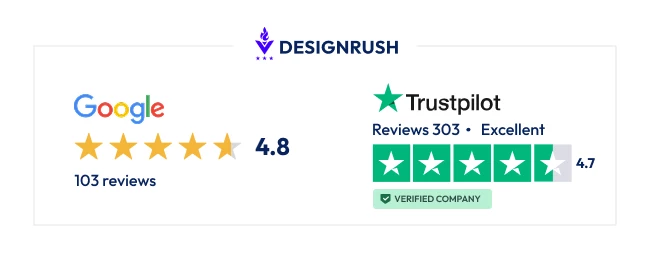
Why Companies Trust DesignRush Rated 4.8 on Google and 4.7 on Trustpilot , DesignRush Agency Directory is a reliable resource for finding eCommerce SEO services. We owe this to our executive selection team, which follows a strict screening process when featuring agencies on the platform, assessing key performance indicators like portfolio, client reviews, and industry reputation.
Learn more about DesignRush Agency Ranking Methodology .
Sources DesignRush sustains a directory of over 40,000 agencies categorized by service category, location, expertise, and reviews. We build our database in two ways:
Our dedicated team of agency experts actively searches the web for top-performing companies. We then pull information from their websites, online presence, and client testimonials to verify their status and qualifications prior to listing. The agencies listed get notified of their profiles on the website and they can choose to claim it or not, which suggests their availability for more collaborations. Agencies can also reach out to DesignRush and must go through the verification process prior to being listed.


 Proposals