
The Cost of Influencers: Key Points
- Nearly 90% of U.S. marketers will invest in influencer marketing in 2025, but influencer costs vary widely by platform and follower tier, making smart budgeting crucial.
- Micro-influencers offer strong engagement at lower rates ($35–$450 per post on Instagram), while macro influencers deliver fast mass reach at a premium (up to $12,000+ per post).
- Blending micro and macro influencer strategies and paid media retargeting helps balance trust, reach, and ROI, allowing brands to stretch budgets and optimize conversions.
Influencer marketing is a top revenue driver for brands. But without clear pricing clarity, even the most promising campaigns can spiral fast. As CMOs and growth leaders ramp up efforts in 2026, knowing what influences pricing is critical to long-term success.
We'll outline current pricing benchmarks, cost drivers, ROI by tier, emerging trends, and strategies for building high-impact, budget-wise campaigns.


Influencer Pricing by Platform and Tier
Nearly 90% of U.S. marketers are expected to work with influencers — a clear signal that brands are betting big on creator-led growth. But pricing can vary widely depending on the platform and audience size, so understanding the current environment is key to smart strategies and budget allocation.
Below are typical price ranges per sponsored post on the most popular platforms according to recent industry benchmarks:
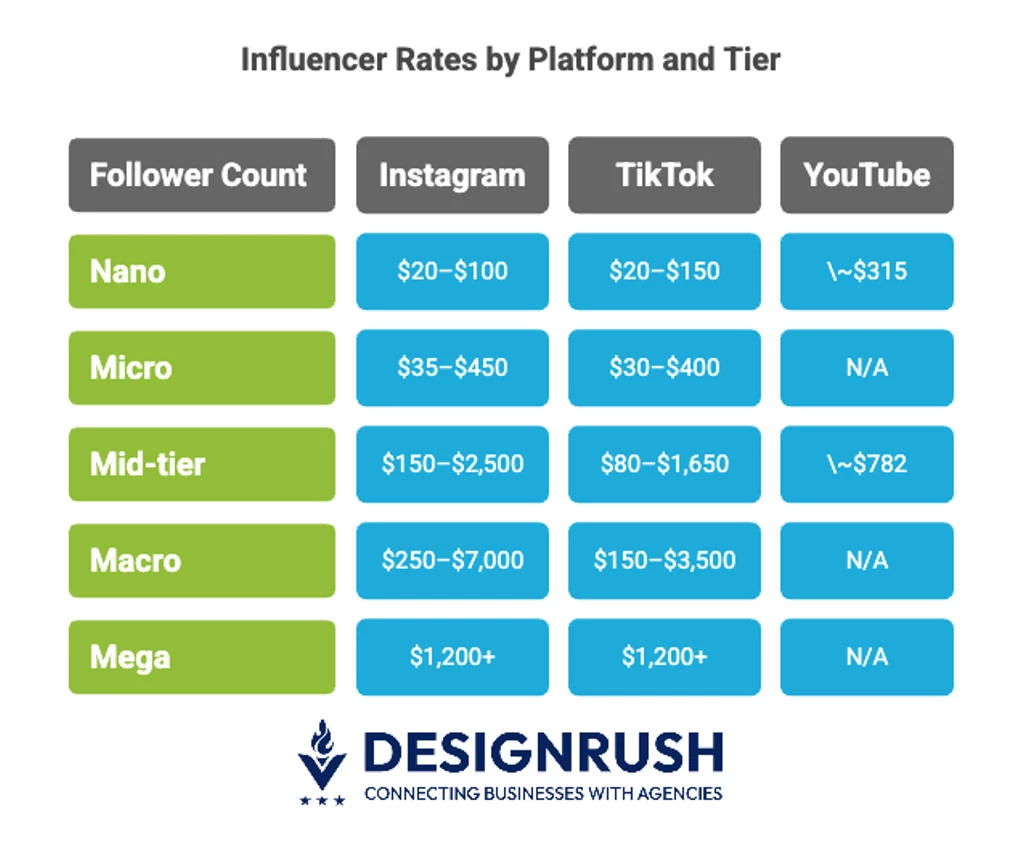
- Instagram (per post):
- Nano (<10k followers) – $20–$100
- Micro (10k–50k) – $35–$450
- Mid-tier (50k–500k) – $150–$2,500
- Macro (500k–1M) – $250–$7,000
- Mega (1M+) – $1,200+
Influencer rates often show higher pricing for static Instagram feed posts vs. Stories due to permanence and discoverability. Instagram Reels command premiums tied to virality potential and high engagement.
- TikTok (per short video):
- Nano (1k–10k) – $20–$150
- Micro (10k–50k) – $30–$400
- Mid-tier (50k–500k) – $80–$1,650
- Macro (500k–1M) – $150–$3,500
- Mega (1M+) – $1,200+
Exceptional TikTok stars (e.g. Charli D’Amelio) can earn well above these averages, as reports indicate some popular TikTokers earn $10,000+ for a single post.
- YouTube (per video):
- Nano (~<30k subscribers) average $315 per video
- Mid-tier (~30k–500k subs) about $782 per video
However, top YouTubers charge much more: estimates suggest macro-YouTubers (500k–1M subs) often get $10K–$20K per integration, and mega-creators (1M+ subs) $20,000 or more per video.
YouTube commands the highest fees due to the effort and length of video content. A typical sponsored YouTube video costs about $2,100 on average.
What Influences the Cost of Working With Influencers?
Influencer pricing is shaped by a mix of factors that impact both value and cost. Understanding these drivers will help you negotiate smarter deals and optimize your marketing budget.
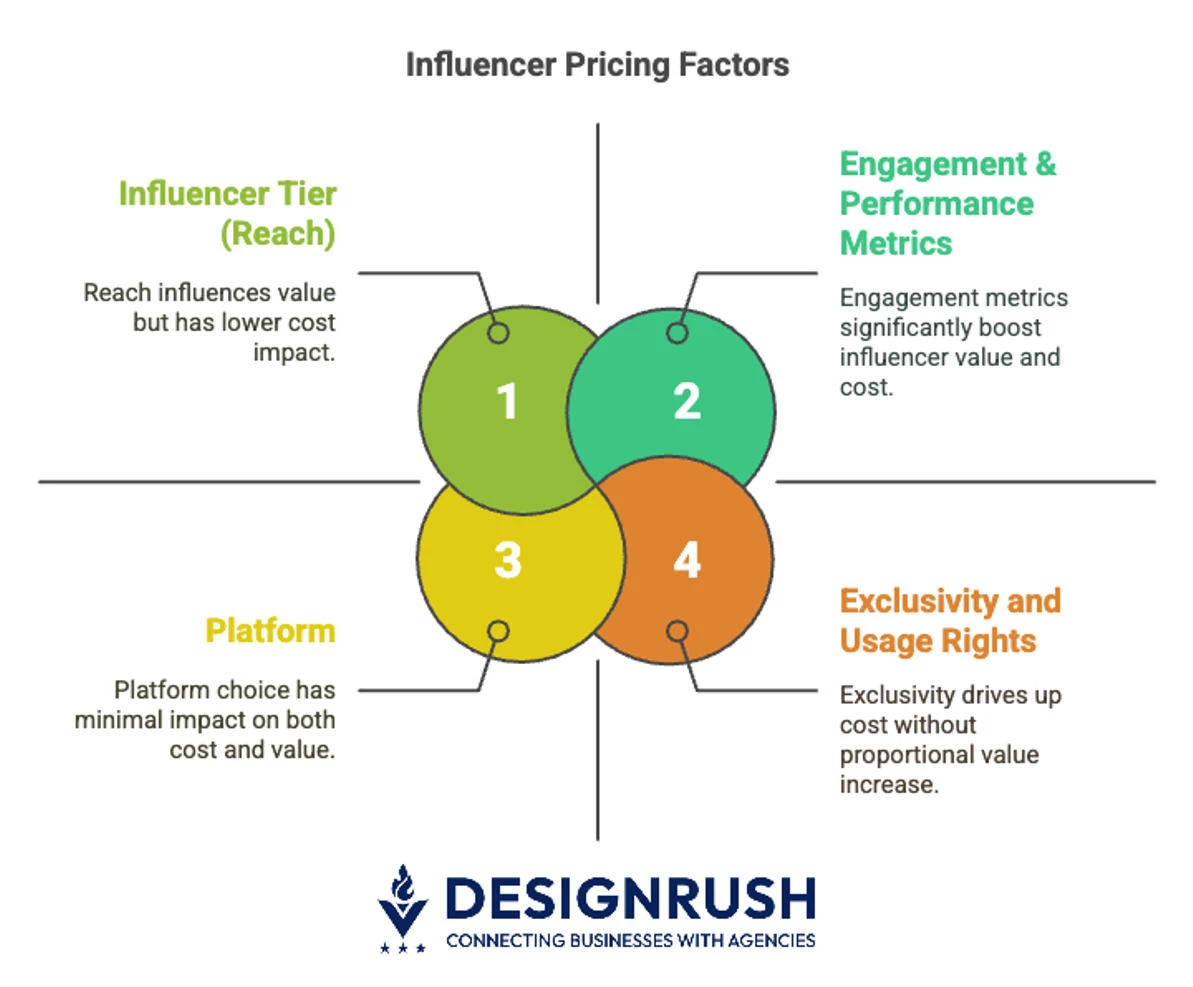
- Influencer tier (reach): As shown, follower count heavily influences price. Nano and micro-influencers are far cheaper per post than celebrities or mega-influencers. A macro influencer’s fee can be an order of magnitude higher due to their reach.
- Platform: The medium matters. YouTube videos cost more than an Instagram photo or TikTok clip of similar reach, and Facebook and Twitter typically see lower rates than Instagram or TikTok. Always calibrate budgets by platform.
- Content type & effort: Content type impacts cost — videos (like YouTube, Reels, TikToks) and multi-post campaigns cost more than static images due to higher production effort. Live videos and takeovers also command premium rates.
- Engagement & performance metrics: High engagement often outweighs follower count. A 50k-follower influencer with 10% engagement may cost more than one with 100k and 1%. Brands evaluate cost per engagement or per view. Influencers who consistently drive conversions or high views can demand a premium.
- Industry/niche: Lucrative niches like beauty, fashion, and tech often have higher going rates (due to larger marketing budgets in those industries) compared to less monetized niches. An influencer in finance or B2B may price differently than a lifestyle influencer of similar size.
- Exclusivity and usage rights: Exclusivity and content rights cost extra. Expect higher fees if you block competitor promos or want to reuse influencer content for ads or brand channels.
(e.g. repurpose the post in pay-per-click ads, or whitelisting rights to boost it on brand channels) - Campaign length & volume: You can save money with longer engagements or multiple post deals with influencers who offer bundle or package pricing. For example, rather than paying $1,000 for one post, you might negotiate $2,500 for a package of 5 posts.
- Influencer status: If an influencer is in high demand (lots of incoming brand deals) or has a strong personal brand, they can charge more. Factors like verification status, press coverage, and overall fame (even outside social media) can push rates higher.
Maximizing Value: Micro-Influencer Networks vs. Macro Endorsements
A critical budgeting question is where you get the best return on investment (ROI): from a few big influencers or many smaller ones?
Micro-influencers have smaller, highly engaged audiences, while macro-influencers boast large, broad-reaching followings. Both offer unique advantages: micro-influencers deliver authenticity and targeted engagement, whereas macro-influencers provide scale and widespread brand exposure. Understanding when and how to leverage each can unlock powerful growth opportunities for your brand.
1. Micro-Influencer Networks
Micro-influencer networks enable brands to work with multiple micro-influencers at once, amplifying reach and engagement across targeted niche audiences without the high costs associated with big-name personalities.
By tapping into these networks, you can achieve genuine connections with diverse segments, generate more personalized content, and often see higher engagement rates — all while maintaining more controlled and adaptable budgets compared to single macro-influencer deals.
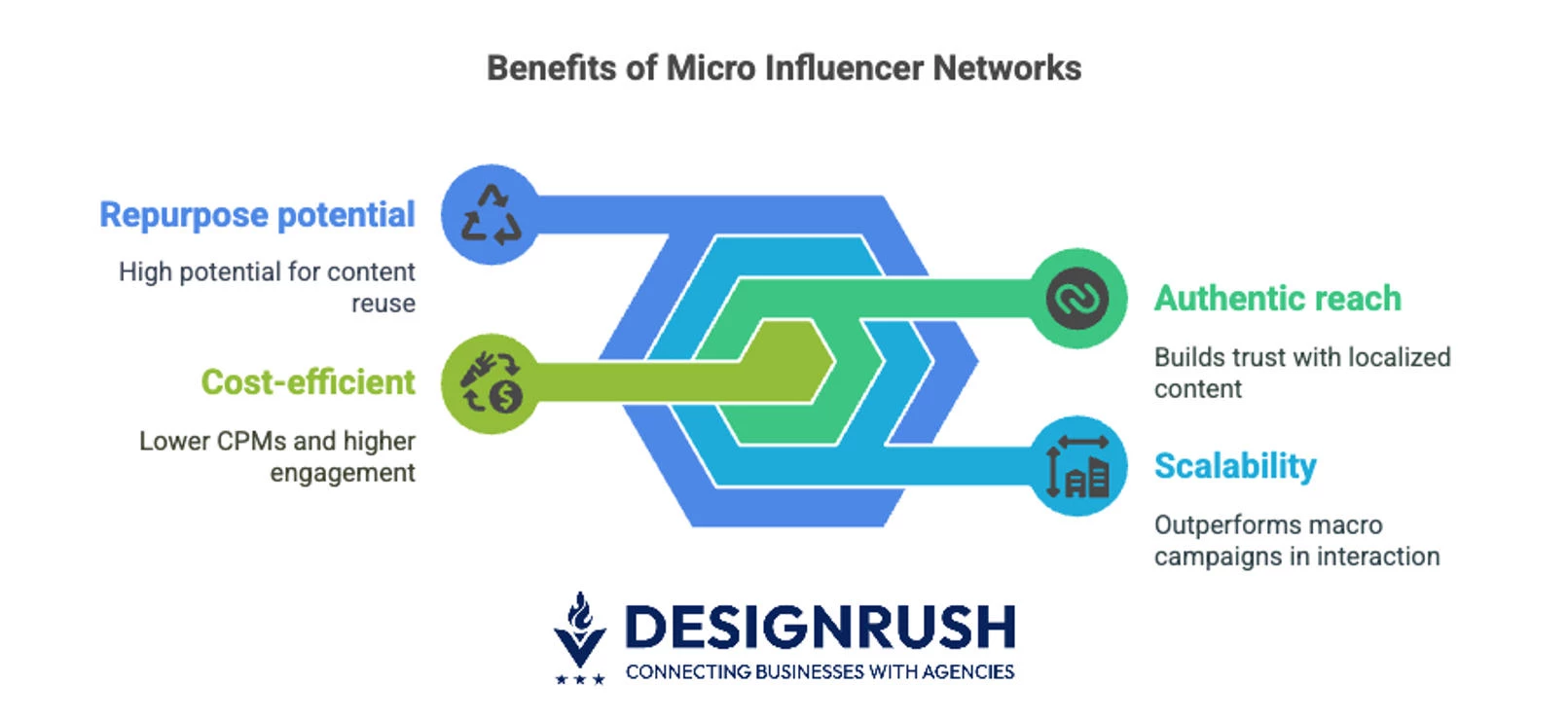
Micro influencer networks provide the following benefits:
- Cost-efficient: Lower CPMs, higher engagement, ideal for testing messaging across demographics.
- Authentic reach: Localized content builds trust, especially in B2C sectors.
- Scalability: Running 10 micro campaigns across geographies often outperforms one national macro post in terms of interaction and conversion.
Here’s a sample budget calculation:
10 micro influencers × $500 = $5,000
Expected reach: 100K–300K
Engagement rate: 4–7%
Repurpose potential: High
As discussed, their ROI in terms of engagement can be higher. Many brands find success by allocating, say, 50% of their influencer budget to a roster of micro-influencers who each authentically speak to pockets of your audience. In a survey, 44% of marketers favored micro-influencers largely because they cost less and deliver strong results. You can always “graduate” to larger influencers once you’ve proven results at the micro level.
2. Macro or Mega Endorsements
While often more expensive, macro and mega endorsements can deliver powerful visibility and credibility, especially for product launches or major campaigns. Their wide audience allows brands to scale messaging rapidly, but it’s important to balance cost with targeting to ensure meaningful engagement.
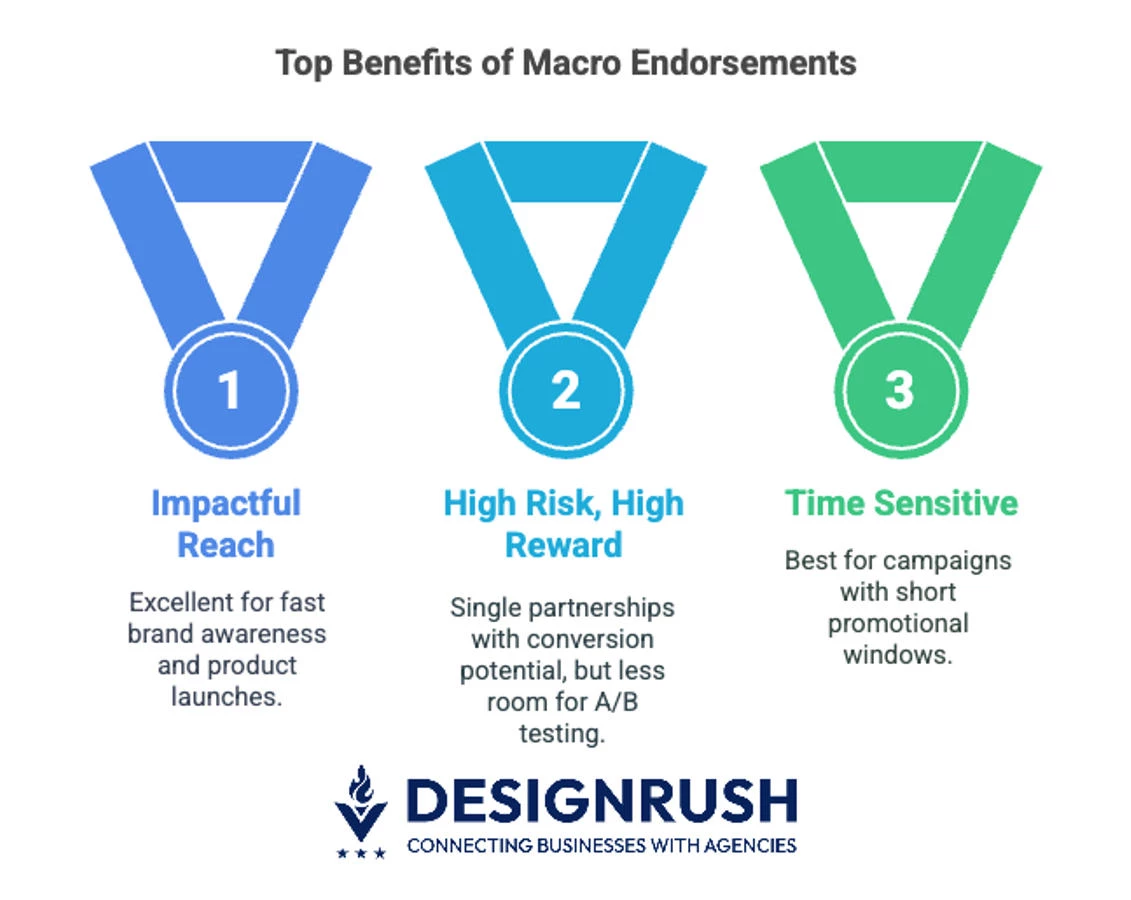
Benefits include:
- Impactful reach: Excellent for fast brand awareness and product launches.
- High risk, high reward: Single partnerships with conversion potential, but less room for A/B testing.
- Time sensitive: Best for campaigns with short promotional windows.
Here’s a sample budget computation:
1 macro influencer at $12,000
Expected reach: 500K+
Engagement rate: 1–2%
Repurpose potential: Medium (usually licensed for short term)
If the goal is national or global brand awareness in a short time (e.g. a new product launch), a celebrity influencer’s single post that reaches millions may be effective (and easier to manage than coordinating dozens of smaller creators).
Additionally, some macro influencers are very professional in content production, providing high-quality creative assets along with their reach.
3. Blended Strategy: The Influencer Pyramid
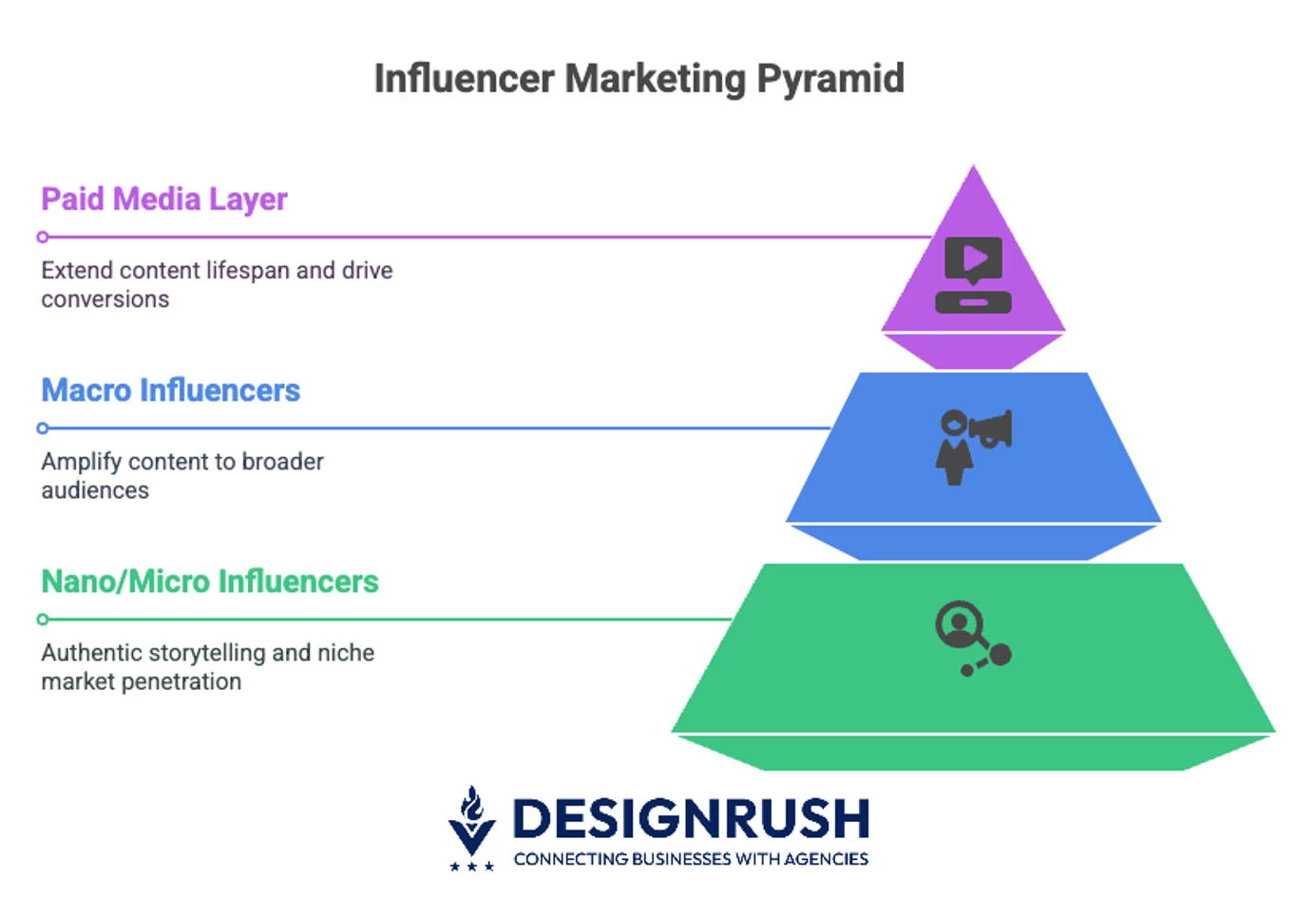
The Influencer Pyramid strategy combines the strengths of different influencer tiers with paid media to create a scalable, cost-efficient approach that enhances both engagement and reach.
By layering influencer types — starting with trusted community builders at the base and scaling up to broad-reach amplifiers at the top — you can build authentic relationships while driving measurable growth. Adding a paid media layer further extends the lifespan and impact of influencer content, turning organic engagement into a multi-channel marketing engine.
- Nano/micro influencers: At the base of the pyramid, nano and micro influencers’ highly targeted audiences make them ideal for authentic storytelling and niche market penetration, helping you foster meaningful connections and build grassroots momentum.
- Macro influencers: Positioned above the base, macro influencers are powerful amplifiers of proven content, so you can scale successful campaigns rapidly and reach broader, more diverse audiences without sacrificing quality.
- Paid media layer: To boost ROI, layer paid media over influencer and UGC content. Retargeting across social channels extends shelf life and increases conversions through repeated, relatable exposure.
Bottom line: For direct ROI (conversions, engagements per dollar), investing in a team of micro- or mid-tier influencers is often a better bang for your buck than a single big name. However, for sheer reach and brand lift, macros and celebrities have unique value. Many savvy brands mix tiers – e.g. anchor a campaign with one or two macros for reach and round it out with a fleet of micros for targeted engagement.
Measuring ROI requires tracking metrics (promo codes, referral links, engagement rates, sales lift) for each influencer tier and optimizing your mix over time.
6 Strategic Budgeting Tips for ROI-Driven Influencer Campaigns
How can brands practically plan and refine an influencer marketing budget? Here are some actionable tips grounded in the data and trends above:
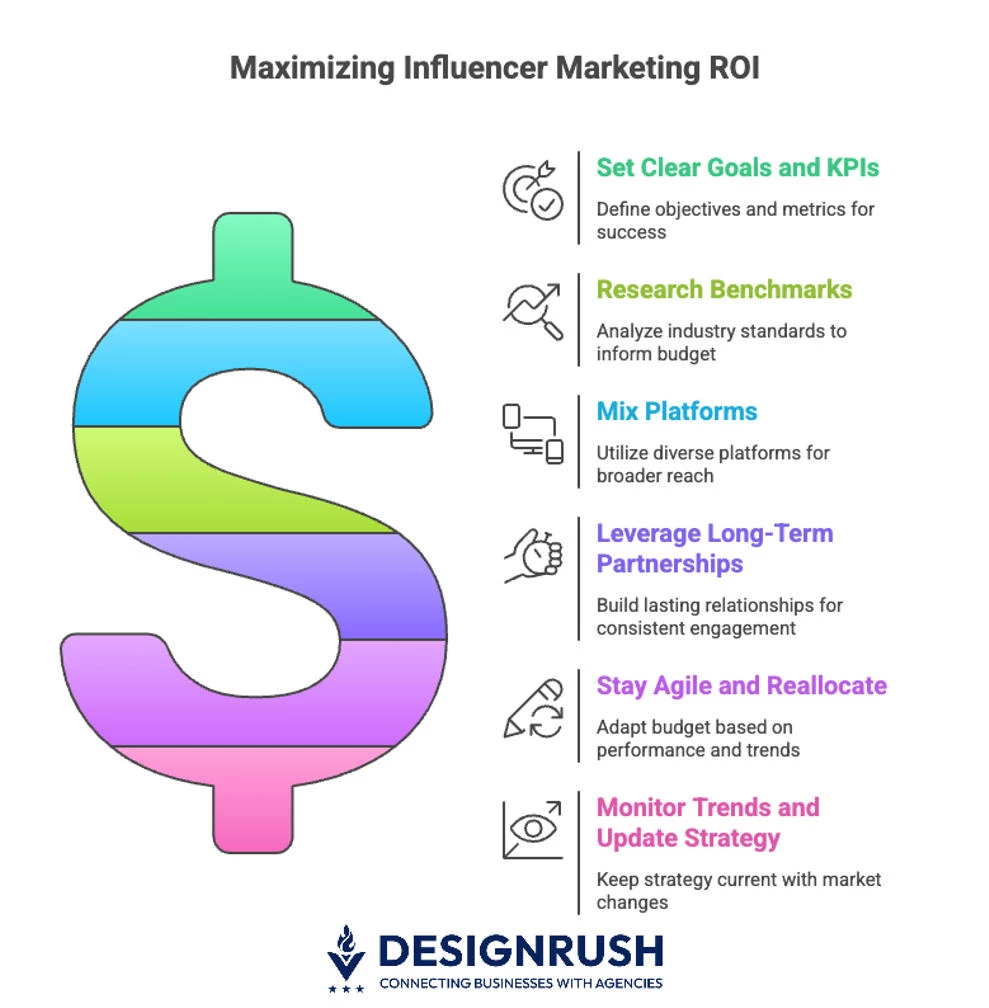
- Set clear goals and KPIs
- Research benchmarks to build your budget
- Mix platforms for a balanced strategy
- Leverage long-term partnerships and bundles
- Stay agile and reallocate as needed
- Monitor trends and update your strategy
1. Set Clear Goals and KPIs
Define what success looks like (e.g. increasing brand awareness, driving sales, gaining social followers, content creation): your goals inform your budget. For awareness, you might justify spending more on a macro-influencer or a YouTuber with broad reach. For conversions or niche engagement, allocate more to several micro-influencers.
Establish key performance indicators (reach, engagement rate, click-throughs, or ROI metrics) upfront to guide how much investment makes sense. For example, if your goal is 100,000 new impressions, you might budget for one influencer with 100k reach or a few smaller ones totaling that reach.
2. Research Benchmarks To Build Your Budget
Use industry data (like the pricing ranges cited above) to create a realistic budget range. For instance, if you need 10 Instagram posts from mid-tier influencers (~100k followers each), expect to pay on the order of $1k+ per post based on averages. That would mean budgeting at least $10–$15k for influencer fees.
Don’t forget to budget for ancillary costs as well, such as product samples, influencer travel or experiences, agency fees, or subscriptions if you're using an influencer marketing platform. Having data-driven estimates prevents sticker shock and helps you negotiate confidently.
3. Mix Platforms for a Balanced Strategy
Use a combination of platforms — such as Instagram for visuals and product-centric content, TikTok for viral video potential, and YouTube for in-depth storytelling. Each platform supports different stages of the funnel: TikTok and Instagram drive awareness, while YouTube is more effective for consideration.
A balanced portfolio ensures one over-performing influencer can make up for another that might under-deliver.
4. Leverage Long-Term Partnerships and Bundles
Stretch your budget by negotiating multi-post deals or long-term ambassadorships. According to Sprout Social, over 70% of influencers offer discounts for longer commitments.
Rather than one-off deals, propose a 3 to 6-month collaboration with an influencer, including multiple posts, perhaps on multiple platforms. This lowers cost per post and yields more consistent brand messaging and a stronger relationship (which can lead to more organic mentions).
5. Stay Agile and Reallocate As Needed
Treat your influencer and social media budget as a fluid resource. If mid-campaign you see one creator vastly over-performing and another under-performing, be ready to reallocate (e.g. give extra budget to extend the partnership with the winning influencer).
You can also maintain a contingency budget to boost posts that go viral or to engage additional influencers mid-campaign if early results are promising. Social trends can change quickly, so a bit of agility helps maximize returns.
Also, keep tabs on external factors. For example, if a certain platform’s algorithm changes or new Federal Trade Commission (FTC) rules limit a tactic, you may want to shift spend to another channel or format.
6. Monitor Trends and Update Your Strategy
The influencer landscape in the U.S. is dynamic, which means new social media trends, platforms, and content formats, along with shifting audience behaviors over time. Allocate a small portion of your budget for experimentation. For example, try a campaign with a virtual influencer or a TikTok-only strategy if those align with your audience, but maybe just as a pilot with 5-10% of your budget.
Keep an eye on the trend data: if engagement rates on one platform start declining, you might reduce spend there and increase on another platform where ROI is rising. Continuous learning will ensure you’re spending each dollar in the right place. Influencer marketing tools and reports from firms like Statista, Gartner, and Sprout Social can inform these decisions with up-to-date stats.
Cost of Influencers: Wrap-Up
By understanding pricing tiers, what drives cost, and how to maximize value through blended strategies, your influencer campaigns can turn into long-term revenue-generating assets. Remember, cost-effective influencer partnerships begin with data, strategy, and smart negotiation.
Do you want help optimizing your influencer strategy? Explore top influencer marketing agencies and connect with vetted experts who can build campaigns that convert.

Our team ranks agencies worldwide to help you find a qualified partner. Visit our Agency Directory for the top influencer marketing agencies, as well as:
- Top Social Media Marketing Agencies
- Best Video Production Companies
- Top Audio Production Companies
- Top Advertising Agencies
- Top Influencer Marketing Agencies in Los Angeles
Cost of Influencers FAQs
1. Are influencer costs negotiable?
Often, yes. You can negotiate rates, especially for longer-term partnerships, bundled content, or when working with less established influencers.
2. How can brands measure the ROI of influencer spend?
ROI can be tracked through metrics like engagement rates, traffic, conversions, sales uplift, and use of unique promo codes or affiliate links.
3. What emerging trends are influencing influencer pricing in 2025?
Trends include performance-based pricing models, increased use of AI for rate benchmarking, and growing demand for niche, authentic content driving premium rates.
4. How should brands budget for influencer marketing in their overall marketing spend?
It varies by industry and goals, but a common recommendation is to allocate 10-30% of the digital marketing budget to influencer marketing, scaling based on past performance and campaign objectives.