Finding the right developer means knowing what to look for before the first conversation. Here, you'll find vetted software developers in New York with portfolios, reviews, and rates to compare, so you can move forward with confidence.
Best Software Developers in New York
558 Companies-Rankings updated: September 29, 2026
Organic rankings are determined by five factors: top services, reviews, portfolio, awards/press, and team expertise. Sponsored listings pay for a placement that appears above organic positions. Sponsorship does not affect star ratings or review content - read more on our methodology page.
Codea Technologies Private Limited is a dynamic force in technology solutions, headquartered in San Diego. With an unwavering commitment to excellence, we specialize in custom software development, digital transformation, cloud solutions, AI, data science, and more...
Cuspy Software provide the best software developers from Eastern Europe (from Ukraine, Belarus, Romania and Poland).Our techstack is: - Backend: Python, PHP, Ryby on Rails, .NET, Java- JavaScript: React, Vue, Angular, Node- Platforms: Salesforce, SharePoint- Mobile: iOS, Android, Hybrid, PWA...
Transforming Tech Heritage Into Your Future Success
Transforming Tech Heritage Into Your Future Success
ModLogix by Langate is a trustworthy software vendor who focuses on legacy software transformation and cloud computing. We deal with old programming languages such as Visual Basic, Visual FoxPro, AngularJS, C, and so on...
Agente has over 11-year experience of delivering design-driven app development services. We have already released more than 400 web and mobile apps following our main values: people and good UX. That's why your clients will have positive customer experience when using you app designed by our team. We also...
Our expertise lies in crafting revolutionary business software and delivering exceptional UX
Our expertise lies in crafting revolutionary business software and delivering exceptional UX
Established in 2002, our company, a prominent Drupal development company, is based in the heart of NYC, and we are backed by a dedicated global team devoted to creating enduring software solutions...
Most businesses know something is slow or broken. They don't know exactly what to fix, or where AI actually fits. We start there: map your processes, find the highest-ROI automations, then build, run, and help your team adopt them as your ongoing AI automation partner. Certified n8n Expert Partner, Clutch...
SoftDoes builds custom software, AI, and web applications for mid-market companies that need enterprise-grade results without the overhead of an in-house team. U.S.-based leadership. Full IP ownership. No lock-in...
Our team starts with one important question: how can your business use digital to grow? Then, we combine in-depth research with results-driven strategy to develop beautiful, innovative sites that resonate with your target market and direct business growth one way – Forward /...
Award-Winning Medical Animation & 3D Visualization Agency
Award-Winning Medical Animation & 3D Visualization Agency
VOKA is a US-based MedTech company headquartered in New York. We specialize in advanced 3D medical visualization, operating in two primary divisions: B2B Medical Animation Services for healthcare and pharma, and a flagship B2C interactive 3D Anatomy Atlas...
VR Development Services | Custom VR Development Company in US | VR Development Team
VR Development Services | Custom VR Development Company in US | VR Development Team
Invisible Toys is a VR development team with experience in custom VR development services and mobile development focusing on VR and AR technologies. We provide top-notch solutions for businesses of all sizes. With our help, companies focus on their core activities while delivering their customers' best...
millermedia7 is a digital, full service innovation, branding, software, UX, and digital strategy agency that exists only for the stratospheric elevation of brands. Our team has over 50 years of combined, vital experience working with major brands. We wholeheartedly embrace the web, video, IoT, mobile, AI...
We founded Create Neptune in 2015, but it was really born back when our founders were two video-game-loving kids who grew up on Neptune Avenue in Brooklyn, NY. Since founding Create Neptune we have built edutainment games for some of the largest educational institutions in the world, digital pharmaceuticals...
Top Mobile App Development Company Powered by AI & Blockchain
Top Mobile App Development Company Powered by AI & Blockchain
Ultrashield Technology is a top mobile app development company in INDIA, specializing in iOS, Android & cross-platform apps. With expertise in AI/ML, LLMs, and Blockchain, we deliver secure, scalable, and future-ready digital solutions trusted by startups and enterprises...
Revolutionizing Industries with Customized Mobile Tech Solutions.
Revolutionizing Industries with Customized Mobile Tech Solutions.
New York Mobile Tech is an enterprise mobile app development agency powered by experienced tech professionals. We specialize in creating valuable and dedicated tech solutions for industries worldwide...
DNAMIC is an IT Consulting company with an automation mindset specializing in Software Development, Quality Assurance, Software Testing, and Digital Production...
Navsoft has spent 26 years building custom software and AI solutions for complex, large-scale organizations. Today, we work with Fortune 500 companies across 33 countries, with a team of 400+ engineers and specialists...
As premier Flutter developers, Appsvolt offers top-notch software development and IT consulting, rivaling the best freelancers but with added reliability. Our advanced gig management platform ensures consistent support, adjusting to your workload needs. With a unique blend of product and domain knowledge, we...
Xduce is more than a technology company; we're architects of digital transformation. With an unwavering focus on innovation, we've been reshaping industries since our inception. Our influence spans across the globe, redefining businesses and markets...
Using agile technology and smart design we close the gap between brands, their products and the people who enjoy them. We believe today’s leading technology and innovative creative is the fastest way to get there. Every project is an opportunity to swing the pendulum toward the incredible, where brands and...
Qwegle Inc. excels in solution-driven service consulting, specializing in consumer-driven technology development. We bridge the gap between client needs and consumer expectations, focusing on scalability, adaptability, engagement, and ease of code development. Additionally, we assist startups in nurturing...
3AX shines as a top digital tech agency, leading in software, web development, and mobile apps. We craft strategies centered on your brand's success...
Hooman is a digital studio that blends bold ideas with beautiful, human-first design. We specialize in websites, apps, and brand experiences that feel simple, smart, and just right. Whether you're building from scratch or leveling up, we turn complex ideas into intuitive products people actually enjoy using...
AI led Digital Engineering for the Connected Enterprise.
AI led Digital Engineering for the Connected Enterprise.
Ignitho is acclaimed as one of the premier Software Development Companies in New York, USA. We specialize in delivering high-quality software development services to enterprises, employing a Frugal Innovation methodology that emphasizes achieving more while optimizing resources. Our approach prioritizes...
We're based in New York and were named one of the top performing app dev agencies for startups by the GoodFirms. Check out some of the awesome work we did here https://bromin7.com...
Bridging the gap between business vision and technology, Check4Tech creates tailored digital solutions for business that simplify operations, improve efficiency, and drive growth...
Redefining mobile app experiences like never before!
Redefining mobile app experiences like never before!
Appinventiv is an award-winning digital product engineering and consulting company with 10+ years of experience, 1,700+ experts, and 3,000+ successful digital solutions delivered worldwide...
We lead the way in the iOS app development domain. Our adept team collaborates with clients from various sectors, specializing in full-cycle app development, ensuring a tailored approach for iPad, Apple TV, watch OS, Mac, and iPhone applications...
The Offshore Developers is a New York-based software development agency delivering high-quality, scalable code through expert offshore teams. We specialize in web and mobile development, custom software, and dedicated engineering teams. With US-based leadership, agile processes, and modern tech stacks, we...
IQ Direct Inc, performs complex outsourcing development services for small and medium business in the fields of business automation, development and implementation of electronic devices and applications. We are very grateful to our most valuable customers from California, New York, Georgia, Canada, Poland...
AvierIT Tech empowers enterprises to thrive in the digital age. As a global technology services and solutions company, they combine deep industry expertise with a passion for innovation. By harnessing the power of data, technology, and AI, AvierIT Tech transforms bold ideas into impactful outcomes. Their...
Dreamcraft specializes in developing top-tier, comprehensive solutions for both mobile and web platforms, elevating your business and propelling it to new heights with unparalleled quality...
nFocal Inc. is a professional services company that works with our clients internal product development teams, both large and small, to deliver products to market, on time and on budget...
Elevate your IT team with the IT Operations market leader.
Elevate your IT team with the IT Operations market leader.
BetterCloud is the market leader for IT Operations, empowering IT to transform their employee experience, centralize data protection, and make the most of operational efficiency...
Commit creates bespoke software and Internet of Things platforms for clients looking to create their next-generation products, offering innovative, end-to-end, cutting-edge technology solutions...
At InterSoft, we prioritize understanding your business needs. Whether you aim to boost revenue, cut costs, optimize workflows, safeguard data integrity, or tackle other challenges, our commitment is to address your specific business issuesnot simply sell you software...
Tabdelta is a global AI-driven software development company in New York USA delivering innovative digital solutions to startups, SMBs, and enterprises across New York and worldwide...
Empower Brands With AI-Driven Digital Transformation
Empower Brands With AI-Driven Digital Transformation
Biz Klinics is a marketing partner that treats growth like a clinical science. We diagnose the root causes behind weak branding, poor SEO, outdated websites, and ineffective advertising, then prescribe precise, evidence based solutions that improve performance. Our approach blends clear analysis with...
Rapptr Labs is a NYC-based team creating premium mobile and web apps. We offer full-service design, development, and post-launch support to help startups and enterprises build digital products that engage users. Lets talk about how we can bring your app to life...
5 Frequently Asked Questions About Software Development Companies in New York
How do I know if I need a software development agency or an in-house hire?
The decision comes down to what you are building and how long you need to build it.
An in-house hire makes sense when software is a core, ongoing function of the business and will likely require continuous iteration and deeper institutional knowledge. An external hire, on the other hand, makes sense when the timeline is fixed or the technical requirements exceed what a single hire could cover.
Do you need something shipped within a specific window?
Do you need multiple specializations at once?
Are you not sure yet about the product direction to justify a permanent headcount commitment?
How much do software development companies in New York charge for their services?
Software development companies in New York typically charge $100 or more per hour, though rates as low as $40 per hour exist depending on the agency's size and specialization. North American agencies more broadly average $70 to $200+ per hour, with New York firms at the higher end of that range, given local market costs.
Here are some factors that drive price variation:
Seniority mix. An agency billing you lower hourly rates is likely staffing your project with junior or mid-level developers, whereas an agency charging higher fees typically means senior engineers will be hands-on.
Engagement model. Fixed-price contracts carry a built-in risk premium: agencies charge more upfront to protect against scope shifts. Time-and-materials contracts are priced lower per hour but require active management on your end to prevent overruns.
Specialization. A software development company in New York that works primarily in fintech, healthcare, or regulated industries will price above a generalist shop.
Project size. Agencies price smaller engagements higher per hour. A $30,000 project will cost more per hour than a $300,000 one from the same firm.
What hidden costs don't show up in the initial quote?
The quoted number and the final invoice rarely match. Notably, research shows that around 70% of software projects exceed their initial budget, with an average overrun of 27%. The gap usually compounds from several smaller add-ons that were not defined at the start.
The most common “hidden costs” include:
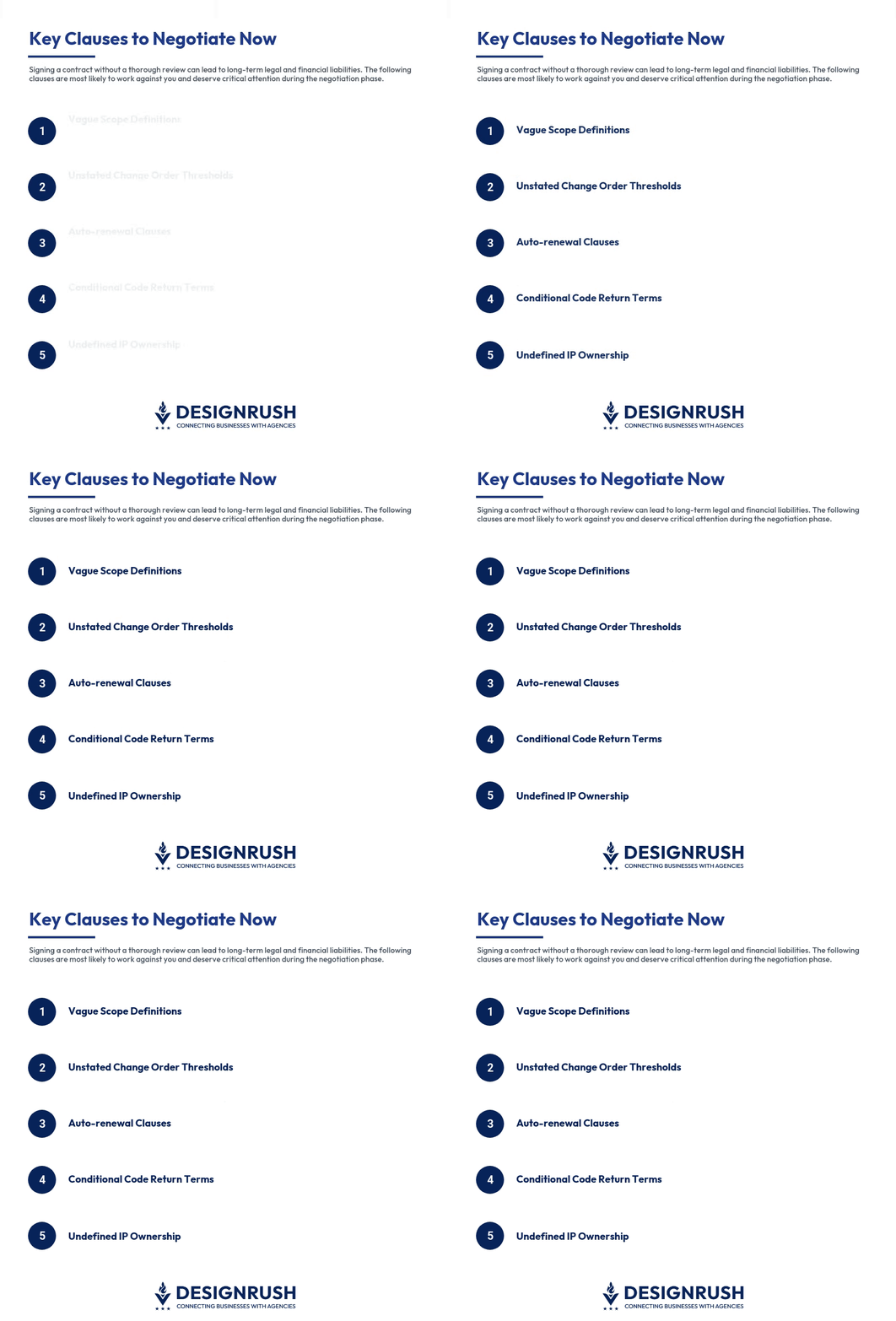
Scope change fees. Any feature or requirement that was not in the original spec gets billed as a change of order, typically at a higher hourly rate than the base engagement.
QA and testing. Some software developers in New York include testing in the base scope. Many do not. User acceptance testing, load testing, and security testing are frequently itemized separately.
Infrastructure and environment setup. Cloud configuration, third-party API integrations, and staging environments often appear as separate line items after the contract is signed.
Post-launch support. Bug fixes, performance monitoring, and small adjustments after go-live are almost always billed separately unless written into the contract upfront.
The simplest protection from such overruns is to ask for a written breakdown of every category of work that triggers an additional charge before signing anything.
Is a larger software development company in New York safer than a smaller one?
Not by default, and for most buyers, the assumption works against them.
Larger software development companies in New York bring staffing depth, structured processes, and institutional accountability. For enterprise-level builds with complex compliance requirements, multi-region infrastructure, or large concurrent engineering teams, that scale is genuinely necessary.
For most projects, the dynamic tends to invert: your account gets assigned to mid-level engineers, senior oversight is limited, and the relationship becomes transactional once the contract is signed. The senior developer who impressed you in the sales call may not be the one writing your code.
The more useful question is who will lead your project day-to-day. Ask for the name, seniority level, and relevant experience of the lead engineer and project manager assigned to your account before signing.
When does it make sense to switch software development companies mid-project?
Here are some situations that justify switching firms mid-project:
Consistent missed sprint deliverables with no clear explanation
Engineers who cannot answer questions about their own architectural decisions
Billing disputes the agency will not itemize or resolve
A point of contact who relays information but cannot make decisions
Code that an independent review has flagged as creating long-term technical debt
If you decide to switch, you will need: full codebase access and documentation, all environment credentials and infrastructure configurations, a list of open bugs and known issues, and any third-party API keys or service accounts tied to the project. Do not assume these will be handed over without being asked for explicitly; make them a condition of the offboarding.
The best window to switch is between major milestones, after a working build has been delivered and before the next phase begins. Switching mid-sprint, or worse, mid-launch, multiplies handoff risk significantly.





















 4.8
4.8 4.8
4.8
-preview-webp.webp)
 Proposals