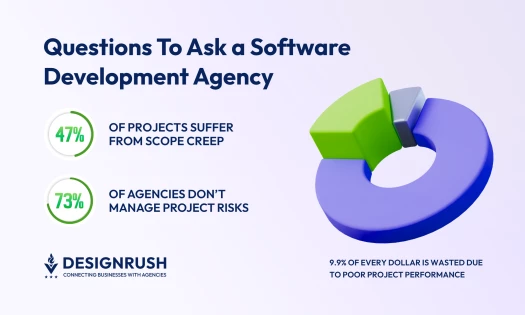
Connect with vetted software companies in Dallas that help brands convey their business ideas into functioning products. Compare agencies by portfolio, reviews, team size, cost and more to choose a partner that meets your criteria.
Organic rankings are determined by five factors: top services, reviews, portfolio, awards/press, and team expertise. Sponsored listings pay for a placement that appears above organic positions. Sponsorship does not affect star ratings or review content - read more on our methodology page.
AppCrops is a next-gen technology partner delivering end-to-end digital solutions for startups and enterprises. From interactive user-friendly iOS, Android or Custom Mobile applications to Web apps, ERP systems and custom software, we help transform ideas into high-performing digital products...
Top Services:
- Mobile App Development
- Web Development
- eCommerce Development
- Software Development
- Web Design
- Show more
- Location
- Dallas, Texas
- Number of Employees
- 50 - 99
- Average Hourly Rate
- $50/hr
- Minimal Budget
- $1,000 - $10,000
- Portfolios Count
- 4 Projects Listed
With 8+ years delivering digital excellence, we now build agentic AI systemssmart agents, LLMs, generative AI, predictive analyticsthat think, act, adaptand drive real business outcomes...
Top Services:
- AI Development
- Blockchain
- Big Data Analytics
- eCommerce Development
- Software Development
- Show more
- Location
- Dallas, Texas
- Number of Employees
- 100 - 249
- Average Hourly Rate
- $45/hr
- Portfolios Count
- 4 Projects Listed
Accelerate your path to digital business with our vetted tech talent...
Top Services:
- Software Development
- IT Services
- Cloud Consulting
- eCommerce Development
- Show more
- Location
- Dallas, Texas
- Number of Employees
- 100 - 249
DVelop Software Solutions is an IT and business consultancy founded by qualified professionals. Our team offers expert advice and solutions across various areas of technology. We aim to deliver innovative and cost-effective solutions that address the complex challenges faced by our clients, adding value to...
Top Services:
- Software Development
- Mobile App Development
- Web Development
- IT Services
- Show more
- Location
- Dallas, Texas
- Number of Employees
- 100 - 249
- Average Hourly Rate
- $49/hr
- Minimal Budget
- $10,000 - $25,000
The goal of Software Allies is to create technically competent teams. We are specialists in the development of mobile, web, and Salesforce.com applications using a range of technologies...
Top Services:
- Software Development
- Mobile App Development
- Web Development
- UI/UX Design
- Show more
- Location
- Dallas, Texas
- Number of Employees
- Under 49
- Average Hourly Rate
- $49/hr
- Minimal Budget
- $1,000 - $10,000
At 27Global, our vision is to translate revolutionary ideas into revolutionary technological solutions for our clients. Through a strategic approach that combines local leadership, cost-effective offshore pricing and a deep understanding of your company's distinctive requirements, we are able to provide...
Top Services:
- Software Development
- Cloud Consulting
- IT Services
- Mobile App Development
- Show more
- Location
- Dallas, Texas
- Number of Employees
- 100 - 249
- Average Hourly Rate
- $99/hr
- Minimal Budget
- $25,000 - $50,000
GDT drives digital transformation and business growth by upgrading and modernizing platforms, networks, and security with top-tier infrastructure solutions, extensive expertise, and adaptable service delivery models...
Top Services:
- Software Development
- Cloud Consulting
- Managed Services
- Cybersecurity
- Show more
- Location
- Dallas, Texas
- Number of Employees
- 500 - 999
At Medical Web Experts, we focus on healthcare website design and HIPAA-compliant solutions, offering mHealth app development, portals, and more. Based in Dallas and established in 2003, we've partnered with top healthcare organizations, delivering secure and user-friendly digital solutions...
Top Services:
- Mobile App Development
- Web Design
- Web Development
- Software Development
- IT Services
- Show more
- Location
- Dallas, Texas
- Number of Employees
- Under 49
- Average Hourly Rate
- $100/hr
- Minimal Budget
- $25,000 - $50,000
- Portfolios Count
- 3 Projects Listed
KritiKal Solutions is a technology design house and holds 22+ years of experience in AI, Computer Vision, Software Applications, Cloud and Mobile-based Solutions, Embedded Systems, Generative AI and Large Language Models. We specialize in R&D, product engineering, and innovation services...
Top Services:
- AI Development
- IoT
- Mobile App Development
- Software Development
- Wearables
- Show more
- Location
- Dallas, Texas
- Number of Employees
- 100 - 249
- Average Hourly Rate
- $25/hr
- Minimal Budget
- $25,000 - $50,000
- Portfolios Count
- 4 Projects Listed
TVW is an innovation & creative development studio based in Dallas, Tx. We pride ourselves on our ability to discover unique solutions to client’s marketing challenges with technology, design, and strategy. Anything but traditional, we’re a collective of tech nerds, digital storytellers & empathetic...
Top Services:
- Mobile App Development
- Software Development
- Social Media Marketing
- Digital Marketing
- VR/AR
- Show more
- Location
- Dallas, Texas
- Number of Employees
- Under 49
- Average Hourly Rate
- $150/hr
- Minimal Budget
- $50,000 & Up
CodeVerse360 is a full-service digital agency that helps businesses grow through web development, mobile applications, branding, and digital solutions. The agency combines design, development, and growth-focused strategies to create websites and digital experiences that improve visibility, engagement, and...
Top Services:
- Graphic Design
- Web Design
- WordPress Website Design
- Web Development
- SEO
- Show more
- Location
- Dallas, Texas
- Number of Employees
- Under 49
- Average Hourly Rate
- $25/hr
- Minimal Budget
- $1,000 - $10,000
- Portfolios Count
- 1 Project Listed
Drupalify specializes in Drupal migrations from version 7, 8, and 9 to Drupal 11. Every project starts with a free site audit so clients know exactly what's involved before committing to anything. We recently completed a Drupal 7 to Drupal 11 migration for a pharmaceutical company: 6 weeks, zero downtime...
Top Services:
- IT Services
- CRM Consulting
- Software Development
- Digital Services
- Web Design
- Show more
- Location
- Dallas, Texas
- Number of Employees
- Under 49
- Average Hourly Rate
- $25/hr
- Minimal Budget
- $1,000 - $10,000
- Portfolios Count
- 2 Projects Listed
Lukor Technologies is a custom software development company helping businesses build secure, scalable digital solutions. We provide custom software, web development, mobile app development, AI development, and DevOps consulting services...
Top Services:
- Mobile App Development
- Software Development
- DevOps Consulting
- Business Consulting
- Web Development
- Show more
- Location
- Dallas, Texas
- Number of Employees
- 100 - 249
- Average Hourly Rate
- $30/hr
- Minimal Budget
- $1,000 - $10,000
- Portfolios Count
- 1 Project Listed
Watermark Digital was founded on a single yet critical principle, how can we help our clients be significantly more visible, relevant and quickly more profitable. Our passion at Watermark is to be “the supporting partner behind your brand”, like the watermark that is visible when held up to light; b...
Top Services:
- Mobile App Development
- Software Development
- UI/UX Design
- Digital Marketing
- Digital Services
- Show more
- Location
- Dallas, Texas
- Number of Employees
- Under 49
- Average Hourly Rate
- $150/hr
- Minimal Budget
- $10,000 - $25,000
6Degrees IT has a decade of experience as an industry-leading specialized IT firm, with skilled professionals and digital marketing experts leveraging their extensive abilities to benefit companies around the globe. For more than 10 years they have demonstrated innovation in technical proficiency and...
Top Services:
- Software Development
- eCommerce Development
- Mobile App Development
- Staff Augmentation
- Web Development
- Show more
- Location
- Dallas, Texas
- Number of Employees
- 100 - 249
- Average Hourly Rate
- $49/hr
- Minimal Budget
- $1,000 - $10,000
Providus is a global technology partner uniting VCs, founders, and engineers to deliver human-centered, AI-enabled digital transformation. From strategy to scalable execution, we build intelligent solutions tailored to every stage, region, and ambition...
Top Services:
- CRM Consulting
- Staff Augmentation
- Managed Services
- Cloud Consulting
- Cybersecurity
- Show more
- Location
- Dallas, Texas
- Number of Employees
- 100 - 249
- Average Hourly Rate
- $50/hr
- Minimal Budget
- $10,000 - $25,000
- Portfolios Count
- 4 Projects Listed
ForwardXP creates interactive content for Virtual Reality, Augmented Reality and Mixed Reality. We are focused on experiences, which is what the “XP” part of our name stands for. Our internal research and development is focused on the intersection of Voice User Interfaces with AI in both VR and AR worlds...
Top Services:
- VR/AR
- Software Development
- Location
- Dallas, Texas
- Number of Employees
- Under 49
- Average Hourly Rate
- $150/hr
- Minimal Budget
- $25,000 - $50,000
Thryv is leading the martech industry with a comprehensive suite of customer engagement solutions, helping businesses revolutionize how they communicate and cultivate relationships with their customers. Its advanced tools empower companies to effectively increase loyalty, refine messaging and monitor success...
Top Services:
- CRM Consulting
- Software Development
- Location
- Dallas, Texas
- Number of Employees
- 500 - 999
Lemington Consulting is a globally acclaimed IT consulting and managed services company that excels in crafting top-quality, cutting-edge IT solutions for businesses, non-profit organizations and government entities. With offices strategically located in Atlanta, Dallas, Fairfax, Miami, Tampa, and...
Top Services:
- IT Services
- Software Development
- Location
- Dallas, Texas
- Number of Employees
- Under 49
- Average Hourly Rate
- $199/hr
- Minimal Budget
- $1,000 - $10,000
OSP is a healthcare technology company dedicated to transforming the industry through innovative digital solutions. With more than 16 years of experience and a team of skilled healthtech experts, OSP helps healthcare organizations improve performance, efficiency, and patient care through advanced technology...
Top Services:
- AI Development
- Software Development
- IT Services
- Location
- Dallas, Texas
- Number of Employees
- 100 - 249
- Average Hourly Rate
- $50/hr
- Minimal Budget
- $50,000 & Up
OZVID Technologies is an ISO: 9001:2015 certified global software services company focused on Mobile and Web application development...
Top Services:
- Software Development
- Location
- Dallas, Texas
- Number of Employees
- 100 - 249
We are a Canadian federally incorporated company based in Windsor, ON, specializing in Mobile Apps.TFP helps you build your prototype, taking your business from the ideation phase to the validation phase, helping you make your inventions come to life...
Top Services:
- Mobile App Development
- Software Development
- Web Development
- IT Services
- Show more
- Location
- Dallas, Texas
- Number of Employees
- Under 49
TatvaSoft is a trusted technology partner enabling global businesses with its strategic IT solutions. Our services majorly encompasses Custom software development, Web development, product development, Ecommerce , Mobile apps, QA and many similar cutting-edge technologies...
Top Services:
- Software Development
- Web Development
- Mobile App Development
- Software Testing
- AI Development
- Show more
- Location
- Dallas, Texas
- Number of Employees
- 500 - 999
- Average Hourly Rate
- $20/hr
- Minimal Budget
- $10,000 - $25,000
- Portfolios Count
- 3 Projects Listed
Ascendant Systems LLC is a Dallas-based technical delivery firm serving growing organizations, specialist consultancies, and internal teams across the United States. We take on defined data engineering, cloud and DevOps, and business automation problems and deliver them as scoped engagements: an assessment, a...
Top Services:
- IT Services
- Software Development
- Big Data Analytics
- Cloud Consulting
- DevOps Consulting
- Show more
- Location
- Dallas, Texas
- Number of Employees
- Under 49
- Average Hourly Rate
- $125/hr
- Minimal Budget
- $1,000 - $10,000
We are all about delivering what you need from whiteboard to app store, well build your moonshot. We're a custom application development firm that specializes in building advanced solutions for the financial services, healthcare, utility, hospitality, commodity, social and other industries...
Top Services:
- AI Development
- Software Development
- Web Design
- Web Development
- Mobile App Development
- Show more
- Location
- Dallas, Texas
- Number of Employees
- 100 - 249
Welcome to AdvancEdge Digital, a dynamic digital agency rooted in the heart of Texas. We are a team of driven experts specializing in digital marketing, standout web design & development, and custom software solutions...
Top Services:
- Web Development
- Digital Marketing
- Software Development
- Location
- Dallas, Texas
- Number of Employees
- 100 - 249
- Average Hourly Rate
- $50/hr
- Minimal Budget
- Under $1,000
Since 2011, Pixel and Texel has produced custom apps, VR experiences, websites, and backend solutions...
Top Services:
- VR/AR
- AI Development
- Mobile App Development
- Software Development
- Web Development
- Show more
- Location
- Dallas, Texas
- Number of Employees
- Under 49
- Average Hourly Rate
- $149/hr
- Minimal Budget
- $50,000 & Up
HeavyTask is an innovative software development company that specializes in creating solutions for complex business challenges. With core expertise in custom software development, mobile applications, staff augmentation and enterprise websites, their team is dedicated to delivering excellence and finding...
Top Services:
- Cloud Consulting
- ERP Consulting
- CRM Consulting
- Staff Augmentation
- Software Development
- Show more
- Location
- Dallas, Texas
- Number of Employees
- Under 49
- Average Hourly Rate
- $99/hr
- Minimal Budget
- $1,000 - $10,000
AlgoRepublic offers comprehensive business automation, product development, and software/web development services to clients globally. Our expertise ensures innovative and efficient solutions tailored to meet the diverse needs of businesses worldwide...
Top Services:
- Software Testing
- Blockchain
- Mobile App Development
- Software Development
- eCommerce Development
- Show more
- Location
- Dallas, Texas
- Number of Employees
- 250 - 499
- Average Hourly Rate
- $30/hr
- Minimal Budget
- Under $1,000
- Portfolios Count
- 1 Project Listed
Carmatec is an enterprise IT solutions provider with over 23+ years of proven industry experience and has successfully carved out a niche in web development, software and application design and development apart from its expertise in mobile development, managed IT services & cloud solutions...
Top Services:
- Web Development
- Web Design
- Mobile App Development
- Software Development
- eCommerce Development
- Show more
- Location
- Dallas, Texas
- Number of Employees
- 100 - 249
- Average Hourly Rate
- $25/hr
- Minimal Budget
- $1,000 - $10,000
- Portfolios Count
- 3 Projects Listed
We offer data-driven web design, graphic design, Web App development, and digital marketing services with a creative and organized approach to digital development...
Top Services:
- Web Development
- UI/UX Design
- Web Design
- SEO
- Branding
- Show more
- Location
- Dallas, Texas
- Number of Employees
- Under 49
- Average Hourly Rate
- $25/hr
- Minimal Budget
- $1,000 - $10,000
India app developer is a well known Mobile App Development Company for every application and software solution. We realise that a company manager needs to handle a company with diverse clients and market competition...
Top Services:
- Mobile App Development
- Software Development
- Web Development
- Digital Marketing
- SEO
- Show more
- Location
- Dallas, Texas
- Number of Employees
- Under 49
- Average Hourly Rate
- $20/hr
- Minimal Budget
- $1,000 - $10,000
- Portfolios Count
- 1 Project Listed
At Josh Software, we have consistently been ranked as the #1 most reliable software development partner by most of our clients for 15 years now...
Top Services:
- Mobile App Development
- Software Development
- UI/UX Design
- Location
- Dallas, Texas
- Number of Employees
- 500 - 999
- Average Hourly Rate
- $149/hr
- Minimal Budget
- $25,000 - $50,000
IT Softlab is a forward-thinking IT consultancy delivering tailored digital solutions that help businesses operate smarter and grow faster. We combine strategic consulting, modern technology, and data-driven execution to solve real business challenges. From building scalable systems to optimizing processes...
Top Services:
- Web Development
- Graphic Design
- Web Design
- eCommerce Development
- WordPress Website Design
- Show more
- Location
- Dallas, Texas
- Number of Employees
- Under 49
- Average Hourly Rate
- $15/hr
- Minimal Budget
- Under $1,000
- Portfolios Count
- 1 Project Listed
At Codroon, we create technology that moves businesses forward. Operating across the USA and South Asia, we specialize in building AI-driven solutions, scalable digital platforms, and custom software that empower organizations to grow faster and smarter. Our approach is simple: focus, speed, and impact. By...
Top Services:
- Web Development
- Mobile App Development
- AI Development
- UI/UX Design
- Software Development
- Show more
- Location
- Dallas, Texas
- Number of Employees
- Under 49
- Average Hourly Rate
- $25/hr
- Minimal Budget
- $25,000 - $50,000










Related Services in Dallas
Software Development Companies Near Dallas
Popular Services
Everything you need to know before hiring software companies in Dallas
Why should I hire a local custom software development company in Dallas rather than an offshore developer?
For the discerning Dallas executive, the decision to hire local is an intentional decision for greater operational agility and risk mitigation.
While the DFW metroplex continues its ascent as the Silicon Prairie, local firms offer a level of friction-free collaboration that offshore vendors, separated by vast time zones and cultural gaps, simply cannot replicate.
The local advantage also extends to legal and intellectual security.
Notably, 73% of businesses cite industry experience as their top priority when selecting a partner, a metric that is far easier to verify through regional references and local authority.
Beyond the code, a Dallas partner will better understand the specific gravity of regional compliance standards.
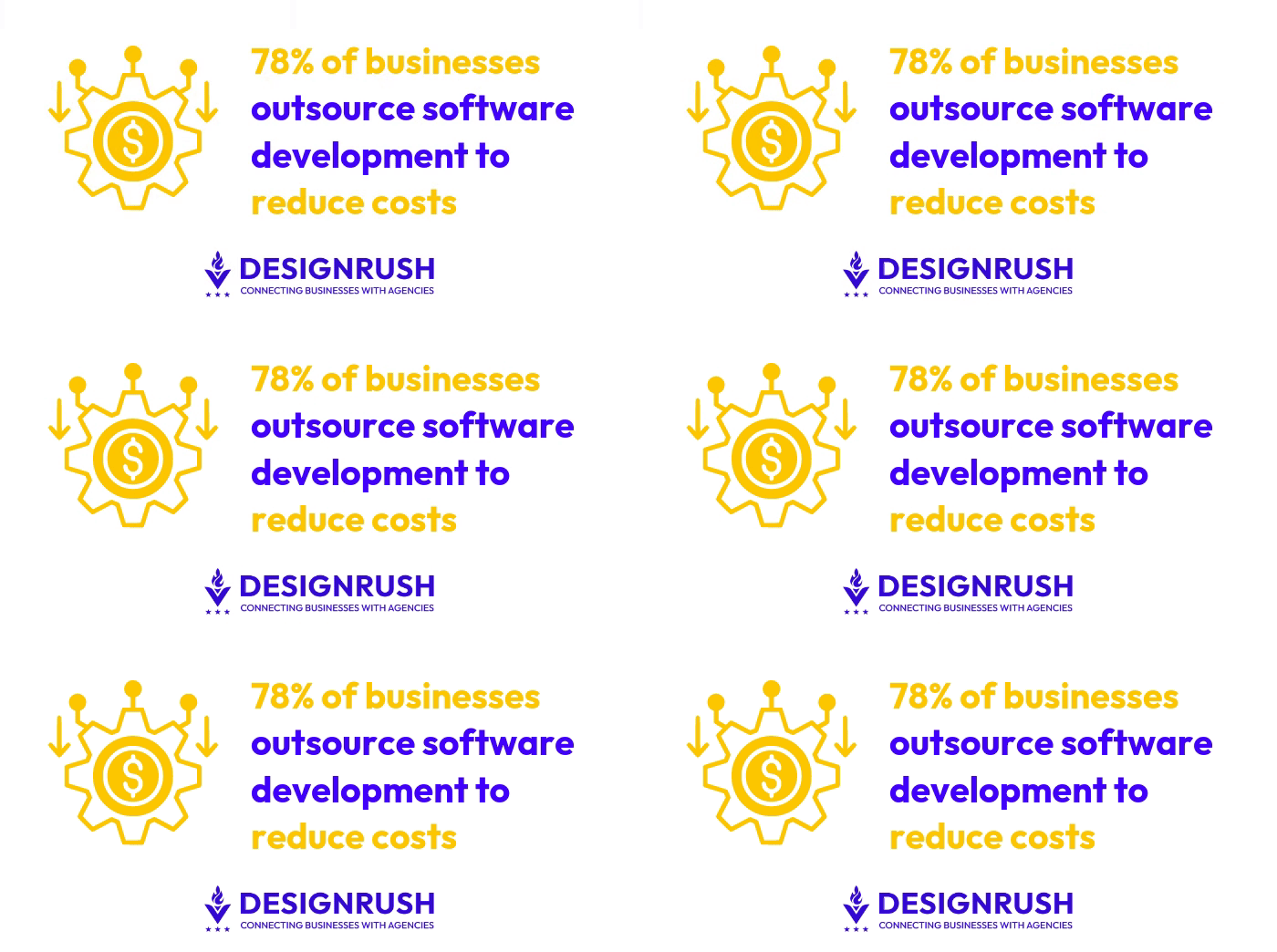
While 78% of companies initially look to outsource the coding service to reduce costs, many leaders also reconsider this option due to the probability of technical debt and rework.
How long does software development usually take?
Software development duration is primarily dictated by the product archetype and its associated technical complexity. In 2026, while AI-assisted coding has compressed the time required for unit-level logic, the overhead for integration and multi-platform stability still requires manual, human input that takes time.
Here’s what different software product entails:
| Product type | Timeline (MVP) |
| Web app | 3 to 6 months |
| Mobile app | 4 to 8 months |
| AI platform | 5 to 9 months |
| Enterprise system | 10 to 18+ months |
| ECommerce platform | 3 to 5 months |
How to find the best custom software development company in Dallas for my project?
To choose the best software development company in Dallas for your business, consider the following steps:
Define product scope
Define your basic framework of your product, including preferred programming language, list of features, functionalities, and other integrations you’d like to include.
- Research companies
Look for software companies in Dallas on DesignRush and read their reviews to assess quality and reliability. - Review their project portfolios
Look into case studies and read client testimonials for info on past work and check for experience with API integrations and connecting custom apps to existing CRMs or ERPs. - Discuss the SLAs
Make sure the contract specifies a minimum of 99.9% uptime for hosted applications, guaranteed response times for critical bugs, and total ownership of the source code and intellectual property upon final payment. - Consider security
Ask how the company handles vulnerabilities. They should follow secure coding standards like OWASP and provide penetration testing to simulate and block cyberattacks. - Review compliance measures
Verify the company understands necessary regulatory requirements for your specific industry. In Dallas, this includes SOC2 for general data privacy and PCI-DSS for secure payment processing.
How to find a local specialist on DesignRush that fits my budget?
We have compiled a list of top-rated Dallas software companies across different price points, so you can find a vendor that meets your spending expectations.
| High budget: $50,000+ |
|
| Low budget: $25,000 to $50,000 |
|
What questions should I ask software companies in Dallas before hiring one?
Ask the following questions when interviewing Dallas software developers:
Relevant Background
- Have you worked with businesses similar to mine?
- Do you specialize in a particular technology stack?
- What certifications or partnerships does your company hold?
- Have you developed any proprietary software or frameworks?
Services and Processes
- What tools do you use for collaboration and tracking progress?
- How do you ensure software quality and security?
- How do you handle bug fixes and software updates?
- What happens if the project timeline extends beyond the initial estimate?
Related to Your Project
- What is the estimated timeline for our project?
- Can you provide a breakdown of your pricing and payment structure?
- What are the biggest risks you foresee for our project?
- Will I own the source code and intellectual property rights?
Sources
DesignRush sustains a directory of over 40,000 agencies categorized by service category, location, expertise, and reviews. We build our database in two ways:
- Our dedicated team of agency experts actively searches the web for top-performing companies. We then pull information from their websites, online presence, and client testimonials to verify their status and qualifications prior to listing.
- The agencies listed get notified of their profiles on the website and they can choose to claim it or not, which suggests their availability for more collaborations.
Agencies can also reach out to DesignRush and must go through the verification process prior to being listed.

Why companies trust DesignRush
Every agency is independently vetted before it can be listed or ranked
 4.8
4.8 4.8
4.8Some agencies pay for sponsored placement, clearly labeled and held to the same vetting standards.
Frequently Asked Questions About Software Development Companies in Dallas
What services do software companies in Dallas provide?
Dallas software developers provide a range of programming services that support the full lifecycle of a product. These specialists work with clients on product validation to reduce initial delivery risk and coding the front- and back-end of internal and customer-facing systems, platforms, apps, and tools.
Key services include:
- Proof of concept (PoC) development
- Minimal viable product (MVP) development
- Web development
- Mobile app development
- Artificial Intelligence (AI) development,
- Cloud system development
- System integration
- DevOps services
- Big data and analytics
- Maintenance
How much do software development companies in Dallas charge for their services?
Custom software development companies in Dallas may charge between $20,000 and $250,000+ for a full software development package. The final rate is determined based on the project size, features, team structure, and timelines.
The type of software will also impact the service fee, as simple business apps entail a considerably smaller budget than a complex enterprise system with many functionalities and features. In terms of the pricing structure, developers operate on a few common models: fixed price, dedicated team, milestone-based, value-based, subscription, and revenue-sharing.
What is an SLA and what does it include?
A Service Level Agreement (SLA) is a formal, contractually binding contract between a service provider and an end user that defines the expected quality and responsibilities of the service. Technically, it serves as the operational framework for performance monitoring, often listing specific Service Level Indicators (SLIs) to measure deliverability against the defined Service Level Objectives (SLOs).
A standard SLA includes the following components:
- Service scope: A detailed inventory of the services provided and excluded
- Performance metrics: Quantifiable metrics like system uptime and throughput
- Response time: Tiered timelines for acknowledging and resolving incidents based on severity
- Penalties: Financial or service-credit consequences triggered if the provider fails to meet the agreed-upon standards
- Exclusions: Scheduled maintenance windows that do not count toward downtime
What is the difference between response time and resolution time in an SLA?
In the context of SLAs, response time measures how quickly a service provider acknowledges a support request after it’s submitted. It emphasizes the initial interaction, so the user knows their issue has been seen and is being addressed.
By comparison, resolution time measures the duration from the moment the ticket is opened until the problem is fully fixed and closed. While a fast response time builds that initial trust, resolution time is often more critical for productivity because it defines when the user can get back to using the software.
Is quality assurance (QA) usually included in the basic fee or is it charged extra?
Whether QA is charged in addition to the basic fee will depend on the contract type. Namely, in fixed-price agreements, QA is usually bundled into the basic fee as a part of the development lifecycle. Conversely, if the offering is requested as a managed service, the testing is billed as a separate item or a dedicated resource.
While basic functional testing is complementary and standard, specialized services like penetration testing or load testing are almost always charged as an additional cost.
Latest Trends Related to Software Development
Software Development
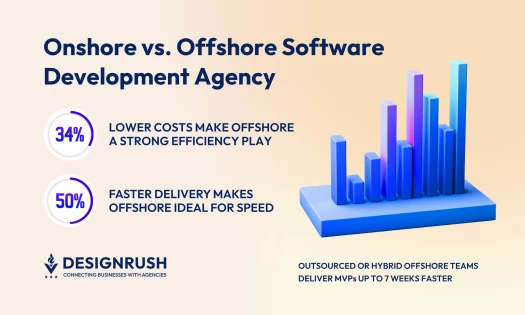
Onshore vs. Offshore Software Development Company: Which One Is a Better Choice?
2,682