Discover the leading visual effect companies whose technology turns raw footage into visually consistent worlds that define modern storytelling. Our experts have curated a list of top VFX companies that use advanced rendering engines to deliver immersive digital realism to your project.
Organic rankings are determined by five factors: top services, reviews, portfolio, awards/press, and team expertise. Sponsored listings pay for a placement that appears above organic positions. Sponsorship does not affect star ratings or review content - read more on our methodology page.
AGENCY LISTING COMING SOON.
Explore Video Production Specializations
Popular Services
Everything You Need to Know Before Hiring Visual Effects Companies
What can VFX companies do for businesses?
They can help turn abstract ideas into clear, persuasive visuals that sell products, explain services, and strengthen storytelling across websites, campaigns, investor presentations, and commercials.
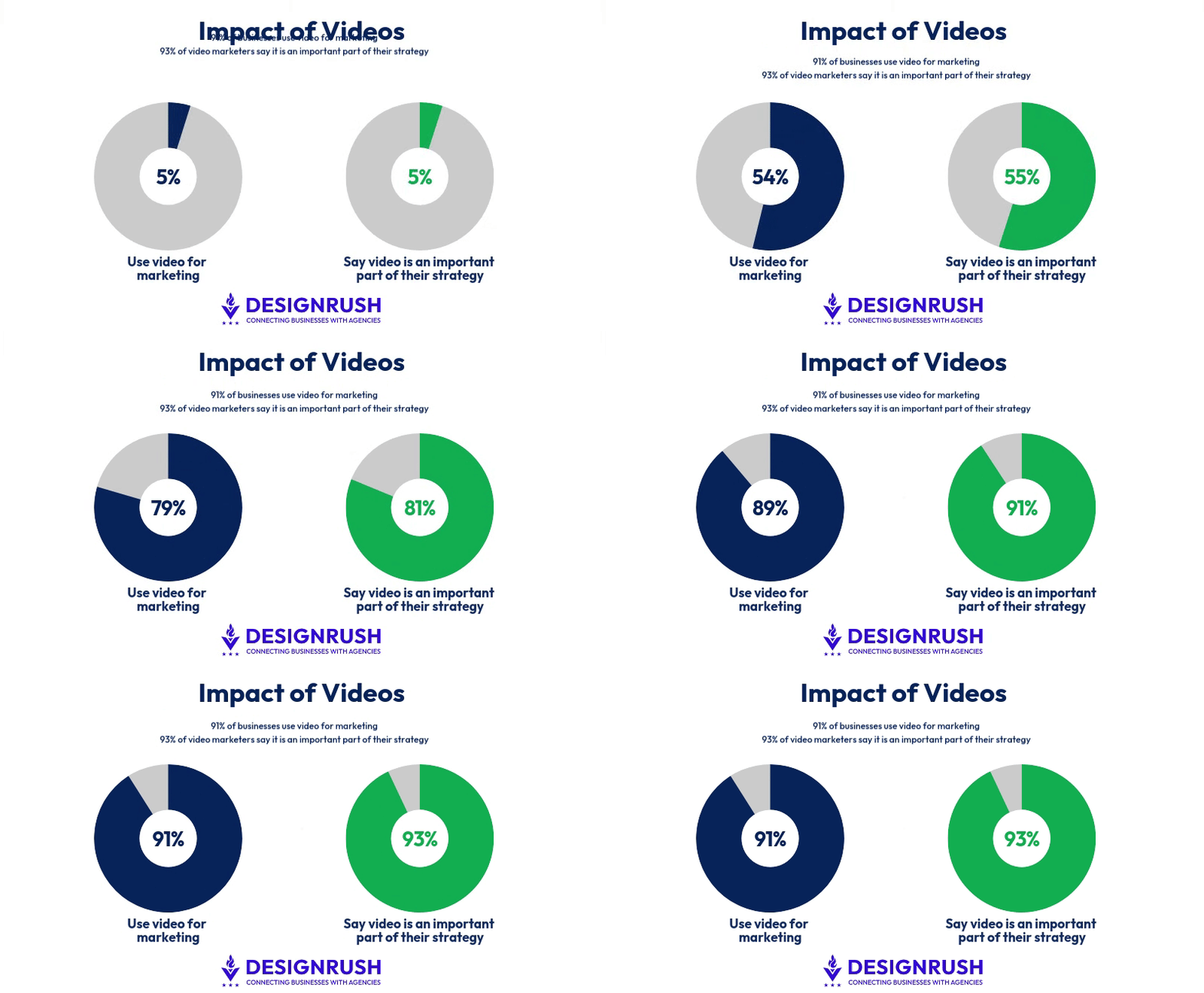
That matters because video is now a mainstream business tool, considering 91% of businesses use video as a marketing tool, and 93% of video marketers say it is an important part of their strategy.
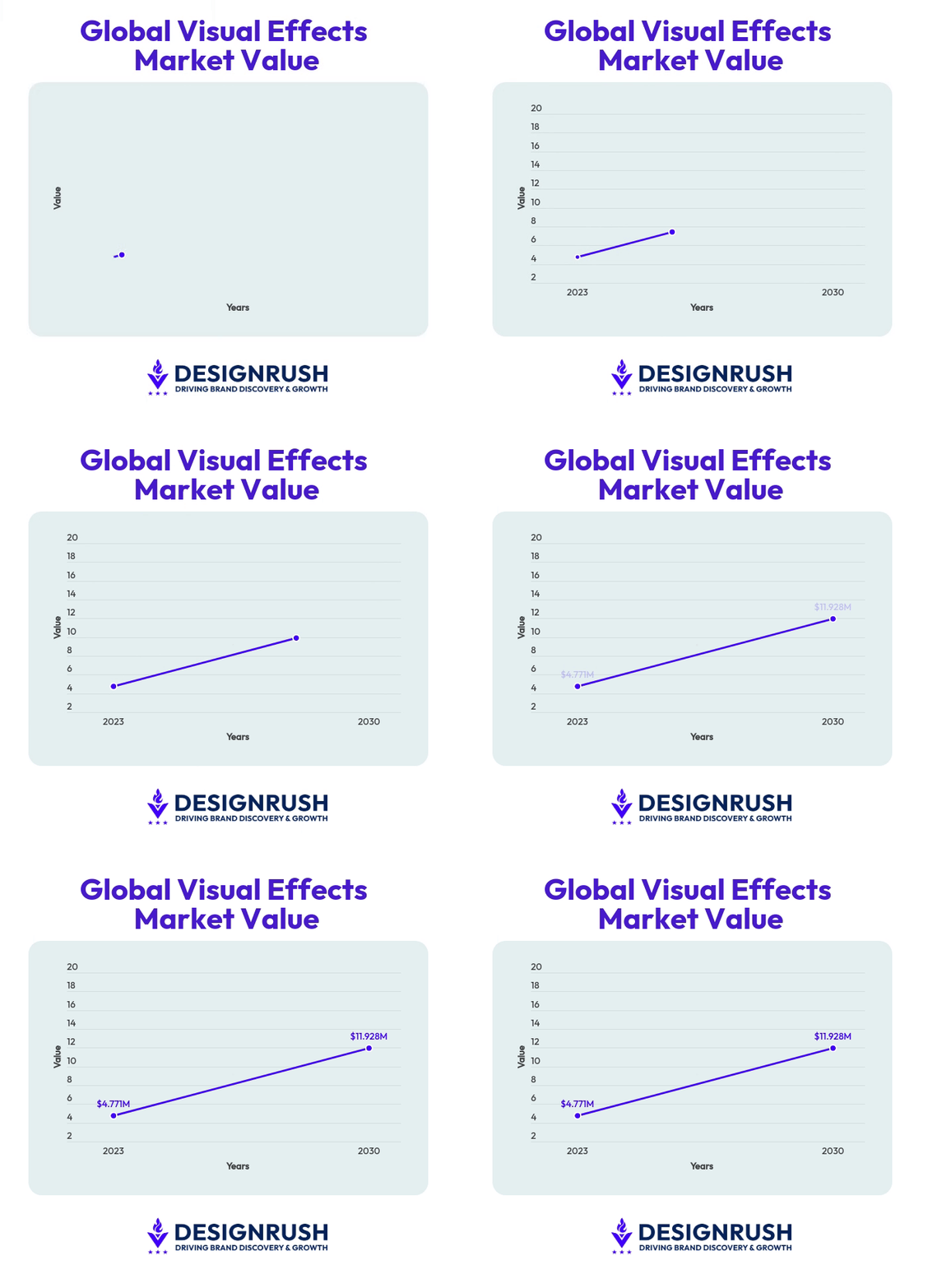
The global visual effects 3D animation market size was valued at $4,771.8 million in 2023 and is estimated to grow at a compound annual growth rate (CAGR) of 14.1% from 2023 to 2030.
A VFX studio can help businesses visualize what is difficult, expensive, or impossible to film in real life, such as product demos, technical process videos, digital environments, architectural visualization, simulation, and immersive brand experiences.
Visuals can create immersive environments and provoke emotional responses, boosting audience engagement.
Studies show that people process visual information 60,000 times faster than text, which is why businesses use a visual effects company to simplify technical or abstract ideas through visuals rather than long explanations.
Visual content also significantly impacts conversion performance.
Landing pages with video can increase conversions by up to 80%, which makes high-quality commercials and branded content a direct driver of revenue.
Businesses use visual effects to modernize live production and premium content. VFX can be more cost-effective than building large sets, renting locations, or staging dangerous practical stunts.
With virtual production, a talented team can build controlled digital environments that reduce location costs, speed revisions, and improve consistency for global campaigns.
Virtual production can reduce production costs by around 20-30% in certain cases, according to Deloitte-cited industry analyses. It allows companies to produce premium content with more control and fewer logistical constraints.
How do VFX studios support storytelling?
They help businesses visualize ideas that would otherwise be impossible, too expensive, or too complex to produce physically.
A skilled studio translates creative concepts into compelling visuals, whether that means building entire worlds, enhancing real footage, or guiding the viewer's emotional experience through subtle effects.
ILM's StageCraft work on The Mandalorian is a good example.
During that project, over 50% of season 1 was filmed using the LED volume workflow, which allowed the team to create multiple planets and environments on one stage and eliminated the need for location shoots.
VFX companies also help preserve realism even when the subject cannot be filmed directly.
For Apple TV+'s Prehistoric Planet: Ice Age, the production shot across 15 countries and combined practical puppets with CG to make extinct animals feel as if they had been captured in a real wildlife documentary.
What industries benefit most from visual effects?
The film industry remains the primary driver of demand for visual effects, especially in large-scale feature film production.
Today, it is common for blockbuster films to include over 1,500 VFX shots, with some exceeding 2,000 shots per project, making visual effects companies central to modern production pipelines, according to American Cinematographer.
The growth of streaming has significantly expanded the role of visual effects in television shows.
According to Ampere Analysis, global spending on original content by streaming platforms surpassed $240 billion in 2023, with a large portion allocated to high-end productions that depend heavily on effects.
This shift has brought film-level VFX quality into episodic television, increasing demand for experienced VFX companies.
Advertising is another major beneficiary.
In the United States, digital video advertising spending reached $61.2 billion in 2024, according to the IAB.
Brands increasingly rely on motion graphics, CGI, and animation to create high-impact commercials that capture attention and communicate value quickly in competitive markets.
The gaming and interactive sector also benefits from techniques developed by VFX studios, particularly as real-time rendering becomes more advanced.
The global video game market generated over $184 billion in 2023, according to Newzoo.
Cinematic visuals and immersive environments were often built using visual effects workflows, which played a key role in user engagement.
Beyond entertainment, the architecture, engineering, and manufacturing industries use visual effects to visualize complex systems and products.
How important is location when hiring these companies?
Location still plays a meaningful role when choosing between VFX companies, but it is no longer the limiting factor it once was.
One of the biggest factors is financial incentives.
In the United Kingdom, film and high-end television productions can receive up to 25% tax relief on qualifying expenditures through the Film & TV Tax Relief program, according to BFI.
Similarly, regions in the United States, such as California, offer state-level incentives that can cover 20-30% of production costs, depending on the project.
These incentives are a key reason why major productions often choose specific locations or partner with studios that have a presence there.
Location also impacts access to talent.
Global hubs such as Los Angeles, New York, and San Francisco are home to some of the most experienced visual effects studios.
For example, New Zealand's screen sector generated over NZD $3.5 billion in revenue in 2023, driven in large part by high-end visual effects work and international productions.
This concentration of expertise often translates into higher-quality output and more efficient workflows.
At the same time, emerging markets are becoming increasingly competitive.
South Korea is investing $1 billion to support the growth of the country's animation sector through to 2029.
What questions should I ask a VFX agency before signing a contract?
Ask VFX artists the following questions before you sign the contract:
Relevant Background
- What types of projects have you worked on that are most similar to ours?
- Can you share detailed case studies or breakdowns of your previous work?
- What industries or clients do you specialize in?
- Who will be the key team members on our project, and what is their experience?
Services and Processes
- Which services do you handle in-house, and which do you outsource?
- What does your production pipeline look like from concept to final delivery?
- How do you manage timelines, milestones, and project communication?
- What is your process for revisions, feedback, and approval?
Related to Your Project
- How would you approach our project creatively and technically?
- What challenges do you foresee with our scope or concept?
- What is the estimated timeline and budget range for this type of work?
- How do you ensure data security, asset management, and long-term storage?
Sources
DesignRush sustains a directory of over 40,000 agencies categorized by service category, location, expertise, and reviews. We build our database in two ways:
- Our dedicated team of agency experts actively searches the web for top-performing companies. We then pull information from their websites, online presence, and client testimonials to verify their status and qualifications prior to listing.
- The agencies listed get notified of their profiles on the website, and they can choose to claim them or not, which suggests their availability for more collaborations.
Agencies can also reach out to DesignRush and must go through the verification process prior to being listed.
Latest Trends Related to Visual Effects
Video Production
Are AI Video Agents Worth It? I Tested 5 Tools for Avatars & AI-Generated Videos
7,667