

Graphic design communicates ideas and influences how we experience the world. But who are the most prominent creative minds behind the logos and brands that surround us?
From the minimalist mastery of Paul Rand to the vibrant energy of Jessica Walsh, we celebrate the 20 most famous graphic designers of all time whose impact on the industry cannot be understated. Let’s explore their legacies and evergreen lessons.
1. Paul Rand
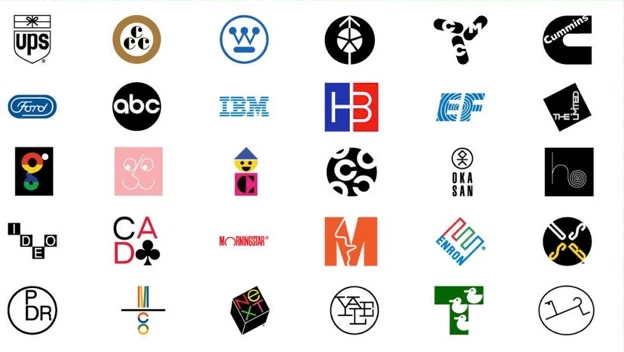
Paul Rand (1914-1996) revolutionized corporate branding with his minimalist aesthetic, making him one of the most well-known graphic designers worldwide. He believed design should be simple, clear, and impactful, using bold typography and vibrant colors to communicate effectively.
Rand is best known for his iconic logos for IBM, UPS, and ABC — designs still in use today. He also produced memorable work for Westinghouse, Enron, and NeXT.
Rand championed the idea that good design was good business, and his influence can be seen in the clean, modern aesthetics of the best graphic designers today. His legacy continues to influence top logo design companies that strive for the same timeless simplicity and impact in their branding solutions.
"Don't try to be original, just try to be good." - Paul Rand
2. Saul Bass
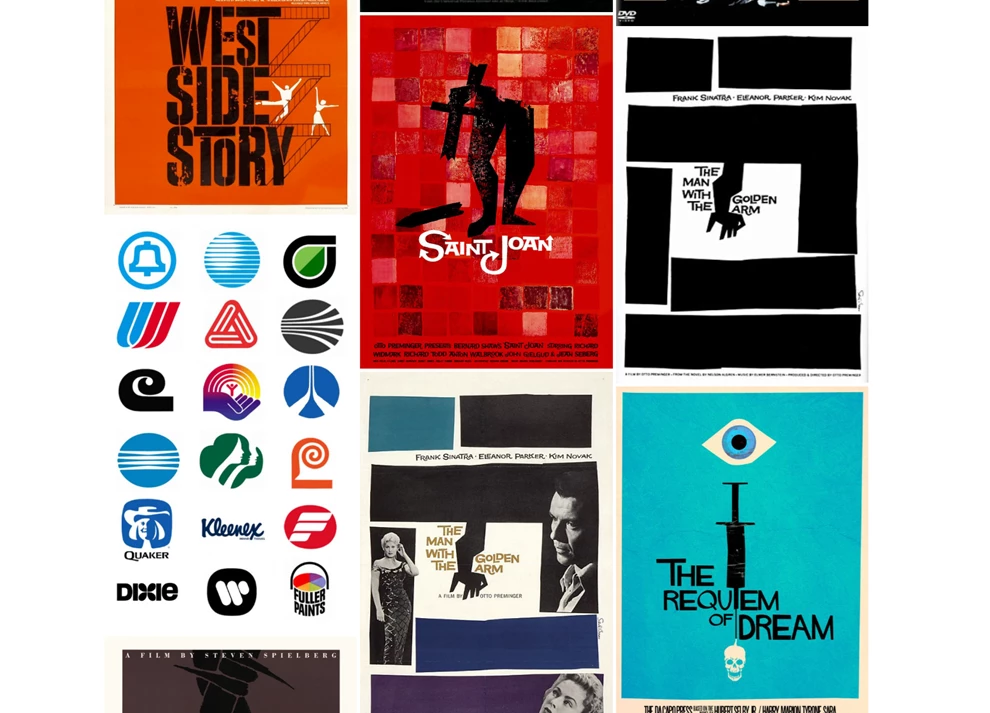
US-based Saul Bass (1920-1996) is hailed as one of the best graphic designers of all time who revolutionized the way we experience movies. His innovative title sequences for films like “Psycho,” “Vertigo,” and “North by Northwest” transformed the opening credits into an art form, using dynamic graphics and animation to set the mood and draw audiences into the story.
Beyond his legendary film work, Bass created some of the most enduring corporate logos of the 20th century. His simple, yet powerful designs for AT&T, Quaker Oats, and the Girl Scouts of America remain instantly recognizable symbols of these brands.
Bass understood the power of visual communication to evoke emotion and create a lasting impression, leaving an indelible mark on both cinema and graphic design.
"I want to make beautiful things, even if nobody cares." - Saul Bass
3. Milton Glaser
Milton Glaser (1929-2020) was a prolific American graphic designer whose work spanned everything from iconic logos to vibrant posters and illustrations. He embraced various styles, drawing inspiration from Art Nouveau, Art Deco, and psychedelic art, while always maintaining a distinctly human touch.
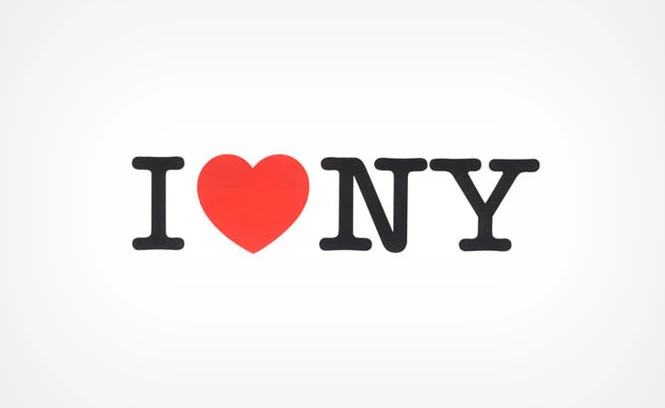
Glaser is best known for his "I ♥ NY" logo, a simple yet compelling design that became a global symbol of New York City. His iconic poster of Bob Dylan with psychedelic hair captured the spirit of the 1960s, and his work for DC Comics, Brooklyn Brewery, and New York Magazine further cemented his status as a design legend.
Glaser believed design should be communicative and expressive, and his work continues to inspire and delight people around the world.
"There are three responses to a piece of design — yes, no, and WOW! Wow is the one to aim for." - Milton Glaser
4. Massimo Vignelli

Massimo Vignelli (1931-2014) was an Italian designer who brought his modernist principles to a wide range of disciplines, from graphic design to furniture and architecture. He believed in a "semantic" approach to design, prioritizing clarity, order, and timeless simplicity.
Vignelli is best known for his controversial 1972 redesign of the New York City Subway map. Though ultimately replaced, its bold colors, clean lines, and focus on clarity over geographical accuracy exemplified his design philosophy.
He also created enduring brand identities for American Airlines, Bloomingdale's, and Ford, and designed furniture, tableware, and interiors with the same minimalist elegance.
Vignelli's legacy as one of the best graphic designers of all time lies in his belief in design as a force for good, and his dedication to both functionality and beauty.
"If you can design one thing, you can design everything." - Massimo Vignelli
5. Herb Lubalin
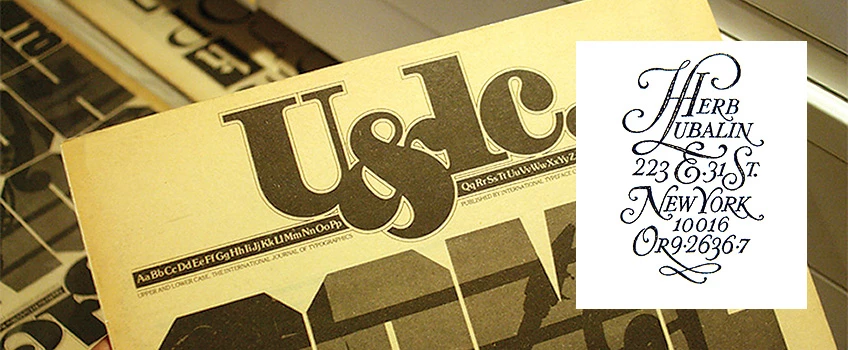
Herb Lubalin (1918-1981) pushed the boundaries of letterforms, using them not just to convey information, but as visual elements that evoked emotion and added layers of meaning. He embraced experimentation, often manipulating letterforms, overlapping them, and playing with positive and negative space to create dynamic compositions.
Lubalin is best known for his work in magazines like “Avant Garde,” “Eros,” and “Fact,” where he challenged conventional layouts and typographic norms. He also created several iconic typefaces, including ITC Avant Garde Gothic, which captured the spirit of the era with its geometric forms and bold personality.
"Typography can be as exciting as illustration and photography." - Herb Lubalin
6. Paula Scher
[Source: Pentagram]
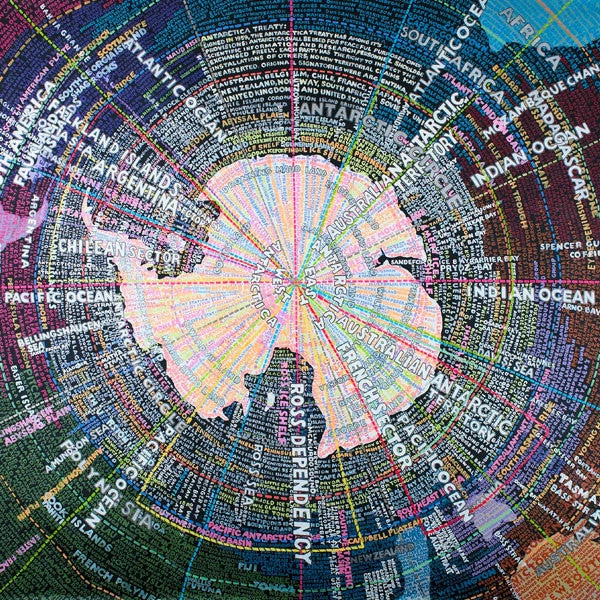
Paula Scher (born 1948) is an American graphic designer known for her bold, expressive typography and her ability to transform information into captivating visuals.
Scher is celebrated for her large-scale typographic maps, where layers of vibrant text create intricate portraits of cities and countries. Her work for The Public Theater revitalized its brand identity with its hand-painted, street-art-inspired aesthetic. As a partner at Pentagram, she has created impactful designs for clients like Citibank, Microsoft, and the Museum of Modern Art.
"It’s through mistakes that you actually can grow. You have to get bad in order to get good." - Paula Scher
7. Michael Beirut
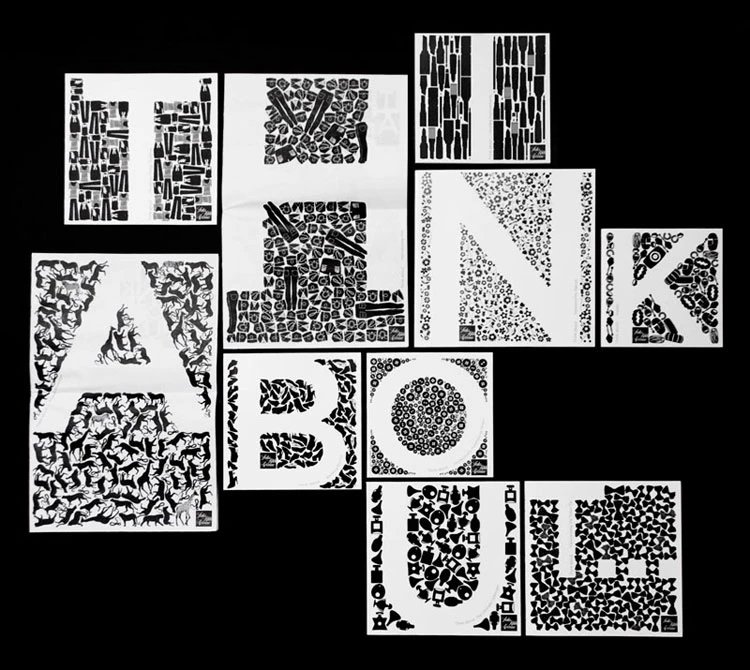
Michael Bierut (born 1957) is a modern design leader known for his intelligent and impactful approach to branding, identity, and editorial design. Bierut's portfolio spans many of the best logo designs today, from the playful yet sophisticated rebranding of Yahoo!, to the bold and modern visual identity for Verizon, and even the iconic Mastercard logo redesign.
Bierut's influence extends beyond his impressive client list. As a partner at Pentagram and a senior critic at the Yale School of Art, he has mentored countless young designers and shaped the future of the field, advocating for the power of design to improve our lives and shape our experiences.
"If you do good work for good clients, it will lead to other good work for other good clients. If you do bad work for bad clients, it will lead to other bad work for other bad clients." - Michael Bierut
8. Peter Saville
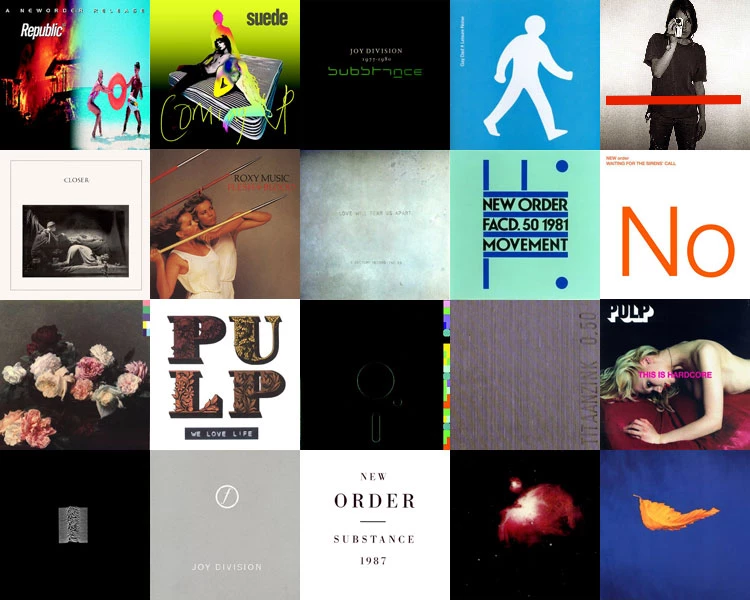
Peter Saville (born 1955) is a British art director and graphic designer who redefined the visual language of music. His iconic album covers for “Factory Records,” particularly those for “Joy Division” and “New Order,” transcended mere packaging to become cultural artifacts.
Saville's work often draws on art history, appropriating and recontextualizing classic imagery to create something new and unexpected. The stark, data-visualization aesthetic of “Unknown Pleasures” and the color-coded florals of “Power, Corruption & Lies” are prime examples of his ability to merge high art with popular culture. He later expanded his work into fashion and branding, collaborating with brands like Yohji Yamamoto and Calvin Klein.
Saville's innovative designs challenged conventions and helped shape the visual identity of post-punk and electronic music. His work left a lasting impact on graphic design and music culture, solidifying him as one of the best graphic designers of all time.
"Creative people have to believe in the value of their work." - Peter Saville
9. Stefan Sagmeister
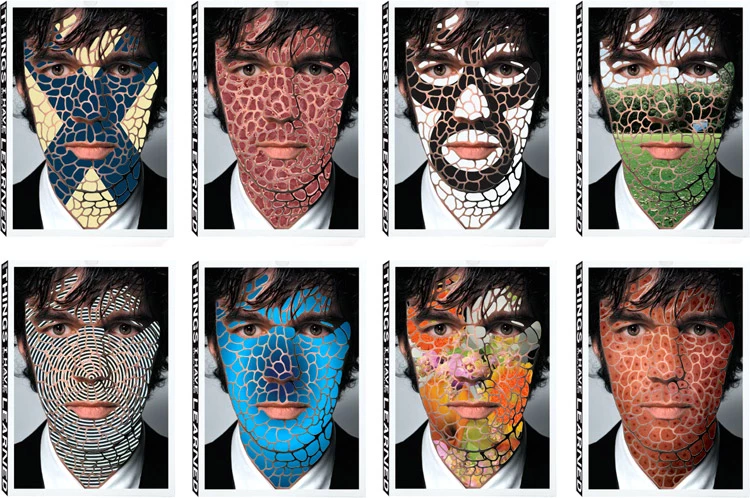
Stefan Sagmeister (born 1962) is an Austrian graphic designer known for his experimental, often provocative work. He isn't afraid to use his own body as a canvas, incorporate humor and sexuality, and explore unconventional materials to create visually arresting and conceptually challenging designs. This blurring of the lines between graphic design vs. illustration is a hallmark of his style.
Sagmeister's work spans album covers for musicians like Lou Reed, OK Go, and the Rolling Stones, to posters, books, and exhibitions that explore themes of happiness, beauty, and the human condition. He often uses hand-rendered typography and photography, combined with unexpected elements like flowers, food, or even his own skin, to create unforgettable imagery.
Today, Sagmeister inspires designers to think outside the box and embrace a more personal, expressive approach to their work.
"Trying to look good limits my life." - Stefan Sagmeister

10. Chip Kidd
A collection of graphic design book covers by Chip Kidd
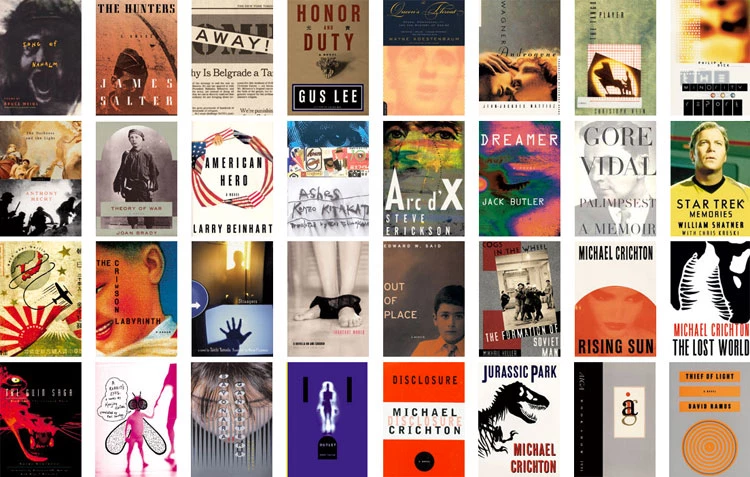
Chip Kidd (born 1964) is an American graphic designer best known for his innovative and often playful book cover designs. He has a knack for capturing the essence of a book in a single image, using bold typography, striking visuals, and a touch of wit.
Kidd's most recognizable work is arguably the cover for Jurassic Park, with its simple yet powerful silhouette of a Tyrannosaurus Rex skeleton. He has designed hundreds of covers for authors like Haruki Murakami, David Sedaris, and Cormac McCarthy.
"A book cover is a distillation of the book itself, a haiku, if you will, of the story." - Chip Kidd
11. David Carson
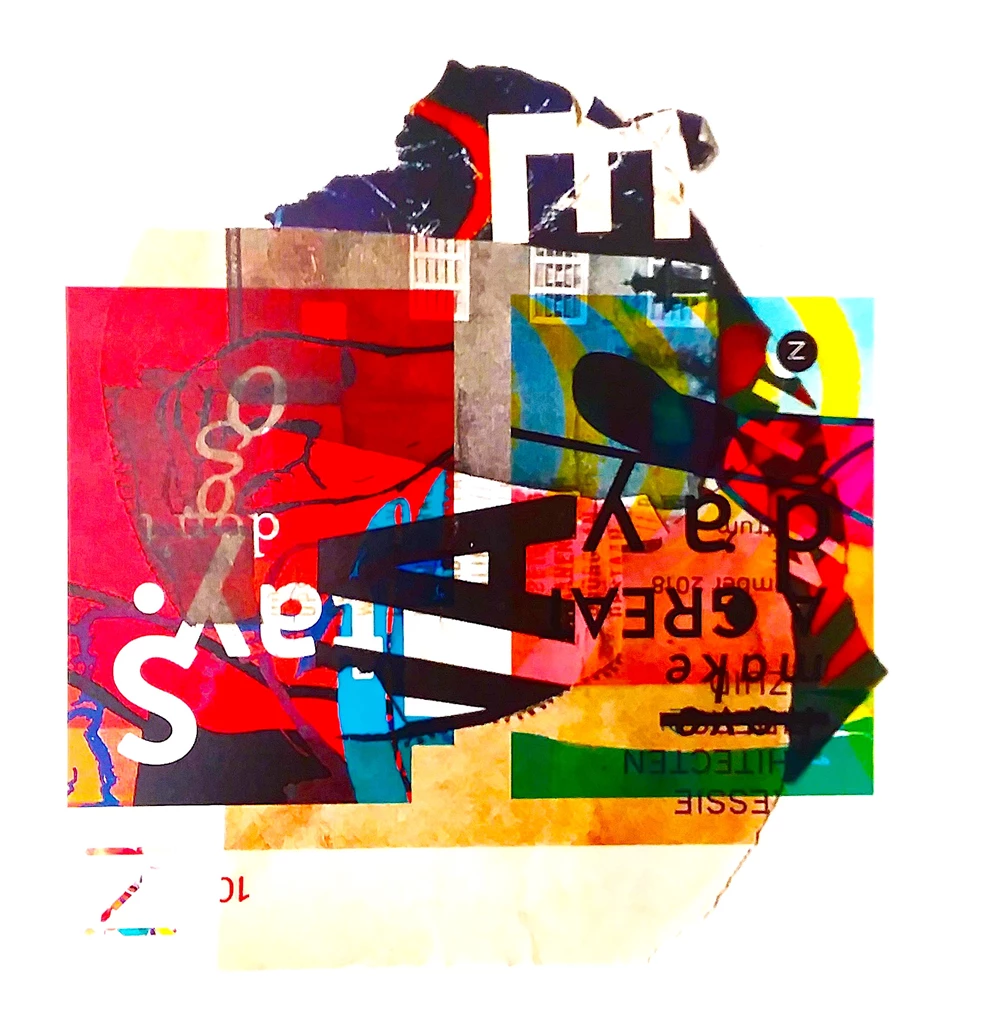
David Carson (born 1955) is an American graphic designer who challenged the rules of legibility and ushered in the era of grunge typography. His intuitive and experimental approach to design, often prioritizing emotion and visual impact over traditional communication, revolutionized magazine design in the 1990s.
Carson is known as one of the best graphic designers of all time because of his work as art director of Ray Gun magazine, where he employed unconventional layouts, distorted typefaces, and a raw, deconstructed aesthetic. He disregarded grid systems, embraced illegibility, and used type as an expressive visual element, often layering text, overlapping images, and incorporating unexpected textures.
Carson inspired a generation of designers to break the rules, experiment with form, and prioritize personal expression in their work.
"Don't mistake legibility for communication." - David Carson
12. April Greiman
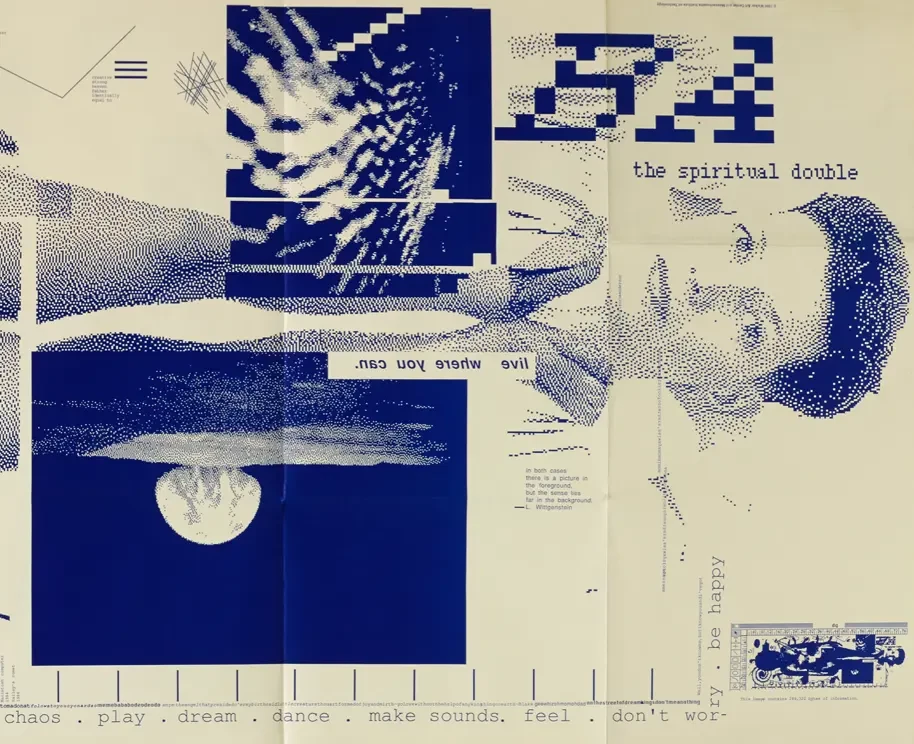
April Greiman (born 1948) is an American designer recognized as one of the first to embrace computer technology as a design tool. Her groundbreaking work in the 1980s helped pave the way for the digital revolution in graphic design, and her influence continues to be felt today.
Greiman is known for her bold use of color, her experimental typography, and her "hybrid imagery" that blends photography, illustration, and digital elements. Her iconic poster “Does it Make Sense?” showcases her innovative approach to combining photography and graphic design. She also created memorable designs for the California Institute of the Arts and the Los Angeles Olympics.
Greiman helped redefine the boundaries of graphic design, paving the way for a new era of digital creativity and expression.
"Design must seduce, shape, and perhaps more importantly, evoke an emotional response." - April Greiman
13. Wolfgang Weingart
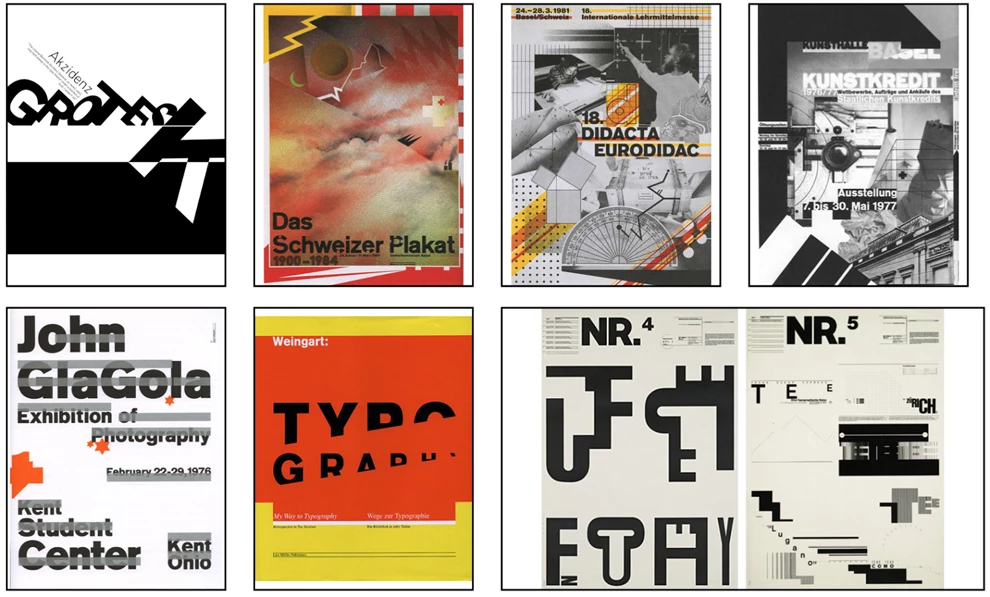
Wolfgang Weingart (1941-2021) was a German typographer and graphic designer who was known for injecting a dose of punk rock energy into his dynamic and often chaotic typographic compositions.
Weingart layered type, experimented with extreme letter spacing, and incorporated unexpected elements like photography and collage to create a sense of movement and energy. He rebelled against the rigid rules of the International Typographic Style and the notion that typography should be purely functional, instead using it as a tool for artistic expression.
Weingart's legacy lies in his influence on the "New Wave" or "Swiss Punk" typography movement. He inspired generations of designers to break free from the constraints of traditional Swiss design and embrace a more expressive, experimental approach to typography.
"I took Swiss Typography as my starting point, but then I blew it apart." - Wolfgang Weingart
14. Jessica Walsh
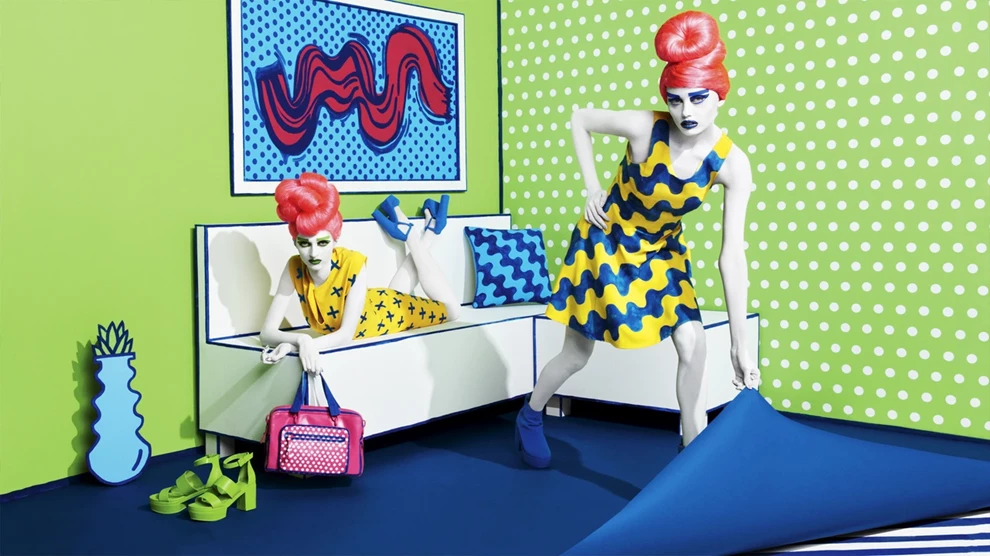
Jessica Walsh (born 1986) is an American graphic designer, art director, and illustrator known for her bold, colorful style and her commitment to social impact. She infuses her work with a playful energy, often incorporating hand-drawn elements, vibrant palettes, and a fearless approach to experimentation.
Walsh first gained recognition as a partner at Sagmeister & Walsh, where she created memorable campaigns for clients like Jay-Z, Levi's, and the Museum of Modern Art. In 2019, she founded her own agency, &Walsh, which champions creativity and inclusivity. Her personal projects, like the book 40 Days of Dating, explore themes of relationships, mental health, and self-discovery.
Walsh uses her platform to advocate for women and marginalized communities, and her work inspires a new generation of designers to embrace their individuality and create work that matters. Her bold use of color and hand-drawn elements aligns with some of the best graphic design trends we see today.
"If no one hates it, no one really loves it." - Jessica Walsh
15. Louise Fili
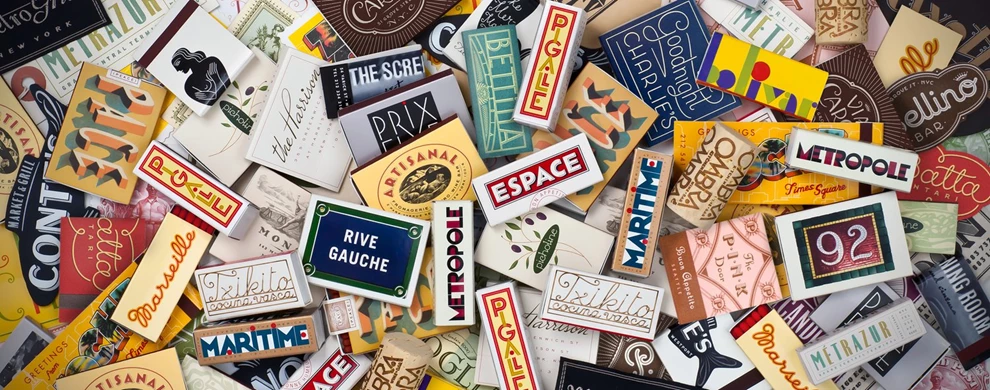
Louise Fili (born 1951) is a well-known graphic designer from America whose work exudes timeless elegance and a deep appreciation for historical typography. She draws inspiration from Art Deco, Italian Modernism, and vintage signage, creating designs that feel both classic and contemporary.
Fili is renowned for her work in restaurant branding, food packaging, and book cover design. Her logos and packaging often feature intricate lettering, ornate details, and a sophisticated color palette, evoking a sense of old-world charm and revitalizing historical styles for a modern audience.
"I don’t think one should ever be 100% satisfied because then there is nothing left to aspire to." - Louise Fili
16. Alex Trochut
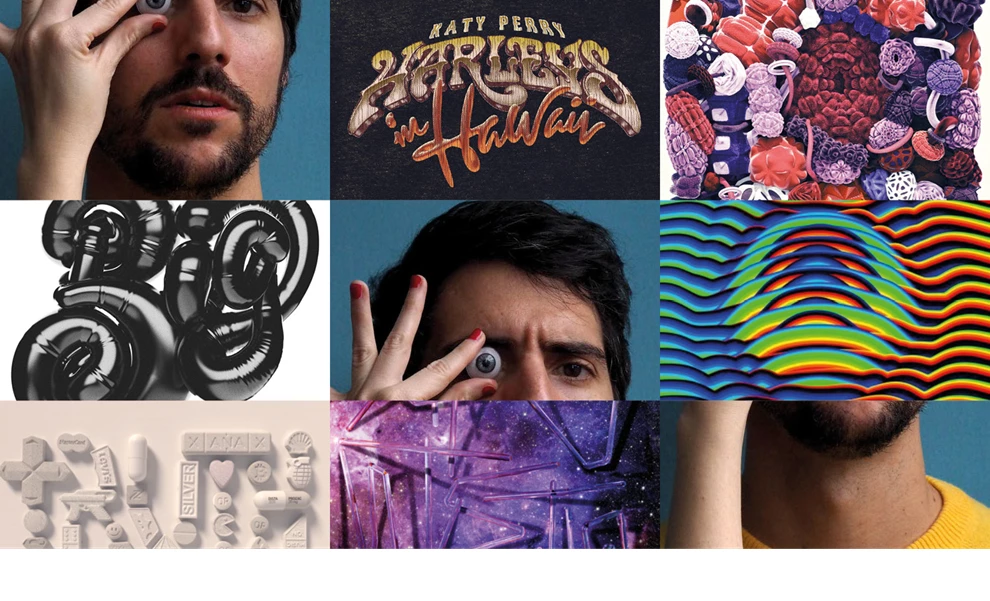
Alex Trochut (born 1981) is a Spanish graphic designer and illustrator known for his vibrant, geometric style and mastery of 3D typography.
Trochut's work is characterized by bold colors, intricate patterns, and a playful sense of experimentation. He has designed album covers for artists like Katy Perry and the Rolling Stones, created eye-catching posters for brands like Nike and Coca-Cola, and developed innovative typefaces like Bipolar, which features contrasting styles within a single font.
"Easy is boring. If you aren’t having fun pushing yourself, you aren’t doing it right." - Alex Trochut
17. Morag Myerscough
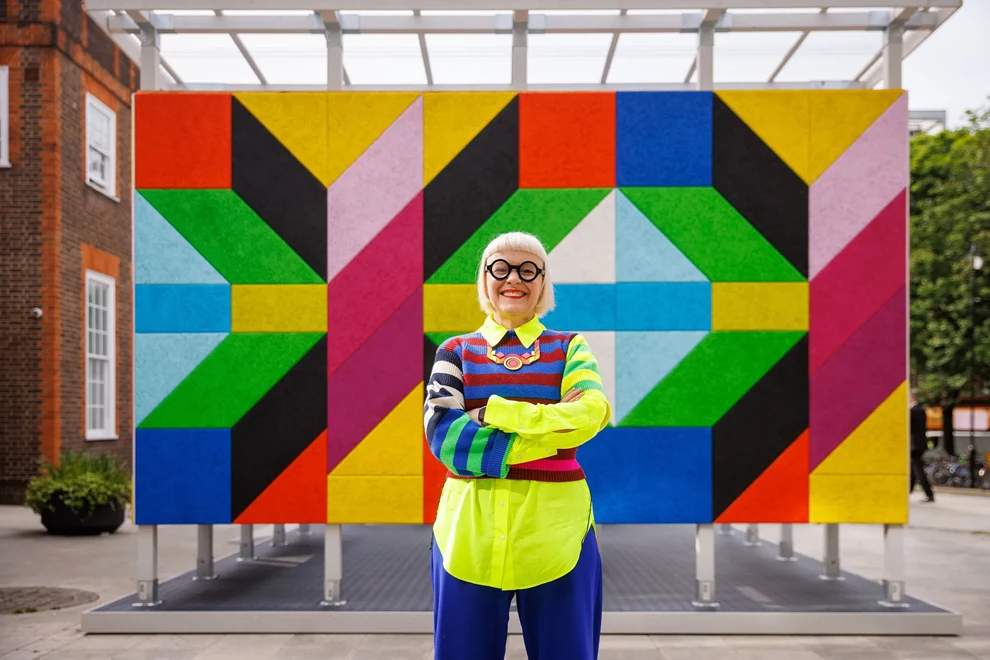
Morag Myerscough (born 1963) is a London-based artist and the most well-known graphic designer for injecting vibrant energy into public spaces. Her signature style — a riot of bold colors, playful patterns, and uplifting messages — transforms mundane environments into joyful experiences.
Myerscough's work extends far beyond traditional graphic design. She creates immersive installations, architectural interventions, and public art that encourage interaction and foster a sense of community. From hospitals and schools to cultural institutions and festivals, her work brings people together and sparks a sense of wonder.
"There is nothing better than to see an amazing colour in the right environment. It can change your whole mood." - Morag Myerscough
18. Aries Moross
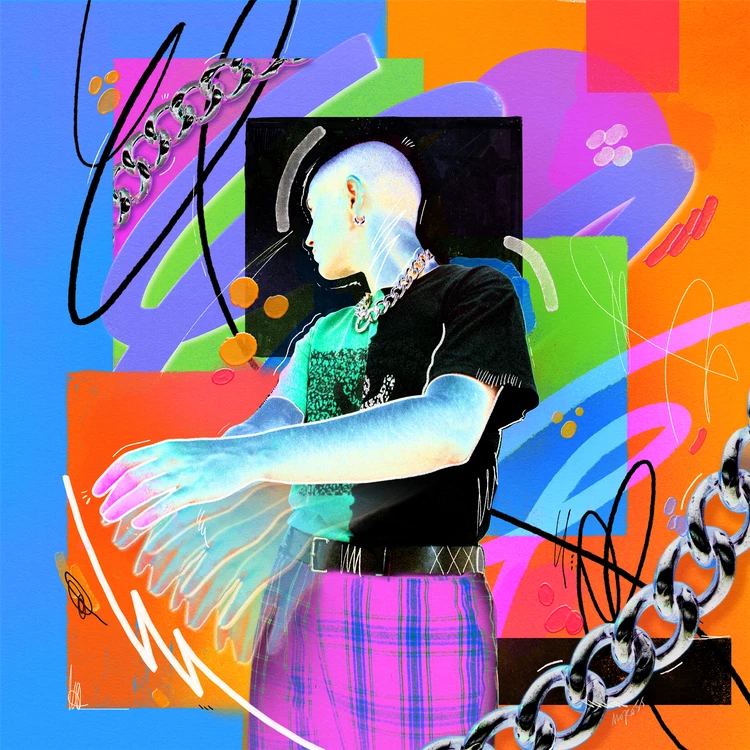
Aries Moross (born 1988) is a multidisciplinary artist and designer who injects a dose of playful energy and vibrant color into the world of pop culture. Their work spans graphic design, illustration, art direction, and music videos, always with a signature style that is both bold and inclusive.
Moross's portfolio is a kaleidoscope of creative expression. They have designed stage sets for the Spice Girls, directed music videos for artists like Jessie Ware, and created visual identities for brands like MTV and Kiehl's. Their work is characterized by a love of typography, a fearless approach to color, and a desire to create experiences that are both visually striking and emotionally resonant.
“I hate the homogenisation of design.” - Aries Moross
19. Max Miedinger
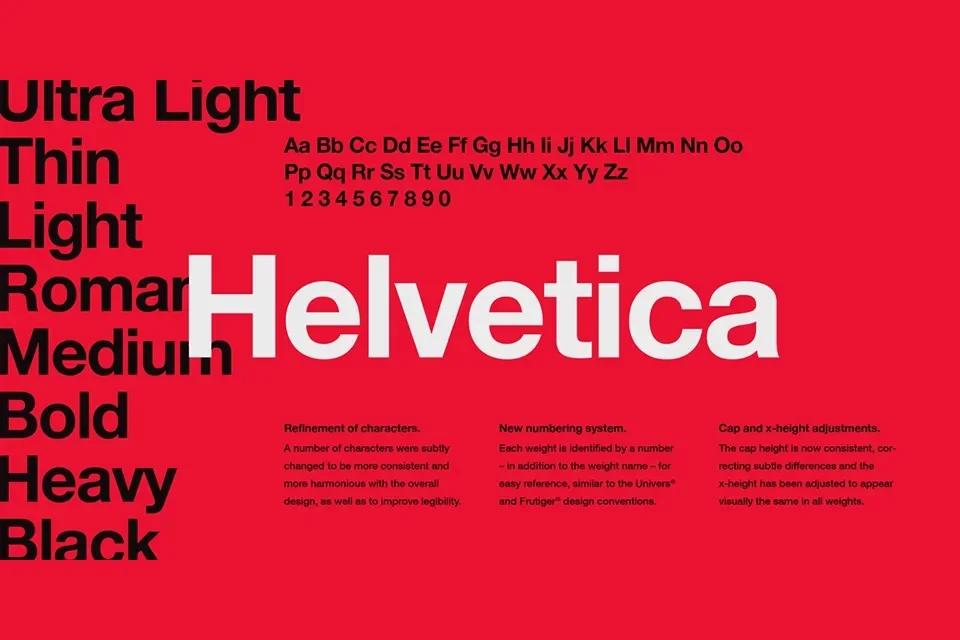
Max Miedinger (1910-1980) may not be the most well-known graphic designer, but his creation – Helvetica – is arguably the most recognizable typeface in the world. This Swiss typeface designer birthed a visual language that has shaped everything from corporate branding to public signage, leaving an indelible mark on our visual landscape.
Miedinger's journey to creating Helvetica began with a desire to modernize Akzidenz-Grotesk, a popular sans-serif typeface. In 1957, he released Neue Haas Grotesk — one of the most popular fonts — which was later renamed Helvetica, meaning "Swiss" in Latin. Its clean lines, neutral character, and exceptional versatility quickly propelled it to global prominence.
Helvetica became a symbol of Swiss modernism, embraced by designers and corporations alike for its ability to communicate with clarity and authority. Though he designed other typefaces, Miedinger's reputation rests firmly on Helvetica's success.
20. Dana Tanamachi
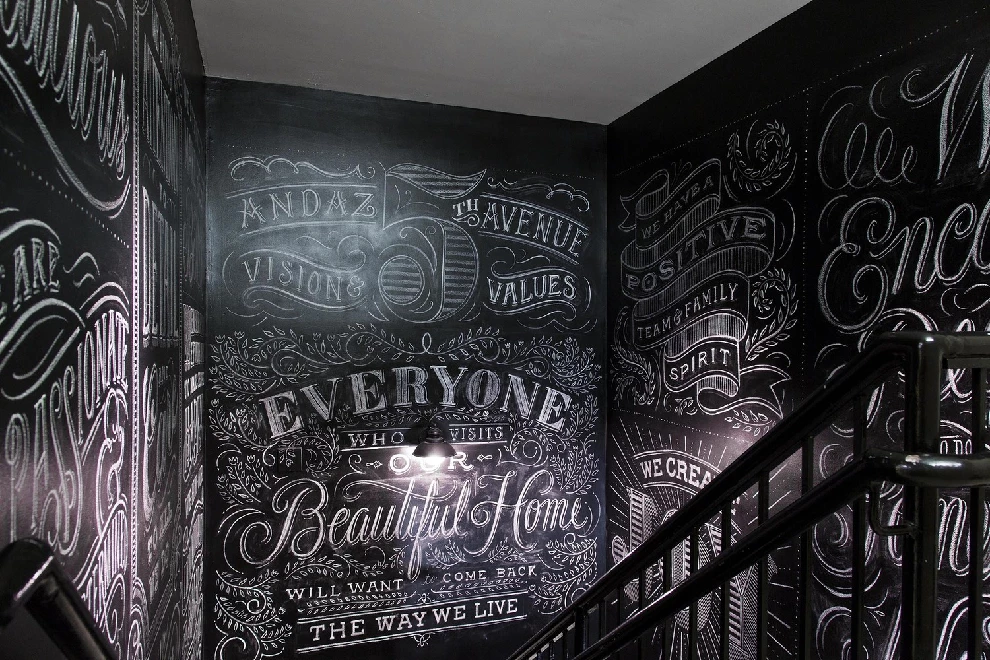
Dana Tanamachi (born 1985) is an American artist and one of the best graphic designers that use chalk lettering as an art form. With remarkable precision and an eye for detail, she transforms ordinary chalkboards into breathtaking displays of typographic artistry.
Tanamachi's chalk art has graced everything from storefronts and restaurants to the covers of TIME magazine and installations for clients like Google, Target, and the US Open. Her live performances, where she creates intricate murals in real time, are mesmerizing displays of skill and artistry. She invites viewers to appreciate the beauty of the process, reminding us that even temporary creations can leave a lasting impact.
"Chalk is ephemeral and I want to keep it that way [...] people value it more when they know it could be wiped away in an instant." - Dana Tanamachi
What Makes a Famous Graphic Designer
Becoming one of the best graphic designers of all time requires more than just technical skill. It takes a unique combination of talent, vision, and impact to achieve legendary status. Here's why certain graphic designers rise to fame:
- They solve problems with visual impact: Famous graphic designers don't just make things look pretty; they solve communication challenges with creativity and ingenuity. Take Paula Scher's rebranding of The Public Theater, where her bold, hand-painted typography captured the vibrancy and accessibility of their performances.
- They capture the spirit of the times: The best graphic designers have a finger on the pulse of culture. Think of David Carson's work for Ray Gun magazine, which perfectly encapsulated the rebellious energy and DIY aesthetic of the 1990s grunge era.
- They push boundaries and innovate: Every well-known graphic designer is often a pioneer. April Greiman, for example, embraced digital tools early on, creating groundbreaking work that blended photography, illustration, and computer graphics in the 1980s.
- They create work that endures: The most iconic designs transcend trends and remain relevant for years, even decades. Just look at Paul Rand's IBM logo, a masterpiece of minimalist design that has remained virtually unchanged since 1956.
- They inspire and influence: The most famous graphic designers leave a lasting legacy that extends beyond their own portfolios. Wolfgang Weingart's experimental typography, for instance, sparked the "New Wave" movement and continues to influence designers today.
Famous Graphic Designers: The Bottom Line
These 20 most famous graphic designers, each with their unique vision and contributions, continue to inspire the field, reminding us of the power of creativity to inform, engage, and transform. By understanding their legacies, we learn that design is more than just about aesthetics — it's about problem-solving, cultural impact, and leaving a lasting mark on the world.
Famous Graphic Designers FAQs
1. Who is the most popular graphic designer?
Some of the most widely recognized and influential graphic designers of all time include Paul Rand, Saul Bass, and Milton Glaser. Their iconic works have left a lasting impact on the field and continue to inspire designers today.
2. Who is the best graphic designer in the world right now?
The "best" graphic designer is subjective and depends on individual preferences and criteria. However, Jessica Walsh is a highly acclaimed contemporary designer known for her bold, innovative, and thought-provoking work. Her unique style and ability to push boundaries have earned her numerous awards and recognition in the design world.
3. Who is the godfather of graphic design?
Paul Rand is often considered the "godfather" of modern graphic design. His minimalist approach and emphasis on clear communication revolutionized the field, particularly in the area of corporate branding. He created iconic logos for companies like IBM, UPS, and ABC, which remain influential to this day.





-preview-webp.webp)