
Planning to launch affiliate services, grow your partner programs, or demonstrate ROI to clients? Start with the facts. These key stats, trends, and platform benchmarks reveal what’s really happening in affiliate marketing in 2026, so you can make smarter, data-backed decisions.
Affiliate Marketing Statistics: Key Findings
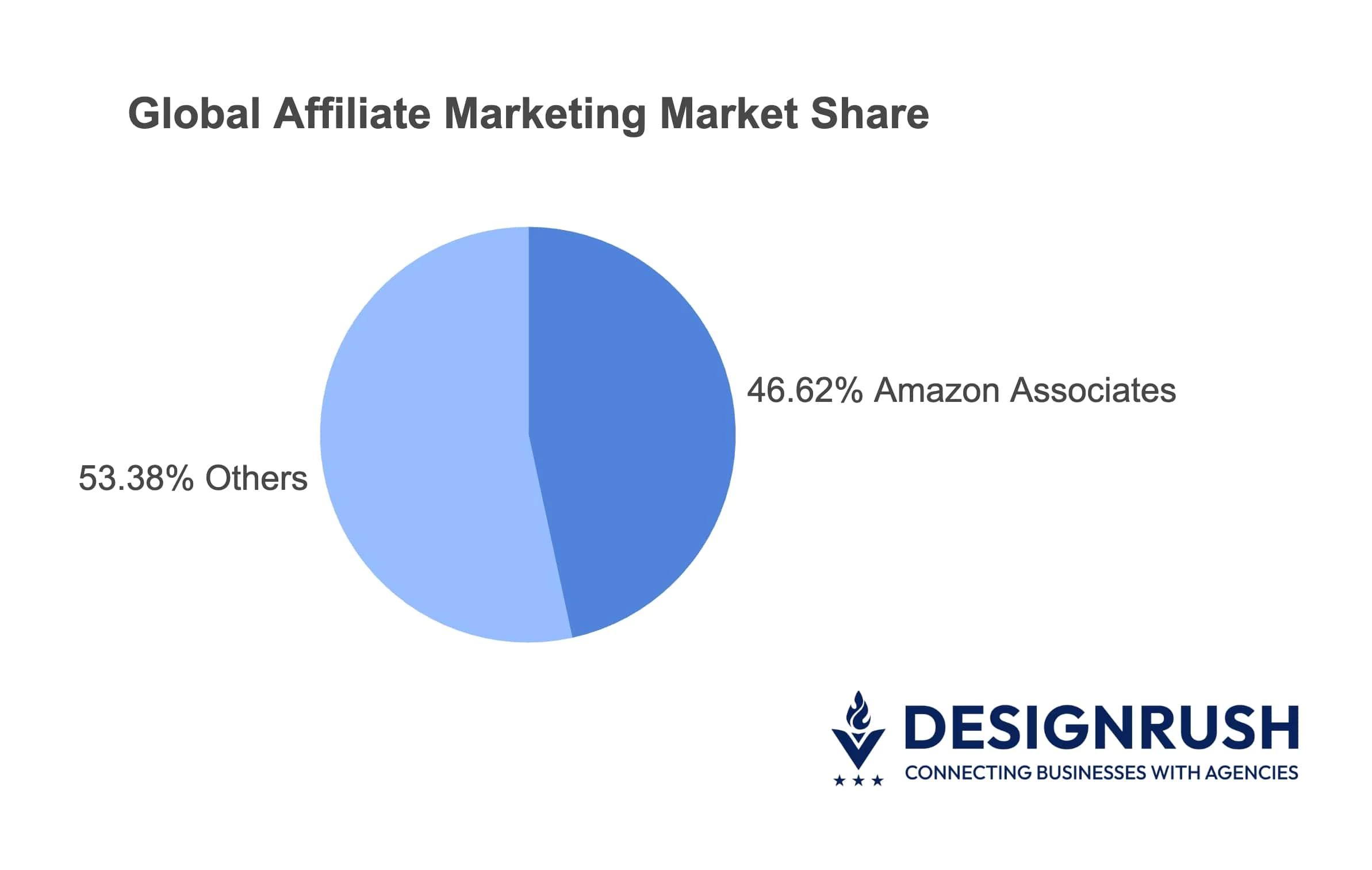
- As of 2026, the largest global affiliate program is Amazon Associates, holding a significant 46.61% market share.
- According to Awin and Forrester, affiliate-acquired customers have a 21% higher average order value and greater retention, supporting long-term growth.
- Brands blending influencer and affiliate efforts are seeing up to a 46% increase in affiliate-driven sales.
Revenue and Strategy Growth
Affiliate marketing has transitioned from a supplementary tactic to a core revenue stream for performance-focused agencies. According to the Cognitive Market Research, global affiliate spend has reached $18.5 billion in 2024, and agencies that understand how to harness affiliate data are building revenue streams that rival traditional paid media.
Here's what affiliate marketing success looks like in 2026:
- Affiliate ROI benchmarks outperform traditional media
- Earning potential by niche
- CAC and CLTV favor affiliate-acquired customers
1. Affiliate ROI Benchmarks Outperform Traditional Media
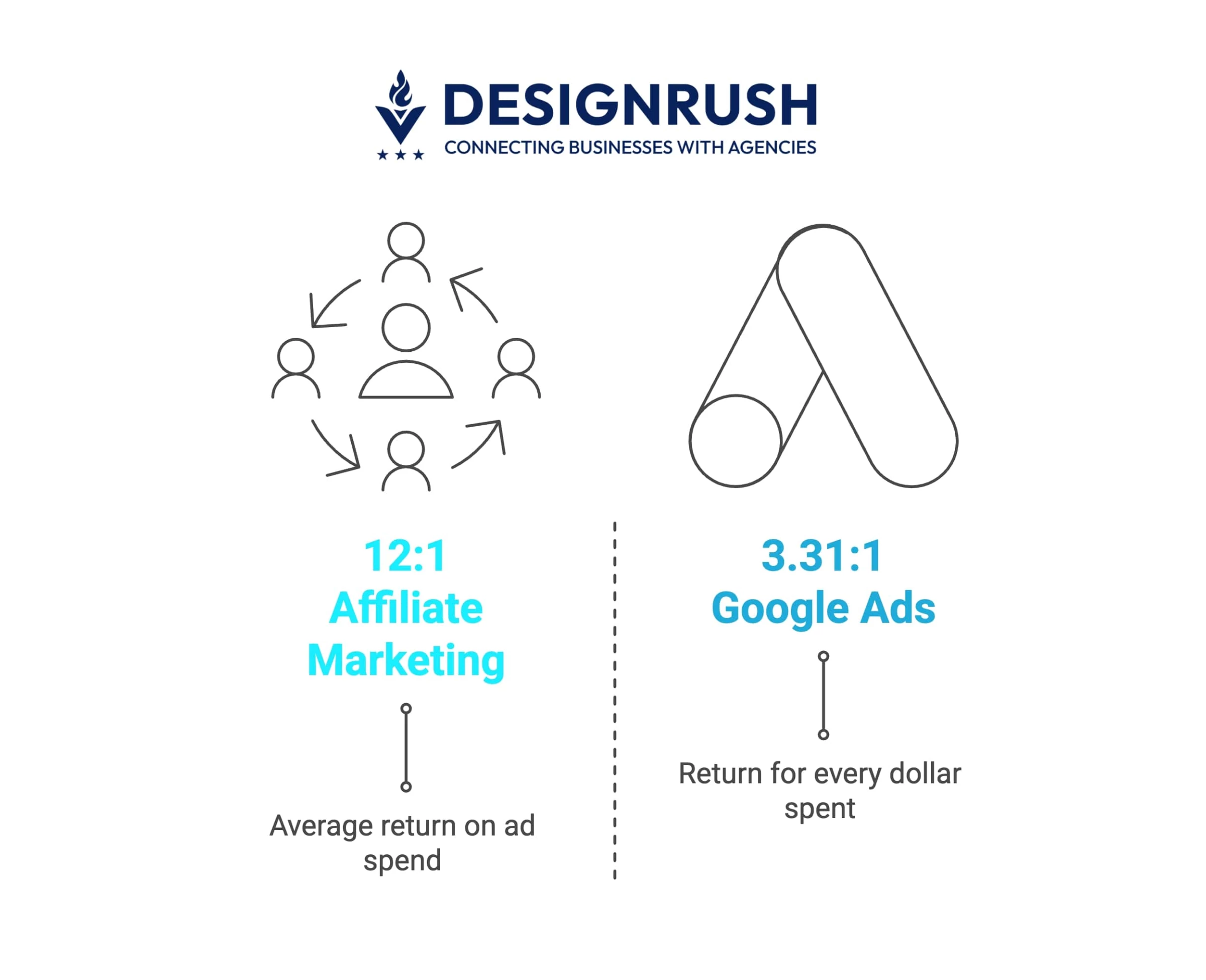 Shopify reports that affiliate campaigns deliver an average return on ad spend (ROAS) of 12:1. Unlike display or paid social advertising, affiliate marketing scales with greater control, attribution transparency, and cost-efficiency.
In contrast, in April 2025, Google Ads yielded a ROAS of $3.31 for every $1 spent, highlighting how affiliate marketing can offer significantly higher returns for performance-driven advertisers.
Here are a few ways your agency can drive ROI with affiliate:
- Prioritize verticals with recurring revenue like SaaS and fintech.
- Use hybrid strategies (affiliate + influencer) to amplify reach and trackable conversions.
- Focus on high-EPC offers and commission structures that reward lifetime value.
- Incorporate affiliate ROAS benchmarks into performance dashboards.
- Develop white-label affiliate services with tiered pricing and analytics baked in.
Here’s some more data around affiliate marketing revenue worth noting:
- The United States leads in affiliate marketing, accounting for 39% of global activities.
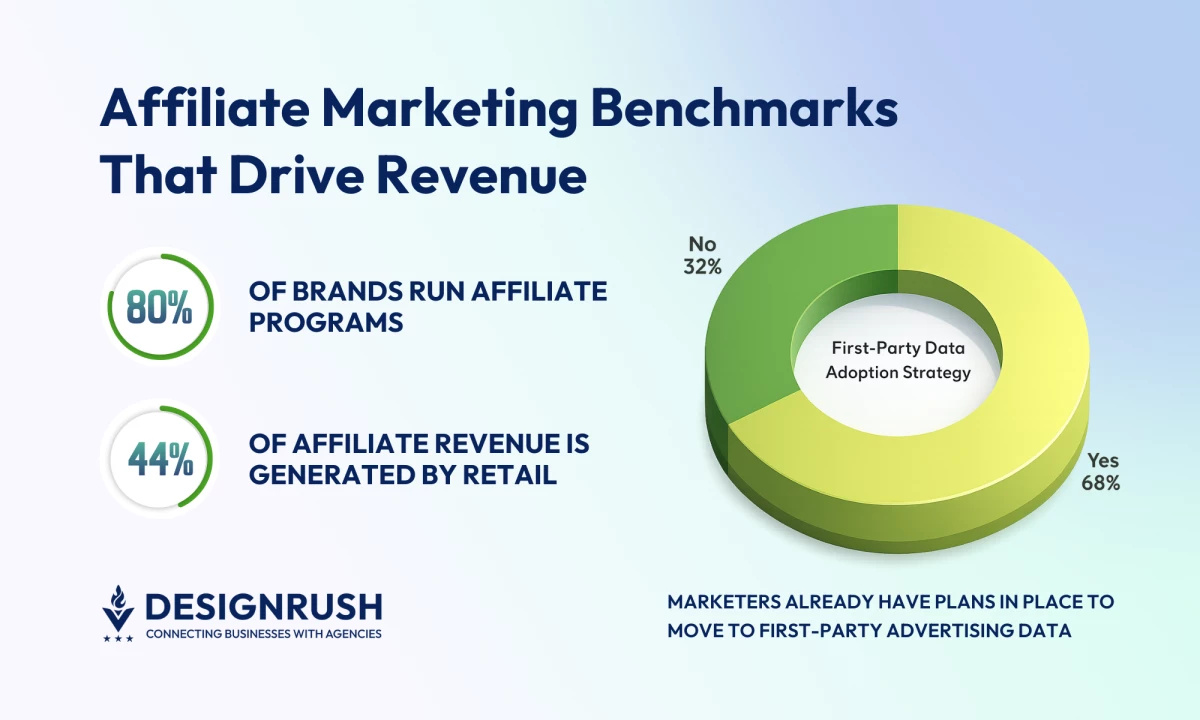
- A study by Rakuten showcases that over 80% of brands run affiliate programs.
- Asia-Pacific (APAC) is the fastest-growing region, driven by influencer commerce and mobile-first behavior.
- Retail businesses generate 44% of all affiliate marketing revenue.
- AuthorityHacker has predicted that global affiliate marketing industry will grow to a market size of $27.78B by 2027.
- Emarketer forecasts that US affiliate marketing ad spending will exceed $15 billion in 2028.
2. Earning Potential by Niche
Authority Hacker’s affiliate marketing survey uncovered a telling trend: not all niches are created equal — some are revenue powerhouses. Out of 19 surveyed categories, three stood out for generating the highest average monthly affiliate income:
| Niche | Average Monthly Income |
| Education/E-Learning | $15,551 |
| Travel | $13,847 |
| Beauty/Skincare | $12,476 |
| Finance | $9,297 |
| Technology | $7,418 |
| Digital Marketing | $7,218 |
| Health and Fitness | $7,194 |
It’s worth mentioning that only these top 7 niches exceeded $7,000 per month on average, creating a clear earnings gap from the rest — which ranged between ~$500 and ~$6,000.
While raw income shows clear winners, revenue per 1,000 Visitors (RPM) reveals another layer of profitability:
| Niche | RPM (Revenue per 1,000 Visitors) |
| Education/E-Learning | $274 |
| Digital Marketing | $236 |
| Entertainment | $203 |
| Travel | $196 |
| Health and Fitness | $159 |
| eCommerce | $156 |
| Finance | $141 |
Here’s how you can take a piece of the profit for your own business:
- Prioritize verticals like education, travel, or beauty/skincare where income potential is significantly higher.
- Improve content quality and conversion paths to raise revenue per visitor rather than just increasing traffic.
- Enter competitive niches with a clear plan using strong SEO, brand positioning, and partnerships.
- Focus on niches like finance or technology where average earnings are high enough to replace salaried income.
- Allocate more budget to niches with high RPMs since they offer better returns per visitor.
- Start with lower-risk niches like health or eCommerce and expand to more competitive ones as performance improves.
3. CAC and CLTV Favor Affiliate-Acquired Customers
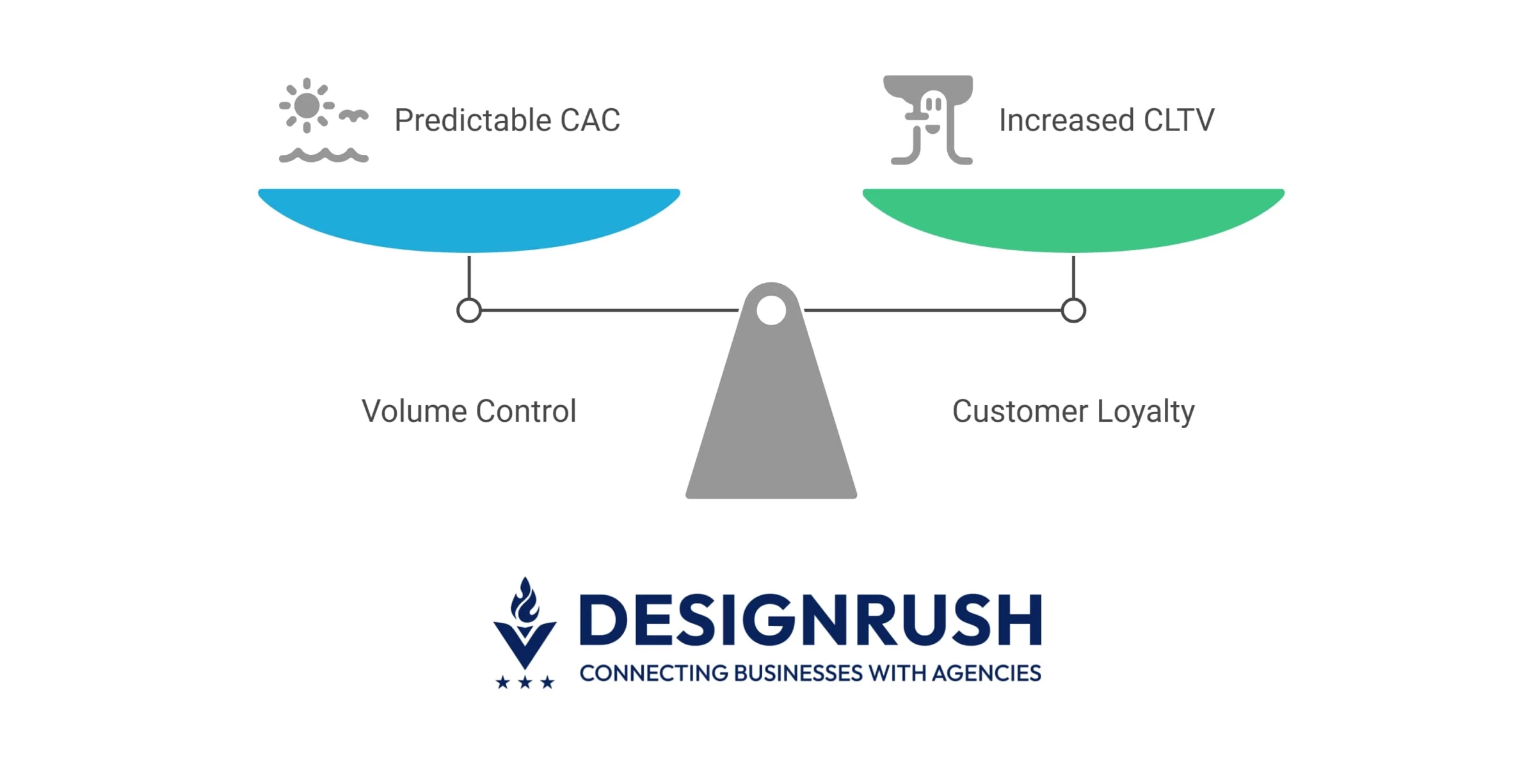 The scalability of affiliate programs allows you to control volume by adjusting partner incentives, leading to more predictable and often lower customer acquisition cost (CAC).
On the other hand, by partnering with affiliates who have established trust with their audiences, you can acquire customers who are more likely to remain loyal, thereby increasing customer lifetime value (CLTV).
There are various ways to optimize CAC and CLTV through affiliate:
- Use onboarding flows to turn affiliate traffic into sticky users.
- Build retention-based commission structures (e.g., payouts based on 30/60/90-day LTV).
- Track post-click behavior — not just clicks or signups — to attribute true value.
- Combine content marketing with affiliate to pre-educate and qualify leads.
- Focus B2B efforts on software and services with high-margin, long-LTV models.
More supporting performance stats on this matter:
- A 2024 Awin/Forrester analysis showed affiliate-sourced buyers had 21% higher average order values.
- In the same Awin/Forrester study, affiliate-referred customers’ higher spend and repeat rates imply a far higher CLTV than paid-acquired customers.
Platform Benchmarks: Amazon, Shopify, Impact, and SaaS Ecosystems
Choosing the right affiliate platform can make or break an agency’s ability to scale performance. Each platform has its sweet spot and knowing how to align them with your vertical and client goals is essential for maximizing ROI and long-term value:
- Amazon Associates is built for scale
- Shopify’s affiliate model is built for ecosystem play
- EBay's affiliate model is built for monetizing diverse niches
1. Amazon Associates Is Built for Scale
 Amazon’s Associates Program offers businesses an accessible avenue to monetize digital content and drive revenue. With category-based commissions ranging from 1% to 20% — such as 20% for Amazon Games and 10% for Luxury Beauty products — and a vast product inventory, it enables companies to earn commissions on a wide array of products.
This makes it particularly beneficial for businesses that produce content like product reviews, buying guides, or curated recommendations.
However, its 24-hour cookie window severely limits long-term attribution, making it better suited to low-commitment purchases and impulse-driven traffic.
When to use Amazon Associates:
- To monetize informational content that attracts traffic but doesn’t directly convert.
- Use it during seasonal promotions or product launches to drive sales through a trusted platform.
- It helps generate passive revenue from evergreen content like product comparisons or gift guides.
- Amazon Associates can serve as a supplementary income stream alongside other affiliate or product offerings.
- It works well for SEO-focused strategies that attract high-intent clicks without requiring a strong sales push.
Let’s unpack a few key stats from Amazon Associates to sharpen the picture:
- Approximately 75,659 companies utilize the Amazon Associates program, with 52% based in the United States.
- Amazon Associates dominates the affiliate marketing field, holding an estimated 46.61% of the global affiliate market share. This makes it the single largest affiliate program by a wide margin.
- The global affiliate marketing industry was valued at over $20 billion in 2024, so Amazon’s program likely accounts for a multi-billion-dollar portion of that total.
- Amazon Associates boasts a vast community of affiliate publishers across the globe. Recent estimates put the count at over 900,000 active Amazon affiliate partners worldwide.
- For Amazon, AOV can vary widely by niche, but many affiliates see an average order in the $100+ range.
2. Shopify’s Affiliate Model Is Built for Ecosystem Play
 Shopify offers a robust affiliate infrastructure focused on ecosystem expansion. Through partner referrals, app integrations, and co-branded campaigns, agencies can earn recurring revenue by onboarding clients or launching apps and themes.
Its value lies not just in payouts but in the way it integrates affiliates with developers, influencers, and merchants — ideal for agencies working across DTC and platform growth.
When to use Shopify’s affiliate model:
- For agencies offering Shopify store builds or app installs
- To monetize content in the DTC and eCommerce enablement space
- When running hybrid influencer–affiliate campaigns for Shopify brands
- To build recurring commission models based on store success
- For collaboration with developers and app partners in the Shopify ecosystem
Additional statistics and data on Shopify affiliate:
- As presented in a 2024 Statista report, Shopify experienced a growth rate of approximately 20%, nearly three times the global eCommerce growth rate of around 8.4%.
- On average, a Shopify affiliate earns about $58 per referral.
- Historically, Shopify offered roughly “200% of the new customer’s first monthly payment” as commission (capped at a maximum amount for high-tier plans).
- The same industry sources report that Shopify’s affiliate conversion rate is around 6–10% for targeted audiences.
- Affiliates typically earn $100–$500 per referral when a user subscribes to a paid Shopify plan. Higher payouts may be available for Shopify Plus referrals (enterprise-level clients).
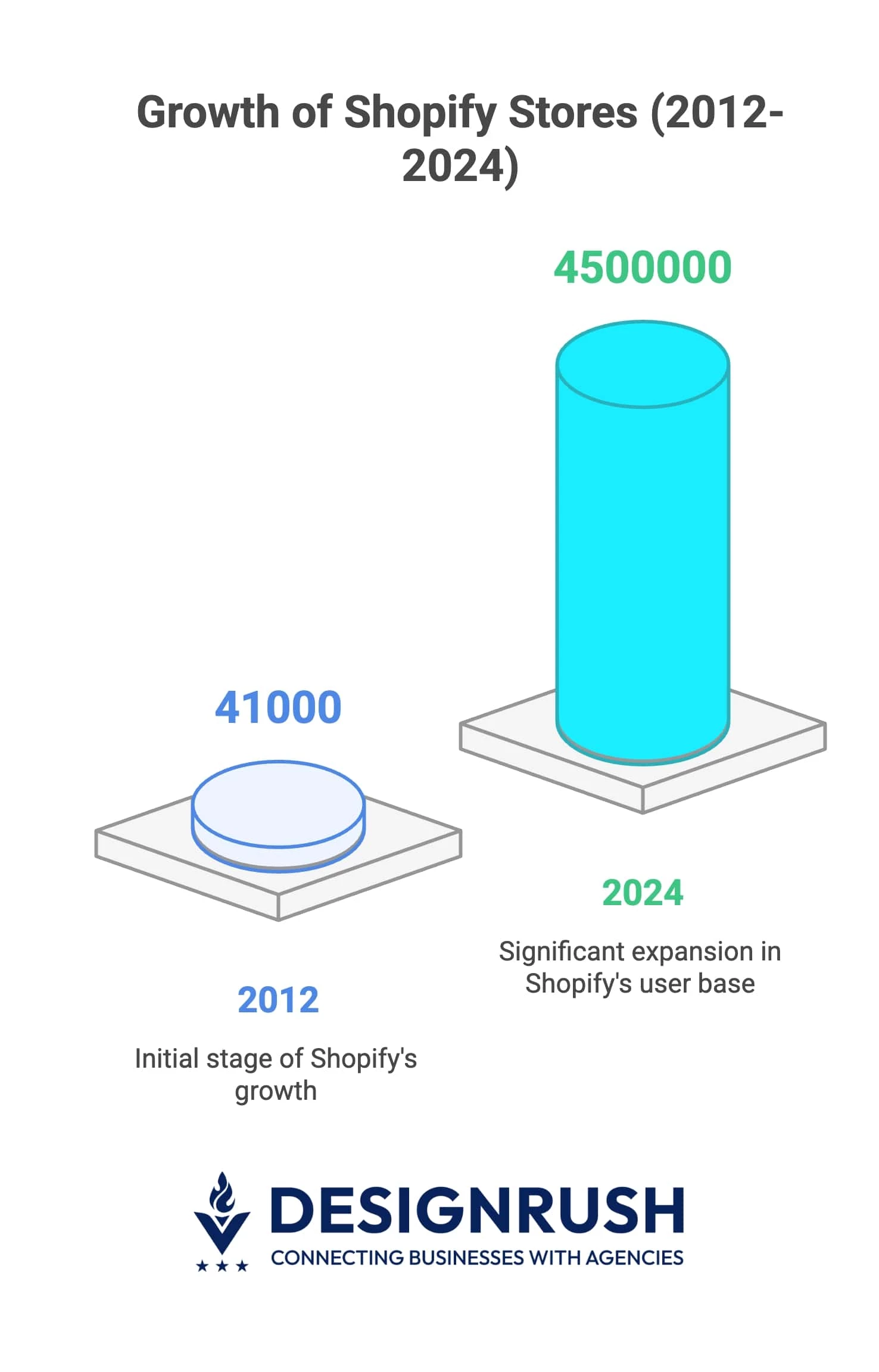
- Shopify grew from about 41,000 stores in 2012 to over 4–5 million active stores by 2024.
3. eBay’s Affiliate Model Is Built for Monetizing Diverse Niches
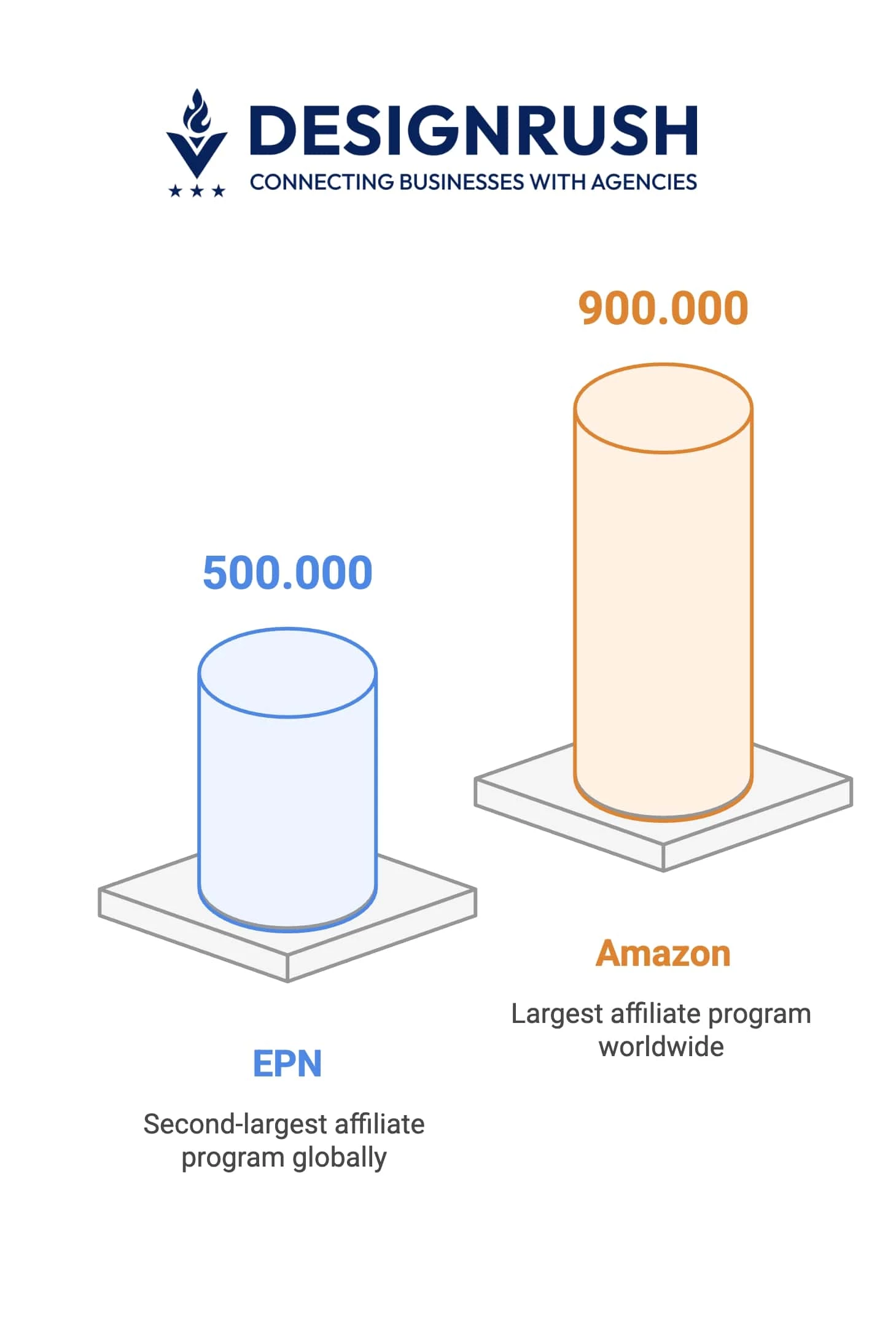 The eBay Partner Network (EPN) is one of the world’s largest in-house affiliate programs. While eBay does not publicly disclose exact annual payout figures, EPN’s scale is evident – it has over 500,000 active affiliates worldwide, making it the second-largest affiliate program after Amazon’s.
EPN represents a key revenue channel for eBay and a major income source for affiliates globally, even if precise payout totals aren’t publicly reported.
When to use eBay’s affiliate model for your business:
- Whether your business runs a niche content site, operates a specialty product review platform, or targets a particular interest group, eBay's vast and varied inventory allows you to monetize virtually any vertical.
- If your business generates a steady flow of content-based traffic, EPN allows you to earn commissions without needing to stock or ship products.
- If your business already works with Amazon Associates or other affiliate programs, EPN can diversify your affiliate portfolio, especially in categories where eBay may offer better availability, pricing, or buyer demand.
- If your audience tends to look for bargains, used items, or refurbished goods, EPN is a natural fit.
- Since eBay’s cookie duration is only 24 hours, EPN is best suited for businesses that can drive quick purchase decisions through comparison content, deal alerts, or real-time product recommendations.
Other stats supporting EPN’s influence on the market:
- Commission rates range from 1% up to 4% of the sale price, with most categories in the 2–4% range.
- According to an affiliate benchmarking study, eBay’s EPC averages roughly $0.05–$0.10 USD per click. In other words, 100 clicks sent to eBay generate about $5–$10 in commission on average.
- EPN’s cookie duration was cut from 7 days to just 24 hours (implemented around 2020–2021).
- EPN is a global program, leveraging eBay’s presence in 190+ markets worldwide.
The Future of Affiliate Marketing: Strategic Predictions for Agencies
Privacy, predictive analytics, and hybrid execution will dominate the next wave of performance marketing. Forward-thinking agencies are already adapting — shifting to first-party data, automating partner scoring, and merging creator campaigns with affiliate metrics.
Here’s where affiliate marketing is heading and how your agency can stay ahead.
- Privacy-first affiliate strategy will redefine targeting
- AI and attribution modeling will power smarter campaigns
- Influencer-affiliate hybrid campaigns will dominate DTC growth
1. Privacy-First Affiliate Strategy Will Redefine Targeting
 As third-party cookies continue their phase-out, privacy regulations are tightening, and performance marketers are being forced to evolve. The industry is responding by prioritizing first-party and zero-party data, which empowers agencies to track conversions more accurately and ethically.
Tools like GetRewardful and Hashtag Paid enable precise tracking by relying on direct customer interactions, affiliate IDs, and opt-in signals — not third-party ad pixels.
How to win in a privacy-first affiliate world:
- Build affiliate flows around owned data and opt-ins
- Replace cookie-based tracking with server-side and API-based solutions
- Encourage partners to collect zero-party data via polls, email, and gated content
- Use compliant platforms with built-in privacy support (GDPR/CCPA-ready)
- Develop first-party audiences for retargeting and partner personalization
Key stats and trends:
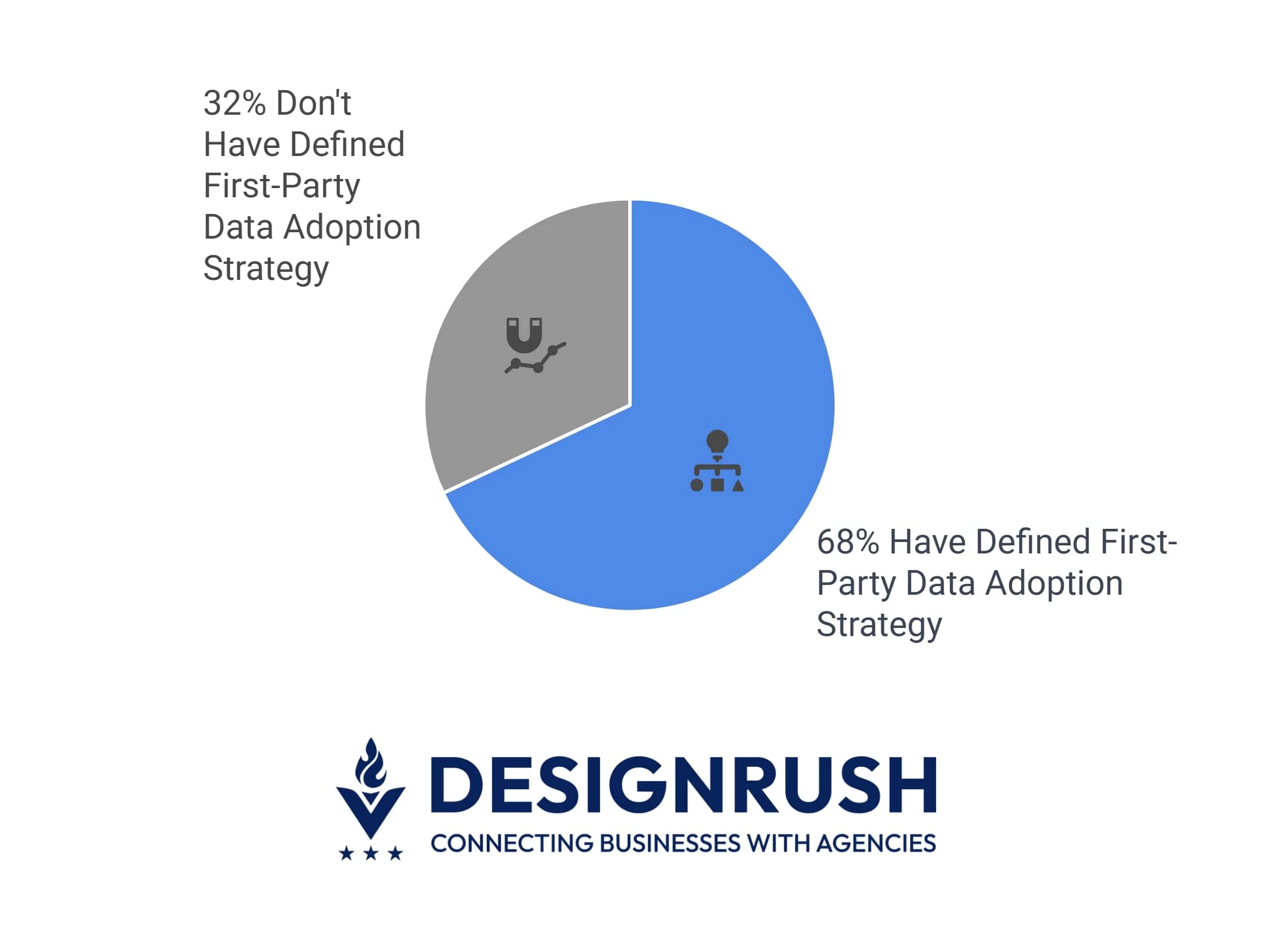
- Salesforce reports that 68% of marketers already have a defined strategy to migrate toward first-party data sources.
- Apple’s iOS privacy changes reduced third-party attribution accuracy by over 50%.
- 58.1% of a company's advertising budget is impacted by ad fraud.
2. AI and Attribution Modeling Will Power Smarter Campaigns
 Affiliate is moving beyond spreadsheets and static UTM links. Leading platforms are adopting AI-driven partner scoring, dynamic attribution modeling, and real-time fraud prevention.
This unlocks new levels of performance optimization, letting agencies predict which partners will drive results, detect click fraud instantly, and assign credit more accurately across the funnel.
How to leverage AI for affiliate success:
- Use AI scoring models to rank and prioritize top affiliate partners
- Automate payout tiers based on historical and forecasted performance
- Detect fraud using behavioral analytics and anomaly detection
- Integrate AI-powered attribution to assign credit across email, influencer, SEO, and affiliate touchpoints
- Use predictive insights to optimize partner recruitment and retention
Supporting data:
- In 2024, the global AI in marketing market was valued at $20.45 billion and is expected to grow at 25% per year from 2025 to 2030.
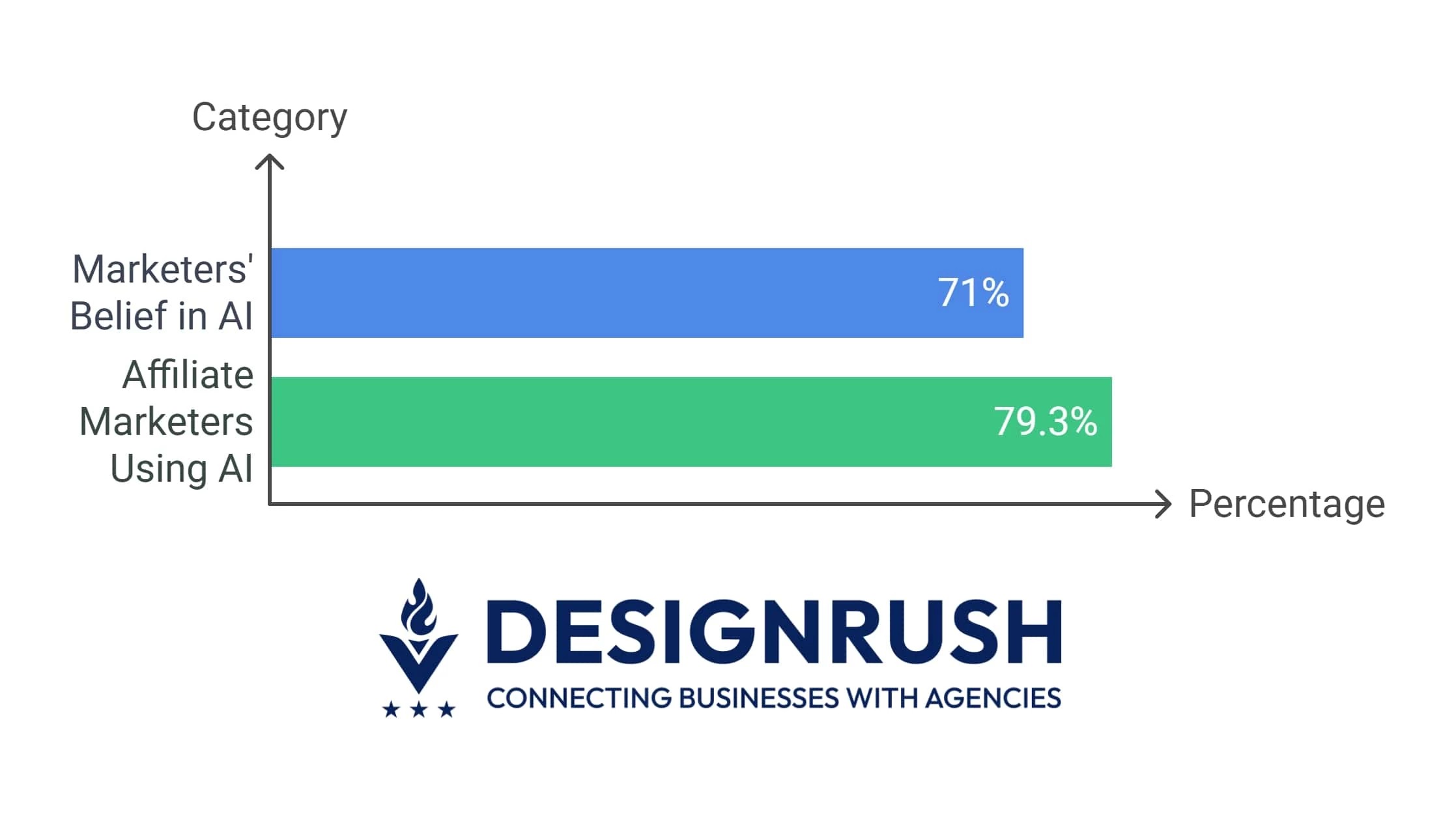
- Authority Hacker tells us that 79.3% of affiliate marketers are utilizing AI content creation.
3. Influencer-Affiliate Hybrid Campaigns Will Dominate DTC Growth
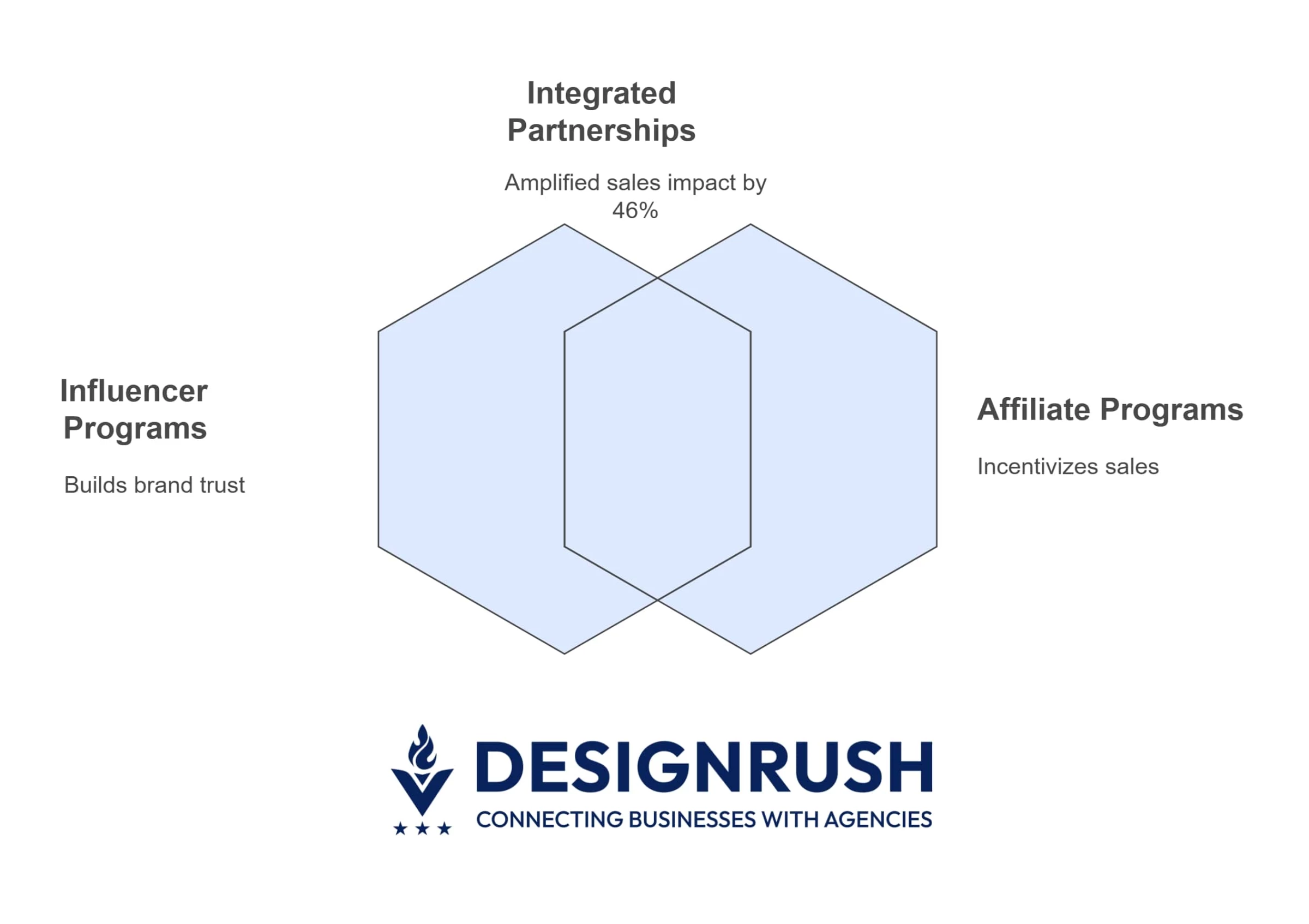
Affiliate and influencer marketing used to be siloed. That’s over. In 2026, hybrid influencer-affiliate campaigns are emerging as the top-performing model for DTC brands — blending top-funnel awareness with bottom-funnel attribution.
By combining TikTok creators, blog content, and email follow-ups, brands are creating “conversion stacks” that offer full-funnel measurement. These campaigns are proving to outperform static ads in both engagement and ROI.
How to launch high-performing hybrid campaigns:
- Partner with creators who also participate in affiliate programs (via LTK, Impact, or Shopify Collabs).
- Build content stacks that combine influencer video + trackable affiliate links + remarketing flows.
- Use creator landing pages with embedded referral tracking.
- Align influencer commissions with performance tiers (CPA, revenue share, milestones).
- Track performance across channels using unified dashboards and UTMs.
Stats fueling the hybrid model trend:
- According to an Impact study in 2024, brands combining influencer and affiliate programs have reported a 46% increase in affiliate-based sales.
- The Impact study also found that marketing leaders who combined their influencer and affiliate channels led to remarkable growth.
- Creator-driven affiliate revenues were projected to reach $1.3 billion in 2025, indicating a substantial impact on the affiliate marketing space.
- Influencers and affiliate marketers were responsible for approximately 20% of US eCommerce revenue on Cyber Monday 2024.
Affiliate Marketing Statistics: Final Thoughts
Strategic use of affiliate findings deepens client trust, unlocks new service lines, and positions agencies as indispensable players in a privacy-first, performance-based marketing industry.

Ready to scale your affiliate strategy? Book a strategy session today with one of the best affiliate marketing agencies.
Alternatively, visit our Agency Directory for expert guidance in the following categories:
- Top Digital Marketing Agencies
- Top Email Marketing Agencies
- Top SEO Agencies
- Top Advertising Agencies
- Top Branding Agencies
Affiliate Marketing Statistics FAQs
1. Which platforms offer the highest affiliate payouts?
PartnerStack and Impact.com are top-tier for affiliate earnings. They offer recurring commissions, longer cookie windows, and custom payout structures, making them ideal for B2B, SaaS, and fintech programs. These platforms also support partner CRM tools, scaling potential, and API integrations.
2. How can agencies monetize affiliate marketing?
Agencies have multiple revenue paths:
- Charge performance retainers for managing client affiliate programs
- Launch their own affiliate sites (blogs, comparison engines)
- Earn recurring commissions through partner referrals (e.g., SaaS tools)
- Sell packaged affiliate services, including strategy and platform onboarding
This creates recurring revenue streams beyond one-off project work.
3. Is affiliate marketing viable for B2B?
Absolutely. B2B affiliate programs tend to have longer sales cycles but drive higher lifetime value and lower acquisition costs. Tools like PartnerStack and FirstPromoter are built for B2B, offering features like revenue-based payouts, partner segmentation, and advanced lead tracking.