
Ever wondered if we’re living in a slightly more cheerful episode of Black Mirror?
The AI wearables of 2026 aren’t here to haunt you, but to give you a glimpse of a future where your life gets a little upgrade. Think of them as the friendliest tech companions you didn’t know you needed.
Key Findings: AI Wearables
- eSight Go and Dephy Sidekick focus on physical support and mobility, while FRENZ Brainband SuperBrain Edition and Looki L1 center on sleep, focus, and daily patterns.
- Looki L1, SuperBrain, and AeroFit 2 Pro automatically adjust based on context, movement, or environment, reducing the need for manual input.
- Users value comfort and insight, while noting higher prices and battery life as the most common concerns.
Why AI Wearables Are No Longer Niche
CES 2026 made it clear that AI wearables are no longer unattainable gadgets.
With more than 148,000 attendees and over 55% senior-level executives on site, the show highlighted how devices like smart glasses, rings, earbuds, and assistive wearables are moving into everyday use across health, work, and accessibility.
For companies, this matters because wearables now sit at the intersection of consumer behavior, enterprise AI, and real-world data.
The same products gaining attention on the CES floor are shaping how businesses think about human-computer interaction, wellness tech, productivity tools, and AI-powered services that extend beyond the phone screen.
1. eSight Go: Smart Glasses for Vision Loss
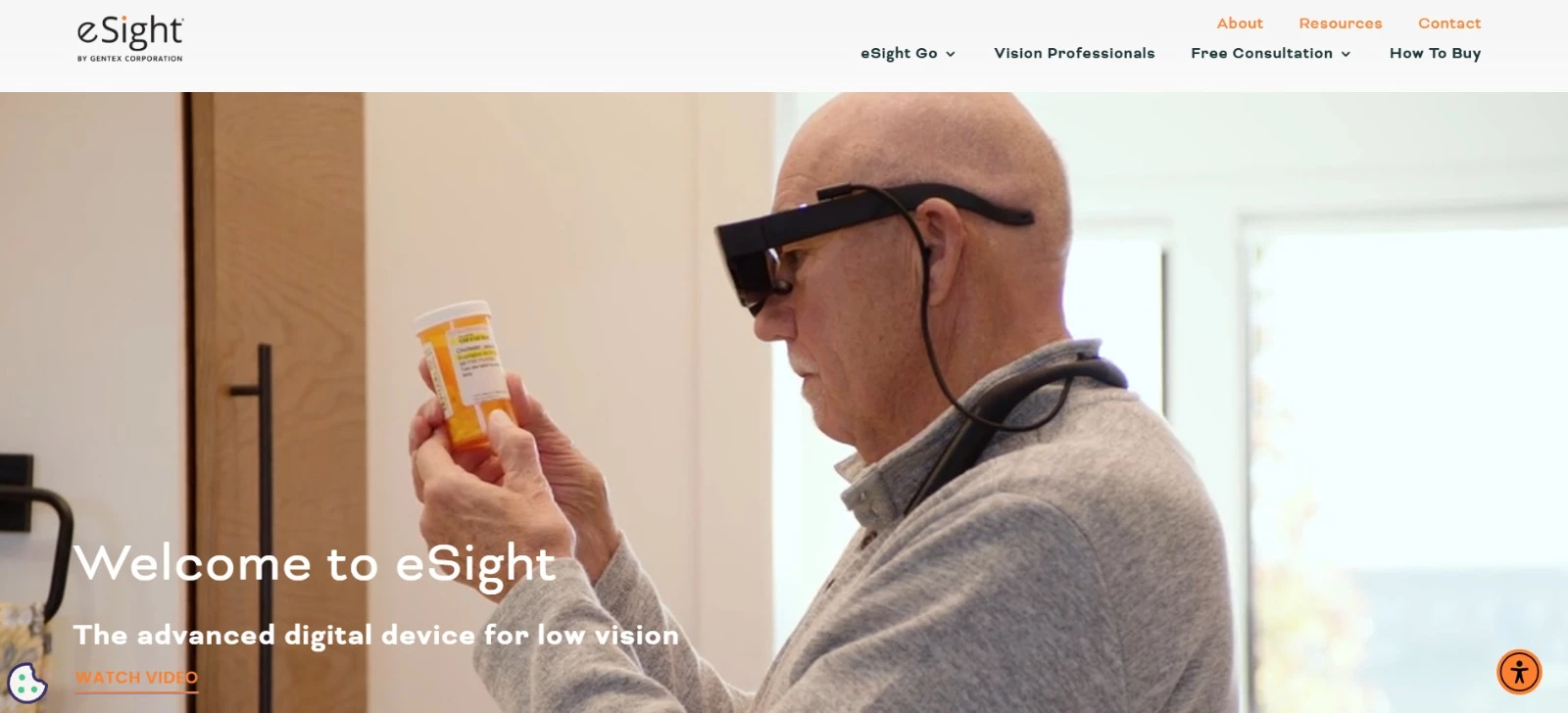
eSight Go is one of the more serious health-focused wearables, and it's designed for a very specific user.
These smart glasses are built to help people with significant central vision loss handle everyday tasks like reading, recognizing faces, and navigating their surroundings more confidently.
The eSight Go glasses are closer to assistive eyewear than consumer smart glasses.
Pricing:
- $4,950 USD/$6,600 CAD

What makes eSight Go interesting is how practical the approach feels.
Instead of promising vision restoration, it focuses on improving clarity in real situations, such as reading a menu, watching TV, or moving through indoor and outdoor spaces.
The glasses preserve peripheral vision, which is important for mobility, and the hands-free design allows users to stay engaged with their surroundings.
For companies building accessibility-first products or regulated health tech, eSight Go shows how AI wearables can move beyond features into measurable impact on independence and daily function.
Pros:
- Improves clarity for reading, faces, and daily tasks
- Adjustable zoom, contrast, and color filters
- Preserves peripheral vision for safe movement
- Image stabilization helps in low light
- FDA-registered Class I medical device
Cons:
- Expensive compared to consumer wearables
- Heavier than standard glasses
- Battery lasts 3-4 hours only
- Image quality softens at high zoom
- Results vary by vision condition
What Users Say
Feedback on eSight Go is mixed but generally positive among users with severe central vision loss. Many report improved independence for activities like reading, navigating unfamiliar spaces, and recognizing people.
Users frequently praise image stabilization and low-light performance. At the same time, some note that the device can feel bulky and that clarity drops at higher magnification levels.
Outcomes appear to vary significantly depending on the user’s specific vision profile and how much time they spend adjusting settings.
@blindguycomedy “These glasses let me freeze time… so I can finally read the menu.” Trying the new eSight Go at Tim Hortons 🍩 #BlindNotBroken#eSightGo#AssistiveTech#Accessibility#TimHortons#BlindLife#Innovation#LifeChangingTech#TechForGood#DisabilityAwareness#AdaptiveTech#VisionMatters♬ original sound - J.R.Bjornson
Who’s It For?
eSight Go is best suited for people with central vision loss caused by conditions such as macular degeneration or diabetic retinopathy who want wearable support for daily activities.
It’s a better fit for users prioritizing function and independence over aesthetics, especially those looking to reduce reliance on handheld magnifiers or stationary assistive tools.
Other Notable Features
- Wi-Fi and Bluetooth connectivity
- Home trial program available in select regions
- Up to 24x digital zoom with image stabilization
- Tactile controls on the frame plus handheld remote
- Companion mobile app with screen-sharing support
- FDA- and EUDAMED-registered Class I medical device
- 45-degree field of view that preserves peripheral vision
- Dual Full HD OLED near-eye displays with adaptive brightness
2. Soundcore AeroFit 2 Pro: Dual-Form Earbuds for Awareness & Focus
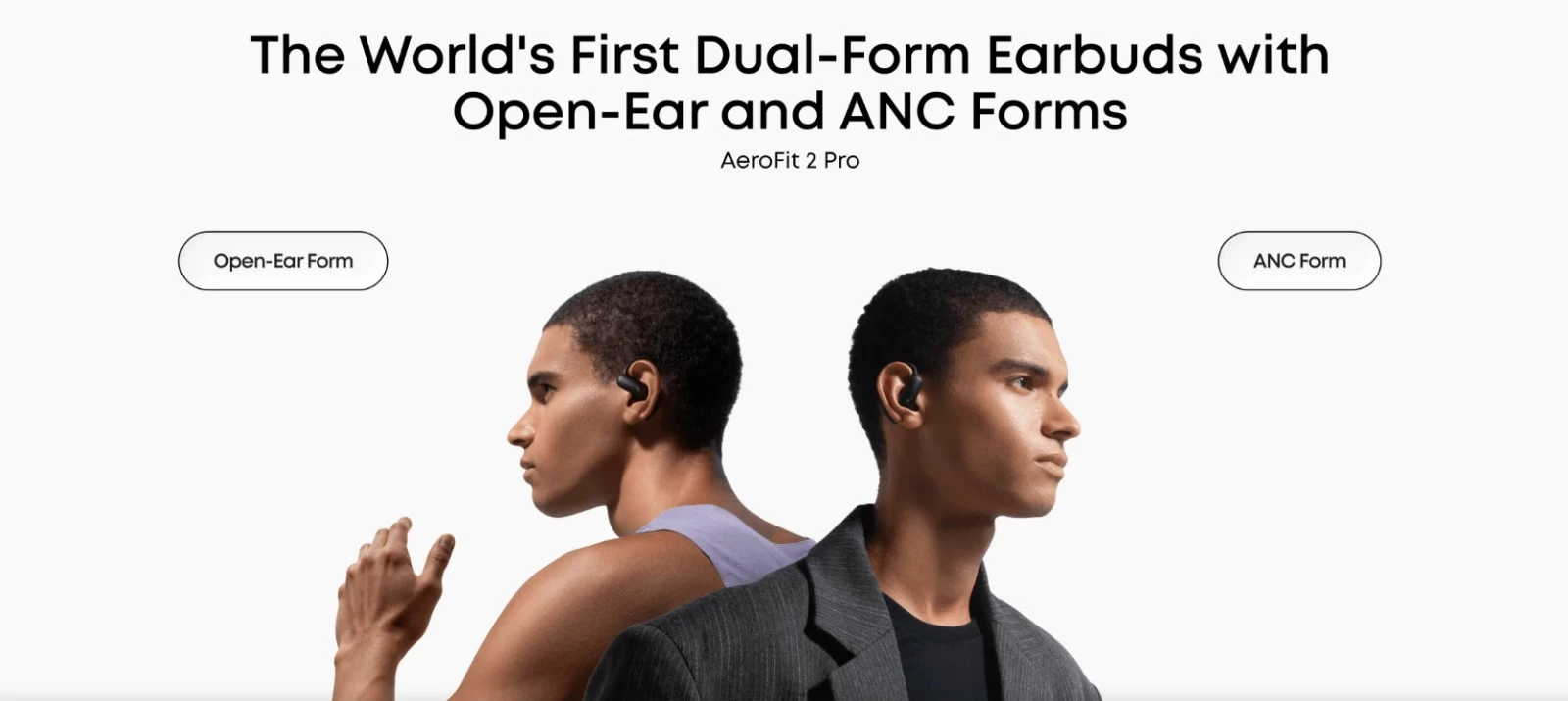
The AeroFit 2 Pro takes a familiar open-ear design and adds a twist that changes how you actually use it day to day.
Pricing:
- $149.99 (discounted price)
- $179.99 (standard price)
By adjusting the ear hook, the earbuds switch between an open-ear fit for awareness and active noise cancellation for louder environments. You don’t need a second pair of earbuds, and you don’t need to dig through settings. The physical adjustment does the work.
For product teams and brands, this kind of context-aware hardware highlights how physical design choices can reduce friction and make AI-driven features feel intuitive.
I also like that Soundcore stuck with physical buttons instead of touch controls. It makes a difference during workouts or quick adjustments when touch gestures tend to misfire.
Pros:
- Switches between open-ear and ANC modes
- Comfortable for long wear
- Strong call clarity with AI mic system
- Physical buttons for reliable control
- Good battery life with fast charging
- IP55 water resistance
Cons:
- ANC is lighter than dedicated in-ear models
- Fit adjustment takes some trial and error
- Battery life drops in ANC mode
- Not ideal for very small ear canals
What Users Say
Comfort comes up again and again in user reviews. Many say they can wear the AeroFit 2 Pro for hours without discomfort and often forget they’re on.
Call quality and microphone performance earn consistent praise, along with battery life and fast charging. Several users also mention appreciating the physical buttons over touch controls.
@soundcoreph Team AeroFit 2 or Team Aerofit Pro? Drop your pick below. #Soundcore#Aerofit2#AerofitPro♬ original sound - Soundcore Philippines
Feedback on ANC is mixed. Some users find it helpful for reducing steady background noise, while others note that performance depends heavily on fit and positioning.
Who’s It For?
The AeroFit 2 Pro fits people who move between different environments throughout the day.
It works well for runners, commuters, and remote workers who want situational awareness at times and quieter focus at others. It’s also a good option for anyone who struggles with traditional in-ear buds slipping out or feeling uncomfortable over long sessions.
View this post on Instagram
Other Notable Features
- Fast charging for quick top-ups
- Four-mic AI system for clearer calls
- IP55 rating for sweat and dust resistance
- Adaptive ANC 3.0 that responds to environmental noise
- Spatial audio with head tracking and LDAC support on Android
- AI-powered real-time translation available via the Soundcore app
- Dual-form design with adjustable ear hooks for open-ear and ANC modes
Order your AeroFit 2 Pro today.
3. Frenz Brainband SuperBrain Edition: AI Wearable for Sleep & Daytime Focus

Developed by Earable Neuroscience in collaboration with Tonino Lamborghini, this version builds on the award-winning FRENZ Brainband and extends it beyond sleep tracking into focus training, cognitive recovery, and all-day mental performance.
It’s still worn as a soft headband, but the scope is much broader.
Pricing:
- MSRP: $1,999
- Pre-orders open March 2026, with deliveries expected in June 2026
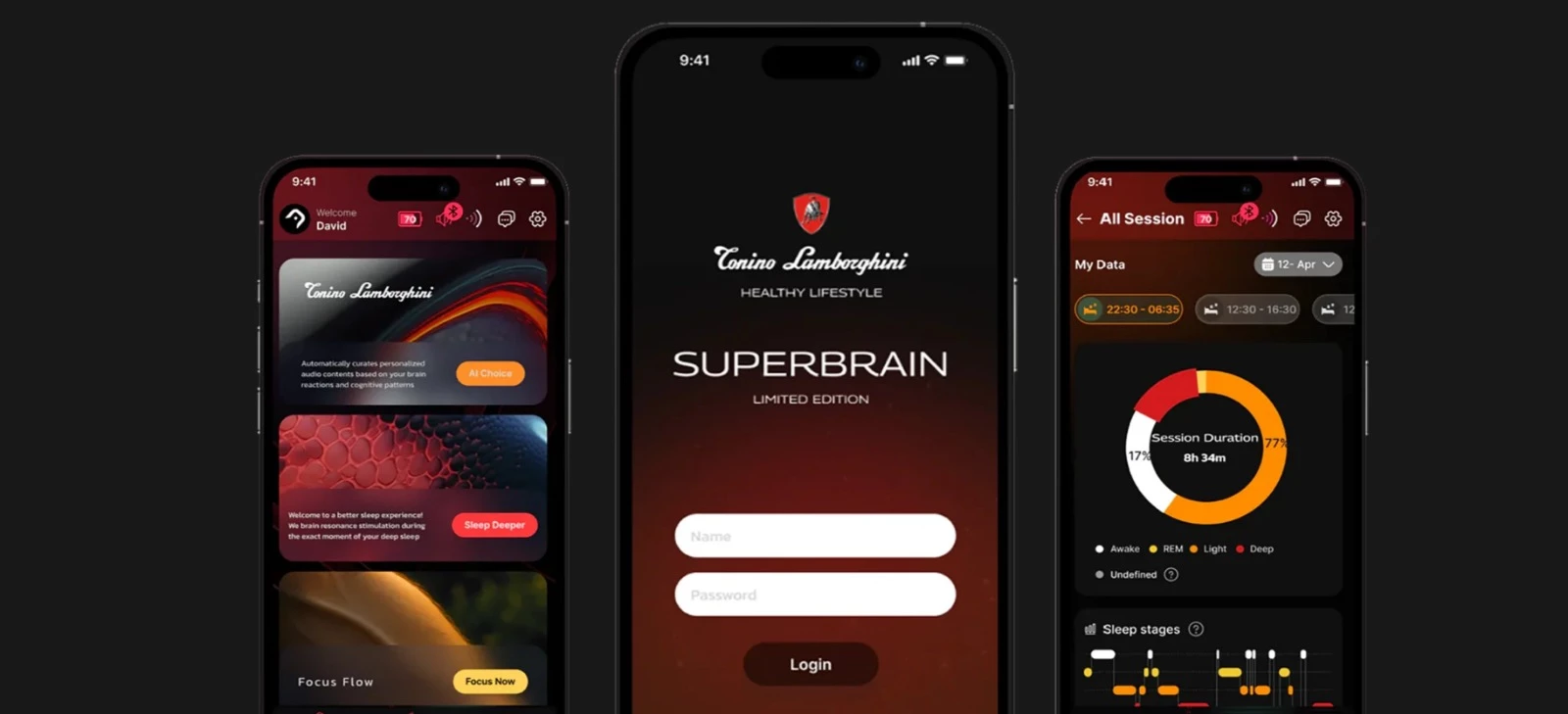
At night, SuperBrain tracks brain activity with EEG sensors and delivers AI-driven audio therapy in real time to help users fall asleep faster and stay in deeper sleep.
During the day, it switches roles and becomes a focus-training tool, measuring cognitive states and helping users learn how to shift between alertness and relaxation more deliberately.
What I find interesting here is that this isn’t framed as passive tracking.
It’s expensive, no question. But for users who already care about sleep quality, mental recovery, and cognitive performance as a system, SuperBrain feels like a natural next step.
Pros:
- Tracks real brain activity using EEG
- Uses real-time audio therapy
- Supports both sleep improvement and daytime focus training
- Comfortable, soft headband design suitable for overnight wear
- Backed by clinical studies and multiple CES Innovation Awards
Cons:
- High price point compared to mainstream sleep wearables
- Requires regular use to see meaningful results
- Focus features may feel too specific for casual users
This same real-time responsiveness is increasingly relevant for companies building adaptive digital experiences that react to users instead of waiting for manual input.
What’s happening here mirrors a broader shift in how AI is being used across digital products. As Dimi Baitanciuc, Co-Founder and CEO of Brizy, says:
"I’m particularly excited about AI trends like advanced personalization and predictive analytics. Imagine a website that adapts its layout or content in real-time based on who’s visiting — that’s where we’re headed."
What Users Say
Reviews of the original FRENZ Brainband have been consistently enthusiastic, especially among users dealing with insomnia or restless sleep. Many describe noticeable improvements in how quickly they fall asleep and how rested they feel in the morning.
Early impressions of the SuperBrain Edition focus heavily on the improved design. If you were also previously put off by the look of earlier models, chances are, the Lamborghini version feels far more wearable and polished.
Who’s It For?
SuperBrain is best suited for people who already think about sleep, focus, and recovery as performance tools.
It’s also a strong option for users who have tried traditional sleep trackers and want something more interactive.
Other Notable Features
- Real-time AI audio therapy for sleep and focus
- Premium materials and redesigned form factor
- Backed by Samsung Ventures and Founders Fund
- Dedicated Focus mode for daytime cognitive training
- Companion app with detailed sleep and performance insights
- EEG-based brainwave tracking validated against clinical sleep studies
Order your FRENZ Brainband SuperBrain Edition today.
4. Looki L1: A Wearable Memory That Pays Attention
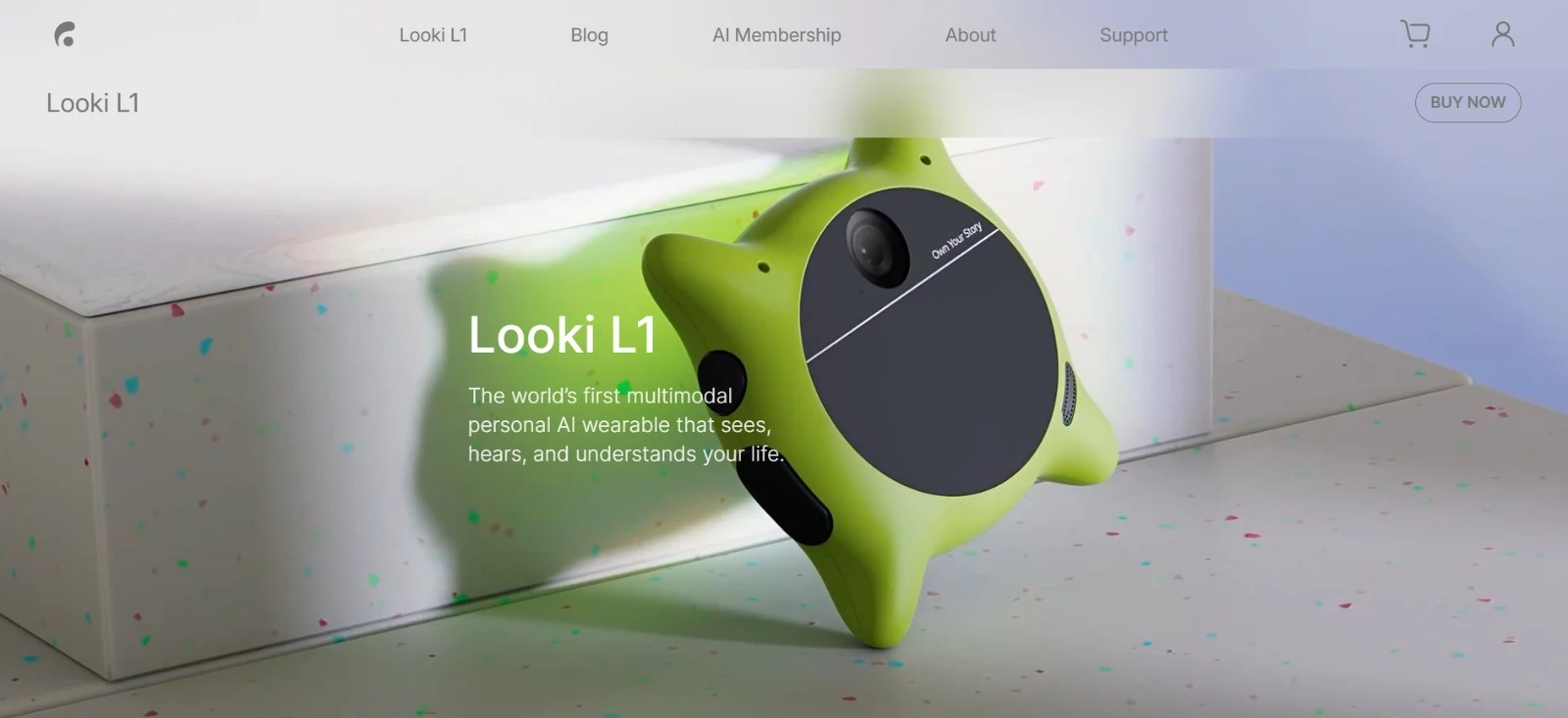
Looki L1 is one of the more unusual wearables to come out of CES 2026. It’s a small, clip-on camera that quietly records short moments throughout your day and then helps you make sense of them later.
Pricing:
- $199

Ask it simple questions like what you ate, who you spent time with, or how your day felt overall, and it pulls answers from what it actually recorded.
You put it on, forget about it, and check in later to see what it noticed.
For businesses exploring passive data capture or journaling-style tools, Looki hints at a future where AI can summarize behavior without you constantly logging anything.
This is still a young product, but for its price, it shows real promise as a lightweight way to document everyday life without having to pull out your phone all the time.
Pros:
- Lightweight and easy to wear all day
- Automatically captures short moments
- Turns days into summaries, vlogs, and comics
- Easy to search past moments by question
- No subscription required
Cons:
- Video quality drops indoors or in low light
- Battery drains quickly with frequent clips
- AI features still feel uneven in places
- Limited customization for generated videos
- Accessories sold separately
What Users Say
Early reviews describe Looki L1 as easy to live with once it becomes part of a daily routine.
They love Story Mode, comic-style summaries, and automatic day recaps, noting that the hands-free capture helps catch patterns they would otherwise miss.
In a hands-on CES 2026 test, Tech Advisor reported mixed image quality, with strong results outdoors and grainier footage indoors.
He found the AI assistant useful for basic queries but less reliable in noisy environments, ultimately describing Looki L1 as compelling for users interested in automated lifelogging and AI-driven storytelling.
View this post on Instagram
Who’s It For?
Looki L1 fits people who like reviewing their days rather than actively documenting them. It appeals to users who enjoy seeing patterns, routines, and moments reflected back over time.
It’s also a good match for anyone interested in passive journaling or lifelogging, where the value comes from summaries and stories.
Other Notable Features
- Story Mode recording with adjustable capture intervals
- Automatic daily recaps, short vlogs, and comic-style storyboards
- Multimodal AI that combines visual, audio, and motion data
- Natural-language search across recorded moments
- Local storage with optional cloud upload
- IP67-rated design for everyday use
- Voice interaction for quick questions and insights
5. Dephy Sidekick: A Powered Boost for Everyday Walking
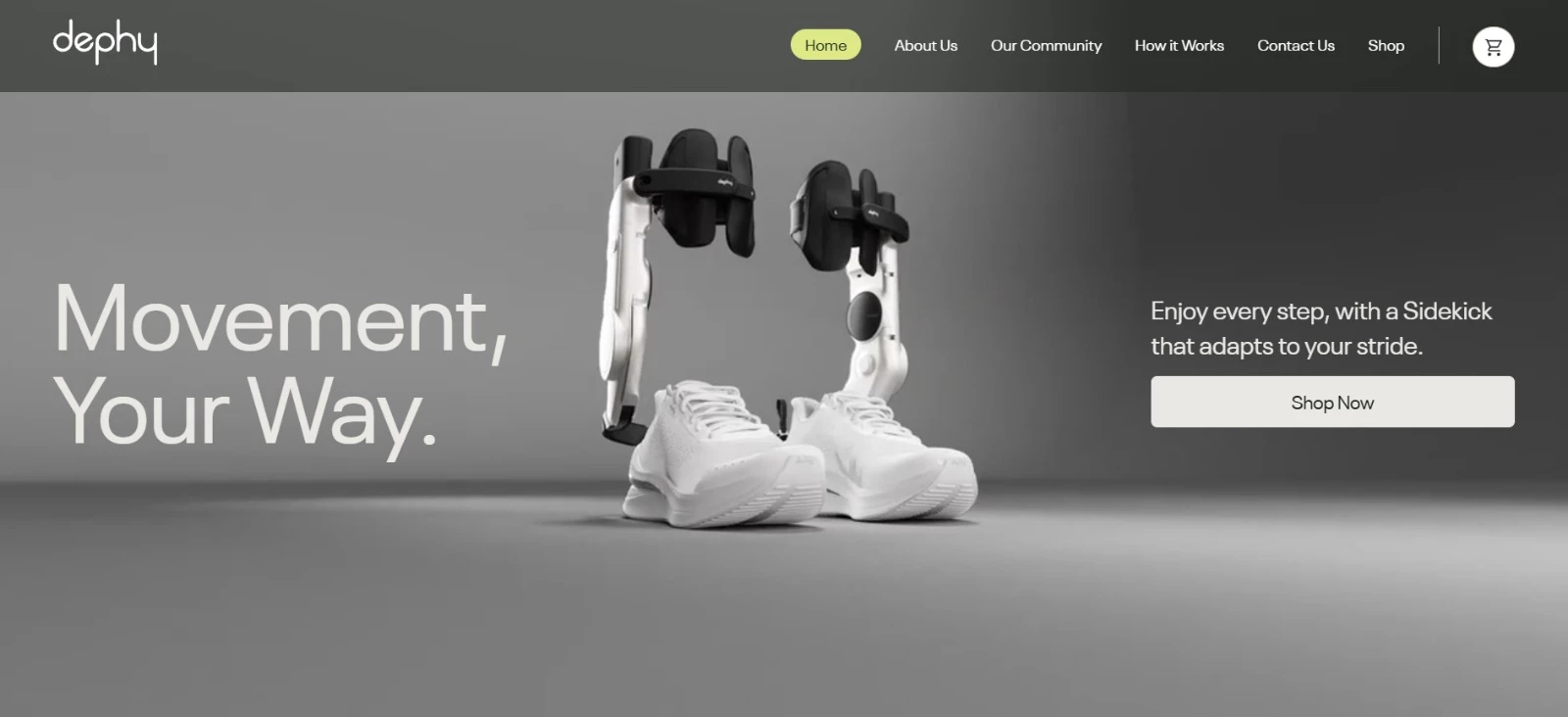
The Dephy Sidekick is a powered ankle wearable designed to make walking feel easier over longer distances. It pairs a battery-powered assist with a custom shoe, adding support through the ankle with each step.
From a business perspective, Sidekick reflects growing interest in physical AI, where software, hardware, and biomechanics combine to support movement and mobility.
Pricing:
- $4,500
Once it’s on, the system quietly learns how you walk and adjusts as your pace or terrain changes. There’s no app to set up and nothing to fiddle with. You just walk and let it do its thing.
Pros:
- Provides powered ankle assistance that reduces fatigue during walking
- Adapts automatically to the user’s gait in real time
- No app, calibration, or setup required
- Maintains natural ankle movement
- Secure fit with custom shoes and quick-connect system
Cons:
- Very high price point
- Battery range limits longer outings without a recharge
- Not designed for steep inclines or uneven terrain
- Early access product with limited long-term user data
What Users Say
Early impressions mostly come from hands-on CES demos. People who tried the Sidekick describe the sensation as a noticeable lift with each step, often comparing it to a gentle boost that makes walking feel lighter.
PCMag’s CES tester reported being surprised by how quickly the assist kicked in after a few steps and noted that the device didn’t feel heavy while walking around the show floor.
View this post on Instagram
Who’s It For?
The Sidekick makes the most sense for adults who want a bit of help with longer walks and daily movement, especially if fatigue or joint strain tends to cut things short.
It also suits people who are genuinely curious about powered mobility wearables and comfortable investing early in hardware that’s still finding its audience.
Other Notable Features
- Removable batteries with quick charging
- Tested for durability beyond one million steps
- Airline-friendly removable battery design for travel
- Three selectable power levels controlled directly on the device
- Carbon fiber shoe plate designed to improve walking efficiency
- Real-time adaptive assist that learns the user’s walking pattern automatically
Order your Sidekick Starter Pack today.
View this post on Instagram
Final Thoughts on AI-Powered Wearables
AI wearables in 2026 feel like purpose-built tools.
What stood out across these five devices is how narrowly each one focuses on a real problem, whether that’s vision loss, sleep quality, daily focus, memory, or mobility. They do one thing well and let AI quietly handle the complexity.

If you're looking to integrate AI into your business strategy or product line, partner with experts who can turn advanced technology into real-world business value.
Our team ranks agencies worldwide to help you find a qualified partner. Visit our Agency Directory for the top AI companies, as well as:
- Top IoT Companies
- Top Cybersecurity Companies
- Top Software Testing Companies
- Top VR & Augmented Reality Companies
- Top Blockchain Development Companies
FAQs: AI Wearables
1. Who should consider AI wearables in 2026?
AI wearables are most useful for people who want technology to support a specific part of daily life, such as health, focus, or accessibility. They’re especially relevant for users who value hands-free assistance, ongoing feedback, and tracking.
2. What makes AI wearables different from traditional smart devices?
They rely on adaptive systems that respond to behavior, context, or biological signals over time. Instead of fixed rules or dashboards, they adjust continuously based on how you use them.
3. Are AI wearables replacing phones or smartwatches?
No, most AI wearables work alongside existing devices without requiring constant interaction or screen time.