
AI can improve the entire sales prospecting funnel when applied with the right strategy. We'll show you how to use it to identify high-quality leads, refine outreach, and shorten sales cycles.
We’ll help you move beyond experimentation to unlock real revenue impact.
How to Use AI for Sales Prospecting: Key Points
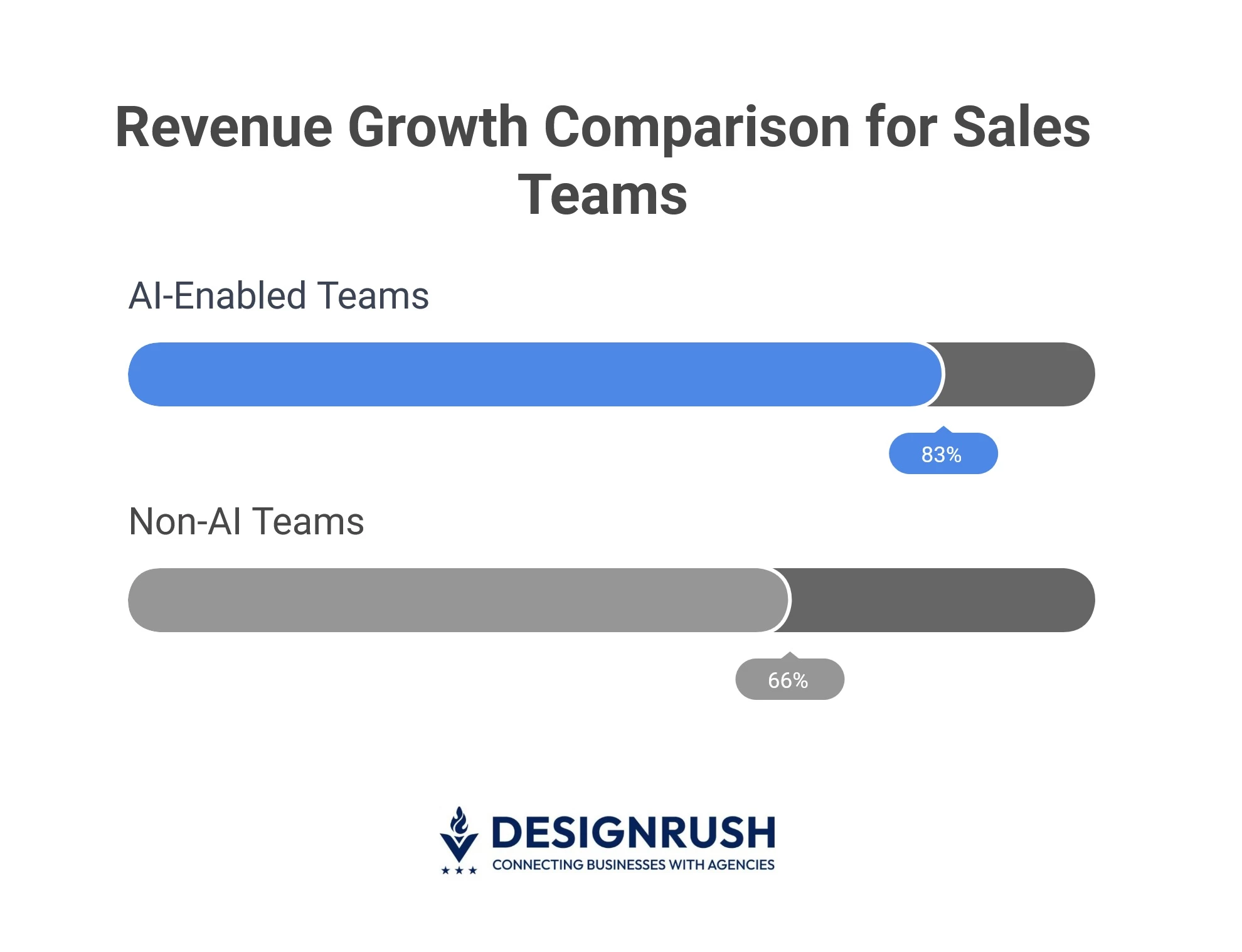
- 83% of AI-enabled sales teams grew revenue, compared to just 66% of those not using AI.
- Exclusive Networks boosted lead qualification using AI-driven predictive analytics and behavioral targeting at scale.
- Automated, personalized outreach across channels saves reps hours while driving stronger engagement and conversions.
AI for Sales Prospecting in 6 Steps
AI is reshaping how sales teams find and connect with prospects. Unlike traditional methods that rely on manual research and gut instinct, AI analyzes massive datasets to detect patterns, automate repetitive tasks, and adapt strategies in real time to deliver a competitive edge.
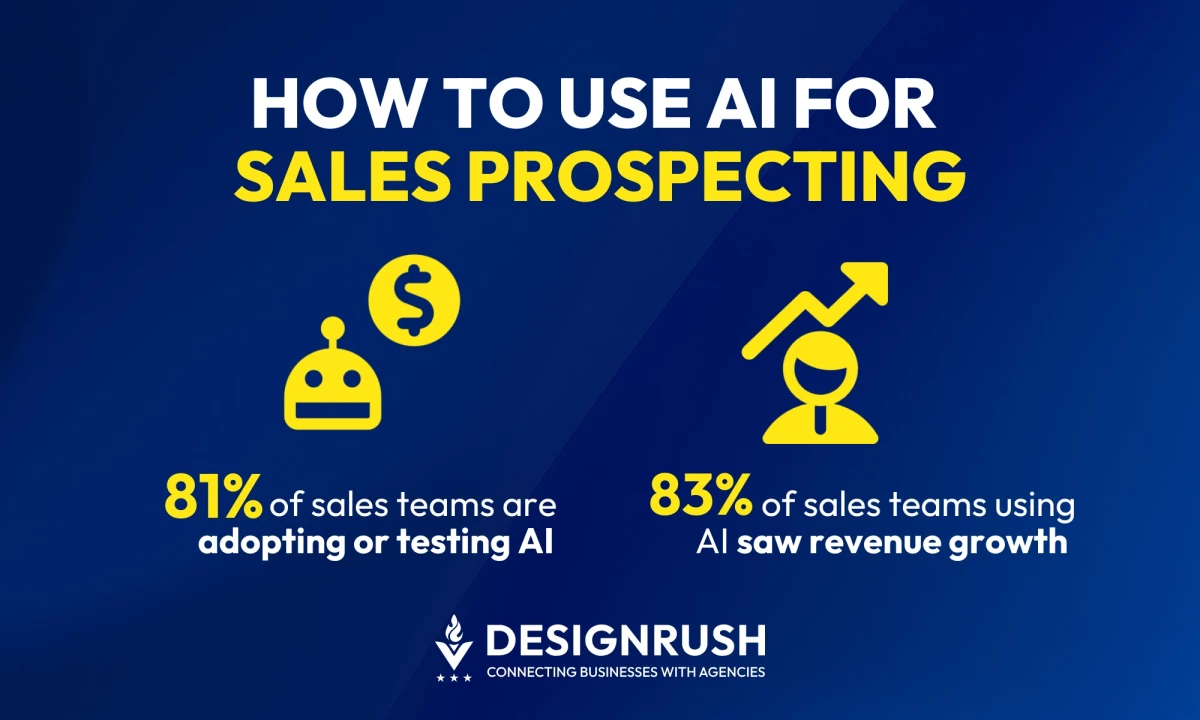
And it’s not just theory. Salesforce found that 81% of sales teams are already exploring or using AI, and it’s paying off: 83% of those teams saw revenue growth this year, compared to just 66% of those not using AI.
Here are five steps to get started with AI as a sales prospecting tool:
- Step 1: Define and enrich your ICP
- Step 2: Automate lead discovery
- Step 3: Score and qualify leads with AI
- Step 4: Personalize and launch outreach at scale
- Step 5: Analyze and optimize your funnel with AI
Step 1: Define and Enrich Your ICP
A precise Ideal Customer Profile (ICP) forms the backbone of any AI-driven prospecting strategy (garbage in, garbage out always applies). Enhancing CRM records with enriched data ensures AI tools function effectively and target the right prospects.
- Enrichment: Supplement CRM records with firmographic, technographic, and behavioral attributes to create a richer picture of each account. This might include job seniority, digital activity patterns, or purchasing signals.
- Behavior-based filtering: Use observed actions like content downloads, pricing page visits, or product comparisons to identify prospects that match both demographic fit and engagement readiness.
- Data hygiene and alignment: Ensure data is regularly updated, deduplicated, and aligned across systems. High-quality data improves AI’s ability to segment leads accurately and reduces noise in scoring and prioritization models.
Step 2: Automate Lead Discovery
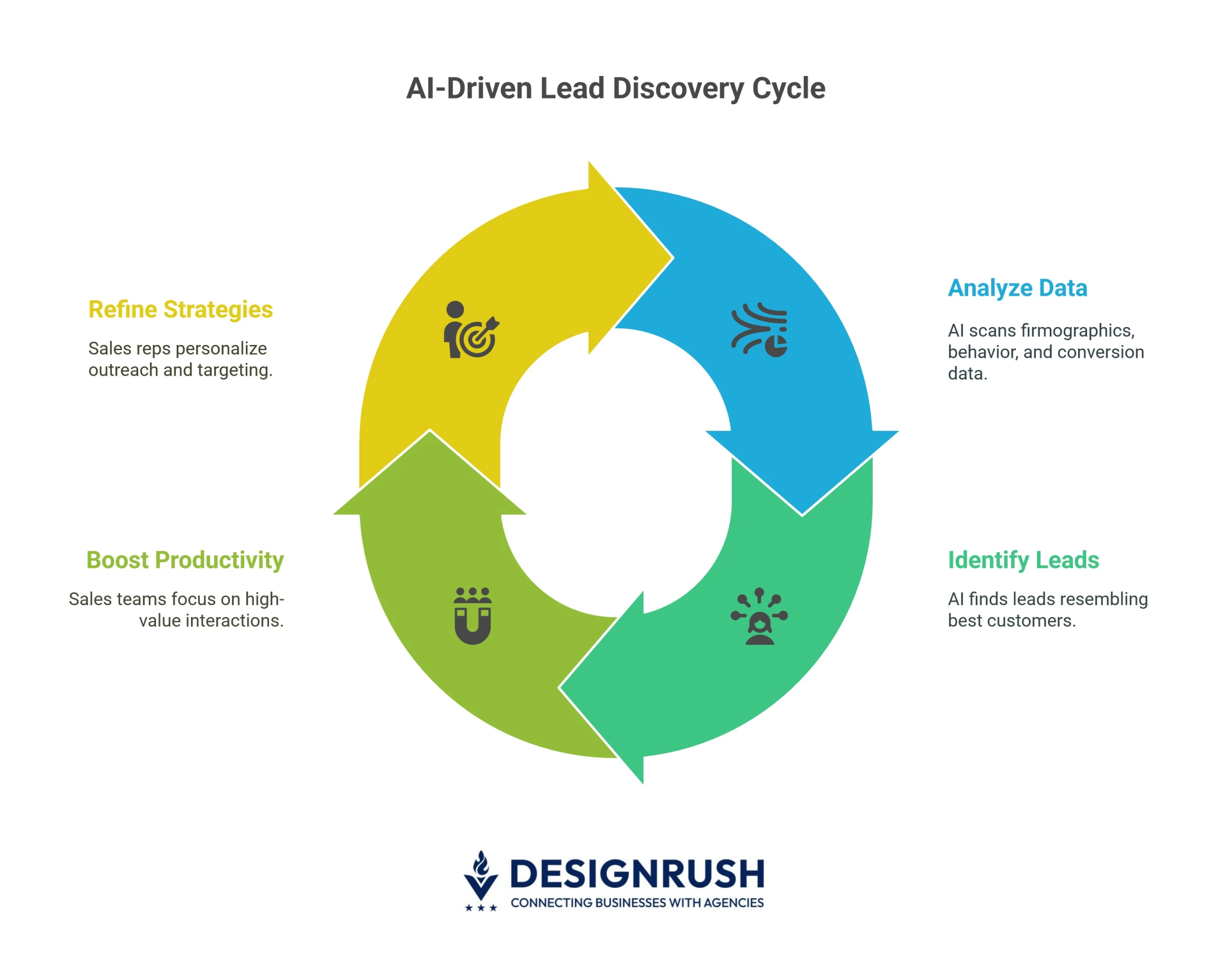 Manually hunting leads is time-consuming and often inefficient. AI-powered discovery tools scan vast datasets and pinpoint meaningful opportunities based on underlying patterns.
- Pattern recognition at scale: AI analyzes a combination of firmographics, digital behavior, and historical conversion data to identify accounts that resemble your best customers and surface leads you may have otherwise missed.
- Productivity boost: Automated prospecting can uncover more qualified leads in a fraction of the time, freeing up sales teams to focus on high-value conversations and relationship-building.
- Strategic refocus: Moving the burden of list-building to AI lets sales development reps concentrate on crafting personalized outreach and refining targeting strategies, leading to more impactful engagement.
Step 3: Score and Qualify Leads with AI
Balancing personalization with efficiency is key. AI-generated drafts save time, but human oversight ensures brand voice and accuracy.
- Smart lead scoring: AI systems evaluate leads based on behavioral signals, demographic fit, and historical performance to assign scores that reflect their likelihood to convert.
- AI-assisted drafting: Prospect data can be used to generate personalized messaging, allowing reps to accelerate outreach without starting from scratch.
- Human-driven refinement: While AI speeds up content creation, sales reps should always fine-tune messages for tone, relevance, and context.
Exclusive Networks is one example of a business using AI-driven predictive analytics to improve lead qualification. VP of digital business, Olivier Gil, says: “These digital-first initiatives allow us to scale our operations effectively while maintaining the adaptability needed for local execution.”
Step 4: Personalize and Launch Outreach at Scale
Once leads are scored and qualified, AI can supercharge how you reach out, combining speed with relevance. Smart sequencing tools craft personalized touchpoints based on behavior, job role, and intent, helping reps start the right conversations at the right time.
- Dynamic content generation: Combine generative AI with prospect signals to create tailored messaging across email, LinkedIn, and SMS.
- Channel orchestration: Use AI recommendations for optimal outreach timing and channel mix based on past engagement data.
- Efficiency and empathy: Save reps hours on copywriting while maintaining relevance and human tone.
Step 5: Analyze and Optimize Your Funnel with AI
Pipeline performance isn’t a one-time setup; it requires continuous monitoring. AI platforms analyze communication patterns to drive insights and corrective action.
- Conversation analysis: Natural language processing (NLP) can review sales calls, emails, and messages to uncover key buyer signals like hesitation, interest, or disengagement.
- Deal health detection: AI can flag when opportunities are stalling, reps are missing buying cues, or follow-ups are poorly timed, enabling early intervention before deals go cold.
- Actionable feedback loops: These insights allow managers and reps to refine messaging, shift priorities, and coach in the moment, creating a culture of continuous improvement.


AI Tools for Sales Prospecting
With AI tools flooding the sales landscape, you need to be careful about choosing one that fits your team’s structure and prospecting goals. Here’s a quick rundown of four leading platforms:
- ZoomInfo: Known for its robust firmographic and intent data, ZoomInfo helps pinpoint high-fit accounts using real-time buying signals. It supports complex sales cycles and powers precision-targeted ABM strategies.
- Apollo.io: Apollo merges lead discovery with multi-channel outreach and generative AI for a streamlined workflow from prospecting to messaging. It’s well-suited for fast-growing teams looking to scale outbound efficiently without piecing together multiple tools.
- Outreach.io: Focused on sequencing and performance analytics, Outreach uses AI to optimize timing, guide reps with real-time insights, and improve overall engagement.
- Clay: A powerful prospecting engine that combines AI, enrichment, and flexible automation, Clay allows teams to build dynamic lead workflows by pulling from dozens of data sources, then layering in GPT-powered personalization at scale.
| Tool | Strengths | Best For |
| ZoomInfo | Top-tier firmographic and intent data for precise account targeting. | Enterprise B2B teams with complex sales cycles and ABM strategies. |
| Apollo.io | All-in-one lead discovery, outreach, and AI-powered personalization. | Fast-growing SDR teams scaling outbound quickly. |
| Outreach.io | Sequencing, engagement analytics, and AI-driven rep enablement. | Sales orgs focused on consistent outreach and performance coaching. |
| Clay | Custom lead workflows, multi-source enrichment, GPT-based messaging. | Teams needing flexible automation and deep control over prospecting. |
Best Practices for Integration, Governance, and Adoption
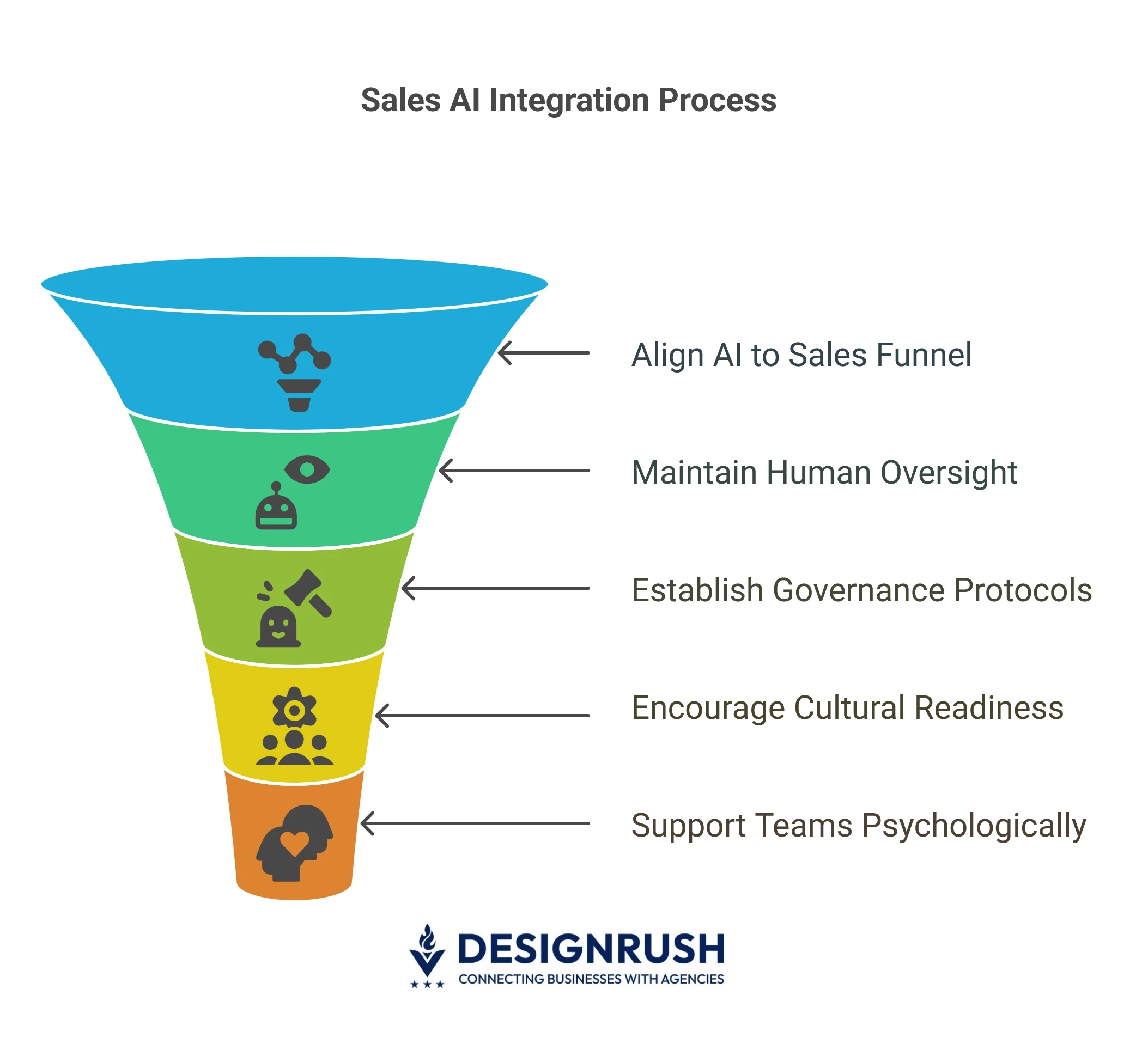
Creating value from sales AI involves aligning technology with process, culture, and accountability, from funnel mapping to frontline adoption. Here’s how to execute it effectively:
- Align AI to the sales funnel
- Maintain human oversight
- Establish governance protocols
- Encourage cultural readiness and adoption
- Support teams psychologically through change
1. Align AI to the Sales Funnel
Build a strategic AI roadmap that mirrors your sales journey from start to finish, ensuring each stage uses the most effective technology rather than relying on generic tools.
- Top of funnel: Use chatbots or AI-based qualification tools to initiate lead conversations automatically.
- Mid-funnel: Deploy AI-driven sequencing engines and automated outreach to manage workflows.
- Bottom funnel: Implement predictive alerts and scoring to trigger senior rep engagement at the right time.
2. Maintain Human Oversight
Automations reduce workload, but your brand voice and relationship expertise still need a human lens. So, make rep review an integral part of every AI-generated interaction. Here’s how:
- Automate drafts (emails, playbooks), but always have reps refine them to maintain authenticity.
- Use tools like Salesforce Agentforce AI to support (not replace) relationship-building, with real-time coaching and conversational research.
3. Establish Governance Protocols
To scale safely and successfully, implement clear compliance, bias checks, and performance tracking so teams trust AI and executives can measure ROI.
- Conduct bias and compliance audits (GDPR, CCPA) before scaling AI.
- Build transparent dashboards that explain why leads are prioritized (e.g., “VP + pricing lookup”).
- Regularly review KPIs like conversion lift, engagement rates, and pipeline impact to ensure continuous ROI.
4. Encourage Cultural Readiness and Adoption
Speed up the pace of AI adoption by showing real-life use cases, sharing transparent explanations of lead scoring, and rewarding reps for early AI successes. Focus on the following:
- Hands-on onboarding: Showcase AI scoring and draft outputs using real pipeline data—builds excitement and trust.
- Explainable dashboards: Clarify lead scores and signals driving outcomes—essential for rep confidence.
- Incentives and recognition: Celebrate AI-driven wins publicly and reward reps for AI-sourced deals.
- Cross-functional alignment: Connect Marketing (lead generation), RevOps (data hygiene), and IT/Product (integrations) to support AI fluency.
5. Support Teams Psychologically through Change
Adoption curves include excitement, disillusionment, and productive use. Support reps emotionally through each phase, and set up cross-functional groups to lead the way.
- Create an AI working group across product, sales, legal, and engineering to pilot tools, host workshops, and guide adoption.
- Acknowledge the adoption curve (“excitement → disillusionment → productive use”) and support reps through it.
- Focus on measuring tool usage, confidence, and sentiment (not just productivity) during early rollout phases.
AI or Sales Prospecting: Final Words
Successfully implementing AI in sales means embedding intelligence into the fabric of your workflows and team dynamics. When done right, AI becomes less of a disruptor and more of a growth engine that quietly powers better decisions, stronger engagement, and faster wins.

Our team ranks agencies worldwide to help you find a qualified partner. Visit our Agency Directory for the top lead generation companies, as well as:
- Top B2B Lead Generation Agencies
- Top B2B Digital Marketing Agencies
- Top Digital Marketing Agencies
- Top Digital Marketing Agencies for Small Businesses
- Top Advertising Agencies
AI or Sales Prospecting: FAQs
1. How do I evaluate whether an AI tool is actually improving our sales outcomes?
Look beyond usage stats. Measure impact by comparing key performance indicators like conversion rate, deal velocity, and average lead response time before and after adoption ( ideally through controlled A/B testing).
2. What data should I avoid feeding into AI prospecting tools?
Avoid sensitive personal information like racial or ethnic data or personal social profiles. Stick to firmographic, behavioral, and intent signals aligned with compliance standards.
3. How do I prevent AI from reinforcing bad sales habits or biases?
Train models on diverse, high-quality historical data. Regularly audit outputs for patterns like over-prioritizing certain industries or job titles, and include human review to avoid model drift.