
Email compliance is becoming more demanding, with stricter standards and less margin for error. Here’s what you need to know to stay ahead.
Email Marketing Compliance: Key Findings
- Email compliance regulations directly influence how consent is collected, data is managed, and campaigns are executed.
- Mailbox providers use engagement signals to assess sender trust, making consent quality a key indicator of compliant email practices.
- Consent must be consistently stored, updated, and applied across all systems, making compliance an operational process rather than a one-time action.
Why Consent Quality Now Matters to Email Deliverability
Responsibilities once handled by legal teams (like consent, opt-ins, and data usage) now directly determine whether your emails reach the inbox.
Mailbox providers like Gmail, Yahoo, and Microsoft no longer evaluate senders based only on technical setup or sending volume, they now rely heavily on engagement signals to determine sender trust, namely:
- Spam complaints
- Deletes without reading
- Inactivity
- Unsubscribe behavior
These signals point to a simple question: did the user expect and intend to receive this email? When people don’t clearly expect your emails, they’re more likely to ignore them, delete them, or mark them as spam.
That’s why the quality of consent matters: how clearly consent was given, how recently, and for what purpose all shape how recipients respond. That makes it a measurable deliverability signal.
How Engagement Thresholds Affect Inbox Placement
Even small negative signals can have a disproportionate impact. Most providers expect spam complaint rates to stay below 0.1% (just 1 in 1,000 emails), where historically 0.2–0.3% was considered acceptable.
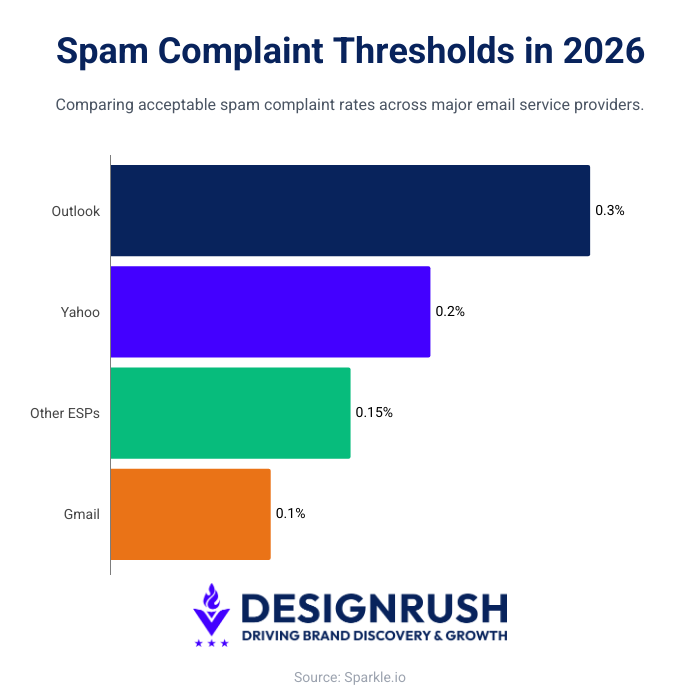
High-performing senders can achieve inbox placement rates above 90%, as Validity’s 2026 Benchmark Report shows, while lower-quality programs, often driven by poor list hygiene and weak engagement, can fall into the 70% range or below.
Internet service providers and email providers are combatting spam through stronger systems, Liviu Tanase, founder and CEO of ZeroBounce, explains.
“For senders, that means tougher rules,” he says, “But if you want results from your email marketing, you must follow these rules.”
List Hygiene Is Now a Compliance Issue
This shift fundamentally changes how marketers need to approach list hygiene.
Continuing to email inactive or unengaged contacts increases the likelihood of negative engagement signals, and that can damage sender reputation and inbox placement over time.
Maintaining a clean, engaged list is now a key part of staying compliant with how mailbox providers evaluate sender behavior.
What GDPR, CCPA and CAN-SPAM Require of Email Marketers in 2026
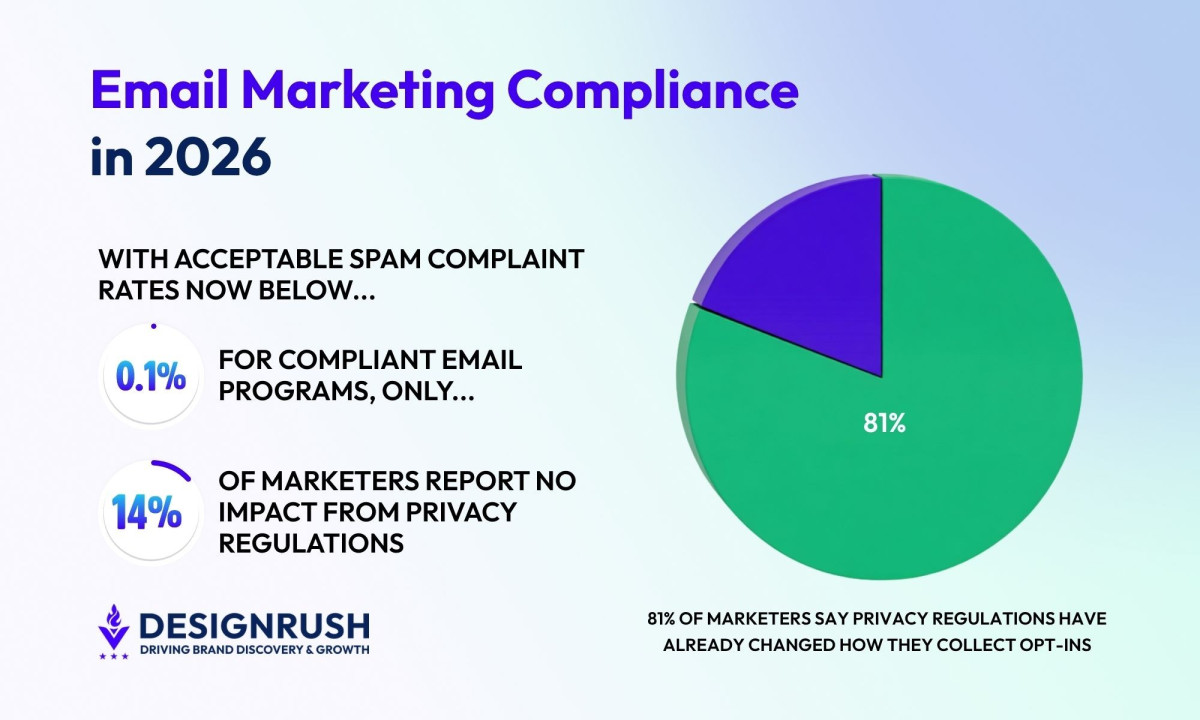
Email compliance regulations in 2026 requires clear, practical action. According to DesignRush’s 2026 Email Marketing Benchmark Survey, 81% of marketers say privacy regulations have significantly changed how they collect opt-ins, and just 14% report no impact.
GDPR, CCPA, and CAN-SPAM take different approaches, but all define how consent is collected, data is managed, and users retain control. Compliance depends on how those requirements are enforced across your systems, not just captured at signup.
That means:
- Consent and preferences must be accurately recorded and retrievable
- User requests (access, deletion, correction) must be processed across all systems
- Data must remain consistent between your CRM, ESP, and other tools
Technical infrastructure also plays a role in compliance. While protocols like SPF, DKIM, and DMARC aren’t explicitly required under GDPR or CCPA, they support core obligations to:
- Protect personal data
- Preventing unauthorized use
- Ensuring secure communication
Each regulation defines these requirements differently, so it’s important to understand how they apply in practice.
- GDPR: Consent, purpose, and permission standards
- CCPA: Transparency, control, and consumer rights
- CAN-SPAM: Transparency, identification, and opt-out requirements
1. GDPR: Consent, Purpose, and Permission Standards
GDPR sets the strictest standard for email marketing consent. At its core, it requires that permission is freely given, specific, informed, and unambiguous, and that you can prove it.
In practice, that means:
- Explicit consent is the default: Users must take a clear action to opt in. Pre-checked boxes or passive consent mechanisms don’t meet the standard.
- Consent must be specific and purpose-based: Users should know exactly what they’re signing up for, whether that’s newsletters, product updates, or promotions. Broad or bundled consent is not valid.
- Consent must be separate from other agreements: You can’t hide marketing consent inside terms and conditions or make it a condition of access.
GDPR also requires that users can easily withdraw consent and control how their data is used. In practice, this means providing clear unsubscribe options, allowing users to update their preferences, and ensuring those choices are reflected across your systems.
There’s also a distinction between consent and legitimate interest, particularly in B2B contexts. While legitimate interest can apply in limited cases, it doesn’t remove the need for relevance, transparency, and clear opt-out mechanisms (and it’s increasingly scrutinized).
Meta’s $420 Million Fine for Invalid Consent Practices
In 2023, Meta Platforms was fined roughly $420 million by Irish data regulators for relying on “forced consent” to process user data for advertising.
The ruling made it clear that consent must be freely given and specific, and bundling it into terms of service won't fly under GDPR.
Soft Opt-In: A Narrow Exception With Growing Risk
Soft opt-in (primarily defined under GDPR and related ePrivacy rules) allows you to email existing customers without explicit consent, based on an existing relationship rather than a formal opt-in.
It usually applies when:
- A user has made a purchase or shown clear intent
- You’re promoting similar products or services
- A clear opt-out was provided at the point of data collection
A customer who buys a product may reasonably expect follow-up emails about similar items, but not broader promotional campaigns or unrelated offers. That's where soft opt-in is often misapplied.
Likewise, using third-party data or continuing to email users without a clear opt-out quickly pushes soft opt-in beyond its intended scope.
Even if technically valid, low-intent contacts are more likely to disengage, increasing complaint rates and reducing inbox placement.
To manage this risk:
- Limit how often you email these contacts
- Keep content closely tied to their original interaction
- Convert them to explicit opt-in where possible
If engagement drops, suppress or remove those contacts.
2. CCPA: Transparency, Control, and Consumer Rights
CCPA takes a different approach. Rather than focusing primarily on consent, it centers on transparency and user control over personal data.
For email marketers, that means:
- Clear notice at the point of data collection: Users must understand what data is being collected and how it will be used.
- The right to opt out of data selling or sharing: Even if you have permission to send emails, users must be able to control how their data is used beyond the inbox.
- The right to access, delete, and correct personal data: These rights extend beyond consent and require systems that can respond to user requests accurately and quickly.
Compliance comes down to how well user data and consent are captured, synchronized, and acted on across every system in your stack. It means email marketers need systems that can track, update, and act on user data in real time.
For example, if a user requests deletion or opts out of data sharing, those changes must be reflected across your CRM, ESP, and any connected tools. Without this level of coordination, it becomes difficult to meet CCPA requirements consistently.
Sephora’s $1.2 Million Fine for Data Transparency Failures
Sephora was fined $1.2 million for failing to disclose data sharing practices and provide a clear opt-out mechanism. The case highlighted that compliance requires systems that can track, honor, and enforce user choices across all touchpoints.
3. CAN-SPAM: Transparency, Identification, and Opt-Out Requirements
In the U.S., the CAN-SPAM Act sets baseline rules for commercial email. While less strict than GDPR, it still defines key email compliance requirements around transparency and user control.
At a minimum, your emails must:
- Use accurate “from,” “to,” and subject line information
- Clearly identify the message as an ad where applicable
- Include a valid physical mailing address
- Provide a clear and easy unsubscribe option
- Honor opt-out requests promptly
CAN-SPAM doesn’t always require explicit consent, but it does require that recipients can easily understand who you are and control what they receive.
While CAN-SPAM is less restrictive than GDPR, failing to meet these requirements can still lead to penalties and increased spam complaints.
Poor identification or difficult unsubscribe processes often result in users marking emails as spam, which directly impacts deliverability and sender reputation.
Experian’s $650,000 Fine for Unsubscribe Violations
In 2023, the Federal Trade Commission fined Experian Consumer Services $650,000 for sending marketing emails without a clear opt-out mechanism. Regulators found that recipients were not given a “clear and conspicuous” way to unsubscribe, violating core CAN-SPAM requirements.
Zero-Party Data as a Solution to Privacy Rules
View this post on Instagram
Zero-party data offers a more compliant alternative to traditional list-building. Instead of inferring intent, it relies on information users intentionally share, making consent clearer, more specific, and easier to act on across your systems.
Collecting an email address is no longer enough. To meet compliance standards, you need to capture clear intent and context at the point of signup.
That means asking for:
- Content preferences (e.g. product updates, newsletters, promotions)
- Frequency expectations (e.g. weekly, monthly)
- Areas of interest or intent
Just as important is when and how you ask.
- At signup: Keep it simple and focused on core preferences
- Post-signup: Use follow-up emails or onboarding flows to gather more detail
- Over time: Build a clearer picture through progressive interactions
“Zero-party data, in conjunction with traditional first-party data sources, is really the best answer for brands looking to deliver personalized experiences in a more privacy-focused world,” Jennifer Sego, former head of marketing at Wyng and current director of demand generation at Aampe, shares with us.
Progressive Profiling and the Role of Preference Centers
Rather than collecting everything upfront, progressive profiling allows you to build consent and preference data over time.
This means:
- Asking for small amounts of information at different touchpoints
- Updating user profiles based on explicit inputs, not inferred behavior
- Using preference centers as an ongoing mechanism for data collection and control
A well-designed preference center should:
- Allow users to adjust content types and frequency
- Reflect what they originally signed up for
- Make it easy to update or withdraw consent
Consent Health Audit: How to Validate Compliance in 2026
Most email programs break compliance when it comes to how consent is stored, updated, and applied over time. You need to ensure that permission is consistently reflected across your systems, campaigns, and data flows.
Use this email compliance checklist to assess whether your program can stand up to real scrutiny, from both regulators and mailbox providers.
- Can you prove where and how consent was given?
- Does your current messaging match the original consent?
- Are inactive contacts still being treated as “permissioned”?
- Are unsubscribes and preferences fully enforced across systems?
- Are you transparent about data use and tracking?
- Is consent consistent across your marketing stack?
- Would your program hold up under audit?
1. Can You Prove Where and How Consent Was Given?
For every contact, you should be able to answer:
- Where did this email address come from?
- What exactly did the user agree to?
- When was that consent given?
This requires:
- Stored consent language (not just a checkbox)
- Timestamped records
- Clear source tracking
If you can’t reconstruct the original context, your consent may not be defensible.
2. Does Your Current Messaging Match the Original Consent?
Consent is tied to purpose, not just permission.
Check whether:
- You’re sending the types of emails users originally signed up for
- Messaging hasn’t expanded beyond that scope
- Frequency aligns with expectations set at signup
Drift between consent and communication is a common compliance gap, and a key driver of disengagement.
3. Are Inactive Contacts Still Being Treated as “Permissioned”?
Consent degrades over time.
Review:
- How you define inactivity
- Whether disengaged users are still being emailed
- Whether re-permissioning workflows are in place
Continuing to email unengaged contacts increases both compliance risk and negative engagement signals.
4. Are Unsubscribes and Preferences Fully Enforced Across Systems?
User intent must be reflected immediately and consistently. Any gap between user action and system response is a compliance failure.
Validate that:
- Unsubscribes are processed without delay
- Suppression lists are applied across all tools
- Preference changes update how users are segmented and targeted
5. Are You Transparent About Data Use and Tracking?
Compliance extends beyond sending emails to how data is used.
Check whether:
- Tracking (e.g. opens, clicks) is clearly disclosed
- Data usage aligns with what users were told
- You avoid relying on opaque or inferred signals where consent is unclear
Transparency is increasingly scrutinized, especially as tracking practices evolve.
6. Is Consent Consistent Across Your Marketing Stack?
Consent is only as strong as its weakest system.
Audit:
- Whether consent status is synced between CRM, ESP, and other tools
- How updates propagate across systems
- Whether conflicting data exists in different platforms
Fragmented systems often lead to inconsistent enforcement and hidden compliance risks.
7. Would Your Program Hold Up Under Audit?
Finally, step back and assess the full picture.
Ask:
- Can you demonstrate compliance without manual reconstruction?
- Are your processes documented and repeatable?
- Would an external reviewer see clear alignment between consent, data, and messaging?
If not, your compliance model may rely too heavily on assumptions rather than verifiable controls.
Email Marketing Compliance: Wrapping Up
Email compliance best practices in 2026 are about aligning your entire program with user intent, from how you capture consent to how you manage data and respond to engagement signals.
Compliant teams are those that embed consent into how their marketing operates, consistently and at scale.
| DesignRush Email Marketing Benchmark Survey, conducted Apr 2026. Respondents include agency professionals (53%), small business owners (18%), enterprise marketers (11%), and in-house teams (10%). Annual email send volumes range from under 10,000 to over 1 million. |

Our team ranks agencies worldwide to help you find the right fit. Visit our Agency Directory for the top email marketing agencies, as well as:
- Top Compliance Consultancy Firms
- Top Conversion Rate Optimization Agencies
- Top Content Marketing Agencies
- Top Digital Strategy Agencies
- Top Email Marketing Agencies In Miami
Email Marketing Compliance FAQs
1. What is email marketing compliance?
Email marketing compliance refers to following laws and regulations that govern how you collect consent, use personal data, and communicate with subscribers, guided by email compliance best practices that ensure transparency, user control, and responsible data handling.
2. What does “good consent” actually look like in email marketing?
Good consent is specific, recent, and clearly tied to a defined purpose. Users should understand exactly what they’re signing up for, and your messaging should consistently reflect that expectation.
3. How often should you refresh or re-permission your email list?
There’s no fixed timeline, but consent should be revisited when engagement drops or when your messaging changes. Regular re-permissioning helps ensure your list remains both compliant and responsive.
4. Does this apply to B2B email marketing as well?
Yes, although rules may be interpreted differently. Even where legitimate interest applies, expectations around relevance, transparency, and easy opt-out still directly affect compliance and deliverability.
5. Is being compliant enough to ensure good deliverability?
No. Compliance sets the baseline, but deliverability depends on how users actually respond. Poor engagement (even from technically compliant lists) can still lead to filtering or spam placement.
6. Who is responsible for email compliance within an organization?
Compliance is no longer just a legal function. It requires coordination between marketing, CRM, data, and legal teams to ensure consent is captured, stored, and enforced consistently.
7. Do GDPR and CCPA cover all email marketing requirements globally?
No, but they set the standard many other regulations follow. Even if you operate outside these regions, their principles around consent, transparency, and user control are increasingly expected by both regulators and mailbox providers.