
We’re living in a time where everything from your next meal to that perfect pair of shoes is just a tap away, making eCommerce apps a digital storefront staple. But if you’re wondering how much it costs to get in on the action, you’ve come to the right place.
Spoiler alert: it’s not a one-size-fits-all answer, but don’t worry — we’re about to break it down for you. Grab your virtual shopping cart as we dive into the ins and outs of eCommerce app development costs, exploring how to keep said costs from giving your budget a case of sticker shock.
What Is an eCommerce App?
An eCommerce app is a mobile application that allows users to browse, select, and purchase products or services online. It’s your online store, but in the palm of your customer’s hand, ready to serve them 24/7, no matter where they are.
Think Amazon, eBay, or even your local bakery that offers online orders — these apps provide a streamlined, user-friendly way to shop without ever needing to step foot in a physical store. They integrate various features like product catalogs, search functionality, secure payment gateways, order tracking, and often even customer service chats, all within a single app.
Essentially, an eCommerce app is your storefront’s digital twin, dressed up in pixels and code.



Why Would You Need an eCommerce App?
You might be thinking, “I already have a website; why do I need an app?” Fair question. While a website is a fantastic start, an eCommerce app offers a more personalized, engaging and convenient experience for your customers.
With the number of mobile users worldwide projected to reach 7.49 billion by 2025, having an app ensures you're meeting your customers where they are — on their phones.
Here’s why you should consider investing in one.
- Mobile convenience: With mobile e-commerce sales making up 60% of all e-commerce sales around the world, having a dedicated app is more critical than ever.
- Push notifications: App users who receive any push notifications in their first 90 days of downloading the app have a three times higher retention rate compared to those who receive none, making this feature a powerful tool for maintaining customer engagement.
- Loyalty programs: Apps can seamlessly integrate loyalty programs, offering customers rewards for repeat purchases, which can significantly boost customer retention.
- Offline access: Many eCommerce apps offer limited functionality offline, allowing users to browse products even without an internet connection.
- Branding opportunities: An app on your customer’s phone is a constant reminder of your brand, building stronger brand loyalty over time.
- Enhanced user experience: Apps can offer features like personalized recommendations, faster checkout processes, and even augmented reality (AR) try-ons, all of which can significantly enhance the user experience.
eCommerce Mobile App Development Cost
Now the big question — how much will it cost? When considering the cost of building an app, it's important to recognize that prices can vary widely based on several factors, including platform, complexity, and the development team you choose.
According to Fiverr, eCommerce mobile app development costs can range from as low as €1,612 and under to €3,263 and above. This wide range reflects the different levels of service, expertise, and customization available in the market.
To give you another sense of the landscape, the top 50 eCommerce app development companies on DesignRush offer their services at an average rate of $50/hour. The great news is that there’s a lot of flexibility in the market — around 7.7% of these developers accept projects with a minimum budget of less than $1,000, making it accessible for smaller businesses.
On the other end of the spectrum, if you’re looking for a high-end, custom solution, about 4.2% of developers cater to projects with a $50,000+ minimum budget, ensuring that there’s something for everyone, regardless of the scale of your project.
These are broad estimates, and the final cost can vary based on several factors, which we’ll dive into next.
Factors That Influence eCommerce App Development Cost
Several factors play a crucial role in determining the cost of developing an eCommerce app. From the platform you choose to the complexity of the features you want; each decision impacts the overall budget.
- Platforms used
- App complexity
- Personalized requirements
- Development process
- Third-party integrations
- Development partner
- App maintenance
Platforms Used
The first decision you’ll need to make is whether to develop your app on iOS, Android, or both. Building on a single platform is generally more affordable, but it limits your audience reach. Opting for cross-platform development ensures your app is accessible to a broader audience but will typically cost more.
Beyond mobile platforms, the type of eCommerce platform you integrate with also impacts the cost. For instance, building an app that connects with popular eCommerce platforms like Shopify, Magento, or WooCommerce can vary in expense.
Choosing the right combination of mobile and eCommerce platforms is essential to balance functionality, user experience, and budget.
App Complexity
The complexity of your app is a major cost driver. The more features and functionalities you want, the more it will cost.
A basic app with product listings and a simple checkout process will be much cheaper than an enterprise mobile app packed with advanced features like AR product try-ons, artificial intelligence (AI) driven recommendations, and real-time analytics.
Personalized Requirements
Customization always comes at a price. If you want a unique design, custom animations, or tailor-made features that aren’t found in most eCommerce apps, you can expect to pay a premium. Adding features like eCommerce SEO optimization, which ensures your app is search-engine friendly and ranks well in search results, can also increase costs.
While these customizations make your app stand out in a crowded market, they require more time and expertise from the development team, ultimately impacting the overall budget.
Development Process
The approach you choose for the development process can have a significant impact on the cost of your eCommerce app. One major decision is whether to build the app from scratch or to use a clone or template of an existing app.
The developing from scratch option offers the highest level of customization and ensures your app is tailored exactly to your business needs. However, it also requires more time and resources, making it a more expensive option.
However, opting for clone or template of an existing app can greatly reduce costs and development time. These pre-built solutions provide a solid foundation, but they may come with limitations in terms of customization and scalability.
When deciding on the development process, consider outsourcing as an option to manage costs effectively. Outsourcing allows you to tap into global talent, often at a lower price point, without compromising on quality.
Third-Party Integrations
Integrating third-party services like payment gateways (PayPal, Stripe, etc.), shipping services, or social media logins can add to the cost.
Payment gateways, in particular, are crucial and complex because they involve security protocols and compliance with regulations like Payment Card Industry Data Security Standard (PCI DSS).
Development Partner
The choice of your development partner is a significant factor in determining the cost of your eCommerce app.
Experience, expertise, and the ability to effectively communicate and understand your business needs are equally important. A highly experienced team with a strong portfolio might charge more, but they can often deliver a better product more efficiently, potentially saving you time and money in the long run.
And if you are considering outsourcing, location also plays a crucial role in determining the cost of the development of your eCommerce app.
App Maintenance
Don’t forget about the ongoing costs after your app is launched. Maintenance costs include updates for new operating system versions, fixing bugs, adding new features, and ensuring security measures are up to date.
Additionally, as your business expands, you may need to scale your app to handle more traffic and transactions. This could involve optimizing your app’s performance, improving server capabilities, and integrating more advanced features.
And let’s not neglect customer support. Regularly collecting user feedback, monitoring app performance, and addressing any issues promptly ensure that your app remains user-friendly and effective over time.
Developing an eCommerce App on a Budget
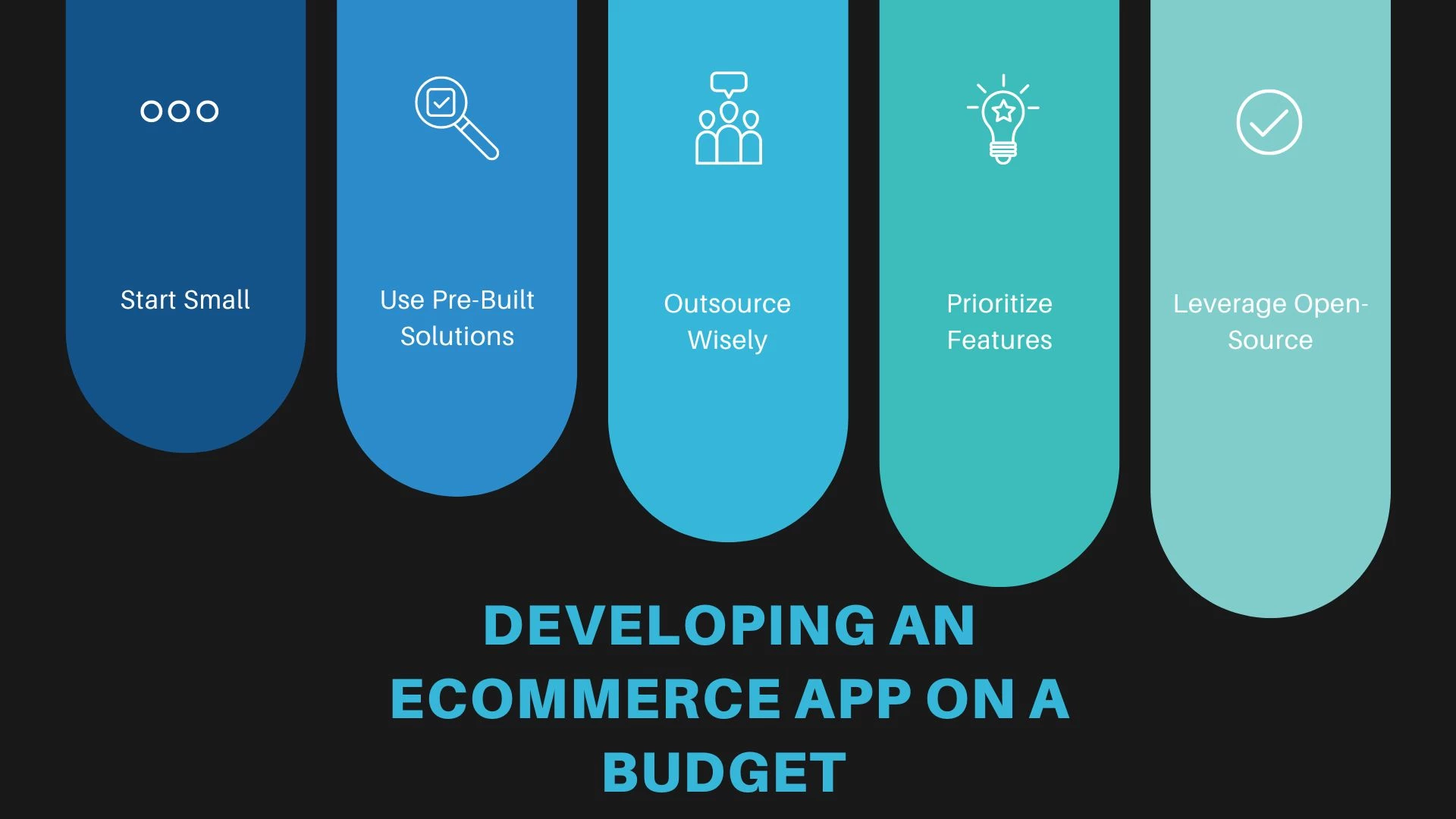
If the price tags above made you gulp, don’t fret — there are ways to keep costs down without sacrificing too much quality. Here are some of them.
- Start small: Focus on developing a minimum viable product (MVP) with only the core features necessary to launch. This allows you to enter the market quickly and gather user feedback before investing in more features.
- Use pre-built solutions: Consider using pre-built eCommerce app templates or frameworks that can be customized to fit your needs. This can significantly cut down development time and cost.
- Outsource wisely: As mentioned earlier, choosing an external team can reduce costs, but make sure to vet their portfolio, communication skills, and time zone compatibility.
- Prioritize features: List all desired features and prioritize them based on user value and development cost. You can always add more features in future updates once the app is generating revenue.
- Leverage open-source: Utilize open-source tools and libraries where possible, which can reduce the need for custom development.
Wrapping-Up eCommerce App Development Cost
Building an eCommerce app is an investment that can pay off in spades if done correctly. Understanding the costs involved and the factors that influence those costs is the first step in ensuring your app development project stays on budget and delivers the value your customers expect.
Whether you’re working with a shoestring budget or have the funds to go all out, there are many ways to make your eCommerce app vision a reality.

Our team ranks agencies worldwide to help you find a qualified partner. Visit our Agency Directory for the top eCommerce app development companies, as well as:
- Top App Development Companies
- Top Enterprise Mobile App Development Companies
- Top Android App Development Companies
- Top AI App Development Companies
- Top App Developers In San Francisco
Our team also highlights award-winning work on the Design Awards page, so be sure to check it out for the best and latest in app design.
eCommerce App Development Cost FAQs
1. How long does it take to develop an eCommerce app?
The timeline can vary depending on the app’s complexity and the development process. A basic app might take 3-6 months, while a more complex app could take 9-12 months or longer.
2. What ongoing costs should I expect after launching my app?
Expect to budget for regular updates, bug fixes, security patches, and possibly new features as your app grows. Hosting, customer support, and marketing are also ongoing costs to consider.
3. Can I monetize my eCommerce app?
In addition to revenue from sales, you can explore in-app advertising, subscription models, or charging for premium features.