










Law Firm PPC Strategy: How To Attract High-Intent Legal Leads

Unlock actionable law firm PPC strategies to drive qualified leads and measurable growth.
Law Firm PPC Strategy: How To Attract High-Intent Legal Leads
Published Aug 05 2025
|
Updated Aug 05 2025

To maximize ROI, law firms must use highly targeted strategies by focusing on specific, urgent queries and local audiences, rather than broad, generic keywords. Let’s show you how to do that.

Law Firm PPC: Key Points

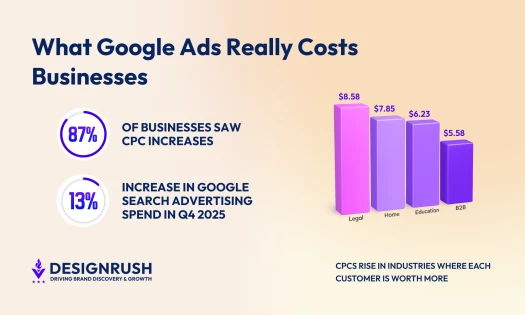
Legal industry CPCs average $6.75, with some terms like “medical malpractice lawyer” costing up to $250, making long-tail, high-intent keywords essential for cost-effective lead generation.
Benchmarks reveal top conversion rates in Bankruptcy Law (8.56%) and Estate Law (7.65%), showing that focused campaigns in specific verticals can give higher ROI than broad ones.
Since 18% of local searches lead to a purchase within 24 hours, geo-targeted campaigns using ZIP codes, cities, and local ad extensions significantly increase lead quality and conversion rates.

PPC Is a Legal Business Growth Engine — When Done Right

For law firms aiming to grow their caseloads, PPC can deliver a strong, measurable ROI, but only when it's backed by precise targeting, robust conversion tracking, and a strategy grounded in business goals.

According to Google, businesses earn $8 in profit for every $1 spent on Google Ads. With the right execution, PPC has the potential to become your most effective digital marketing channel.

1. Start with High-Intent Search Queries

DesignRush Logo

Legal PPC keywords are among the most expensive in paid search

Average Cost-Per-Click (CPC)
$6.75

To stay competitive, law firms need more strategic PPC campaigns that drive ROI despite premium keyword pricing.

The average cost-per-click (CPC) for legal keywords on Google is $6.75, making it one of the most expensive industries in paid search.

Broad terms like “lawyer” or “attorney” are not only one of the most expensive keywords, but also too generic to drive qualified leads.

Instead, focus your budget on long-tail, intent-driven keywords like “personal injury lawyer near me” or “divorce attorney free consultation”, terms that signal the searcher is ready to hire.

Google Ads data shows that adding specificity and intent (like “free consultation” or “24/7” availability) lowers competition and raises conversion rates.

Implementation Tactics

  • Use location and qualifiers in keywords: e.g. “DUI attorney in Los Angeles”, “workers’ comp lawyer near me”, or “best personal injury lawyer [City]”.
  • Avoid broad head terms: Bidding on “attorney” or “lawyer” alone can cost hundreds per click (e.g. “medical malpractice lawyer” ~$250) with many irrelevant clicks.
  • Match query to page: Ensure your landing page specifically addresses the search. Users who search “24/7 criminal defense San Antonio” should see a page about immediate criminal defense services in San Antonio.
Explore The Top PPC Agencies
Agency description goes here
Sponsored i Agencies shown here include sponsored placements.

2. Use Geo-Targeting for Local Market Domination

Legal services are inherently local. By geo-targeting your PPC ads, you focus your budget on potential clients within your service area, reducing wasted spend on irrelevant clicks. In fact, 18% of local searches lead to a purchase within 24 hours.

DesignRush Logo

Geo-targeted PPC reaches the right clients, right where they are

Local Search Conversion Rate (within 24 hrs)
18%

Google Ads allows targeting by city, zip code, county or radius. Set your campaigns to only show ads where your firm can practice.

Targeting Tactics

  • Target by city/county/zip: Customize your location settings so ads appear only in the cities, counties or ZIP codes you serve. For instance, a Seattle personal injury lawyer might target Seattle and King County only.
  • Use local ad extensions: Include location extensions (show your address) and call extensions (click-to-call with a local phone number) to boost relevance. Call extensions let clients phone you immediately from the ad.
  • Optimize ad schedule: Run ads during peak response times. If your staff handles intake 8am–6pm, concentrate your budget on those hours. Use Google Ads scheduling to pause or bid-down late-night and weekend hours if they produce fewer consult-ready leads.
  • Run separate campaigns for each geographic cluster to optimize budget allocation and relevance.

3. Track Conversions, Not Just Clicks

Clicks don’t pay the bills — signed cases do. To understand PPC ROI, implement robust conversion tracking that follows a user from ad click to case win.

How To Implement Conversion Tracking

  • Call tracking: Assign unique phone numbers to each campaign or ad. This lets you see which keywords and ads generate calls, and tag those calls in your system.
  • Form and lead tracking: Track all form submissions, chat sign-ups, and appointment bookings. Use Google Ads/Bing conversions and Google Analytics goals to log every contact submission.
  • CRM integration: Connect your PPC data with your intake CRM or case management software. This shows which ad clicks turned into consulted leads and ultimately retained cases.

Action Steps

  1. Assign a unique tracking number per campaign
  2. Use hidden form fields to capture campaign, keyword, and ad group data
  3. Use UTM parameters for Google Ads → CRM linking
  4. Regularly audit leads for quality: Was it a consult? Did they retain?

4. Build Niche Campaigns Around High-Value Practice Areas

Instead of fighting in the generic “family lawyer” keyword arena, dominate micro-niches:

NicheTactic
Medical MalpracticeUse keywords like “surgical error attorney near me” and emphasize case results 
Deportation DefenseTarget urgent queries like “ICE hold lawyer available now”
Class Action LawsuitsUse educational ad copy + downloadable lead magnets (e.g., "Check your eligibility")

Niche targeting allows you to tailor your ads, keywords, and landing pages to a specific client profile—boosting relevance and increasing conversions.

In fact, niche websites see 53% higher engagement rates than general-topic sites.

This reduces competition: you’re not bidding against every general practitioner, but other firms handling that specific issue.

In practice, niche PPC often means a lower cost per qualified lead and higher case values.

Looking for the top AdWords agencies?
FIND THEM HERE

5. Optimize Landing Pages for Conversions

The work isn’t done at the click — landing pages turn clicks into clients.

DesignRush Logo

Slow-loading pages cost you potential clients

Bounce Rate When Load Time Exceeds 3 Seconds
53%

Website speed isn’t optional. If your legal landing page takes longer than 3 seconds to load, up to 53% of visitors will bounce, costing you leads before they even see your offer.

Design dedicated landing pages that match each ad’s message (never send PPC traffic to a generic homepage).

  • Dedicated pages for each campaign: Create a landing page for each practice area or campaign. For example, ads for DUI should lead to a DUI defense page; personal injury ads to a PI page. This relevance boosts Quality Score and conversions.
  • Clear, urgent headlines: Use benefit-driven headlines that mirror the ad text. E.g., “Speak to a DUI Attorney Now” or “24/7 Accident Case Evaluation.” This continuity confirms the user’s intent and encourages action.
  • Prominent calls-to-action: Include sticky “Call Now” buttons and simple forms. Make it as easy as possible for users to contact you from desktop or mobile. For mobile especially, ensure click-to-call buttons are obvious.
  • Trust signals: Build credibility with client testimonials, case results, awards or press logos. Display attorney bios and certifications. These elements reassure prospects they’ll get quality representation.
  • Fast and mobile-friendly: A page should load in under 3 seconds, or visitors will bounce. Use a clean layout, minimize images/scripts, and ensure the form works flawlessly on smartphones.

Mauricio Luiz Siriguti, Marketing Director and Business Partner of Webegin, says website content is crucial for conversions:

"All the content needs to be proofread and carefully reviewed. We always advise the client to check before launching. This is also the reason why landing pages are more complex for law firms, as we can't use some terminologies because even [synonyms] can bring problems."

6. Automate Smartly Without Losing Control

Automation and AI tools in PPC advertising can help manage bids and tests, but human oversight remains essential:

  • Ad copy control: Use responsive search ads or scripts for testing, but ensure all variations stay on-brand and compliant. Review automated ad suggestions to maintain your firm’s voice.
  • Negative keywords: Keep your negative keyword list updated. For example, exclude “free advice,” “legal internship,” or unrelated practice areas to block poor fits. This prevents wasting clicks on low-value searches.
  • Smart bidding: Google’s automated strategies (Target CPA, Target ROAS) can optimize bids toward conversions. These rely on accurate conversion data, so make sure tracking is set up properly. Use smart bidding to scale, but check that it’s aligning with your goals.
  • Consistent messaging: Map the client journey. Ensure your ads, landing pages, and follow-up communications all reinforce the same service offering. This consistency improves trust and conversion rates.
  • Compliance: Always follow ABA and local bar advertising rules. Avoid unsubstantiated claims or guarantees. Include disclaimers for data tracking (e.g., call recordings) as required. Ethical advertising builds long-term credibility and avoids penalties.

Connor O'Hanlon, Director of PPC at SmartSites, emphasizes the importance of staying within Google’s regulations:

"The regulations are more specific about what you can and cannot say in the ad copy, so standing out from your competition is a challenge. This makes great branding, aggressive bidding, and a well-performing landing page crucially important for any law firm to compete."

Benchmarking Costs, Returns and Scaling for Law Firms

Before launching or scaling a PPC campaign, law firms need clarity on what success looks like — and what it costs.

Benchmarking across key advertising metrics provides insight into how your firm stacks up and helps you set realistic ROI expectations.

Use the following Google ad performance benchmarks by practice area to guide your targeting, budgeting, and campaign optimization decisions.

Practice AreaCPCCTRConversion Rate
Accidents and Personal Injury Law$44,834.56%5.45%
Criminal Law
$14,434.51% 6.90%
Bankruptcy Law
$7,576.23% 8.56%
Estate and Probate Law
$8,365.17% 7.65%
Family Law
$11,444.70% 7.52%

Of course, performance isn’t just about hitting the right numbers. According to Jeff Carterson, Founder and Project Manager at SevenCube, effective PPC campaigns succeed when they match user intent.

He explains that the key lies in “high-quality, targeted ad copy, ad extensions that add value, and optimized landing pages” — all of which contribute to a seamless, relevant experience.

“Ultimately,” Carterson notes, “if you’re delivering exactly what someone is looking for, they don’t care if it’s an ad.”

So while these benchmarks provide a solid foundation, winning campaigns require more than just cost efficiency — they demand messaging and UX that feel like a perfect fit for the user’s moment of need.

Our team ranks agencies worldwide to help you find a qualified partner. Visit our Agency Directory for the top PPC companies, as well as:

  1. Top Law Firm PPC Agencies
  2. Top Legal Marketing Agencies
  3. Top Law Firm SEO Companies

Our design experts also recognize the most innovative design projects across the globe. Given the recent uptick in design, you'll want to visit our Awards section for the best & latest in legal website designs.

Get connected with the right PPC agency for your project.
GET STARTED

Law Firm PPC FAQs

1. Should I choose Google Ads or Facebook Ads?

Google Ads are ideal for capturing active search intent (urgent legal needs); Facebook Ads are best for brand awareness and retargeting. Many firms succeed with both in parallel.

2. How can I ensure ad quality scores are high?

Ensure tight alignment between keywords, ad copy, and landing pages; emphasize relevance, fast loading times, and strong Quality Scores.

3. Should we bid on competitor law firm names?

While technically allowed, bidding on competitors’ names is a gray area legally and ethically. It can also lead to poor quality scores if your ad isn’t relevant to the branded search, resulting in higher costs and lower performance.

👍👎💗🤯