
B2B Social Media: Key Points
An effective B2B social media strategy promotes products or services to decision-makers and business clients, while also building relationships and showcasingexpertise.
We’ll walk you through a step-by-step approach and share tools to help align your strategy with your business goals.
Why Is Social Media Important for B2B?
Social media has become indispensable for B2B brands looking to enhance their reputation, boost sales, and build trust. As customer expectations evolve, social platforms have transformed into essential spaces for industry news, thought leadership, and customer interactions.
Here are some benefits of B2B social media marketing:
- Audience reach: B2B social media proves most effective for increasing brand awareness, educating the audience through nurturing strategies, and generating leads.
- Increased traffic: Business-to-business social media marketing drives traffic to company websites by delivering valuable content in familiar formats — such as informative or entertaining posts — guiding users to key pages and contributing to increased sales and customer acquisition.
- Connect with decision-makers: Platforms like LinkedIn connect businesses with important stakeholders and executives, making it the best social media platform to generate conversions.
- Brand credibility: Social media also amplifies B2B PR efforts by extending the reach of press mentions and establishing credibility.
10 Steps To Create a B2B Social Media Marketing Strategy
Unlike B2C endeavors that often focus on direct sales through social media, B2B audiences typically undergo a more extended conversion journey, often involving higher-value offerings. Crafting an effective B2B social media strategy requires carefully considering these distinctions to resonate with the target business audience.
Here’s how you can do this in a few steps:
- Identify your B2B objectives
- Analyze your social media competitors
- Choose the right social media channel
- Generate B2B social media content ideas
- Invest in social media ad campaigns
- Use influencer marketing
- Leverage employee advocacy
- Develop a B2B social media calendar
- Engage with your social media followers
- Monitor social media performance
1. Identify Your B2B Objectives

Start by clearly outlining your business objectives using the SMART framework (Specific, Measurable, Attainable, Relevant, and Time-Bound). This approach will help guide your planning, execution, and evaluation of your B2B social media marketing efforts.
For example, if your goal is to increase brand awareness among key decision-makers, a SMART object could be to boost your LinkedIn follower count by 20% within the next quarter. This goal is specific, measurable through analytics tools, and relevant to your broader business objectives like increasing leads and conversions. Furthermore, ensure that the deadline and goal are attainable with your marketing team’s current resources and capabilities.
2. Analyze Your Social Media Competitors
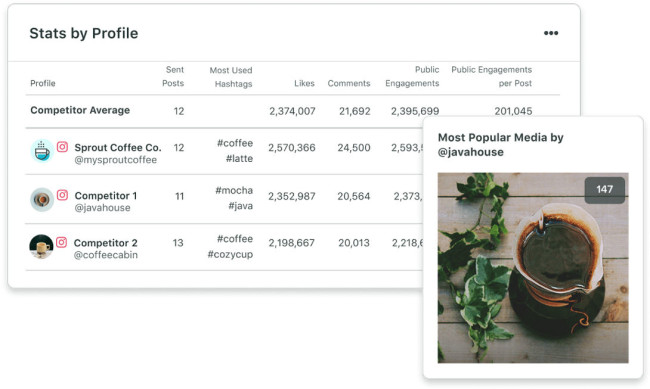
[Source: Sprout Social]
Analyze your competitors' content preferences, engagement strategies, and platform choices to gather valuable insights into optimizing your own social media approach. Here’s how:
- Examine content: Look at your competitor’s content across all platforms, observe which pieces resonate with their audience, and draw inspiration from it.
- Leverage tools: Use social media marketing tools to compare and gain insights into the metrics of both your own and your competitors' paid and organic campaigns.
- Identify gaps: Studying competitors helps uncover content gaps in your industry. For instance, if they focus on company updates but neglect industry-related news, you can seize the opportunity to fill the gap and become the go-to source for such content.
3. Choose the Right Social Media Channel
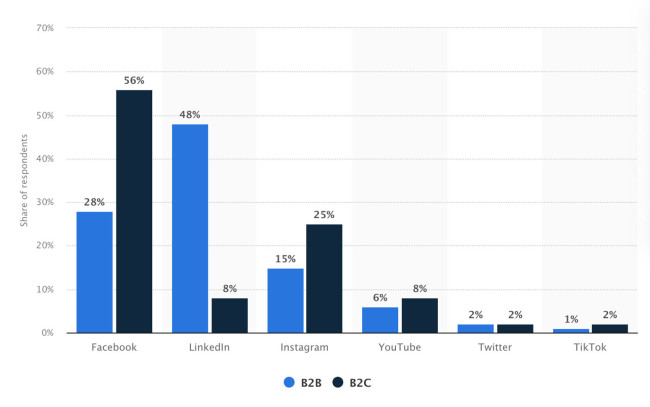
Various social media platforms offer opportunities for businesses to connect with B2B buyers, generate interest, and engage in meaningful conversations. Choosing the right channel ensures that B2B content aligns effectively with the target audience and business objectives.
LinkedIn is a top choice for B2B marketers and its focus on a professional audience of business decision-makers makes it a conducive environment for B2B content. It offers advantages for B2B marketers, including:
- Content alignment
- Precise targeting through powerful tools
- The ability to leverage employee-focused user-generated content for social proof
- Integrates industry news and career-centric updates
On the other hand, entertainment-oriented platforms each serve distinct purposes for B2B marketers:
- YouTube for visual content and engaging presentations.
- Instagram for posting industry updates through visually appealing content and stories.
- Twitter/X for customer support, industry news, and real-time interactions.
Additionally, using hashtags strategically on these platforms can enhance your organic visibility.
4. Generate B2B Social Media Content Ideas

To stand out in B2B social media marketing, it's crucial to distinguish your content from competitors. Here are some fresh content ideas to innovate your B2B social media strategy:
- Incorporate GIFs or memes that resonate with your audience.
- Showcase your office and company culture.
- Introduce key personalities.
- Provide a behind-the-scenes look into your operations.
- Share short interviews with your team members.
- Provide tips for product usage or troubleshooting.
- Offer free advice on topics relevant to your audience.
According to Jeremy Durant, Business Principal at Bop Design, B2B social media content should prioritize value and education over direct selling.
"For B2B brands, social media is less about the hard sell and more about building trust over time. Clients are inherently self-centered and will only consume content if it’s something immediately valuable to them.
At Bop Design, we advise clients to focus on educational, insight-driven content that positions them as industry experts and gives some expertise away for free — it attracts the right audience and keeps them engaged."
5. Invest in Social Media Ad Campaigns
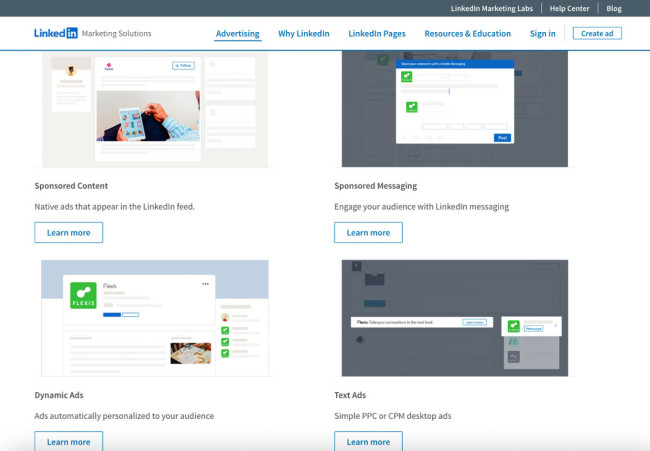
Navigating social media to reach your target audience organically can be challenging. Many companies utilize social media ads to overcome this hurdle, even though it requires additional costs, because of its substantial payoff. Paid advertising on social media is widely considered a cost-effective option for B2B marketers.
Social media platforms offer valuable tools for targeted advertising based on contact information, hobbies, interests, purchase history, search history, and usage data.
Paid ads can also help you achieve specific campaign goals, such as:
- Reaching potential B2B buyers
- Generating leads
- Boosting website traffic
- Driving sales
- Increasing app downloads.
6. Use Influencer Marketing

Incorporating influencers into your social media strategy can help you reach a wider audience. Partnering with the right influencer enhances your business's credibility and helps you attract new customers.
For B2B, choose influencers who are:
- Professionals in fields relevant to your target audience
- Individuals regarded as thought leaders in your industry
You can partner with authors, motivational speakers, coaches, C-level employees, or anyone in a leadership role. You can also leverage existing customers who fit this profile or initiate an affiliate program for VIP customers and influencer partners.
This strategic approach ensures that your chosen influencers resonate with your target audience and contribute to the overall success of your B2B social media efforts.
7. Leverage Employee Advocacy

Encouraging employees to share company content on their personal social media accounts can significantly boost brand reach and credibility. Employee advocacy turns team members into brand ambassadors, helping B2B companies establish trust and extend their influence organically.
To implement a successful employee advocacy program:
- Provide employees with ready-to-share content, such as company updates, industry insights, and thought leadership articles.
- Educate employees on social media best practices to enhance their engagement and authenticity.
- Use employee advocacy platforms like LinkedIn Elevate or Sprinklr to track performance and measure impact.
- Recognize and reward employees who actively participate in advocacy efforts to encourage continued involvement.
This approach strengthens brand awareness, fosters trust with potential clients, and enhances the overall B2B social media marketing strategy.
8. Develop a B2B Social Media Calendar

Creating a social media calendar is essential for consistently producing quality content that aligns with your business goals. This planning tool provides an overview of monthly messaging and helps with timely and efficient content production.
A comprehensive calendar should include:
- Post ideas
- Captions
- Business hashtags
- Relevant links
- Metrics for measurement
- Ideal post frequency
- Optimal posting times.
Numerous planning tools can automate the posting process, allowing you to focus on content creation. Grid planner tools also help with B2B Instagram content planning by providing a visual preview of the post before it goes live.
9. Engage with Your Social Media Followers
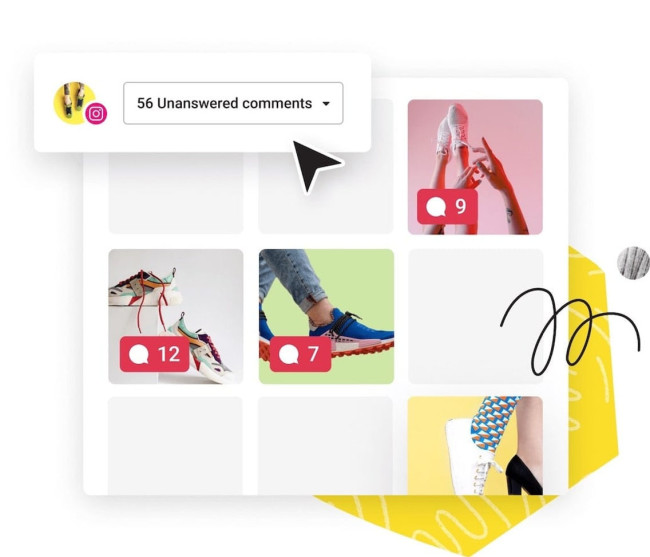
Social media profiles are accessible channels for leads and clients to connect with your business. Additionally, active engagement on social media enhances conversion chances. Utilize these platforms to initiate conversations and promptly respond to messages and comments.
Beyond communication, social media can also drive website traffic by encouraging followers to explore your products, updates, and pricing on your website. To boost interaction, use clickable links on your social media followers to turn engaged followers into potential leads.
10. Monitor Social Media Performance
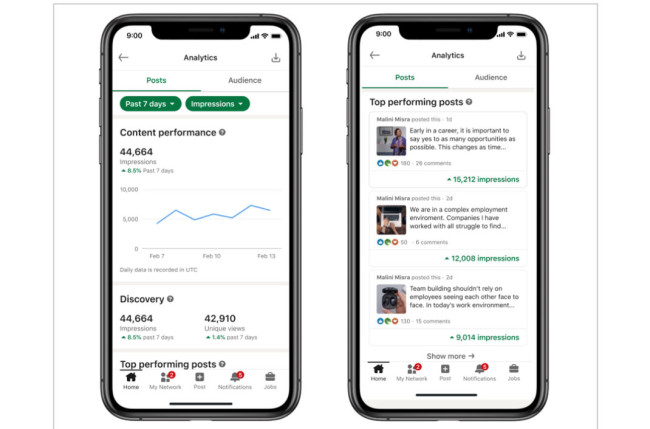
Keeping tabs on your social media performance is vital to meet your business objectives. If you don’t track important metrics, you risk rendering your content creation efforts ineffective.
Ram Mizrahi, Senior Product Manager at Bright Data, highlights the value of this approach:
“In B2B social media, data-driven insights are paramount. Leveraging real-time analytics allows brands to tailor their messaging, ensuring relevance and engagement with their target audience.”
To stay on top of your performance:
- Use the analytics tools provided by each social media platform to track engagement, impressions, and overall performance.
- Consider popular social media tools like Buffer and Hootsuite to gather extensive data and insights.
- Use a reporting tool to consolidate data from various channels, giving you a centralized view of your key performance indicators (KPIs).
Analyzing and tracking your performance lets you understand which content types are most effective, helping you create a more impactful content strategy, and ultimately driving lead generation, conversions, and revenue.
Platform-Specific Strategies for B2B Social Media Marketing
B2B social media marketing requires tailored strategies for each platform to maximize engagement and lead generation. Different platforms cater to distinct audiences and content preferences, making it essential to align your approach accordingly.
- LinkedIn: The hub for professional networking
- Twitter/X: Real-time industry engagement
- Facebook: Community building and brand Awareness
- Instagram: Visual storytelling for B2B Brands
- YouTube: Long-form video for B2B engagement
LinkedIn: The Hub for Professional Networking
- Share in-depth industry insights, thought leadership articles, and company news.
- Engage with decision-makers by joining and contributing to relevant LinkedIn groups.
- Use LinkedIn Ads for precise targeting based on job titles, industries, and company sizes.
- Leverage LinkedIn Live to host Q&A sessions, webinars, and expert discussions.
Best content type to share on LinkedIn:
- Industry reports
- Thought leadership articles
- Professional webinars
- Company updates
Twitter/X: Real-Time Industry Engagement
- Post timely updates, industry news, and quick insights with relevant hashtags.
- Participate in Chats to establish credibility and engage with industry leaders.
- Use Polls to gather feedback and boost engagement.
- Share bite-sized content like quotes from blog posts or key takeaways from webinars.
Best content type to share on Twitter/X:
- Short-form insights
- Industry news
- Polls
- Quick tips
- Live updates
Facebook: Community Building and Brand Awareness
- Create a dedicated Facebook Business Page with valuable B2B content.
- Use Facebook Groups to build a community around your brand and engage with customers.
- Invest in Facebook Ads for retargeting and reaching niche audiences.
- Post a mix of content, including blog links, case studies, and behind-the-scenes company culture.
Best content type to share on Facebook:
- Blog posts
- Behind-the-scenes content
- Customer testimonials
- Community discussions
Instagram: Visual Storytelling for B2B Brands
- Showcase company culture and employee highlights to humanize your brand.
- Use Instagram Stories for behind-the-scenes looks, quick tips, and event coverage.
- Post carousel content to provide step-by-step insights or industry trends.
- Leverage Reels and IGTV for engaging, short-form educational content.
Best content type to share on Instagram:
- Infographics
- Behind-the-scenes videos
- Employee highlights
- Carousel posts
YouTube: Long-Form Video for B2B Engagement
- Publish product demos, tutorials, and explainer videos to educate potential clients.
- Host panel discussions and expert interviews to establish authority.
- Optimize video descriptions and titles with SEO-friendly keywords.
- Create playlists for different content themes, such as case studies, webinars, and industry insights.
Best content type to share on YouTube:
- Product demos
- Tutorials
- Case studies
- Expert interviews
- Explainer videos
5 Best B2B Social Media Tools
In the competitive B2B landscape, using the right social media tools is key to generating leads, building relationships, and enhancing brand visibility. Here are the top B2B social media tools to boost your marketing efforts and drive business growth:
1. Hootsuite
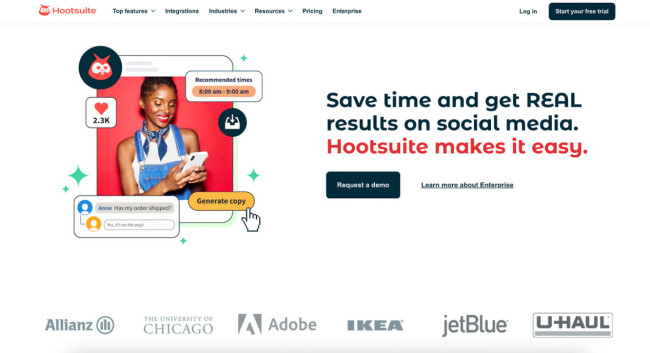
Established in 2008, Hootsuite is one of the most popular social media management tools among marketers. The free version allows the management of up to three social media accounts across platforms like Facebook, Twitter/X, and LinkedIn.
Hootsuite excels in content scheduling, publishing, cross-platform conversation tracking, and campaign result measurement. Notably, its AI assistant, OwlyWriter AI, aids in content ideation and automation.
Key Features:
- Scheduling and publishing across multiple platforms
- Detailed analytics and customizable reports
- Social listening tools (brand mentions, competitor activity)
- Third-party integrations
2. Oktopost
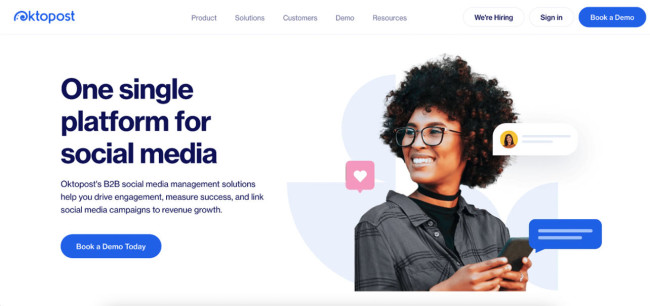
Oktopost caters specifically to B2B organizations, focusing on empowering marketing teams with social campaign management, editorial calendars, and detailed analytics. It seamlessly integrates with CRM and marketing automation platforms like Salesforce and HubSpot, emphasizing employee advocacy to ensure a shared social media presence beyond the marketing team.
Key Features:
- Precise coordination for social media publishing
- Social listening tools
- Robust lead attribution
- Detailed analytics focused on B2B KPIs
3. Buffer
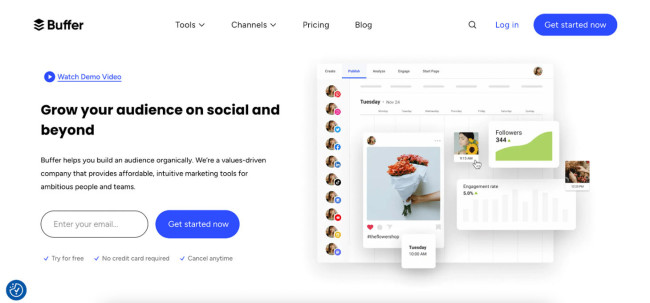
Buffer is suitable for smaller teams and provides simple and flexible tools for social media scheduling and management. It has a clean interface, analytics for post engagement and reach, and an AI assistant for content ideation and experimentation. Supported channels include Facebook, Twitter/X, LinkedIn, Pinterest, Instagram, Google My Business, and TikTok.
Key Features:
- Content queue management
- Performance analytics for optimization
- Robust team collaboration tools
- Browser extension and mobile app for on-the-go management
4. Sprout Social
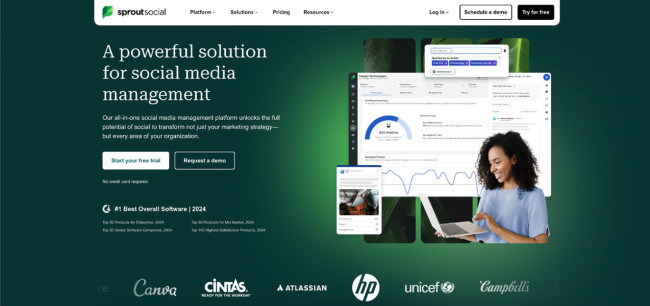
Sprout Social offers workflow management features like a unified inbox and the Discover tab to identify followers not reciprocated. Additional capabilities encompass engagement monitoring, detailed analytics, social listening, and options for employee advocacy. While it caters very well to larger teams, it comes at a higher cost.
Key Features:
- Bulk scheduling for multiple platforms
- In-depth analytics and reporting tools
- Integrations with various CRM systems
- Asset library management
5. Agorapulse
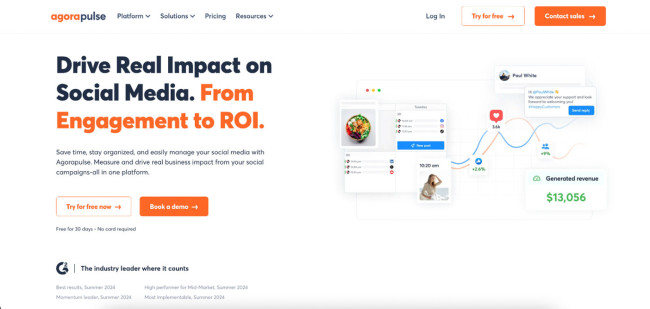
Focused on writing, publishing, monitoring, and reporting across various social media platforms, Agorapulse strikes a balance between advanced features and affordability. The tool offers features for inbox management, chatter monitoring, CRM functionality, and monthly reporting at a more accessible price point.
Key Features:
- Unified social inbox
- CRM and social media integration
- Detailed analytics and customizable reports
- Comment management for paid ads
B2B Social Media Marketing Takeaways
B2B social media offers B2B companies an efficient and effective means to establish their brand presence and engage with their audience. The traditional approach of buyers solely relying on website visits for purchasing decisions is long gone. Instead, focus on building long-lasting relationships with business owners and decision-makers by positioning your brand as an industry authority.
Work with the top B2B marketing agencies to take your social media marketing strategy to another level.