Discover the leading visual effect companies whose technology turns raw footage into visually consistent worlds that define modern storytelling. Our experts have curated a list of top VFX companies that use advanced rendering engines to deliver immersive digital realism to your project.
Give it a second look
We are Mulligan Studio, a dynamic team of creators based in northern Portugal, dedicated to delivering innovative and high-quality creative solutions. Our passionate professionals work collaboratively to bring your visions to life, ensuring exceptional results in every project... View Mulligan Studio profile
Top Services:
- Graphic Design
- Video Production
- Print Design
- Audio Production
- Creative Services
- Show more
- Location
- Porto, Portugal
- Number of Employees
- Under 49
- Average Hourly Rate
- $100/hr
- Minimal Budget
- $1,000 - $10,000
Redefine the Norm.
CRE8 Media is a Melbourne-based creative design and development studio specializing in innovative solutions. We are dedicated to delivering exceptional results that elevate your brand's presence and impact... View CRE8 Media profile
Top Services:
- Digital Services
- Graphic Design
- Video Production
- Branding
- Creative Services
- Show more
- Location
- Thomastown, Australia
- Number of Employees
- Under 49
- Average Hourly Rate
- $280/hr
We help companies reach 7+ figures and beyond.
Artzmen Creative is a full-service social media marketing agency committed to helping businesses of all sizes engage their audiences and drive results through innovative and strategic social media campaigns. We specialize in crafting tailored solutions that maximize your brand's impact and online presence... View Artzmen Creative profile
Top Services:
- Creative Services
- Branding
- Video Production
- Logo Design
- Web Design
- Show more
- Location
- Helsinki, Finland
- Number of Employees
- Under 49
- Minimal Budget
- $1,000 - $10,000
Flat illustrations has always been our main passion, on which we tried to do constant research.
In recent years we have worked with artists with very different styles, which is why today we are able, based on the characteristics of each project, to offer the client different stylistic options, also choosing from the most important Italian illustrators and motion graphic designers... View all reviews
Top Services:
- Video Production
- Graphic Design
- Location
- Piacenza, Italy
- Number of Employees
- Under 49
- Average Hourly Rate
- $1/hr
- Minimal Budget
- Under $1,000
A Creative Agency That Digs Strategy, Content and Execution.
Creatica Studios is an award-winning creative agency here to help small businesses rock their brand game with standout strategy, design, and content!... View all reviews
Top Services:
- Digital Strategy
- Design Services
- Branding
- Video Production
- Package Design
- Show more
- Location
- Toronto, Canada
- Number of Employees
- Under 49
- Minimal Budget
- $1,000 - $10,000
The Future of Video.
YouTube Video Production Video Agency... View Digital Media Trade LLC profile
Top Services:
- Video Production
- Video Marketing
- Digital Strategy
- Social Media Marketing
- Branding
- Show more
- Location
- Sheridan, Wyoming
- Number of Employees
- Under 49
- Average Hourly Rate
- $90/hr
Top Video Editing Agency
Prism Pulse is a professional video editing agency. We specialize in finance videos, talking head videos, corporate videos, documentary videos, faceless videos, Instagram Reels, TikTok videos, YouTube Shorts, Minecraft, Roblox, COD and other gaming videos... View Prism Pulse profile
Top Services:
- Digital Services
- Video Production
- Creative Services
- Digital Strategy
- Show more
- Location
- Washington DC, Washington DC
- Number of Employees
- Under 49
- Average Hourly Rate
- $20/hr
- Minimal Budget
- Under $1,000
We are Monksters - creative minds fueling growth with bold strategy, sharp design, and real results.
Monks Agency is a collective of marketers, designers, writers, strategists, and developers who believe work should feel like play - but still deliver serious impact. We value freedom, creativity, responsibility, and commitment - and we bring that energy to everything we do... View all reviews
Top Services:
- Social Media Marketing
- Digital Marketing
- Digital Strategy
- Web Design
- Web Development
- Show more
- Location
- Skopje, Macedonia
- Number of Employees
- Under 49
- Average Hourly Rate
- $50/hr
- Minimal Budget
- $1,000 - $10,000
Elevate. Engage. Inspire.
CREATIVEROOM is a communication and marketing agency based in Brussels.We support companies of all sizes and sectors in defining their strategy, enhancing their identity, and rolling out their communication initiatives... View all reviews
Top Services:
- Digital Strategy
- Digital Marketing
- Web Development
- Logo Design
- Video Production
- Show more
- Location
- Brussels, Belgium
- Number of Employees
- Under 49
- Minimal Budget
- $1,000 - $10,000
Digital Solutions to Empower Your Business
We architect, produce and deliver transformative digital solutions that drive organizational excellence, accelerate growth, and deliver quantifiable impact. We specialize in 3 core areas; technology, creative, and learning services–all of which we have decades of experience in cultivating unique and... View Branch Boston profile
Top Services:
- Digital Services
- Digital Strategy
- Creative Services
- Web Development
- WordPress Website Design
- Show more
- Location
- Newton, Massachusetts
- Number of Employees
- Under 49
- Average Hourly Rate
- $200/hr
- Minimal Budget
- $10,000 - $25,000
Spark Plug Of Creativity
Spinthiras Media is a Dubai-based food and commercial photography studio that doesn't just capture products it makes people want them. Founded in 2013 and ranked among the UAE's top food photographers, Spinthiras Media blends cinematic storytelling with sharp commercial intent, turning everyday food and brand... View all reviews
Top Services:
- Video Production
- Creative Services
- Location
- Dubai, United Arab Emirates
- Number of Employees
- Under 49
- Average Hourly Rate
- $150/hr
- Minimal Budget
- $1,000 - $10,000
Versatile creative agency.
We're Artmadein, an independent creative company that turn brands into Prominent Brands... View Artmadein Creative Solutions LLP's portfolio
Top Services:
- Graphic Design
- Video Production
- Branding
- Creative Services
- Logo Design
- Show more
- Location
- New Delhi, India
- Number of Employees
- Under 49
- Average Hourly Rate
- $20/hr
- Minimal Budget
- Under $1,000
- Portfolios Count
- 3 Projects Listed
INTELLIGENT, EVOCATIVE FILMMAKING FOR PURPOSE-DRIVEN BRANDS & ORGANIZATIONS.
Boutique production house in Seattle, WA. Highly compelling, deeply human work. We've created videos and campaigns for a large array of clients including, Smartwool, Sitecore, Bill & Melinda Gates Foundation, University of Washington, The Nature Conservancy, United Nations Foundation, and Costco among many... View Open Story Films profile
Top Services:
- Video Production
- Location
- Seattle, Washington
- Number of Employees
- Under 49
- Minimal Budget
- $25,000 - $50,000
Analyse - Enhance - Elevate - Engage
WATT is creative production company based in London, with a global reach. We specialise in creating unique and engaging content that empathises with your message, and resonates with your audience... View all reviews
Top Services:
- Design Services
- Video Production
- Graphic Design
- Creative Services
- Show more
- Location
- London, United Kingdom
- Number of Employees
- Under 49
- Minimal Budget
- $10,000 - $25,000
Creative Solutions Propelling You Forward
A boutique animated video production company based in Washington State, with a foundation in traditional animation, graphic design, illustration and web design. We like making things move.Our specialty is motion design and 2d traditional animation work, with a special emphasis for technology companies... View Yon And Yonder Studio profile
Top Services:
- Video Production
- Graphic Design
- Branding
- Creative Services
- Web Design
- Show more
- Location
- Copalis Crossing, Washington
- Number of Employees
- Under 49
- Average Hourly Rate
- $80/hr
- Minimal Budget
- $1,000 - $10,000
Animation and Video Production Company
Looking for a 2D/3D animation and video production company? Stytch provides full service video production service in Delhi NCR and animation services worldwide... View Stytch's portfolio | View all reviews
Top Services:
- Video Production
- Logo Design
- Location
- Ghaziabad, India
- Number of Employees
- Under 49
- Average Hourly Rate
- $10/hr
- Portfolios Count
- 5 Projects Listed
We are the marketing agency of tomorrow, bringing big ideas to small businesses today.
We are LC3 Creative, based in East Liverpool, Ohio, a digital marketing agency founded in 2020 with a mission to empower and uplift local small businesses. Rooted in a commitment to excellence - we specialize in providing innovative and tailored marketing solutions, ranging from web development and graphic... View LC3 Creative LLC profile
Top Services:
- Digital Marketing
- Web Design
- Social Media Marketing
- Advertising
- SEO
- Show more
- Location
- East Liverpool, Ohio
- Number of Employees
- Under 49
- Average Hourly Rate
- $21/hr
- Minimal Budget
- Under $1,000
Captivating Animation. Memorable Stories.
Fox & Co Animation is a leading animation production agency that creates high-quality two- and three-dimensional (2D/3D) animated videos. With a team of experts dedicated to delivering visually stunning and emotionally resonant content, the agency transforms ideas into engaging visual experiences that stand... View all reviews
Top Services:
- Video Production
- Location
- Darlinghurst, Australia
- Number of Employees
- Under 49
- Average Hourly Rate
- $199/hr
- Minimal Budget
- $10,000 - $25,000
We are visual problem solvers!
Salamandra.uk specializes in a wide array of creative services, from content production to comprehensive design and branding solutions, including super-targeted TV advertising. The agency excels in creating and enhancing brand identities across diverse industries by producing bespoke logos, brand guidelines... View Salamandra Animation Studios profile
Top Services:
- Video Production
- Location
- Eton, United Kingdom
- Number of Employees
- Under 49
- Average Hourly Rate
- $199/hr
- Minimal Budget
- $1,000 - $10,000
We Create Strong Brands That People Believe In
We solve business problems with branding and design. We design graphic and semantic systems so that communications between companies and their clients become clearer and faster. We make sure that employees believe in the brand and are proud of where they work. We create an environment in which people feel... View Gromov Branding profile
Top Services:
- Branding
- Logo Design
- Location
- Saint Petersburg, Russia
- Number of Employees
- 50 - 99
- Average Hourly Rate
- $1000/hr
- Minimal Budget
- $25,000 - $50,000
With Tech Gosh You're the Boss!
Techgosh is a digital marketing and web design agency specializing in website development and SEO. We also offer social media marketing, PPC, video editing, influencer marketing, and more delivering tailored strategies to help businesses grow online... View Tech Gosh's portfolio | View all reviews
Top Services:
- SEO
- Web Development
- Social Media Marketing
- Mobile App Development
- Web Design
- Show more
- Location
- Greater Noida, India
- Number of Employees
- Under 49
- Average Hourly Rate
- $10/hr
- Minimal Budget
- Under $1,000
- Portfolios Count
- 3 Projects Listed
Real Estate Marketing Agency in Mumbai.
Welcome to a future where success is not just a goal its a reality crafted by Abstract. innovation, data intelligence, and AI prowess. Abstract is your strategic partner, seamlessly integrating technology and human touch... View all reviews
Top Services:
- Graphic Design
- Creative Services
- Digital Strategy
- Web Design
- Web Development
- Show more
- Location
- Navi Mumbai, India
- Number of Employees
- Under 49
- Average Hourly Rate
- $100/hr
Innovative Designs
S Creations helps businesses grow with high-impact designs, strategic branding, and digital solutions. Lets turn your vision into reality!... View S Creations profile
Top Services:
- Graphic Design
- Video Production
- Branding
- Logo Design
- Product Design
- Show more
- Location
- Islamabad, Pakistan
- Number of Employees
- Under 49
- Average Hourly Rate
- $30/hr
We Build World Class Digital Products.
At Blindtech Agency build websites, apps and provide every digital service that can be possible digitally. The services are Branding, Print Design, Logo Design, Video/Photo Editing, VFX, Graphic Designing and Digital Marketing... View Blindtech Agency's portfolio
Top Services:
- Digital Services
- Graphic Design
- Logo Design
- eCommerce Development
- Web Development
- Show more
- Location
- Hyderabad, India
- Number of Employees
- Under 49
- Average Hourly Rate
- $100/hr
- Minimal Budget
- $10,000 - $25,000
- Portfolios Count
- 3 Projects Listed
Making a mark in the digital space
We specialize in transforming and enhancing existing online business models, as well as constructing comprehensive online ecosystems for startups, mid-size companies, and large brands. Our services are designed to help clients adapt to the ever-evolving digital landscape and achieve sustainable growth... View Adeptd's portfolio
Top Services:
- Web Development
- SEO
- Content Marketing
- Digital Services
- Video Production
- Show more
- Location
- Udaipur, India
- Number of Employees
- Under 49
- Average Hourly Rate
- $22/hr
- Minimal Budget
- $1,000 - $10,000
- Portfolios Count
- 3 Projects Listed
Best Video Editing & Post Production Company.
We are offering professional video editing and post-production services to content creators & production houses all over the world, including the USA, UK, and Canada... View all reviews
Top Services:
- Video Production
- Design Services
- Video Marketing
- Branding
- Audio Production
- Show more
- Location
- Rawalpindi, Pakistan
- Number of Employees
- Under 49
- Average Hourly Rate
- $25/hr
Evolving Creativity
Crevo is a unique branding design agency dedicated to crafting exceptional and personalized brand identities. Guided by our tagline, Evolving Creativity, we blend innovative design with strategic insights to deliver impactful solutions that help businesses stand out. Our goal is to bring your vision to life... View all reviews
Top Services:
- Branding
- UI/UX Design
- Event Marketing
- Digital Marketing
- Business Consulting
- Show more
- Location
- Jaipur, India
- Number of Employees
- Under 49
Design with essense.
We are a passionate group of individuals that present fresh concepts that captivate, delight, and even cause people to expand their eyes!... View Essense Designs's portfolio | View all reviews
Top Services:
- Graphic Design
- Logo Design
- Branding
- Design Services
- Package Design
- Show more
- Location
- Sagar, India
- Number of Employees
- Under 49
- Average Hourly Rate
- $25/hr
- Minimal Budget
- Under $1,000
- Portfolios Count
- 1 Project Listed
Aiding brand experience since 1993
As one of the countrys leading advertising and media agencies, Prachar goes beyond offering full-fledged advertising and media services... View all reviews
Top Services:
- Digital Services
- Graphic Design
- Logo Design
- Branding
- Creative Services
- Show more
- Location
- Mumbai, India
- Number of Employees
- 100 - 249
- Average Hourly Rate
- $10/hr
- Minimal Budget
- $1,000 - $10,000
Fearless, Authentic Marketing
Haris&Co is a digital marketing agency based in kozhikkod,Kerala,that has rapidly gained recognition for its innovative approach and outstanding outcomes... View all reviews
Top Services:
- Digital Marketing
- SEO
- Social Media Marketing
- PPC
- Graphic Design
- Show more
- Location
- Kozhikode, India
- Number of Employees
- 50 - 99
- Minimal Budget
- Under $1,000
Ideas Rendered. Products Remembered.
Bring your product to life with AFE Studio- Your go-to Partner for dynamic, eye catching 3D Product Animations. We help brands stand out with striking visuals that captivate audience, boost engagement, and drive real results. Discover how expert animation makes your product the Hero!... View AFE Studio profile
Top Services:
- Creative Services
- Product Design
- Video Production
- Location
- Indore, India
- Number of Employees
- Under 49
- Average Hourly Rate
- $50/hr
Revolutionizing tThe Future Of Digital Marketing
Markit Papa is a digital marketing platform offering SEO, PPC, and social media solutions to help businesses grow their online presence and drive measurable results... View Markit Papa's portfolio
Top Services:
- Video Production
- Graphic Design
- Creative Services
- Public Relations
- Digital Services
- Show more
- Location
- Islamabad, Pakistan
- Number of Employees
- Under 49
- Average Hourly Rate
- $25/hr
- Minimal Budget
- $1,000 - $10,000
- Portfolios Count
- 1 Project Listed
Your Vision, Our Creation.
As a leading ADA-compliant website design and Custom Software Development Company, we distinguish ourselves as a premier entity in the realm of product and technology services. Our specialization lies in Mobile and Web Development, where we exhibit a keen focus on crafting solutions with innovative UI/UX... View HubTech Solutions profile
Top Services:
- Web Development
- Mobile App Development
- Video Production
- eCommerce Development
- WordPress Website Design
- Show more
- Location
- Chennai, India
- Number of Employees
- Under 49
- Average Hourly Rate
- $25/hr
Beyond Boundaries
Triface International is an award-winning 3d animation company. We have offices in India and the USA. We specialize in high-quality 3d animation in the b2b sector. This is the place if you need high-quality 3d animation with competitive prices and super-fast support... View all reviews
Top Services:
- Video Production
- Digital Services
- Design Services
- Creative Services
- Show more
- Location
- Vadodara, India
- Number of Employees
- Under 49
- Average Hourly Rate
- $35/hr
Where Creative Design Meets Technological Excellence.
We are your one-stop digital powerhouse, crafting stunning designs, developing cutting-edge websites and apps, and driving growth with savvy performance marketing strategies. Whether it's a cohesive brand identity design entailing your brand's values and positioning, or designing packaging & visual... View Resurgam Digital's portfolio | View all reviews
Top Services:
- Branding
- Digital Strategy
- Package Design
- Video Production
- UI/UX Design
- Show more
- Location
- Navi Mumbai, India
- Number of Employees
- Under 49
- Average Hourly Rate
- $45/hr
- Minimal Budget
- $1,000 - $10,000
- Portfolios Count
- 1 Project Listed
A Product Realization Company.
TILTLABS is a pioneering product realization company dedicated to harnessing cutting-edge technologies to craft interactive, user-friendly, and deeply engaging experiences. Our expertise spans across various domains, including XR & Mobility, Games & Gamification, Virtual Production, Metaverse, Blockchain, and... View Tiltlabs's portfolio | View all reviews
Top Services:
- VR/AR
- Video Production
- Mobile App Development
- Software Development
- Blockchain
- Show more
- Location
- Thiruvananthapuram, India
- Number of Employees
- 100 - 249
- Minimal Budget
- $1,000 - $10,000
- Portfolios Count
- 2 Projects Listed
A Leading 3D Visualisation and A New-age Advertising Agency
We bring real estate projects to life through high-impact, 3D visualization, branding, and strategic advertising. With a strong focus on innovation, storytelling, and strategic thinking, we help developers, architects, and agencies build powerful brands that stand out in a competitive market... View Acorn Innotec profile
Top Services:
- Branding
- Video Production
- Logo Design
- Digital Strategy
- Web Design
- Show more
- Location
- Hyderabad, India
- Number of Employees
- Under 49
Creative & Digital Agency
Eilan Digital is a full-service creative and digital agency, providing explainer videos, motion graphics, 3D product visualization, branding and design, and digital marketing services to help brands strengthen communication and boost online visibility... View all reviews
Top Services:
- Branding
- Creative Services
- UI/UX Design
- Product Design
- Web Development
- Show more
- Location
- Pune, India
- Number of Employees
- Under 49
3D Rendering and Animation & e-Commerce Design Services
Ayudh Creations is a Mumbai-based firm specializing in creative design, CGI, and video editing. Located in India's financial capital, we craft exceptional still and motion visuals that are both engaging and effective in achieving your objectives... View Ayudh Creations's portfolio | View all reviews
Top Services:
- Video Production
- Package Design
- Product Design
- Location
- Mumbai, India
- Number of Employees
- Under 49
- Portfolios Count
- 1 Project Listed
More Leads, More Sales with Google Premier Partner!
AtoZ Advert is a Digital Marketing Agency focused on Igniting Growth in Multi-Location businesses. Our belief in democratizing digital marketing has enabled our clients to generate big returns at a local level... View all reviews
Top Services:
- Graphic Design
- Logo Design
- Creative Services
- Print Design
- Digital Services
- Show more
- Location
- Gujrat, Pakistan
- Number of Employees
- Under 49
- Average Hourly Rate
- $20/hr
- Minimal Budget
- Under $1,000
Your Trusted Path To Innovation
Space Inventive delivers AI-powered solutions, data engineering, and digital transformation services tailored for pharma, healthcare, and fast-growing businesses. We blend innovation with execution to solve complex challenges through scalable, future-ready technology... View Space Inventive's portfolio | View all reviews
Top Services:
- Big Data Analytics
- IT Services
- Web Design
- Branding
- UI/UX Design
- Show more
- Location
- Nanakaramguda, India
- Number of Employees
- 250 - 499
- Average Hourly Rate
- $20/hr
- Portfolios Count
- 1 Project Listed
Bridging Creativity and Technology.
Vertical 3D Tech is a leading 3D Visualization company offering state-of-the-art services in 3D technology. Our customized solutions cater to various industries, and we specialize in 3D modeling and rendering, 3D animation, AR VR, 3D printing, and Amazon A+ Listing services... View Vertical 3D Tech's portfolio | View all reviews
Top Services:
- Video Production
- Package Design
- Print Design
- Product Design
- Design Services
- Show more
- Location
- Mohali, India
- Number of Employees
- Under 49
- Average Hourly Rate
- $25/hr
- Minimal Budget
- Under $1,000
- Portfolios Count
- 1 Project Listed
Results, Not Excuses.
Since 2014, Firstclusive Branding has grown from a one-table setup in Hyderabad into a trusted creative agency with 900+ clients, 1500+ projects and a team of 15+ expert professionals serving businesses across 12+ countries. In 2023, we became a Startup India-recognized Private Limited Company , marking the... View Firstclusive Branding's portfolio | View all reviews
Top Services:
- Web Design
- eCommerce Development
- Logo Design
- Video Production
- Web Development
- Show more
- Location
- Hyderabad, India
- Number of Employees
- Under 49
- Average Hourly Rate
- $100/hr
- Minimal Budget
- Under $1,000
- Portfolios Count
- 1 Project Listed
Expert 3D Rendering That Brings Your Designs to Life.
ZealousXR delivers high-quality 3D rendering services that turn ideas into compelling visuals perfect for architects, interior designers, real estate developers, and product brands aiming to stand out... View all reviews
Top Services:
- Video Production
- Product Design
- Package Design
- Digital Strategy
- Show more
- Location
- Chennai, India
- Number of Employees
- 500 - 999
- Average Hourly Rate
- $50/hr
- Minimal Budget
- $10,000 - $25,000
Creative Where It Never Ends.
Bizital Bazaar is your premier destination for post-production and digital media power house. Specializing in video editing, visual effects (VFX), color grading, ad video production, and key art creation, we bring your creative visions to life with unparalleled expertise and quality. With a keen focus on... View Bizital Bazaar profile
Top Services:
- Video Production
- Graphic Design
- Audio Production
- Product Design
- Video Marketing
- Show more
- Location
- Kolkata, India
- Number of Employees
- Under 49
- Minimal Budget
- Under $1,000
Welcome To The Next Level
Abnex Softech is an IT Staff Augmentation Service Providing Agency. We have talented developers and designers to help design and develop anything in almost every technology... View all reviews
Top Services:
- Graphic Design
- Video Production
- Logo Design
- Web Design
- Web Development
- Show more
- Location
- Ahmedabad, India
- Number of Employees
- 50 - 99
- Average Hourly Rate
- $20/hr
- Minimal Budget
- Under $1,000
Red Rock India -Digital Marketing Agency in Mumbai
Red Rock India is a dynamic digital marketing agency based in Mumbai. With more than 50 years of cumulative experience, we specialize in driving business growth through innovative digital marketing strategies. Our expertise includes B2B marketing, SEO Services, social media management, E-commerce Marketing... View all reviews
Top Services:
- Digital Services
- Graphic Design
- SEO
- PPC
- Social Media Marketing
- Show more
- Location
- Mumbai, India
- Number of Employees
- Under 49
- Average Hourly Rate
- $1000/hr
- Minimal Budget
- $1,000 - $10,000
Building Trust-Driven Hospital & Doctor Brands
Redwud Creations is a digital solutions agency empowering businesses and healthcare brands with impactful strategies. We specialize in digital marketing, branding, and design to help organizations connect effectively with their audience... View all reviews
Top Services:
- Web Design
- Digital Marketing
- Advertising
- Public Relations
- Media Buying
- Show more
- Location
- Chennai, India
- Number of Employees
- Under 49
- Average Hourly Rate
- $50/hr
- Minimal Budget
- Under $1,000
Your Vision, Amplified By Design
White Sand is a full-service branding and advertising agency specializing in brand strategy, identity design, digital marketing, packaging, and creative campaigns. With expertise across FMCG, healthcare, education, and entertainment industries, we craft compelling brand experiences that drive business... View all reviews
Top Services:
- Branding
- Digital Marketing
- Social Media Marketing
- Content Marketing
- Media Buying
- Show more
- Location
- Ahmedabad, India
- Number of Employees
- Under 49
- Average Hourly Rate
- $15/hr
Your Vision, Our Cinematic Expertise
Cosmos Production is a well-known video production company in Ahmedabad, India. We have been in video production for the past 10+ years and offer video production services such as Corporate Video, Product Video, Music Video, Documentary, TVCs & DVCs, and Promotional Video production solutions... View all reviews
Top Services:
- Video Production
- Branding
- Creative Services
- Graphic Design
- Show more
- Location
- Ahmedabad, India
- Number of Employees
- Under 49
- Average Hourly Rate
- $50/hr
- Minimal Budget
- Under $1,000

































Explore Video Production Specializations
Popular Services
Everything You Need to Know Before Hiring Visual Effects Companies
What can VFX companies do for businesses?
They can help turn abstract ideas into clear, persuasive visuals that sell products, explain services, and strengthen storytelling across websites, campaigns, investor presentations, and commercials.
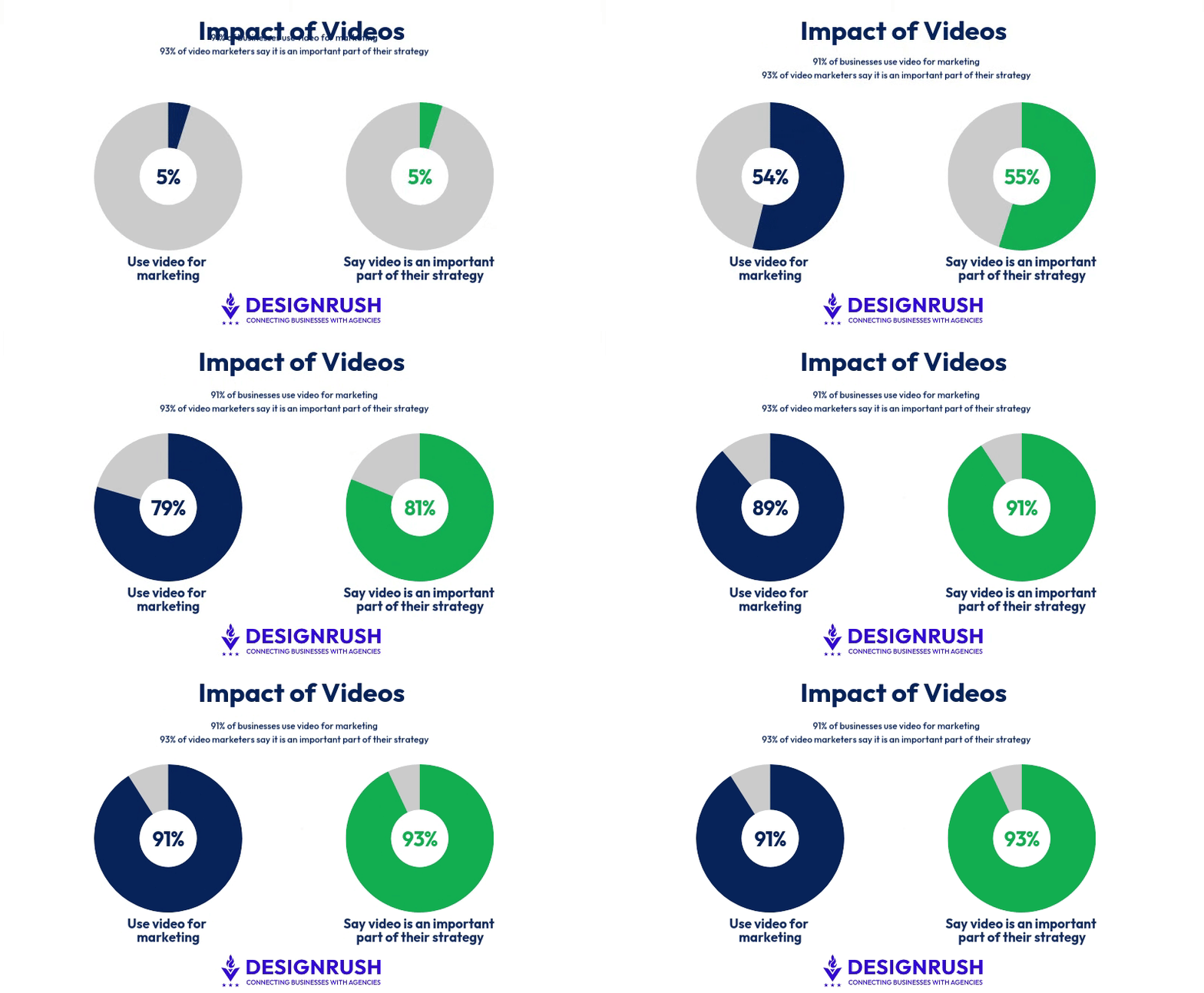
That matters because video is now a mainstream business tool, considering 91% of businesses use video as a marketing tool, and 93% of video marketers say it is an important part of their strategy.
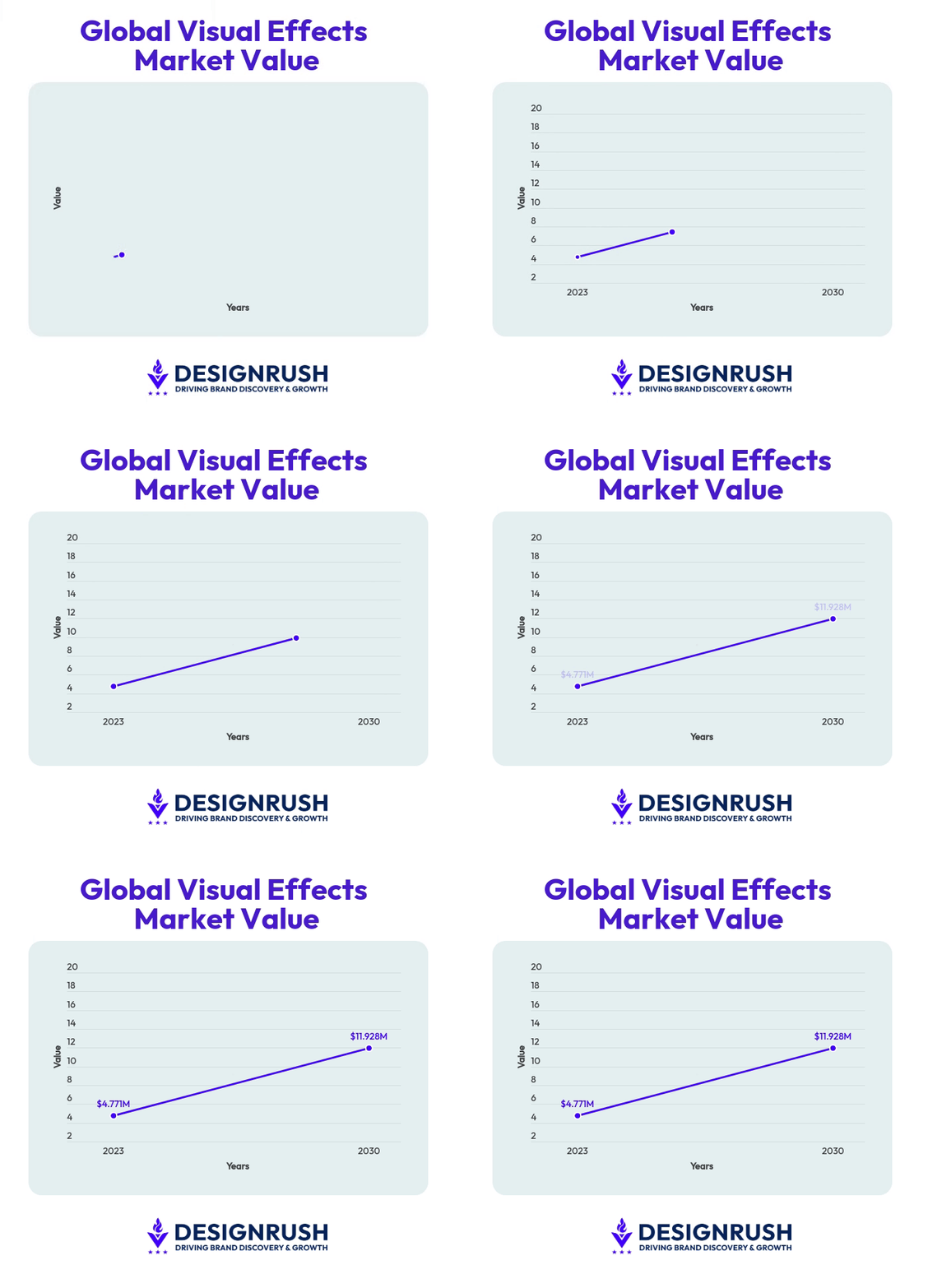
The global visual effects 3D animation market size was valued at $4,771.8 million in 2023 and is estimated to grow at a compound annual growth rate (CAGR) of 14.1% from 2023 to 2030.
A VFX studio can help businesses visualize what is difficult, expensive, or impossible to film in real life, such as product demos, technical process videos, digital environments, architectural visualization, simulation, and immersive brand experiences.
Visuals can create immersive environments and provoke emotional responses, boosting audience engagement.
Studies show that people process visual information 60,000 times faster than text, which is why businesses use a visual effects company to simplify technical or abstract ideas through visuals rather than long explanations.
Visual content also significantly impacts conversion performance.
Landing pages with video can increase conversions by up to 80%, which makes high-quality commercials and branded content a direct driver of revenue.
Businesses use visual effects to modernize live production and premium content. VFX can be more cost-effective than building large sets, renting locations, or staging dangerous practical stunts.
With virtual production, a talented team can build controlled digital environments that reduce location costs, speed revisions, and improve consistency for global campaigns.
Virtual production can reduce production costs by around 20-30% in certain cases, according to Deloitte-cited industry analyses. It allows companies to produce premium content with more control and fewer logistical constraints.
How do VFX studios support storytelling?
They help businesses visualize ideas that would otherwise be impossible, too expensive, or too complex to produce physically.
A skilled studio translates creative concepts into compelling visuals, whether that means building entire worlds, enhancing real footage, or guiding the viewer's emotional experience through subtle effects.
ILM's StageCraft work on The Mandalorian is a good example.
During that project, over 50% of season 1 was filmed using the LED volume workflow, which allowed the team to create multiple planets and environments on one stage and eliminated the need for location shoots.
VFX companies also help preserve realism even when the subject cannot be filmed directly.
For Apple TV+'s Prehistoric Planet: Ice Age, the production shot across 15 countries and combined practical puppets with CG to make extinct animals feel as if they had been captured in a real wildlife documentary.
What industries benefit most from visual effects?
The film industry remains the primary driver of demand for visual effects, especially in large-scale feature film production.
Today, it is common for blockbuster films to include over 1,500 VFX shots, with some exceeding 2,000 shots per project, making visual effects companies central to modern production pipelines, according to American Cinematographer.
The growth of streaming has significantly expanded the role of visual effects in television shows.
According to Ampere Analysis, global spending on original content by streaming platforms surpassed $240 billion in 2023, with a large portion allocated to high-end productions that depend heavily on effects.
This shift has brought film-level VFX quality into episodic television, increasing demand for experienced VFX companies.
Advertising is another major beneficiary.
In the United States, digital video advertising spending reached $61.2 billion in 2024, according to the IAB.
Brands increasingly rely on motion graphics, CGI, and animation to create high-impact commercials that capture attention and communicate value quickly in competitive markets.
The gaming and interactive sector also benefits from techniques developed by VFX studios, particularly as real-time rendering becomes more advanced.
The global video game market generated over $184 billion in 2023, according to Newzoo.
Cinematic visuals and immersive environments were often built using visual effects workflows, which played a key role in user engagement.
Beyond entertainment, the architecture, engineering, and manufacturing industries use visual effects to visualize complex systems and products.
How important is location when hiring these companies?
Location still plays a meaningful role when choosing between VFX companies, but it is no longer the limiting factor it once was.
One of the biggest factors is financial incentives.
In the United Kingdom, film and high-end television productions can receive up to 25% tax relief on qualifying expenditures through the Film & TV Tax Relief program, according to BFI.
Similarly, regions in the United States, such as California, offer state-level incentives that can cover 20-30% of production costs, depending on the project.
These incentives are a key reason why major productions often choose specific locations or partner with studios that have a presence there.
Location also impacts access to talent.
Global hubs such as Los Angeles, New York, and San Francisco are home to some of the most experienced visual effects studios.
For example, New Zealand's screen sector generated over NZD $3.5 billion in revenue in 2023, driven in large part by high-end visual effects work and international productions.
This concentration of expertise often translates into higher-quality output and more efficient workflows.
At the same time, emerging markets are becoming increasingly competitive.
South Korea is investing $1 billion to support the growth of the country's animation sector through to 2029.
What questions should I ask a VFX agency before signing a contract?
Ask VFX artists the following questions before you sign the contract:
Relevant Background
- What types of projects have you worked on that are most similar to ours?
- Can you share detailed case studies or breakdowns of your previous work?
- What industries or clients do you specialize in?
- Who will be the key team members on our project, and what is their experience?
Services and Processes
- Which services do you handle in-house, and which do you outsource?
- What does your production pipeline look like from concept to final delivery?
- How do you manage timelines, milestones, and project communication?
- What is your process for revisions, feedback, and approval?
Related to Your Project
- How would you approach our project creatively and technically?
- What challenges do you foresee with our scope or concept?
- What is the estimated timeline and budget range for this type of work?
- How do you ensure data security, asset management, and long-term storage?
Why Companies Trust DesignRush
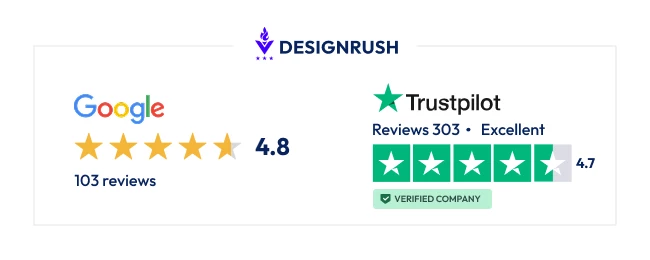
Rated 4.8 on Google and 4.7 on Trustpilot, DesignRush Agency Directory is a reliable resource for finding visual effect companies. We owe this to our executive selection team, which follows a strict screening process when featuring agencies on the platform, assessing key performance indicators like portfolio, client reviews, and industry reputation.
Learn more about DesignRush Agency Ranking Methodology.
Sources
DesignRush sustains a directory of over 40,000 agencies categorized by service category, location, expertise, and reviews. We build our database in two ways:
- Our dedicated team of agency experts actively searches the web for top-performing companies. We then pull information from their websites, online presence, and client testimonials to verify their status and qualifications prior to listing.
- The agencies listed get notified of their profiles on the website, and they can choose to claim them or not, which suggests their availability for more collaborations.
Agencies can also reach out to DesignRush and must go through the verification process prior to being listed.
5 Frequently Asked Questions About VFX Companies
What services do visual effects companies offer?
They provide a wide range of technical and creative services that transform raw footage into immersive visual experiences across film, television shows, commercials, and digital content.
A typical VFX company delivers end-to-end production support, including:
- CGI and animation: Creating digital characters, environments, and simulations.
- Compositing: Combining multiple layers of footage into a seamless final shot.
- Motion capture and tracking: Translating real-world movement into digital assets.
- Matte painting and environment design: Building large-scale digital worlds.
- Atmosphere visual effects: Smoke, fire, water, weather, and particle simulations.
- Motion graphics: Visual elements for commercials, branding, and digital campaigns.
- Post-production editing and enhancement: Refining shots for consistency and realism.
These services are essential to modern production, as around 80% of top-grossing movies rely heavily on visual effects, and over 3,000 films globally used VFX in 2023 alone, according to Market Growth Reports.
Leading VFX companies go beyond post-production and support the entire creative pipeline:
- Virtual production: Real-time environments using LED stages and game engines.
- Previsualization (previz): Planning scenes digitally before filming.
- Digital doubles and de-aging: Recreating actors or modifying performances.
- AI-assisted workflows: Speeding up rotoscoping, rendering, and compositing.
The rise of virtual production is particularly significant, with the market projected to grow from $2.9 billion in 2024 to nearly $13 billion by 2034, reflecting how quickly studios are adopting real-time workflows.
How much does it cost to hire a VFX studio?
The price of hiring VFX studios varies widely based on the project scope, complexity, and the level of visual effects required. It can go from $5,000 to $50,000 for independent projects to millions for feature films.
According to various sources, VFX experts price their work based on complexity:
- Simple effects (cleanup, basic compositing): a few hundred to $1,000 per shot
- Mid-level work (environment extensions, animation): $2,000-$5,000 per minute
- High-end shots for a feature film: $10,000-$60,000 per shot
- Complex blockbuster sequences can exceed $100,000 per shot
The overall cost of hiring visual effects studios depends heavily on the type of content:
- Commercials and branded content: From $1,000 to $20,000 per minute, depending on complexity.
- Independent film projects: Often allocate between $5,000 and $25,000 total for VFX work.
- High-end film and television shows: Visual effects typically account for 20-25% of the total production budget.
- Blockbuster productions: Entire films can reach budgets of $65 million+, with a significant portion dedicated to VFX.
What kind of portfolio should these companies have?
A VFX studio’s portfolio should clearly demonstrate technical capability, creative artistry, and the ability to support high-quality storytelling across different formats.
- Diverse work across formats and industries
VFX companies should showcase projects across feature films, television shows, streaming content, high-end commercials, and digital campaigns. - High-quality, realistic visual effects work
A credible studio should highlight seamless compositing and integration, advanced atmosphere visual effects, photorealistic CGI and animation, and clean breakdowns showing before-and-after shots. VFX studios like Sony Pictures Imageworks and Moving Picture Company are known for delivering large volumes of complex shots. Some productions exceed 2,000 VFX shots per film, demonstrating scale and consistency. - Evidence of innovation and modern workflows
A modern portfolio should reflect innovation, including the use of virtual production pipelines, real-time rendering tools, and AI-assisted compositing and automation. - Recognized work and industry credibility
Look for indicators of quality, such as credits on major film or television productions, collaborations with well-known companies, and recognition like an Academy Award or related nominations. A VFX agency tied to franchises influenced by George Lucas and Star Wars, for example, has historically set benchmarks for the best visual effects, raising expectations across the industry. - Strong storytelling and creative direction
Beyond technical execution, their portfolios should show how visual effects enhance narrative through emotional impact in key scenes, cohesive visual style across sequences, and support for brand messaging in commercials.
What is the process for working with a VFX company?
The process of working with VFX companies includes the following phases:
- Discovery and project briefing: Define goals, scope, budget, and timelines with the studio, including the type of visual effects, target audience, and deliverables.
- Concept development and planning: The studio creates initial concepts, references, and previsualizations to align storytelling, style, and technical approach.
- Bidding and scope approval: Detailed cost estimates are provided based on shot complexity, with clear breakdowns for film, television shows, or commercials.
- Pre-production setup: Planning for shoot requirements, data capture, and workflows, such as virtual production or integration with special effects.
- Production collaboration: VFX studios may support on-set supervision to ensure footage is captured correctly for VFX integration.
- Post-production and execution: VFX artists handle compositing, animation, motion graphics, and atmosphere visual effects, often across multiple review stages.
- Review and feedback cycles: Iterative approvals ensure quality, with clients reviewing versions and refining details to achieve the best visual effects.
- Final delivery and optimization: The completed shots are delivered in required formats, optimized for platforms like television, digital, or theatrical release.
- Data security and archiving: The studio ensures protection of assets and personal information, especially for high-profile or unreleased content.
What is the difference between visual effects and special effects?
Understanding the difference between visual effects and special effects is essential when planning a production, as each plays a distinct role in creating and executing scenes.
While top VFX companies often combine both approaches, knowing when each is used can help optimize budget, safety, and overall storytelling quality.
| Aspect | Visual effects | Special effects |
| Definition | Digital effects created in post-production | Physical effects created on set during filming |
| Creation stage | After filming | During filming |
| Techniques |
|
|
| Flexibility and safety | Highly flexible, safer for complex scenes | Less flexible, can involve physical risk |
| Role in production | Widely used across feature film, television shows, and commercials | Often combined with VFX to enhance realism |
About The Author and Expert Reviewer

Jelena Relić has hundreds of top-ranking articles and a lifestyle & culture magazine she calls The MAN. She gained valuable content and SEO experience working at Digital Circle and Neil Sahota, which she now uses to deliver top-quality B2B content at DesignRush, particularly in the creative industry.

Branko Dimitrijević is a multifaceted creative and a recipient of 33 design awards. Throughout his 12-year career, he has delivered over 165 web design projects, showcasing his expertise in website optimization, UI/UX design, logo design, and video animation. He is now dedicating his talent and skills to being one of the creative geniuses at DesignRush.
Latest Trends Related to Visual Effects