I only work with agencies that solve real business problems. The question is: how do you know when you’ve found one of those?
Questions To Ask When Designing a Website: Key Points
Questions To Ask a Design Agency: An Overview
It all starts with asking the right questions. Let’s explore eight critical questions to ask any design agency before you sign on the dotted line.
They will help you uncover their process, expertise, and commitment to creating a site that truly works for your business.
1. Can You Walk Us Through Your Design Process From Start to Finish?
I believe the best place to start when evaluating a design agency is their process. That’s because it reveals how they work, their attention to detail, and how they’ll approach solving your specific problems.
The ideal answer:
I look for a clear, step-by-step approach: research and discovery, wireframing, design mockups, feedback loops, testing, and final deployment.
An agency that can articulate this confidently has probably learned through iteration, not assumption. They’ve tested, refined, and documented their process, which usually means fewer surprises and smoother delivery.
Red flags:
I’ve seen projects fall apart when agencies are vague about process or skip early discovery. A lack of structure almost always leads to delays, scope creep, and misaligned expectations.
Unclear requirements are a recipe for constant changes and late-stage fixes, and that’s when mistakes happen.
2. How Do You Ensure That the Design Truly Speaks To Our Target Audience?
Time and again I’ve found that design which ignores audience context underperforms. If an agency doesn’t understand your audience, it can’t design a site that converts. Designs have to be data-driven.
The ideal answer:
The agency should explain how they conduct audience research, from user interviews and surveys to persona development. They should highlight how they use data, insights, and market trends to tailor the design to the needs and preferences of your specific audience.
Their response should also mention how they continuously refine the design through testing and feedback from real users.
Red flags:
If the agency doesn’t mention audience research or customization based on user needs, I usually suspect a lack of attention to detail or a generic approach to design.
3. How Do You Ensure a Seamless User Experience (UX) Throughout the Site?
If visitors can’t easily navigate the site, find what they need, and complete desired actions without frustration, they’re going to leave.
I saw this firsthand during a retail site audit last year: sales were strong, but users dropped off within seconds because buried navigation made checkout a hassle. Even well-branded sites can fail when navigation friction outweighs good design.
On the other hand, a carefully crafted UI design has the potential to boost customer conversion rates by as much as 200%.
The ideal answer:
The agency should describe how they map user flows, wireframe journeys, and run usability testing at each stage. In my reviews, the strongest UX teams also test on multiple devices before final deployment, not after.
They should also mention how they implement responsive design to ensure a consistent UX across devices and screen sizes.
Red flags:
If the agency doesn’t mention any methods for improving usability or dismisses user testing as unnecessary, I would take that to mean they don’t value the user experience enough.
4. How Do You Balance Creativity With Functionality in Your Designs?
I love creative design, but creativity should never come at the expense of functionality. No matter how beautiful the design, a website that doesn’t work well will frustrate users.
I’ve watched heatmaps where users abandon a page mid-scroll simply because the navigation wasn’t intuitive. If they haven’t found what they’re looking for within five seconds, 61% of users say they’ll look for another site.
The ideal answer:
The agency should explain how they approach design with both creativity and usability in mind. How do they balance aesthetics with user-centric functionality? They should mention a blend of modern design trends grounded in established UX principles.
Red flags:
If the agency talks only about flashy, trend-driven design with no consideration for speed, mobile optimization, or usability, that’s a big red flag in my book.
5. Can You Show Examples of Websites You've Designed Similar to Our Goals?
Nothing inspires confidence like seeing examples of work that aligns with your vision. It also lets you gauge the agency’s experience in your industry and the type of design you’re looking for.
I remember reviewing proposals for a hospitality client where one agency stood out immediately because they’d solved almost the exact booking-flow challenge my client was facing.
The ideal answer:
They should provide a range of portfolio pieces, including websites that share similarities with your business, target audience, or design preferences. These examples should also showcase a variety of styles and approaches to demonstrate flexibility.
Red flags:
I would be wary if they don’t have relevant examples or seem unable to match their previous work to your goals, as it could suggest they lack the experience or understanding your project needs.
6. I don't like how this site looks so far, what’s your answer?
In every successful redesign I’ve managed, quality, raw feedback was the constant. When clients are part of the process, problems surface early and alignment stays strong.
Listening closely and involving clients early helps teams course-correct quickly and avoid expensive rework later.
As Reza Widjaja, managing director of Urban Geko, says of their process:
“Clear and consistent communication starts with one simple thing: listening.”
Listening carefully to client needs and aspirations and involving them in the review process allows the agency to make timely adjustments that ultimately prevent costly revisions down the line.
The ideal answer:
I look for agencies that schedule structured feedback rounds. The best ones I've worked with run focused review sessions that clarify decisions and keep projects moving without endless back-and-forth.
Red flags:
If the agency mentions limited client involvement or only offers one round of revisions, it might be a sign that they don’t prioritize client input or are rushing through the process.
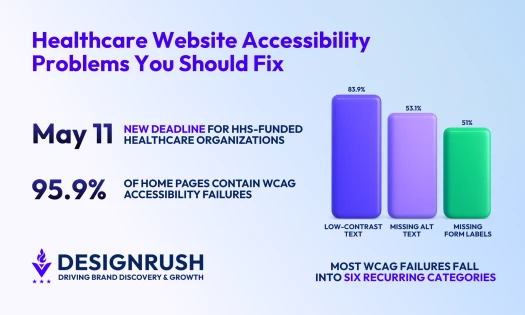
7. What Steps Do You Take to Ensure Your Designs Are Accessible and Inclusive?
Everyone, regardless of ability, should be able to navigate and engage with your site, so web accessibility shouldn't be an afterthought. And that isn’t just my personal view, it always costs more to retrofit than to build right the first time.
A 2025 study found that websites with higher accessibility compliance scores ranked for an average of 27% more organic keywords and experienced a 23% increase in organic traffic compared to less accessible sites.
The ideal answer:
The agency should tell you they adhere to WCAG (Web Content Accessibility Guidelines) and explain how they test for accessibility, including color contrast, text readability, keyboard navigation, and screen reader compatibility.
Red flags:
If the agency is dismissive about accessibility, I’d say that’s a serious red flag. A site that doesn’t accommodate users with disabilities could alienate a significant portion of your audience.
8. What Design Tools and Technologies Do You Use to Streamline the Process?
Apart from directly affecting the speed and quality of collaboration, I’ve found that tool choice often reveals maturity. That’s because those that invest in modern, integrated platforms show they’ve refined their process.
Of course, modern design tools are more accurate and better at supporting collaboration, ultimately simplifying the entire workflow.
The ideal answer:
The agency should mention industry-standard tools like Adobe Creative Suite, Sketch, Figma, or Webflow, and briefly explain how they use these tools to deliver the best possible result.
Red flags:
If the agency uses outdated tools or lacks a clear methodology for design, you should expect longer timelines or a less refined product.
Questions To Ask When Designing a Website: Final Words
Choosing the right design agency is about finding a partner who truly understands your vision, your audience, and your unique needs. These essential questions set the foundation for a successful partnership that ensures your website ultimately helps your business grow.
Find More Agency Hiring Resources:
- Agency vs. In-House for Your Website Redesign
- When to Hire In-House vs. a Web Development Agency
- Defining Goals and Planning a Website Redesign in 2025
The right agency will be committed to your success and invested in bringing your vision to life.

Our team ranks agencies worldwide to help you find a qualified partner. Visit our Agency Directory to find leading web design companies, as well as:
- Top UI/UX Design Companies
- Top Digital Design Agencies
- Top Responsive Web Design Companies
- Top Website Design Companies for Small Business
Our design experts also recognize the most innovative design projects across the globe. Visit our Awards section to see the best and latest in website design.
Questions to Ask When Designing a Website: FAQs
1. How can I ensure that my website design aligns with my brand identity?
To align your website with your brand, ensure your design reflects your brand’s values, voice, and visual elements like logos, colors, and fonts. Share these with your agency and ask for mood boards or style guides.
2. What are the key elements that make a website design intuitive and easy to navigate?
Key elements include clear navigation menus, visible call-to-action buttons, a logical layout, fast load times, and a mobile-friendly design. Make sure the website structure is simple, with important content easy to find and accessible on all devices.
3. How do I know if a design agency is truly focusing on user needs and not just aesthetics?
Look for agencies that prioritize user research, such as persona creation and usability testing. A good agency will focus on solving user problems and improving their experience, not just creating a visually pleasing design. Ask how their design decisions benefit the user, not just the look of the site.