
Agencies that utilize data to inform their service offerings and client interactions are better positioned to lead in the eCommerce industry.
We've compiled a list of eCommerce statistics that will guide your strategy, enhance service delivery, and improve client outcomes.
eCommerce Statistics: Key Points
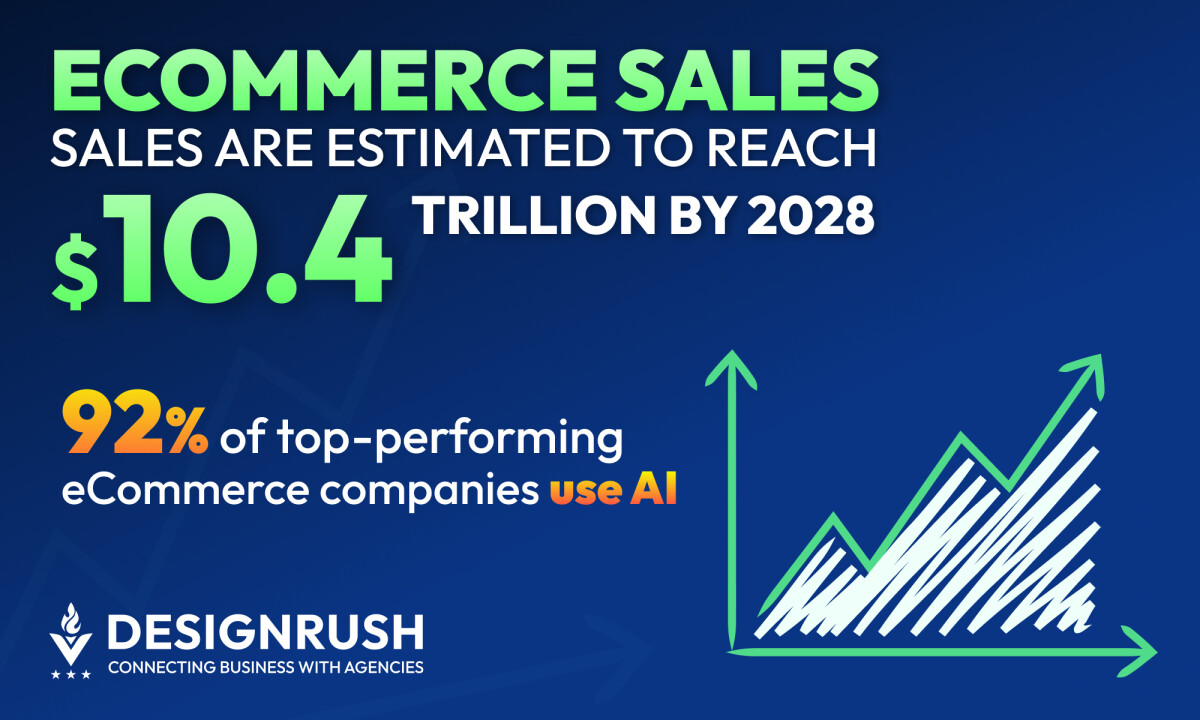
- Over 92% of top eCommerce firms use AI-driven personalization tools.
- Mobile commerce is set to account for 59% of total eCommerce sales ($4.01 trillion) in 2025, with social commerce reaching $1.2 trillion.
- Over 56.1% of internet users make at least one online purchase every week.
eCommerce Growth and Revenue
As global digital sales surge, agencies must understand the drivers and benchmarks that shape market expansion to craft compelling, data-driven strategies.
- Online shopping is breaking all records
- Regional eCommerce markets are diverging
- Shopify, Amazon, and WooCommerce are leaders in eCommerce
1. Online Shopping Is Breaking All Records
According to Statista’s data report, global eCommerce sales are estimated to reach $10.4 trillion by 2028. For agencies, this signals a golden opportunity to anchor strategy and service offerings around data-backed insights and platform-specific expansion
To seize global momentum, agencies should:
- Emphasize data-backed proposals grounded in global performance benchmarks.
- Identify cross-border opportunities for clients looking to scale internationally.
- Stay ahead of evolving privacy, payment, and logistics regulations.
Here’s what the numbers say about market size:
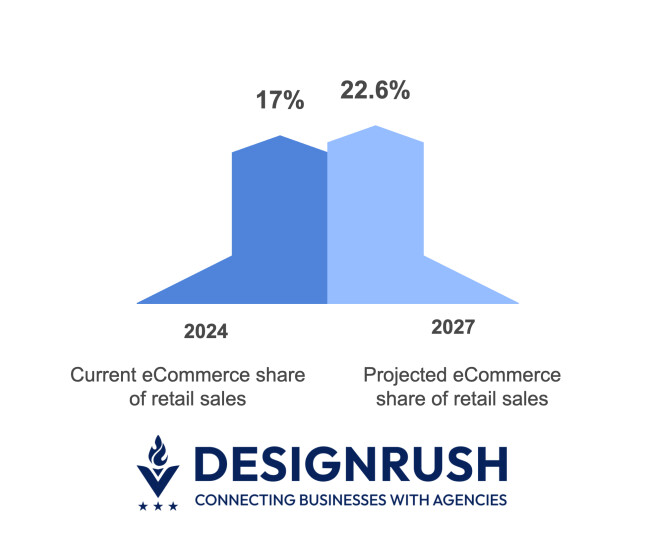
- In 2024, eCommerce accounted for over 17 percent of retail sales worldwide, as per Statista’s report.
- The same research predicts that 22.6% of all global retail purchases will be made online by 2027.
- Retail eCommerce sales are projected to surpass $4.3 trillion globally in 2025, as per Statista’s eCommerce Worldwide report.
2. Regional eCommerce Markets Are Diverging
Each region exhibits distinct patterns in adoption, payment preferences, and regulation — agencies must tailor local strategies accordingly.
To achieve this, they should consider:
- Localizing language, payment methods, and pricing for each market.
- Leveraging regional logistics partners to speed delivery and reduce costs.
- Implementing multi-currency and VAT-compliant checkouts to remove friction.
Asia-Pacific (APAC)
The APAC region continues to outpace other markets, driven by rapid digital adoption and localized payment innovations.
Here’s the data highlighting APAC’s scale:
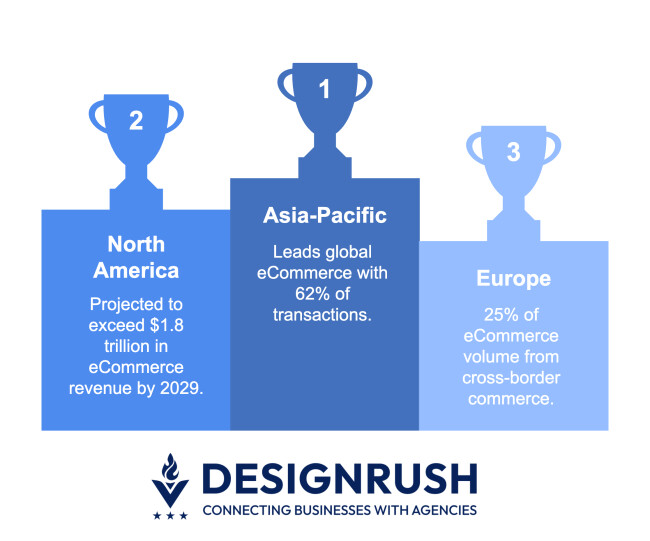
- NIQ survey presents that 62% of global eCommerce transactions happen in this region, led by China, India, and Southeast Asia.
- The same research notes that 43% of APAC consumers pay online via branded payment systems.
- The total revenue of online retail in Asian countries added up to nearly two trillion U.S. dollars in 2024, as per Statista.
North America
North American eCommerce growth is fueled by consumer demand for convenience, personalization, and subscription models.
Here are some of the critical North America figures:
- According to Statista, North America eCommerce revenue is projected to exceed $1.8 trillion by 2029.
- Statista also predicts that the grocery delivery eCommerce revenue in U.S. will exceed $422 billion by 2028.
- In the U.S., apparel leads all categories in eCommerce, with 43% of shoppers having bought clothing online within the last year (Statista).
- U.S. grocery delivery sales are forecast to top $422 billion by 2028 (Statista).
Europe
European markets emphasize cross-border capabilities and regulatory compliance in shaping online retail expansion.
More stats on Europe’s eCommerce, according to the European eCommerce Report:
- Cross-border commerce represents 25% of regional eCommerce volume.
- 72% of online users bought products online during the year 2024.
- Netherlands leads in this statistic with 92% of online users buying products while Moldova is on the last place with just 23% of online buyers.
3. Shopify, Amazon, and WooCommerce Are Leaders in eCommerce
Selecting an appropriate eCommerce platform lays the groundwork for growth that can scale. For instance, some 29 percent of consumers voted marketplaces as their favorite eCommerce channel, as per Statista’s report.
Agencies should consider these strategic approaches:
- Leverage Shopify’s ease and app ecosystem for rapid SMB deployments.
- Tap into Amazon’s vast fulfillment network and marketplace reach for volume growth.
- Utilize WooCommerce’s flexibility and cost-efficiency for full control and customization.
Shopify
Shopify’s intuitive setup and vast app ecosystem make it the platform of choice for small and mid-sized brands aiming for rapid, reliable growth.
Take a look at the metrics that prove its SMB dominance:
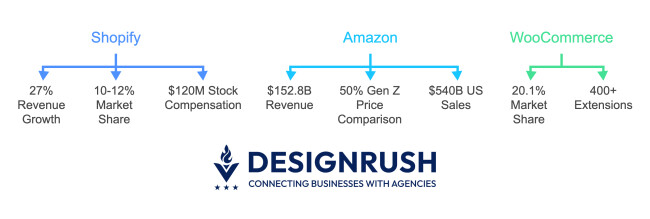
- 27% year-over-year revenue revenue growth in Q1 2025, as per Shopify Q1 2025 Financial Results.
- According to BuiltWith’s statistics, Shopify accounts for approximately 10-12% of the global eCommerce platform market share, particularly strong in small to medium business segments.
- In the Q2 of 2025, Shopify expects stock-based compensation to be $120 million.
Amazon
With an ecosystem that spans the globe and an unmatched fulfillment infrastructure, Amazon’s metrics speak volumes about its market dominance.
Here’s why Amazon remains the marketplace powerhouse:
- Amazon leads the global eCommerce market, boasting worldwide revenue of 152.8 billion U.S. dollars in 2024, as per Statista.
- According to Analyzify’s survey, 50% of Gen Z compare prices on Amazon before placing an order.
- Amazon’s U.S. eCommerce sales are forecast to exceed $540 billion in 2025, accounting for a significant portion of its overall retail revenue, as per Statista.
WooCommerce
WooCommerce’s open-source architecture and expansive extension library empower brands with complete flexibility and cost control.
Review these stats that highlight its customizable prowess:
- WooCommerce powers 20.1% of global online stores, as per BuiltWith’s data.
- WooCommerce offers over 400+ official extensions and plugins enabling tailored features like subscriptions, bookings, and payments.
Conversion Optimization
- Poor UX is silently killing conversions
- Checkout friction drives cart abandonment
- Post-abandonment strategies still work
1. Poor UX Is Silently Killing Conversions
According to Amazon’s AWS case study, an estimated 35% of eCommerce revenue is lost due to bad user experiences. A confusing layout, clunky navigation, or unclear calls-to-action (CTAs) can quietly drive users away before they even consider purchasing.
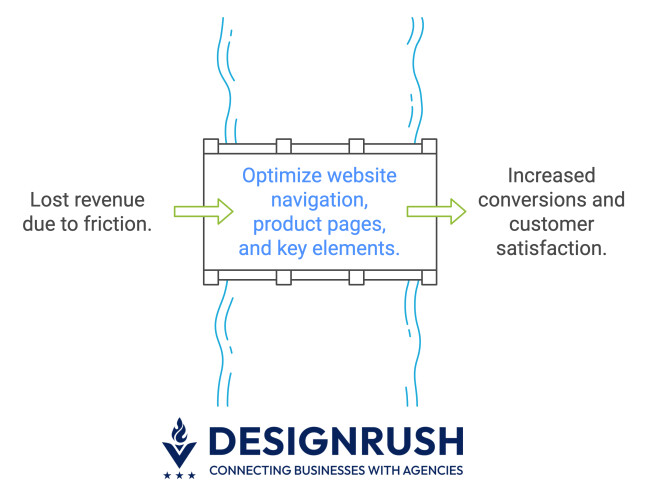
Every click should feel seamless. Here’s how you can ensure your brand’s website converts:
- Simplify navigation and minimize friction across every step of the shopping journey.
- Optimize product pages for skimmability and fast decision-making.
- Make key elements (search bar, cart, CTA buttons) highly visible.
- Use heatmaps and user testing to identify pain points.
- Deploy conversion rate optimization strategies to capture web traffic.
From site speed to overall experience, every second and every click counts. These numbers show the importance of a fast, smooth, and secure process:
- PwC found that 63% of consumers have bought items directly from a brand’s website, proving that people do want to buy if the experience is right.
- A website that loads in 1 second converts 3x better than one that takes 5 seconds, as per Portent’s findings.
- Statista’s data reveals that the eCommerce industry averaged a 2.4% conversion rate in 2024.
- Capgemini Research Institute’s study shows that 45% of Gen Z shoppers use visual and voice search, favoring intuitive and fast discovery methods.
- 73% of U.S. consumers cite payment security as a top priority when shopping online, as per Kelton Research’ Digital Trends Impacting Commerce report.
- Despite mobile growth, conversion rates are still stronger on larger screens, emphasizing the need for optimized design across devices (Statista).
2. Checkout Friction Drives Cart Abandonment
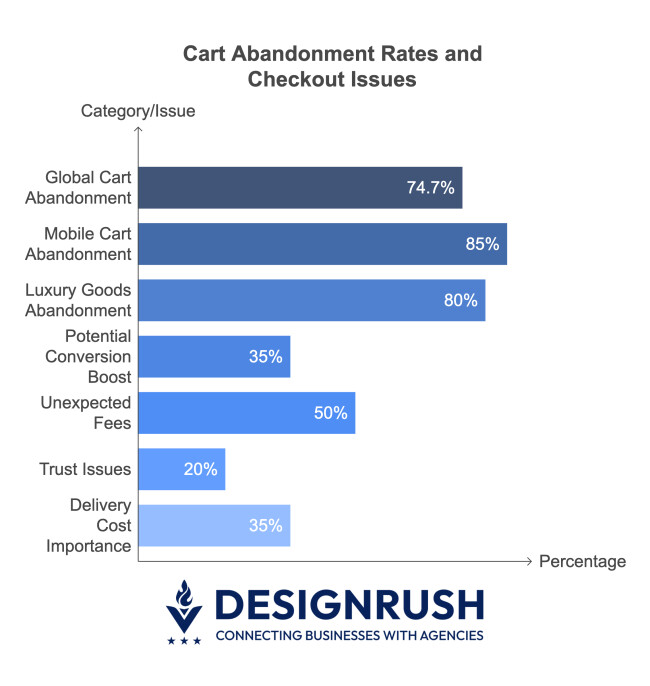
According to Dynamic Yield by Mastercard, the global cart abandonment rate averages 74.7% and it’s even higher on mobile (85%, as per Statista).
Cart abandonment is highest in categories like luxury goods (over 80%), as per Statista. This means millions of shoppers get right to the end of the buying process, then walk away. Often, it’s due to a poor checkout experience, surprise costs, or annoying barriers like account creation.
According to Baymard Institute, eCommerce sites have the potential to boost conversion rates by over 35% by improving how their checkout flow is designed.
This final step is where many brands lose the sale, but it doesn’t have to be. With a few smart adjustments, you can turn abandoned carts into completed checkouts:
- Enable guest checkout so users don’t have to create an account to complete a purchase.
- Display total costs (shipping, taxes, fees) early in the checkout process to avoid last-minute surprises.
- Add trust signals like security badges, payment logos, and secure payment options to build confidence in your brand’s logistics process.
- Use exit-intent popups to offer a last-minute incentive before the user leaves the checkout page.
- Include customer reviews and ratings on product pages and use high-quality photos and videos to show the value of your offerings.
To keep customers moving smoothly toward a completed purchase, your checkout process needs to be fast, clear, and built entirely around user convenience. These stats show that even small points of friction can cause shoppers to walk away:
- The average checkout process takes 5+ steps and includes 11+ form fields for account creation, as per Baymard Institute’s research. Streamlining this flow can significantly increase the chances of converting visitors into paying customers.
- Statista reveals that almost 50% of customers in the U.S. cite unexpected fees (shipping, taxes, etc.) as a reason for abandoning their purchases.
- Around 20% of customers say they bail out at checkout because they don’t trust the site with their credit card details (Baymard Institute).
- Cost of delivery is the most important delivery feature according to 35 percent of online shoppers worldwide (Statista).
- Cornell University finds that shoppers who purchased from a website with one-click checkout features boosted their spending by an average of 28.5% compared to their previous transactions.
3. Post-Abandonment Strategies Still Work
Moosend’s findings demonstrate that half of users who engage with abandoned cart emails go on to complete their purchase. Just because someone leaves don’t mean they’re lost. A well-timed nudge can bring them right back and convert.
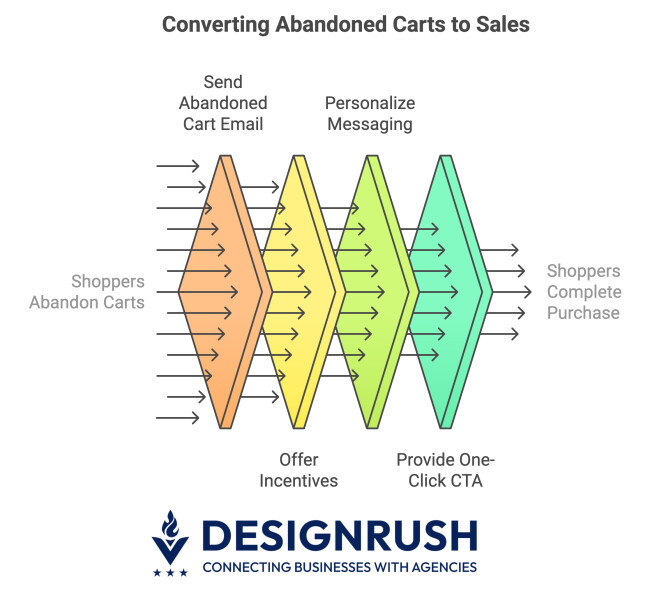
These email marketing strategies can help turn visitor hesitation into action. The key is to strike the right tone, timing, and offer, reminding shoppers why they were interested in the first place. Here are some tips to do so:
- Make it easy to return to the cart with a one-click CTA button that brings users straight back to checkout.
- Use personalized messaging that highlights the product left behind.
- Offer a small discount or free shipping incentive in the follow-up email.
- Incorporate customer reviews of the abandoned item to reinforce its value.
- Test email timing and frequency to find the sweet spot between helpful reminders and inbox overload.
When timed right and crafted with intention, cart abandonment emails can re-engage shoppers and urge them to finish the transaction. Here’s data that provides insights on executing post-abandonment strategies:
- Emails sent approximately 60 minutes after a customer’s last interaction tend to deliver the strongest conversion rates, as per Rejoiner’s survey.
- According to Klaviyo, cart abandonment emails fetch high engagement across various industries.
- Cart abandonment rates are lowest in December, showing that urgency and seasonality matter (Dynamic Yield).
- The rate at which consumers abandon their online shopping carts has been gradually rising to more than 70 percent, as per Baymard Institute’s findings.
- Food and beverage are one of the product categories with the lowest online cart abandonment rate (Statista).
Mobile Commerce Trends
Mobile commerce are transforming the buyer's journey. Consumers now expect instant, seamless, and interactive experiences, especially on mobile-first platforms like TikTok, Instagram, and direct-to-consumer storefronts.
- Mobile is leading the eCommerce surge
- A mobile-optimized experience is non-negotiable
- Mobile wallets are the new checkout standard
1. Mobile Is Leading the eCommerce Surge
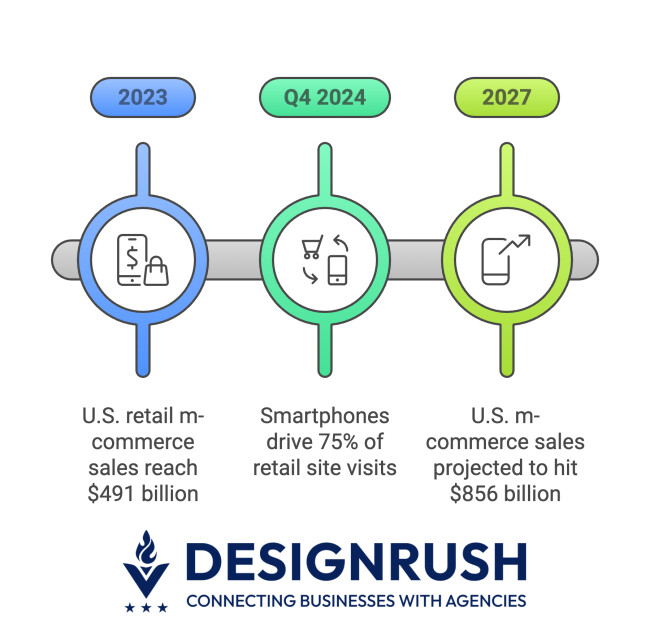
Mobile commerce is set to represent 59% of all eCommerce revenue worldwide — around $4.01 trillion (Statista). In the U.S., retail m-commerce sales hit $491 billion in 2023 and are expected to nearly double to $856 billion by 2027.
Mobile commerce is rapidly becoming the primary way consumers shop. From discovery to checkout, smartphones are driving the majority of eCommerce growth, and that momentum isn’t slowing down anytime soon.
Here’s how you can make sure your eCommerce site is ready for customers on mobile:
- Invest in mobile-first design tools and responsive templates.
- Run mobile-specific promotions to reach users where they’re most active.
- Design vertical, scroll-stopping ad campaigns to grab attention on mobile feeds.
- Test all campaigns and landing pages on mobile before launching.
- Use SMS marketing for limited-time offers and cart reminders. Text messages have high open rates and are perfect for reaching customers who are always on their phones.
User behavior and mobile eCommerce statistics show that smartphones are now the center of the online shopping experience:
- ConsumerAffair’s report finds that over 30% of the U.S. population uses their mobile phone to purchase something online at least once a week.
- Over 62% of global web traffic is from smartphones, as per Statista’s survey.
- In Q4 2024, smartphones made up over 75% of retail site visits and drove about 67% of online orders (Statista).
- Around 46% of U.S. eCommerce mobile users are aged 18 to 24, showing just how deeply rooted mobile shopping is in younger audiences (Statista).
2. A Mobile-Optimized Experience Is Non-Negotiable
If your site doesn’t perform well on a phone or tablet, you’re losing customers before they even see your product pages. According to Webflow’s State report, 67% of consumers say they prefer to shop on mobile-friendly websites. They expect speed, simplicity, and intuitive navigation.
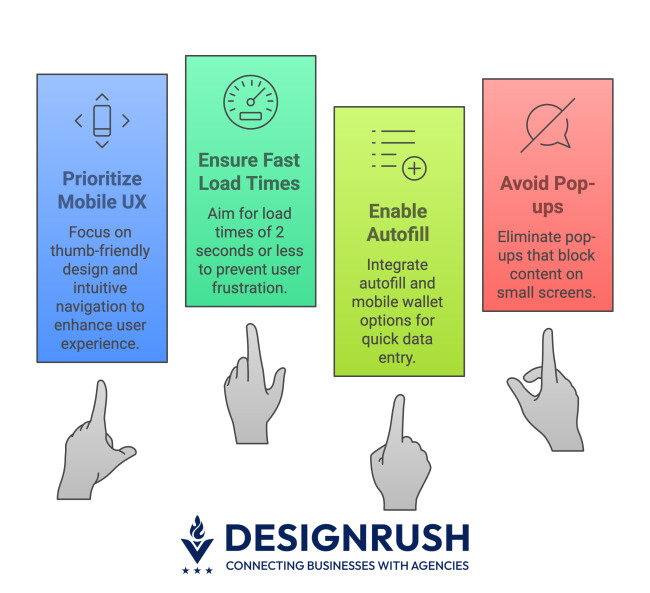
Here’s how to deliver:
- Prioritize mobile UX across your entire eCommerce funnel, from homepage to checkout.
- Design thumb-friendly, conversion-driven mobile UX.
- Use large, easy-to-tap buttons and thumb-friendly layouts.
- Eliminate pop-ups or elements that block content on small screens.
- Ensure fast load times; aim for 2 seconds or less.
- Enable autofill for shipping and payment fields and integrate with mobile wallets for quick data entry.
Users on mobile aren’t just browsing casually; they’re ready to take action. But if your mobile site frustrates them, numbers show they’ll leave in seconds:
- Consumers are more inclined to add products to their shopping carts when using mobile devices, as per Statista’s data.
- Roughly 3 out of 4 mobile sites fail to leave enough space between tappable elements like buttons and links. This small detail can lead to frustrating misclicks and significantly hurt the user experience (Baymard Institute).
- According to Google, almost three-quarters of shoppers (74%) say they’re more inclined to revisit a retailer’s site if it’s mobile-friendly.
3. Mobile Wallets Are the New Checkout Standard
In 2024, digital wallets made up about 50% of all global eCommerce payments. Mobile shoppers don’t want to reach for their credit cards — they expect fast, secure checkout through their preferred payment apps.
Not offering digital wallet options could be costing you serious revenue. Here’s how to change that:
- Integrate mobile-friendly payment options like Apple Pay, Google Pay, and PayPal.
- Highlight the availability of digital wallets at the start of the checkout flow.
- Reduce the need for manual data entry with saved payment options and auto-fill.
- Use trust badges and security messaging to reinforce safe transactions.
- Incentivize wallet use with small perks like faster checkout, loyalty points, or exclusive discounts.
Fast, frictionless payments are a must, and shoppers are showing less patience for merchants who don’t offer them:
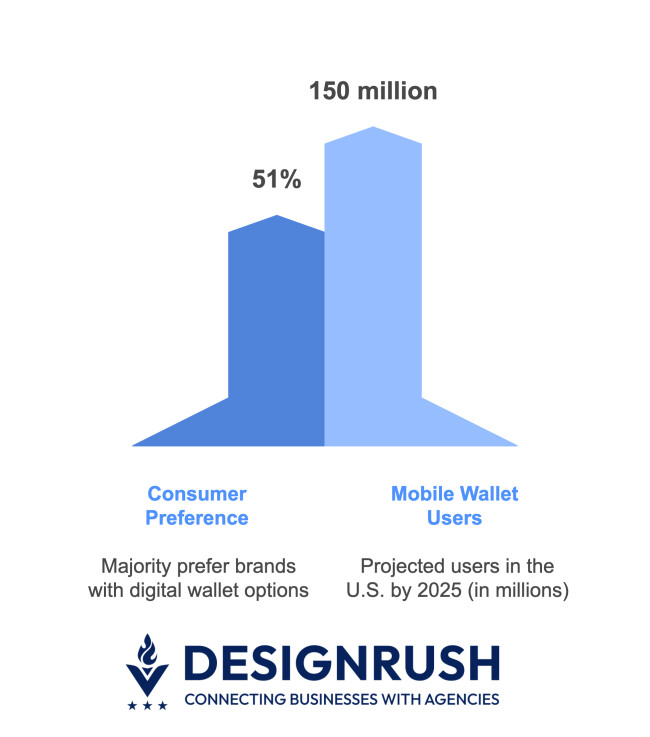
- According to Forbes, 51% of consumers say they’d stop buying from a brand that doesn’t accept digital wallets.
- Mobile wallet penetration in the U.S. is expected to reach over 150 million users in 2025, as per Statista.
Social Commerce Trends
Global sales generated through social platforms hit nearly $700 billion in 2024, marking a shift in how consumers discover and purchase products (Statista).
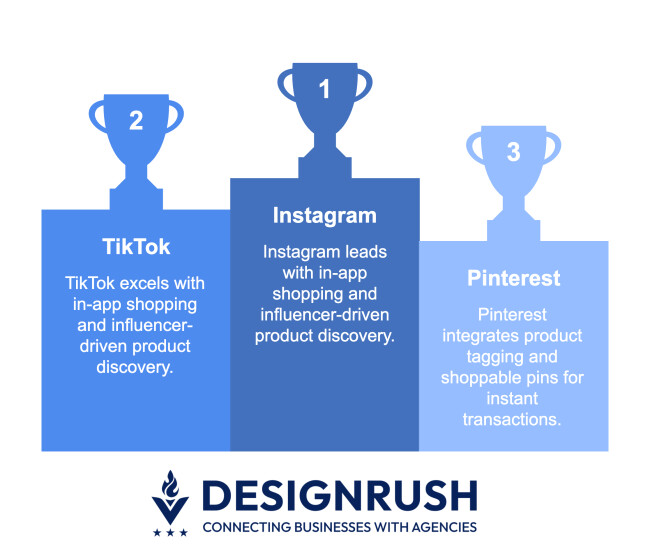
Social commerce is booming across every major platform, with Instagram and TikTok leading the way with in-app shopping features and influencer-driven product discovery. Even Pinterest has leaned into product tagging and shoppable pins, turning inspiration into instant transactions.
This cross-platform growth signals a clear trend: shoppers aren’t just browsing on social — they’re buying, and they expect brands to meet them there. Here's how you can leverage this major sales channel:
- Make your products easily shoppable on TikTok, Instagram, Facebook, and Pinterest.
- Collaborate with social media influencers and creators to drive authentic discovery.
- Use livestream shopping, user-generated content, and social proof to boost engagement.
- Drive urgency and build hype by releasing products or discounts exclusively through your social channels.
- Use trending sounds, challenges, and authentic storytelling to boost engagement and build trust.
More and more shoppers are discovering, researching, and buying products without ever leaving their favorite platforms. Here are some other statistics that demonstrate the power of social selling:
- There are over 5 billion internet users worldwide and around 57% of them discover new brands or products on social media (Statista).
- According to Forbes, social commerce is on track to reach $1.2 trillion globally.
- eMarketer findings show that 4 in 10 customers hold back from social media purchases over safety concerns.
- The same research finds that nearly a quarter (23.1%) of US social buyers are between the ages of 25 and 34.
- In a Consumer Trends survey from The New Consumer, 69% of surveyed TikTok users said they were willing to buy something from the platform.
- Over 50% of Gen Z shoppers have purchased at least one item from TikTok Shop (eMarketer).
User Behavior
Deciphering customer behavior through detailed metrics empowers agencies to fine-tune tactics that drive conversions and loyalty.
1. Online Shopping Is a Regular Habit
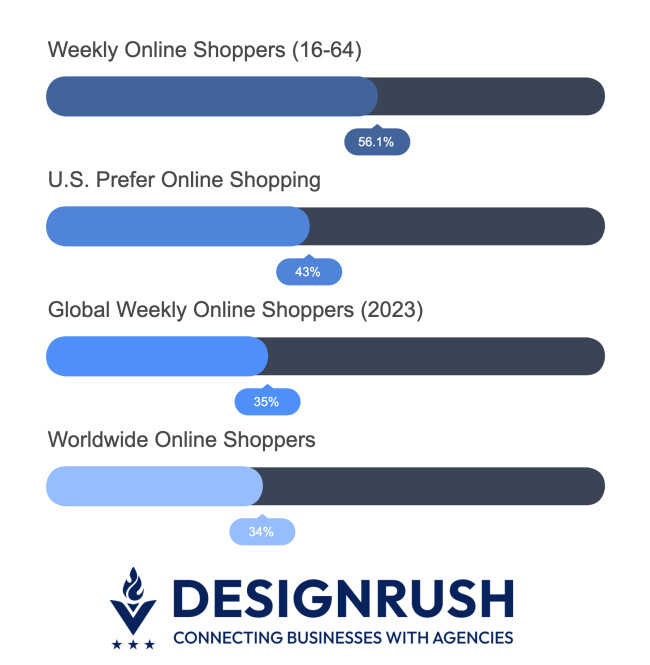
Over 56.1% of internet users aged 16 to 64 make at least one online purchase every week, per Datareportal’s report. Furthermore, nearly 43% of shoppers in the U.S. say they’d rather shop online than in a physical store (Statista).
In the digital age, eCommerce isn’t just convenient; it’s a core part of the modern shopping routine.
Deploying effective eCommerce strategies means you’ll be able to capture a massive audience and potentially see healthy long-term returns. To capitalize on this online shopping trend:
- Update your product listings and run weekly promotions to catch recurring buyers.
- Invest in retargeting ads to stay top-of-mind between shopping cycles.
- Offer incentives like flash sales or loyalty points to reward repeat purchases.
- Scale operations with future growth in mind.
- Build backend systems that can handle seasonal surges and global traffic.
Despite economic uncertainty, shoppers are spending more online than ever before, as these staggering numbers clearly demonstrate:
- Statista’s survey showcases that 35% of the global population shopped online on a weekly basis in 2023.
- In the eCommerce market, the number of users is expected to amount to 3.6bn users by 2029 with a user penetration of 49.1% (Statista).
- Hostinger reports that over one-third of people worldwide (34%) now shop online to fulfill their needs.
2. Sustainability Isn’t Just Good Ethics, It’s Good Business
Modern shoppers want to buy from brands that align with their values. Companies that focus on ESG (environmental, social, and governance)-related claims see 32% to 34% of their buyers return, according to McKinsey & Company’s joint study with Nielsen IQ. And sustainability is one of the top dealmakers or deal-breakers.
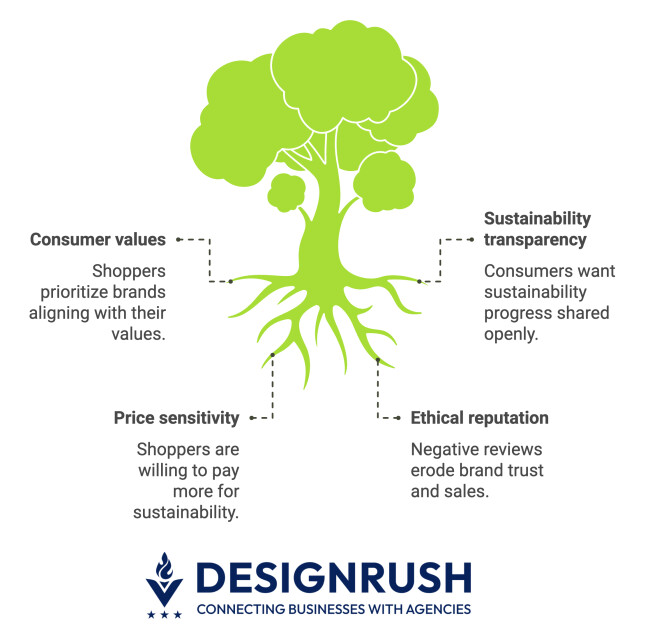
Eco-conscious consumers don’t just support ethical brands once. They come back again and again. The key is to communicate your impact clearly and consistently.
- Be transparent about your sustainability goals and progress.
- Include sustainability messages in your post-purchase flow and packaging.
- Highlight certifications, partnerships, and sustainable practices on your website’s About page.
- Use eco-badges and icons on product pages for items that meet specific sustainability criteria.
- Educate customers through blog posts, emails, or social updates.
Going green is a strong purchasing motivator for customers. These supporting stats show how deeply sustainability and ethics influence trust and loyalty:
- PR News Wire’s survey reveals that 74% of consumers are more likely to shop with brands that openly share sustainability progress.
- Around 80% of shoppers say they’re willing to pay more for sustainably made products (PwC).
- Qualtrics’s report shows that 63% of consumers lose trust if they see negative reviews about a brand’s ethics or product performance.
Customer-Centric eCommerce
- Subscriptions and loyalty programs boost long-term value
- Price, perks, and hassle-free returns drive eCommerce purchases
- Great service is the foundation of loyalty
1. Subscriptions and Loyalty Programs Boost Long-Term Value
The subscription eCommerce market is on track to hit $3 billion by 2029. Subscription models make life easier for your customers and more predictable for your business. They’re a win-win when done right.
When you remove the need for customers to decide what to purchase every time, you lock in convenience and long-term loyalty. Add personalized rewards, and you’ll have a customer for life.
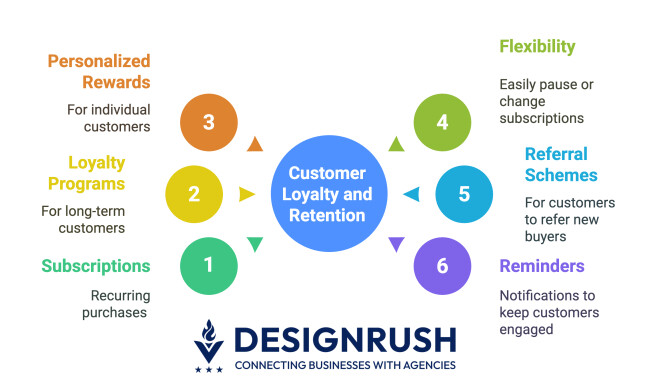
Here’s how you can leverage subscriptions and loyalty programs for your brand:
- Offer subscriptions for replenishable or high-use products like skincare, food, and pet supplies.
- Give early access or exclusive perks to subscribers or loyalty members.
- Allow flexibility and make it easy to pause, cancel, and change subscription options.
- Reward long-term loyalty with VIP tiers or milestone gifts.
- Implement referral schemes to drive repeat purchases.
- Use personalized reminders or auto-renewal notifications to keep the experience smooth.
- Recover lost sales through exit-intent offers and retargeting
The line between loyalty and convenience is becoming thinner. These stats show why offering ease and value keeps people coming back:
- According to Invesp’s report, 54% of online shoppers have signed up for at least one subscription box service.
- 38.5% of consumers sign up for subscription boxes because of free shipping, while 30.7% appreciate the ability to cancel anytime (Statista).
- Recurly Research finds that over 70% of businesses offer more than one type of subscription product or service. Providing variety is important for attracting more customers and providing more value in the long run.
2. Price, Perks, and Hassle-Free Returns Drive eCommerce Purchases
Over 56% of global shoppers say better pricing is the top reason they’d buy directly from a brand’s online store (Statista). They compare prices, look for exclusive deals, and expect added value when purchasing. It’s about getting the best deal and a little something extra.
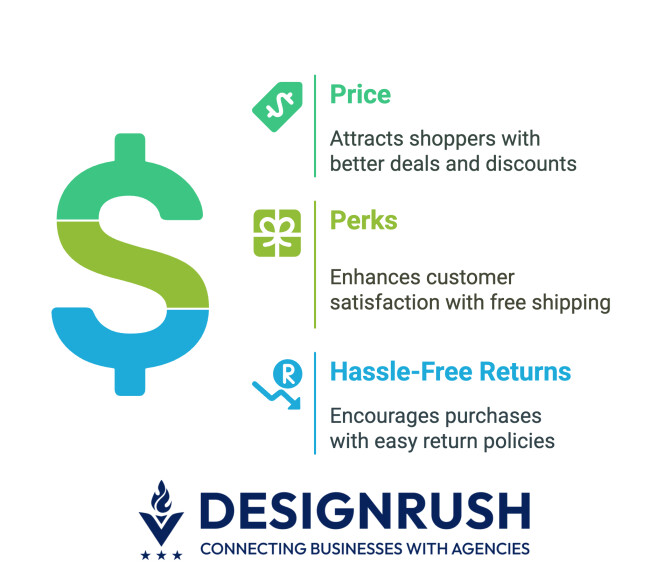
Here’s how you can respond to this mindset:
- Offer exclusive website-only discounts or bundles to attract more buyers.
- Highlight price guarantees or “best deal” messaging to build trust with cost-conscious shoppers.
- Bundle complementary products at a discounted price to encourage higher-value purchases.
- Create urgency with limited-time or seasonal pricing to drive faster decision-making.
- Clearly communicate savings on product pages and in the shopping cart.
And it’s not just about price. Perks like free shipping and easy returns play a huge role in converting and retaining customers. Let’s look at a few more stats that show how these are shaping buyer behavior:
- For more than 80% of shoppers, free shipping is their #1 priority when looking for items to purchase online, as per Digital Commerce 360’s report.
- High delivery costs are the most contentious eCommerce aspect for 54% of adults worldwide, according to eMarketer.
- According to International Council of Shopping Centers, around 82% of consumers say that return policies influence their eCommerce purchase decisions.
- Over 90% of consumers say they’ll complete a purchase if the return process is simple, as per the U.S. Postal Service’s findings.
3. Great Service Is the Foundation of Loyalty
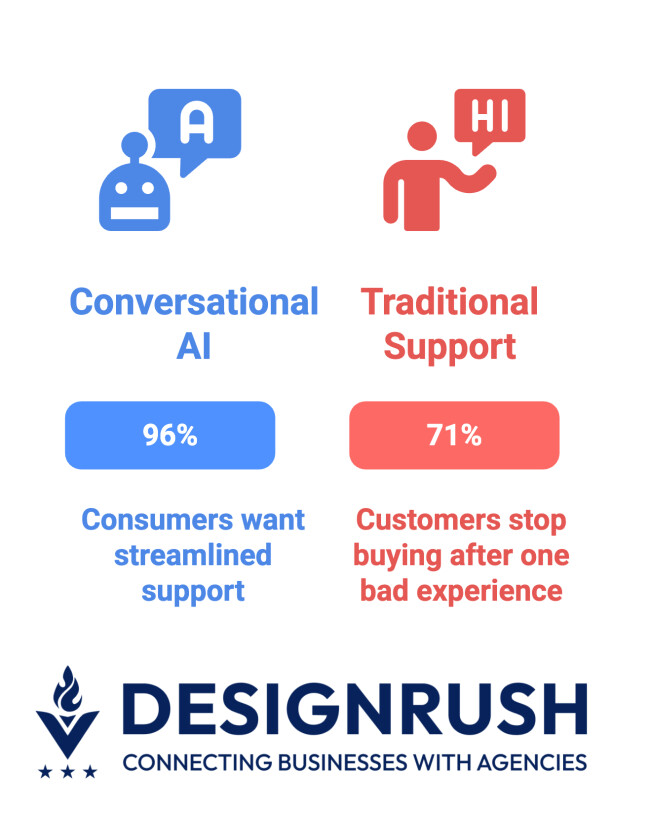
People don’t forget how a brand makes them feel, especially when something goes wrong. 71% of customers say they’ll stop buying from a brand after just one bad customer service experience, as per Yotpo’s research. Good support builds trust; bad service kills it instantly.
Here are actionable ways to make every interaction with your brand feel seamless, rewarding, and personal.
- Give early access to new drops or sales as a perk for repeat buyers or subscribers.
- Offer support across multiple channels, like 24/7 chat, email, social, and SMS.
- Make your customer support feel human — even if it’s automated, it should be warm, helpful, and responsive.
- Use data to recommend relevant products based on past behavior, not just what’s trending.
- Follow up with customer satisfaction surveys to catch issues early.
Top-notch customer service is a key part of the brand experience. The data below shows how much customers value fast, efficient, and personalized help.
- 82% of shoppers said they’d rather use a chatbot than wait on hold for traditional customer support services (Statista).
- 96% of consumers believe more companies should use conversational AI to streamline customer support (Statista).
- 68% of users are happy to share personal info with brands they trust in exchange for more relevant rewards and experiences (Yotpo).
- According to McKinsey & Company’s report, 76% of consumers are frustrated when they don’t get a personalized shopping experience.
AI-Driven Commerce
With AI revolutionizing every touchpoint of the buyer journey, agencies must integrate intelligent tools to meet rising consumer expectations and operational efficiencies.

Here are the smartest AI tactics right now:
- Incorporate AI personalization engines like Dynamic Yield or Bloomreach into vendor proposals
- Train client teams to translate predictive analytics into marketing and inventory actions
- Deploy AI-powered chatbots and visual search to reduce support overhead
Here’s what the AI data shows:
- According to Segment’s research, over 92% of top-performing eCommerce companies use AI for dynamic, personalized product feeds.
- 55% of Statista’s global survey respondents expressed confidence in AI's ability to replace human interaction for assembling and presenting product information before purchases.
- Customer service and support were the leading AI applications of 34% of companies during the 2024 (Statista).
- However, only nine percent of respondents in the Statista survey believe that using AI for customer service improves their online shopping experience. Roughly 56% think that it depends on how it is used, while around 14% believe that it makes the shopping experience worse.
eCommerce Statistics: Final Thoughts
eCommerce is evolving at breakneck speed in 2026. Agencies that embed real-time analytics, benchmark-driven insights, and platform expertise will lead the next wave of digital commerce.
Are you ready to transform your agency’s impact? Explore DesignRush’s top-rated eCommerce agencies or secure your spot to attract performance-focused clients.
eCommerce Statistics FAQs
1. How does mobile shopping influence eCommerce strategies?
With mobile accounting 59% of global eCommerce sales (approximately $4.01 trillion), agencies must prioritize mobile-first UX design, fast loading speeds, and optimized checkout flows.
2. Why should agencies track metrics like AOV and CLTV?
These metrics predict growth and justify strategy: boosting average order value (AOV) by 10% can significantly increase revenue margins. Customer lifetime value (CLTV) helps shape loyalty and upsell strategies, with subscriptions and loyalty programs lifting retention rates by over 20%.