Connect with vetted app development companies that build custom solutions designed to drive retention, engagement, and revenue. Filter agencies by budget, team size, and location to find the right partner for your project.
Turn Your Idea Into a Market-Ready Product
NFN Labs is a design and development studio transforming ideas into market-ready products. With 14+ years, we specialize in UX/UI, web, and mobile app development, helping founders and businesses launch successful, user-centric solutions across diverse platforms, including AI and wearables. [... view NFN Labs profile ]Top Services:
- Mobile App Development
- UI/UX Design
- Web Development
- Location
- Chennai, India
- Number of Employees
- Under 49
- Average Hourly Rate
- $25/hr
Seamless Solutions, Superior Performance.
We have assembled a proficient team comprising expert software developers, skilled designers, and experienced business analysts. This collective expertise allows us to collaboratively evaluate your requirements, propose an optimal solution, and seamlessly execute its implementation and launch. [... view Sahir Web Solutions profile ]Top Services:
- Mobile App Development
- IT Services
- Software Development
- Location
- Chandigarh, India
- Number of Employees
- Under 49
Solutions Innovator.
Patoliya Infotech is not just another enterprise software company; we're your strategic partner in digital transformation. With a decade-long journey of excellence, we've mastered the art of crafting bespoke software solutions for businesses across various industries. Embrace a new era of innovation with us [... view Patoliya Infotech profile ]Top Services:
- Mobile App Development
- Software Development
- Web Development
- Location
- Surat, India
- Number of Employees
- 50 - 99
Best Website Development & Digital Marketing Agency in Dwarka, Delhi
Fifth Shield is the top digital marketing agency in Delhi, founded in 2014 by Surendra Singh, offers SEO, SMO, PPC, & web development services across the world. With the experience of 10+ years, Fifth Shield has worked on 100+ projects for multiple industries. [... view Fifth Shield profile ]Top Services:
- Mobile App Development
- Web Development
- HTML5
- Location
- New Delhi, India
- Number of Employees
- Under 49
- Average Hourly Rate
- $10/hr
- Minimal Budget
- Under $1,000
- Portfolios Count
- 1 Project Listed
Your Global Tech Partner
At zyp, we're not just writing code; we're shaping digital futures. Whether you're a visionary startup or an established enterprise looking to evolve, we're here to transform your tech dreams into reality. Join us on a journey of innovation, growth, and success. [... view Zyp profile ]Top Services:
- Mobile App Development
- IT Services
- Software Development
- Location
- Islamabad, Pakistan
- Number of Employees
- Under 49
- Average Hourly Rate
- $50/hr
- Minimal Budget
- $10,000 - $25,000
- Portfolios Count
- 3 Projects Listed
Partner In Your Digital Journey.
Webnox Technologies is the leading web design, software development and digital marketing company in Coimbatore. With 14+ years of expertise, we specialize in web design, custom software, SaaS, and ROI-driven digital marketing solutions tailored for all types of businesses that drive real results. [... view Webnox Technologies profile ]Top Services:
- Mobile App Development
- Web Development
- Android
- Location
- Coimbatore North, India
- Number of Employees
- Under 49
- Average Hourly Rate
- $5/hr
- Minimal Budget
- $1,000 - $10,000
- Portfolios Count
- 2 Projects Listed
Digital Transformation Company
Goodtogo.pro helps businesses grow through SEO, digital marketing, intelligent websites, apps, and AI-driven automation, boosting traffic, efficiency, and overall online success. Recognizing that every business is unique, their approach begins with a detailed analysis of your goals, target audience, and [... view Goodtogo.pro profile ]Top Services:
- Mobile App Development
- Software Development
- UI/UX Design
- Location
- Lahore, Pakistan
- Number of Employees
- Under 49
- Portfolios Count
- 2 Projects Listed
Defining the Distorted
Antialias is a full service user interface and user experience design company. From voice, chatbots, mobile, web & smart devices, we specialise in all human touch points [... view The Antialias profile ]Top Services:
- Mobile App Development
- VR/AR
- Web Development
- Location
- Delhi, India
- Number of Employees
- Under 49
- Average Hourly Rate
- $25/hr
- Minimal Budget
- $1,000 - $10,000
- Portfolios Count
- 1 Project Listed
Top Developers. Scalable Teams. Seamless Execution
Prilancers provides top-tier developers specializing in AI, LLM, and software development. From cutting-edge AI solutions to scalable applications, we help businesses innovate and grow with expert talent. [... view Prilancers Infotech profile ]Top Services:
- Mobile App Development
- Software Development
- Web Development
- Location
- Surat, India
- Number of Employees
- Under 49
- Average Hourly Rate
- $20/hr
- Minimal Budget
- $1,000 - $10,000
- Portfolios Count
- 1 Project Listed
The Best Place to Build Your MVPs and Startups
Develop the ideal MVP to stay ahead of the competition crafted in weeks, not months leveraging cutting-edge technologies and flexible, vision-aligned pricing tailored to your budget. [... view Srutved profile ]Top Services:
- Mobile App Development
- Software Development
- Web Development
- Location
- Jaipur, India
- Number of Employees
- Under 49
- Average Hourly Rate
- $15/hr
- Portfolios Count
- 1 Project Listed
End-To-End Development
From web development to mobile app development and UI/UX design, Challenge TechnoLabs blends creativity with technology to deliver powerful digital products. [... view Challenge Technolabs profile ]Top Services:
- Mobile App Development
- UI/UX Design
- Android
- Location
- Ahmedabad, India
- Number of Employees
- Under 49
- Average Hourly Rate
- $15/hr
- Portfolios Count
- 1 Project Listed
Building Businesses Online
We are Fill Design Group, a one-stop shop for all your online needs. We offer web design, web development, social media marketing, SEO & more. We provide creativity to solve your advertising, branding, and marketing problems, and we work with companies of almost every size. [... view Fill Design Group profile ]Top Services:
- Mobile App Development
- Software Development
- UI/UX Design
- Location
- Bidhan Nagar, India
- Number of Employees
- 50 - 99
- Average Hourly Rate
- $20/hr
- Minimal Budget
- $1,000 - $10,000
- Portfolios Count
- 1 Project Listed
Define. Design. Develop.
Desilo transforms visionary ideas into impactful digital products through design-driven development. Specializing in SaaS, UI/UX, and end-to-end development, we deliver intuitive, high-quality solutions tailored to user needs and business goals. Our expertise spans startups and enterprises, focusing on [... view Desilo Technologies Pvt. Ltd. profile ]Top Services:
- Mobile App Development
- Software Development
- UI/UX Design
- Location
- Ahmedabad, India
- Number of Employees
- Under 49
- Average Hourly Rate
- $25/hr
- Minimal Budget
- $1,000 - $10,000
- Portfolios Count
- 1 Project Listed
Seathink is Your go-to Partner For Professional
Our mission is simple to help businesses grow online with powerful websites, creative designs, and result-driven digital solutions. [... view Seathink profile ]Top Services:
- Mobile App Development
- UI/UX Design
- Web Development
- Location
- Surat, India
- Number of Employees
- Under 49
- Average Hourly Rate
- $20/hr
- Minimal Budget
- Under $1,000
- Portfolios Count
- 1 Project Listed
Enquire. Code. Deliver
Enqcode is a digital solutions partner helping brands turn ideas into intuitive, high-performing products for startups and growing businesses. We blend clean design, modern engineering, and thoughtful strategy to build high-quality Custom software, MVPs, SaaS platforms, mobile apps, and automated workflows [... view Enqcode Technologies LLP profile ]Top Services:
- Mobile App Development
- Software Development
- UI/UX Design
- Location
- Ahmedabad, India
- Number of Employees
- Under 49
- Average Hourly Rate
- $25/hr
- Minimal Budget
- $1,000 - $10,000
- Portfolios Count
- 1 Project Listed
web design company in kolkata
Moz Web Development is a web design company in kolkata providing a complete branding and online development solution for all types of business. [... view Moz Web Development profile ]Top Services:
- Mobile App Development
- Web Development
- Android
- Location
- Kolkata, India
- Number of Employees
- Under 49
- Average Hourly Rate
- $15/hr
- Minimal Budget
- Under $1,000
Empowering Your Vision With Cutting-Edge Technology and Exceptional Service
Decotechs is a full-stack software agency helping startups and enterprises bring their product ideas to life. We specialize in MVP development, web and mobile app development, and team augmentation. From healthcare to logistics and e-commerce, our team delivers scalable, high-performance solutions with speed [... view Decotechs profile ]Top Services:
- Mobile App Development
- Software Development
- UI/UX Design
- Location
- Karachi, Pakistan
- Number of Employees
- 50 - 99
- Average Hourly Rate
- $30/hr
- Minimal Budget
- $1,000 - $10,000
- Portfolios Count
- 1 Project Listed
Full-Stack Mobile and Web App Development Company - JAMstack and HeadlessCMS Expert
Codage habitation assists businesses to become innovation leaders by providing them software programs on demand and according to their needs. [... view Codage Habitation profile ]Top Services:
- Mobile App Development
- Software Development
- Web Development
- Location
- Gujarat, India
- Number of Employees
- Under 49
- Average Hourly Rate
- $25/hr
- Portfolios Count
- 3 Projects Listed
- Quality website development and interactive web designs can be availed at Qdexi Technology. Also get best seo, smo, PPC and content writing services via experts. Avail best seo services and get your business ranked on various search engines via quality search engine optimization strategies via expert team. [... view Qdexi Technology profile ]
Top Services:
- Mobile App Development
- Web Development
- Location
- Delhi, India
- Number of Employees
- 50 - 99
- Average Hourly Rate
- $199/hr
- Minimal Budget
- $10,000 - $25,000
Delivering Excellence
Agaetis technologies is dedicated to building products that create an impact, exceed expectations and provide a great user experience. No matter how big or small the project, our aim is to deliver the best outcome possible. We aim to improve user experience across the internet through our products. [... view Agaetis Technologies profile ]Top Services:
- Mobile App Development
- UI/UX Design
- Android
- Location
- Mumbai, India
- Number of Employees
- Under 49
- Average Hourly Rate
- $50/hr
- Minimal Budget
- $1,000 - $10,000
Elevated in style
We create experiences that transform brands, grow businesses and make peoples lives better. [... see all AleaIT Solutions Pvt Ltd reviews ]Top Services:
- Mobile App Development
- IT Services
- Windows
- Location
- Jaipur, India
- Number of Employees
- 50 - 99
- Average Hourly Rate
- $25/hr
- Minimal Budget
- $1,000 - $10,000
Social Media & Creative Digital Marketing Agency
At Bramerz, the power of a decade-long experience and more than 100 top-notch professionals come together to offer their expertise in digital media services. Certified by Google, Microsoft & Facebook - we are proud to have served to lead Fortune500 clients like Coca-Cola, Dell and Huawei. Our full range of [... see all Bramerz reviews ]Top Services:
- Mobile App Development
- Web Development
- Location
- Lahore, Pakistan
- Number of Employees
- 100 - 249
- Average Hourly Rate
- $49/hr
- Minimal Budget
- $1,000 - $10,000
Website Development, App Development Solutions and Digital Marketing Services
Dqot Solutions is a global tech partner offering software, mobile app, website, and digital marketing services. We create innovative digital solutions for startups and enterprises worldwide. Our experts turn ideas into powerful experiences, driving growth. [... see all DQOT Solutions reviews ]Top Services:
- Mobile App Development
- Outsourcing
- Software Development
- Location
- Jaipur, India
- Number of Employees
- 100 - 249
- Minimal Budget
- Under $1,000
ECommerce & Web solution development agency
Hemsoft Technologies is a best web development company. we offer excellent web development with asp.net, ecommerce solutions with nopCommerce & wooCommerce. [... view Hemsoft Technologies profile ]Top Services:
- Mobile App Development
- Web Development
- Location
- Mumbai, India
- Number of Employees
- Under 49
- Average Hourly Rate
- $15/hr
- Minimal Budget
- Under $1,000
- Portfolios Count
- 1 Project Listed
Transforming Ideas Into Engaging Applications
Neebha Web Services is a forward-thinking digital development studio dedicated to building high-performance websites, mobile applications, and intelligent digital solutions. [... view Neebha Web Services profile ]Top Services:
- Mobile App Development
- UI/UX Design
- eCommerce
- Location
- Mohali, India
- Number of Employees
- Under 49
- Average Hourly Rate
- $15/hr
- Portfolios Count
- 2 Projects Listed
Your Success is Ours
eDataIndia is a trusted data entry service company in India providing IT and BPO solutions to businesses across global markets, helping them manage data and improve efficiency. [... view EDataIndia profile ]Top Services:
- Mobile App Development
- UI/UX Design
- Web Development
- Location
- Delhi, India
- Number of Employees
- 100 - 249
- Average Hourly Rate
- $3/hr
Your Global Partner For Frontend Talent
We are a software consultancy based in India, specializing in front-end development and international staff augmentation. Our vision is to help companies to scale their engineering team quickly and cost-effectively by providing vetted frontend talent.ready-to-deploy frontend talent within 7 days. [... view NTAI Software profile ]Top Services:
- Mobile App Development
- IT Services
- Software Development
- Location
- Pune, India
- Number of Employees
- Under 49
- Average Hourly Rate
- $30/hr
- Minimal Budget
- $1,000 - $10,000
Empowering Enterprises Through Digital Transformation
Malgo Technologies is a forward-thinking digital transformation company specializing in innovative, scalable solutions that empower businesses to thrive in a tech-driven world. Our expertise spans AI/ML, AR/VR, IoT software, Big Data, analytics, cloud computing, DevOps, and cybersecurity. [... view Malgo Technologies Pvt Ltd profile ]Top Services:
- Mobile App Development
- Web Development
- eCommerce
- Location
- Madurai, India
- Number of Employees
- 50 - 99
- Average Hourly Rate
- $20/hr
- Minimal Budget
- $10,000 - $25,000
- Portfolios Count
- 1 Project Listed
ROI Driven Digital Growth
HyperScale is an AI-driven software development and digital growth agency headquartered in Greater Noida West, India. The agency helps businesses scale faster through AI-augmented engineering, digital marketing, AEO/SEO, automation workflows, and conversion-focused web experiences. By combining software [... view HyperScale profile ]Top Services:
- Mobile App Development
- Software Development
- UI/UX Design
- Location
- Greater Noida, India
- Number of Employees
- Under 49
- Average Hourly Rate
- $15/hr
- Portfolios Count
- 1 Project Listed
Transforming complexity into simplicity with thoughtful design.
As a full-service agency, we provide a wide range of services, including UI/UX design, web and mobile development, digital marketing, and more, ensuring a seamless experience for all your digital needs. We understand that each business is unique, and we work closely with you to create bespoke strategies and [... see all Desisle reviews ]Top Services:
- Mobile App Development
- Software Development
- Web Development
- Location
- Bengaluru, India
- Number of Employees
- Under 49
- Average Hourly Rate
- $25/hr
Digital Transformation Company in Chennai
Way2Smile is one of the foremost agile innovators and software application designers having its development centre in across globe. We offer the precise custom IT services and solutions for our customers business and meet to their expectations in brand designs. [... view Way2Smile profile ]Top Services:
- Mobile App Development
- IT Services
- Outsourcing
- Location
- Chennai, India
- Number of Employees
- Under 49
- Minimal Budget
- Under $1,000
- Portfolios Count
- 1 Project Listed
Shaping the future of Games.
Gamecrio Studios is the best Game Design - Development company in USA & India with 8+ years of experience in game Design & development. [... view Gamecrio Studios profile ]Top Services:
- Mobile App Development
- VR/AR
- HTML5
- Location
- Ahmedabad, India
- Number of Employees
- 50 - 99
- Average Hourly Rate
- $18/hr
- Minimal Budget
- $1,000 - $10,000
- Portfolios Count
- 1 Project Listed
Empowering Businesses with Cutting-Edge Technology.
Telepathy Infotech stands out as a top software company, providing exceptional mobile app development and web development services. Their solutions are tailored to meet client needs, ensuring innovative, user-friendly, and high-performance applications that elevate businesses across industries. [... view Telepathy profile ]Top Services:
- Mobile App Development
- IT Services
- Software Development
- Location
- Khatipura, India
- Number of Employees
- 100 - 249
- Average Hourly Rate
- $25/hr
- Minimal Budget
- $10,000 - $25,000
- Portfolios Count
- 1 Project Listed
WeDigTech is a full Stack mobile & web apps development Company
WeDigTech was established in the year 2010 as an offshore software product development company. We have been focused towards helping startups and enterprises to launch great Mobile, Web, IoT, AR/VR, Foodtech, E-commerce solutions with quality and speed. We have a global presence in 10+ countries including the [... view WeDigTech profile ]Top Services:
- Mobile App Development
- Software Development
- Android
- Location
- Jaipur, India
- Number of Employees
- 50 - 99
- Average Hourly Rate
- $25/hr
- Minimal Budget
- $1,000 - $10,000
- Portfolios Count
- 2 Projects Listed
A Product Realization Company.
TILTLABS is a pioneering product realization company dedicated to harnessing cutting-edge technologies to craft interactive, user-friendly, and deeply engaging experiences. Our expertise spans across various domains, including XR & Mobility, Games & Gamification, Virtual Production, Metaverse, Blockchain, and [... view Tiltlabs profile ]Top Services:
- Mobile App Development
- Software Development
- VR/AR
- Location
- Thiruvananthapuram, India
- Number of Employees
- 100 - 249
- Minimal Budget
- $1,000 - $10,000
- Portfolios Count
- 2 Projects Listed
We are committed to deliver simplified innovative technology solutions for today and tomorrow
We specialized in the creation of web applications, mobile applications, and business applications, as well as cloud deployment and migration. Our best attribute is the creation of business applications with an excellent user experience. [... view Gevinst Technologies Private Limited profile ]Top Services:
- Mobile App Development
- IT Services
- Software Development
- Location
- Chennai, India
- Number of Employees
- 100 - 249
- Average Hourly Rate
- $25/hr
- Minimal Budget
- $10,000 - $25,000
- Portfolios Count
- 3 Projects Listed
Empowering Digital Growth Since 2009
Lathiya Solutions, founded in 2009, offers expert web development, WordPress services, mobile apps, SEO, hosting, and API integration. We deliver reliable, scalable digital solutions tailored to your business needs. [... view Lathiya Solutions profile ]Top Services:
- Mobile App Development
- Web Development
- eCommerce
- Location
- Surat, India
- Number of Employees
- Under 49
- Average Hourly Rate
- $25/hr
- Minimal Budget
- $1,000 - $10,000
- Portfolios Count
- 3 Projects Listed
Leading web development company in India, with more 3+ years of experience.
Started in 2022, Tech Amber is a leading creative design studio in India. Known for our exceptional blend ofdesign and functionality, we quite literally bring your websites to life, helping them generate business instead ofmerely existing and rotting in a corner of the internet. [... view TechAmber profile ]Top Services:
- Mobile App Development
- Outsourcing
- Software Development
- Location
- Moradabad, India
- Number of Employees
- Under 49
- Average Hourly Rate
- $30/hr
- Minimal Budget
- Under $1,000
- Portfolios Count
- 3 Projects Listed
Creative Web Solutions
Domainmantri seems to be a brilliant service firm that offers numerous solutions to meet all organizational needs. We provide trained specialists from several disciplines who might appreciate the requirements from beginning to end. They also continue to work on the tasks using the necessary expertise and [... view Domainmantri profile ]Top Services:
- Mobile App Development
- Web Development
- Location
- Delhi, India
- Number of Employees
- Under 49
- Average Hourly Rate
- $16/hr
- Portfolios Count
- 2 Projects Listed
Mobile App Development Company India
iMOBDEV Technologies is the Top Mobile App Development Company in India. We offer android mobile app development, iOS Mobile App Development, iPad app Development, Native app development services for 10 years. We attempt to come up with the conspicuous outcomes for the website and mobile apps development. As [... view IMOBDEV Technologies profile ]Top Services:
- Mobile App Development
- UI/UX Design
- Web Development
- Location
- Ahmedabad, India
- Number of Employees
- 50 - 99
- Average Hourly Rate
- $50/hr
- Minimal Budget
- $1,000 - $10,000
Software Consultancy and Development
Whether you're a small startup or a large corporation, we have the expertise and resources to deliver results. From simple websites to complex applications, we have the skills and experience to bring your ideas to life. [... view Shivantra profile ]Top Services:
- Mobile App Development
- Software Development
- Web Development
- Location
- Bharuch, India
- Number of Employees
- Under 49
- Average Hourly Rate
- $40/hr
- Minimal Budget
- $1,000 - $10,000
Innovate, Integrate, Succeed
Vxplore is a trusted Web Development Company providing top-notch IT solutions like Mobile App Development, e-commerce development, Digital Marketing, etc. [... view Vxplore Technologies profile ]Top Services:
- Mobile App Development
- Software Development
- HTML5
- Location
- Howrah, India
- Number of Employees
- Under 49
- Minimal Budget
- $1,000 - $10,000
- Portfolios Count
- 1 Project Listed
- SERP SHINE is a digital marketing service provider. We know that this is time to switch for an online business to get more leads. That's why we have skilled professionals in our team who fulfill customers requirements guaranteed. [... see all SERP SHINE reviews ]
Top Services:
- Mobile App Development
- UI/UX Design
- Web Development
- Location
- Jaipur, India
- Number of Employees
- 50 - 99
- Average Hourly Rate
- $25/hr
Transforming Ideas, Amplifying Reach.
DigiVend is a dynamic digital marketing agency dedicated to propelling your brand to new heights. With a focus on innovative strategies and creative solutions, we craft tailored campaigns to enhance your online visibility, engage your audience, and drive meaningful results. Let DigiVend be your partner in [... see all DigiVend Technologies reviews ]Top Services:
- Mobile App Development
- HTML5
- iPhone
- Location
- Noida, India
- Number of Employees
- 100 - 249
- Average Hourly Rate
- $22/hr
- Minimal Budget
- $1,000 - $10,000
Plan. Prototype. Innovate. Lets walk together for a digital transformation of your ideas.
Nestormind - Your trusted custom software development partner takes responsibility for all aspects of your project, no matter what size or complexity. [... view Nestormind Pvt Ltd profile ]Top Services:
- Mobile App Development
- IT Services
- Software Development
- Location
- Mohali, India
- Number of Employees
- Under 49
- Average Hourly Rate
- $18/hr
- Minimal Budget
- $1,000 - $10,000
- Portfolios Count
- 2 Projects Listed
- We are a Custom Software Development company based in New Delhi, India with Sales Office in Burnaby, Canada.We Deals in CRM development(Salesforce), Web Application development, Mobile Apps Development and Digital marketing services along with Software Maintenance & Support.We are a team of experts that [... view Scideas Solutions profile ]
Top Services:
- Mobile App Development
- Outsourcing
- Software Development
- Location
- Delhi, India
- Number of Employees
- Under 49
- Average Hourly Rate
- $20/hr
- Minimal Budget
- $1,000 - $10,000
- Portfolios Count
- 1 Project Listed
Where Ideas Code The Future
Hashloops Technologies is a custom software development company providing services to every businesses. Our services includes web and mobile application development, search engine optimization and digital marketing. Our main priority is to meet our clients requirements and deliver them what they need. [... view Hashloops Technologies profile ]Top Services:
- Mobile App Development
- Software Development
- UI/UX Design
- Location
- Lahore, Pakistan
- Number of Employees
- Under 49
- Average Hourly Rate
- $20/hr
- Portfolios Count
- 1 Project Listed
Acodez is one of top digital agencies in India by various rating agencies and industry magazines.
Acodez is one of best web development agencies in India and works with clients in 70+ countries. We are based in India with offices in Gurgaon, Mumbai, Bangalore & Calicut and have an in-house team strength of 100+ and we've won 14 international awards till date. [... see all Acodez IT Solutions Pvt Ltd reviews ]Top Services:
- Mobile App Development
- UI/UX Design
- Web Development
- Location
- Gurgaon, India
- Number of Employees
- 100 - 249
- Average Hourly Rate
- $15/hr
- Minimal Budget
- $1,000 - $10,000
- Portfolios Count
- 1 Project Listed
Theory of Creativity
We are a team of eCommerce Experts [... view ENS Enterprises profile ]Top Services:
- Mobile App Development
- Web Development
- Location
- Noida, India
- Number of Employees
- 50 - 99
- Average Hourly Rate
- $25/hr
Digital Technology Agency
Swrice Company stands as a beacon of digital innovation and excellence in the world of technology services. Our diverse array of offerings spans the realms of web development, graphic design, 3D art, and SEO, with each service delivered by a team of exceptionally talented professionals. What sets us apart is [... view Swrice profile ]Top Services:
- Mobile App Development
- Web Development
- HTML5
- Location
- Karachi, Pakistan
- Number of Employees
- Under 49
- Average Hourly Rate
- $40/hr
- Minimal Budget
- Under $1,000
- Portfolios Count
- 1 Project Listed



























Mobile App Development Specializations
- Accessibility Mobile App
- Android
- App Development Consultants
- Application Modernization
- Consumer
- Cross-Platform
- eCommerce
- Educational
- Enterprise
- Entertainment App Development
- Field Operations
- Financial
- Fitness App Development
- Food Delivery App Development
- Freelance
- Gambling
- Games
- Government
- Healthcare
- HTML5
- Hybrid
- Insurance
- iPad
- iPhone
- Media App
- Mobile App design
- Nonprofit
- Publishing
- React Native
- Restaurant App Development
- Small Businesses App Development
- Social Network Apps
- Sports App Development
- Startup
- Telemedicine App Development
- Thunkable
- Travel App Development
- Wearables
- Windows
Services Related to Mobile App Development
Top Mobile App Developers by Country
Everything You Need to Know Before Hiring App Development Firms
What can mobile app development companies do for your business?
A mobile application development company can help your business reduce product risk and accelerate growth by designing, building, and optimizing mobile user experiences that users want to return to.
Mobile app companies typically support your business in three ways:
- Validate your app idea before you scale through discovery, prototyping, and MVP to test assumptions, confirm feasibility, and gather real user feedback early.
- Build for retention through UI/UX design, performance engineering, and data analytics to remove friction and improve onboarding, engagement, and reliability, especially during peak usage moments.
- Enable growth loops via lifecycle messaging (push notifications and in-app messages), experimentation, and iteration based on user behavior and outcomes.
According to eMarketer, 80% of US customers spend nearly 4x more time on mobile apps compared to mobile browsers, underscoring that apps are the primary engagement channel on mobile devices.
However, mobile apps have a high churn rate, with the top reasons for deletion being:
- Too many in-app ads (30%)
- Expectation not met (25%)
- Poor UX (18%)
- Too many notifications or in-app messaging (18%)
- Found a better app (18%)
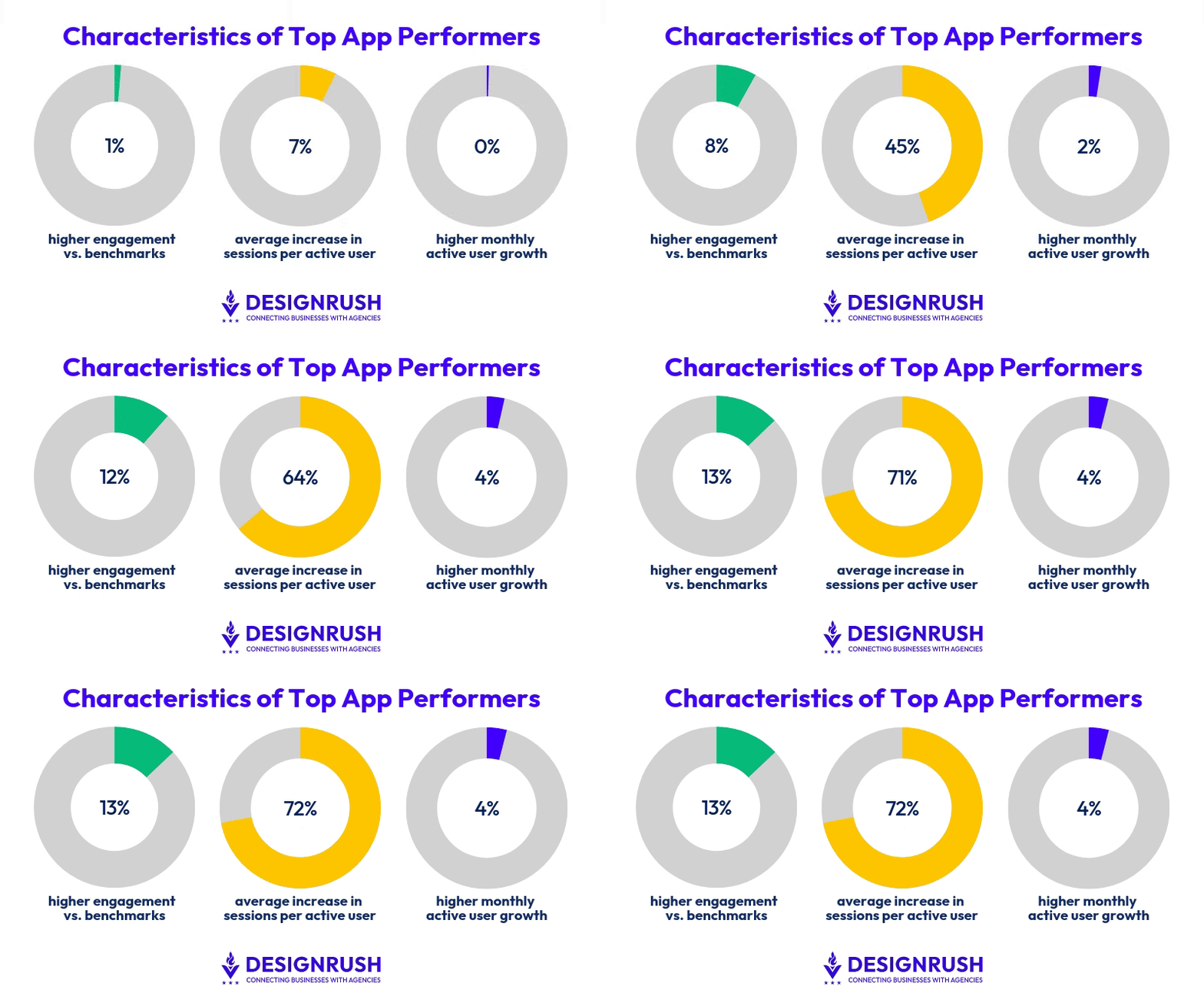
On the other hand, top mobile app performers record:
- 13% higher engagement scores above industry benchmarks
- 72% average increase in sessions per active user
- 4% higher monthly active user growth
Ultimately, this translates to higher revenue, with global users spending up to $40.9 billion on mobile apps in the first quarter of 2025 alone.
How much does it cost to build a mobile app?
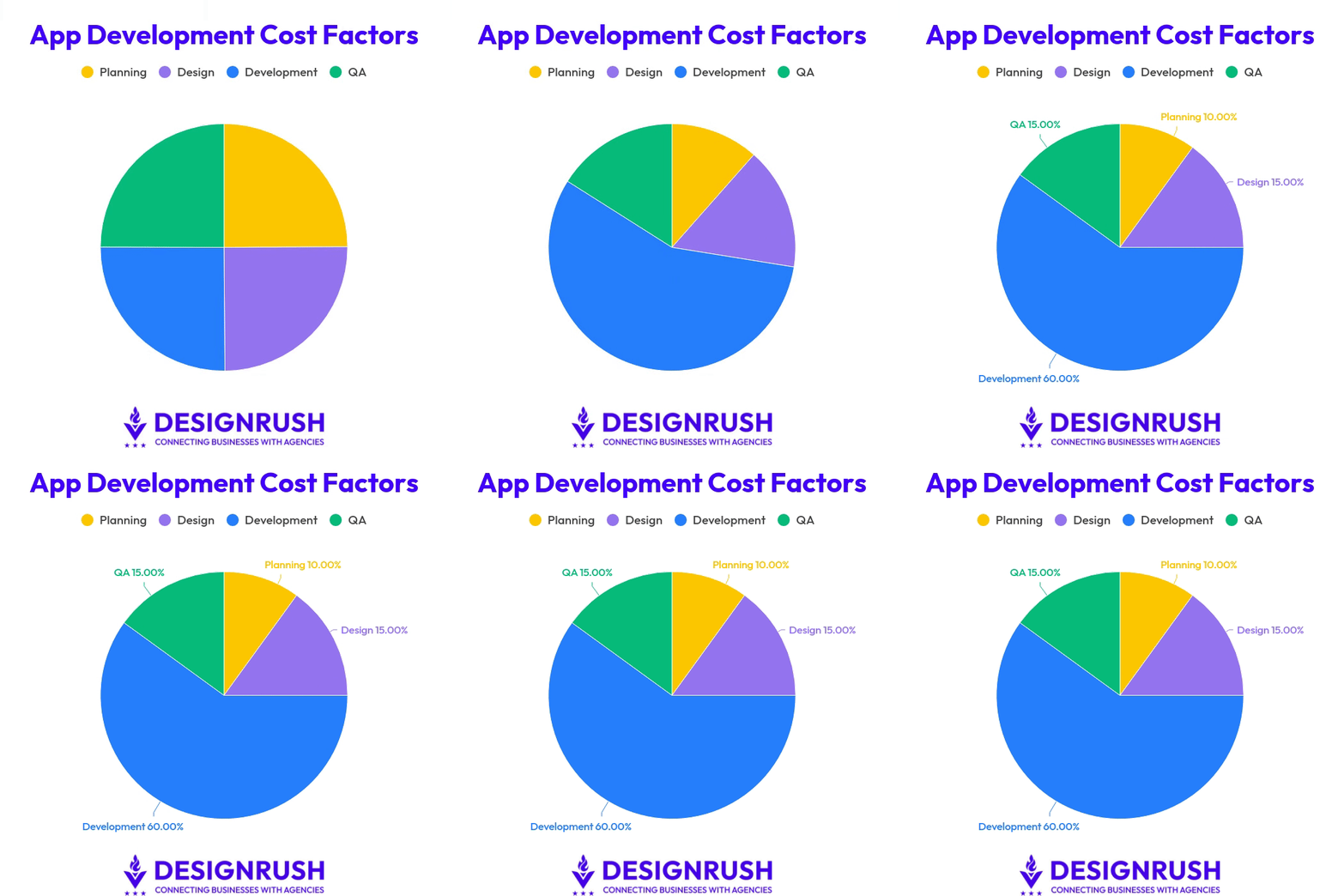
On average, a mobile app can cost between $20,000 and over $100,000, depending on software complexity, target users, features, functions, and technical requirements. The location and expertise of your custom mobile app development company also impact overall costs.
Below is the estimated hourly rate of app development firms for each region:
- Southeast Asia: $20-$45
- Eastern Europe: $30-$50
- Western Europe: $60-$120
- Latin America: $40-$160
- United States and North America: $100-$150
Based on the hourly rate above, here is how much you can expect to pay for different mobile app development projects:
- Basic MVP apps: $15,00-$25,000 for basic features like user login and static content forms.
- Simple apps: $20,000-$60,000 for internal use and $40,000-$90,000 for commercial releases. This includes basic UI and functions with low programming complexity.
- Medium complexity: $50,000-$120,000 for internal use and over $100,000 for commercial distribution. Features include interactive UI with multi-step user journeys and system integration.
- Highly complex apps: Over $200,000, and includes custom UI/UX design, complex back-end logic, and advanced security layers.
- eCommerce apps: $50,000-$150,000+, depending on the product catalog volume, number of integrations, and advanced features (e.g., AI recommendation engines)
- Healthcare and fintech apps: $60,000-$350,000+, often priced at the higher end due to the compliance and security measures needed.
How long does the app development process take?
Custom mobile app development can take 3 months to over 1 year to produce, depending on the software complexity, platform type, mobile app design, compliance requirements, and iteration cycle.
Below is an estimated timeline for different app development services:
- Basic MVP: 3-6 months for a basic dashboard or contact form. eCommerce app development also falls under this timeline.
- Moderate builds: 6-9 months for payment gateway and social media integrations, in-app messaging, and multi-language support. Examples include social media and dating apps.
- Advanced app complexity: 9-12 months for real-time data dashboards and role-based user access. Examples include 3D gaming apps.
- Enterprise builds: 12-18+ months for AI-based personalization or recommendations, real-time data processing, complex backend infrastructure, and integration into several business systems. Examples include SaaS and blockchain apps.
How to choose the right app development company for your business?
To choose the right app development company for your business, assess its technical capabilities, proven expertise, and pricing structure against your goals and needs. Here are some steps to aid your decision-making process:
- Clarify your project goals and needs, including use cases, target users, platform type, priority features and functionalities, and integration requirements.
- Seek expertise in your industry, app type, and technical requirements by evaluating their case studies. Also, review how the app developer describes their process and business impact.
- Read their client reviews and references to understand their project management approach, problem-solving skills, and service delivery. Also, long-term client relationships show that the company is dependable.
- Send a request for proposal and detail your goals, timeline, budget range, and requirements. Compare proposals and shortlist 5 that provide the best value for money.
- Interview the team working on your app to learn about their team structure, approach to your project, and post-launch support services.
- Start with a pilot project, such as a prototype or MVP, to further confirm project and business fit before signing a full-scale development contract.
What questions should you ask before hiring?
Before hiring app development firms, consider asking these questions to verify its credibility and reliability:
Relevant Background
- What platforms and tech stack do you specialize in?
- Can you share past projects similar to my requirements? What results did you achieve?
- How familiar are you with my sector and target users? Can you provide client references?
Services and Process
- How do you validate product market fit and scope before development?
- What is your quality assurance process? How do you ensure usability, accessibility, cross-device compatibility, and functionality?
- What is your approach to security, privacy, and compliance?
- What is included in your launch/post-launch package? Will you help me with app store submission, incident response, and iteration?
Related to Your Project
- Who will be on my team, and what are their credentials?
- How do you ensure my app aligns with my brand, target users, and existing systems?
- How do you manage delivery, including project milestones, governance, reporting, and change control?
- Will I own the source code, design files, IP, documentation, and admin controls after the end of the project?
Why People Trust DesignRush
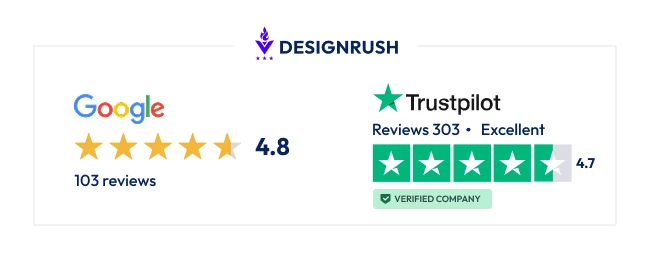
Rated 4.8 on Google and 4.7 on Trustpilot, DesignRush Agency Directory is a reliable resource for finding mobile app development companies. We owe this to our executive selection team, which follows a strict screening process when featuring agencies on the platform, assessing key performance indicators like portfolio, client reviews, and industry reputation.
Learn more about DesignRush Agency Ranking Methodology.
Sources
DesignRush sustains a directory of over 40,000 agencies categorized by service category, location, expertise, and reviews. We build our database in two ways:
- Our dedicated team of agency experts actively searches the web for top-performing companies. We then pull information from their websites, online presence, and client testimonials to verify their status and qualifications prior to listing.
- The agencies listed get notified of their profiles on the website, and they can choose to claim them or not, which suggests their availability for more collaborations.
Agencies can also reach out to DesignRush and must go through the verification process prior to being listed.
Frequently Asked Questions About App Development Companies
What services do app development companies provide?
App development services span the software development lifecycle: discovery and planning, mobile app design, custom software development, testing, and launch. Core services are:
- Product strategy and discovery: Establishing business goals, target users, technical requirements, and development roadmap.
- UI/UX design: Crafting the mobile solution's user flows, wireframes, information architecture, design system, and interactive elements (e.g., buttons and menus) to ensure brand consistency and frictionless user experience.
- Native app development: Producing mobile applications specifically for iOS or Android for maximum performance and access to device features.
- Cross-platform development: Building apps for iOS and Android from a shared codebase, balancing speed-to-market with app performance and maintainability.
- Web app development: Engineering browser-based applications that don’t require installation and can be deployed quickly across mobile and desktop devices.
- Hybrid app development: Packaging a web app inside a native container (WebView) to ship through app stores.
- QA and testing: Conducting functional, usability, performance, compatibility, security, and regression tests to ensure that the app meets industry and client standards before deployment.
- System integration: Connecting the app to existing systems (e.g., CRM, ERP, payments) through APIs for consistent data flow.
- Release and deployment: Managing app store submissions, implementing CI/CD pipelines, monitoring app performance, and providing incident response.
- Ongoing maintenance and support: Updating the app for OS changes, fixing bugs, optimizing performance, installing security patches, and enhancing features.
In addition to these app development services, many companies also offer digital marketing services to support software growth. This includes app store optimization, social media marketing, and paid advertising.
When should you choose a native app development or cross-platform app development?
The answer depends on your target users, budget, timeline, UX expectations, technical requirements, and the expertise of your chosen mobile app development company. Here is a breakdown of each one to help you in your decision:
| Native app development | Cross-platform app development | |
| Advantages |
|
|
| Considerations |
|
|
| Best For |
|
|
What is the difference between a PoC, prototype, and MVP?
A proof of concept (PoC) is used to validate the technical feasibility of an application for new technologies, like AI development or complex integrations. While a PoC isn’t production-ready, it helps reduce technical risk early.
A prototype is a clickable or interactive model that simulates functionality without the full backend. It is ideally used to test user flows, information architecture, and design direction with stakeholders or early users.
A minimum viable product (MVP) is an early version of the final app and only has the core features and functions. Unlike a prototype, an MVP involves both software development and design, enabling developers to confirm product-market fit and conduct real user testing.
Because an MVP involves real build, deployment, and measurement, it often requires longer timelines and bigger budgets than a PoC or prototype.
How to choose the best tech stack?
The best mobile app development tech stack will depend on your priority (speed to market vs peak performance), required device features, UX expectations, compliance and security needs, and long-term maintainability.
Most decisions begin with a platform approach:
Native Development (best-in-class performance)
- Android app: Kotlin, Java, Android Studio, Android SDK with Jetpack Compose or Views/XML
- IOS app: Swift, Objective-C, Xcode, iOS SDK with SwiftUI or UIKit
Cross-Platform and Hybrid App Tech Stack (faster multi-platform delivery)
- Flutter is best for a highly consistent UI across iOS and Android and fast iterations.
- React Native is ideal if your team is an expert in React/JS, and you want to move quickly with broad library support.
- Kotlin is recommended if you want to share core logic but have a native UI. It’s also often used for complex apps and features.
- .NET MAUI is best for internal business software that requires seamless integration with existing Microsoft systems.
- Ionic is often used for progressive web app developments and is best for teams with web development skills but want to ship to app stores.
How do app development firms secure data?
A custom mobile application development company secures data by combining a secure development lifecycle with technical controls, including:
- DevSecOps (Shift Left): Conducting security tests throughout the development pipeline instead of a single phase, which involves threat modeling, secure coding standards, code reviews, and automated security checks in CI/CD.
- Dependency/SDK risk management: Vetting third-party software development kits (SDK) and open-source libraries.
- Strong authentication and access control: Implementing multi-factor authentication when appropriate, role-based access controls (RBAC), least privilege, and secure session/token handling.
- Encryption and key management: Conducting encryption in transit (TLS) and at rest when needed, with proper key handling and secrets management.
- Secure mobile storage: Using platform-provided secure storage (iOS Keychain / Android Keystore) and avoiding sensitive data in logs.
- Backend/API protection: Securing API design and running server-side authorization checks, rate limiting, and input validation.
- Mobile hardening (as needed): Implementing techniques like jailbreak or root detection, tamper resistance, and selective use of certificate pinning.
- Privacy-by-design: integrating clear permission prompts and consent flows aligned with privacy requirements and platform policies.
About The Author and Expert Reviewer

Selina Garcia has authored 500+ articles and edited 50+ published books in economics, law, and history. Her unique blend of experiences allows her to approach content creation from a well-rounded perspective. Currently, Selina applies her expertise to producing insightful articles on IT, software, and applications for DesignRush.

Sergio is a technology leader with over six years of experience managing global teams and delivering projects across fintech, sportstech, and B2B platforms. At DesignRush, he drove product growth and development execution, building tools that speed up processes by 95% and cut costs by 35% while maintaining full uptime.
Latest Trends Related to App Development