
The right SEO agency can bend your demand curve; the wrong one burns budget and time. Here’s how I vet whether a team is truly up to the challenge.
Questions To Ask When Hiring An SEO Agency: Key Points
- A great agency turns technical debt into ROI. Only 53.5% of sites pass Core Web Vitals, so you need a 60-day LCP/INP plan on revenue templates and baseline in CrUX.
- The right team protects clicks from zero-click SERPs. Amid AI Overviews (13.1% in Mar 2025), agencies should segment risk, pursue citations, and deploy click magnets.
- Experienced partners set realistic timelines and hit them. Look for 60/120/180-day milestones, baseline updates, and separate leading indicators from business KPIs like qualified pipeline.
Before You Interview: Gather Inputs (So Answers Are Specific)
To get useful, tailored responses, potential SEO vendors need context. Bring the following:
- Access windows: 12 to 16 months of Google Search Console (GSC) and analytics (or screenshots if legal blocks access).
- Ideal customer profile (ICP) & high‑stakes webpages: Present your priority products/services and 10 to 20 revenue‑bearing URLs.
- Sales context: Your sales cycle length, rough lead closing rates, and customer lifetime value ranges.
- Constraints: SEO companies also need to know about your content management system (CMS), developer bandwidth, approval workflow, and legal/compliance needs.
- Marketing mix: Provide your paid search terms, top content, PR calendar, events, marketing ops, and CRM stack.
Without these, even a great agency will speak in generalities. When you provide crucial information, you’ll hear the concrete plan they’d run on your site.


1. How Can You Prove That You Specialize in Our Industry?
“Specialist” claims can mask generic SEO playbooks. True expertise shows up in how an agency models ROI, handles compliance, and delivers tangible results because they already know your buyer language, metrics, and constraints.
Ideal answer: “We’ll share two permissioned, recent case studies in your industry, including technical fixes, content program, and PR placements. Our workflow includes legal/compliance checkpoints, and our editors have domain experience.
We’ll deliver a technical audit tuned to your CMS, three editor-ready briefs with buyer-language angles, and a digital PR calendar naming outlets we’ve previously placed in.”
Red flag: “We’ve worked with companies like yours” with no verifiable case studies, vague best practices, and click-through forecasts copied from generic benchmarks.
2. How Will You Show Core Web Vitals Improvements in the First 60 Days?
In August 2025, only 53.5% of origins passed all three Core Web Vitals (LCP, INP, CLS). That leaves a lot of low-hanging performance wins that correlate with better user experience and are explicitly recommended by Google for search success.
Ideal answer: “We run a crawl + log sample + CrUX baseline, then prioritize fixes that move INP/LCP on your revenue templates. We’ll ship a 60-day performance plan (tasks, owners, expected deltas) and re-report CrUX trends monthly.”
Red flag: “We’ll install a plugin/CDN, and your speed should improve.”
3. How Will Your Content Strategy Win Clicks, Not Just Impressions?
Clicks concentrate at the top: recent studies show that #1 search engine results average a 40% click-through rate, dropping to 19% at #2 and 10% at #3. Content strategy and briefs must target intent where ranking gains translate into traffic.
Ideal answer: “We cluster topics by intent and business value, size opportunities by click-through curves, and ship editor-ready briefs (H1 to H3, angles, evidence, internal links). We forecast clicks using realistic click-through rates by rank and refresh cycles.”
Red flag: “We’ll publish lots of 2,000-word posts and see what sticks.”
4. How Would You Define Your Link-Building Strategy?
Google’s spam policies prohibit link schemes; enforcement around manipulative behavior continues. If links are your growth lever, they must be earned and clearly qualified.
Beyond compliance, editorial links are still among the strongest off-page ranking signals, accelerating discovery, crawl, and indexation for priority pages. They also drive qualified traffic and build brand authority, which cushions rankings during algorithm volatility.
Ideal answer: “Digital PR and editorial outreach only, no paid link schemes. We use strict prospecting criteria (topical fit, real readership), qualify outbound links correctly (nofollow vs. sponsored), and log every placement for audit.”
Red flag: “We pay $X per month for guaranteed DA-60+ links.”
5. How Will You Adapt Our Site Given Increasing Zero-Click Behavior?
More and more searches are answering user queries without a click. In March 2025, roughly 13.1% of searches showed an AI Overview, and the People Also Ask section has grown nearly 40% on mobile and desktop.
You can hold positions and still lose traffic if your pages don’t get cited inside the Overview or create a compelling reason for people to click. Fortunately, commercial and problem-solving intents still win clicks when you provide depth and proprietary insight.
Ideal answer: “We segment queries by zero-click risk (lookup vs. evaluative vs. transactional) and run a two-track strategy. For high-risk terms, we provide source-attributed answers that earn AI Overview citations, and introduce click-worthy elements like interactive tools, calculators, and POV that the Overview can’t reproduce.”
Red flag: “We’ll just publish more listicles and chase rankings; AI Overviews don’t change much.”
6. What’s Your Plan To Optimize Crawl Budget and Maintain Indexation Hygiene?
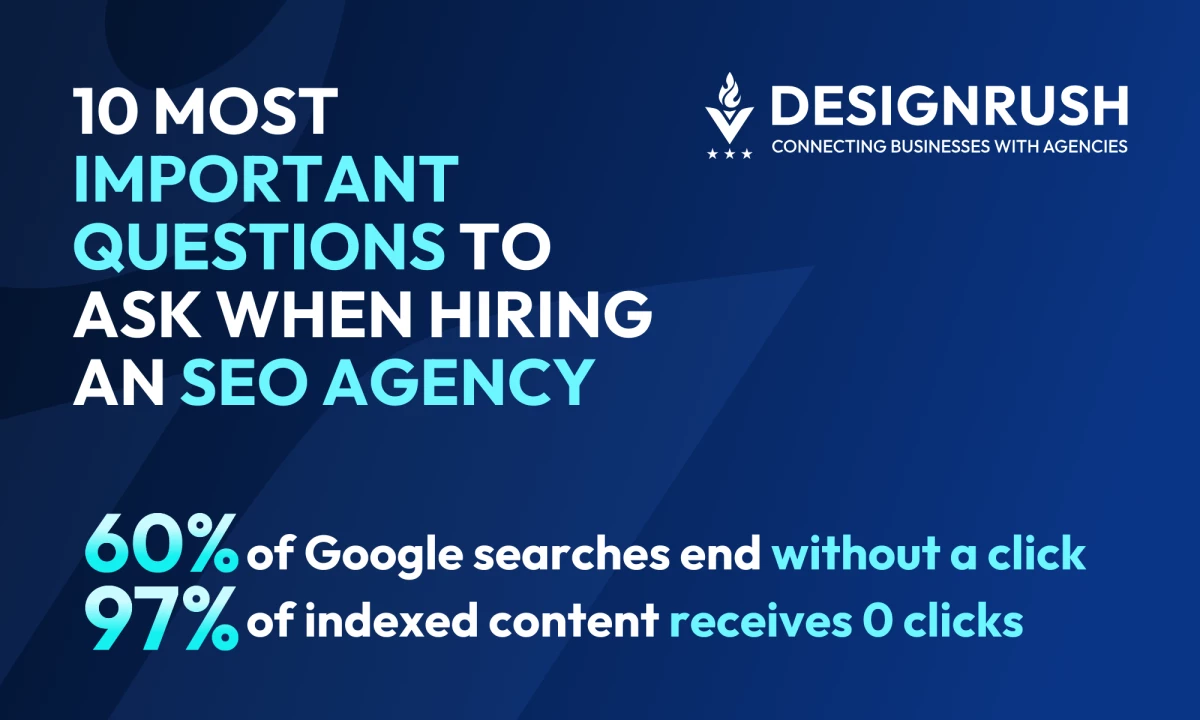
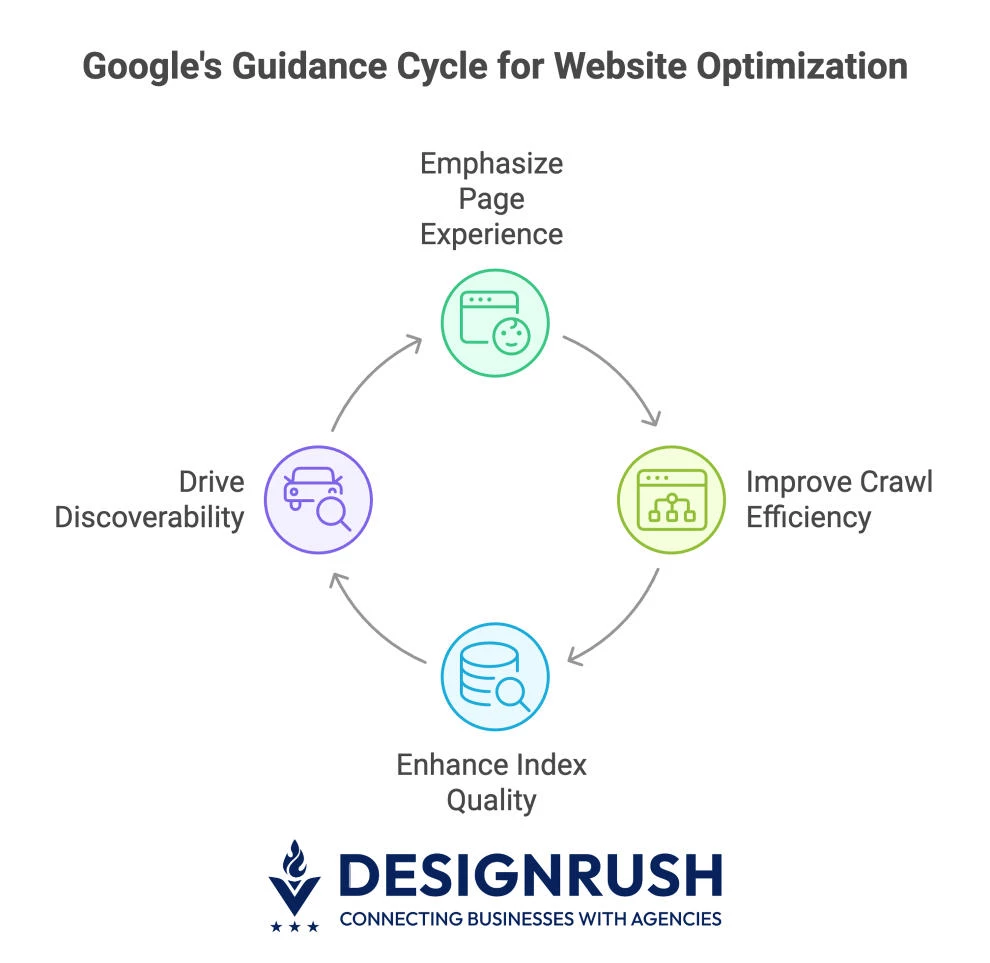
Google’s guidance emphasizes overall page experience and quality signals. Furthermore, nearly 97% of indexed content receives zero organic visits. Pruning/merging thin pages and focusing crawl budget is critical.
This means crawl efficiency and index quality drive discoverability at scale. Bloated sitemaps, soft 404s, and parameter sprawl waste crawl while suppressing important templates.
Ideal answer: “Information architecture first: we map hubs/sub-hubs, control duplication (canonicals, noindex), fix status codes, and keep XML sitemaps tight to priority. We’ll sample logs, then monitor index coverage deltas in Search Console.”
Red flag: “We’ll add more tags; the rest is on Google.”
7. How Will You Quantify ROI?
BrightEdge’s 2025 data shows organic search remains the primary driver of clicks with stronger conversions. Investing in organic is still a revenue play at the end of the day.
Ideal answer: “We model SEO like a pipeline: addressable queries → realistic rank gains → CTR by position → conversion rate → revenue. We present a base forecast, then track against it monthly.
"We also disclose what’s excluded (dev tickets, translations, paid syndication), offer month-one quick wins (Core Web Vitals fixes, high-intent page refreshes), and report cost per incremental lead/opportunity quarterly.”
Red flag: “We don’t forecast budgets, as rankings are too unpredictable.”
8. What Are Your 60/90/180-Day Milestones by Workstream (Technical, Content, Digital PR)?
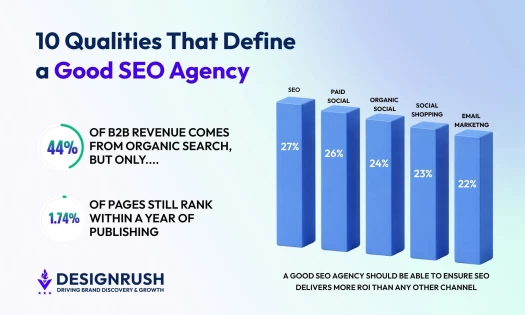
According to Google, changes take weeks to months to reflect in Search, and indexing new pages can take a few days (sometimes longer). New pages rarely rank fast: in 2025, only 1.74% of newly published pages reached the top 10 within a year, and the average #1 page is 5 years old.
Ideal answer: “We stage outcomes: in the first 60 days, we fix critical technical issues, prepare content briefs, and secure first editorial mentions. Within 120 days, we publish/refactor priority pages, build topical clusters, and expand PR. In 180 days, we’ll report compounding gains on mid-funnel pages.
We present range-based timelines tied to crawl/index patterns, your dev bandwidth, and link acquisition pace, and we re-baseline after major updates. Reporting distinguishes early signals (coverage, average position) from business KPIs (qualified leads/revenue).”
Red flag: “We’ll get you top 3 in 60 days,” and promises that ignore the time Google needs to crawl, index, and re-rank content.
9. How Will You Report SEO Performance To Our Executives Without Drowning Them in Jargon?
Effective reporting turns SEO work into executive decisions because it directly ties movements in rankings and traffic to pipeline, revenue, and margin, so budgets flow to what performs.
Executives need to know about concrete outcomes, not vanity metrics.
SEO reporting also creates accountability and speed, surfacing risks early, documenting trade-offs, and enabling re-prioritization during algorithm updates or shifting business goals.
Ideal answer: “We provide a monthly executive read-out: what moved (rankings → traffic → pipeline/revenue), why it moved (content posted, algorithm notes), and what’s next. We draft one-page reports for the board, with a more detailed appendix for your marketing team.”
Red flag: “Here’s a 30-metric SEO dashboard; you tell us what matters.”
10. How Will You Communicate With Us Throughout Our Partnership?
Clear, predictable communication prevents wasted cycles and budget surprises. You need an agency that translates work into executive outcomes, flags risk early, and runs a steady cadence with named owners, especially during algorithm updates or leadership reviews.
Ideal answer: “You’ll get a weekly executive brief (milestones, risks, budget, next decisions), a monthly KPI review, and a quarterly business review with roadmap re-prioritization. We maintain a living tracker (issues, owners, due dates) and a decision log linked from each report.
During major updates, we switch to a daily war room and send written impact/readiness notes. We provide a project manager (day-to-day), tech lead, content lead, PR lead, and executive sponsor. All artifacts (dashboards, briefs, and documents) live in one shared workspace.”
Red flag: “Join our standups, and we’ll drop updates in Slack.” No executive summary, no SLAs, no escalation path, no decision log, and reporting that lists activities instead of outcomes.
Most Important Questions To Ask When Hiring An SEO Agency: Final Thoughts
As you evaluate potential agencies, be sure to consider the red flags and weigh the answers they provide. Trust your instincts and remember that SEO is a long-term investment.
Find More Agency Hiring Resources:
- How to Define SEO Goals Before Hiring an Agency
- How To Strategically Plan Your SEO Budget
- SEO In-House vs. Outsourcing: Choosing the Right Path for Your Business
Take your time, ask the right questions, and choose an agency that will become a strategic partner in your business growth.
Our team ranks agencies worldwide to help you find a qualified partner to implement the latest AI solutions. Visit our Agency Directory for the Top SEO Agencies, as well as:
- Top SEO Consultants
- Top Small Business SEO Companies
- Top B2B SEO Agencies
- Top SEO Outsourcing Companies
- Top Enterprise SEO Companies
Most Important Questions To Ask When Hiring an SEO Company: FAQs
1. How do I avoid analysis paralysis when choosing an SEO company?
Timebox discovery. Ask vendors to complete one priority cluster brief and one indexation sweep for your top 20 URLs as a paid pilot. Use the scorecard to grade.
2. Can businesses with small budgets ask these questions?
Even at modest spend, insist on: 1) a minimal tracking plan mapped to pipeline; 2) a 90‑day plan with leading indicators; 3) artifact ownership (briefs, roadmaps) you can keep.
3. What should I prioritize if two agencies look equally strong?
Pick the one that models ROI with defensible CTR assumptions, commits to Core Web Vitals gains early, and shows a policy-safe plan for content and links aligned to Google’s 2024–2025 rules.