
Whether you’re hosting a conference, fundraising gala, trade show, festival, or team-building day, each event type demands a specific strategy to deliver results.
This guide breaks down exactly what makes each one work, and what you need to get right to plan events that win hearts and hit KPIs.
Types of Event Management: Key Findings
- Choose the event that matches your goal, whether it's product trials, stronger client relationships, or new skills. Use that outcome to guide spending and measure success.
- Engine Groups helps coordinate attendee accommodation, and Meeting Tomorrow’s examples show how room design and equipment support the experience.
- Hire support for clearly defined responsibilities. Compare proposals by scope, staffing, and exclusions, then check how providers handle disruptions.
What Are the Main Types of Event Management?
Event management covers planning, coordinating, and running an event, including budgets, venues, suppliers, attendee logistics, and post-event evaluation.
These seven categories break down an event’s main purpose, though a single event can serve several. For example, a company conference may include training workshops and a networking reception.
In-person, virtual, and hybrid are delivery formats that work across these event-planning categories.
| Event Type | Examples | Planning Priorities | What To Measure |
| Corporate Events | Conferences, sales kickoffs, retreats | Agenda, production, travel, hotel rooms | Attendee feedback, agreed actions completed |
| Trade Shows and Exhibitions | Industry expos, buyer exhibitions | Booth layout, exhibitor needs, lead capture | Qualified leads, buyer meetings |
| Product Launches and Brand Activations | Launches, pop-ups, sampling events | Messaging, demos, promotion | Product trials, demo requests, media coverage |
| Nonprofit and Fundraising Events | Galas, auctions, donor receptions | Sponsors, donations, volunteers | Net funds raised, new donors |
| Educational Events | Workshops, training, seminars | Instructors, materials, equipment | Skills gained, course completion |
| Entertainment and Cultural Events | Performances, festivals, cultural celebrations | Talent, production, crowd safety | Attendance, audience feedback |
| Social and Networking Events | Industry mixers, client evenings, partner receptions | Guest list, introductions, hospitality | New connections, follow-up meetings |
1. Corporate Event Management
Best for aligning teams, communicating business priorities, and strengthening workplace relationships.
Corporate events bring employees, clients, partners, or investors together for a business purpose. These can include company conferences, annual meetings, sales kickoffs, and retreats, but each needs an agenda focused on a specific outcome.
For a sales kickoff, you might want teams to practice product demos and agree on account priorities. A leadership retreat could focus on resolving decisions that keep getting postponed during day-to-day work.
Visa’s Olympic-themed team-building event turned the parking lot at its San Francisco headquarters into a space for sports challenges, memory games, and a catered lunch.
Interact Event Productions, the organizer, also provided bistro tables where coworkers could eat, chat, and take a break from the games.
What to prioritize:
- Define what attendees should leave with. Agree with stakeholders on a concrete outcome, such as an approved plan, a demonstrated skill, or assigned next steps. Use it to decide which sessions belong on the agenda.
- Give participation time on the agenda. Schedule discussions and exercises, and share background materials before decision-making sessions so attendees arrive prepared.
- Assign owners and rehearse key moments. Create a run of show that names who handles speaker cues, slides, microphones, and transitions. Test remote participation and prepare backup presentation files.
- Coordinate accommodation early. Estimate rooms needed for each night, check travel time to the venue, and track booking deadlines. Clarify who pays and how attendees should request changes.
- Make follow-up specific. Share decisions and action items with named owners and deadlines. Ask attendees whether the event helped them achieve its stated purpose.
How Engine Groups Supports Accommodation Planning
For events with traveling attendees, comparing hotels and keeping reservations up to date can take considerable coordination. Engine Groups handles group hotel bookings for room blocks of 9 to 9,000 rooms.
A dedicated trip manager sources properties, negotiates rates and terms, and manages contracts, reservations, consolidated billing, and changes through one platform, with 24/7 support.
Before requesting a proposal, prepare your dates, estimated room count, budget, and preferred distance from the venue. Compare the total cost, booking terms, and nightly rate.
2. Trade Shows & Exhibitions: Your Highest-Intent Lead Engine
Best for connecting with buyers, demonstrating products, and generating qualified leads.
At a trade show, buyers want to compare solutions and speak with suppliers. Exhibitors need those conversations to justify the cost of their booth, staff, and travel.
As an organizer, your job is to make those exchanges easier.
Start with the visitor journey. Can someone find a relevant supplier, watch a demonstration, and have a conversation without navigating packed aisles or competing with stage noise?
What to prioritize:
- Make the floor easy to navigate. Group related exhibitors and clearly mark booth numbers, exits, and meeting areas. Allow space for demo audiences and lines, with meeting areas positioned away from louder activities.
- Set exhibitors up before they arrive. Provide one guide covering delivery windows, booth requirements, power, internet, setup, and teardown. Specify deadlines and a named contact for questions.
- Let attendees prepare. Publish a searchable exhibitor directory with product categories and booth locations. Prebooked meetings help time-limited buyers organize their visit.
- Make lead capture meaningful. Encourage exhibitors to record the buyer’s needs and agreed next step. A badge scan alone gives the sales team little context for a follow-up.
- Ask what the event delivered. Attendance is only part of the picture. Find out whether exhibitors met relevant prospects and whether visitors found suppliers worth speaking to again.
At the New York Toy Fair, more than 720 exhibiting companies showcased products to buyers representing all 25 of the top U.S. toy retailers.
Hands-on demonstrations show how experiential marketing helps buyers explore products and ask questions before placing orders.
How Meeting Tomorrow Gave Attendees More Choice in One Event Space
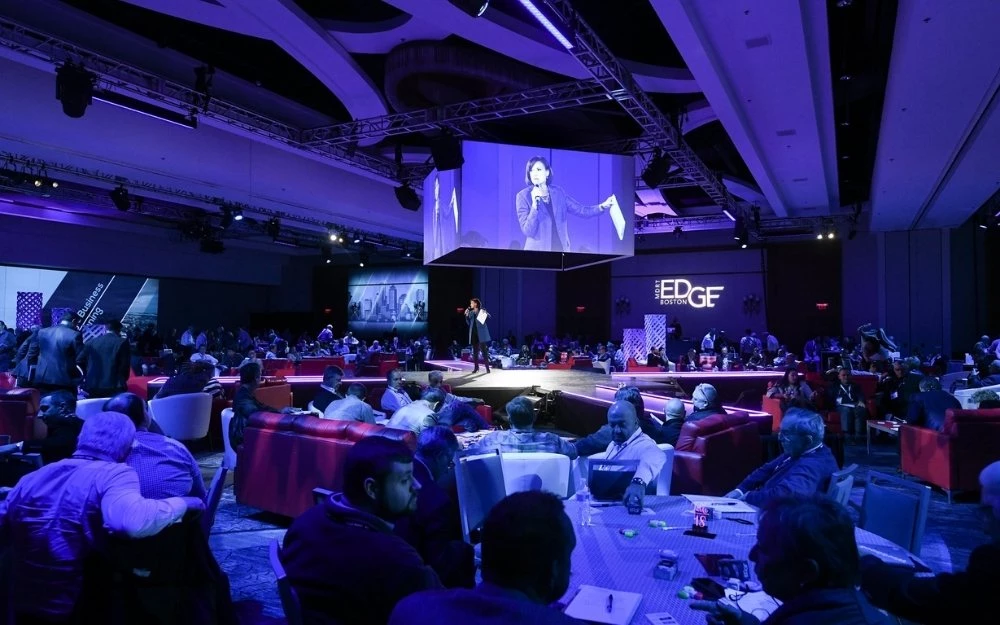
At the MDRT EDGE Conference by Million Dollar Round Table, event production company Meeting Tomorrow designed a highly immersive environment tailored to financial professionals.
They introduced a “theater-in-the-round” general session for 360-degree engagement and a “silent disco” format where attendees could choose between simultaneous presentations via headphones.
The space was further divided into interactive zones with custom lighting, kinetic stage elements, and projection design, so content felt dynamic, personalized, and continuously engaging for a diverse audience.
Lauren Reeves, Chief Operating Officer at Meeting Tomorrow, shares:
“The generic events are losing appeal. Attendees are expecting personalized experiences, tailored content, and memorable moments.
It will require getting out of the standard templates and the way you’ve always done it.”
3. Product Launch and Brand Activation Management
Best for introducing products, encouraging trials, and building brand awareness.
Product launches introduce something new to the market. Brand activations let people experience a brand directly through pop-ups, sampling events, interactive installations, or live demonstrations.
The two often overlap when a launch invites customers to try the product themselves.
The experience should make the product’s value easy to understand. A striking venue or photo opportunity can attract attention, but visitors also need a reason to remember what you’re offering and take the next step.
What to prioritize:
- Build around one clear message. Decide what visitors should understand about the product, then design an activity that demonstrates it. Avoid packing every feature into the experience.
- Choose the location for your audience. Check who visits the area and when. A busy shopping street may suit a consumer pop-up; a targeted industry gathering may work better for a specialist business product.
- Plan for participation time. Estimate how long each demonstration takes and how many people can participate at once. Provide enough staff, samples, and working equipment to prevent lines from dominating the visit.
- Prepare staff for real questions. Rehearse demonstrations and brief the team on pricing, availability, and common objections. For launches, coordinate the reveal with your website, sales team, and press materials.
- Connect attention to action. Give visitors a clear way to buy, request a demo, or sign up for updates. Track those actions using event-specific links or codes. Measure social reach separately, and use attributable revenue and event costs to assess marketing ROI.
How Samsung Put Galaxy Features Into Visitors’ Hands
Following Galaxy Unpacked in July 2025, Samsung’s Galaxy Experience Space in New York let visitors try its latest devices through product demos, daily workshops, and influencer meet-ups.
Additional Galaxy Hangouts across Manhattan extended the activation into public spaces. The program offered several reasons to visit, with product exploration at its center.
For your own activation, build the main activity around something customers would actually do with the product. Then use workshops or guest appearances to attract relevant audiences and give them more time to explore.
4. Nonprofit & Fundraising Event Management
Best for raising funds, attracting donors, and encouraging community participation.
A fundraising gala can fill every seat and still fall short if production costs leave little money for the cause. Nonprofit event management means keeping the mission visible and making sure the budget, program, and guest experience support it.
Galas, auctions, donor receptions, and volunteer days serve different purposes. Decide early whether you need to raise money, attract supporters, or complete a specific community project.
That choice should guide both the activities and how you measure success.
In OneCause’s 2025 Fundraising Outlook survey, 66% of nonprofits with annual operating revenue below $1 million reported raising at least 21% of that revenue through events and online fundraising in 2024.
What to prioritize:
- Set a target after costs. Budget for the amount you want to retain after venue, catering, production, and payment-processing expenses. Track pledged donations separately from money received.
- Show what support will accomplish. Explain the project or service being funded and use accurate examples of what contributions can provide. Brief speakers on what the donations will fund and how guests can contribute.
- Make donating straightforward. Test donation forms, QR codes, card payments, and auction checkout before guests arrive. Have someone available to help donors who encounter problems.
- Give sponsors and volunteers clear roles. Confirm sponsor recognition in advance and assign volunteers to specific shifts and tasks. Brief them on the schedule, common questions, and who can resolve issues.
- Prepare the follow-up before the event. Plan thank-you messages, pledge reminders, and updates showing how funds were used. Offer attendees a clear way to keep supporting the organization.
How Rise Against Hunger Made Progress Part of the Event
For its 25th-anniversary celebration in Raleigh, North Carolina, Rise Against Hunger organized a three-day meal-packaging event in November 2023. More than 1,400 volunteers packaged 250,000 meals, with a gong sounding each time they completed another 5,000 meals.
The milestone announcements gave volunteers a running update on their collective progress. Food, music, and family activities also gave supporters space to celebrate.
This is a hands-on, high-impact experience that fosters teamwork, raises awareness, and delivers immediate results for people in need.
For your own event, choose a progress measure that directly reflects the goal, such as donations received or supplies assembled, and keep participants updated as they contribute.
5. Educational Event Management
Best for employee training, customer education, and professional development.
Educational events give participants time to learn, practice, and ask questions. For businesses, these can include employee training days, customer workshops, certification programs, and professional development seminars.
The planning starts with what people should be able to do afterward. “Understand our software” is broad. “Build and share a report without assistance” gives the facilitator something concrete to teach and assess.
Radical Candor’s feedback workshops take a similar approach, using guided exercises and realistic scenarios to help teams practice difficult workplace conversations.
What to prioritize:
- Check participants’ starting point. Ask about experience levels and specific challenges during registration. Share any prerequisites early, and consider separate beginner and advanced sessions when the gap is substantial.
- Leave time to practice. Pair explanations with exercises, demonstrations, or small-group problem-solving. For specialist topics, corporate training companies can help develop the curriculum and facilitate sessions.
- Prepare the room for the activity. A discussion needs a different layout from a software workshop. Check sightlines, microphones, accessibility, and power outlets. Test logins and software on the devices participants will actually use.
- Check understanding before moving on. Ask participants to complete a task or explain a decision. Their answers can reveal where the facilitator needs to slow down or revisit a concept.
- Make the learning usable afterward. Send relevant templates, instructions, or recordings, with a suggested task to try next. A short follow-up can establish whether participants have applied the skill and where they still need help.
How Meeting Tomorrow Built a Trading Floor for 400 Students
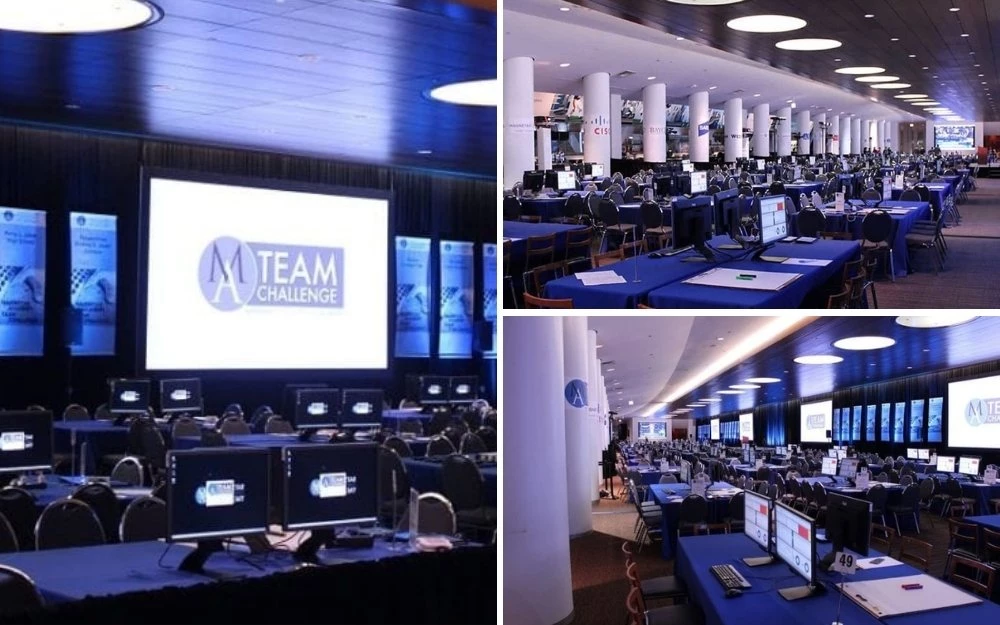
For the Magnetar Youth Investment Academy Team Challenge, Meeting Tomorrow transformed a traditional learning setup into a fully immersive experience by building a mock trading floor for 400 students.
They deployed hundreds of pre-configured devices, integrated AV systems (projectors, sound, lighting), and coordinated a 22-person technical team. They also tested equipment in advance and provided on-site experts, which ensured a seamless, high-engagement environment.
For organizers planning a technology-dependent workshop, that preparation is key. Test the equipment before participants arrive so they can spend the session practicing, without interruptions for technical fixes.
6. Entertainment and Cultural Event Management
Best for attracting audiences through live performances, celebrating culture, and building brand affinity.
At concerts, festivals, screenings, and brand-hosted shows, the performance is the main attraction. But the experience starts at the entrance, and long lines or poor sound can overshadow what happens onstage.
Your programming and operations teams need to plan together, with enough time for sound checks, set changes, and guests moving between spaces.
Before booking talent, work out how ticket sales, sponsorships, and other income will cover the costs.
What to prioritize:
- Confirm what each performance needs. Agree on set lengths, equipment, sound checks, and changeover times before finalizing the schedule. Assign someone to communicate timing changes to performers and production crews.
- Walk through the guest experience. Check the route between entrances, stages, food vendors, restrooms, and exits. Keep lines off busy walkways, and provide accessible viewing areas and seating.
- Plan for disruptions. Establish who can pause a performance and how staff will communicate delays, severe weather, or an evacuation. Brief security, medical teams, and vendors before doors open.
- Give sponsors a relevant role. Offer charging stations, water refill points, or branded giveaways that guests appreciate. Agree on placements and reporting requirements before selling sponsorship packages.
- Track what pays for the event. Review ticket income, vendor fees, sponsorships, and merchandise sales against their associated costs. Guest feedback can help explain weak sales or identify problems to fix before the next edition.
How Norbergfestival Makes the Venue Part of the Performance
At Sweden’s Norbergfestival, a former mining complex becomes part of the show.
The festival matches performances to each space's character. Ambient and experimental music fills the vast, echoing Mimer stage. Outdoors, the 303 stage hosts energetic DJ sets, with room to dance and socialize.
Additional performances and installations extend the program into the surrounding town.
Consider the acoustics and layout of your own venue before assigning acts to stages.



7. Social and Networking Event Management
Best for strengthening client relationships, introducing potential partners, and celebrating company milestones.
A client appreciation evening gives you time to catch up without a sales agenda. An industry mixer helps guests meet people they might work with. Holiday parties, community gatherings, and company anniversaries also fall into this category, emphasizing conversation and shared experiences.
The challenge is giving people enough structure to feel welcome without scheduling every minute.
What to prioritize:
- Build the guest list around the purpose. For networking, consider which roles, interests, or industries would benefit from meeting. For a celebration, check that invitations include the people who contributed to the milestone.
- Help people enter the conversation. Assign hosts to welcome arrivals and make introductions. At professional mixers, name badges that list a role or area of interest give guests an easy starting point.
- Leave room for unplanned conversations. Keep speeches brief and activities optional. Arrange seating in small groups and set music at a level that lets people talk comfortably.
- Make guests comfortable. Ask about dietary and accessibility needs during registration, offer nonalcoholic drinks, and provide seating away from louder activities. Choose invitations and decor that represent your brand identity and suit the occasion.
- Follow up personally. Thank guests, share event photos where appropriate, and deliver on promised introductions or resources. For client events, make this part of your ongoing customer engagement strategy.
A Pumpkin Patch Outing Gives Client Appreciation a Personal Touch
Real estate professionals can reconnect with clients and their families over seasonal activities at a local farm. Pumpkin picking and photo opportunities give guests something to enjoy as they catch up.
Planning something similar? Make the invitation clear about who can attend, which activities are included, and what happens if the weather changes.
In-Person, Virtual, and Hybrid Events: What Changes?
Once you’ve chosen the event’s purpose, decide how people will attend. A workshop may work online if participants can complete the exercises remotely.
A product demonstration may work better in person, where buyers can try the product and ask questions as they explore its features.
The format changes your staffing, budget, and technical requirements.
| Format | When It Fits | What To Plan For |
| In-person | Hands-on activities, product demonstrations, and face-to-face conversations | Venue access, travel, accommodation, catering |
| Virtual | Presentations, remote training, and discussions across locations | Time zones, accessible materials, speaker rehearsals, moderation, and technical support |
| Hybrid | Events with both on-site and remote audiences | Streaming, clear audio, online moderation, and participation options for both audiences |
Hybrid needs more than a camera at the back of the room. Assign someone to field online questions and explain what happens during breaks or activities that remote attendees cannot join.
If the budget cannot support both audiences properly, a focused live event with recordings shared afterward may be a better choice.
How To Choose Event Management Support
Before contacting agencies, list what you want them to handle. That might be the entire event, hotel bookings for 200 attendees, or sound and streaming for a single stage. Specify what your team will handle too, so proposals cover the same work and are easier to compare.
| If You Need Help With | Look For | Ask Before Hiring |
| Planning and coordinating the whole event | A full-service event management company | Who owns the schedule, budget, supplier coordination, and on-site decisions? |
| Staging, sound, lighting, and streaming | An event production specialist | What equipment, rehearsals, crew, and backup arrangements are included? |
| Hotels for traveling attendees | A group accommodation service | Who manages room changes, booking deadlines, and billing? |
| Promotion and registration | An event marketing agency | How will you reach the intended audience and track registrations? |
| Training content and facilitation | A corporate training provider | How will you adapt the material and check what participants learned? |
Compare proposals line by line. Review staffing hours, equipment, travel expenses, overtime, and exclusions, using an event planner cost breakdown to identify questions to ask. A lower quote may leave your team responsible for substantial work.
Once you’ve defined the support you need, compare providers with experience in your event type.

Our team ranks agencies worldwide to help you find a qualified partner. Visit our Agency Directory for the Top Event Management Companies as well as: