Discover top USA mobile app development companies on DesignRush that build bespoke iOS, Android, cross-platform apps, and MVPs. Compare developers with verified portfolios and client reviews, renowned for their ability to achieve stronger user adoption.
Organic rankings are determined by five factors: top services, reviews, portfolio, awards/press, and team expertise. Sponsored listings pay for a placement that appears above organic positions. Sponsorship does not affect star ratings or review content - read more on our methodology page.
United States ×
12AM Agency helps local service businesses move from inconsistent lead flow to predictable, high-quality lead generation using AI visibility, Google Maps, and conversion systems...
Top Services:
- Digital Strategy
- Digital Marketing
- Digital Services
- Content Marketing
- SEO
- Show more
- Location
- Dallas, Texas
- Number of Employees
- Under 49
- Average Hourly Rate
- $195/hr
- Minimal Budget
- $1,000 - $10,000
- Portfolios Count
- 5 Projects Listed
TVISHA is a dynamic technology company that envisions and crafts innovative digital solutions. With an unwavering commitment to excellence, we stand as a trusted partner on the forefront of technological evolution especially mobile and publishing app development...
Top Services:
- Mobile App Development
- Web Design
- Software Development
- AI Development
- eCommerce Development
- Show more
- Location
- Edison, New Jersey
- Number of Employees
- 100 - 249
- Average Hourly Rate
- $10/hr
- Portfolios Count
- 5 Projects Listed
TekRevol is a globally recognized digital innovation company with 10 years of experience delivering high-impact mobile applications, AI-powered software, and scalable digital products. Every engagement begins with a clear roadmap, defined KPIs, and a commitment to measurable business outcomes...
Top Services:
- Mobile App Development
- Web Development
- AI Development
- Staff Augmentation
- Digital Marketing
- Show more
- Location
- Houston, Texas
- Number of Employees
- 250 - 499
- Average Hourly Rate
- $35/hr
- Minimal Budget
- $25,000 - $50,000
- Portfolios Count
- 46 Projects Listed
instinctools is a professional mobile app development agency with 25+ years of experience delivering AI-driven custom software and digital products. With 400+ experts across global hubs, we accelerate your app’s time-to-market while ensuring quality and security through multiple ISO certifications...
Top Services:
- Software Development
- Web Development
- Mobile App Development
- Big Data Analytics
- eCommerce Development
- Show more
- Location
- Potomac, Maryland
- Number of Employees
- 250 - 499
- Average Hourly Rate
- $40/hr
- Minimal Budget
- $10,000 - $25,000
- Portfolios Count
- 69 Projects Listed
HTMLPanda is a leading website development company founded in 2014. With offices in Boston, Walpole & NYC, we have collaborated with clients all over the world. Our cutting-edge web development services include WordPress development, Drupal development, Woocommerce development, Shopify development...
Top Services:
- eCommerce Development
- Web Development
- WordPress Website Design
- Software Development
- UI/UX Design
- Show more
- Location
- Boston, Massachusetts
- Number of Employees
- 100 - 249
- Average Hourly Rate
- $20/hr
- Minimal Budget
- $1,000 - $10,000
- Portfolios Count
- 27 Projects Listed
SDLC Corp provides solutions for clients seeking an innovative app development agency that transforms ideas into scalable, high-performance applications. Our proven strategies drive excellence in every mobile app and digital product we handle, ensuring seamless user experiences and measurable business growth...
Top Services:
- Software Development
- Mobile App Development
- Web Development
- AI Development
- Blockchain
- Show more
- Location
- Batavia, Illinois
- Number of Employees
- 1000 & Up
- Average Hourly Rate
- $30/hr
- Minimal Budget
- $10,000 - $25,000
- Portfolios Count
- 54 Projects Listed
Global software development company crafting secure AI-enabled solutions...
Top Services:
- Software Development
- AI Development
- Web Development
- Mobile App Development
- Web Design
- Show more
- Location
- Marlborough, Massachusetts
- Number of Employees
- 250 - 499
- Average Hourly Rate
- $50/hr
- Minimal Budget
- $10,000 - $25,000
- Portfolios Count
- 40 Projects Listed
Optimal IT Solutions is your one-stop destination for cutting-edge digital services. We specialize in mobile and web app development, custom software solutions, stunning web design and development, engaging social media and digital marketing strategies, and high-quality video animation. Whether you're a...
Top Services:
- Mobile App Development
- Digital Marketing
- Digital Services
- Web Development
- Show more
- Location
- Austin, Texas
- Number of Employees
- 100 - 249
- Average Hourly Rate
- $25/hr
- Minimal Budget
- $10,000 - $25,000
Solution Analysts is a leading digital transformation and enterprise software development company, specializing in custom solutions that drive innovation...
Top Services:
- Mobile App Development
- Software Development
- Wearables
- AI Development
- Blockchain
- Show more
- Location
- Suwanee, Georgia
- Number of Employees
- 100 - 249
- Average Hourly Rate
- $25/hr
- Minimal Budget
- $50,000 & Up
- Portfolios Count
- 66 Projects Listed
Achievements: Laracon Hackathon Winner 2024: Recognized for excellence in Laravel technology.Top Development Company: Featured on platforms like GoodFirms, Clutch & Designrush...
Top Services:
- Web Development
- Web Design
- eCommerce Development
- AI Development
- Mobile App Development
- Show more
- Location
- Jersey City, New Jersey
- Number of Employees
- 50 - 99
- Average Hourly Rate
- $50/hr
- Portfolios Count
- 9 Projects Listed
All-in-one BNPL solution - an efficient system that brings together various elements of BNPL services, automating processes, and ensuring a smooth operation that benefits both merchants and customers on a global scale...
Top Services:
- Mobile App Development
- Location
- St. Petersburg, Florida
- Number of Employees
- 50 - 99
- Average Hourly Rate
- $150/hr
- Minimal Budget
- $50,000 & Up
- Portfolios Count
- 4 Projects Listed
Techstack is a strategic technology partner with 10+ years of expertise in mobile and custom software development. We build, scale, and evolve high-quality digital products through strong engineering culture, transparency, and long-term growth focus...
Top Services:
- Mobile App Development
- Web Development
- Software Development
- Web Design
- AI Development
- Show more
- Location
- Dover, Delaware
- Number of Employees
- 100 - 249
- Average Hourly Rate
- $50/hr
- Minimal Budget
- $10,000 - $25,000
- Portfolios Count
- 24 Projects Listed
We don't just build apps. We build app businesses that actually succeed, where 80% fail within their first year. For 17 years we've perfected what actually works, having launched 300+ successful apps, including one that hit 4+ million downloads in just 60 days with sub-$3 user acquisition...
Top Services:
- Mobile App Development
- Web Development
- Software Development
- eCommerce Development
- UI/UX Design
- Show more
- Location
- Alpharetta, Georgia
- Number of Employees
- 100 - 249
- Portfolios Count
- 27 Projects Listed
Ecommerce engineering agency for Adobe Commerce (Magento), Shopify Plus, SFCC, Medusa and Shopware. B2B portals, ERP integration (SAP, NetSuite, Dynamics), replatforming, rescue of failing builds, team extension. Adobe Commerce Silver, Hyvä Bronze Partner. Est. 2009, 200+ engineers, Europe and US...
Top Services:
- eCommerce Development
- Web Development
- Mobile App Development
- Software Testing
- Cloud Consulting
- Show more
- Location
- New York City, New York
- Number of Employees
- 100 - 249
- Average Hourly Rate
- $50/hr
- Minimal Budget
- $25,000 - $50,000
- Portfolios Count
- 20 Projects Listed
App Development drives innovation at Closeloop Technologies. With our unique expertise, we deliver tailored mobile solutions that enhance user engagement and business growth. Expect collaborative, cutting-edge apps designed to meet your specific goals and elevate your digital presence...
Top Services:
- Software Development
- Web Design
- Mobile App Development
- AI Development
- Wearables
- Show more
- Location
- Mountain View, California
- Number of Employees
- 100 - 249
- Average Hourly Rate
- $25/hr
- Minimal Budget
- $25,000 - $50,000
- Portfolios Count
- 31 Projects Listed
At Mobcoder AI, certified engineers and data scientists help you identify high-ROI AI use cases and operationalize them at scale. With 150+ deployments, CMMI Level 3 certification and 12+ years of experience, we build AI solutions governed by design and model-agnostic frameworks...
Top Services:
- Mobile App Development
- AI Development
- Software Development
- Web Development
- VR/AR
- Show more
- Location
- Seattle, Washington
- Number of Employees
- 100 - 249
- Average Hourly Rate
- $55/hr
- Minimal Budget
- $10,000 - $25,000
- Portfolios Count
- 14 Projects Listed

Lionwood.software
VerifiedVerified by the DesignRush team for authenticity and credibility.Lionwood.software is a software development company founded in 2017 that builds digital products through long-term, collaborative partnerships with organizations across Europe and North America. The company combines strong engineering expertise with a human-centered approach focused on transparency,...
Top Services:
- Software Development
- Mobile App Development
- Web Development
- Blockchain
- Staff Augmentation
- Show more
- Location
- Newark, Delaware
- Number of Employees
- 50 - 99
- Average Hourly Rate
- $35/hr
- Minimal Budget
- $25,000 - $50,000
- Portfolios Count
- 19 Projects Listed

Surf
Award WinnerRecipient of a Best Design Award for outstanding work.Our commitment is to deliver exceptional App Development solutions that drive business growth. With over 13 years of experience, Surf crafts native and cross-platform apps tailored to your goals. Our extensive expertise ensures success in even the most complex projects, from strategy and design to launch and...
Top Services:
- Mobile App Development
- Software Development
- Web Development
- Location
- Wilmington, Delaware
- Number of Employees
- 100 - 249
- Average Hourly Rate
- $49/hr
- Minimal Budget
- $25,000 - $50,000
- Portfolios Count
- 10 Projects Listed
Ramotion is a San Francisco/Burlingame, California based digital product studio founded in 2009. The boutique agency blends brand strategy, UX/UI, web and mobile design, and front-end development to support startups through Fortune 500 companies. With a curated client roster and a team of ~70...
Top Services:
- Web Design
- Branding
- UI/UX Design
- Web Development
- Mobile App Development
- Show more
- Location
- San Francisco, California
- Number of Employees
- 50 - 99
- Average Hourly Rate
- $150/hr
- Portfolios Count
- 18 Projects Listed
No matter what your niche is, we will help build mobile apps for your business. Choose our best application development company for building apps in any business vertical...
Top Services:
- Mobile App Development
- Web Development
- Software Development
- UI/UX Design
- AI Development
- Show more
- Location
- Atlanta, Georgia
- Number of Employees
- 250 - 499
- Average Hourly Rate
- $25/hr
- Minimal Budget
- $10,000 - $25,000
- Portfolios Count
- 13 Projects Listed
We are a leading web design and digital marketing agency based in the USA. Our focus is on providing top-class digital marketing services to growing businesses, startups, and online stores. With our skilled team, we offer web design, hosting, maintenance, apps & software development...
Top Services:
- Web Design
- eCommerce Development
- Web Development
- PPC
- SEO
- Show more
- Location
- Fairfax, Virginia
- Number of Employees
- Under 49
- Average Hourly Rate
- $100/hr
- Portfolios Count
- 13 Projects Listed
SapientPro is a custom software, design, and AI development team. Since 2017, we've shipped 200+ projects in the US and EU, with offices in New York, Tallinn, and Lucerne. Most clients come back for a second project, the metric we actually care about...
Top Services:
- AI Development
- eCommerce Development
- Mobile App Development
- Web Design
- Web Development
- Show more
- Location
- New York City, New York
- Number of Employees
- 100 - 249
- Average Hourly Rate
- $40/hr
- Minimal Budget
- $1,000 - $10,000
- Portfolios Count
- 20 Projects Listed
iTechnolabs empowers clients to transform ideas into dynamic digital experiences. Our creative excellence drives outstanding performance in app creation and software innovation, delivering intuitive, scalable solutions that boost engagement and streamline operations, ensuring your brand stands out in a...
Top Services:
- Mobile App Development
- Software Development
- VR/AR
- AI Development
- IoT
- Show more
- Location
- Sheridan, Wyoming
- Number of Employees
- 100 - 249
- Average Hourly Rate
- $20/hr
- Minimal Budget
- $10,000 - $25,000
- Portfolios Count
- 41 Projects Listed
Guiding and helping businesses worldwide build solutions that sell. Genetech is an award-winning custom software development company with almost 2 decades of experience in delivering top-notch tech services, including AI, IoT, Intelligent Apps, Cyber Security, and Tech Talent...
Top Services:
- Software Development
- AI Development
- Mobile App Development
- Staff Augmentation
- Cybersecurity
- Show more
- Location
- Ann Arbor, Michigan
- Number of Employees
- 100 - 249
- Average Hourly Rate
- $50/hr
- Minimal Budget
- $10,000 - $25,000
- Portfolios Count
- 34 Projects Listed

Groove Jones
Award WinnerRecipient of a Best Design Award for outstanding work.Groove Jones is an innovative technology company that specializes in creating AI/VR/AR software solutions for a wide range of industries, including advertising, entertainment, marketing, health, and training...
Top Services:
- VR/AR
- Software Development
- Mobile App Development
- Web Development
- Web Design
- Show more
- Location
- Dallas, Texas
- Number of Employees
- Under 49
- Average Hourly Rate
- $150/hr
- Minimal Budget
- $50,000 & Up
- Portfolios Count
- 26 Projects Listed
Sapphire Solutions is the best Web &Mobile App Development Company in India, USA offering reliable and affordable Web & Mobile App Development Services to businesses from startups to enterprises...
Top Services:
- Mobile App Development
- Digital Marketing
- Big Data Analytics
- Location
- Coral Springs, Florida
- Number of Employees
- 100 - 249
- Average Hourly Rate
- $10/hr
- Minimal Budget
- $1,000 - $10,000
- Portfolios Count
- 2 Projects Listed
Ailoitte is an AI-native engineering partner helping startups and enterprises build, modernize, and scale digital products with faster, more predictable outcomes...
Top Services:
- AI Development
- Mobile App Development
- Software Development
- Web Development
- eCommerce Development
- Show more
- Location
- Dover, Delaware
- Number of Employees
- 100 - 249
- Average Hourly Rate
- $25/hr
- Minimal Budget
- $10,000 - $25,000
- Portfolios Count
- 9 Projects Listed
At Inventco Software, we craft top-tier media apps that redefine user engagement. Pioneers in media app development, we seamlessly blend mobility and entertainment, ensuring your brand resonates universally...
Top Services:
- Mobile App Development
- eCommerce Development
- Blockchain
- AI Development
- IoT
- Show more
- Location
- Somerset, Massachusetts
- Number of Employees
- 50 - 99
- Average Hourly Rate
- $25/hr
- Minimal Budget
- $1,000 - $10,000
- Portfolios Count
- 74 Projects Listed
We build custom Software Solutions, Mobile Apps, Content Management Systems, Document Management Systems, Customer Relationship Management Systems (CRM), Enterprise Resource Planning (ERP), E-Commerce Software Development, Web Product Development, IT Consulting Services, Web Designing & Development...
Top Services:
- Software Development
- Mobile App Development
- IT Services
- Web Development
- eCommerce Development
- Show more
- Location
- Salt Lake City, Utah
- Number of Employees
- 50 - 99
- Average Hourly Rate
- $45/hr
- Minimal Budget
- $25,000 - $50,000
- Portfolios Count
- 5 Projects Listed
As a web development company specializing in building high-load complex products, we are passionate about sharing our expertise and keeping you updated on the latest advancements in these key areas...
Top Services:
- Mobile App Development
- Software Development
- Software Testing
- Wearables
- CRM Consulting
- Show more
- Location
- San Francisco, California
- Number of Employees
- 100 - 249
- Average Hourly Rate
- $35/hr
- Minimal Budget
- $10,000 - $25,000
- Portfolios Count
- 4 Projects Listed
Use MAXBURST to Revolutionize Your Internet Presence. We create creative, captivating websites that captivate visitors and increase conversions. Whether you require a corporate website on WordPress or an e-commerce platform like Shopify, our unique designs and digital experiences provide outcomes. Are you...
Top Services:
- Web Design
- eCommerce Development
- Web Development
- Branding
- Media Buying
- Show more
- Location
- New York City, New York
- Number of Employees
- Under 49
- Average Hourly Rate
- $100/hr
- Minimal Budget
- $10,000 - $25,000
- Portfolios Count
- 99 Projects Listed
RisingMax Inc., a prominent IT consulting company based in NYC, collaborates with startups and Fortune 500 companies, offering advanced IT solutions, chatbot solution, and smart strategies to streamline business operations and explore new opportunities...
Top Services:
- Mobile App Development
- Web Development
- Software Development
- Blockchain
- Software Testing
- Show more
- Location
- New York City, New York
- Number of Employees
- 50 - 99
- Average Hourly Rate
- $25/hr
- Minimal Budget
- $1,000 - $10,000
- Portfolios Count
- 7 Projects Listed
Our vision is to see businesses of all sizes reach their full potential by using modern marketing strategies and that are proven to help scale businesses either in size, reach, revenue, or all three...
Top Services:
- SEO
- PPC
- Digital Marketing
- Web Design
- Web Development
- Show more
- Location
- Seattle, Washington
- Number of Employees
- Under 49
- Average Hourly Rate
- $100/hr
- Minimal Budget
- $1,000 - $10,000
- Portfolios Count
- 4 Projects Listed
I am grateful that you took the time to visit! Because you are here, I may assume that you are searching for help with some aspect of software development, whether it is UI/UX design or mobile app development. You are at the appropriate location. Your unique requirements for digital company might become a...
Top Services:
- Mobile App Development
- Web Design
- Software Development
- WordPress Website Design
- eCommerce Development
- Show more
- Location
- Los Angeles, California
- Number of Employees
- 100 - 249
- Average Hourly Rate
- $30/hr
- Minimal Budget
- $25,000 - $50,000
- Portfolios Count
- 16 Projects Listed
Mercury Development provides a unique blend of digital craftsmanship, transforming ideas into seamless mobile experiences. The team’s creative vision elevates the impact of every interactive platform, ensuring intuitive user journeys and cutting-edge solutions that resonate in today’s fast-evolving tech...
Top Services:
- Mobile App Development
- Software Development
- UI/UX Design
- Software Testing
- Wearables
- Show more
- Location
- Stuart, Florida
- Number of Employees
- 250 - 499
- Average Hourly Rate
- $50/hr
- Portfolios Count
- 8 Projects Listed
InvoZone provides comprehensive software development consulting services for businesses, startups, and enterprises...
Top Services:
- Mobile App Development
- Software Development
- eCommerce Development
- Blockchain
- AI Development
- Show more
- Location
- Pembroke Pines, Florida
- Number of Employees
- 500 - 999
- Average Hourly Rate
- $45/hr
- Minimal Budget
- $10,000 - $25,000
- Portfolios Count
- 28 Projects Listed

Solveit
Award WinnerRecipient of a Best Design Award for outstanding work.We design and develop top-rated mobile and web apps for startups and SMEs. E-commerce, Healthcare, Marketplaces, and more. Our clients rate us for 5 out 5 - check out why!...
Top Services:
- Mobile App Development
- Software Development
- Web Design
- Design Services
- AI Development
- Show more
- Location
- San Francisco, California
- Number of Employees
- 50 - 99
- Average Hourly Rate
- $45/hr
- Minimal Budget
- $25,000 - $50,000
- Portfolios Count
- 32 Projects Listed
Origami Studios gets its fame for developing high-performance, feature-packed mobile applications and custom softwares that deliver 5-star rating and ultimate user experience. We create applications that help you scale your business, gain traction, and become industry leaders...
Top Services:
- AI Development
- Mobile App Development
- Software Development
- eCommerce Development
- Staff Augmentation
- Show more
- Location
- Parsippany-Troy Hills, New Jersey
- Number of Employees
- Under 49
- Average Hourly Rate
- $49/hr
- Minimal Budget
- $10,000 - $25,000
- Portfolios Count
- 61 Projects Listed
GET OUR EXPERT CONSULTING AND SOFTWARE ENGINEERING SERVICES...
Top Services:
- Software Development
- Mobile App Development
- Web Development
- Cloud Consulting
- AI Development
- Show more
- Location
- New York City, New York
- Number of Employees
- 250 - 499
- Average Hourly Rate
- $40/hr
- Minimal Budget
- $25,000 - $50,000
- Portfolios Count
- 25 Projects Listed
GO LOGO NOW has perfected the ideation and pronouncements of technology over the years by drinking the cocktail of motivation, innovation, materialization and amalgamation, with addition of exhaustive research, steady tread and rigid dedication...
Top Services:
- Mobile App Development
- Web Design
- Branding
- Software Development
- Blockchain
- Show more
- Location
- Irvington, New Jersey
- Number of Employees
- 100 - 249
- Average Hourly Rate
- $25/hr
- Minimal Budget
- $1,000 - $10,000
- Portfolios Count
- 14 Projects Listed
Through Koderspedia, clients gain a mobile app development company partner with a proven record—millions of downloads, funded launches, and seamless UI/UX. Our strategic thinking leads to remarkable outcomes in iOS, Android, and cross-platform app innovation. Submit your RFP today...
Top Services:
- Web Design
- Web Development
- Mobile App Development
- Software Development
- Logo Design
- Show more
- Location
- Palo Alto, California
- Number of Employees
- Under 49
- Minimal Budget
- $1,000 - $10,000
- Portfolios Count
- 13 Projects Listed
Building MVPs and scaling solutions for FoodTech & Retail startups since 2015...
Top Services:
- Mobile App Development
- Software Development
- Web Design
- eCommerce Development
- Branding
- Show more
- Location
- Addison, Texas
- Number of Employees
- Under 49
- Average Hourly Rate
- $60/hr
- Minimal Budget
- $50,000 & Up
- Portfolios Count
- 20 Projects Listed
At SemiDot Infotech, we're at the forefront of media app development, offering scalable and customized solutions for the entertainment sector. Our expertise spans across image editing, video and music streaming, gaming, enterprise mobility, and content aggregation...
Top Services:
- Mobile App Development
- Web Development
- Blockchain
- eCommerce Development
- Web Design
- Show more
- Location
- Boulder, Colorado
- Number of Employees
- 50 - 99
- Average Hourly Rate
- $20/hr
- Minimal Budget
- $1,000 - $10,000
- Portfolios Count
- 30 Projects Listed
We produce dependable technology solutions while emphasizing team growth, continual innovation, and a sense of belonging. We offer value to your organization by creating new customer experiences without losing sight of the client. With the assistance of our team of professionals, we foster innovation by...
Top Services:
- Mobile App Development
- Software Development
- UI/UX Design
- HR Outsourcing
- IT Services
- Show more
- Location
- Fort Walton Beach, Florida
- Number of Employees
- Under 49
- Average Hourly Rate
- $45/hr
- Minimal Budget
- $25,000 - $50,000
- Portfolios Count
- 6 Projects Listed
WebDesk Solution is an AI-first digital growth agency serving North America since 2011. From offices in New York and Toronto, we build eCommerce stores, deploy custom AI systems, and run growth programs that answer to revenue with the same engineers across every discipline, under one roof...
Top Services:
- eCommerce Development
- Web Development
- Web Design
- Mobile App Development
- Digital Marketing
- Show more
- Location
- Great Neck, New York
- Number of Employees
- Under 49
- Average Hourly Rate
- $80/hr
- Minimal Budget
- $1,000 - $10,000
- Portfolios Count
- 21 Projects Listed
We build digital solutions that help brands boost visibility and double their growth within 12 - 18 months...
Top Services:
- Web Development
- Mobile App Development
- Web Design
- Digital Marketing
- SEO
- Show more
- Location
- Baldwin, New York
- Number of Employees
- Under 49
- Minimal Budget
- $10,000 - $25,000
- Portfolios Count
- 55 Projects Listed
With expertise in emerging and traditional markets, experience working with blue chip and new chip companies, and the support of a committed development team, we have been partnering with customers across North America and abroad interested in building their brand and on-line presence since 1996...
Top Services:
- Web Design
- Web Development
- WordPress Website Design
- eCommerce Development
- VR/AR
- Show more
- Location
- Claremont, California
- Number of Employees
- Under 49
- Average Hourly Rate
- $220/hr
- Minimal Budget
- $10,000 - $25,000
- Portfolios Count
- 8 Projects Listed
Chudovo: A nearshore software development leader with offices in Cologne, Kyiv, NY, Tallinn, and London. Specializing in healthcare, finance, and more. Innovative, domain-focused solutions...
Top Services:
- Software Development
- IT Services
- eCommerce Development
- AI Development
- Mobile App Development
- Show more
- Location
- New York City, New York
- Number of Employees
- 100 - 249
- Portfolios Count
- 98 Projects Listed
Synergy Labs is a results-driven mobile app and web development agency helping startups, enterprises, and fast-growing businesses build scalable digital products. With a team of experienced UI/UX designers, app developers, and growth strategists, we've partnered with clients across the world...
Top Services:
- Mobile App Development
- Software Development
- Staff Augmentation
- AI Development
- Show more
- Location
- Miami, Florida
- Number of Employees
- 50 - 99
- Average Hourly Rate
- $25/hr
- Portfolios Count
- 8 Projects Listed
Wezom offers custom software development services, providing solutions that address business challenges, meet market demands, enhance internal operations, and stay up-to-date with the latest technologies...
Top Services:
- IT Services
- Software Development
- Mobile App Development
- Web Design
- eCommerce Development
- Show more
- Location
- Chicago, Illinois
- Number of Employees
- 250 - 499
- Average Hourly Rate
- $49/hr
- Minimal Budget
- $50,000 & Up
- Portfolios Count
- 27 Projects Listed



























Mobile App Development Companies by City
Mobile App Development Companies by State
Mobile App Development Specializations in the US
- Android
- Application Modernization
- Consumer
- Cross-Platform
- eCommerce
- Educational
- Enterprise
- Financial
- Fitness App Development
- Games
- Government
- Healthcare
- HTML5
- iPad
- iPhone
- Mobile App design
- Publishing
- React Native
- Small Businesses App Development
- Social Network Apps
- Sports App Development
- Startup
- Travel App Development
- Wearables
- Windows
Popular Services
Hiring Guide: How to Choose a Leading App Development Company in the US
How do businesses evaluate and compare mobile app development companies?
To choose the best provider for their needs, businesses typically evaluate:
- Relevant experience: Proven delivery on similar app types, industries, or technical requirements, especially as many organizations outsource primarily to access specialized talent.
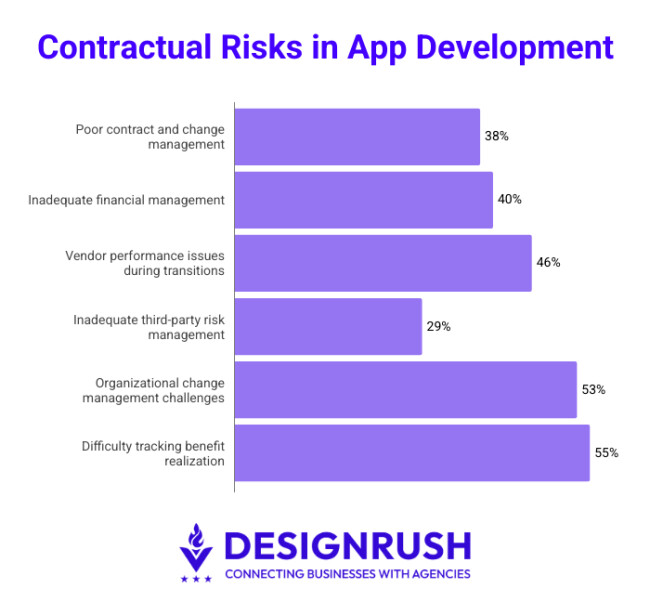
- Portfolio depth: Evidence of real, shipped apps with measurable outcomes rather than design concepts alone, as 55% of organizations report difficulty tracking realized value from external providers.
- Technical expertise: Ability to support required platforms, integrations, security, scalability, and AI-enabled capabilities, with 83% of executives expecting vendors to embed AI into service delivery.
- Process and communication: A clear development methodology, milestones, and reporting cadence, given that 53% of organizations cite organizational change management challenges and 47% report issues integrating vendor services.
- Pricing transparency: Well-defined hourly or project-based pricing with clear scope assumptions and change control mechanisms.
- Post-launch support: Ongoing maintenance, updates, monitoring, and optimization to prevent value loss after launch.
- Client feedback: Verified reviews and case studies that reflect delivery quality and reliability, particularly as 46% of organizations experience vendor performance issues during transitions.
How to differentiate a high-quality app from a functional one in an agency portfolio?
A stronger app stands out in an agency portfolio through evidence of product thinking, execution depth, and real-world performance, not just working features.
Watch out for:
- Clear problem framing tied to a specific business or user need.
- Polished user experience with intuitive navigation and refined interaction design.
- Technical depth such as custom logic, integrations, or scalable backend architecture.
- Performance signals including stability, responsiveness, and cross-device consistency.
- Adoption or outcome metrics like usage, retention, revenue impact, or operational gains.
- Evidence of iteration based on post-launch data or user feedback.
What risks should be contractually defined before signing with an agency?
Clear contractual safeguards help set expectations, protect both parties, and prevent common issues that can arise during complex development engagements:
The most important risks to address include:
- Scope definition and change control: Clearly defined deliverables, assumptions, and approval processes, as 38% of organizations report poor contract and change management.
- Timeline and delivery risk: Milestones, dependencies, and remedies if delivery expectations are not met.
- Cost overruns: Transparent pricing structures, payment schedules, and protections against unexpected charges, with 40% of organizations citing inadequate financial management as a contributor to outsourcing issues.
- Intellectual property ownership: Explicit ownership of code, designs, documentation, and related assets upon payment.
- Data security and confidentiality: Responsibilities for protecting sensitive data and handling breaches, especially as 29% of organizations report inadequate third-party risk management.
- Quality standards: Acceptance criteria, testing requirements, and remediation obligations, aligned with the fact that 33% of organizations prioritize improved quality and performance when outsourcing.
- Termination and exit terms: Conditions for ending the engagement and transferring work, assets, and knowledge, given that 46% of organizations report vendor performance challenges during transitions.
What questions should a business ask an app development agency before requesting proposals?
Before engaging vendors or requesting formal estimates, businesses benefit from clarifying capabilities, processes, and delivery expectations to ensure alignment and reduce risk:
Relevant Background
- What mobile app projects similar to ours have you delivered, and what outcomes were achieved?
- Which industries or app types do you have the strongest delivery experience in?
- What platforms and technologies do you most frequently work with (iOS, Android, cross-platform)?
Services and Processes
- Which stages of the mobile app lifecycle do you handle in-house?
- How do you approach discovery, requirements definition, and technical planning?
- What does your development, testing, and release process look like end to end?
Relevant to Your Project
- Who will be assigned to our project, and what roles will they cover?
- How do you manage scope changes, prioritization, and tradeoffs during development?
- What level of involvement and decision-making do you expect from our team?
How to find the best mobile app development company in the USA on DesignRush?
DesignRush features vetted mobile app development companies in the US, making it easier for you to explore providers that align with your project needs and spend.
| High budget: $50,000+ |
|
| Low budget: $25,000-$50,000 |
|
Sources
DesignRush sustains a directory of over 40,000 agencies categorized by service category, location, expertise, and reviews. We build our database in two ways:
- Our dedicated team of agency experts actively searches the web for top-performing companies. We then pull information from their websites, online presence, and client testimonials to verify their status and qualifications before listing.
- The agencies listed get notified of their profiles on the website, and they can choose to claim them or not, which suggests their availability for more collaborations.
Agencies can also reach out to DesignRush and must go through the verification process prior to being listed.

Why companies trust DesignRush
Every agency is independently vetted before it can be listed or ranked
 4.8
4.8 4.8
4.8Some agencies pay for sponsored placement, clearly labeled and held to the same vetting standards.
FAQs About Mobile App Development Companies
What services does a mobile app development company in the US provide?
The core services of US mobile app development companies include product strategy and discovery, UI/UX design, development, quality assurance and testing, app store deployment, and maintenance and support. Some companies also offer system integration, internet of things (IoT) development, and AI product development.
Which platforms do US mobile app development companies typically support?
Most US development companies support Android and iOS systems and cross-platform frameworks. Many also build cloud-connected backend platforms and tablet-specific, multi-device, and ecosystem-level experiences.
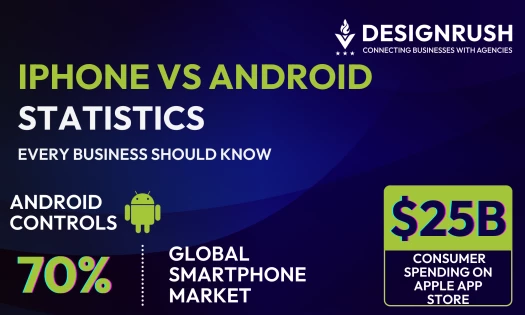
StatCounter reports that that iOS accounts for 59.56% of the American mobile market share, while Android is at 40.46%. As such, it’s valuable to develop mobile apps according to your target users.
How much does it cost to hire a US-based mobile app development company?
Mobile app development costs in the US are about $100-$200+ per hour or $15,000-$30,000 for basic projects. Apps that require more complex features and functionalities can reach $150,000-$500,000+ per project.
What factors most influence mobile app development pricing?
Mobile app development pricing is primarily driven by a combination of scope, technical complexity, and delivery requirements. The most influential factors include:
- Platform choice, design requirements, feature set, and complexity
- Integration, security, and compliance requirements
- Timeline and delivery speed
How long does it typically take to develop a mobile app?
Mobile app development generally takes about 2-3 months for basic products and over 12 months for enterprise builds. Here’s a breakdown:
- Simple apps: 2-3 months, which typically have limited features and integrations.
- Mid-complexity apps: 3-6 months for custom UI/UX, backend, and third-party integrations.
- Enterprise apps: 6-12+ months for advanced functionality, scalability requirements, and extensive testing.
Does a US-based mobile app company build iOS and Android separately?
Most no longer do. Cross-platform frameworks allow one team to ship both platforms from a single codebase, which reduces cost and keeps feature parity. Designli, based in Greenville, South Carolina, uses React Native as its default mobile stack for exactly that reason.
Latest Trends Related to App Development