Are you looking for a credible fintech software development company to optimize your financial operations? Explore our carefully selected directory of top-tier fintech software developers, assessed based on verified client reviews, their portfolios, and expertise, among other criteria. Utilize our reviews, budget, and hourly rate filters to discover your ideal business partner and enhance your services and transactions.
We thoroughly reviewed over 500 fintech software development companies globally to curate a short list of the best companies in the industry. Our in-depth analysis concentrates on their technological proficiency, service spectrum, project showcases, customer testimonials, pricing models, and industry accolades. Learn about our rigorous selection methodology and how we identify the best players in the fintech software development industry.
The Number 1 Fintech Software Development Company as Selected by DesignRush Is:
Geniusee

- Best for: Overall
- Average hourly rate: $40
- Minimum budget: $25,000 - $50,000
- Founded: 2016
- Size: 100 - 249
- Location: Kyiv, Ukraine
- Notable clients: DigitalBits, WayWiser, Keep, Zedosh, Zytara
Geniusee specializes in fintech software development, fortified by strategic partnerships with AWS, Galileo, Plaid, and Finicity. The company offers a comprehensive suite of services, from financial data management and fraud detection to advanced blockchain and predictive analytics solutions. Its extensive portfolio includes banking portals, digital banking solutions, eWallets, and robust wealth management systems. Recognized by Forbes, Geniusee focuses on delivering secure, tailor-made software catering to the unique demands of each client.
Geniusee and DigitalBits collaborated to develop a robust blockchain-based ecosystem centered around the XDB cryptocurrency. The project required a wide range of services, including business analysis, web and mobile development, user interface, and user experience (UI/UX) design, all tailored to the unique demands of the fintech industry. Key challenges included creating web and mobile wallets for secure money transfers, developing a financial dashboard for blockchain performance tracking, and ensuring a scalable architecture capable of handling high traffic loads.
The collaboration yielded the DigitalBits blockchain, a versatile platform for creating digital assets like branded currencies and stablecoins. This infrastructure supported high-load traffic, ensuring optimal response times globally. The partnership led to forming a comprehensive ecosystem of applications integrated with DigitalBits. This facilitated the exchange of loyalty coins using DigitalBits tokens and enhanced the liquidity of traditionally non-liquid digital assets through on-chain token transfers and trades.
Diceus

- Best for: Insurance software development
- Average hourly rate: $45
- Minimum budget: $1,000 - $10,000
- Founded: 2011
- Size: 250 - 499
- Location: Wroclaw, Poland
- Notable clients: BriteCore, Teambase, RiskPoint, SMART VALOR, Insly
Since its inception in 2011, Diceus has delivered specialized software solutions for the insurance, banking, and finance sectors, all backed by a global presence and a strong team of over 250 tech professionals. Its insurance offerings encompass a broad spectrum, from crafting omnichannel customer experiences with digital channels to advanced risk management with (artificial intelligence) AI integration. The fintech software development company also excels in developing secure and compliant core banking systems. In finance, it provides a comprehensive suite of services, including payment systems and regulatory compliance solutions.
Diceus took on the challenge of enhancing BriteCore’s Property and Casualty (P&C) insurance core platform to create an intuitive and efficient operations ecosystem. The project involved developing BriteCore’s internal administrative cash flow management and budgeting app, alongside participation in its Community Code Contribution program. Diceus worked closely with BriteCore engineers to develop key products like BriteApps, BriteQuote, and BriteDocs. They focused on mobile and desktop solutions that integrate seamlessly with the BriteCore platform and meet specific carrier needs.
The collaboration brought significant value to BriteCore, notably through the BriteApps policyholder portal. It improved user experience by offering a new digital channel for policyholders to manage their insurance needs efficiently. Key features like enhanced security through biometric authentication, streamlined communication via a centralized message center, and configurable quoting wizards in BriteQuote improved operational efficiency and user engagement.
Praxent

- Best for: Fintech UX design
- Average hourly rate: $50
- Minimum budget: $10,000 - $25,000
- Founded: 2000
- Size: 50 - 99
- Location: Austin, TX
- Notable clients: Meriwest Credit Union, Nymbus, Codat, Neocova, Banker’s Toolbox
Praxent is a leading fintech UX design and engineering firm boasting a robust team of over 100 experts. Specializing in various services, including cloud solutions, and web development, it has successfully delivered over 400 projects. Praxent drives clients’ rapid market entry, modernizes systems, and refines the fintech customer journey. The firm adeptly addresses industry challenges like stakeholder misalignment and brand relevance, positioning clients for success in the dynamic fintech arena.
Meriwest, a $2 billion credit union, partnered with Praxent to enhance its digital user experience and streamline the member onboarding process. Faced with challenges in its digital transition and member drop-off during account opening, Meriwest collaborated with Praxent for a thorough UX overhaul. The result was a redesigned, more intuitive website and onboarding experience, drastically reducing the steps needed for new members to join and open accounts.
The project’s success led to a more consistent and engaging digital journey for existing and prospective members. Onboarding clicks, previously ranging from seven to ten, were reduced to just two to three. Satisfied with the improvements, Meriwest decided to prepare for the next phase, aiming to extend these enhancements to its online banking and mobile platforms with Praxent’s continued expertise.
UppLabs

- Best for: Taxtech solutions
- Average hourly rate: $40
- Minimum budget: $50,000
- Founded: 2014
- Size: 50 - 99
- Location: Kyiv, Ukraine
- Notable clients: Tax1099, Recap Investing, Limehome, Ukrsutki, List Assist
UppLabs specializes in security, compliance, and efficiency, helping businesses navigate the rapidly changing financial market. Its expertise includes web and mobile development, AI-based solutions, as well as online trading, money transactions, and exchange platform engineering. Additionally, it specializes in payment systems integration and optimization, and the maintenance and modernization of existing financial services. Proficient in fintech areas like cryptocurrency, blockchain, regtech, and insurtech, UppLabs offers solutions for stock-trading apps, cybersecurity, mobile payments, open banking, conversational interfaces, and robotic process automation (RPA).
Tax1099, an award-winning IRS-authorized eFiling platform, faced performance issues with its outdated legacy solution, which couldn’t support more than 2,000 real-time users. The monolithic architecture made it difficult to scale, so UppLabs offered two options: rebuild the system from scratch or implement microservice to address critical performance issues. The latter option was chosen. The fintech software development company gradually migrated the legacy product to microservices, introducing a Public Getaway application programming interface (API).
Within two months, the solution’s performance tripled, enabling it to handle a higher volume of real-time users. The migration to microservices architecture and introduction of a Public Getaway API set the foundation for future scalability and efficient communication. UppLabs’ expertise in legacy code support and effective collaboration helped overcome challenges and raise the software development standard. The Tax1099 platform is now better equipped to support its core business goals and deliver improved user service.
Kindgeek

- Best for: Fintech cybersecurity
- Average hourly rate: $40
- Minimum budget: $25,000 - $50,000
- Founded: 2015
- Size: 100 - 249
- Location: Lviv, Ukraine
- Notable clients: The Interface Financial Group, Jaja, SFLend, Asoko Insight, HyperJar
Kindgeek is a one-stop-shop for fintech solutions, helping businesses quickly bring fintech products like digital wallets and neobanks to market. It offers full-cycle development, from crafting custom banking and payment solutions to ensuring regulatory compliance and robust product management. With expertise in developing various fintech applications and its core banking white-label platform, Kindgeek simplifies market entry through its pre-built solution constructor, melding ready-to-use features with customization. Leveraging technologies such as AI, blockchain, crypto, non-fungible tokens (NFTs), cybersecurity, and cloud computing, the fintech software development company stands at the forefront of fintech innovation.
Kindgeek had to develop a secure and efficient back-end architecture for SFLend, an innovative P2P investment platform. It was critical to build a system that was resilient to attacks, capable of handling large traffic, and adaptable for future expansions. Implementing strong end-to-end encryption for data transfers while preserving platform performance was very difficult. The solution required substantial study, rigorous testing, and a precise quality assurance approach to discover and resolve any vulnerabilities or flaws.
As a result, SFLend’s iOS and Android apps launched seamlessly, offering consumers a dependable and user-friendly solution for investing in loans, managing interest rates, and withdrawing funds. The platform’s design, led by SFLend’s corporate identity and focused on user-friendly procedures, reduced user effort, allowing them to concentrate on making investment decisions.
Hexaview Technologies

- Best for: Fintech security solutions
- Average hourly rate: $35
- Minimum budget: $10,000 - $25,000
- Founded: 2010
- Size: 250 - 499
- Location: New York City, NY
- Notable clients: LPL Financial, NIIT Technologies, White Oak, Nestlé, Adobe
As one of the world’s Most Innovative 100 WealthTech Companies, Hexaview Technologies has established itself as a trusted provider of feature-rich financial software solutions, serving leading banks and financial institutions. It provides a range of fintech software development solutions in wealth management and investment, digital lending and alternative financing, capital and stock market, digital banking, and insurtech sectors. The fintech software development company’s offerings entail a comprehensive product development strategy and cutting-edge technologies like AI, machine learning (ML), big data, and blockchain.
Hexaview Technologies collaborated with a New York-based public benefit corporation dedicated to revolutionizing business and customer account-opening experiences. Its primary mission was to make account onboarding accessible, efficient, and secure while introducing a "Stripe for Onboarding" service and a global initiative, the Open Trust Protocol. Challenges included improving fraud detection, optimizing API performance, and creating new software development kits (SDKs).
Hexaview provided a comprehensive fraud detection solution, including data pre-processing, custom model development, integration, and SDK creation. The impact was impressive, with a 25% increase in application acceptance rates, a 7% reduction in fraud rates, enhanced performance, streamlined onboarding, and significant financial benefits.
Check Hexaview Technologies Agency Profile
Netguru

- Best for: Mobile banking solutions
- Average hourly rate: Inquire
- Minimum budget: $10,000 - $25,000
- Founded: 2008
- Size: 500 - 999
- Location: Poznań, Poland
- Notable clients: UBS, Volkswagen, Keller Williams, Merck, OLX Group
Over the last 15 years, Netguru evolved into the leading digital consultancy in the EU, with over 600 specialists and 1,000 completed projects. Utilizing personalization, automation, and AI, it sets a new standard for digital excellence in the fintech industry. With a strong focus on creating personalized products and frictionless experiences, the fintech software development company delivers solutions that drive customer-centricity and streamline operations. Its expertise includes next-gen personalized banking, open finance, and accelerated business operations, leveraging technologies like machine learning operations (MLOps) and AI-powered data quality. Netguru serves various financial sectors, including banking, insurance, and wealth management.
UBS, a leading investment bank, partnered with Netguru to enhance its mobile banking app for private clients. The project focused on creating a seamless, mobile-first user experience, ensuring consistency across all app features. Netguru collaborated with UBS’s design team to implement a refreshed app design, which included a smoother login process, intuitive in-app navigation, and a user-centric home screen. The team also integrated market analysis, usability testing, and best practices sharing to enhance the app’s design and functionality.
The collaboration yielded significant results, with the app featuring newly designed payment functions, a streamlined login process, and improved navigation. The new design offered users a comprehensive view of their financial health, personalized insights, and product suggestions. Integrating a native design approach and a systematic process for enhancing and adding new components to the app contributed to a smoother and more engaging user experience, aligning with UBS’s high standards.
Softjourn
- Best for: Payment processing solutions
- Average hourly rate: $50
- Minimum budget: Inquire
- Founded: 2001
- Size: 100 - 249
- Location: Fremont, CA
- Notable clients: Noca, Card Tent, Tacit, Bullet, iKobo
For nearly two decades, with a team of over 300 experts and 1,000 projects completed, Softjourn has collaborated with fintech companies and financial institutions, providing project-specific solutions or augmenting in-house tech teams. Its fintech expertise includes technology and cloud consulting, payment security and processing, expense management, prepaid cards, money transfer operations (MTO), know your customer (KYC), and digital wallets. Additionally, it operates with expertise in open APIs and secure implementation of European Union’s Payment Services Directive (PSD2).
Noca, a forward-thinking startup from California, partnered with Softjourn to revolutionize payment processing through its innovative Secure Check™ platform. Aiming to offer a cost-effective alternative to conventional card payments, Noca faced the challenge of optimizing its platform to ensure low transaction fees and heightened security for electronic checks. Softjourn established a robust production testing environment, paving the way for comprehensive development and enhancement of the Secure Check system.
The collaboration led to substantial advancements, notably improving transaction processes, customer service, and security measures and expanding market reach through API integrations. The introduction of the Secure Check system marked a significant stride in fintech. It showcased Softjourn’s ability to support startups like Noca in disrupting traditional payment methods and setting new benchmarks for efficiency and security in electronic transactions.
Check Softjourn Agency Profile
S-PRO

- Best for: Crypto solutions
- Average hourly rate: $50
- Minimum budget: $25,000 - $50,000
- Founded: 2014
- Size: 250 - 499
- Location: Berlin, Germany
- Notable clients: CoinMENA, Zondacrypto, Treezor, Earlybird, Stableton
S-PRO is one of the leading fintech software development companies specializing in custom banking and financial services solutions. Its comprehensive services cover ideation, mobile/web app development, solution architecture, quality assurance, UI/UX design, and ongoing maintenance. S-PRO’s expertise spans various fintech domains, including digital banking, lending platforms, eCommerce, crypto, insurtech, and stock trading. With access to top fintech talent, the company excels in regulatory compliance, blockchain solutions, and API integration, making it a trusted partner for financial companies.
In collaboration with a prominent financial institution in the Middle East and North Africa (MENA) region, S-PRO successfully developed a Sharia-compliant crypto exchange platform known as CoinMENA. Headquartered in Bahrain and licensed by the Central Bank of Bahrain (CBB), CoinMENA allows users to securely buy, sell, store, and transact digital assets. The platform also facilitates deposits and withdrawals in local currencies. Challenges included navigating the diverse regulations, building user trust through robust security measures, and tailoring the platform to meet the specific language and cultural preferences of the MENA region.
S-PRO's solution incorporated regulatory compliance, stringent security measures, and localized user experience. This resulted in increased user adoption, regulatory trust, and an enhanced reputation for the financial institution. The institution became a trusted leader in the MENA crypto market, contributing to the region’s growth and digital transformation of financial services.
Software Mind

- Best for: Payment systems
- Average hourly rate: $99
- Minimum budget: $50,000
- Founded: 1999
- Size: 1000 & Up
- Location: Kraków, Poland
- Notable clients: CSL, Mortgage Advice Bureau, Branch, Voice of Fire, Travel Counsellors
With over 20 years of experience in fintech software development, Software Mind offers a comprehensive range of services, including product design, digital transformation, data science, AI, open API integration, as well as cloud and software as a service (SaaS) solutions. Its expertise is backed by Service Organization Control Type 2 (SOC 2) certification, dedicated security officers, and a strong focus on transparency and compliance with international and local regulations. The company supports Open Banking integrations, payment processing, accounting, wealth and asset management, as well as omnichannel, corporate, and retail banking. It also serves the insurance, and savings and loans sector.
A leading gaming technology and integrated lottery operator sought to diversify its operations by offering customers the ability to purchase mobile phone top-ups and pay bills through its existing lottery infrastructure. To meet the tight deadline of six months and achieve 24/7 service with 99.9% availability, the client partnered with Software Mind.
Software Mind successfully delivered the project within the planned timeline and with a budget that was 25% under the initial estimate. In the first week following the service launch, the system handled over 70,000 daily transactions without a single failure, showcasing its robustness and reliability. Subsequently, the system gained popularity among hundreds of thousands of customers, significantly boosting the client’s revenue and solidifying its position as the market leader in the gaming and lottery industry.
Check Software Mind Agency Profile
How We Picked the Best Fintech Software Developers
Our team’s rigorous selection process, involving industry experts and previous agency owners, ensures that we only feature the top service providers.
The DesignRush team has identified the best fintech software development companies based on the following criteria:
- Verified client feedback: Quality of work, client satisfaction, and agency expertise
- Portfolio: A history of successfully executed fintech software development projects
- Awards and press mentions: Proof of industry repute and trust
- Team bios: Workforce profiles and qualifications
- Top services: Core service offerings and areas of focus
- Fintech software development expertise: Competence in regulatory compliance, data security, and various fintech-related technologies
For more details on our selection process, visit our DesignRush Agency Ranking Methodology.
10 Most Popular Fintech Software Development Companies Compared
| Agency name | Location | Hourly rate | Size | Best for |
| Geniusee | Kyiv, Ukraine | $40 | 100 - 249 | Overall |
| Diceus | Wroclaw, Poland | $45 | 250 - 499 | Insurance software development |
| Praxent | Austin, TX | $50 | 50 - 99 | Fintech UX design |
| UppLabs | Kyiv, Ukraine | $40 | 50 - 99 | Taxtech solutions |
| Kindgeek | Lviv, Ukraine | $40 | 100 - 249 | Fintech cybersecurity |
| Hexaview Technologies | New York City, NY | $35 | 250 - 499 | Fintech security solutions |
| Netguru | Poznań, Poland | Inquire | 500 - 999 | Mobile banking solutions |
| Softjourn | Fremont, CA | $50 | 100 - 249 | Payment processing solutions |
| S-PRO | Berlin, Germany | $50 | 250 - 499 | Crypto solutions |
| Software Mind | Kraków, Poland | $99 | 1000 & Up | Payment systems |
Organic rankings are determined by five factors: top services, reviews, portfolio, awards/press, and team expertise. Sponsored listings pay for a placement that appears above organic positions. Sponsorship does not affect star ratings or review content - read more on our methodology page.
NewAgeSys IT, Top Mobile App Development Company in NJ, provide mobile app development services to various vertical such as Healthcare, Fitness, Social & Networking, Sports, Education, Utility, On Demand Services etc. We take care of Mobile App UI/UX Design & Development, API & Back-end Programming...
Top Services:
- Mobile App Development
- Web Development
- Software Development
- Web Design
- ERP Consulting
- Show more
- Location
- Princeton, New Jersey
- Number of Employees
- 250 - 499
- Average Hourly Rate
- $25/hr
- Minimal Budget
- $10,000 - $25,000
- Portfolios Count
- 21 Projects Listed
FuturByte is a custom software and app development company that builds high-performance digital solutions. We develop apps, websites, and web apps designed to solve real business challenges...
Top Services:
- Web Development
- eCommerce Development
- Mobile App Development
- Software Development
- Web Design
- Show more
- Location
- Wilmington, Delaware
- Number of Employees
- 100 - 249
- Average Hourly Rate
- $50/hr
- Portfolios Count
- 10 Projects Listed
Been an expert to develop custom software, AI and product solutions in the past decade. We've assisted a diverse array of businesses, ranging from fledgling startups operating on a limited budget to medium-sized enterprises and large-scale corporations with billion-dollar valuations, in expanding their...
Top Services:
- Web Development
- AI Development
- Mobile App Development
- Software Development
- Blockchain
- Show more
- Location
- Toronto, Canada
- Number of Employees
- 50 - 99
- Average Hourly Rate
- $30/hr
- Minimal Budget
- $1,000 - $10,000
- Portfolios Count
- 7 Projects Listed
Developing secure and compliant software for Fintech, Healthcare and Real Estate. For tech business eager to be #1 in their niche...
Top Services:
- Software Development
- Web Development
- Mobile App Development
- eCommerce Development
- Big Data Analytics
- Show more
- Location
- Harrisburg, Pennsylvania
- Number of Employees
- 50 - 99
- Average Hourly Rate
- $40/hr
- Minimal Budget
- $50,000 & Up
- Portfolios Count
- 20 Projects Listed
EitBiz is a digital transformation and product engineering partner delivering end-to-end digital solutions. Since 2017, we've helped global businesses build scalable software, mobile apps, SaaS platforms, automation solutions, and AI-powered systems through dedicated teams and strategic expertise...
Top Services:
- Mobile App Development
- Web Development
- Software Development
- AI Development
- eCommerce Development
- Show more
- Location
- Fort Wayne, Indiana
- Number of Employees
- 50 - 99
- Average Hourly Rate
- $26/hr
- Minimal Budget
- $10,000 - $25,000
- Portfolios Count
- 11 Projects Listed
Linum Labs is an industry-leading software development studio building scalable Web3 & AI solutions...
Top Services:
- Blockchain
- Software Development
- Web Development
- Web Design
- AI Development
- Show more
- Location
- Neuhausen am Rheinfall, Switzerland
- Number of Employees
- 50 - 99
- Average Hourly Rate
- $150/hr
- Minimal Budget
- $10,000 - $25,000
- Portfolios Count
- 22 Projects Listed
23 years ago, the internet looked nothing like it does today. Matrix Media has been evolving right along with it...
Top Services:
- Web Development
- Mobile App Development
- eCommerce Development
- Digital Marketing
- SEO
- Show more
- Location
- Kolkata, India
- Number of Employees
- 100 - 249
- Average Hourly Rate
- $15/hr
- Minimal Budget
- $1,000 - $10,000
- Portfolios Count
- 55 Projects Listed
DigiPrima Technologies-Leading AI-driven software development, Generative AI, ERP Solutions, Custom Web and App Development, Data Visualization. we have successfully delivered 2,000+ projects across 40+ countries and 30+ industries, with 90%+ client satisfaction. Get 24 hours free development today!...
Top Services:
- AI Development
- IoT
- Cloud Consulting
- Mobile App Development
- Web Development
- Show more
- Location
- New York City, New York
- Number of Employees
- 100 - 249
- Average Hourly Rate
- $20/hr
- Minimal Budget
- Under $1,000
- Portfolios Count
- 28 Projects Listed
Light IT provides the following services on the global tech market:- consulting clients on IT products and services- custom product and software development- provision of resources at the clients' request- software delivery and maintenance- software quality assurance...
Top Services:
- Software Development
- Mobile App Development
- Web Development
- Software Testing
- IT Services
- Show more
- Location
- Rickmansworth, United Kingdom
- Number of Employees
- 100 - 249
- Average Hourly Rate
- $40/hr
- Minimal Budget
- $10,000 - $25,000
- Portfolios Count
- 14 Projects Listed
Congratulations, we are a Top UX/UI company for B2B Software Vendors (ISVs) and Enterprise. We help businesses scale and improve commercial efficiency through thoughtful and strategic design...
Top Services:
- Product Design
- Digital Services
- UI/UX Design
- Software Development
- ERP Consulting
- Show more
- Location
- São Domingos de Rana, Portugal
- Number of Employees
- Under 49
- Average Hourly Rate
- $50/hr
- Minimal Budget
- $10,000 - $25,000
- Portfolios Count
- 13 Projects Listed
Brocoders is an AI-native software development company from Estonia. We modernize,scale and maintain the software businesses run on, and build new products from scratch.Audit first when the system already exists, AI-ready by the end...
Top Services:
- Software Development
- Web Development
- Mobile App Development
- UI/UX Design
- AI Development
- Show more
- Location
- Tallinn, Estonia
- Number of Employees
- 50 - 99
- Average Hourly Rate
- $50/hr
- Minimal Budget
- $10,000 - $25,000
- Portfolios Count
- 29 Projects Listed
Organizing the teamwork with the client, we dive deep into their business needs and find the optimal way to reach the final goal with software...
Top Services:
- Software Development
- Mobile App Development
- eCommerce Development
- Web Development
- UI/UX Design
- Show more
- Location
- Herford, Germany
- Number of Employees
- 250 - 499
- Average Hourly Rate
- $40/hr
- Minimal Budget
- $10,000 - $25,000
- Portfolios Count
- 22 Projects Listed
We help businesses and startups harness the power of Web3 by delivering custom and white-label solutions for crypto wallets, NFT platforms, DeFi, and dApps. Through Onez Labs, our Web3 venture studio, we collaborate with companies to design, develop, and launch innovative products while providing end-to-end...
Top Services:
- Mobile App Development
- Web Development
- Blockchain
- Software Development
- Product Design
- Show more
- Location
- Atlanta, Georgia
- Number of Employees
- Under 49
- Average Hourly Rate
- $50/hr
- Minimal Budget
- $10,000 - $25,000
- Portfolios Count
- 6 Projects Listed
Since 2002, Armada Labs has been honing its in-depth fintech domain expertise by delivering spot-on technology consulting and state-of-the-art software development services to industry leaders, ranging from aspiring and mature startups to Fortune 500 companies...
Top Services:
- Software Development
- Big Data Analytics
- IT Services
- ERP Consulting
- AI Development
- Show more
- Location
- Estero, Florida
- Number of Employees
- 100 - 249
- Average Hourly Rate
- $55/hr
- Minimal Budget
- $50,000 & Up
- Portfolios Count
- 10 Projects Listed
Eremenko & Polomani is an Estonia-based boutique consultancy developing ideas and solutions for business. Our core practices are: DevOps&Cloud, Digital Advisory, Creatoring...
Top Services:
- Software Development
- Business Consulting
- IT Services
- Digital Strategy
- Product Design
- Show more
- Location
- Tallinn, Estonia
- Number of Employees
- Under 49
- Average Hourly Rate
- $60/hr
- Minimal Budget
- $10,000 - $25,000
- Portfolios Count
- 7 Projects Listed
Clear your backlog and ship products you're proud of faster with our nearshore software development resources. We provides highly skilled, team-based resources to companies that need tech talent fast...
Top Services:
- Mobile App Development
- Software Development
- Staff Augmentation
- Web Development
- eCommerce Development
- Show more
- Location
- San Francisco, California
- Number of Employees
- Under 49
- Average Hourly Rate
- $70/hr
- Minimal Budget
- $25,000 - $50,000
- Portfolios Count
- 8 Projects Listed
The Gnar Company designs and developed robust, reliable AI solutions and software products built to grow and scale. We help companies build foundational web and mobile applications like their in-house teams...
Top Services:
- Software Development
- Mobile App Development
- UI/UX Design
- Web Design
- AI Development
- Show more
- Location
- Boston, Massachusetts
- Number of Employees
- Under 49
- Average Hourly Rate
- $150/hr
- Minimal Budget
- $25,000 - $50,000
- Portfolios Count
- 10 Projects Listed
Altoros is a 350+ person strong IT consulting and development group. For over 20 years, we've been assisting Global 2000 organizations in getting software products to market faster and reducing the cost of R&D experiments to enable stable business growth...
Top Services:
- Software Development
- Mobile App Development
- Web Design
- Web Development
- Staff Augmentation
- Show more
- Location
- Pleasanton, California
- Number of Employees
- 250 - 499
- Average Hourly Rate
- $50/hr
- Minimal Budget
- $25,000 - $50,000
- Portfolios Count
- 12 Projects Listed
We know for sure that the process of scaling is always a challenge, therefore we are always in touch with our clients: since the moment of infrastructure audit, during critical loads and to the successful launch of the project. We are fully responsible for the quality of our work...
Top Services:
- IT Services
- Cloud Consulting
- Managed Services
- AI Development
- Cybersecurity
- Show more
- Location
- London, United Kingdom
- Number of Employees
- Under 49
- Average Hourly Rate
- $80/hr
- Minimal Budget
- $1,000 - $10,000
- Portfolios Count
- 4 Projects Listed
Powercode Group builds custom software and AI solutions for Global startups and Fortune 500s. We deliver end-to-end products and supply pre-vetted engineers specializing in AI automation, ML, data, and DevOps. GDPR-compliant with hubs in the UK, DE, and PL...
Top Services:
- Staff Augmentation
- AI Development
- Software Development
- Mobile App Development
- eCommerce Development
- Show more
- Location
- Warsaw, Poland
- Number of Employees
- 50 - 99
- Average Hourly Rate
- $40/hr
- Minimal Budget
- $1,000 - $10,000
- Portfolios Count
- 12 Projects Listed
One stop shop for modern software development...
Top Services:
- Software Development
- Wearables
- Mobile App Development
- eCommerce Development
- UI/UX Design
- Show more
- Location
- Boston, Massachusetts
- Number of Employees
- 50 - 99
- Average Hourly Rate
- $45/hr
- Portfolios Count
- 13 Projects Listed
A global technology outsourcing and custom Development Company with expertise into diverse Web Development, Custom Software and Mobile Applications...
Top Services:
- Mobile App Development
- Web Development
- WordPress Website Design
- Web Design
- eCommerce Development
- Show more
- Location
- Ahmedabad, India
- Number of Employees
- 100 - 249
- Average Hourly Rate
- $20/hr
- Minimal Budget
- $10,000 - $25,000
- Portfolios Count
- 38 Projects Listed
Kernelics is a boutique web and mobile software development firmfor startups and tech companies...
Top Services:
- Mobile App Development
- Staff Augmentation
- Product Design
- Software Development
- eCommerce Development
- Show more
- Location
- London, United Kingdom
- Number of Employees
- 50 - 99
- Average Hourly Rate
- $40/hr
- Minimal Budget
- $25,000 - $50,000
- Portfolios Count
- 18 Projects Listed
Seedium provides full-cycle development and team augmentation services for startups and SMBs around the world. We focus on progressive mobile & web application development, marketplaces, serverless and microservices solutions, high-load projects, and SaaS platforms...
Top Services:
- Software Development
- Mobile App Development
- AI Development
- Web Design
- Staff Augmentation
- Show more
- Location
- Tallinn, Estonia
- Number of Employees
- Under 49
- Average Hourly Rate
- $35/hr
- Minimal Budget
- $25,000 - $50,000
- Portfolios Count
- 8 Projects Listed
Bearplus is an award-winning digital agency specializing in branding, websites, products, and systems development, helping worldwide businesses and startups transform visions into results-driven digital products...
Top Services:
- UI/UX Design
- Product Design
- Web Design
- Web Development
- eCommerce Development
- Show more
- Location
- St Leonards, Australia
- Number of Employees
- Under 49
- Average Hourly Rate
- $60/hr
- Minimal Budget
- $10,000 - $25,000
- Portfolios Count
- 4 Projects Listed
Scaleup Consulting is a Sydney-based technology consultancy helping startup founders and small businesses build, scale, and ship software products. Founder-led by Technical Director Jayen Ashar with senior engineers on every project from day one no junior handoffs...
Top Services:
- Mobile App Development
- Web Development
- Staff Augmentation
- Software Development
- eCommerce Development
- Show more
- Location
- Haymarket, Australia
- Number of Employees
- Under 49
- Average Hourly Rate
- $149/hr
- Minimal Budget
- $25,000 - $50,000
- Portfolios Count
- 7 Projects Listed
Scalability Inc. is a New Yorkbased design and technology agency specializing in digital platforms, web and software development, and AI-driven systems. We partner with biotech, healthcare, and innovation-led companies to build scalable, high-performing digital products...
Top Services:
- Web Design
- Branding
- UI/UX Design
- Web Development
- eCommerce Development
- Show more
- Location
- New York City, New York
- Number of Employees
- Under 49
- Average Hourly Rate
- $80/hr
- Minimal Budget
- $10,000 - $25,000
- Portfolios Count
- 2 Projects Listed
A passionate team driven by technology in Biotech, Cloud, Data & AI. From design to development and support to management, Veraqor offers decades of experience, proven frameworks, and a disciplined approach to rapidly deliver reliable, quality solutions that help you go to market faster and get a leg up on...
Top Services:
- Software Development
- AI Development
- Wearables
- Staff Augmentation
- Managed Services
- Show more
- Location
- Princeton, New Jersey
- Number of Employees
- 100 - 249
- Average Hourly Rate
- $49/hr
- Minimal Budget
- $1,000 - $10,000
- Portfolios Count
- 6 Projects Listed
Matellio is a leading software engineering studio, recognized globally for delivering intelligent solutions powered by Artificial Intelligence and Machine Learning. We specialize in developing customized AI solutions tailored to various needs of businesses under different industry verticals...
Top Services:
- AI Development
- IoT
- DevOps Consulting
- Cloud Consulting
- Mobile App Development
- Show more
- Location
- Denver, Colorado
- Number of Employees
- 250 - 499
- Average Hourly Rate
- $50/hr
- Minimal Budget
- $50,000 & Up
- Portfolios Count
- 26 Projects Listed
Intuz is an AI development company with 16+ years of enterprise delivery: 700+ products built, 54+ AI systems live in production today. AWS Consulting Partner and a Clutch Top Generative AI Company in 2026. Startups to Fortune 500s hire us when AI has to work on day 400, not just in the demo...
Top Services:
- AI Development
- Software Development
- IoT
- Mobile App Development
- eCommerce Development
- Show more
- Location
- San Ramon, California
- Number of Employees
- 50 - 99
- Average Hourly Rate
- $40/hr
- Minimal Budget
- $10,000 - $25,000
- Portfolios Count
- 12 Projects Listed
Gitmax is a global, AI-powered recruiting and staffing company dedicated to connecting the right talent with the right opportunities. By combining advanced artificial intelligence with human expertise, we help organizations build high-performing, high impact teams efficiently and responsibly...
Top Services:
- Staff Augmentation
- HR Outsourcing
- Software Development
- Location
- Boca Raton, Florida
- Number of Employees
- 100 - 249
- Average Hourly Rate
- $65/hr
- Portfolios Count
- 8 Projects Listed
At RichestSoft, we don't just build apps; we create seamless digital experiences that automate businesses. As a leading Mobile App and Web Development Company, we partner with visionary companies to bring their ideas to life, blending their vision with our cutting-edge technical expertise to spark future...
Top Services:
- Mobile App Development
- Web Development
- Software Development
- Software Testing
- AI Development
- Show more
- Location
- Mohali, India
- Number of Employees
- 250 - 499
- Average Hourly Rate
- $20/hr
- Minimal Budget
- $10,000 - $25,000
- Portfolios Count
- 9 Projects Listed
Leznit Software is a forward thinking technology partner delivering custom software, web and mobile app development, SaaS products, UI/UX design, AI-powered solutions, and API integrations. Serving startups and enterprises across SaaS, fintech, healthcare, e-commerce, and more, we blend innovation w...
Top Services:
- Software Development
- Mobile App Development
- Web Design
- Web Development
- eCommerce Development
- Show more
- Location
- Vancouver, Canada
- Number of Employees
- 50 - 99
- Average Hourly Rate
- $35/hr
- Minimal Budget
- $1,000 - $10,000
Intetics, established in 1995, is a prominent player in the IT software services domain. They offer a range of services, including Custom Software Development, Educational Software Development, Remote In-Sourcing®, and comprehensive digital technology solutions...
Top Services:
- Software Development
- Mobile App Development
- IoT
- Software Testing
- AI Development
- Show more
- Location
- Naples, Florida
- Number of Employees
- 500 - 999
- Average Hourly Rate
- $50/hr
- Minimal Budget
- $50,000 & Up
- Portfolios Count
- 51 Projects Listed
Stakk is the UK's #1 rated mobile app development company. Based in London with over 10 years of experience and a 100% senior in-house team. Specialists in iOS, Android, React Native and Flutter. 120+ apps delivered for startups and global enterprises, including Samsung, LNER and the British Museum...
Top Services:
- Mobile App Development
- Software Development
- AI Development
- UI/UX Design
- Show more
- Location
- London, United Kingdom
- Number of Employees
- Under 49
- Average Hourly Rate
- $50/hr
- Minimal Budget
- $25,000 - $50,000
- Portfolios Count
- 6 Projects Listed
Dubai-headquartered technology company specialising in AI, Blockchain, Web & Mobile, and DevOps solutions. 14+ years delivering enterprise-grade digital products for clients across the US, UAE, and UK...
Top Services:
- AI Development
- Blockchain
- Software Development
- Web Development
- Mobile App Development
- Show more
- Location
- Dubai, United Arab Emirates
- Number of Employees
- 50 - 99
- Average Hourly Rate
- $25/hr
- Portfolios Count
- 18 Projects Listed
The best eCommerce development company empowering you with the tools you need to conquer your industry...
Top Services:
- Wearables
- VR/AR
- Mobile App Development
- Software Development
- eCommerce Development
- Show more
- Location
- Pleasanton, California
- Number of Employees
- 250 - 499
- Average Hourly Rate
- $35/hr
- Minimal Budget
- $25,000 - $50,000
- Portfolios Count
- 11 Projects Listed
Prismetric is a leading technology partner delivering future-ready AI-driven software solutions tailored to modern business needs...
Top Services:
- AI Development
- Mobile App Development
- Web Development
- eCommerce Development
- IoT
- Show more
- Location
- Jersey City, New Jersey
- Number of Employees
- 100 - 249
- Average Hourly Rate
- $18/hr
- Portfolios Count
- 21 Projects Listed
Vrinsoft Pty Ltd is a top software and mobile app development company in Melbourne, Australia. With over a decade of experience in the Australian market, we have demonstrated a history of success in every industry vertical...
Top Services:
- Mobile App Development
- Software Development
- Web Development
- Web Design
- Digital Marketing
- Show more
- Location
- Melbourne, Australia
- Number of Employees
- 100 - 249
- Average Hourly Rate
- $45/hr
- Minimal Budget
- $10,000 - $25,000
- Portfolios Count
- 11 Projects Listed
Ekotek is a leading software company based in Vietnam & Japan, delivering high-quality custom software, web/mobile apps, blockchain, and AI solutions. With 200+ experts, we provide end-to-end services from strategy and design to development and support. Build smarter with Ekotek: contact@ekotek.vn...
Top Services:
- Software Development
- AI Development
- Blockchain
- Mobile App Development
- Staff Augmentation
- Show more
- Location
- Hanoi, Vietnam
- Number of Employees
- 100 - 249
- Average Hourly Rate
- $30/hr
- Minimal Budget
- $1,000 - $10,000
- Portfolios Count
- 21 Projects Listed
Seegno specializes in building digital products, with a creative team ready to conceive, design and develop any and all features required by a technological product or service...
Top Services:
- Software Development
- Mobile App Development
- Blockchain
- AI Development
- Web Development
- Show more
- Location
- Braga, Portugal
- Number of Employees
- 50 - 99
- Minimal Budget
- $10,000 - $25,000
- Portfolios Count
- 26 Projects Listed
OmiSoft is a full-cycle product development company specializing in web, mobile, blockchain, and AI-driven solutions. We support clients throughout the entire product lifecycle from concept validation and prototyping to full implementation and long-term technical evolution...
Top Services:
- Blockchain
- Software Development
- Location
- London, United Kingdom
- Number of Employees
- 50 - 99
- Average Hourly Rate
- $25/hr
- Minimal Budget
- $10,000 - $25,000
- Portfolios Count
- 25 Projects Listed
ZAPTA Technologies is a global technology partner helping startups and SMEs build, scale, and modernize software products through digital and AI innovation. We deliver secure, performance-driven platforms designed to grow with the business...
Top Services:
- Software Development
- Web Design
- Web Development
- Mobile App Development
- Software Testing
- Show more
- Location
- Austin, Texas
- Number of Employees
- 100 - 249
- Average Hourly Rate
- $30/hr
- Minimal Budget
- $25,000 - $50,000
- Portfolios Count
- 8 Projects Listed
Tech9 is an outsourcing company that believes outsourcing technology should be a delightful experience. We guarantee our partner clients' happiness with the software delivered, the journey experienced, and the positive business results achieved. With remarkable growth and industry recognition, our global team...
Top Services:
- Mobile App Development
- Web Design
- Blockchain
- Software Testing
- Software Development
- Show more
- Location
- Lehi, Utah
- Number of Employees
- 250 - 499
- Average Hourly Rate
- $75/hr
- Minimal Budget
- $10,000 - $25,000
- Portfolios Count
- 4 Projects Listed
We help growing companies modernize and scale their web platforms.Our focus is building high-performance, SEO-ready, and content-scalable systems using modern web architecture...
Top Services:
- Web Development
- Mobile App Development
- Software Development
- Staff Augmentation
- IT Services
- Show more
- Location
- Białystok, Poland
- Number of Employees
- Under 49
- Average Hourly Rate
- $50/hr
- Minimal Budget
- $10,000 - $25,000
- Portfolios Count
- 20 Projects Listed
TechnoScore is a 5-star rated, CMMI Level 3 digital engineering partner delivering AI-enabled web, mobile, cloud, and enterprise software. With 25+ years of experience, ISO-certified security, and a vetted team of 200+ developers, we have successfully completed 6,000+ projects globally...
Top Services:
- Web Development
- eCommerce Development
- Mobile App Development
- Web Design
- WordPress Website Design
- Show more
- Location
- New Delhi, India
- Number of Employees
- 100 - 249
- Average Hourly Rate
- $14/hr
- Minimal Budget
- $1,000 - $10,000
- Portfolios Count
- 16 Projects Listed
Accelerate your journey with Enyata's on-demand engineering teams . We'll get your ideas or projects up and running quickly. We develop user-centric solutions that are powered by our market research, agile sprints, and wide-ranging expertise...
Top Services:
- Mobile App Development
- Software Development
- Web Development
- eCommerce Development
- Product Design
- Show more
- Location
- Toronto, Canada
- Number of Employees
- 100 - 249
- Average Hourly Rate
- $20/hr
- Minimal Budget
- $10,000 - $25,000
- Portfolios Count
- 8 Projects Listed
DataOx builds and runs custom web scraping systems for businesses that need reliable, structured data at scale...
Top Services:
- Big Data Analytics
- Software Development
- Location
- Tallinn, Estonia
- Number of Employees
- 50 - 99
- Average Hourly Rate
- $35/hr
- Minimal Budget
- $1,000 - $10,000
- Portfolios Count
- 3 Projects Listed
We strategically modernize large-scale digital platforms. With 10+ years of experience, our team helps increase revenue, performance, and brand trust perception...
Top Services:
- UI/UX Design
- Product Design
- Web Development
- Web Design
- Branding
- Show more
- Location
- Tallinn, Estonia
- Number of Employees
- Under 49
- Average Hourly Rate
- $40/hr
- Minimal Budget
- $10,000 - $25,000
- Portfolios Count
- 48 Projects Listed
Hello, and welcome to Lizard Global!Visit our website: https://www.lizard.global/...
Top Services:
- Mobile App Development
- eCommerce Development
- Web Development
- Software Development
- AI Development
- Show more
- Location
- Kuala Lumpur, Malaysia
- Number of Employees
- 50 - 99
- Average Hourly Rate
- $70/hr
- Minimal Budget
- $10,000 - $25,000
- Portfolios Count
- 43 Projects Listed















































Explore Software Development Specializations
- .Net
- Agile Consulting
- AgTech
- ASP.NET
- Automotive
- Banking
- Biotech
- C#
- Cloud Application Development
- CRM Development
- Cryptocurrency
- Data Mining
- DeFi
- Eastern Europe
- Educational
- Enterprise
- Flutter Development
- Foodtech
- for Small Business
- Gaming
- Golang
- Google App Engine
- Government
- Healthcare
- Hospitality
- HR Tech Solution
- Java
- JavaScript Development
- Laravel
- Legal
- Machine Learning
- Manufacturing
- MVP Development
- Nearshore
- Node.js
- Offshore
- Outsourcing
- Performance Testing
- PHP
- Python Django
- Real Estate
- Robotics Process Automation
- SaaS Development
- Salesforce Consulting
- Smart Contracts
- Software Consulting
- Software Maintenance
- Startups
- Unity
Popular Services

Why companies trust DesignRush
Every agency is independently vetted before it can be listed or ranked
 4.8
4.8 4.8
4.8Some agencies pay for sponsored placement, clearly labeled and held to the same vetting standards.
Fintech Software Development Company Hiring Guide
What is a fintech software development company?
A fintech software development company is a company that specializes in creating and implementing technology solutions primarily tailored for the financial services sector. Fintech (financial technology) companies develop innovative software products and applications to streamline, automate, and improve financial services and operations.
Their services and products can cater to various aspects of the financial industry, including:
- Banking services: Digital solutions for mobile and online banking, and efficient banking operations.
- Payment solutions: Secure and convenient payment gateways, digital wallets, and peer-to-peer payment systems.
- Investment management: Platforms for wealth management, automated trading, and personalized investment advice.
- Insurance technology (Insurtech): Applications for claim processing, risk assessment, and policy management.
- Regulatory technology (Regtech): Solutions for compliance management, fraud detection, and anti-money laundering (AML) activities.
- Personal finance management: Tools for budgeting, personal finance tracking, and financial planning.
Fintech software development companies often use cutting-edge technologies such as blockchain, artificial intelligence (AI), machine learning (ML), and big data analytics to improve the security, efficiency, and accessibility of financial services. They aim to support and innovate financial, educational, telecommunications, healthcare, and numerous other industries, offering more accessible, user-friendly, and cost-effective solutions.
The fintech industry had a market value of $226.76 billion in 2023 and is expected to reach $917.17 billion by 2032, increasing at a CAGR of 16.8%.
AltSource collaborated with Consumer Cellular, Inc. (CCI), a mobile virtual network operator, to modernize its billing platform, addressing the increased service demand. The project aimed to improve customer service with a user-friendly interface and diverse payment options. AltSource integrated the new billing platform with CCI’s phone systems, customer service, customer portal, mobile app, and external agencies, significantly streamlining the payment process.
AltSource’s solution offered a range of payment methods, such as mobile payments, pay-by-phone, autopay, and eCheck payments, integrating essential systems into a unified operational framework. The implementation of this solution resulted in increased successful payments, reduced customer service involvement for failed payments, improved customer payment experience, and a stable and efficient revenue stream for CCI.
What do fintech software engineers do?
Fintech software engineers design, develop, and maintain software solutions within the financial technology sector. They create innovative products and services that revolutionize how financial operations are conducted.
The specific duties and responsibilities of fintech software engineers can vary widely but generally include the following:
- Software development: Writing clean, efficient, and well-documented code to develop robust and scalable financial software applications. Coding includes front-end development for user interfaces, back-end development for server-side logic, and full-stack development.
- System design and architecture: Designing the overall structure of fintech systems, ensuring that the architecture is secure, scalable, and capable of handling high-volume transactions and data processing.
- Financial model integration: Implementing complex financial models and algorithms into software solutions, which may involve working with predictive models, risk management tools, and pricing strategies.
- Security implementation: Ensuring the security of financial data by implementing advanced cybersecurity measures, encryption techniques, and compliance with regulatory standards like the Payment Card Industry Data Security Standard (PCI-DSS) for payment processing, General Data Protection Regulation (GDPR) for data protection, and others specific to the financial industry.
- Data management and analysis: Handling large volumes of financial data, ensuring data integrity, and using data analytics and ML techniques to derive insights, improve services, and make data-driven decisions.
- Troubleshooting and debugging: Identifying and fixing bugs or issues in the software, optimizing performance, and ensuring that applications run smoothly and efficiently.
- Staying updated with the newest trends and innovation: Fintech engineers often explore and adopt new technologies like blockchain, AI, and cloud computing to innovate and improve financial services. They also keep up to date with the latest technology trends, financial regulations, and best practices in software development.
- Collaboration and communication: Working closely with other developers, product managers, user experience and user interface (UX/UI) designers, and stakeholders to understand requirements, provide technical insights, and ensure the final product aligns with business goals and user needs.
Trinetix addressed a challenge for a Big Four accounting firm, focusing on the manual and time-consuming aspects of data aggregation and analysis in the financial services sector. The objective was to create a comprehensive financial performance analytics platform, streamlining data aggregation with a real-time analytics view. Developed by Trinetix’s Experience Design team, the solution is a user-centric app that consolidates financial data from diverse sources, providing actionable insights to financial analysts.
The platform, featuring a fully customizable dashboard, real-time stock analysis, and user-tailored views, significantly enhances situational awareness and decision-making efficiency. With an easy-to-learn interface and comprehensive features, it ensures an accelerated time-to-value, reducing the need for extensive training. Minimizing time spent on routine tasks, the platform is designed for accessibility from any device, empowering finance teams to stay informed and responsive regardless of their location.
What kind of software is used in fintech?
Software used in fintech encompasses banking platforms, crowdfunding tools, cryptocurrency solutions, and numerous others, each serving different facets of financial operations. These software solutions enhance, automate, and innovate traditional financial services, making them more accessible, secure, and efficient.
The types of fintech software include, but are not limited to:
- Payment gateways and digital wallets: Facilitate secure and convenient transactions online, allowing users to send, receive, and manage money digitally.
- Banking software: Solutions for online banking, mobile banking apps, and banking operations management, offering features like account management, fund transfer, and customer service.
- Crowdfunding platforms: Enable individuals or businesses to fund projects or ventures by raising small amounts of money from a large number of people, typically via the internet.
- Cryptocurrency and blockchain solutions: Include cryptocurrency exchanges, wallets, and blockchain-based financial services.
- Insurtech platforms: Innovate the insurance sector with digital insurance services, claim processing, and policy management.
- Regtech solutions: Help financial institutions comply with regulations efficiently and cost-effectively, including compliance reporting, risk management, and fraud prevention systems.
- Robo-advisors and wealth management tools: Provide automated, algorithm-driven financial planning services with little to no human supervision.
- Lending platforms: Include peer-to-peer (P2P) lending platforms and services that provide loans or investment opportunities.
- Accounting systems: Including core accounting software, payroll software, billing and invoicing software, and enterprise resource planning (ERP) systems.
- Insurance and pensions: Software that manages insurance processes and pension calculations.
- Tax management software: Automating tax calculation, submission, and management processes.
- Investment apps: Tools for managing investments, tracking performance, and making trades.
- Personal finance apps: Helping individuals manage their finances, budget, and plan expenses.
Fintech software works by integrating modern technology into financial services, providing a seamless, efficient, and user-friendly experience. It processes and manages data, integrates with existing financial systems, and ensures security and regulatory compliance, allowing users to efficiently perform financial activities online.
Technologies used in fintech development include:
- Blockchain: For secure, transparent, and decentralized financial transactions, especially in cryptocurrency and smart contracts.
- AI and ML: For predictive analytics, personalized financial advice, fraud detection, and automation of complex tasks.
- Big data analytics: Helps process large volumes of data for better decision-making, risk management, and customer insights.
- Cloud computing: Provides scalable and flexible infrastructure for fintech applications, enhancing accessibility and cost-effectiveness.
- Cybersecurity technologies: Include encryption, biometric data, and secure access protocols to protect against cyber threats and ensure data privacy.
- APIs (Application Programming Interfaces): Enable integration with other financial systems and services, facilitating a more interconnected financial ecosystem.
Which businesses need fintech software development services?
Although often associated with the banking and financial sector, a wide range of businesses use fintech software to streamline their operations, improve customer experience, and ensure regulatory compliance.
Here are some industries and types of businesses that typically require fintech services:
- Banks and financial institutions: For digital banking solutions, risk management, transaction processing, and to innovate their existing services.
- Insurance companies: To automate claims processing, policy management, and customer service and to provide personalized insurance solutions.
- Investment firms and brokerages: For portfolio management, robo-advising, algorithmic trading, and real-time market insights.
- Payment processors and gateways: To facilitate secure, fast, and convenient payment transactions across different currencies and platforms.
- Credit unions: To improve member services, manage assets, and enhance loan processing efficiency.
- Regulatory bodies: For compliance management, fraud detection, and ensuring financial regulations and standards adherence.
- Crowdfunding platforms and P2P lending: To manage campaigns, process payments, and provide a platform for investors and borrowers to connect.
- SMEs and enterprises: For managing payroll, invoicing, and expenses, and ensuring better control and insight into finances.
- Retail and eCommerce: For integrating secure payment systems, managing transactions, and providing customer finance options like buy-now-pay-later.
- Real estate: To streamline transactions, manage property investments, and integrate blockchain for secure and transparent dealings.
- Healthcare: For managing patient billing, insurance claims, and offering flexible payment solutions.
Regardless of your industry sector, fintech software development services can enhance your operations and boost productivity.
Why should you hire fintech software developers?
You should hire fintech software developers to leverage their specialized expertise in creating secure, innovative, and user-centric financial solutions that enhance your operations, ensure regulatory compliance, and drive business growth. Their solutions can improve client engagement and propel your business forward.
Hiring professional fintech software developers offers the following advantages:
- Enhanced payment systems: Streamlined and efficient payment solutions simplify transactions, allowing for accurate and prompt invoicing and payment processing.
- Advanced security: Fintech software developers are well-versed in the latest security protocols, ensuring your business data and client information remain protected against cyber threats. Data security in fintech is the most pressing concern for 70% of banks since up to 98% of global financial startups are exposed to cyberattacks. In 2021, more than 92% of cyberattack victims were from the fintech applications market.
- Regulatory compliance: Professional fintech developers effortlessly navigate complex financial regulations, ensuring your software complies with industry standards and legal requirements, thereby mitigating risks and avoiding potential fines.
- Rapid approval rates: Professional fintech solutions expedite application processing, significantly reducing approval times, often within 24 hours.
- Elevated customer experience: Fintech enables seamless access to financial services, allowing clients to interact with your business effortlessly, fostering loyalty, and enhancing overall satisfaction.
- Personalized financial advice: Cutting-edge fintech software provides tailored advice, offering valuable insights into investments and financial health, thereby nurturing trust and client contentment.
- Scalability and flexibility: Fintech solutions are designed to grow with your business, easily adapting to increased transaction volumes or expanding service offerings without compromising performance or security.
- Cost efficiency: By outsourcing to fintech developers, you can avoid the overhead costs associated with an in-house development team, such as recruitment, training, salaries, and benefits, while still obtaining high-quality, specialized services. Professionals can implement advanced technologies like blockchain in the fintech sector, which can lower expenses by 50%.
Furthermore, fintech software development services position businesses for growth and competitive advantage by:
- Boosting employee productivity: Empowering your team to manage clients more efficiently drives operational excellence.
- Cultivating client loyalty: Delivering user-friendly services that meet and exceed client expectations, ensuring sustained business relationships.
Online investment and market research tool provider, TradeSmith, partnered with Itransition to develop an advanced investment portfolio management platform. The project aimed to attract 20,000 active users to solidify TradeSmith’s market position. The collaboration extended to create a comprehensive ecosystem, including a desktop tool for financial statistics, a mobile app for investment management, and a web portal for cryptocurrency management.
Itransition’s solution is an integrated suite of web, desktop, and mobile apps processing global stock trading data, and supporting major brokerage services. The ecosystem features tools for tracking, analyzing, and managing investments, and a proprietary API for streamlined integration with third-party data providers. The core product, TradeStops, attracted over 30,000 active users, managing portfolios worth over $20 billion. Post-launch, Itransition continued enhancing the platform and introduced additional financial monitoring tools, ensuring the ecosystem’s relevance and efficiency.
How do fintech software development companies charge for their services?
Fintech software development companies typically charge for their services based on an hourly rate, monthly rate, fixed price, or through a hybrid hiring model:
- Hourly rate: Client pays based on the number of hours worked on the project.
- Monthly rate: Client pays a fixed monthly fee for the development.
- Fixed price: Client pays a fixed amount for the fintech software project, regardless of how many hours or resources are required.
- Hybrid model: Client and the development team agree on the scope of the project, the deliverables, and the budget, but also leave some room for flexibility.
Fintech software development costs between $30,000 and $300,000. However, the required budget varies significantly based on several factors, and there’s no one-size-fits-all cost.
Key factors influencing the pricing include:
- App complexity and type: The cost of a basic fintech application starts at around $30,000, but more complex applications, such as advanced banking apps or those integrating cutting-edge technologies, can require a longer development period and be much more expensive:
- Banking apps: $30,000 - $300,000
- Lending apps: $50,000 - $150,000
- Personal finance apps: $50,000 - $300,000
- Insurance apps: $45,000 - $200,000
- Investment apps: $60,000 - $120,000
- Specific features: Certain functionalities like real-time credit score tracking, EMI calculators, or data analytics can increase the overall budget.
- Location of development agency: Hourly rates for development teams can vary drastically depending on their geographical location:
- North America: $25 – $35
- Latin America: $25 – $35
- Europe: $35 – $65
- India: $20 – $25
- Africa: $25 – $30
The top 50 fintech software development companies on DesignRush charge an average of $60/hour. 4.1% of fintech software development companies on DesignRush accept projects with a minimum budget of $1,000, while 9.6% have a $50,000+ minimum budget.
How do I choose a fintech software development company?
To choose a fintech software development company consider the following steps:
- Define your fintech software requirements: Identify the specific financial technology solutions you need, such as payment gateways, banking apps, investment platforms, or regulatory compliance systems.
- Research fintech-focused companies: Look for companies with a solid track record in fintech. Seek recommendations, check reviews, and explore fintech industry directories and platforms.
- Evaluate their fintech expertise: Ensure the company has expertise in fintech regulations, data security, and compliance standards like PCI-DSS for payment processing or GDPR for data protection.
- Review their fintech portfolio: Request and assess examples of their previous fintech projects and case studies. Evaluate their ability to deliver high-quality solutions and their experience addressing fintech challenges.
- Check their online presence: A reputable fintech software development company should have a robust online presence, showcasing industry recognitions, awards, and thought leadership in this industry.
- Ask for client references: Contact organizations that have partnered with the company to understand their performance, adherence to fintech standards, and reliability in delivering solutions.
- Prioritize compliance and security: Given the sensitivity of financial data, choose companies that prioritize compliance and data security and can navigate the financial sector’s complex regulations.
- Determine budget and value: While considering the cost, focus on the value the company can bring regarding innovation, efficiency, and meeting regulatory requirements.
- Consider the location: Decide whether you’re comfortable working with an outsourcing team that can deliver customized fintech solutions remotely, potentially offering cost savings and access to a broader talent pool. Alternatively, you might prefer a local financial software developer for the convenience of in-person meetings and closer collaboration.
- Discuss fintech strategy: Inquire about their approach to developing fintech software, including how they align their solutions with your business goals and industry regulations.
- Evaluate post-launch maintenance and support: Your fintech software will need regular updates and modifications to adapt to evolving business needs and regulatory changes. The best fintech developers should provide ongoing support and be readily available to help, ensuring your software remains efficient, compliant, and aligned with your business objectives even after the project is completed.
- Assess communication and collaboration: Ensure their communication style, project management, and workflow meet your expectations for a collaborative partnership.
- Shortlist the candidates: Based on your research, narrow your list to a few companies meeting your specific fintech criteria.
- Request proposals for your project: Send a detailed project brief to each shortlisted company and request a fintech software development request for proposal (RFP) tailored to your needs.
- Conduct interviews: Evaluate the proposals and arrange meetings with the shortlisted companies to assess their understanding, capabilities, and approach to your project.
- Select the right partner: After a comprehensive evaluation of proposals and interviews, choose the fintech software development partner that best aligns with your project requirements, goals, and budget.
If you need help finding an ideal fintech software development partner, visit our Marketplace and tell us more about your project. We’ll connect you with the most suitable fintech software developers based on your requirements – for free.
What questions should I ask fintech software developers?
Questions you should ask fintech software developers include the following:
Its Relevant Background
- Can you detail your company’s background and experience in fintech software development?
- How long have you been active in the fintech sector?
- Could you provide case studies or examples of previous fintech projects you’ve completed?
- Who are some of your prominent clients in the fintech industry?
- What areas of fintech software development do you specialize in (e.g., payment solutions, blockchain technology, regulatory compliance)?
- Do you have certifications or specialized expertise in fintech development or security standards?
Company Services and Processes
- What fintech services do you offer (e.g., custom software development, API integration, system maintenance)?
- Which project management methodologies and frameworks do you employ in your software development process (e.g., Agile, Scrum)?
- How do you integrate client feedback and manage changes during the development process?
- Could you describe your quality assurance, testing, and bug resolution approach?
- How do you ensure the security and privacy of financial data in your software solutions?
- How do you guarantee compliance with fintech regulations (like PCI-DSS, or region-specific regulations)?
- Do you provide ongoing support and maintenance after the software launch?
The Project
- How will you collaborate with our team to understand our fintech needs and goals?
- What’s the projected timeline for our project, and how do you manage and communicate milestones?
- Can you offer a comprehensive cost breakdown, including payment terms and conditions?
- How will we communicate throughout the project? Who will be our main point of contact?
- What type of progress updates will you provide, and how frequently?
- How do you address challenges, changes, or new requirements that arise during the project?
- What’s your strategy for managing scope creeps or unforeseen project complexities?
- How do you ensure the developed fintech solution is scalable and adaptable to future industry changes or business growth?
What are the best fintech software development companies in the US?
The best fintech software development companies in the US are:
| Agency name | DesignRush rating | Google rating | Top clients |
| Saigon Technology | 4.9 (55 reviews) | 3.3 (3 reviews) |
|
| Designli | 4.9 (20 reviews) | 5.0 (73 reviews) |
|
| Suffescom Solutions Inc | 5.0 (36 reviews) | 4.7 (90 reviews) |
|
| Naked Development | 4.6 (12 reviews) | 3.7 (3 reviews) |
|
| Apriorit | 4.8 (5 reviews) | 4.8 (69 reviews) |
|
Check their profiles to discover more about these companies and explore the rest of our listings for additional fintech software development companies. Easily refine your search by reviews, location, rates, team size, and other valuable parameters.
Latest Trends Related to Fintech Software Development

Software Development
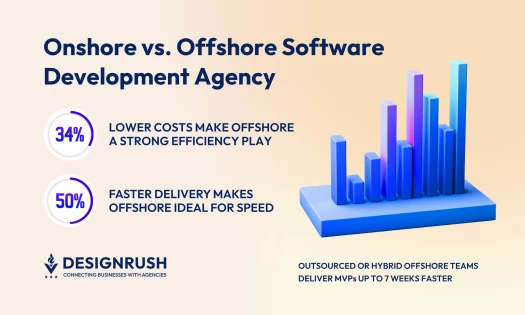
Onshore vs. Offshore Software Development Company: Which One Is a Better Choice?
2,665