Partner with leading Denver web design companies specializing in eCommerce design, F&B websites, and SaaS solutions. Compare agencies across Metro Denver and LoDo by expertise and budget.
Organic rankings are determined by five factors: top services, reviews, portfolio, awards/press, and team expertise. Sponsored listings pay for a placement that appears above organic positions. Sponsorship does not affect star ratings or review content - read more on our methodology page.
House of Giants is dedicated to creating top-performing websites and web applications that are easy to use and data-driven. Our focus is on providing high-quality products that will make a significant impact on your business...
Top Services:
- UI/UX Design
- Web Design
- Web Development
- Digital Strategy
- Show more
- Location
- Denver, Colorado
- Number of Employees
- Under 49
- Average Hourly Rate
- $149/hr
- Minimal Budget
- $1,000 - $10,000
- Portfolios Count
- 1 Project Listed
Ethical SEO Consulting is a Denver SEO company that specializes in helping clients make more money by helping them increase their visibility online...
Top Services:
- SEO
- Web Design
- Location
- Denver, Colorado
- Number of Employees
- 50 - 99
- Average Hourly Rate
- $1/hr
- Minimal Budget
- $1,000 - $10,000
Communications Strategy Group is a comprehensive strategic marketing and PR agency offering services such as public relations, financial services PR, content marketing, digital marketing, advertising, corporate communications, social media management, website development, and design...
Top Services:
- Public Relations
- Creative Services
- Digital Marketing
- Web Design
- Social Media Marketing
- Show more
- Location
- Denver, Colorado
- Number of Employees
- Under 49
- Average Hourly Rate
- $175/hr
- Minimal Budget
- $1,000 - $10,000
- Portfolios Count
- 3 Projects Listed
The Drizzle Digital team has been involved in website development, eCommerce strategy, and digital marketing since its inception. Over the past decade or two, we've developed into a full-service digital agency with specialized teams focused on online brand presentation. We can handle everything, from website...
Top Services:
- Social Media Marketing
- Web Design
- eCommerce Development
- Web Development
- WordPress Website Design
- Show more
- Location
- Denver, Colorado
- Number of Employees
- Under 49
- Average Hourly Rate
- $150/hr
- Minimal Budget
- $1,000 - $10,000
Spitfiregirl is a boutique design studio focused on branding, custom websites, packaging, and digital marketing for both emerging and established event professionals, as well as hospitality and lifestyle brands...
Top Services:
- Branding
- Web Design
- Package Design
- Print Design
- Digital Marketing
- Show more
- Location
- Denver, Colorado
- Number of Employees
- Under 49
- Portfolios Count
- 1 Project Listed
5280Devs is a branding and website development agency specializing in supporting small businesses, heath and wellness businesses, non-profits, and entrepreneurs. We're a small family-owned and operated agency based out of Denver, Colorado...
Top Services:
- Web Development
- eCommerce Development
- WordPress Website Design
- Web Design
- Branding
- Show more
- Location
- Denver, Colorado
- Number of Employees
- Under 49
- Average Hourly Rate
- $100/hr
- Minimal Budget
- $1,000 - $10,000
Planet Media is a sustainability marketing agency helping B Corps, nonprofits and purpose-driven brands grow since 1999. We blend branding, web design and digital marketing built for sustainability, with one rule: prove real impact, never greenwashing...
Top Services:
- Branding
- Logo Design
- Web Design
- eCommerce Development
- Web Development
- Show more
- Location
- Denver, Colorado
- Number of Employees
- Under 49
- Average Hourly Rate
- $100/hr
- Minimal Budget
- $1,000 - $10,000
- Portfolios Count
- 2 Projects Listed
At Denver Website Designs we pride ourselves on delivering superior web design and internet marketing solutions. Our value is unequaled and crushes our competitor's offerings. And by the way, we have a relentless commitment to outstanding customer service...
Top Services:
- Digital Marketing
- Web Design
- Web Development
- Location
- Denver, Colorado
- Number of Employees
- Under 49
- Minimal Budget
- $1,000 - $10,000
We offer a full suite of Marketing, Branding, and Design services to build, maintain, and evolve your brand...
Top Services:
- Branding
- Web Design
- Digital Marketing
- Location
- Denver, Colorado
- Number of Employees
- Under 49
- Average Hourly Rate
- $145/hr
- Minimal Budget
- $1,000 - $10,000
PAYTECH SOFT main goal is to Understand and differentiate its Customer Processes and Workflow and use new and up-to-Date Technology to help Customers Re-Create these Processes and Workflows to make things Easier and Simpler...
Top Services:
- Mobile App Development
- Web Design
- Web Development
- Location
- Denver, Colorado
- Number of Employees
- Under 49
In the shadow of the Rockies but never in the dark when it comes to technology, FYIN is proud to be a leader in all things digital. They use technology to move mountains for their clients...
Top Services:
- Web Development
- Web Design
- Digital Marketing
- Location
- Denver, Colorado
- Number of Employees
- 50 - 99
Hello from Innovative Web Agency! We're all about helping you shine online. Need a cool website? Want to launch a new product? Or maybe get more people to see what you offer?...
Top Services:
- Web Development
- Web Design
- SEO
- Location
- Denver, Colorado
- Number of Employees
- Under 49
Legal Guardian Digital is a law firm lead generation agency that specializes in SEO for lawyers, local SEO, web design, and PPC. Tired of poor results? We can help...
Top Services:
- SEO
- Web Design
- PPC
- Location
- Denver, Colorado
- Number of Employees
- Under 49
- Average Hourly Rate
- $500/hr
Blair Rosen is a graphic designer based in Denver who specializes in both visual and verbal expression. Her expertise spans a wide range of creative services, including brand naming, identity development, print design, marketing campaigns, promotional materials, web concepting, email layouts, digital media...
Top Services:
- Print Design
- Graphic Design
- Web Design
- Location
- Denver, Colorado
- Number of Employees
- Under 49
- Portfolios Count
- 1 Project Listed
Orange is a comprehensive hospitality marketing and branding agency where strategic brilliance propels brands to wield impactful influence, and creative ingenuity translates into tangible outcomes...
Top Services:
- Branding
- Graphic Design
- Web Development
- Digital Marketing
- Logo Design
- Show more
- Location
- Denver, Colorado
- Number of Employees
- Under 49
- Portfolios Count
- 3 Projects Listed
Carson+Doyle is a global, independent collective of creators proudly part of Generation Z. We guide our clients through the evolving Gen Z landscape by combining bold creativity with unrivalled insights into the next generation of consumers. | carsondoyle.com...
Top Services:
- Advertising
- Video Marketing
- Digital Marketing
- Social Media Marketing
- Web Design
- Show more
- Location
- Denver, Colorado
- Number of Employees
- Under 49
- Average Hourly Rate
- $150/hr
- Minimal Budget
- $1,000 - $10,000
Artisan Talent is a premier creative staffing agency that has been redefining talent solutions since its inception. Committed to excellence, we offer a comprehensive suite of services tailored to the unique needs of the creative, digital, and marketing industries...
Top Services:
- Graphic Design
- Digital Marketing
- Social Media Marketing
- Creative Services
- Web Design
- Show more
- Location
- Denver, Colorado
- Number of Employees
- Under 49
- Average Hourly Rate
- $75/hr
- Minimal Budget
- $1,000 - $10,000
VectorDefector is a digital agency specializing in handcrafted websites that stir emotion.We specialize in the design, development and implementation of tailor-made solutions across a wide range of business sectors...
Top Services:
- Logo Design
- Graphic Design
- Product Design
- Web Development
- SEO
- Show more
- Location
- Denver, Colorado
- Number of Employees
- Under 49
- Average Hourly Rate
- $100/hr
- Minimal Budget
- $1,000 - $10,000
Print and web design for small businesses. Research, strategy, tech tools, and design combined to help grow your business, boost your credibility, and free up your time...
Top Services:
- WordPress Website Design
- Web Development
- Web Design
- Branding
- Social Media Marketing
- Show more
- Location
- Denver, Colorado
- Number of Employees
- Under 49
- Minimal Budget
- $1,000 - $10,000
EnerCom, Inc. is an internationally-recognized consulting firm advising companies on marketing, analysis and valuation, media, branding, and visual communications design. EnerCom, Inc. is certified minority & women owned business enterprise...
Top Services:
- Branding
- Digital Marketing
- Creative Services
- Public Relations
- Web Development
- Show more
- Location
- Denver, Colorado
- Number of Employees
- Under 49
- Average Hourly Rate
- $200/hr
- Minimal Budget
- $1,000 - $10,000
- Portfolios Count
- 1 Project Listed
We’re a team of digital experts fueled by a love of technology and a passion for results. At Accelerated Websites, we specialize in designing and developing custom websites, mobile applications, branding, seo and marketing campaigns for great clients, both big and small...
Top Services:
- Web Development
- Web Design
- Mobile App Development
- SEO
- Show more
- Location
- Denver, Colorado
- Number of Employees
- Under 49
- Average Hourly Rate
- $60/hr
- Minimal Budget
- Under $1,000
We are a group of strategists, project managers, designers, and engineers who enjoy collaborating with businesses to create meaningful digital products and experiences...
Top Services:
- Digital Services
- Web Design
- Web Development
- Digital Strategy
- Show more
- Location
- Denver, Colorado
- Number of Employees
- Under 49
- Average Hourly Rate
- $199/hr
Elevated Third is a digital agency that was established in 2004 to bring the benefits of open-source technology to B2B companies. Our team operates from several offices across the United States and specializes in utilizing the Drupal platform to empower B2B marketing ecosystems...
Top Services:
- Digital Services
- Web Design
- Web Development
- Digital Strategy
- Show more
- Location
- Denver, Colorado
- Number of Employees
- Under 49
- Average Hourly Rate
- $199/hr
Phases Design Studio provides no-nonsense branding, design, and website services for emerging and established businesses. We offer the perfect balance of skills, know-how, and customer service to help your brand succeed. Our services include brand development, graphic design, and WordPress site development...
Top Services:
- Logo Design
- Web Design
- Web Development
- Branding
- Show more
- Location
- Denver, Colorado
- Number of Employees
- Under 49
- Average Hourly Rate
- $149/hr
- Minimal Budget
- $1,000 - $10,000
Vertana helps local businesses get found on Google and ChatGPT, answer every lead fast, and run lean, starting at $500/month. Denver-based...
Top Services:
- SEO
- Web Design
- AI Development
- Business Consulting
- Show more
- Location
- Denver, Colorado
- Number of Employees
- Under 49
- Average Hourly Rate
- $25/hr
- Minimal Budget
- Under $1,000
Simanson Design is a creative graphic design studio specializing in brand identity, logo design, and visual communication. With a focus on telling compelling brand stories through thoughtful design, the studio develops distinctive visual solutions that help businesses communicate clearly and memorably across...
Top Services:
- Logo Design
- Branding
- Web Design
- Web Development
- Package Design
- Show more
- Location
- Denver, Colorado
- Number of Employees
- Under 49
- Portfolios Count
- 1 Project Listed
Ruka Dental Marketing offers 30 years of specialization, a dedicated approach, and a results-driven strategy. We prioritize dental PPC in capturing leads, converting customers, and cultivating your brand, setting you apart in the dental industry...
Top Services:
- SEO
- Digital Marketing
- PPC
- Content Marketing
- Web Design
- Show more
- Location
- Denver, Colorado
- Number of Employees
- Under 49
- Average Hourly Rate
- $120/hr
- Minimal Budget
- $1,000 - $10,000
- Portfolios Count
- 2 Projects Listed
Established in 2000, Radix Interactive provides a variety of small business SEO, digital marketing and website design services to businesses ranging from local start-ups to large corporations...
Top Services:
- PPC
- Digital Marketing
- SEO
- Content Marketing
- Social Media Marketing
- Show more
- Location
- Denver, Colorado
- Number of Employees
- Under 49
- Average Hourly Rate
- $80/hr
- Minimal Budget
- $1,000 - $10,000
- Portfolios Count
- 1 Project Listed
Class is in session. Horizontals Marketing Cloud Master Class is a video series packed with expert tips, strategies, and real-life use cases to help you maximize your Marketing Cloud potential...
Top Services:
- eCommerce Development
- Web Design
- Web Development
- Digital Marketing
- UI/UX Design
- Show more
- Location
- Denver, Colorado
- Number of Employees
- 1000 & Up
Green Hat Web Solutions is a one-stop, full service digital agency founded in 2010 in Denver. Through the power of interactive design and intelligent technology, we strive to intrigue, inspire, and connect people. To capture your audience, we’re the digital partner for you...
Top Services:
- eCommerce Development
- Web Design
- Web Development
- SEO
- Digital Strategy
- Show more
- Location
- Denver, Colorado
- Number of Employees
- Under 49
- Average Hourly Rate
- $199/hr
- Minimal Budget
- $1,000 - $10,000
INK Communications Co. is a top US-based PR agency for energy and B2B tech companies. With over 20 years of experience, INK helps high-growth companies in North America stand out through integrated programs that elevate brand stories, build industry authority, and drive measurable results...
Top Services:
- Public Relations
- Content Marketing
- Digital Marketing
- Reputation Management
- Social Media Marketing
- Show more
- Location
- Denver, Colorado
- Number of Employees
- Under 49
Nichez is an agile branding and design agency with 18 years under our belt...
Top Services:
- Branding
- Graphic Design
- Web Design
- Package Design
- Logo Design
- Show more
- Location
- Denver, Colorado
- Number of Employees
- Under 49
- Average Hourly Rate
- $150/hr
- Minimal Budget
- $1,000 - $10,000
- Portfolios Count
- 1 Project Listed
PickJohn is responsible for creating unique brands and designs for small to medium businesses.He collaborates with companies to empower their teams and customers to believe in the products, services, and brand that drive their greatness...
Top Services:
- Logo Design
- Graphic Design
- Web Design
- Print Design
- Video Production
- Show more
- Location
- Denver, Colorado
- Number of Employees
- Under 49
- Average Hourly Rate
- $65/hr
- Minimal Budget
- Under $1,000
- Portfolios Count
- 1 Project Listed
Faceted Media is providing businesses with SEO, website build and design, branding, content, social media, and more. We are experts in what you do, and you don't really get excited when a new Google business statement is out or read every new Facebook algorithm change announcement with fervor. Each of our...
Top Services:
- Digital Marketing
- Web Design
- SEO
- Video Marketing
- Content Marketing
- Show more
- Location
- Denver, Colorado
- Number of Employees
- Under 49
- Average Hourly Rate
- $250/hr
- Minimal Budget
- $1,000 - $10,000
NVZN builds the AI Operations Dashboard for owner-operators who cannot hire a tech team. One custom system that connects the tools you already use, so admin work stops living in your head. Built in Denver by an operator, not a template shop. See the live demo: https://demo.nvzn.ai/...
Top Services:
- AI Development
- Web Design
- Web Development
- Graphic Design
- Social Media Marketing
- Show more
- Location
- Denver, Colorado
- Number of Employees
- Under 49
- Minimal Budget
- $1,000 - $10,000
Trepoly specializes in building high-performing stores on Shopify Plus, BigCommerce Enterprise, and WooCommerce, prioritizing a "mobile-first" philosophy Trepoly ensures seamless conversions across all devices. With over 14 years of experience and hundreds of projects completed, Trepoly provides the technical...
Top Services:
- eCommerce Development
- Web Design
- UI/UX Design
- CRO
- SEO
- Show more
- Location
- Denver, Colorado
- Number of Employees
- Under 49
- Average Hourly Rate
- $85/hr
- Minimal Budget
- $1,000 - $10,000
Agency FIFTY3 crafts brands, products, websites, and campaigns that drive results (and drive our competitors crazy).We offer a full-service marketing approach for the real estate industry, refined through experience and exceptional as the standard. Together, lets make it legendary...
Top Services:
- Branding
- Web Design
- Graphic Design
- Digital Marketing
- Content Marketing
- Show more
- Location
- Denver, Colorado
- Number of Employees
- Under 49
- Average Hourly Rate
- $100/hr
- Minimal Budget
- Under $1,000
Nathan Kim is a forward-thinking brand designer recognized for his meticulous attention to detail and commitment to exceptional quality. He goes beyond creating beautiful visuals, he builds strategic, story-driven brand experiences...
Top Services:
- Logo Design
- Branding
- Print Design
- Web Design
- Package Design
- Show more
- Location
- Denver, Colorado
- Number of Employees
- Under 49
- Portfolios Count
- 1 Project Listed
We're redefining the traditional model. We've taken the strongest parts of a classic agency and transformed them into a modern, streamlined approach. Our virtual structure reduces costs and accelerates delivery, allowing us to assemble the perfect team at the perfect time, giving you the results and impact...
Top Services:
- Package Design
- Branding
- Creative Services
- Web Design
- SEO
- Show more
- Location
- Denver, Colorado
- Number of Employees
- Under 49
- Portfolios Count
- 1 Project Listed
Natalie Legg has over 15 years of experience working with a wide range of clients, from small businesses to large corporations, across diverse industries including both the corporate sector and local charitable organizations...
Top Services:
- Package Design
- Branding
- Print Design
- Web Design
- Logo Design
- Show more
- Location
- Denver, Colorado
- Number of Employees
- Under 49
- Portfolios Count
- 1 Project Listed
AJM Design Studio is a Denver-based creative graphic design studio that specializes in Squarespace website design, branding, website assets, the whole spectrum of print & digital graphics, and building awesome relationships with our clients...
Top Services:
- Print Design
- Branding
- Logo Design
- Graphic Design
- Web Design
- Show more
- Location
- Denver, Colorado
- Number of Employees
- Under 49
- Average Hourly Rate
- $125/hr
- Minimal Budget
- $1,000 - $10,000
Our philosophy is simple: construct thoughtful solutions that maximize outcomes...
Top Services:
- Web Development
- Web Design
- Digital Marketing
- Branding
- Email Marketing
- Show more
- Location
- Denver, Colorado
- Number of Employees
- Under 49
- Average Hourly Rate
- $160/hr
- Minimal Budget
- $1,000 - $10,000
Colorado 420 Websites & Design is a boutique team of graphic designers, online marketers, website creators, e-commerce experts, and cannabis industry consultants...
Top Services:
- eCommerce Development
- Web Design
- Web Development
- Branding
- Package Design
- Show more
- Location
- Denver, Colorado
- Number of Employees
- Under 49
- Average Hourly Rate
- $100/hr
- Minimal Budget
- $1,000 - $10,000
Supercharge your online success with Mile High Willow! We specialize in web design, development, and SEO mastery, helping your business connect with customers and skyrocket your profits. Unleash your potential, conquer search rankings, and watch your revenue soar...
Top Services:
- Branding
- Web Design
- WordPress Website Design
- Web Development
- CRO
- Show more
- Location
- Denver, Colorado
- Number of Employees
- Under 49
- Average Hourly Rate
- $25/hr
- Minimal Budget
- Under $1,000
Four Columns offers services such as SEO, Web design, Social Media, etc. From strategy to the web to video to social media to advertising to design to public relations to SEO and anything else your company wants to effectively engage in from a marketing perspective - Four Columns has done it all...
Top Services:
- SEO
- Digital Marketing
- Web Design
- Location
- Denver, Colorado
- Number of Employees
- Under 49
Designs that engage. Websites that convert. Marketing that drives. Ember Method is where you go to light the embers and build a flame of success by elevating the online presence of your business...
Top Services:
- Digital Marketing
- SEO
- Web Design
- Location
- Denver, Colorado
- Number of Employees
- Under 49
- Average Hourly Rate
- $100/hr
- Minimal Budget
- Under $1,000
ClicksBridge Internet Marketing Agency is a full-service agency specializing in lead generation, PPC, social media marketing and management, SEO, web design and development, and more...
Top Services:
- Digital Strategy
- Web Design
- WordPress Website Design
- Web Development
- PPC
- Show more
- Location
- Denver, Colorado
- Number of Employees
- Under 49
- Average Hourly Rate
- $30/hr
- Minimal Budget
- $1,000 - $10,000
We're a leading, global B2B marketing agency. Fueled by insights. Inspired by creativity. Powered by digital experiences. We're making marketing the engine room for B2B growth...
Top Services:
- Web Development
- Web Design
- eCommerce Development
- SEO
- Digital Marketing
- Show more
- Location
- Denver, Colorado
- Number of Employees
- 100 - 249
- Average Hourly Rate
- $80/hr
- Minimal Budget
- $50,000 & Up
When you decide to outsource your needs to Allianze BPO International, we make it a point ensure an accurate and quality-oriented output, no matter what the size of the project is. We have a team of professional and dedicated team members who possess a high set of skills and expertise...
Top Services:
- Email Marketing
- Social Media Marketing
- SEO
- Video Marketing
- eCommerce
- Show more
- Location
- Denver, Colorado
- Number of Employees
- 100 - 249
- Average Hourly Rate
- $20/hr
- Minimal Budget
- $1,000 - $10,000
Avalore is a premier branding agency committed to crafting captivating brand experiences that resonate with audiences. Through comprehensive brand strategies, stunning visual identities, and innovative creative solutions, Avalore empowers businesses to stand out in competitive markets and drive meaningful...
Top Services:
- Graphic Design
- Creative Services
- Web Design
- SEO
- Show more
- Location
- Denver, Colorado
- Number of Employees
- Under 49
- Average Hourly Rate
- $149/hr
- Minimal Budget
- $10,000 - $25,000






































Related Services in Denver
Web Design Companies Near Denver
Popular Services
Everything You Need to Know Before Hiring a Top Denver Web Design Company
How can a Denver web design company benefit your business?
Denver web design companies can help you improve pipeline and revenue by building intuitive, conversion-focused, and accessible websites grounded in user research and aligned with your business goals.
A local agency understands the local markets, behaviors, and trends. It uses this knowledge to implement local search engine optimization and location-based integration strategies, such as creating location pages and implementing local schema markup.
In doing so, you more effectively capture high-intent traffic. In fact, 80% of local searches lead to conversions.
Many Denver website design companies also draw from Colorado’s top tech talent base, having one of the highest tech economies in the United States. This translates to stronger engineering, integrations, performance, and analytics for your site.
Another advantage of working with Denver companies is that they help you stay on top of shifts in target audience behavior, search algorithms, and technological updates.
Bain & Company reports that 80% of consumers depend on AI-generated summaries for 40% of their online searches, making it even more important to have technically structured and sound websites, such as indexable content, strong information architecture, and responsive website design — all of which are part of a designer's skillset.
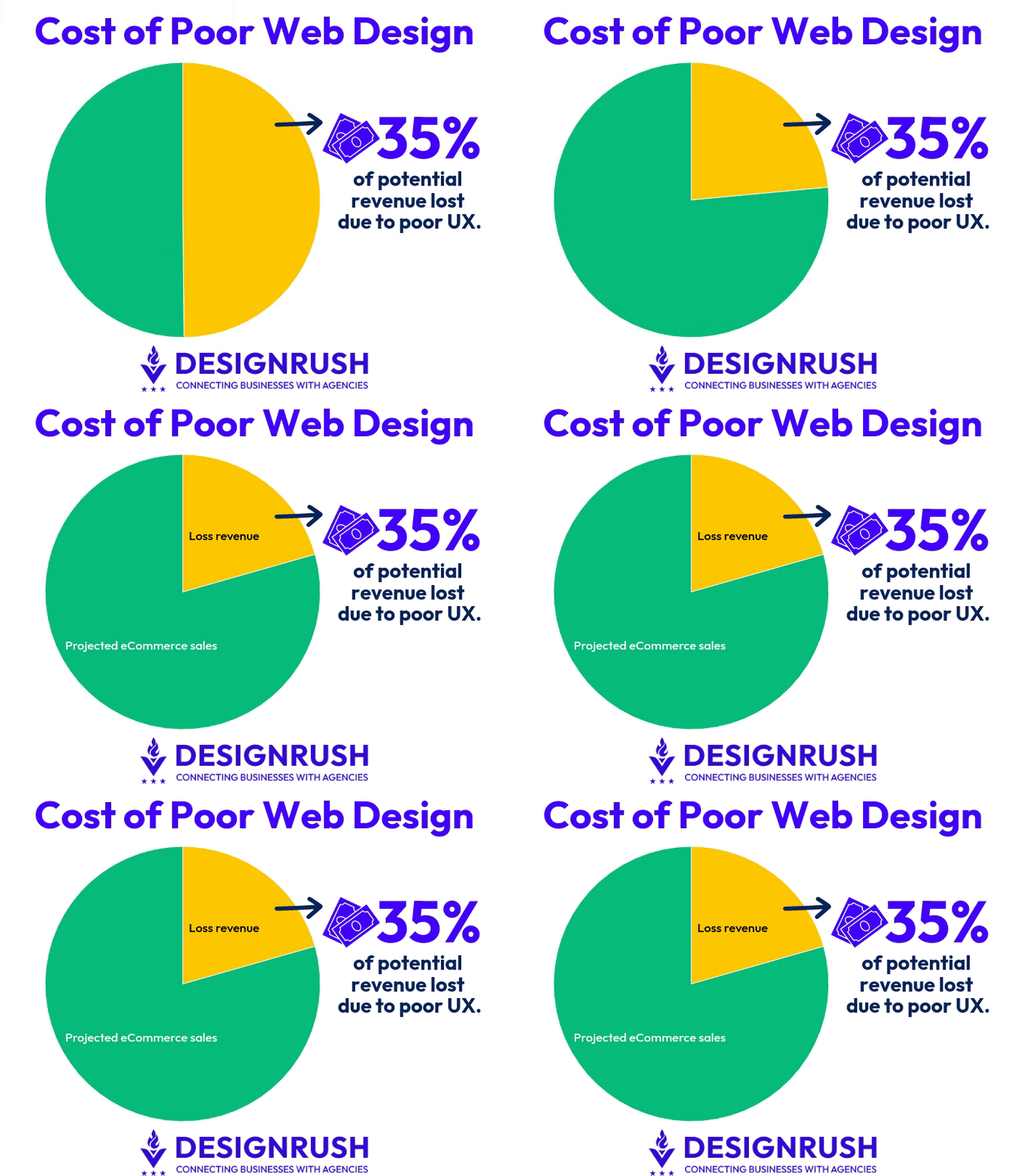
Poor web design has real costs. According to industry research, 88% of customers will leave a website after a bad experience. Moreover, eCommerce businesses stand to lose 35% of potential revenue due to poor user experience (UX) design.
How long does a typical build take?
A small business website with around 1-15 pages typically takes 4-8 weeks, while more complex builds, such as eCommerce stores and web apps, can take over 6 months. Here’s what to expect when partnering with Denver web design companies:
| Phase | What it includes | Timeline |
| Strategy and planning |
| 1-2 weeks |
| Design |
| 1-4 weeks |
| Development |
| 1-8+ weeks |
| Content population |
| 1-3 weeks |
| Testing and quality assurance |
| 1-2 weeks |
| Launch |
| 1-7 days |
How do you choose the right Denver web design firm?
To choose the right Denver design firm for your needs, assess their design skills, technical expertise, and strategic thinking. Here are some steps to guide you:
- Clarify your goals, success metrics, target audience, design style, technical and regulatory requirements, and priority features and functions.
- Search for agencies that specialize in your industry, platform, and design style by checking their case studies and client references. Also, make sure that the case studies talk about their design process and business outcomes.
- Analyze its client reviews and testimonies to understand what it’s actually like working with the designer. Look also for awards, vendor partnerships, and recognitions to confirm industry reputation.
- Send a request for a proposal that includes your business background, creative brief, and time and budgetary constraints. Shortlist those that provide the most value for money.
- Directly meet with the team who’ll be working on your website and ask them about their approach to AI, customization, QA testing, and security.
- Choose a Denver web design company that aligns with your culture and project needs. Also, seek one that’s transparent, reliable, responsive, and user-centric.
What questions should you ask before hiring?
Before hiring a web design company in Denver, ask the following questions to verify its ability to execute your brand’s needs and goals:
Relevant Background
- What platforms and tools are you most familiar with?
- Can you provide 2-3 examples of projects similar to my design style and build? What business outcomes did you achieve?
- Can you provide client references for Denver businesses in my sector?
Services and Processes
- What services do you offer in addition to web design? Can you help me with content strategy, development, and SEO?
- Can you walk me through your user research process before beginning a web design project?
- How do you approach quality assurance, compliance, and security? How do you ensure my website adheres to Colorado’s 2026 accessibility laws?
- Who owns the source code, website elements, and visuals once the website is live?
Related to Your Project
- What strategies will you implement to help my business grow and reach local audiences in Denver?
- Will my website be AIO (AI optimization) ready?
- How do you ensure brand alignment and scalability of your web designs?
- How will you define and measure success? What type of reporting should I expect?
What red flags should you avoid?
When evaluating a Denver web design firm, avoid these red flags:
- Weak, unverifiable portfolio: Case studies without details on context, processes, and measurable business results suggest limited strategic or delivery rigor.
- No defined process: No clear discovery, user research, design iteration, QA testing, or launch checklist often leads to scope creep, project delays, and a website that doesn’t fulfill your needs.
- Vague ownership and handoff process: If a firm will not put into writing who owns the domain, accounts, source files, code, and design assets, you run the risk of vendor lock-in.
- Ignoring accessibility, compliance, and security: Dismissing WCAG/ADA guidelines, the Colorado Privacy Act, security backups and monitoring, and other regulatory requirements can increase legal and reputational risk.
- No SEO migration plan: Firms that don't provide redirect mapping, client migration plans, or technical SEO checks for website redesigns lead to lost traffic and poor search engine rankings.
- Limited local understanding: A Denver web design company without an understanding of the local cultural nuances, user behavior, and industry competition may miss out on valuable insight that can improve user engagement and conversions.
- Concerning client reviews: Multiple reviews that highlight missed deadlines, poor communication, inefficient project management, ambiguous pricing, and low-quality output are indications of a recurring behavior that can jeopardize your project.
Sources
DesignRush sustains a directory of over 40,000 agencies categorized by service category, location, expertise, and reviews. We build our database in two ways:
- Our dedicated team of agency experts actively searches the web for top-performing companies. We then pull information from their websites, online presence, and client testimonials to verify their status and qualifications prior to listing.
- The agencies listed get notified of their profiles on the website and they can choose to claim it or not, which suggests their availability for more collaborations.
Agencies can also reach out to DesignRush and must go through the verification process prior to being listed.

Why companies trust DesignRush
Every agency is independently vetted before it can be listed or ranked
 4.8
4.8 4.8
4.8Some agencies pay for sponsored placement, clearly labeled and held to the same vetting standards.
Frequently Asked Questions About Denver Web Design Firms
What web design services do Denver firms typically offer?
Denver web design services typically span strategy, design, and ongoing optimization of a website. These include discovery and user experience planning (e.g., discovery workshops and information architecture), custom UI design, responsive design, performance optimization, graphic design, and hand-off or deployment.
Many also offer branding, copywriting, web development, quality assurance and testing, CMS implementation, analytics and tracking setup, accessibility and compliance support, and ongoing website maintenance plans.
Some Denver web design companies also help with digital marketing, particularly search engine optimization (SEO), landing page design, content strategy, conversion rate optimization, and PPC.
What industries do they specialize in?
Denver web designers work across multiple industries, with the most common being:
- Hospitality and tourism: Denver draws a sizable tourist population with attractions like the Rocky Mountains and Red Rocks Amphitheater. As such, many local designers are adept at delivering visually driven sites, reservations/booking integrations, and location-based experiences.
- Tech and SaaS: Colorado has the fifth-largest tech industry in the United States. Because of this, Denver firms are skilled in product-led architecture, rapid MVP deployment, and digital marketing sites that support demos and trials.
- Food and beverage: Known for its Denver Beer Trail, many local designers specialize in mobile-first menus, online ordering platform designs, and multi-location site structures for franchises.
- Aerospace and defense: Operating in one of the global hubs for aerospace and defense, Denver web designers are experienced in highly technical content, stakeholder-heavy approvals, and web-optimized 3D renders.
- Energy and natural resources: With 300 days of annual sunshine, Denver has a strong solar and renewable energy sector. As such, many local companies are skilled in delivering interactive tools tailored to these organizations, such as billing integrations and energy usage dashboards.
Beyond these five, Denver website design companies are also experts in serving small businesses, including real estate, construction (e.g., tiling, roofing, and HVAC), law firms, eCommerce, and arts and entertainment.
How much does a new website cost in Denver?
Web design services can cost from $100 to $200+ per hour for small business platforms and $300 to over $400 per hour for enterprise builds. Here’s the approximate price range of web design projects in Denver:
- Basic business websites: $5,000-$8,000 for websites with customized templates, 1-5 pages, and standard contact forms
- Mid-tier websites: $8,000-$15,000 for 6-10 unique pages, a structured UX design, and responsive design for mobiles and desktops
- Enterprise builds: $18,000-$30,000+, includes complex structures, multiple user journeys, detailed design systems, custom features and functions, and advanced integrations, such as AI recommendation engines
- eCommerce websites: $15,000-$25,000, depending on product volume, integration requirements, and chosen platform
- SaaS or web app design: $20,000-$30,000+, often involving conversion-driven UI
What factors impact the cost of web design?
The factors that affect overall cost include the service scope, design complexity, core features and functions, integration requirements, and total number of pages.
Here’s a breakdown of web design costs:
- Domain name: $10-$50+ per year
- Web hosting: $2-$300 per month
- SSL certificate: Up to $150 per year
- Custom development: $1,000-$50,000, with some companies including this service in their billing
- Content creation and management: $50-$5,000 per month
- SEO: $500-$5,000 per month
- Integrations, plugins, and add-ons: $100-$2,000+ per month
- eCommerce features: $2,000-$20,000+
- Website maintenance: $500-$2,000 per year or 10%-15% of initial costs
What platforms do Denver web design firms commonly use?
Denver web design firms are skilled in multiple website platforms, including:
- WordPress: The most widely used platform, accounting for 62% of CMS-based sites globally. It is often chosen for content-heavy marketing sites and editorial flexibility.
- Webflow: A low-code, no-code content management platform (CMS), enabling fast design iterations. It's ideally used by non-technical teams with visual-heavy designs and needs to publish updates quickly.
- Shopify: The second-most popular website platform at 6.2% of the market share, Shopify best suits brands prioritizing online sales with a managed, hosted approach.
- WooCommerce: A WordPress plugin to convert websites into online stores, making it ideal for brands that want higher customization and control over their website than what Shopify provides. It’s also best for businesses that want to combine content-heavy requirements with eCommerce experiences.
Many are also experienced in website builders, like Wix and Squarespace, enterprise stacks (e.g., Drupal or headless CMS with Next.js), and design tools, like Figma and Adobe.
Typically, a reputable Denver website design company will suggest a platform that best meets your business goals, requirements, budget constraints, and team capabilities.
Latest Trends Related to Web Design