
The ideal host ensures reliable uptime, fast page load speeds, strong security, and responsive support. We'll explain what to look for in a host, compare the top providers of 2026, and discuss common pitfalls to avoid when selecting your hosting solution.
Hosting Providers: Key Findings
- SiteGround stands out with its AI-driven security system and proactive anti-bot defenses, combined with daily backups and built-in caching
- Elementor combines Google Cloud hosting, Cloudflare CDN, and built-in security with its drag-and-drop builder, giving 18M+ users an all-in-one WordPress solution.
- Atlantic.Net specializes in HIPAA- and SOC 2-compliant cloud hosting, offering secure, scalable infrastructure and dedicated support trusted by healthcare and enterprise clients.
What Are Hosting Providers, and Why Do You Need One?
A web hosting provider is the company that runs the servers that store your website files and deliver them to visitors’ browsers whenever someone types in your URL or clicks a link.
In practice, they give you access to the resources your site needs to function online, like storage, bandwidth, processing power, and a control panel to manage your website.
Beyond simply putting your site online, hosting providers typically help you with the things business owners care about most:
- Speed and performance: Faster sites convert better. A one-second load time can deliver 3x higher conversion rates than five seconds for B2B lead-gen sites, and 2.5x higher for eCommerce sites.
- Reliability and uptime: If your site is down, you lose sales and leads. A 2025 survey reported businesses average five hours of downtime per month, and 1 in 5 lose $2,500+ monthly from downtime-related issues.
- Security and protection: Many hosts include SSL certificates, firewalls, malware scanning, and backups to reduce risk and recover quickly if something goes wrong.
- Scalability and support: As traffic grows, a good host helps you upgrade plans, handle spikes, and troubleshoot problems without you needing to become a server expert.
Types of Web Hosting
There are several types of hosting to match different needs:
- Shared hosting: Multiple sites share one server and its resources. This is the most affordable option, suitable for small blogs or businesses.
- VPS (Virtual Private Server) hosting: A single server is partitioned into isolated virtual servers. Each VPS gets dedicated CPU/RAM, giving more performance and control than shared hosting.
- Dedicated hosting: You rent an entire physical server. This offers maximum control, power, and security (you choose OS and software) but is the most expensive.
- Cloud hosting: Instead of one server, your site runs on a network of virtual servers. Resources scale up or down on demand, ideal for sites with variable traffic or growth needs.
- Managed hosting(e.g. Managed WordPress): With managed plans, the provider handles the technical maintenance (updates, security, backups) on your behalf.
Each website has unique hosting requirements. A small personal blog might only need a basic shared plan, while a large e-commerce store may require dedicated or managed cloud hosting.
How Hosting Choices Affect Performance, Cost, and Risk
Your hosting plan directly impacts how fast your site loads, how much you pay as traffic grows, and how exposed you are to downtime or security issues. Here is what to pay attention to when you compare providers.
- Performance: Speed and uptime
- Cost: What you pay now vs later
- Risk: Security and recovery
- Support: Response times matter
- Scalability: Growing without rebuilding
1. Performance: Speed and Uptime
Hosting affects load time and reliability, which affects conversions and trust.
- Uptime targets: Look for providers that commit to 99.9% uptime or higher and explain what happens if they miss it.
- Speed factors: Modern hardware, server location options, caching, and a CDN can noticeably improve load times.
2. Cost: What You Pay Now vs Later
The cheapest plan is not always the cheapest long-term.
- Renewal pricing: Intro rates often jump after the first term, so compare the renewal cost, not just the promo price.
- Add-on fees: Check what costs extra, like backups, email, SSL, security tools, migrations, and premium support.
- Scaling costs: Understand how pricing changes when you need more storage, bandwidth, or computing power.
3. Risk: Security and Recovery
Hosting decisions can reduce risk, or they can increase it. Here's how:
- Baseline security: SSL, firewalls, malware scanning, and DDoS protection lower your exposure to common threats.
- Backups and restore: Automated backups are only useful if restores are easy and frequent enough for your business.
- Isolation: Shared hosting can be higher risk because many sites share the same resources, while VPS or dedicated plans provide stronger separation.
4. Support: Response Times Matter
When something does break, response times become all-important.
- Availability: 24/7 support is important if your site generates leads or revenue outside business hours.
- Quality signals: Look for live chat or phone options, clear support hours, and strong documentation.
- What to ask: How fast do they respond to downtime and security issues, and is help included or paid?
5. Scalability: Growing Without Rebuilding
A good host makes it easy to grow without painful migrations.
- Upgrade path: Make sure you can move from shared to VPS or cloud as traffic increases.
- Traffic spikes: If you run promos or seasonal campaigns, confirm how the host handles sudden demand.
- Resource control: Plans with clear limits and monitoring help you avoid surprise slowdowns.



Top 11 Hosting Providers in 2025
Below are some of the leading hosting providers of 2025, each excelling in different areas:
Provider | Best For | Managed Hosting | PCI Compliance | Cloud Hosting | Pricing |
| Atlantic.Net | Fully Managed PCI-Compliant Hosting | ✅ | ✅ | ✅ | From $8/mo |
| Elementor | WordPress Hosting With Built-In Design Tools | ✅ | ❌ | ✅ | From $14.99/mo |
| Hosting.com | Speed Optimization | ✅ | ✅ | ✅ | From $1.99/mo |
| Hostinger | Affordable Plans | ✅ | ❌ | ✅ | From $1.99/mo |
| HostGator | User-Friendly Experience | ✅ | ❌ | ✅ | From $17.59/mo |
| InMotion Hosting | Business Websites | ✅ | ✅ | ✅ | From $2.79/mo |
| DreamHost | Reliable Uptime | ✅ | ❌ | ✅ | From $2.89/mo |
| IONOS | Enterprise Solutions | ✅ | ✅ | ✅ | From $4/mo |
| Liquid Web | Managed Hosting | ✅ | ✅ | ✅ | From $5/mo |
| Hostwinds | Customization Options | ✅ | ❌ | ✅ | From $4.54/mo |
| SiteGround | AI-Driven Security | ✅ | ❌ | ✅ | From $3.99/mo |
1. Atlantic.Net – Best for Fully Managed PCI-Compliant Hosting
Atlantic.Net is a cloud hosting provider known for its strong emphasis on compliance, security, and fully managed solutions. With over 30 years in the industry, it serves healthcare, finance, and enterprise clients with HIPAA- and PCI-compliant cloud environments.
The platform also offers scalable infrastructure, GPU hosting, and dedicated servers for high-performance applications.
A standout feature of Atlantic.Net is its fully compliant, one-click HIPAA and PCI hosting environments. These plans include essentials like encrypted storage, managed firewalls, and intrusion prevention — all backed by a signed Business Associate Agreement (BAA).
Atlantic.Net is ideal for healthcare providers, fintech organizations, and enterprises that require fully managed, compliance-ready hosting.
Key features:
- HIPAA- and PCI-compliant cloud hosting
- Fully managed hosting with optional support add-ons
- Secure infrastructure with SOC 2 & SOC 3 certifications
- GPU cloud and bare metal hosting options
- One-click HIPAA deployment with built-in BAA
- 100% uptime SLA with 24/7/365 support
Pricing:
- Cloud starting at $8/mo for Linux and $15.5/mo for Windows
2. Elementor – Best for WordPress Hosting With Built-In Design Tools
Elementor is a full-featured WordPress website platform trusted by over 18 million users worldwide. Known primarily for its powerful drag-and-drop website builder, Elementor also offers managed cloud hosting optimized specifically for WordPress and WooCommerce.
Built on Google Cloud’s C2 infrastructure and paired with Cloudflare’s Enterprise CDN, Elementor hosting ensures lightning-fast load times, automatic scaling during traffic spikes, and enterprise-grade security.
Each plan includes free migration, a free domain for the first year, premium SSL, and daily backups — so you can launch and grow your site seamlessly.
With Elementor’s seamless integration of hosting and website building, you don’t just get fast, secure hosting; you also get access to 100+ design widgets, built-in marketing tools, and optimization features that help you create high-performing websites and online stores from day one.
Elementor is ideal for web creators, agencies, and businesses who want an all-in-one solution for building, hosting, and scaling WordPress sites.
Key features:
- Auto-scaling WordPress hosting on Google Cloud
- Optimized for Elementor and WooCommerce
- Cloudflare Enterprise CDN (320+ locations)
- Built-in SSL, WAF, and DDoS protection
Free migration and first-year domain - Daily backups with security scans
- 24/7 expert support
Pricing:
- Plans start at $14.99/mo
3. Hosting.com – Best for Speed Optimization
Hosting.com delivers enterprise-level dedicated hosting built for performance, security, and scalability. Their infrastructure is designed to handle mission-critical workloads, with robust security protocols, high availability, and customizable configurations.
Whether you're managing large databases, hosting multiple applications, or running compliance-sensitive platforms, Hosting.com ensures consistent uptime and rock-solid performance.
Its key feature Turbo Servers differentiates Hosting.com from competitors. These servers deliver faster load times and improve performance for high-traffic sites. Automatic backups also provide peace of mind by ensuring data remains protected.
Hosting.com is best suited for mid-size to large enterprises, SaaS providers, healthcare platforms, and financial services that need fully managed, secure, and scalable hosting with 24/7 expert support.
Key features:
- Turbo Servers for faster load times
- SSD storage for enhanced speed
- Automatic backups
- Free site migration
- Content delivery network (CDN) integration
Pricing:
- Plans start at $1.99/mo
4. Hostinger – Best for Affordable Plans
Hostinger is one of the top web hosting sites today, offering budget-friendly hosting solutions without compromising performance, and it holds the largest market share among managed WordPress hosts.
The company provides shared, VPS, and cloud hosting at competitive prices. Small businesses and personal projects benefit from its cost-effective approach.
Users should activate LiteSpeed caching to get the most out of Hostinger’s services. This enhances website speed and improves search rankings by reducing load times. Keeping software updated ensures optimal performance and security.
If you're just starting out, Hostinger offers pro-level tools without crushing your budget. It’s affordable, beginner-friendly, and scalable as your website grows.
Key features:
- Custom hPanel for easy management
- Free domain registration on selected plans
- LiteSpeed caching for better speed
- 24/7 multilingual support
- Affordable pricing for all plans
Pricing:
- Plans start at $1.99/mo
5. HostGator – Best for User-Friendly Experience
HostGator is a top hosting provider that offers a straightforward hosting solution suitable for beginners and professionals. The company presents a variety of plans, including shared, VPS, and dedicated hosting. User-friendly features and reliable uptime make it a solid choice.
Beginners should take advantage of HostGator’s one-click application installer. This enables easy integration of platforms like WordPress, Joomla, and Drupal. Regularly monitoring website performance ensures optimal functionality.
HostGator makes website building super intuitive with its drag-and-drop tools and one-click app installs. Great for startups, small businesses, or anyone who just wants to get online fast.
Key features:
- Drag-and-drop website builder
- Unlimited storage and bandwidth
- One-click application installer
- Free website migration
- 24/7 customer support
Pricing:
- Plans start at $17.59/month
6. InMotion Hosting – Best for Business Websites
InMotion Hosting is among the top web hosting providers today that specializes in business-class hosting with a focus on reliability. The company offers solutions tailored for entrepreneurs, eCommerce stores, and agencies. Performance and security remain top priorities.
Setting up a business website on InMotion Hosting should start with an optimized landing page. A clear call-to-action improves conversion rates and enhances visitor engagement. Implementing security measures protects customer data.
Small to mid-sized businesses looking for dependable hosting with business-focused perks like professional email and a secure environment will find InMotion a great match.
It’s especially useful for eCommerce and service-based companies that rely on performance and uptime.
Key features:
Free business email accounts
SSD storage for fast data retrieval
Free website migration
Secure hosting environment
90-day money-back guarantee
Pricing:
- Plans start at $2.79/mo (shared hosting)
7. DreamHost – Best for Reliable Uptime
DreamHost is a leading hosting solution that offers a dependable hosting service with strong uptime guarantees. It is ideal for individuals and businesses looking for long-term stability. Additionally, its transparent pricing and feature-rich plans add to its appeal.
To improve website performance, IT teams should enable DreamHost’s built-in caching and regularly update themes and plugins to further optimize functionality. This reduces server load and enhances responsiveness.
This one’s for content businesses, developers, and SMBs who want hosting they can trust long-term. If uptime is a dealbreaker and you prefer straightforward pricing, DreamHost is reliable, no-frills, and built to last.
Key features:
Unlimited bandwidth
Automated daily backups
Free domain with annual plans
Built-in caching tools
100% uptime guarantee
Pricing:
- Plans start at $2.89/mo (1 year subscription)
8. Ionos – Best for Enterprise Solutions
Another ideal hosting service provider is Ionos, which delivers enterprise-grade hosting solutions tailored for large-scale businesses. The platform offers cloud, dedicated, and VPS hosting with scalable resources, advanced security, and performance tools.
Enterprises should implement server monitoring to track performance in real time. Adjusting resources based on traffic patterns and conducting regular security audits optimizes efficiency and further strengthens website protection.
Ionos is tailored for big players, like large-scale organizations or enterprises that need custom infrastructure, security, and scalability.
If you’re managing high-traffic websites or mission-critical applications, this is enterprise-grade hosting done right.
Key features:
Dedicated customer support
Scalable cloud infrastructure
DDoS protection for security
High-performance VPS and dedicated servers
Custom enterprise solutions
Pricing:
- Plans start at $4/mo (1-year term)
9. Liquid Web – Best for Managed Hosting
Liquid Web is among the best hosting providers that specializes in fully managed hosting solutions for businesses and developers.
The company provides dedicated, cloud, and VPS hosting with a focus on hands-off management. Customer support and technical assistance set it apart.
Businesses should utilize Liquid Web’s real-time monitoring to detect issues early. This minimizes downtime and ensures continuous operation. Configuring automated backups further enhances data protection.
Busy business owners, dev teams, and agencies who want premium performance without babysitting the backend — Liquid Web handles the tech so you can focus on your business.
It’s ideal for people who want white-glove, fully managed hosting with real support.
Key features:
Fully managed hosting solutions
Automatic updates for security
High-performance dedicated servers
24/7 expert support
Real-time performance monitoring
Pricing:
- Plans start at $4/mo (managed WordPress)
10. Hostwinds – Best for Customization Options
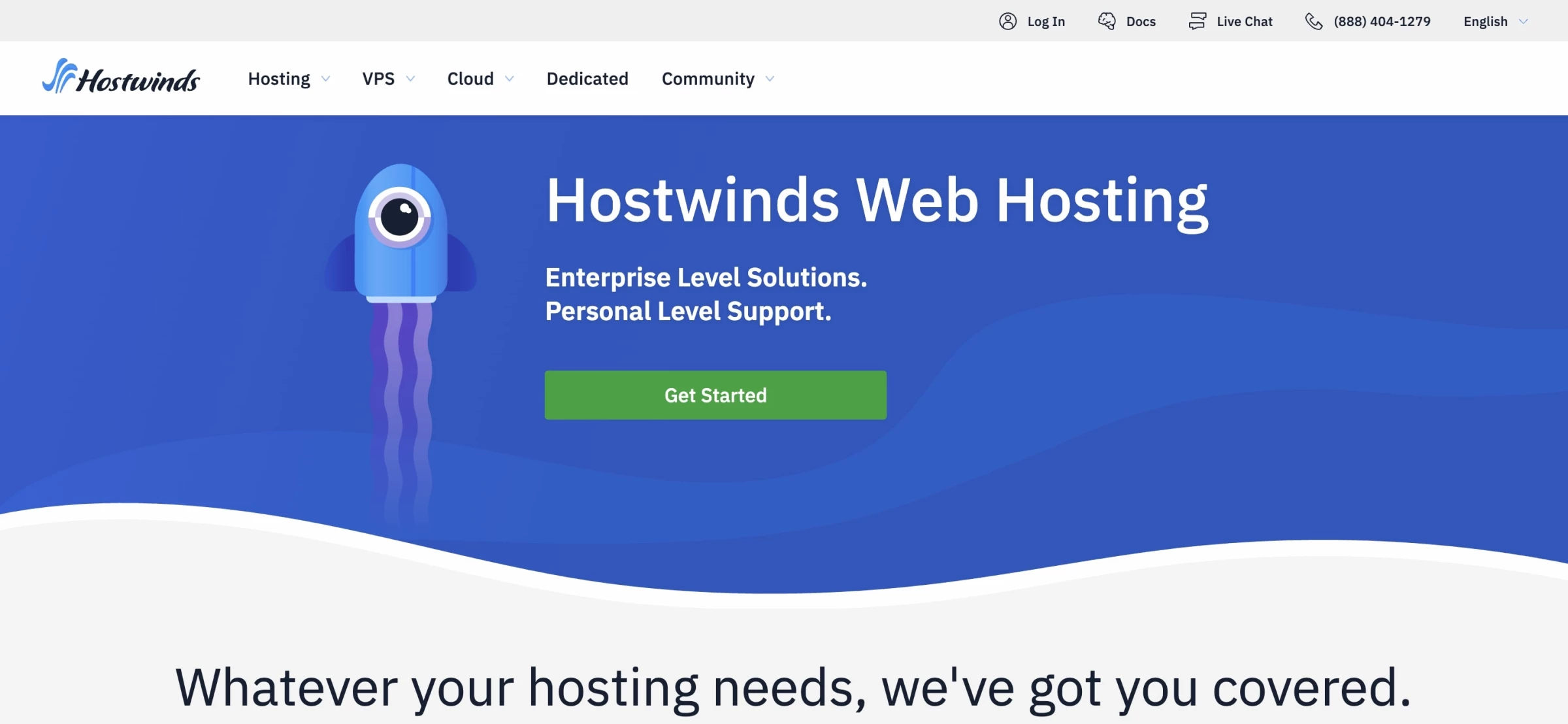
Hostwinds is a top hosting company that offers flexible and scalable hosting solutions that allow extensive customization for a variety of users. The company provides shared, cloud, VPS, and dedicated hosting.
A standout feature is its custom server configurations, allowing users to tailor their hosting environment. The platform also offers nightly backups to safeguard valuable data, making it an attractive choice for those who need flexibility.
Tech-savvy users, developers, and IT teams who want full control over their hosting environment will love Hostwinds. If you like to tweak and tailor every server detail to fit your exact needs, this flexible host won’t box you in.
Key features:
Custom server configurations
Nightly backups for data security
Scalable hosting solutions
24/7 technical support
SSD storage for better performance
Pricing:
- Plans start at $4.54/mo
11. SiteGround – Best for AI-Driven Security
SiteGround is an excellent hosting solution known for its outstanding customer service and reliable hosting. The platform caters to individuals, small businesses, and developers seeking a well-balanced hosting solution.
Speed, security, and ease of use make it a preferred choice for many website owners.
A standout feature of SiteGround is its in-house security system, which includes proactive monitoring and AI-driven anti-bot protection. The hosting provider also offers free daily backups, ensuring data remains safe.
Security-conscious users like, small business owners, and WordPress agencies who want worry-free hosting with smart protection tools. SiteGround’s AI-powered defenses are perfect for those who want strong performance without needing to micromanage security.
Key features:
AI-driven security and anti-bot protection
Free daily backups
Built-in caching for speed optimization
24/7 customer support
Managed WordPress hosting solutions
Pricing:
- Plans start at $3.99/mo
How To Choose the Right Hosting Provider for Your Website
Choosing a host is about matching features to needs. Here’s a step-by-step guide:
- Define your requirements (platform, traffic, growth plan): Start with the basics: What platform are you using (WordPress, custom CMS, eCommerce)? How much traffic do you expect now — and how much growth do you anticipate?
- Check uptime and reliability: Read customer reviews and independent monitoring reports to see if the host actually meets its SLA.
- Evaluate support quality: Look for 24/7 availability via multiple channels (chat, phone, tickets). You can test responsiveness by starting a pre-sales chat.
- Balance budget and risk: Cheaper hosts may cut corners. Downtime costs can far outweigh a low monthly fee. If uptime is mission-critical, invest in a premium plan.
- Plan for scalability: Check whether you can easily upgrade from shared → VPS → dedicated and add extra CPU, RAM, or storage without downtime.
- Verify reputation and compliance: Healthcare and fintech businesses should prioritize hosts that provide HIPAA or PCI-ready environments.
Which plan is best for your site? As a rule of thumb:
- Low traffic (personal blog, small business): Shared hosting or basic cloud; ultra-cheap plans may suffice.
- Growing business/eCommerce: Managed VPS or cloud; more power, autoscaling.
- High-traffic or complex needs (large store, SaaS): Dedicated or high-end cloud; ensure high uptime.
- WordPress sites: A managed WordPress host (Elementor, SiteGround, Liquid Web, etc.) often yields the best performance and ease of use.
When It’s Time to Change Hosting Providers
Even reputable hosts can become a bad fit as your site grows. If you notice any of the issues below, it may be time to switch.
- Frequent downtime: Occasional outages happen, but repeated downtime is a revenue risk. Look for a provider with a clear SLA, set up uptime monitoring, and use a CDN to reduce impact.
- Sluggish site performance: Shared servers can get overloaded, slowing your pages and hurting conversions. Start with caching and CDN tools, but plan to upgrade if traffic or complexity increases.
- Unreliable support: Slow or unhelpful support turns small issues into big ones. Test responsiveness during a trial or money-back window before committing long-term.
- Pricing surprises: Intro rates can jump at renewal, and key features like backups, migrations, and security tools may cost extra. Review renewal terms and add-ons before you’re locked in.
- Limited flexibility: Some plans restrict plugins, configurations, or server access. If you need customization, confirm what’s supported, including SSH and advanced settings.
One precaution that always pays off: keep your own recent backups, even if your host offers them, so you stay in control if you ever need to move quickly.
Best Hosting Providers: Final Words
Picking the right host requires balancing cost, features, performance, and support. A great provider won’t be the same for everyone: what’s “best” for a small blog may differ for a large enterprise.
Use the criteria above to evaluate hosts. In the end, the best host is one that reliably delivers uptime, speed, and security while fitting your budget and future plans.

Our team ranks agencies worldwide to help you find a qualified partner. Visit our Agency Directory for the top IT services companies, as well as:
- Top Managed IT Service Providers
- Top IT Services for Financial Industry
- Top IT Services for Startups
- Top Healthcare IT Services
- Top IT Services for Transportation and Logistics
Our design experts also recognize the most innovative design projects across the globe. Given the recent uptick in web development, you'll want to visit our Awards section for the best & latest in website designs.
Best Hosting Providers FAQs
1. What type of hosting is best for a growing business?
If your business is scaling, cloud hosting or VPS (Virtual Private Server) hosting is ideal. These offer flexibility, better performance, and room to grow without downtime. Providers like Liquid Web, and InMotion Hosting are built for business-grade growth.
2. What hosting companies are PCI DSS compliant?
If you’re handling credit card data, look into Atlantic.Net, Liquid Web, and Rackspace — they offer fully managed PCI-compliant hosting with pre-validated infrastructure, security monitoring, and audit support.
3. Is managed hosting worth it for my business?
Yes, especially if you don’t have an in-house IT team. Managed hosting providers like Liquid Web, Ionos, and Atlantic.Net handle backups, updates, security, and server optimization, so you can focus on your business instead of server maintenance.