
Ask a group of small business owners what they should spend on advertising, and you’ll get a dozen different guesses, usually based on gut feel rather than clear strategy.
This clear, practical breakdown of what advertising really costs a small business will turn those guesses into knowledge.
Small Business Advertising Costs: Key Findings
- Small-business ad budgets work best when they are set as a share of overall revenue and marketing investment, rather than as random fixed amounts.
- Different pricing models — like paying per click, per impression, or per acquisition — are most effective when matched deliberately to goals such as awareness, traffic, or direct lead generation.
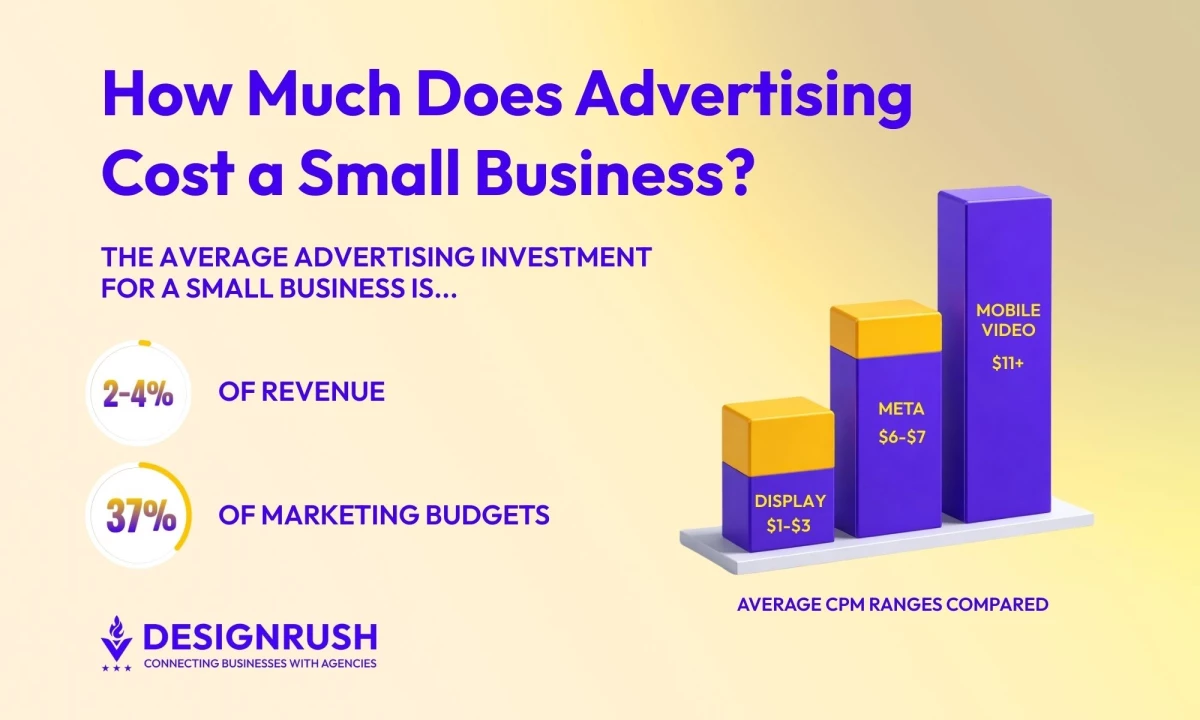
- Small businesses typically invest about $78,000 per year (~$6,500/month) in ads — roughly 2–4% of revenue and 37% of the marketing budget.
Typical Ad Budgets for Small Businesses
Spend too little and growth stalls; spend too much and cash flow tightens. By digging into what the average advertising cost for a small business includes and where money typically leaks, you can start shaping a budget that feels intentional instead of instinctive.
How much should I actually spend on ads? Most small‑business owners want a straight answer to that question.
According to a report by Intuit SMB MediaLabs’, the average small‑business advertising budget is about $78,000 per year, based on a survey of U.S. businesses with up to 100 employees. When you spread that over a year, it works out to roughly $6,500 per month on advertising alone (excluding labor).
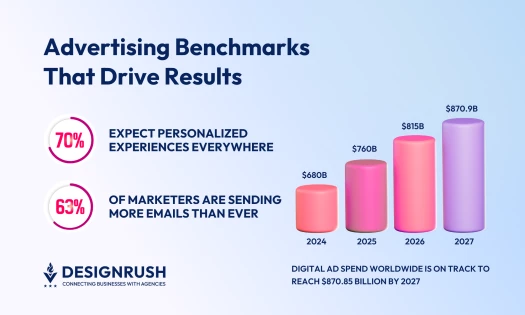
Global forecasts suggest total ad spend will keep rising. WPP projects global advertising revenue to grow about 6.1% in 2026 so it’s reasonable to expect that average small‑business ad budget to creep into the low $80,000’s over the next year.
Advertising as a Share of Revenue
There’s also a revenue‑based way to think about ad costs.
Historically, data cited by the U.S. Small Business Administration put average business advertising spend at about 1.08% of revenue, with more ad‑intensive sectors (like retail) spending closer to 4%.
Recent findings from the 2025 CMO Survey show that, across U.S. firms, marketing now accounts for approximately 11.4% of total budgets and 9.4% of company revenues. Intuit’s SMB data shows about 37% of that marketing budget goes into advertising.
Put those pieces together and you get a practical rule of thumb: many small businesses effectively invest somewhere in the 2–4% of revenue range into paid advertising, with leaner firms closer to the bottom of that range and aggressive growth‑stage businesses closer to (or above) the top.

Ad Pricing Models & What They Typically Cost a Small Business
Digital advertising platforms offer a range of pricing models to suit different business goals, so the best choice depends on what you're aiming for with your ads.
I recommend gaining a firm understanding of them to make smarter choices about where to invest your budget, with the help of tools like this ROAS calculator to assess expected returns.
Here’s a closer look at these pricing models and what small businesses can typically expect to pay:
- Cost‑per‑Click (CPC)
- Cost‑per‑Mille (CPM) / Cost‑per‑Impression
- Cost‑per‑Acquisition / Cost‑per‑Lead (CPA / CPL)
- Automated/Predictive Bidding Models
1. Cost‑per‑Click (CPC)
You pay each time someone clicks your ad, with costs varying based on competition and ad quality. This model is commonly used for search ads targeting high-intent users.
- For search ads via Google Ads (Search Network), recent data shows an average CPC of $2.69 across industries.
- On display/ad‑network or less competitive formats, CPC is often lower. BusinessofApps lists CPC as low as $0.63 for display‑type ads on Google.
- For social media ads, CPC tends to be substantially under search‑ad levels.
As Jeff Carterson, founder of SevenCube, points out: "With tactics like retargeting, consistent ad optimization, and data-driven adjustments, PPC campaigns become more efficient over time. You drive down cost per acquisition and deliver a solid ROI."
2. Cost‑per‑Mille (CPM) / Cost‑per‑Impression
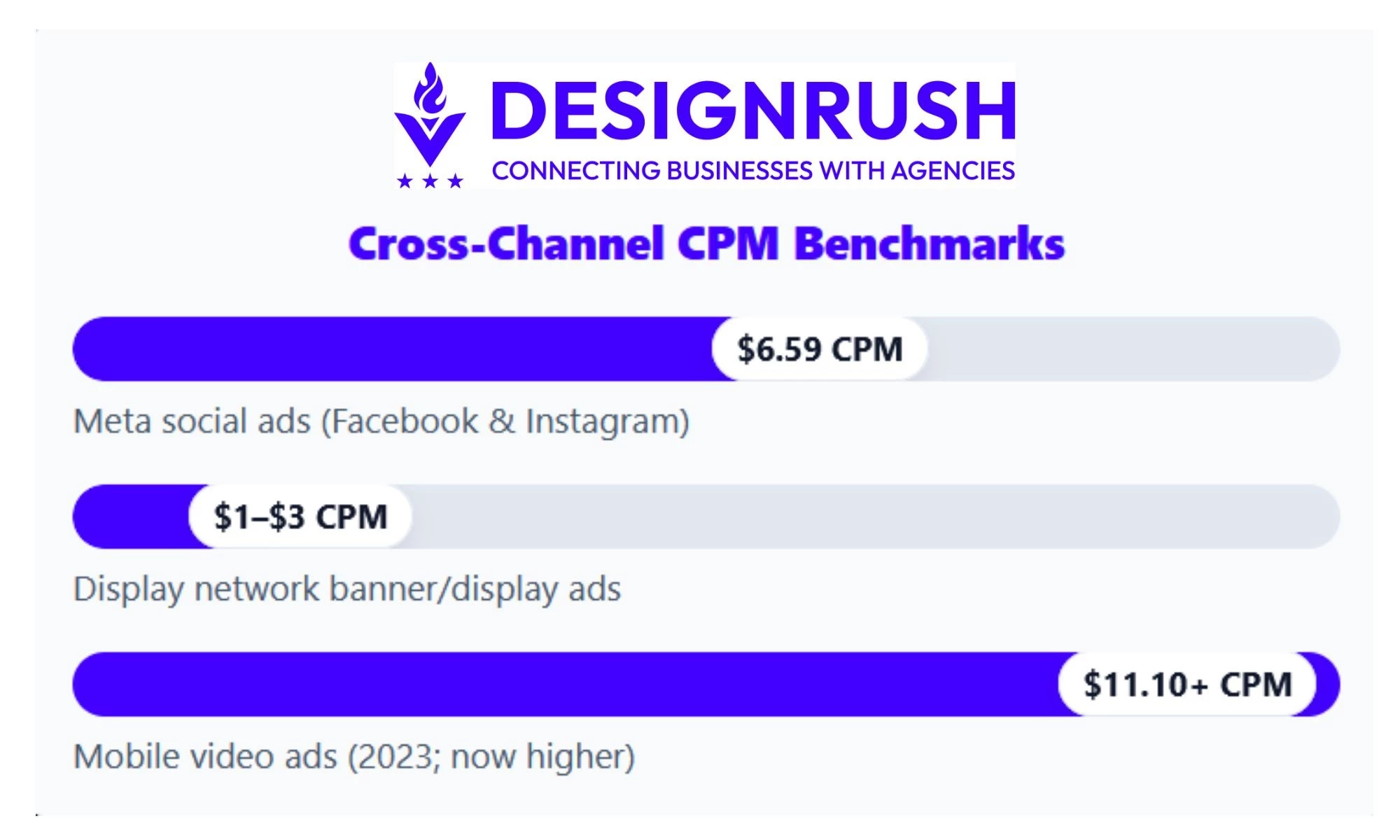
You pay per 1,000 impressions (views), a model often used for campaigns focused on brand awareness, reach, or exposure rather than immediate actions like clicks or conversions.
- On the Meta platforms (Facebook & Instagram), recent 2025 data puts average CPM around $6.59 for typical social‑media ads.
- For broader display‑network ads (e.g. banner/display across websites) CPM tends to be lower, with many campaigns averaging around $1–$3 per thousand impressions.
- A 2023 industry‑wide study found mobile‑video CPM at about $11.10 per thousand impressions, so you can reasonably expect current rates to be higher (expect current rates to be higher).
3. Cost‑per‑Acquisition / Cost‑per‑Lead (CPA / CPL)
You pay when a desired action happens (sale, sign‑up, lead). This model tends to be used by eCommerce, service-based, or lead‑generating small businesses where conversions matter more than clicks or impressions.
The average cost per lead (CPL) across all industries in Google Ads is $70.11.
4. Automated/Predictive Bidding Models
Many ad platforms now offer “smart bidding” or automation (e.g. bidding for conversions rather than clicks). These can drive efficiency, but cost depends heavily on competition, relevance (quality score), and conversion likelihood.
What this means for small businesses: CPC and CPM remain the most accessible entry points, but CPA/CPL and automated bidding can offer better value if campaigns are set up and optimized carefully.
What Different Channels and Platforms Typically Cost
Now let’s look at what small businesses tend to spend on each major channel so you can see where your own numbers sit in the real world.
Keep in mind that these are benchmarks, not rules.
- Paid Search (Google & Bing Ads)
- Paid Social (Facebook, Instagram, TikTok, LinkedIn & Co.)
- Display & Native / Programmatic Ads
- Video & YouTube Ads
1. Paid Search (Google & Bing Ads)
Paid search (mainly Google Ads, plus Microsoft/Bing) is where many small businesses put their first serious ad dollars because it captures people who are actively searching for what you sell.
Typical small‑business paid search budgets:
- Test phase: In my experience, around $100–$500 per month should be enough to start testing, especially if you’re targeting a narrow set of keywords and a small geographic radius.
- Working range for active campaigns: Most small and mid‑sized businesses end up in the $1,000–$3,000 per month range once they’re running paid search seriously, where most find a balance between meaningful data and manageable risk.
- Scaling up: WordStream’s 2025 report notes that many SMBs ultimately spend $1,000–$10,000 per month on Google Ads when they’ve proven ROI and expanded their keyword coverage.
Note: If search is your main growth engine (e.g., high‑intent local services, eCommerce), be ready to grow that budget quickly once the numbers make sense.
2. Paid Social (Facebook, Instagram, TikTok, LinkedIn & Co.)
Paid social is often cheaper per click or impression than search. It also lets you reach people based on interests and behavior instead of keywords.
How much might a small business spend on paid social:
- Entry-level budgets: Many small businesses start with $400–$2,000 per month in ad spend, enough for light promotional campaigns or testing a few audiences and creatives.
- Typical active-growth budgets: A more common range for SMBs investing consistently in paid social is $1,000–$10,000 per month, depending on industry competition, number of platforms, and campaign objectives.
Normal costs per platform:
- Facebook: One of the most cost-efficient paid-social channels for small businesses, a single Facebook ad costs about $7.19 per 1,000 impressions, covering not only views but also user engagements such as clicks, likes, and shares.
- X (formerly Twitter): X allows users to set up a free business profile and boosting a tweet costs approximately $1.35.
- Instagram: A sponsored post often runs around $7 for every 1,000 impressions, whereas a video view campaign can achieve 1,000 views for as little as $3.
- LinkedIn: With average costs of $2.00–$3.00 per click, LinkedIn advertising is significantly more expensive than Facebook or Google Ads.
3. Display & Native / Programmatic Ads
Display (banner) and native ads appear across websites, apps and news sites, often bought through self‑serve tools or programmatic platforms. Because pricing is impression‑based, you can reach large audiences cheaply, but intent and click‑through rates are much lower than search.
Standard budgets and minimums:
- Self‑serve networks: Many modern self‑serve ad platforms let you get started with $50–$100 as a minimum deposit and then recommend at least $500–$1,000 per month to see meaningful results.
- More advanced DSPs: Enterprise‑oriented programmatic platforms often expect $5,000+ per month, and fully managed services can require $35,000–$50,000 in monthly media spend, which prices them out of reach for many small businesses.
Note: If my goal is brand awareness or retargeting, I treat display as a low-cost way to stay visible. But when I’m focused on pure lead generation with a tight budget, I usually use display as a supporting channel rather than the main driver.
4. Video & YouTube Ads
Video ads (especially on YouTube) sit somewhere between search and social: you get rich storytelling like TV, but with digital‑style targeting.
What you can expect to pay:
- Cost per view (CPV) for YouTube is usually in the $0.11–$0.50 range, depending on targeting and ad format.
- Those same sources report CPM for many YouTube campaigns landing around $4–$10, and note that many businesses set daily budgets of US $10–$50, which translates to roughly US $300–$1,500 per month for a typical small‑business test.
- As a rough benchmark, it costs about $2,000 in ad spend to reach 100,000 YouTube views, assuming mid‑range CPV.
How small businesses usually use video:
- I advise starting with modest daily budgets ($10–$20) to test a few creatives and audiences.
- Use video to amplify what’s already working, such as retargeting site visitors or people who engaged with your social ads.
Industry-Specific Advertising Costs for Small Businesses
Different industries face different competitive pressures, and that shows up clearly in both their average advertising costs and their share of revenue spent on ads.
Here’s a quick look at how some key SMB sectors tend to allocate their advertising spend, based on 2025 data from industry CPC benchmarks from WordStream:
- Retail & eCommerce: In competitive retail and eCommerce markets, CPCs typically fall in the $1.00–$2.50+ range, and many SMBs in this sector report some of the highest overall advertising budgets.
- Professional & B2B services: B2B advertisers often face $3–$4 CPCs, and many in this category fall into mid- to upper-tier spenders given the cost of reaching niche, high-value audiences.
- Home services & local services: Trades and local service providers regularly encounter some of the steepest CPCs (often $5–$15+) and many allocate larger-than-average budgets because paid search is central to generating high-intent local leads.
- Healthcare providers & clinics: Healthcare advertisers typically see CPCs in the $2–$6+ range, depending on specialization, and they remain among the more active SMB advertisers as they invest in search and targeted campaigns to build trust and visibility.
- Hospitality, travel & food services: Hospitality businesses generally operate in a mid-range CPC band of $1–$2+, and many continue to maintain or increase spend, balancing budget pressures with the need to capture seasonal and location-driven demand.
- Real estate: Real-estate advertisers face premium CPCs (commonly $2–$6+ and higher in major metros) and tend to be consistent high spenders due to the need for continuous lead generation and listing promotion.
- Education & training: Education providers typically encounter CPCs of $2–$4+, and many invest meaningfully in paid channels to compete for enrollments and stand out in increasingly crowded program categories.
| Industry | Typical CPC |
| Retail & eCommerce | $1.00–$2.50+ |
| Professional & B2B Services | $3–$4 |
| Home services & local services | $5–$15+ |
| Healthcare providers & clinics | $2–$6+ |
| Hospitality, Travel & Food Services | $1–$2+ |
| Real Estate | $2–$6+ (often higher in metros) |
| Education & Training | $2–$4+ |
Typical SMB ad spend
[Source: Intuit SMB MediaLabs 2025]
- Information: ~$148,000
- Finance & Insurance: ~$127,000
- Healthcare & Social Assistance: ~$91,000
- Manufactoring: ~$91,000
- Trade & Transport: ~$71,000
- Construction: ~$58,000
- Leisure & Hospitality: ~$58,000
- Professional & Business Services: ~$54,000
- Real Estate, Rental, Leasing: ~$48,000
- Other services: ~$37,000
Advertising Costs by Service Provider Type: In-House vs. Agency Support
Beyond how much they advertise, small businesses must also consider how they execute those campaigns. I’ve seen firsthand how much the choice between in-house staffing and outsourced agency affects costs.
Here’s how the two models compare.
- In-House Advertising Costs
- Agency or Outsourced Advertising Costs
- Which Is More Cost-Effective for a Small Business?
1. In-House Advertising Costs
Building an internal advertising capability gives SMBs more control over creative direction and responsiveness, but it comes with fixed costs. Typical expenses include:
- Employee salaries: Marketing coordinators, specialists, or managers often range from $50,000–$90,000+ per year, depending on experience.
- Software and tools: Many marketing tools start around $150/month, with add-ons pushing costs upward, making $150–$500+ a practical monthly range for SMB ad and analytics software.
- Creative production: Photo/video assets, landing page design, and graphics often range from $300–$3,000+ per project, depending on complexity.
In-house management tends to be cost-effective only when an SMB already employs marketing personnel or maintains a consistent advertising volume year-round.
2. Agency or Outsourced Advertising Costs
Outsourcing provides immediate access to experienced advertising specialists without the fixed cost of full-time hires, and it scales easily as needs grow. These pricing benchmarks give small businesses a clear view of typical agency fees:
- Monthly retainers: Many full-service or channel-specific agencies charge for retainers in a range that, for SMB-sized clients, often starts around $2,000–$6,000/month.
- Percentage-of-spend models: Agencies often take 10–20% of monthly ad spend, especially for PPC management.
- Project-based fees: Campaign builds, audits, or creative packages may run anywhere from under $1,000 to over $10,000, depending on scope.
3. Which Is More Cost-Effective for a Small Business?
Cost-effectiveness depends on budget size, internal skills, and how complex the advertising program is:
1. Budgets under ~$1,500/month
In-house or owner-managed ads are usually more cost-effective because agency fees would consume most of the budget.
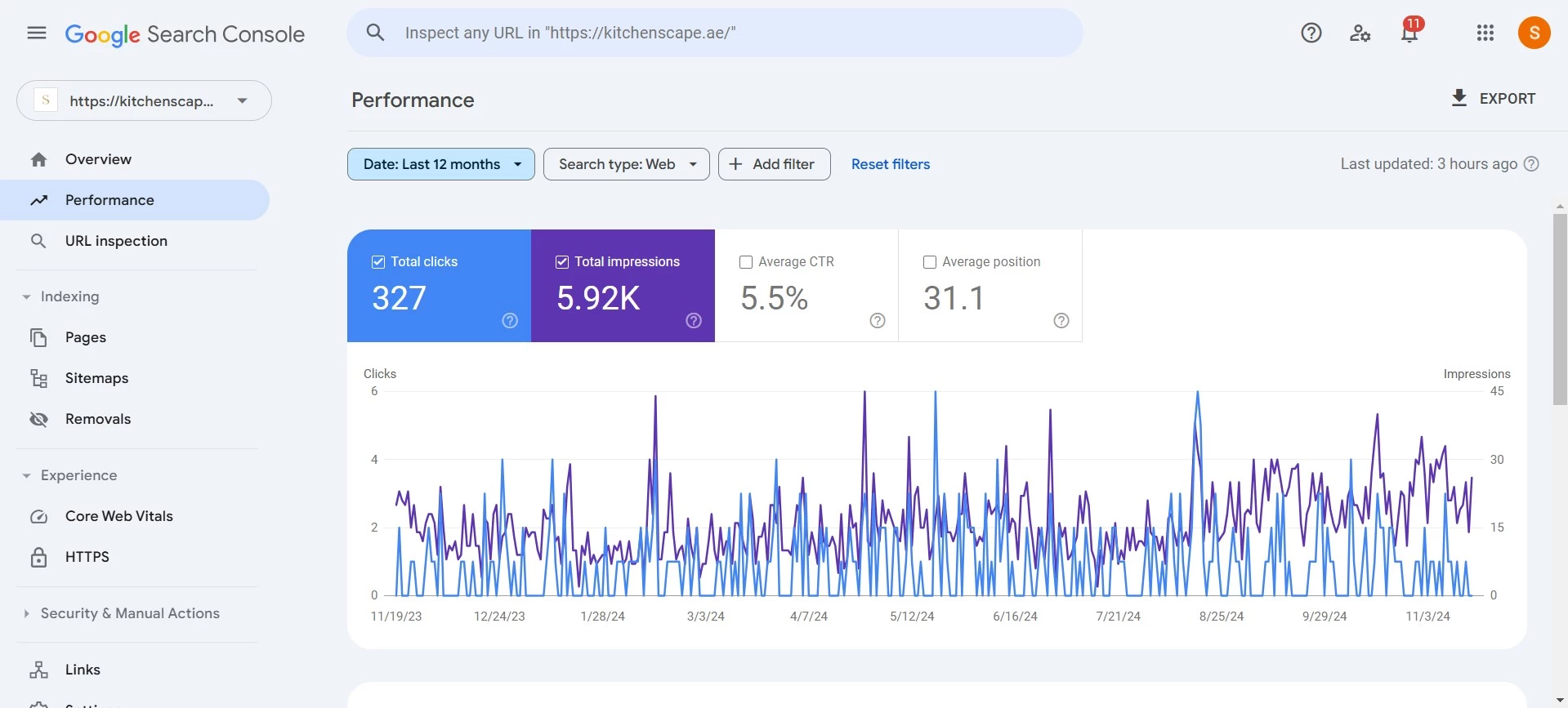
A good example of what a budget of just ~$620 can accomplish comes from Soharon Infotech’s work with Kitchenscape, which used a lean, well-targeted Google Ads campaign to generate a steady flow of qualified renovation leads.
Their results show that with focused keywords, clear intent, and consistent optimization, even a modest monthly budget can reliably produce meaningful enquiries in high-value service industries.
2. Budgets ~$1,500–$5,000/month
For businesses in the $1,500–$5,000/month range, I think a hybrid model makes the most sense: strategy and content handled in-house, with optimization outsourced to specialists.
A good example of what this can achieve is Lingo Translations, also from Soharon Infotech, which used a mid-tier budget to generate steady, high-intent leads through tightly structured Google Ads campaigns.
Seeing results like these reinforces my view that this middle budget band benefits most from combining internal brand knowledge with external performance expertise.
3. Budgets above ~$5,000/month
For budgets above ~$5,000/month, agencies typically deliver stronger ROI through deeper optimization, multivariate testing, and cross-channel coordination.
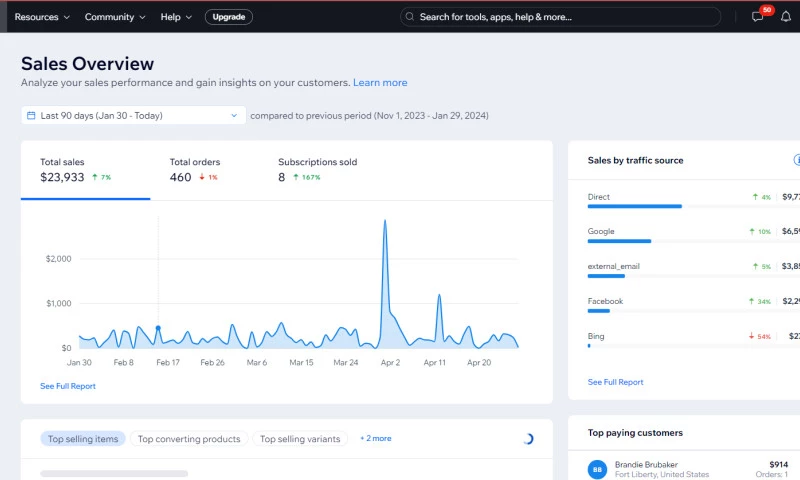
A clear example of what this level of investment can unlock comes from Dynamic Wave Consulting’s work on FoamFrat, a medical education provider that saw its best fiscal years on record after running a strategy-driven Google Ads and Meta campaign — including a 57% year-to-date lift over the prior year.
Small Business Advertising Costs: Final words
Understanding what advertising really costs gives small businesses the clarity they need to budget confidently. These benchmarks show that effective ad spend is about aligning your budget with your market, goals, and capacity to execute.
Our team ranks agencies worldwide to help you find a qualified partner. Visit our Agency Directory to find top-rated advertising agencies, as well as:
- Top Digital Marketing Agencies for Small Businesses
- Top Digital Marketing Agencies For Startups
- Top PPC Agencies
- Top Performance Marketing Agencies
- Top Shopper Marketing Agencies
Small Business Advertising Costs FAQs
1. How do I know if my current ad budget is actually “enough” for my industry and goals?
A budget is generally “enough” if it produces consistent impressions, stable optimization, and leads or sales at a sustainable cost. If your campaigns struggle to exit the learning phase, deliver too little data to optimize, or lose visibility to competitors, you’re likely under-spending.
If increasing budget doesn’t improve results, you may be overspending. Comparing your performance to industry benchmarks is the simplest way to gauge fit.
2. What should I expect in terms of setup costs, onboarding fees, or minimum commitments when hiring an agency?
Most agencies charge onboarding or setup fees to cover initial strategy, tracking, and account restructuring, and many require a three- to six-month minimum commitment.
These non-media costs can meaningfully affect affordability, so SMBs should review upfront fees, contract terms, and cancellation policies alongside monthly retainers and percentage-of-spend models.
3. How long does it usually take to see meaningful results from paid advertising?
Most campaigns need several weeks of learning and one to three months of optimization before producing reliable results. Search campaigns often ramp faster, while social and display might need more testing.
Meaningful performance emerges once enough data accumulates to refine targeting, creative, and bidding effectively.