
Events don’t implode all at once. They unravel piece by piece: a missed deadline here, a confused vendor there.
To pull off an unforgettable experience without the stress spiral, try the same tactics expert planners and event production agencies use to stay in control.
Event Planning Troubleshooting: Key Findings
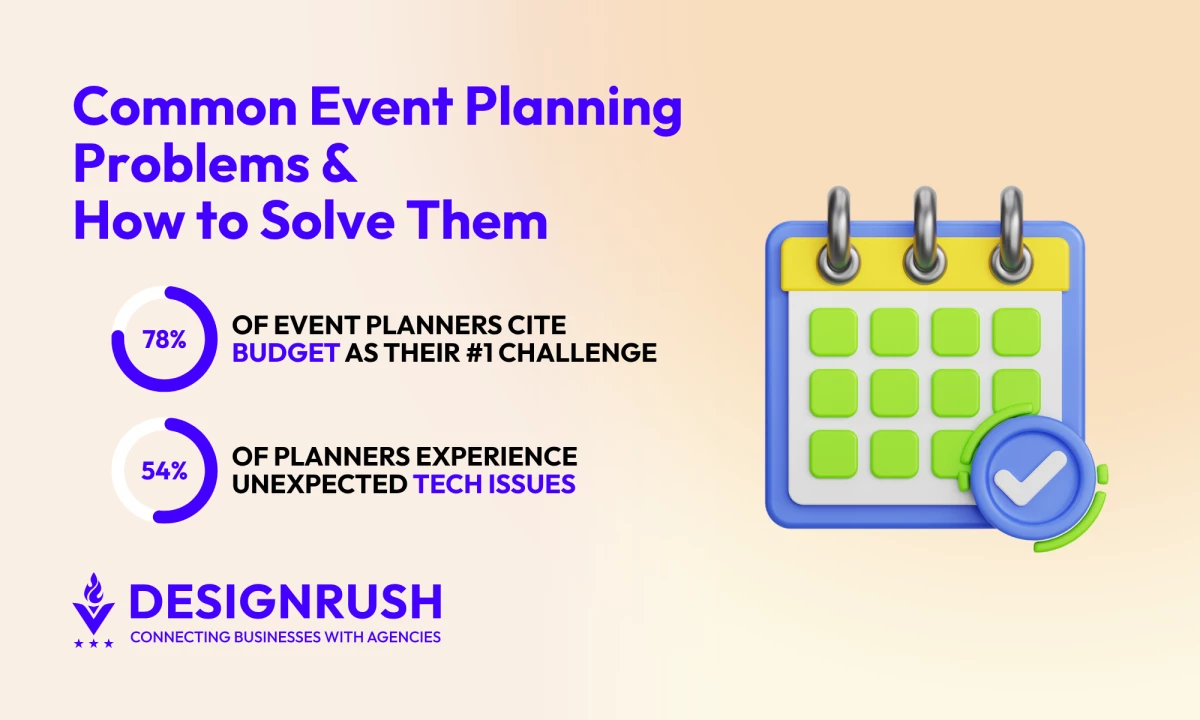
- 78% of planners cite budget constraints as their #1 challenge, and 71% expect costs to rise this year. Teams that categorize spending early and require written change orders reduce surprise fees.
- Attendees now demand interactive, human experiences. When agendas shift from passive presentations to curated interactions, registration and NPS scores increase significantly.
- Planners who track just 3 to 5 KPIs (pipeline influence, cost per attendee, NPS, post-event engagement) can report impact to leadership within seven days.
A Practical Guide to Solving Event Planning Problems
This guide breaks down the six biggest challenges event teams face today.
For each challenge, you’ll find proven, repeatable solutions used by top event agencies to keep events on schedule, on budget, and high impact.
Top Event Planning Challenges and Proven Solutions
The event planning industry is in a period of high demand and high pressure: 52% of planners say they’re managing more events than last year, while 70% anticipate rising costs.
Last-minute changes, vendor issues, and technical failures can derail an otherwise flawless event.
Below are the most common challenges planners and event production agencies face today, along with proven solutions to overcome them.
- Limited time & overwhelming project scope
- Rising attendee expectations
- Budget constraints & unexpected costs
- Technology & AV failures
- Vendor coordination
- Proving event ROI & measuring success
1. Limited Time & Overwhelming Project Scope
For many event planners, time feels like the ultimate enemy. With multiple stakeholders, tight deadlines, and endless moving parts, it’s easy for your calendar to shrink as your to-do list balloons.
Without a structured system to manage tasks, assign ownership, and track progress, events become vulnerable to oversights that compromise quality, attendee experience, and overall success.
Tame Your Event Timeline
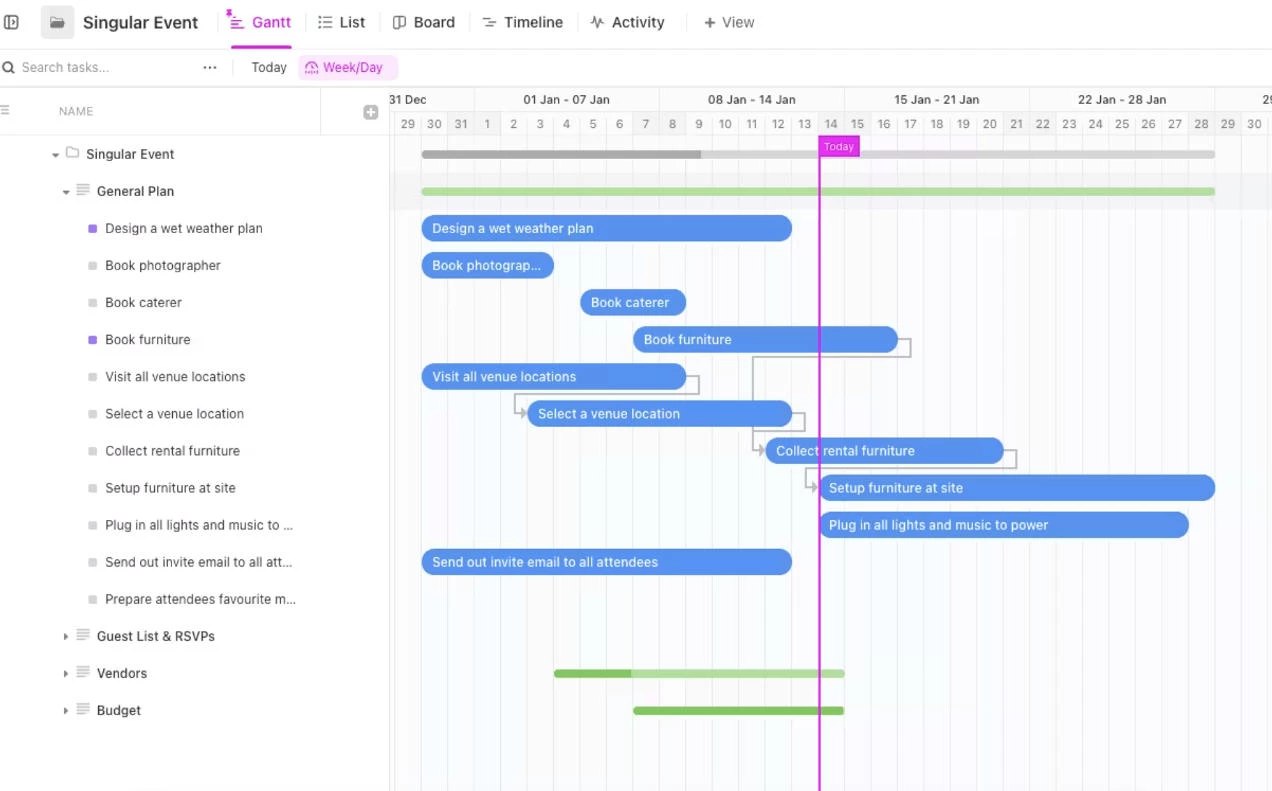
- Build your timeline backward. List the immovables (venue lock, keynote, registration launch, print deadlines). Create a simple Gantt to mark the most critical tasks and include “decision-by” dates.
- Define ownership. Assign RACI (Responsible, Accountable, Consulted, Informed) and one DRI (directly responsible individual) for each task. Establish shared calendars and task lists on your chosen project management platform.
- Prioritize like a pro. Each week, pick the top 3 high-impact tasks and limit work-in-progress. Tackle urgent critical-path items first and run 10-minute standups to surface blockers early.



2. Rising Attendee Expectations
The days of cookie-cutter agendas and one-size-fits-all event programming are gone.
Over the last five years, audience expectations have evolved dramatically, demanding deeper engagement, flexibility, and authenticity.
Lauren Reeves, Chief Operating Officer at Meeting Tomorrow, shares:
“The generic events are losing appeal. Attendees are expecting personalized experiences, tailored content, and memorable moments. It will require getting out of the standard templates and the way you’ve always done it.”
Furthermore, Amex Global reports that professionals are increasingly discerning about how they choose to spend time outside of work or home.
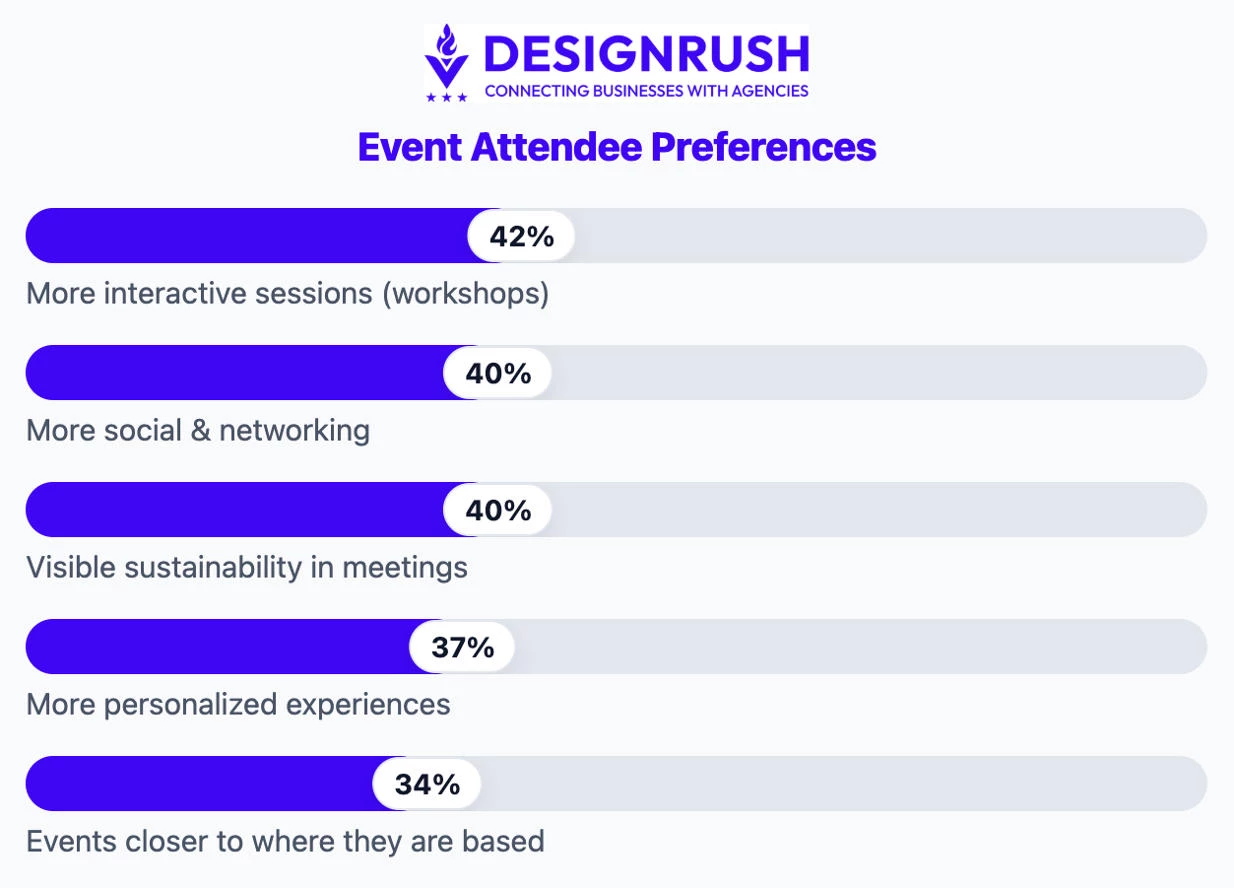
Personalization isn’t just about name tags or segmented emails anymore. It’s about designing moments that feel intentional and human.
Create Engaging, Meaningful Experiences
- Design for engagement, not just attendance. Give attendees ways to shape their own experiences. Go for interactive workshops, Q&A sessions, or small breakout discussions instead of long keynotes.
- Facilitate authentic connections. Curate networking spaces where people can actually talk, not just exchange business cards.
- Show your values in action. Integrate sustainability and accessibility visibly: use local vendors, digital materials, and eco-friendly setups.
Meeting audience expectations starts at registration. Lead with a clear value promise (what they’ll learn or who they’ll meet) and add social proof (speakers, partners).
You can also use early-bird pricing and simple reminder nudges for drop-offs, then watch conversion rates and abandon rate to see what’s working.
Pro tip: Audit your agenda closely. If any session could exist as a run-of-the-mill webinar replay, rethink it. Memorable events feel alive, not templated.
3. Budget Constraints & Unexpected Costs
If your event planning budget keeps “mysteriously” disappearing, you’re not alone. In fact, 78% of event planners say budget limits are their biggest challenge (Zipdo).
Furthermore, about 71% of event professionals expect expenses to rise over the coming year.
Those surprise event expenses (e.g., service fees, overtime, rush rentals) can make you feel like you’re losing control, even when you’re doing everything right. Fortunately, the fix is simpler than it looks.
Control Your Budget Proactively
- Plan your budget the smart way. Set simple category caps (Venue, F&B, Production, Marketing) and keep a 10% to 15% contingency. Categorize them into must-have or nice-to-have, so you know what can be paused if costs creep.
- Clarify vender costs. Lock the scope with a signed contract; any additions must go through a written change order with price + schedule impact.
- Check once a week. Compare committed vs. actual spend weekly. If a category is >5% over, cut or delay a nice-to-have. Build buffers and match orders to invoices, so nothing slips through.
Pro tip: The biggest budget traps are predictable, so pre-negotiate service fees, power/rigging, union labor, venue Wi-Fi, and drayage before the contract.
4. Technology & AV Failures
Technical problems often stem from overconfidence (“it worked perfectly last time”), poor setup time, or skipping a full run-through.
When multiple vendors handle different systems, small miscommunications can cause big on-stage embarrassment.
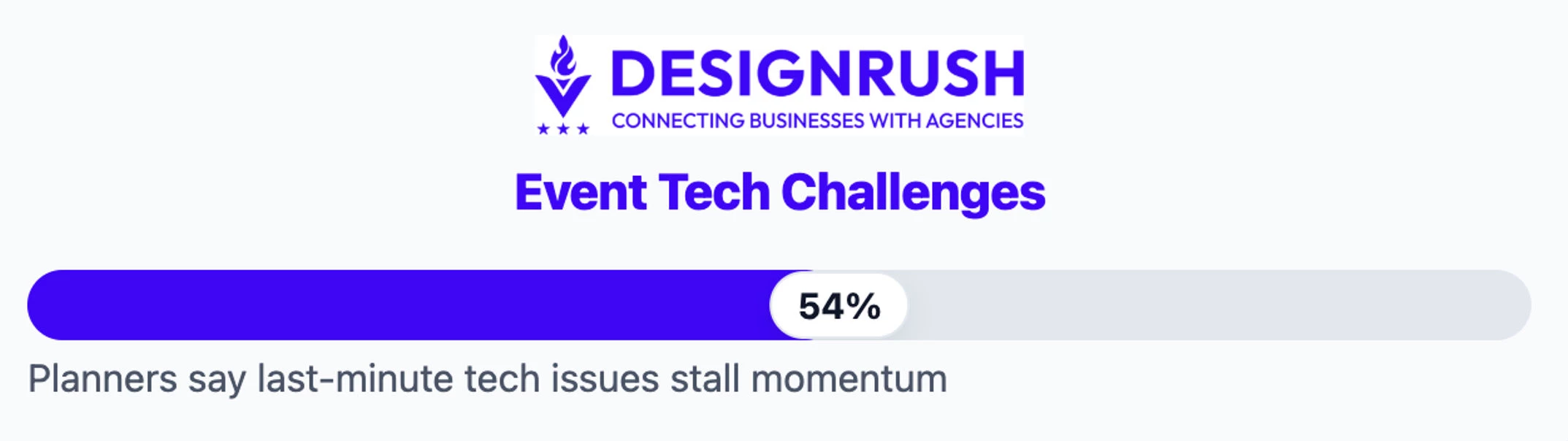
Unfortunately, 54% of organizers report last-minute tech issues killing their event momentum (Zipdo), proving just how common (and preventable) this stress can be.
Secure Flawless Event Technology
- Test everything early. Schedule a full technical run-through, including presentations, mics, lighting, and video playback. Treat it like a dress rehearsal, so click every button and look at every slide.
- Prepare backups and redundancies. Keep spare mics, cables, clickers, and batteries on site. If possible, use hard-wired internet instead of Wi-Fi for streaming and presentations.
- Get expert help on site. Hire experienced AV partners and ensure you have a dedicated technician during the event.
Pro tip: Create a quick tech checklist for your team (including gear inventory, backups confirmed, presentations pre-tested) and review it before every event.
5. Vendor Coordination
If you’ve ever played telephone between your AV team, caterer, and décor vendors, you know how fast details can get lost.
Managing multiple partners feels like herding cats, especially when everyone works on different timelines and versions of the plan.
If you don't have a single hub of truth, small misalignments compound into last-minute scrambles.
Streamline Vendor Coordination
- Centralize communication. Choose one main channel and name a single point of contact who filters updates and decisions. This avoids crosstalk and ensures nothing gets missed.
- Maintain one master production schedule. Create a consolidated run of show (ROS). Every vendor should see key milestones, setup times, and dependencies.
- Set escalation paths and responses. Define how quickly vendors must respond and where issues get logged. Share a vendor incident channel to keep day-of decisions fast and documented.
Pro tip: Start weekly vendor sync calls 4 to 6 weeks before the event. Keep them short (15 to 20 minutes) and use the master schedule as your shared agenda.
6. Proving Event ROI & Measuring Success
Even the best-executed event means little if you can’t show tangible results afterward.
Post-event reporting (i.e., connecting attendance and engagement data to real business outcomes) is often where planners struggle most.
Without clear ROI tracking, it’s hard to secure next year’s budget or justify the spend to leadership.
Track and Report Event ROI
- Set success metrics. Decide what “good” looks like, whether it’s leads generated, revenue influenced, attendee NPS, cost per attendee, or social reach.
- Connect your data sources. Link registration, check-in, and app engagement data to your CRM or marketing dashboard to track the journey from sign-up to post-event action.
- Report fast and keep it visual. Within a week, send a short Event Impact Report showing results vs. goals, attendee feedback, and key takeaways. Use charts and quick wins to make it leadership friendly.
Pro tip: Keep it simple. Pick 3 to 5 KPIs that align with your organization’s goals and report them consistently across every event.
KPIs to track:
- Leads or opportunities generated
- Cost per attendee (CPA)
- Attendee satisfaction (NPS/CSAT)
- Pipeline or revenue influenced
- Post-event engagement rate
Top 5 Event Planning Companies to Work With
The right event partner can transform your vision into a seamless, high-impact experience that feels effortless to attendees (and stress-free for you).
These top event planning companies are known for their creativity, technical expertise, and proven ability to deliver world-class events of every scale.
1. Meeting Tomorrow
Meeting Tomorrow is a nationwide event production agency specializing in high-stakes corporate events. With 20+ years of experience, the team handles everything from executive dinners to large conference logistics with thousands of attendees.
Its in-house team brings strategy, planning, creative, and production together under one roof. They can partner with clients early to shape event goals, then handle everything from branding and content creation to custom stage design, hybrid solutions, and full onsite production.
Known for consistent quality across multiple cities and venues, it provides streamlined processes, experienced technicians, and extensive equipment resources across the U.S. and globally.
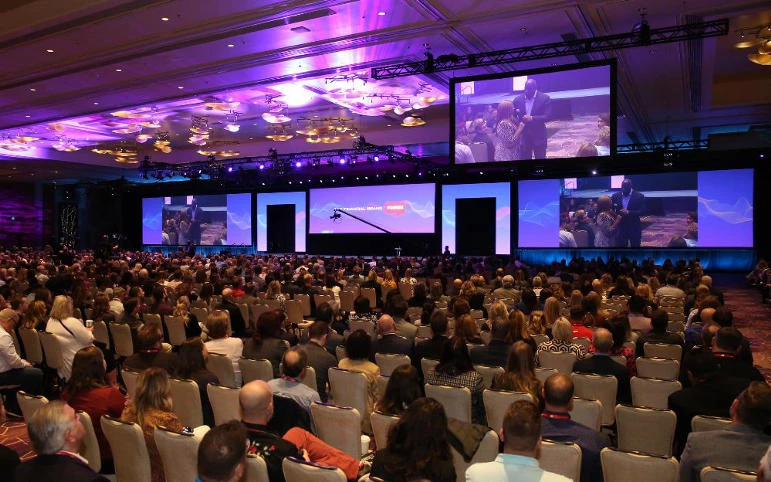
Meeting Tomorrow served as the full-service production partner for The Financial Brand Forum, the banking industry’s largest digital growth conference with 3,000+ attendees and 70+ speakers, including Fortune 500 leaders and celebrities.
With 1 in 5 attendees at the C-suite level, the event required flawless execution. The team delivered a high-impact stage design, managed 40+ breakout sessions, and produced all general sessions with multi-camera coverage.
Despite last-minute speaker changes, the show ran seamlessly. All sessions were recorded and uploaded, extending post-event value and elevating overall production quality.
- Location: Chicago, United States
- Team size: 50-99
- Minimum budget: Inquire
- Best for: Full-service event production
- Services: Comprehensive event production integrating tech, logistics, and creative direction
- Notable Clients: AT&T, Pfizer, Amazon, Microsoft, & CVENT
Check out Meeting Tomorrow’s DesignRush profile.
2. Freeman
Freeman is a global leader in live event production, known for designing experiences that create meaningful connections between brands and their audiences.
With 80+ years of expertise, Freeman provides end-to-end solutions, from AV and stage design to trade shows and large-scale exhibits. It combines strategic thinking, deep industry knowledge, and innovative technologies to deliver unforgettable moments that strengthen brand loyalty and impact.
Guided by strong values and a purpose-driven culture, Freeman consistently elevates events into powerful, memorable experiences.
Freeman helped the American Society of Clinical Oncology transform its 2025 Annual Meeting: a global event drawing 40,000+ oncology professionals — into a connection-focused experience.
By creating purposeful spaces such as mentorship lounges, a career fair, wellness zones, and creative branded environments, Freeman increased engagement, improved attendee flow, and turned previously overlooked areas into high-traffic destinations.
Vendor activations generated donations for cancer research, directly supporting ASCO’s mission. With strategic design and growth planning, Freeman elevated a traditional medical conference into a vibrant community experience.
- Location: Texas, United States
- Team size: 1,000 & up
- Minimum budget: Inquire
- Best for: Large-scale corporate events, trade shows, and experiential exhibits
- Services: Enterprise-scale events with advanced infrastructure
- Notable Clients: FreightWaves, International Baking Industry Exposition (IBIE), & Link-Belt Excavators
Check out Freeman’s DesignRush profile.
3. George P. Johnson Experience Marketing
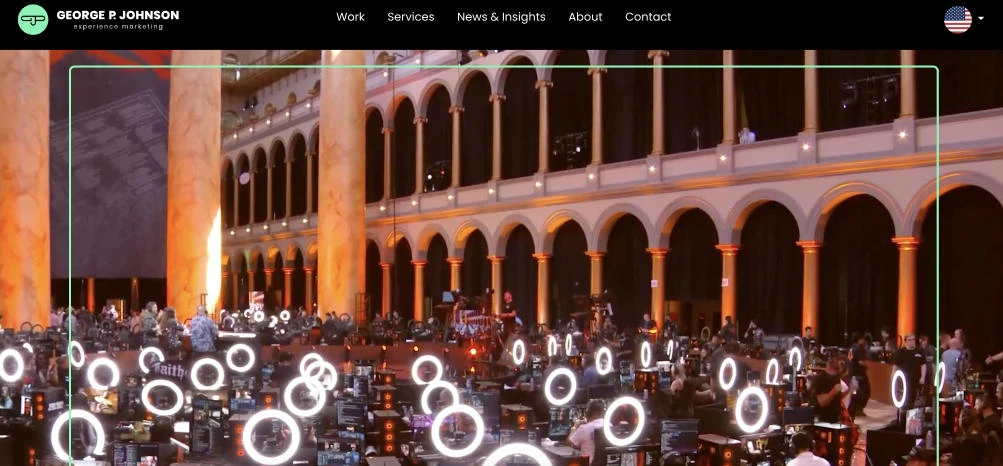
George P. Johnson Experience Marketing (GPJ) is the world’s leading experiential marketing agency, creating breakthrough brand experiences that drive measurable business results.
With over 100 years of innovation, GPJ blends strategy, creative design, and flawless execution to produce in-person, hybrid, and virtual events that deepen audience connections and build long-term loyalty.
Its global team combines bold thinking with meticulous delivery, earning decades-long client relationships and award-winning work. Passionate, collaborative, and fearless, GPJ transforms ideas into unforgettable experiences that move brands forward.
GPJ partnered with Google Cloud to produce Next 2025, the company’s largest global event, attracting 32,000+ attendees to Las Vegas.
The agency transformed the venue into an immersive Cloud City featuring interactive AI demos, networking zones, and packed learning sessions that showcased how AI delivers real-world impact.
A VIP kickoff at the Sphere, led by Google Cloud and Alphabet CEOs, set the tone for innovation. Through strategic design and a guided “Imagine → Learn → Build” attendee journey, GPJ turned AI from concept into tangible experience, reinforcing Google Cloud’s leadership.
- Location: California, United States
- Team size: Under 49
- Minimum budget: Inquire
- Best for: Experiential marketing, large-scale brand activations, immersive corporate events
- Services: Experiential brand storytelling for Fortune 500
- Notable Clients: Volkswagen, IBM, Call of Duty, Google Health, & DP World
Check out George P. Johnson’s DesignRush profile.
4. Agency EA
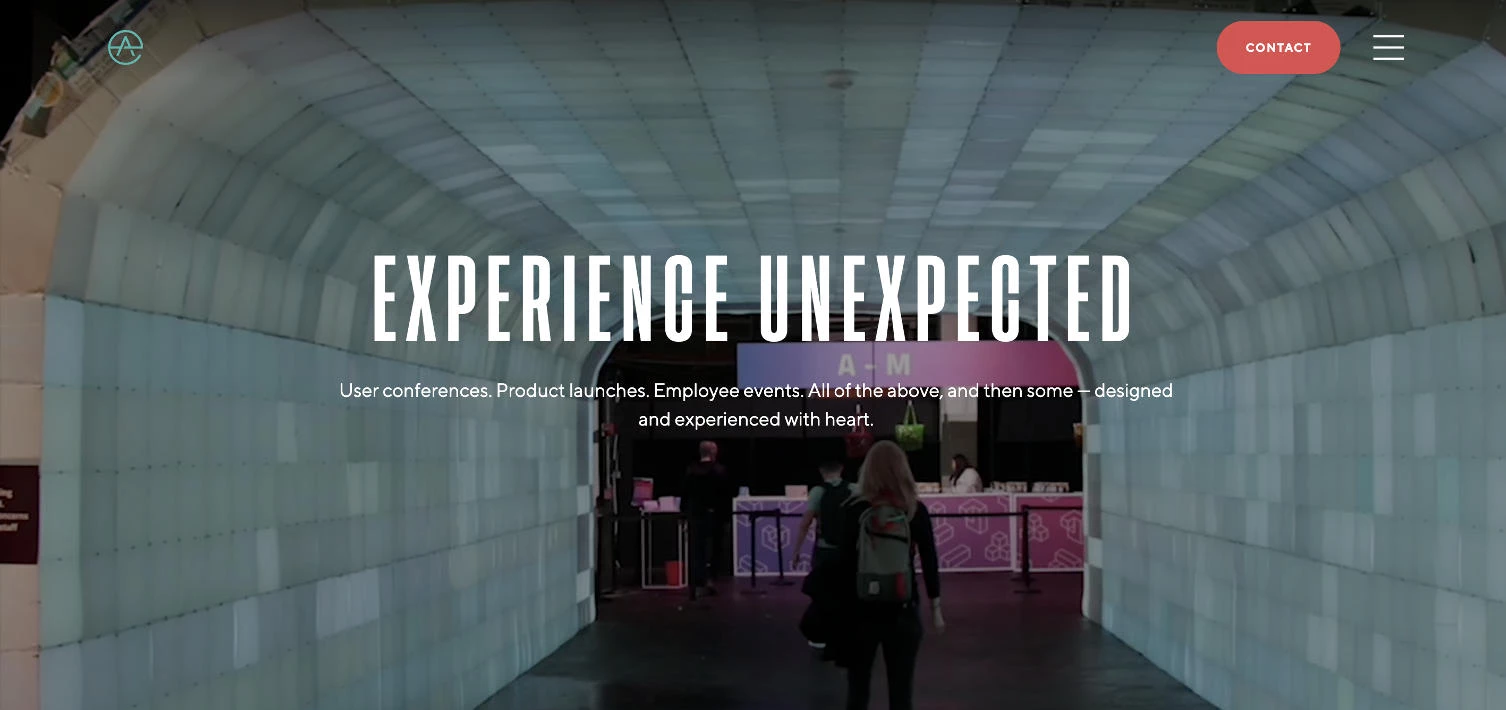
Agency EAis a full-service event agency delivering scalable, end-to-end solutions for live, digital, and hybrid experiences.
Since 1999, it’s partnered with global brands to create award-winning campaigns that deepen audience engagement and drive lasting impact.
Known for creativity, collaborative approach, and consistent execution, EA combines a diverse team, innovative thinking, and strategic insights to produce memorable, high-caliber experiences.
Agency EA partnered with US Foods to relaunch Food Fanatics, attracting 5,000+ attendees after a four-year hiatus.
It transformed the expo into an immersive culinary ecosystem with 200 custom-built pieces, 32 sessions, and 88 sponsors/exhibitors, creating a festival-style experience that combined live demos, celebrity chef competitions, and interactive content hubs.
By designing a sustainable, reusable event toolkit, EA enabled future activations to run faster and more cost-effectively. Over 16,000 pounds of surplus food were donated, enhancing impact and attendee engagement.
- Location: Chicago, United States
- Best for: High-impact, audience-centered events
- Services: Corporate brand events emphasizing creative engagement
- Notable Clients: Boeing, DoorDash, Google, Square, McDonald’s, & Samsung
5. Wilson Dow
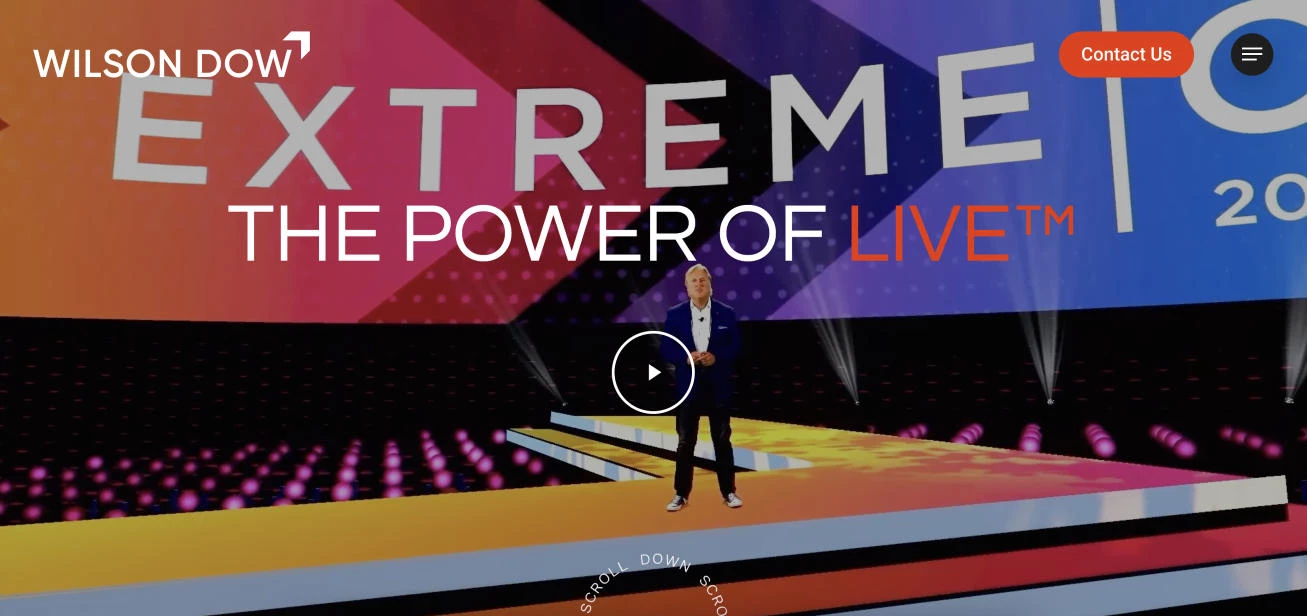
Wilson Dow is a full-service event production and audience engagement agency specializing in live experiences that educate, inspire, and drive behavioral change.
Since 1996, it has blended strategy, creativity, experiential learning, and ongoing communications to deliver events that maximize impact and sustained performance.
Its multidisciplinary team of strategists, creatives, instructional designers, and production experts collaborate closely with clients across industries to create meaningful shared experiences.
Guided by a people-first culture, Wilson Dow fosters connection, innovation, and measurable results in every event they produce.
- Location: Chicago, United States
- Best for: Multi-day experiential storytelling for enterprise events
- Services: Product launch events, communication campaigns, experiential learning
- Notable Clients: Microsoft, Zelis, Gigamon
Event Planning Problems: Final Thoughts
The best events don’t come together by luck. They’re the result of clear planning, decisive leadership, and proactive vendor management long before opening day.
Streamline ownership, design for engagement, and track impact early. Suddenly, your event isn’t just smooth; it’s scalable, repeatable, and driving measurable business growth.

Our team ranks agencies worldwide to help you find a qualified partner. Visit our Agency Directory for the Top Event Marketing Agencies as well as:
- Top Event Management Companies
- Top Live Events Production Companies
- Best Event Marketing Companies for Enterprises
- Top Experiential Marketing Agencies
- Best Public Affairs Agencies
Event Planning Problems FAQs
1. How far in advance should I begin planning a corporate event?
For conferences and multi-day events, start planning 6 to 12 months out. For smaller internal or customer events, 8 to 12 weeks is typical. However, vendor availability and venue demand may push timelines earlier.
2. What’s the most effective way to increase event registration?
Lead with a clear value promise (“Here’s what you’ll walk away with”), add social proof (speakers, sponsors, client brands), and create urgency with deadlines (early bird tiering). Personalization at registration boosts conversion and lowers abandonment.
3. How do I measure event ROI if my goal isn’t revenue?
Non-revenue events should track KPIs such as attendee NPS, cost per attendee, content engagement, or post-event actions (demo requests, downloads, meeting bookings). Pick 3 to 5 metrics and use them consistently across all events.