Connect with vetted headless CMS developers to drive better UX, conversions, and ROI through consistent omnichannel experiences. Filter agencies by expertise, budget, and location to find the right partner.
Organic rankings are determined by five factors: top services, reviews, portfolio, awards/press, and team expertise. Sponsored listings pay for a placement that appears above organic positions. Sponsorship does not affect star ratings or review content - read more on our methodology page.
Crafting Websites That Convert, Ads That Deliver.
At Les Creatifs Studio, we craft websites and online stores that dont just sit therethey work. As a certified Google Ads Partner, we design sleek, responsive sites and ROI-focused ad campaigns that turn clicks into customers. Whether you need a bold digital presence or a strategic marketing boost, we blend...
Top Services:
- WordPress Website Design
- PPC
- Web Design
- Web Development
- Digital Strategy
- Show more
- Location
- New York City, New York
- Number of Employees
- Under 49
- Average Hourly Rate
- $35/hr
- Minimal Budget
- $1,000 - $10,000
- Portfolios Count
- 3 Projects Listed
Catalyzing Innovation and Smart Digital Solutions.
Apptalyst is a software development and digital marketing company. Our team is as wise as tree full of owls and we take great pride in proving our mettle in the services we offer. We strive to serve individuals, small businesses and corporations alike...
Top Services:
- Mobile App Development
- Digital Marketing
- SEO
- Graphic Design
- Web Design
- Show more
- Location
- Great Falls, Virginia
- Number of Employees
- Under 49
- Average Hourly Rate
- $35/hr
- Minimal Budget
- Under $1,000
- Portfolios Count
- 3 Projects Listed
Production AI you're not allowed to get wrong.
iSimplifyMe is an AI Infrastructure & Orchestration firm. We architect and operate production AI on private AWS...
Top Services:
- AI Development
- Software Development
- Cloud Consulting
- CRM Consulting
- IT Services
- Show more
- Location
- Chicago, Illinois
- Number of Employees
- Under 49
- Average Hourly Rate
- $299/hr
- Minimal Budget
- $50,000 & Up
- Portfolios Count
- 3 Projects Listed
Think | Design | Develop
Sydney based with skilled local staff that know how to deliver website projects that help elevate your brand and produce tangible results. Our team will work in partnership with you to ensure timely project delivery that exceeds expectations...
Top Services:
- Web Design
- eCommerce Development
- Web Development
- WordPress Website Design
- Digital Marketing
- Show more
- Location
- Chippendale, Australia
- Number of Employees
- Under 49
- Average Hourly Rate
- $150/hr
- Minimal Budget
- $1,000 - $10,000
- Portfolios Count
- 3 Projects Listed
Boutique Engineering Studio
EltexSoft is a boutique engineering studio of 35 to 50 senior developers, building web, mobile, and AI products for startups and established companies since 2015. We embed as a long-term extension of your team, the engineers who scope the work are the ones who ship it...
Top Services:
- eCommerce Development
- AI Development
- Web Development
- Software Development
- Mobile App Development
- Show more
- Location
- Los Angeles, California
- Number of Employees
- Under 49
- Average Hourly Rate
- $80/hr
- Minimal Budget
- $25,000 - $50,000
- Portfolios Count
- 3 Projects Listed
More Business. Less Work.
At BMS Services, we build apps, websites, and custom software that simplify your work and help your business grow.From app development and CRMs to automation, web development, and SEO, we turn your goals into smart, scalable solutions that actually work.Why BMS: honest advice without the jargon, live...
Top Services:
- Software Development
- Mobile App Development
- AI Development
- Digital Services
- Web Development
- Show more
- Location
- Semarang, Indonesia
- Number of Employees
- Under 49
- Average Hourly Rate
- $35/hr
- Minimal Budget
- Under $1,000
- Portfolios Count
- 3 Projects Listed
Your marketing challenges? Accepted.
As one of the UK's longest-established independent marketing, brand, design and technology agencies, we're specialists in connecting you with your clients, customers and prospects at every stage of their journey with you, wherever they are in the world...
Top Services:
- Digital Marketing
- Web Development
- Branding
- Web Design
- Digital Strategy
- Show more
- Location
- Bristol, United Kingdom
- Number of Employees
- Under 49
Design Delivered
STYL one moves you forward. No paperwork. No billable hours. No delays. Just performance-grade design that gets your business. Streamlined, reliable, relentless...
Top Services:
- Web Design
- Branding
- UI/UX Design
- CRO
- Design Services
- Show more
- Location
- Visoko, Bosnia and Herzegovina
- Number of Employees
- Under 49
- Minimal Budget
- $1,000 - $10,000
Your Idea + Our Team A Real Product Delivered End-to-end
Kavita Systems builds custom SaaS platforms, web apps, AI features, and API-driven products with Laravel, Vue/Nuxt, React/Next, DevOps, and scalable architecture...
Top Services:
- Software Development
- Web Development
- AI Development
- UI/UX Design
- Product Design
- Show more
- Location
- Cluj-Napoca, Romania
- Number of Employees
- Under 49
- Average Hourly Rate
- $41/hr
- Minimal Budget
- $1,000 - $10,000
JW Digital builds fast, modern websites, apps, and SEO campaigns for UK businesses.
JW Digital is a Manchester-based digital agency specialising in custom-coded bespoke websites, technical and local SEO, Shopify and WooCommerce ecommerce, mobile and web app development, database and API engineering, and managed hosting. We work with businesses across the UK...
Top Services:
- Web Design
- Web Development
- SEO
- eCommerce Development
- Cloud Consulting
- Show more
- Location
- Manchester, United Kingdom
- Number of Employees
- Under 49
- Average Hourly Rate
- $40/hr
- Minimal Budget
- Under $1,000
Just Websites That Work
Webvise is a Halifax-based web design and development studio that creates fast, search-friendly websites for trades and service businesses across the UK. The company offers website design, hosting, WordPress migrations, booking systems, local SEO, and Google Ads management through a simple one-time fee model...
Top Services:
- Web Design
- UI/UX Design
- Web Development
- Mobile App Development
- Software Development
- Show more
- Location
- London, United Kingdom
- Number of Employees
- Under 49
- Average Hourly Rate
- $35/hr
- Minimal Budget
- Under $1,000
Strategy, design, engineering, and AI
Bay Area Coders is a San Francisco-based product and engineering studio working with venture-backed startups and growth-stage companies since 2016. We combine strategy, design, engineering, and AI to help teams ship real products and modernize existing ones...
Top Services:
- Software Development
- Web Development
- Mobile App Development
- AI Development
- Design Services
- Show more
- Location
- Roseville, California
- Number of Employees
- Under 49
- Average Hourly Rate
- $100/hr
- Minimal Budget
- $1,000 - $10,000
Marketing Systems To Grow Your Business.
Attribute Media is a Toronto-based digital marketing agency helping businesses grow through SEO, GEO, paid advertising, web development, conversion design, content, and branding. The agency has worked in digital marketing since 2004 and supports businesses across Toronto, Canada, and the USA. Attribute Media...
Top Services:
- Branding
- Web Design
- Web Development
- WordPress Website Design
- SEO
- Show more
- Location
- Toronto, Canada
- Number of Employees
- Under 49
- Average Hourly Rate
- $100/hr
- Minimal Budget
- $1,000 - $10,000
Show up professionally. Grow on purpose.
We help start, launch, and grow small businesses and brands. NYC based, offering services nationwide. Learn more at rymariemarketing.com...
Top Services:
- Digital Services
- Creative Services
- Video Production
- Branding
- Logo Design
- Show more
- Location
- Albany, New York
- Number of Employees
- Under 49
- Minimal Budget
- $1,000 - $10,000
Outcome-Focused Software Solutions
OneEKO Technologies is a software development agency building custom solutions for small businesses. We specialize in web applications, mobile apps, and AI integration, helping local businesses like restaurants, gyms, law firms, and retail stores compete with modern technology. Our flagship product KaiScout...
Top Services:
- Software Development
- Digital Services
- eCommerce Development
- UI/UX Design
- SEO
- Show more
- Location
- Wilmington, Delaware
- Number of Employees
- Under 49
- Average Hourly Rate
- $100/hr
- Minimal Budget
- $1,000 - $10,000
- Portfolios Count
- 6 Projects Listed
A Full Service Marketing Agency
JA Media is a full-service marketing agency helping businesses of all sizes stand out online. Since 2012, we've created stunning websites, optimized SEO, managed social media, and produced media content that drives results. From redesigns and mobile-friendly sites to backlinking and video optimization, our...
Top Services:
- Web Design
- SEO
- PPC
- Location
- Suffern, New York
- Number of Employees
- Under 49
- Average Hourly Rate
- $100/hr
- Minimal Budget
- $1,000 - $10,000
- Portfolios Count
- 1 Project Listed
Your Inspiration Our Creation
Creative Tugs is a web design and software development agency specializing in custom websites, web applications, mobile apps, and API integrations. With a sales office in Manchester, Connecticut, and a technical back office in Karachi, Pakistan, the agency combines US-based client support with an...
Top Services:
- Software Development
- Digital Marketing
- Web Design
- Branding
- Logo Design
- Show more
- Location
- Manchester, Connecticut
- Number of Employees
- Under 49
- Average Hourly Rate
- $35/hr
- Minimal Budget
- $1,000 - $10,000
- Portfolios Count
- 3 Projects Listed
Grow Your Business, Block By Block
Fivenson Studios is an award-winning web design, SEO, and branding agency based in Ann Arbor, Michigan. With 128+ verified 5-star reviews, we are Michigan's highest-rated digital agency. We build custom, revenue-driving websites, craft strategic SEO campaigns, and develop brand identities that set businesses...
Top Services:
- SEO
- Web Design
- Digital Services
- Graphic Design
- Reputation Management
- Show more
- Location
- Ann Arbor, Michigan
- Number of Employees
- 50 - 99
- Average Hourly Rate
- $150/hr
- Minimal Budget
- $1,000 - $10,000
- Portfolios Count
- 1 Project Listed
Big on involvment
Althaus is an independent branding and digital design studio. We work with a limited number of clients, and every project is led directly by the founder, from the earliest ideas through launch...
Top Services:
- Branding
- Graphic Design
- Web Design
- Logo Design
- WordPress Website Design
- Show more
- Location
- Bucharest, Romania
- Number of Employees
- Under 49
- Average Hourly Rate
- $50/hr
- Minimal Budget
- $1,000 - $10,000
- Portfolios Count
- 1 Project Listed
Your Go-To Custom Software Solutions Partner
6sense HQ offers custom software solutions for businesses of all sizes, providing expert services in web development, managed delivery, custom software development, dedicated team options and UX design. With a proven track record of delivering top-quality solutions, our experienced team is committed to...
Top Services:
- Software Development
- Mobile App Development
- IoT
- Location
- Wilmington, Delaware
- Number of Employees
- Under 49
- Average Hourly Rate
- $49/hr
Bringing Brands Into The Light
Solyn Studio is a branding and web design agency helping small business owners build brands that look and perform like they belong at the next level. We handle identity, websites, apps, social content, and SEO all under one roof, with a design language rooted in refinement rather than trend. Every project is...
Top Services:
- Web Design
- Branding
- eCommerce Development
- Digital Strategy
- SEO
- Show more
- Location
- Wyoming, Wisconsin
- Number of Employees
- Under 49
- Average Hourly Rate
- $50/hr
- Minimal Budget
- $1,000 - $10,000
We build the systems companies actually run on.
Talegen combines enterprise engineering discipline with a practical Small to Medium-sized Business lens: reduce manual work, connect the right tools, and build custom systems only where they create durable value...
Top Services:
- Software Development
- AI Development
- Mobile App Development
- SEO
- AEO
- Show more
- Location
- York, Pennsylvania
- Number of Employees
- Under 49
- Average Hourly Rate
- $150/hr
- Minimal Budget
- $1,000 - $10,000
Custom Websites & Business Systems
Enrom is a South African web development company specialising in custom websites, business systems and digital solutions built around the way a business works. We design and develop professional business websites, custom web applications, workflow automation, systems integrations and ongoing website...
Top Services:
- Software Development
- Web Development
- Web Design
- Mobile App Development
- AI Development
- Show more
- Location
- Boksburg, South Africa
- Number of Employees
- Under 49
- Average Hourly Rate
- $30/hr
- Minimal Budget
- Under $1,000
Design. Marketing. Results
Visual Realm is a full service advertising agency that specializes in the whole process. From building the look of the logo and brand to the full on marketing campaign. We do it all...
Top Services:
- SEO
- Advertising
- Digital Marketing
- Web Design
- Social Media Marketing
- Show more
- Location
- Palm Harbor, Florida
- Number of Employees
- Under 49
- Average Hourly Rate
- $300/hr
- Minimal Budget
- $1,000 - $10,000
- Portfolios Count
- 1 Project Listed
Building, Optimizing, and Maintaining Business Websites
Acorn Websites, formerly Duford Digital, is a Canadian web design and SEO agency that builds high-performing websites for established businesses in Western Canada...
Top Services:
- Web Design
- SEO
- Email Marketing
- Location
- Vernon, Canada
- Number of Employees
- Under 49
- Average Hourly Rate
- $200/hr
- Minimal Budget
- $1,000 - $10,000
- Portfolios Count
- 1 Project Listed
SEO & Web Design That Makes the Phone Ring
Techy Toes is an SEO, Google Maps and web design agency in St. Petersburg, FL, working with local businesses across the US. We measure success in calls and leads, not rankings: one client went from 4 calls a month from Google to 77, another from a quiet website to 2030 leads a month...
Top Services:
- Web Design
- eCommerce Development
- Web Development
- WordPress Website Design
- AEO
- Show more
- Location
- St. Petersburg, Florida
- Number of Employees
- Under 49
- Average Hourly Rate
- $15/hr
- Minimal Budget
- Under $1,000
- Portfolios Count
- 1 Project Listed
Real Results For Dallas Business Owners
GridCrafters SEO is a Dallas-based SEO agency focused on driving real leads, not just rankings. We specialize in local SEO, Google Business Profile optimization, and high-converting websites built for speed and performance. Our approach combines technical SEO, citation building, and conversion-focused design...
Top Services:
- SEO
- Digital Marketing
- CRO
- Web Design
- Web Development
- Show more
- Location
- Dallas, Texas
- Number of Employees
- Under 49
- Minimal Budget
- $1,000 - $10,000
- Portfolios Count
- 1 Project Listed
Your website should bring in customers. We make sure it does.
MooseBase is a US-based digital agency helping small businesses win online with websites, SEO, custom software and AI chatbots. We are small on purpose, so every client works directly with the person building their project. We also offer web applications and large scale websites for bigger companies with...
Top Services:
- Web Design
- Web Development
- SEO
- eCommerce Development
- Software Development
- Show more
- Location
- Sheridan, Wyoming
- Number of Employees
- Under 49
True Strategy. Real Growth.
Strativera is a growth consulting and digital marketing agency that connects marketing, revenue operations, and execution into one system built to drive pipeline and revenue. We serve mid-market and PE-backed companies from startups to $500M+ enterprises...
Top Services:
- Digital Marketing
- SEO
- PPC
- Content Marketing
- AEO
- Show more
- Location
- Cherry Hill, New Jersey
- Number of Employees
- Under 49
- Average Hourly Rate
- $200/hr
- Minimal Budget
- $1,000 - $10,000
AI Driven Digital Marketing Services For Law Firms
California Lawfirm SEO is a digital marketing agency specializing exclusively in search engine optimization (SEO) services for attorneys and law firms across California. The agency helps legal practices improve organic search visibility, achieve first-page Google rankings, and attract prospective clients...
Top Services:
- Digital Services
- Branding
- Web Development
- WordPress Website Design
- AEO
- Show more
- Location
- Los Angeles, California
- Number of Employees
- Under 49
- Average Hourly Rate
- $90/hr
- Minimal Budget
- $1,000 - $10,000
- Portfolios Count
- 1 Project Listed
More Leads. More Growth. Less Guesswork.
Crimson Oak Marketing is a full-service digital marketing agency focused on helping businesses grow online through data-driven strategies and creative execution. Our area of expertise includes SEO, web design, paid marketing campaigns, social media marketing, content marketing, email marketing...
Top Services:
- SEO
- Digital Marketing
- PPC
- Social Media Marketing
- Web Development
- Show more
- Location
- Kalispell, Montana
- Number of Employees
- Under 49
- Average Hourly Rate
- $30/hr
- Portfolios Count
- 1 Project Listed
We craft innovative, digital solutions for your business
eCommerce, webdesign & SEO agency in Brussels & New York City! We love creating beautiful interfaces for web and mobile devices, to make your business shine online...
Top Services:
- Web Design
- Web Development
- eCommerce Development
- WordPress Website Design
- Mobile App Development
- Show more
- Location
- Brussels, Belgium
- Number of Employees
- Under 49
- Average Hourly Rate
- $95/hr
- Minimal Budget
- $1,000 - $10,000
Agency Devoted to Strategic Business Development
Unbranded Manchester is a web design agency for market leading SME's. We rely on data insights, cutting-edge research & development strategies, and user experience design to drive growth and success...
Top Services:
- Web Design
- Web Development
- SEO
- Digital Marketing
- Show more
- Location
- Manchester, United Kingdom
- Number of Employees
- Under 49
- Average Hourly Rate
- $199/hr
- Minimal Budget
- $25,000 - $50,000
Think Smart. Act Bold.
Insivia empowers businesses to reach their goals and exceed expectations by providing innovative growth strategies, profound insights and efficient execution. Our dynamic approach helps clients break through barriers to success on a global scale...
Top Services:
- Digital Marketing
- CRO
- SEO
- Web Design
- UI/UX Design
- Show more
- Location
- Cleveland, Ohio
- Number of Employees
- Under 49
- Average Hourly Rate
- $149/hr
- Minimal Budget
- $1,000 - $10,000
Web development and support specialists.
We are a development-focused company that specializes in both open-source web apps and bespoke software. To help our customers expand and progress their businesses, we assist them in locating and implementing technology that is both practical and effective...
Top Services:
- Web Development
- Software Development
- Software Testing
- Cybersecurity
- Mobile App Development
- Show more
- Location
- Geelong, Australia
- Number of Employees
- Under 49
- Minimal Budget
- $1,000 - $10,000
Time to make the business startup.
Mainstream Digicom specializes in cutting-edge AI and VoIP solutions tailored for modern businesses. From AI-driven content creation to robust VoIP services, we equip startups and enterprises with the tools to enhance efficiency and scale operations. Visit us at https://mainstreamdigicom.com for innovative...
Top Services:
- Web Design
- eCommerce Development
- Web Development
- WordPress Website Design
- UI/UX Design
- Show more
- Location
- Montreal, Canada
- Number of Employees
- Under 49
- Average Hourly Rate
- $95/hr
- Minimal Budget
- $1,000 - $10,000
Where Personalized Marketing Meets Digital Innovation
SmartEdge Marketing is a full-service marketing agency that combines personalized service with digital innovation. We specialize in custom website design, SEO, branding, digital advertising, print marketing materials, and more, all tailored to help businesses grow confidently with a focus on creativity...
Top Services:
- Web Design
- Logo Design
- Branding
- Web Development
- Print Design
- Show more
- Location
- Charleston, South Carolina
- Number of Employees
- Under 49
- Average Hourly Rate
- $50/hr
- Minimal Budget
- Under $1,000
Websites Designed For Performance,
The Creative Depot builds fast, modern websites engineered to perform. We focus on clarity, clean design, and real-world results. Sites that feel great to use, show up in search and AI systems, and convert visitors into customers. No templates, no outsourcing, just thoughtful strategy and expert craftsmanship...
Top Services:
- Web Design
- UI/UX Design
- SEO
- CRO
- Show more
- Location
- Lakeville, Minnesota
- Number of Employees
- Under 49
- Average Hourly Rate
- $85/hr
- Minimal Budget
- $1,000 - $10,000
Full-Service Digital For Businesses That Mean Business
Helium is a South Africa-based digital agency specializing in custom web design, AI automations, SEO, and digital growth solutions. The agency helps businesses build high-performing digital ecosystems that generate leads, improve efficiency, and support long-term growth. By combining strategy, design...
Top Services:
- Web Design
- SEO
- Social Media Marketing
- AI Development
- Design Services
- Show more
- Location
- Sandton, South Africa
- Number of Employees
- Under 49
- Average Hourly Rate
- $35/hr
- Minimal Budget
- Under $1,000
Building Digital From The Ground-up.
We're an multi award-winning digital marketing agency based in Hale, Manchester. We offer SEO, Social, Web Development and Hosting & Maintenance services to businesses across both Manchester and nationwide. Our tight-knit team of 20 bring a wealth and variety of experience to every project, working together...
Top Services:
- Digital Services
- Digital Strategy
- SEO
- PPC
- Social Media Marketing
- Show more
- Location
- Hale, United Kingdom
- Number of Employees
- Under 49
- Average Hourly Rate
- $100/hr
- Minimal Budget
- $1,000 - $10,000
Web Design That Converts
Sable Society is a web design and SEO agency helping service-based businesses turn their websites into lead-generating tools. They focus on strategy, performance, and conversion-driven design to guide visitors toward action...
Top Services:
- Web Design
- UI/UX Design
- Web Development
- WordPress Website Design
- SEO
- Show more
- Location
- Southlake, Texas
- Number of Employees
- Under 49
- Average Hourly Rate
- $125/hr
- Minimal Budget
- $1,000 - $10,000
Your Team In Poland. Your Results Worldwide.
Itelence connects international corporations with top Polish IT and BPO talent through a structured nearshoring model that cuts overhead, not quality. From staff augmentation to fully managed teams, we get you operational fast and keep improving from there...
Top Services:
- Staff Augmentation
- Software Development
- Mobile App Development
- AI Development
- Software Testing
- Show more
- Location
- Warsaw, Poland
- Number of Employees
- 100 - 249
- Average Hourly Rate
- $40/hr
- Minimal Budget
- $1,000 - $10,000
Websites | Ecommerce | SEO | PPC | Development
Whether you're launching a startup, modernizing an existing business, or replacing outdated processes, our team delivers custom software, mobile applications, eCommerce platforms, and cloud solutions built around your goals...
Top Services:
- Web Design
- WordPress Website Design
- eCommerce Development
- Software Development
- Mobile App Development
- Show more
- Location
- Mississauga, Canada
- Number of Employees
- Under 49
- Average Hourly Rate
- $30/hr
- Minimal Budget
- $1,000 - $10,000
Website That Wins Trust And Converts
Trinidad-based website design and web development agency building fast, mobile-first sites and web apps for Caribbean and US businesses. Custom builds with SEO included, and you own everything we make...
Top Services:
- Web Design
- UI/UX Design
- eCommerce Development
- Web Development
- WordPress Website Design
- Show more
- Location
- San Juan, Trinidad and Tobago
- Number of Employees
- Under 49
- Average Hourly Rate
- $100/hr
- Minimal Budget
- Under $1,000
Marketing built for brands that want to grow properly.
FTW is a marketing agency. We work with ambitious business owners and leaders to build brands people care about, demand that converts, and experiences that keep customers coming back...
Top Services:
- Branding
- Digital Services
- Digital Strategy
- Logo Design
- Web Design
- Show more
- Location
- London, United Kingdom
- Number of Employees
- Under 49
- Average Hourly Rate
- $105/hr
- Minimal Budget
- $1,000 - $10,000
Less Agency. More Results
Elev8d is a founder led digital marketing agency built for businesses tired of the usual agency runaround. We do SEO, Google Ads, web design and paid social with no lock-in contracts, no jargon and no vanity metrics. You deal directly with senior people doing the work and get reporting tied to real revenue...
Top Services:
- Digital Marketing
- SEO
- PPC
- Social Media Marketing
- Web Design
- Show more
- Location
- Melbourne, Australia
- Number of Employees
- Under 49
- Average Hourly Rate
- $80/hr
- Minimal Budget
- $1,000 - $10,000
If your brand is impacting the world, your brand should reflect it
Alt-Black is a future-focused branding agency for startups that impact the world...
Top Services:
- Branding
- Logo Design
- Graphic Design
- Creative Services
- Design Services
- Show more
- Location
- New York City, New York
- Number of Employees
- Under 49
- Average Hourly Rate
- $75/hr
- Minimal Budget
- $10,000 - $25,000
Lets Get Your Biashara Online
We help businesses build a strong online presence through web design, branding and digital content that ensure customers won't scroll past their brand...
Top Services:
- Web Design
- eCommerce Development
- WordPress Website Design
- Graphic Design
- Branding
- Show more
- Location
- Nairobi, Kenya
- Number of Employees
- Under 49
- Minimal Budget
- Under $1,000
WORRY FREE, SECURE IT
Your "No Worries" Secure IT partner. Accoona Global can help your business on all Cybersecurity and IT needs. We have over 200 people monitoring our Secure Operations Center 24 x 7...
Top Services:
- Cybersecurity
- IT Services
- Managed Services
- IoT
- eCommerce Development
- Show more
- Location
- Dallas, Texas
- Number of Employees
- 100 - 249
- Minimal Budget
- $1,000 - $10,000
Marketing for law firms since 2014
Law firm marketing since 2014: Google Ads, Local Services Ads, SEO, and AI search. Month to month, with plain-English reports tied to calls and leads...
Top Services:
- PPC
- SEO
- AEO
- Digital Marketing
- Content Marketing
- Show more
- Location
- Nashville, Tennessee
- Number of Employees
- Under 49
- Average Hourly Rate
- $100/hr

























Explore Web Development Specializations
- Angular Development
- Backend Development
- Bubble
- CakePHP
- Casino
- Companies for Fintech
- Contentful
- Drupal
- Front End
- Jamstack Development
- Joomla Development
- Next.js
- No Code Development
- Pegasystems
- Podia
- Property Management
- React.JS
- Ruby on Rails
- Sitecore
- Small Businesses Website Development
- TYPO3
- Umbraco
- Webflow
- WordPress
- Zoho Creator
Popular Services
Everything You Need to Know Before Hiring a Headless CMS Agency
How do headless CMS companies help your business?
Headless CMS agencies help you design and implement a content platform and delivery stack that lets teams ship digital experiences faster, scale across channels, and integrate cleanly with your existing systems.
Faster iteration cycles and reduced downtime
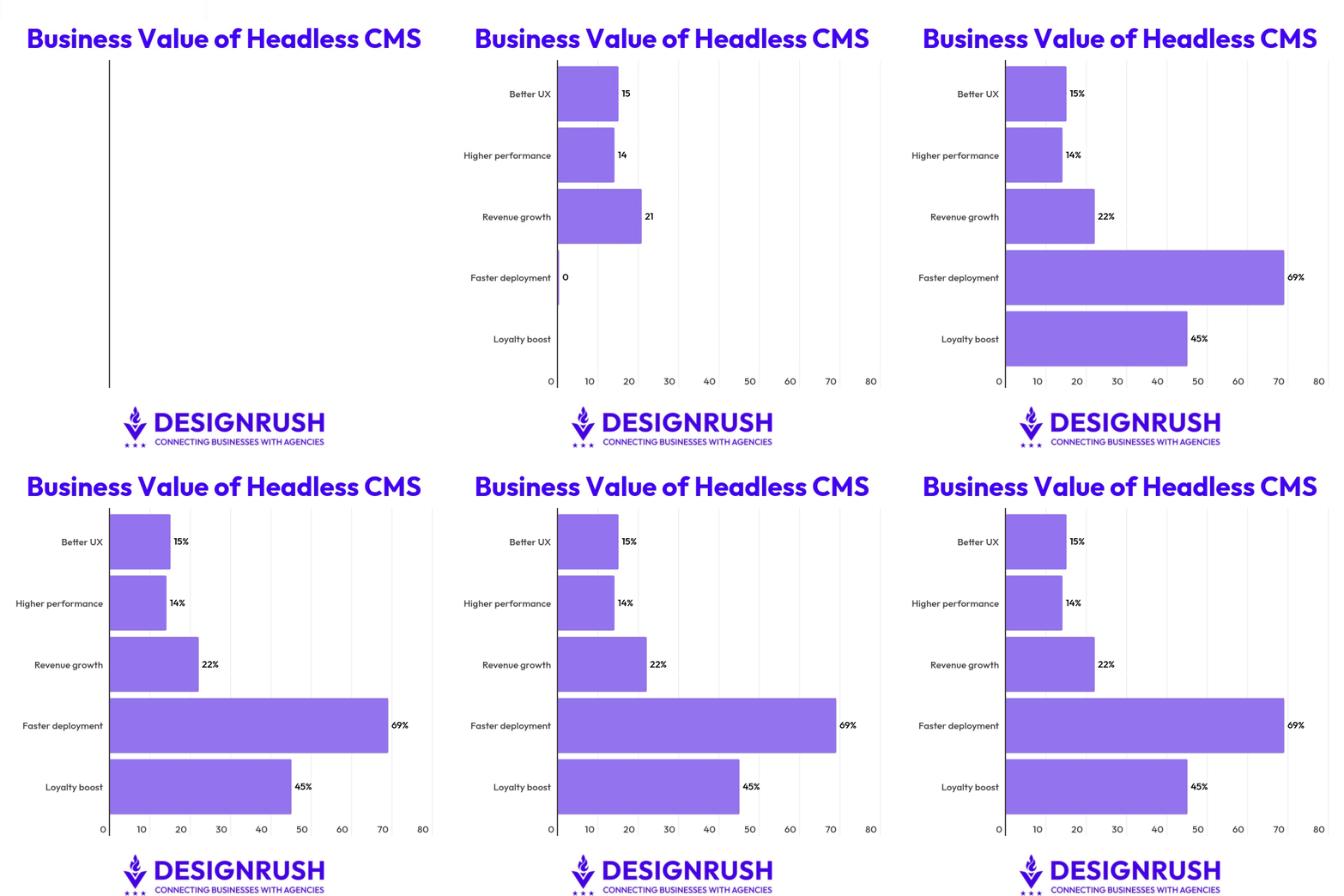
By decoupling the content platform from the front end, content teams can publish while developers ship front-end improvements on independent release cycles. In return, 69% of users report faster time-to-market and higher productivity.
Better user experiences
With 98% of mobile app users expecting consistent UX and a 123% bounce rate for slow-loading mobile sites, headless CMS companies can help you deliver unified yet personalized user experiences. They achieve this by reusing structured content across touchpoints while maintaining centralized governance.
In fact, businesses switching to headless CMS report having 15% better UX and 14% improved performance.
Stronger conversions and ROI
With more localized and personalized user experiences, businesses are reporting higher conversion rates and ROI with their headless CMS systems. According to Gitnux, headless commerce adopters experience:
- 22% year-one-year revenue growth vs. 12% for non-headless CMS stores
- 45% increase in customer retention after adopting a headless CMS
- 320% ROI in 18 months
Moreover, IDC research found that omnichannel buyers spend 15%-20% more than those purchasing on a single channel.
How much do their services cost?
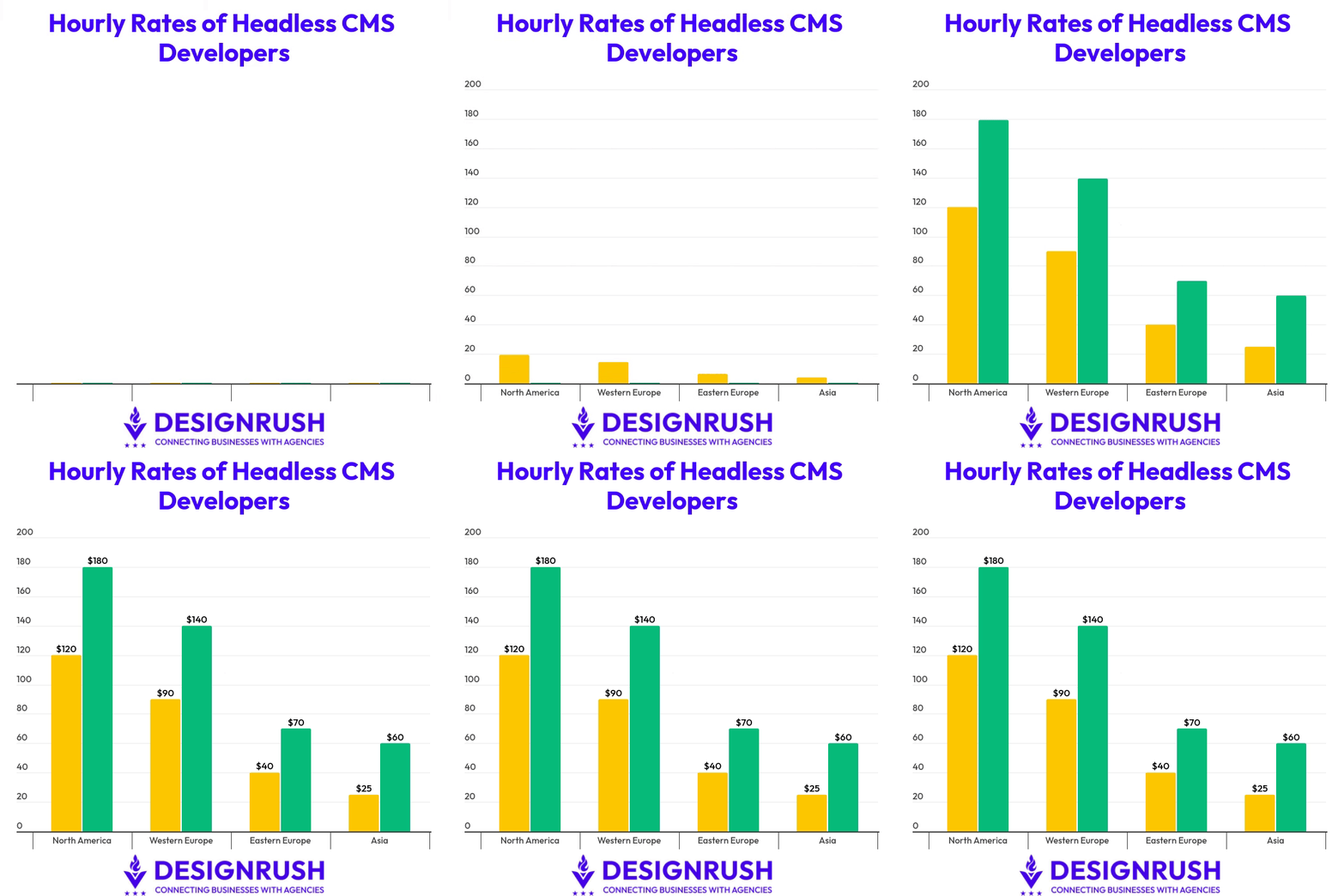
The cost to build a digital solution with headless CMS architecture can range between $8,000 to over $500,000. The final billing will depend on scope, integrations, migration effort, number of channels, and build complexity.
Here are the hourly rates of headless CMS developers per region:
- North America (United States and Canada): $120-$180 per hour
- Western Europe: $90-$140 per hour
- Eastern Europe: $40-$70 per hour
- Latin America: $35-$70 per hour
- Asia: $25-$60 per hour
Based on these hourly rates, here are the approximate costs of each headless CMS project:
- Content migration starts at $2,000-$10,000, depending on data volume and complexity.
- Small builds using a static site generator can start at $8,000-$25,000.
- Standard marketing and business sites that are dynamic, have basic analytics, and simple integration requirements can cost $20,000-$80,000.
- Mid-size platforms can cost $50,000-$150,000 for a scalable headless CMS, advanced integrations, and custom APIs.
- Web apps start at $40,000 for basic functions but go beyond $80,000-$150,000 for more complex requirements.
- Headless commerce stores start at $30,000-$60,000 for small businesses and startups, but can reach over $500,000 a global content delivery system.
- Enterprise builds often start at $100,000, depending on integration requirements, security and compliance controls, and data structures.
How long does it take to build a headless CMS project?
A headless CMS project can take 10-12 weeks for a small-scale project, like a multi-channel marketing website. However, more complex builds can take 12-20+ weeks, and enterprise replatforms can run 4-9 months.
The actual project timeline will depend on your project's complexity, core features and functions, integration and compliance requirements, and feedback loops. Here is an estimated timeline breakdown:
| Discovery and planning (2-4 weeks) | Stakeholder workshops to define business objectives, audiences, performance indicators, governance, and technical requirements. |
| Designing and prototyping (3-5 weeks) | Crafting the wireframes, architecture, design systems, and key components. |
| Content migration (2-10+ weeks, often in parallel with development) | Audit and migration plan, content cleanup, mapping, redirecting SEO, and validation. |
| Development and integration (4-8 weeks) | Content modeling, roles/permissions, environments, front-end build, and integrations (e.g., CRM and data analytics tools). |
| Testing and quality assurance (2-3 weeks) | Testing the website's performance, usability, accessibility, security, and reliability. |
| Launch (1-2 weeks) | Deploying the website to a live site and monitoring it for potential issues, so it can be resolved quickly. |
How do you choose the best headless CMS agency for your business?
Consider these steps when choosing a headless CMS company for your business:
- Define your project scope and goals, performance targets, key features, channels, and compliance and security requirements.
- Shortlist headless CMS companies with proven experience in your project type, technical stack, and industry by examining their case studies and looking for measurable business results.
- Analyze customer reviews and testimonies to assess communication, project management, on-time delivery, and how they handle changes and issues.
- Issue a request for proposal and compare them based on scope, assumptions, deliverables, team composition, and total cost of ownership.
- Interview the team working on your project to ask about process, quality assurance, compliance and security controls, ownership, and post-launch services.
- Choose a headless CMS agency that is strategic, transparent, responsive, and clearly understands your constraints, success metrics, and tech environment.
What questions should you ask before hiring?
Ask these questions before hiring a headless CMS agency to verify that it has the right skills and experience to execute your project:
Relevant Background
- What headless CMS platforms and architectures do you specialize in?
- Can you share past headless CMS projects similar to our scope, integration, and migration requirements? What were the results?
- What is your experience in our industry, and can you provide 3 client references we can contact?
Services and Processes
- Can you walk us through your end-to-end process, from discovery to launch and iteration?
- How do you ensure security, scalability, and accessibility in your design and development process?
- How do you handle quality across devices and channels?
- What are your post-launch services? Will you provide ongoing maintenance and iteration support?
Related to Your Project
- How will you design the content model, workflows, and permissions for our teams (marketing, legal, regional teams)?
- How will the headless CMS solution integrate with my existing technologies?
- Will you provide training to my employees so we can update and manage the platform independently?
- What do we own after launch (code repos, cloud accounts, documentation, CI/CD), and how do handoffs work?
Sources
DesignRush sustains a directory of over 40,000 agencies categorized by service category, location, expertise, and reviews. We build our database in two ways:
- Our dedicated team of agency experts actively searches the web for top-performing companies. We then pull information from their websites, online presence, and client testimonials to verify their status and qualifications prior to listing.
- The agencies listed get notified of their profiles on the website and they can choose to claim it or not, which suggests their availability for more collaborations.
Agencies can also reach out to DesignRush and must go through the verification process prior to being listed.

Why companies trust DesignRush
Every agency is independently vetted before it can be listed or ranked
 4.8
4.8 4.8
4.8Some agencies pay for sponsored placement, clearly labeled and held to the same vetting standards.
Frequently Asked Questions About Headless CMS Companies
What are the typical services provided by headless CMS developers?
Headless CMS companies plan, implement, and operate a headless content management system (CMS), so teams can efficiently publish content across websites, apps, and other digital channels. Typical headless CMS development services include:
- Headless CMS consulting and strategy: Advising businesses on the best headless CMS vendor and architecture or optimizing current platforms to meet their goals.
- Platform migration: Moving content and assets from legacy systems while preserving data integrity, security, and SEO with minimal downtime.
- Custom headless CMS development: Building the content models, automations, and user roles as well as the front and back end to ensure easy maintainability and reliable performance.
- API and plugin development: Integrating the headless CMS platform with third-party systems, such as payment gateways, CRMs, ERPs, and marketing automation tools.
- Ongoing maintenance and support: Continuously monitoring the platform's performance, resolving issues, installing security patches and updates, and managing infrastructure.
What is the difference between headless CMS and traditional CMS?
A headless CMS separates the content management backend from the frontend experiences. As such, content is delivered via APIs to any channel (websites, mobile apps, and IoT devices), so teams can reuse the same content across multiple experiences.
On the other hand, a traditional CMS has a unified back- and front-end (monolithic), meaning that there is a single interface that often comes in the form of a website. It can still power multiple channels, but doing so requires extensive tooling and customization.
Here are more details on their differences:
| Headless CMS platforms | Traditional CMS platforms | |
| Advantages |
|
|
| Disadvantages |
|
|
What are the most common headless CMS platforms?
Based on our research, here are some of the most common headless CMS platforms that developers use:
- WordPress: While it is a traditional CMS, it can be converted into a headless platform when paired with a modern JavaScript framework. Use this platform if you already have an existing WordPress-based site and want to migrate to a headless one.
- Strapi: An open-source, self-hosted headless CMS, enabling teams to have higher control over their data and infrastructure while being able to customize plugins, APIs, and workflows. Choose Strapi if you want to keep your data within your servers, and data sovereignty is non-negotiable.
- Contentful: A digital experience platform (DXP) with an API-first architecture and an extensive library of pre-built integrations. This platform is common for enterprises with complex needs and legacy tools.
- Sanity: Known for its collaboration features and flexible content management, Sanity is ideal for businesses that prioritize agility through controlled yet automated workflows.
While these are the most common platforms, reputable headless CMS companies will recommend a tech stack that best matches your goals, technical requirements, existing systems, operating models, team capabilities, and target audiences.
What companies benefit the most from headless CMS?
Many organizations benefit the most from a headless CMS when they need to publish content to multiple digital channels, scale across regions, or build custom experiences without being constrained by a single website template system. Common scenarios include:
- eCommerce and retail with multiple customer touchpoints (web, app, in-store screens) and heavy integrations (PIM, inventory, CRM, marketing automation), where teams want faster experimentation and performance.
- Brands running omnichannel campaigns (web + mobile + social + email + in-product) that need to reuse content consistently across channels.
- Product-led or platform businesses building multiple front ends (customer portals, apps, partner dashboards) that require developer flexibility and frequent releases.
- Global enterprises managing multiple markets, languages, and brands—where content governance, localization workflows, and reusable components are essential.
When should a company NOT use headless CMS frameworks?
A headless CMS may not be the best fit if:
- You need to launch quickly on a tight budget, and a template-based website will meet your goals.
- Your site is simple (e.g., a landing page or small brochure site), and you do not need multiple channels, complex integrations, or frequent changes.
- You do not have ongoing development capacity (in-house or via a retainer) to maintain the front end, integrations, and updates.
- Your team depends on visual page-building and WYSIWYG (what you see is what you get) editing and you are not prepared to invest in a headless setup that delivers an equivalent editorial experience.
Latest Trends Related to Headless CMS
-preview-webp.webp)