Connect with vetted headless CMS developers to drive better UX, conversions, and ROI through consistent omnichannel experiences. Filter agencies by expertise, budget, and location to find the right partner.
Organic rankings are determined by five factors: top services, reviews, portfolio, awards/press, and team expertise. Sponsored listings pay for a placement that appears above organic positions. Sponsorship does not affect star ratings or review content - read more on our methodology page.
Mehr Sichtbarkeit in Google & KI
SEOoptimierung.de unterstützt Unternehmen seit über 20 Jahren dabei, nachhaltig mehr Sichtbarkeit, qualifizierte Besucher und Umsatz über Suchmaschinen zu gewinnen. Die Agentur bietet individuelle Lösungen in den Bereichen Technical SEO, Local SEO, E-Commerce SEO, Content-Strategie, Linkaufbau und AI...
Top Services:
- SEO
- AEO
- Content Marketing
- eCommerce
- AI Development
- Show more
- Location
- Berlin, Germany
- Number of Employees
- Under 49
- Average Hourly Rate
- $100/hr
- Minimal Budget
- Under $1,000
- Portfolios Count
- 1 Project Listed
Transform Your Vision Into Digital Reality
Alisons Technology is an AI-powered software and IT services company helping businesses turn ideas into digital solutions. With 20+ years of experience and clients in 50+ countries, we build scalable web, mobile, and AI applications that drive innovation, automation, and efficiency...
Top Services:
- Mobile App Development
- Software Development
- Digital Marketing
- AI Development
- UI/UX Design
- Show more
- Location
- Nahwa, United Arab Emirates
- Number of Employees
- 50 - 99
- Average Hourly Rate
- $50/hr
- Minimal Budget
- $1,000 - $10,000
- Portfolios Count
- 3 Projects Listed
Ad-spendings are working. Turn that off and you're invisible. We fix that.
We don't build websites. We engineer revenue. Every Page we ship is a conversion system - built on market research, buyer's intent and zero guesswork...
Top Services:
- Digital Strategy
- Web Design
- UI/UX Design
- Web Development
- CRO
- Show more
- Location
- Pune, India
- Number of Employees
- Under 49
- Average Hourly Rate
- $24/hr
- Minimal Budget
- $1,000 - $10,000
- Portfolios Count
- 2 Projects Listed
Websites That Win Work For Yorkshire Businesses
Lucent Digital Studio is a Leeds-based web design studio working with small and medium businesses across Yorkshire - construction, trades, hospitality and professional services. We design and build fast, search-friendly websites, then keep them running with ongoing care plans, hosting and SEO. A small senior...
Top Services:
- Web Design
- Web Development
- WordPress Website Design
- UI/UX Design
- SEO
- Show more
- Location
- Leeds, United Kingdom
- Number of Employees
- Under 49
- Average Hourly Rate
- $50/hr
- Minimal Budget
- $1,000 - $10,000
- Portfolios Count
- 1 Project Listed
Builds Digital Experiences That Impress And Inspire
SKEELUP is a marketing agency serving businesses across Flanders, Belgium, combining web design, SEO, GEO, Google Ads, and IT services to help companies improve their visibility and generate more customers. The agency builds custom, mobile-friendly websites and supports businesses in gaining visibility across...
Top Services:
- UI/UX Design
- Web Development
- Digital Strategy
- AEO
- SEO
- Show more
- Location
- Vosselaar, Belgium
- Number of Employees
- Under 49
- Average Hourly Rate
- $95/hr
- Minimal Budget
- $1,000 - $10,000
- Portfolios Count
- 1 Project Listed
Your Trusted Nonprofit Web Design and Marketing Agency
Cornershop Creative is an award-winning digital agency thats worked with hundreds of nonprofits, political campaigns, and mission-driven small businesses. Our fully remote team of 30+ includes developers, designers, strategists, and SEO expertsall focused on helping organizations engage supporters online and...
Top Services:
- Web Design
- Web Development
- WordPress Website Design
- UI/UX Design
- Digital Marketing
- Show more
- Location
- Olney, Maryland
- Number of Employees
- 50 - 99
- Average Hourly Rate
- $180/hr
- Minimal Budget
- $1,000 - $10,000
- Portfolios Count
- 1 Project Listed
Taking Your Dental Practice To The Next Level
Geek Dental Marketing is a Miami-based dental marketing agency specializing in growth-focused strategies for modern dental practices. We help dentists attract consistent new patients through Dental SEO, Google Ads marketing, branding, websites, and AI-driven search visibility. Our approach goes beyond design...
Top Services:
- Digital Marketing
- Web Design
- Logo Design
- PPC
- Print Design
- Show more
- Location
- Miami, Florida
- Number of Employees
- Under 49
- Average Hourly Rate
- $95/hr
- Minimal Budget
- Under $1,000
- Portfolios Count
- 1 Project Listed
AI-augmented development for ambitious product teams.
Innostax is a custom software development and IT staff augmentation company with 100+ engineers in Framingham, MA (US) and Gurugram, India. Since 2013, we've partnered with product companies and enterprises globally delivering scalable software and dedicated remote teams powered by AI-augmented deve...
Top Services:
- Web Development
- Web Design
- Software Development
- Mobile App Development
- Staff Augmentation
- Show more
- Location
- Framingham, Massachusetts
- Number of Employees
- 50 - 99
- Average Hourly Rate
- $40/hr
- Minimal Budget
- $10,000 - $25,000
Your Go-to Digital Agency
Higglo is a high end marketing agency that has built websites and performed marketing campaigns for the best companies around the world including Hulu, Blizzard, Bethesda, Richard Branson and more. We create memorable web experiences and get your business the attention it deserves...
Top Services:
- SEO
- CRO
- Web Development
- Web Design
- Graphic Design
- Show more
- Location
- Cheswick, Pennsylvania
- Number of Employees
- Under 49
- Average Hourly Rate
- $125/hr
- Minimal Budget
- $10,000 - $25,000
Engineering Excellence Meets Business Intelligence
Bit Byte Technology Ltd. is a strategic technical partner established in 2018 that builds scalable digital ecosystems for visionary businesses globally. Specializing in custom web applications, e-commerce development, and custom mobile apps, they bridge the gap between complex business challenges and elegant...
Top Services:
- Software Development
- Mobile App Development
- eCommerce Development
- Staff Augmentation
- Web Design
- Show more
- Location
- Dhaka, Bangladesh
- Number of Employees
- Under 49
- Average Hourly Rate
- $30/hr
- Minimal Budget
- Under $1,000
- Portfolios Count
- 1 Project Listed
Virtual Assistant Services That Give You Your Time Back
Ellite Assistant is a professional remote staffing and virtual assistant services company that provides dedicated remote support to businesses. The company helps business owners and teams delegate administrative, customer service, sales, marketing, technical, research, and operational tasks to virtual...
Top Services:
- Business Consulting
- Digital Services
- HR Outsourcing
- Customer Support
- Managed Services
- Show more
- Location
- New York City, New York
- Number of Employees
- Under 49
- Average Hourly Rate
- $5/hr
- Minimal Budget
- $1,000 - $10,000
- Portfolios Count
- 1 Project Listed
Masters Of Brand
Tag Creative is an award winning digital marketing agency in Nairobi. Not only does Tag Creative offer digital marketing services such as SEO and AI search (AEO & GEO services) but it also offers graphic design and creative services, event branding, publication design, social media marketing, Meta Ads...
Top Services:
- Digital Services
- Graphic Design
- WordPress Website Design
- Digital Marketing
- SEO
- Show more
- Location
- Nairobi, Kenya
- Number of Employees
- Under 49
- Average Hourly Rate
- $100/hr
- Minimal Budget
- $1,000 - $10,000
We Build What Ships & Scales
Full-service digital marketing and web development agency. Brand strategy, SEO, web dev, AI workflows, content, paid media, and analytics senior-level execution on every project...
Top Services:
- Digital Services
- Branding
- Digital Strategy
- Web Design
- Web Development
- Show more
- Location
- Eugene, Oregon
- Number of Employees
- Under 49
- Average Hourly Rate
- $50/hr
- Minimal Budget
- Under $1,000
Enterprise AI and data, shipped in weeks
Bot2do builds production AI systems for enterprises: AI agents, computer vision, voice AI, and the data pipelines behind them. Our senior engineering team has shipped 900+ projects for global brands, and we work in weekly milestones so clients see working software from the first week, not a slide deck at the...
Top Services:
- AI Development
- Mobile App Development
- Software Development
- Big Data Analytics
- ERP Consulting
- Show more
- Location
- Chennai, India
- Number of Employees
- 50 - 99
- Average Hourly Rate
- $100/hr
- Portfolios Count
- 1 Project Listed
One Partner For Your Entire Digital Journey
We help businesses transform digitally with cutting-edge website development, mobile apps, ERP solutions, and data-driven marketing strategies...
Top Services:
- Digital Services
- Logo Design
- Web Design
- Web Development
- SEO
- Show more
- Location
- Bengaluru, India
- Number of Employees
- Under 49
- Average Hourly Rate
- $26/hr
- Minimal Budget
- Under $1,000
- Portfolios Count
- 1 Project Listed
More Leads. More Growth. Less Guesswork.
Crimson Oak Marketing is a full-service digital marketing agency focused on helping businesses grow online through data-driven strategies and creative execution. Our area of expertise includes SEO, web design, paid marketing campaigns, social media marketing, content marketing, email marketing...
Top Services:
- SEO
- Digital Marketing
- PPC
- Social Media Marketing
- Web Development
- Show more
- Location
- Kalispell, Montana
- Number of Employees
- Under 49
- Average Hourly Rate
- $30/hr
- Portfolios Count
- 1 Project Listed
Innovative Technology. Passionate People.
Applifting is an international software company of over 200 self-managed professionals that specializes in FinTech and MedTech innovation. Our teal principles prioritize freedom, transparency, and ethics, driving our commitment to your success. We offer end-to-end software solutions, technical innovation...
Top Services:
- Software Development
- AI Development
- Mobile App Development
- UI/UX Design
- Branding
- Show more
- Location
- London, United Kingdom
- Number of Employees
- 100 - 249
- Average Hourly Rate
- $199/hr
- Minimal Budget
- $25,000 - $50,000
Work with the best.
SkilldLabs is a leading nearshore staff augmentation provider for High Tech Companies across North America...
Top Services:
- Software Development
- Staff Augmentation
- AI Development
- DevOps Consulting
- IT Services
- Show more
- Location
- Boston, Massachusetts
- Number of Employees
- Under 49
- Average Hourly Rate
- $45/hr
Time to make the business startup.
Mainstream Digicom specializes in cutting-edge AI and VoIP solutions tailored for modern businesses. From AI-driven content creation to robust VoIP services, we equip startups and enterprises with the tools to enhance efficiency and scale operations. Visit us at https://mainstreamdigicom.com for innovative...
Top Services:
- Web Design
- eCommerce Development
- Web Development
- WordPress Website Design
- UI/UX Design
- Show more
- Location
- Montreal, Canada
- Number of Employees
- Under 49
- Average Hourly Rate
- $95/hr
- Minimal Budget
- $1,000 - $10,000
We help companies win new and better customers online.
Againstmedia is an independent digital agency. Our development expertise and in-depth strategy set us apart within the industry and help you achieve goals. We focus on optimizing your customer relationships. The economy is becoming more and more fast-paced, the offers more and more extensive and the customers...
Top Services:
- Web Design
- Web Development
- WordPress Website Design
- Digital Marketing
- Social Media Marketing
- Show more
- Location
- Velden am Wörthersee, Austria
- Number of Employees
- Under 49
- Average Hourly Rate
- $189/hr
- Minimal Budget
- $1,000 - $10,000
Complex software your users love.
HappyFunCorp partners with companies across all industries to develop innovative AI digital products and modernize existing ones, leveraging deep engineering skills, product expertise, and human-focused design...
Top Services:
- Software Development
- AI Development
- Product Design
- Design Services
- Digital Strategy
- Show more
- Location
- New York City, New York
- Number of Employees
- 50 - 99
- Minimal Budget
- $10,000 - $25,000
Strategize. Build. Secure. Scale.
GYSP.tech is a trusted global IT Consulting and Service Provider helping businesses strategize, build, secure, and scale Cloud, Data, AI/ML, SaaS and Ecommerce ecosystems to maximize operational ROI and competitive advantage...
Top Services:
- Cloud Consulting
- DevOps Consulting
- AI Development
- Software Development
- Staff Augmentation
- Show more
- Location
- New York City, New York
- Number of Employees
- 100 - 249
- Average Hourly Rate
- $25/hr
- Minimal Budget
- $1,000 - $10,000
Transform Digital Strategy Into Scalable Business
Zynergetix Hub is an integrated digital agency that bridges creative vision with technical execution. We specialize in building high-performance websites, developing AI-powered automation solutions, and executing data-driven marketing strategies that generate measurable ROI. From SaaS platforms and e-commerce...
Top Services:
- Web Development
- Web Design
- eCommerce Development
- Software Development
- AI Development
- Show more
- Location
- Doha, Qatar
- Number of Employees
- Under 49
- Average Hourly Rate
- $20/hr
- Minimal Budget
- Under $1,000
Design & Development Studio
Storm Digital is a Surrey-based development studio specialising in websites, web apps, mobile apps, VR, AR and 3D experiences...
Top Services:
- VR/AR
- Web Development
- eCommerce Development
- Mobile App Development
- Creative Services
- Show more
- Location
- West Byfleet, United Kingdom
- Number of Employees
- Under 49
- Average Hourly Rate
- $150/hr
- Minimal Budget
- $10,000 - $25,000
Digital Design With A Pulse
We handle strategy, branding, UX design, web development and mobile app design under one roof. No outsourcing, no handoffs between teams. The same people who research your users are the ones designing and building your product. We work best with startups, scale-ups and progressive teams who need a partner...
Top Services:
- Product Design
- Branding
- Web Design
- UI/UX Design
- Web Development
- Show more
- Location
- Gillingham, United Kingdom
- Number of Employees
- Under 49
- Average Hourly Rate
- $70/hr
- Minimal Budget
- Under $1,000
Transform - Secure - Accelerate
Sunbytes is a Dutch technology company (HQ: the Netherlands) with a delivery hub in Vietnam. For 14 years, weve helped clients worldwide Transform · Secure · Acceleratebuilding and modernizing digital products with senior engineering teams, embedding security by design through practical cybersecurity and...
Top Services:
- Web Development
- Web Design
- Software Testing
- Mobile App Development
- Software Development
- Show more
- Location
- Utrecht, Netherlands
- Number of Employees
- 100 - 249
- Average Hourly Rate
- $50/hr
Websites, e-commerce and SEO since 2012
Senior Portuguese web agency (est. 2012) building institutional websites, online stores and SEO for universities, public sector and SMEs...
Top Services:
- Web Design
- UI/UX Design
- eCommerce Development
- Web Development
- WordPress Website Design
- Show more
- Location
- Torres Vedras, Portugal
- Number of Employees
- Under 49
- Average Hourly Rate
- $75/hr
- Minimal Budget
- $1,000 - $10,000
Just Don't Do It Yourself
Software development agency for startups and businesses. From idea to launch in 6 weeks: MVP, branding, go-to-market. Custom CRM, automation, professional websites...
Top Services:
- Web Design
- UI/UX Design
- eCommerce Development
- Web Development
- AI Development
- Show more
- Location
- Almenno San Bartolomeo, Italy
- Number of Employees
- Under 49
- Average Hourly Rate
- $30/hr
- Minimal Budget
- Under $1,000
HitOcean
Custom software specialized in Artificial Intelligence and Cybersecurity...
Top Services:
- AI Development
- Mobile App Development
- Software Development
- Staff Augmentation
- Cybersecurity
- Show more
- Location
- Buenos Aires, Argentina
- Number of Employees
- 50 - 99
- Average Hourly Rate
- $50/hr
- Minimal Budget
- $10,000 - $25,000
Clarkston Website Design That Wins Local Customers
Marhardt Consulting designs, builds, and manages websites, business automations, and custom software for Michigan small businesses. Managed website plans start at $100 per month with no big upfront fee, and most sites launch in about a week...
Top Services:
- Web Design
- eCommerce Development
- Web Development
- Reputation Management
- Logo Design
- Show more
- Location
- City of the Village of Clarkston, Michigan
- Number of Employees
- Under 49
- Average Hourly Rate
- $40/hr
- Minimal Budget
- Under $1,000
AI Systems, Websites And Technical SEO
Freelance developer in Heraklion, Crete, building AI agents, RAG chatbots and automations alongside fast Next.js and WordPress websites. One person handles the whole job: the system design, the code, and the technical SEO that gets it found on Google and in AI answers. Works with hotels, car rentals, service...
Top Services:
- AI Development
- Web Development
- Web Design
- SEO
- AEO
- Show more
- Location
- Heraklion, Greece
- Number of Employees
- Under 49
- Average Hourly Rate
- $40/hr
- Minimal Budget
- $1,000 - $10,000
Multinational strategic communications and advisory firm.
Media Scope Group help their clients engage with diverse stakeholders across multiple channels, tell effective stories, run creative and data-driven campaigns to enhance their communication, reputation and deliver success...
Top Services:
- Public Relations
- Reputation Management
- Branding
- Creative Services
- Graphic Design
- Show more
- Location
- Tallinn, Estonia
- Number of Employees
- Under 49
- Minimal Budget
- $1,000 - $10,000
Full-Service Online Marketing Solutions
Improve your websites visibility on Google with Search Engine Optimization (SEO) strategies from a results driven digital marketing agency designed to increase organic traffic, improve keyword rankings, and support long-term online growth...
Top Services:
- Digital Marketing
- SEO
- Social Media Marketing
- Email Marketing
- PPC
- Show more
- Location
- New York City, New York
- Number of Employees
- Under 49
- Average Hourly Rate
- $150/hr
- Minimal Budget
- Under $1,000
- Portfolios Count
- 1 Project Listed
We Design. Automate. Elevate. AI-Powered Digital Agency in Morocco.
Haimaze is a 360° digital agency based in Rabat, Morocco. We combine human creativity, artificial intelligence and marketing automation to transform brands across Morocco, Europe, MENA and Africa. 270+ projects delivered, 170+ clients, 90+ companies automated...
Top Services:
- Digital Services
- Branding
- Design Services
- Reputation Management
- Web Development
- Show more
- Location
- Rabat, Morocco
- Number of Employees
- Under 49
- Average Hourly Rate
- $50/hr
- Minimal Budget
- $1,000 - $10,000
- Portfolios Count
- 1 Project Listed
We Build for Your Business Success
Etihad Falcon Tech is a software development company headquartered in Riyadh, Saudi Arabia. The company builds custom software around a client's actual workflow instead of starting from a template, which means the software adapts to how the business already operates rather than forcing the business to adapt...
Top Services:
- Web Development
- eCommerce Development
- WordPress Website Design
- AI Development
- Software Development
- Show more
- Location
- Riyadh, Saudi Arabia
- Number of Employees
- 50 - 99
- Average Hourly Rate
- $50/hr
- Minimal Budget
- Under $1,000
- Portfolios Count
- 1 Project Listed
Digital Marketing That Turns Heads, Clicks, And Converts
We are the digital partners for small businesses in the US, Canada, Europe, and Australia. Specializing in expert SEO, AI-powered marketing, and performance optimization, we help you achieve real, measurable growth...
Top Services:
- SEO
- Web Design
- Web Development
- Social Media Marketing
- PPC
- Show more
- Location
- Buffalo Grove, Illinois
- Number of Employees
- Under 49
- Average Hourly Rate
- $25/hr
- Minimal Budget
- Under $1,000
- Portfolios Count
- 1 Project Listed
Creative Digital Solutions For Growth
TmatNetwork is a results-driven digital agency offering expert SEO, web design, and marketing strategies to boost online visibility and business growth...
Top Services:
- Digital Marketing
- Graphic Design
- Branding
- Web Design
- Web Development
- Show more
- Location
- Lagos, Nigeria
- Number of Employees
- Under 49
- Average Hourly Rate
- $40/hr
- Minimal Budget
- Under $1,000
- Portfolios Count
- 1 Project Listed
We Drive Results
Long Drive Marketing is a full-service digital marketing agency and division of Long Drive Group. We build marketing engines for businesses, nonprofits, and motorsports organizations across the U.S. from four offices in Nashville, Franklin, Washington DC, and Cheyenne. Our team delivers strategy consulting...
Top Services:
- Digital Marketing
- SEO
- PPC
- Web Design
- Branding
- Show more
- Location
- Franklin, Tennessee
- Number of Employees
- 100 - 249
- Average Hourly Rate
- $72/hr
- Minimal Budget
- Under $1,000
Your Voice Online
Voxire is a digital solutions agency based in Lebanon, helping businesses dominate their industries through web development, UI/UX design, digital marketing, and SaaS product development. We serve startups, restaurants, e-commerce brands, and local businesses across Lebanon and the Middle East...
Top Services:
- Digital Services
- Branding
- Design Services
- Digital Strategy
- Web Design
- Show more
- Location
- Beirut, Lebanon
- Number of Employees
- Under 49
- Average Hourly Rate
- $35/hr
- Minimal Budget
- $1,000 - $10,000
Web Development Agency St Helens, North West UK Since 2015
Inflix is a full-service web development agency based in St Helens, Merseyside. We build websites, ecommerce platforms, SaaS products, mobile apps, and custom software for UK businesses. Founded in 2015 with 170+ clients served. Fixed-price proposals, no hidden fees, free consultation...
Top Services:
- Web Development
- eCommerce Development
- Mobile App Development
- Software Development
- Digital Services
- Show more
- Location
- St Helens, United Kingdom
- Number of Employees
- Under 49
- Average Hourly Rate
- $90/hr
- Minimal Budget
- $1,000 - $10,000
Leading Web Design Agency in Singapore
NEUTRL Studio is a leading web design company in Singapore renowned for developing beautiful, results-driven websites built on WordPress, Shopify and Webflow. The scope typically involves UI/UX design, frontend development, mobile optimisation, content management system (CMS) integration, content writing, QA...
Top Services:
- Web Design
- UI/UX Design
- eCommerce Development
- Web Development
- WordPress Website Design
- Show more
- Location
- Singapore, Singapore
- Number of Employees
- Under 49
- Average Hourly Rate
- $100/hr
- Minimal Budget
- $1,000 - $10,000
Websites & Apps Built in Weeks, Not Months
LOTS Tech Services is a Tiruchirappalli-based technology company delivering custom websites, mobile apps, software solutions, e-commerce platforms, and digital marketing powered by AI-assisted workflows. We help startups and growing businesses launch fast, quality-focused digital products at competitive...
Top Services:
- Digital Strategy
- Web Design
- eCommerce Development
- Web Development
- Digital Marketing
- Show more
- Location
- Nanguneri, India
- Number of Employees
- Under 49
- Average Hourly Rate
- $35/hr
- Minimal Budget
- $1,000 - $10,000
Digital Marketing Agency in Dubai
SquareZix is a premier digital marketing agency specializing in SEO, SEM, SMM, web design and development, and branding...
Top Services:
- Digital Services
- Graphic Design
- eCommerce Development
- Web Development
- SEO
- Show more
- Location
- Dubai, United Arab Emirates
- Number of Employees
- Under 49
- Average Hourly Rate
- $50/hr
- Minimal Budget
- Under $1,000
- Portfolios Count
- 1 Project Listed
We Build Software In Australia
Goodwin System is an Australian software delivery partner helping businesses, founders, and product teams build custom software, mobile apps, AI systems, and scalable digital experiences across both B2B and B2C use cases...
Top Services:
- Web Design
- UI/UX Design
- Web Development
- Software Testing
- Mobile App Development
- Show more
- Location
- Melbourne, Australia
- Number of Employees
- Under 49
- Minimal Budget
- $10,000 - $25,000
Join forces with WebAnts, and lets build something extraordinary together.
We're more than just a typical web development agency we're a thriving community of digital builders committed to crafting your online kingdom...
Top Services:
- Web Design
- Web Development
- Location
- London, United Kingdom
- Number of Employees
- Under 49
- Average Hourly Rate
- $35/hr
- Minimal Budget
- Under $1,000
- Portfolios Count
- 1 Project Listed
Make Sure AI Recommends You First
FirstMotion is a specialist AI search and SEO agency focused on helping ambitious B2B software companies become more visible and recommended across AI platforms and traditional search engines. Its services include Generative Engine Optimization (GEO), Answer Engine Optimization (AEO), SEO, digital PR, and...
Top Services:
- AEO
- SEO
- Content Marketing
- Market Research
- PPC
- Show more
- Location
- London, United Kingdom
- Number of Employees
- Under 49
- Average Hourly Rate
- $100/hr
- Minimal Budget
- $1,000 - $10,000
Elevate Your Brand Extend Your Reach
Daiyra 360 Communication is a Dubai-based digital transformation company with 12+ years of expertise and 4,200+ successful projects delivered. We build AI-powered mobile apps, custom web platforms, cloud infrastructure, and blockchain solutions for startups, enterprises, and government entities across the UAE...
Top Services:
- Mobile App Development
- Branding
- Software Development
- Digital Marketing
- Blockchain
- Show more
- Location
- Dubai, United Arab Emirates
- Number of Employees
- 100 - 249
- Average Hourly Rate
- $75/hr
- Minimal Budget
- $10,000 - $25,000
Helping businesses grow through SEO in Latin America
SEO for LATAM helps businesses increase their online visibility and attract qualified customers through tailored search engine optimization strategies. The agency specializes in local SEO, content optimization, technical audits, and digital growth solutions designed for businesses targeting Latin American...
Top Services:
- Digital Services
- Digital Strategy
- Reputation Management
- Branding
- Creative Services
- Show more
- Location
- Austin, Texas
- Number of Employees
- 50 - 99
- Average Hourly Rate
- $1000/hr
- Minimal Budget
- $1,000 - $10,000
Ask AI about us
We build fast, mobile-friendly websites and does the local SEO that helps St. Louis businesses get found on Google, in the map pack & with AI; converting traffic to revenue...
Top Services:
- Web Design
- SEO
- CRO
- AEO
- Digital Marketing
- Show more
- Location
- St. Louis, Missouri
- Number of Employees
- Under 49
- Average Hourly Rate
- $125/hr
- Minimal Budget
- Under $1,000
Global Award Winning UI UX Design Company
At Onething Design, our focus is on excelling in a singular domain. Renowned for our exceptional expertise in UX UI design services, we were honored with the Best Design Agency award in 2022. However, it's our enduring passion for design and the praise received from our clients that drive our continual...
Top Services:
- Web Design
- Graphic Design
- UI/UX Design
- Design Services
- Logo Design
- Show more
- Location
- Gurgaon, India
- Number of Employees
- 100 - 249
- Average Hourly Rate
- $49/hr
- Minimal Budget
- $1,000 - $10,000
- Portfolios Count
- 7 Projects Listed




















Explore Web Development Specializations
- Angular Development
- Backend Development
- Bubble
- CakePHP
- Casino
- Companies for Fintech
- Contentful
- Drupal
- Front End
- Jamstack Development
- Joomla Development
- Next.js
- No Code Development
- Pegasystems
- Podia
- Property Management
- React.JS
- Ruby on Rails
- Sitecore
- Small Businesses Website Development
- TYPO3
- Umbraco
- Webflow
- WordPress
- Zoho Creator
Popular Services
Everything You Need to Know Before Hiring a Headless CMS Agency
How do headless CMS companies help your business?
Headless CMS agencies help you design and implement a content platform and delivery stack that lets teams ship digital experiences faster, scale across channels, and integrate cleanly with your existing systems.
Faster iteration cycles and reduced downtime
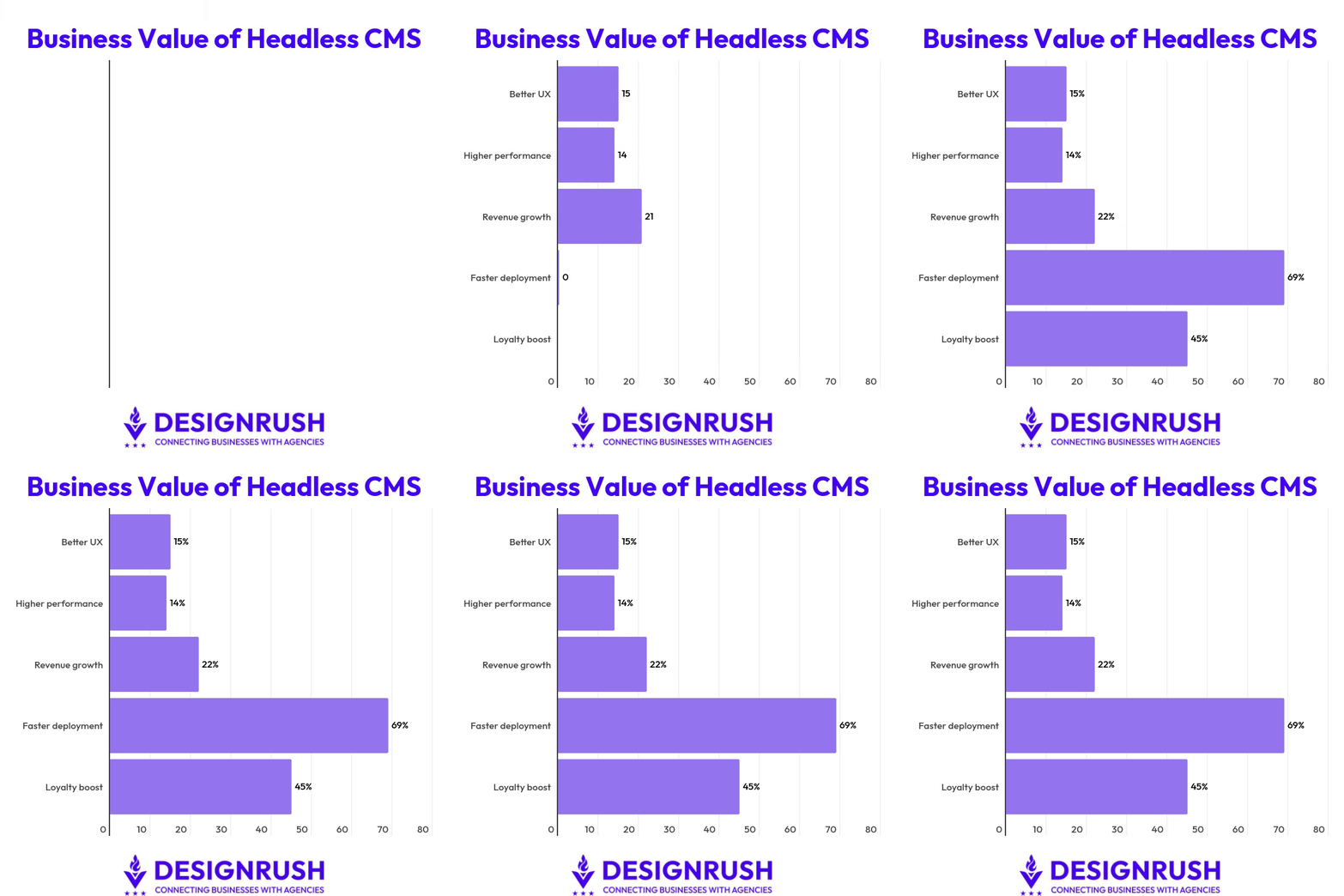
By decoupling the content platform from the front end, content teams can publish while developers ship front-end improvements on independent release cycles. In return, 69% of users report faster time-to-market and higher productivity.
Better user experiences
With 98% of mobile app users expecting consistent UX and a 123% bounce rate for slow-loading mobile sites, headless CMS companies can help you deliver unified yet personalized user experiences. They achieve this by reusing structured content across touchpoints while maintaining centralized governance.
In fact, businesses switching to headless CMS report having 15% better UX and 14% improved performance.
Stronger conversions and ROI
With more localized and personalized user experiences, businesses are reporting higher conversion rates and ROI with their headless CMS systems. According to Gitnux, headless commerce adopters experience:
- 22% year-one-year revenue growth vs. 12% for non-headless CMS stores
- 45% increase in customer retention after adopting a headless CMS
- 320% ROI in 18 months
Moreover, IDC research found that omnichannel buyers spend 15%-20% more than those purchasing on a single channel.
How much do their services cost?
The cost to build a digital solution with headless CMS architecture can range between $8,000 to over $500,000. The final billing will depend on scope, integrations, migration effort, number of channels, and build complexity.
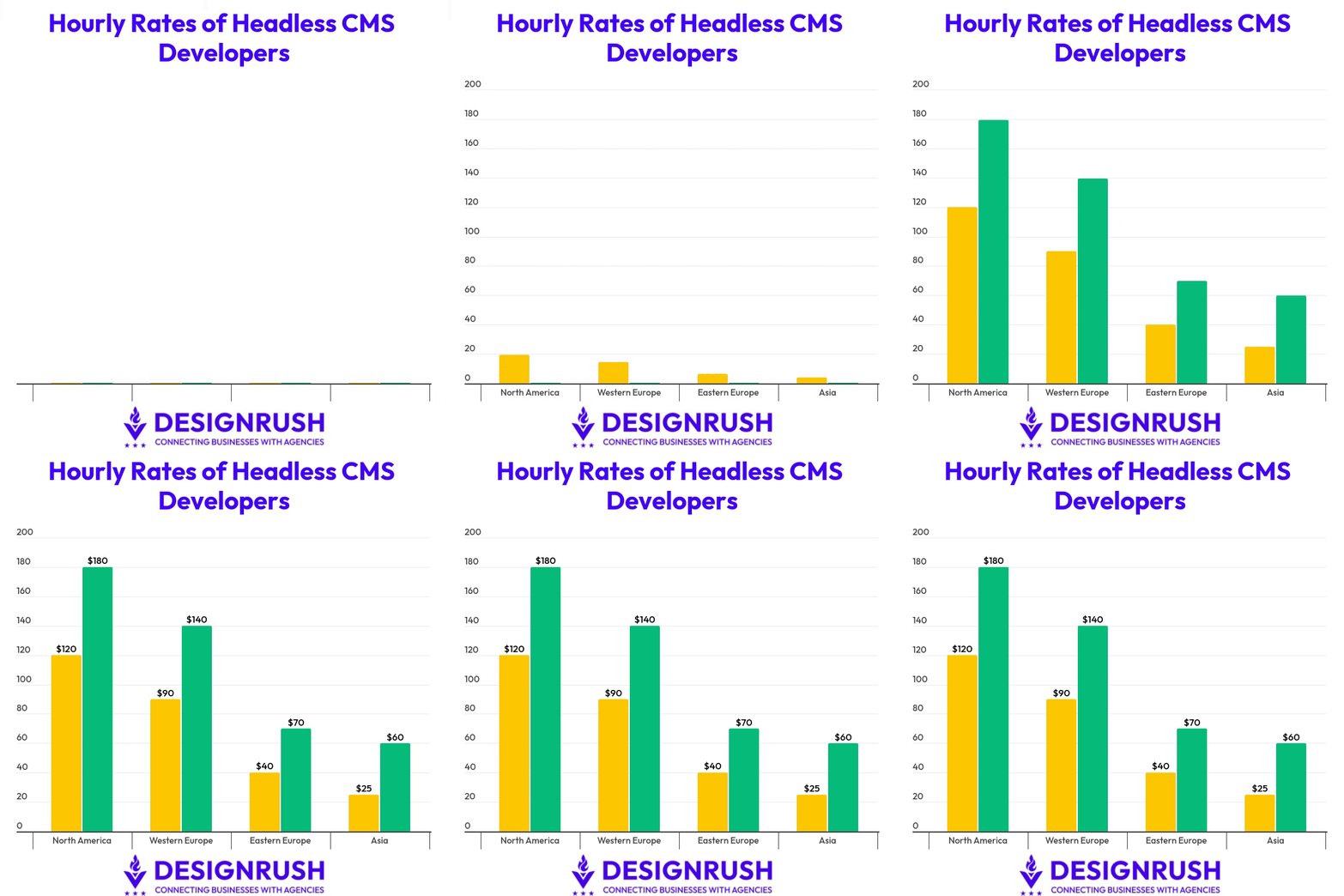
Here are the hourly rates of headless CMS developers per region:
- North America (United States and Canada): $120-$180 per hour
- Western Europe: $90-$140 per hour
- Eastern Europe: $40-$70 per hour
- Latin America: $35-$70 per hour
- Asia: $25-$60 per hour
Based on these hourly rates, here are the approximate costs of each headless CMS project:
- Content migration starts at $2,000-$10,000, depending on data volume and complexity.
- Small builds using a static site generator can start at $8,000-$25,000.
- Standard marketing and business sites that are dynamic, have basic analytics, and simple integration requirements can cost $20,000-$80,000.
- Mid-size platforms can cost $50,000-$150,000 for a scalable headless CMS, advanced integrations, and custom APIs.
- Web apps start at $40,000 for basic functions but go beyond $80,000-$150,000 for more complex requirements.
- Headless commerce stores start at $30,000-$60,000 for small businesses and startups, but can reach over $500,000 a global content delivery system.
- Enterprise builds often start at $100,000, depending on integration requirements, security and compliance controls, and data structures.
How long does it take to build a headless CMS project?
A headless CMS project can take 10-12 weeks for a small-scale project, like a multi-channel marketing website. However, more complex builds can take 12-20+ weeks, and enterprise replatforms can run 4-9 months.
The actual project timeline will depend on your project's complexity, core features and functions, integration and compliance requirements, and feedback loops. Here is an estimated timeline breakdown:
| Discovery and planning (2-4 weeks) | Stakeholder workshops to define business objectives, audiences, performance indicators, governance, and technical requirements. |
| Designing and prototyping (3-5 weeks) | Crafting the wireframes, architecture, design systems, and key components. |
| Content migration (2-10+ weeks, often in parallel with development) | Audit and migration plan, content cleanup, mapping, redirecting SEO, and validation. |
| Development and integration (4-8 weeks) | Content modeling, roles/permissions, environments, front-end build, and integrations (e.g., CRM and data analytics tools). |
| Testing and quality assurance (2-3 weeks) | Testing the website's performance, usability, accessibility, security, and reliability. |
| Launch (1-2 weeks) | Deploying the website to a live site and monitoring it for potential issues, so it can be resolved quickly. |
How do you choose the best headless CMS agency for your business?
Consider these steps when choosing a headless CMS company for your business:
- Define your project scope and goals, performance targets, key features, channels, and compliance and security requirements.
- Shortlist headless CMS companies with proven experience in your project type, technical stack, and industry by examining their case studies and looking for measurable business results.
- Analyze customer reviews and testimonies to assess communication, project management, on-time delivery, and how they handle changes and issues.
- Issue a request for proposal and compare them based on scope, assumptions, deliverables, team composition, and total cost of ownership.
- Interview the team working on your project to ask about process, quality assurance, compliance and security controls, ownership, and post-launch services.
- Choose a headless CMS agency that is strategic, transparent, responsive, and clearly understands your constraints, success metrics, and tech environment.
What questions should you ask before hiring?
Ask these questions before hiring a headless CMS agency to verify that it has the right skills and experience to execute your project:
Relevant Background
- What headless CMS platforms and architectures do you specialize in?
- Can you share past headless CMS projects similar to our scope, integration, and migration requirements? What were the results?
- What is your experience in our industry, and can you provide 3 client references we can contact?
Services and Processes
- Can you walk us through your end-to-end process, from discovery to launch and iteration?
- How do you ensure security, scalability, and accessibility in your design and development process?
- How do you handle quality across devices and channels?
- What are your post-launch services? Will you provide ongoing maintenance and iteration support?
Related to Your Project
- How will you design the content model, workflows, and permissions for our teams (marketing, legal, regional teams)?
- How will the headless CMS solution integrate with my existing technologies?
- Will you provide training to my employees so we can update and manage the platform independently?
- What do we own after launch (code repos, cloud accounts, documentation, CI/CD), and how do handoffs work?
Sources
DesignRush sustains a directory of over 40,000 agencies categorized by service category, location, expertise, and reviews. We build our database in two ways:
- Our dedicated team of agency experts actively searches the web for top-performing companies. We then pull information from their websites, online presence, and client testimonials to verify their status and qualifications prior to listing.
- The agencies listed get notified of their profiles on the website and they can choose to claim it or not, which suggests their availability for more collaborations.
Agencies can also reach out to DesignRush and must go through the verification process prior to being listed.

Why companies trust DesignRush
Every agency is independently vetted before it can be listed or ranked
 4.8
4.8 4.8
4.8Some agencies pay for sponsored placement, clearly labeled and held to the same vetting standards.
Frequently Asked Questions About Headless CMS Companies
What are the typical services provided by headless CMS developers?
Headless CMS companies plan, implement, and operate a headless content management system (CMS), so teams can efficiently publish content across websites, apps, and other digital channels. Typical headless CMS development services include:
- Headless CMS consulting and strategy: Advising businesses on the best headless CMS vendor and architecture or optimizing current platforms to meet their goals.
- Platform migration: Moving content and assets from legacy systems while preserving data integrity, security, and SEO with minimal downtime.
- Custom headless CMS development: Building the content models, automations, and user roles as well as the front and back end to ensure easy maintainability and reliable performance.
- API and plugin development: Integrating the headless CMS platform with third-party systems, such as payment gateways, CRMs, ERPs, and marketing automation tools.
- Ongoing maintenance and support: Continuously monitoring the platform's performance, resolving issues, installing security patches and updates, and managing infrastructure.
What is the difference between headless CMS and traditional CMS?
A headless CMS separates the content management backend from the frontend experiences. As such, content is delivered via APIs to any channel (websites, mobile apps, and IoT devices), so teams can reuse the same content across multiple experiences.
On the other hand, a traditional CMS has a unified back- and front-end (monolithic), meaning that there is a single interface that often comes in the form of a website. It can still power multiple channels, but doing so requires extensive tooling and customization.
Here are more details on their differences:
| Headless CMS platforms | Traditional CMS platforms | |
| Advantages |
|
|
| Disadvantages |
|
|
What are the most common headless CMS platforms?
Based on our research, here are some of the most common headless CMS platforms that developers use:
- WordPress: While it is a traditional CMS, it can be converted into a headless platform when paired with a modern JavaScript framework. Use this platform if you already have an existing WordPress-based site and want to migrate to a headless one.
- Strapi: An open-source, self-hosted headless CMS, enabling teams to have higher control over their data and infrastructure while being able to customize plugins, APIs, and workflows. Choose Strapi if you want to keep your data within your servers, and data sovereignty is non-negotiable.
- Contentful: A digital experience platform (DXP) with an API-first architecture and an extensive library of pre-built integrations. This platform is common for enterprises with complex needs and legacy tools.
- Sanity: Known for its collaboration features and flexible content management, Sanity is ideal for businesses that prioritize agility through controlled yet automated workflows.
While these are the most common platforms, reputable headless CMS companies will recommend a tech stack that best matches your goals, technical requirements, existing systems, operating models, team capabilities, and target audiences.
What companies benefit the most from headless CMS?
Many organizations benefit the most from a headless CMS when they need to publish content to multiple digital channels, scale across regions, or build custom experiences without being constrained by a single website template system. Common scenarios include:
- eCommerce and retail with multiple customer touchpoints (web, app, in-store screens) and heavy integrations (PIM, inventory, CRM, marketing automation), where teams want faster experimentation and performance.
- Brands running omnichannel campaigns (web + mobile + social + email + in-product) that need to reuse content consistently across channels.
- Product-led or platform businesses building multiple front ends (customer portals, apps, partner dashboards) that require developer flexibility and frequent releases.
- Global enterprises managing multiple markets, languages, and brands—where content governance, localization workflows, and reusable components are essential.
When should a company NOT use headless CMS frameworks?
A headless CMS may not be the best fit if:
- You need to launch quickly on a tight budget, and a template-based website will meet your goals.
- Your site is simple (e.g., a landing page or small brochure site), and you do not need multiple channels, complex integrations, or frequent changes.
- You do not have ongoing development capacity (in-house or via a retainer) to maintain the front end, integrations, and updates.
- Your team depends on visual page-building and WYSIWYG (what you see is what you get) editing and you are not prepared to invest in a headless setup that delivers an equivalent editorial experience.
Latest Trends Related to Headless CMS
-preview-webp.webp)