
I’ve helped restaurants boost revenue using these 13 digital marketing strategies, but the biggest impact always came from solving personnel challenges.
Marketing only works at the speed your team can serve, and demand-gen without dependable staffing turns clicks into complaints.
Digital Marketing Strategies for Restaurants: Key Findings
- Email and loyalty programs boost repeat revenue, delivering $36 ROI per $1 spent and up to 7× returns from engaged members.
- Hospitality hiring platforms like OysterLink cut turnover by connecting restaurants with trained professionals, keeping tone, service, and marketing consistent.
- Add online booking with instant confirmations to capture Gen Z diners who avoid phone calls entirely.
Why Most Restaurants Fail To Turn Great Food Into Growth
Efficiency improvements in the hiring process provide the bedrock for tangible ROI from your digital marketing efforts.
A-tier personnel is a non-negotiable unique selling proposition (USP), without which marketing efforts are moot.
The restaurants that treat hiring as marketing grow consistently. Those that only focus on optimized listings, fast websites, strong content, and consistent communication across every channel are the ones that make restaurants seem like bad investments.
Let’s see how it all comes together.



1. Treat Hiring as Marketing
Every guest campaign makes a promise your team has to keep. With hospitality turnover averages around 70-80%, consistency in service quality is a high bar to clear.
I've seen restaurants cut these rates in half via OysterLink, a hospitality-specific platform that connects restaurants with trained professionals.
When staff stay longer, tone, targeting, and service remain consistent, which, at the end of the day, is the real secret behind every successful hospitality marketing campaign.
Steps to replicate:
- Create a profile on a hospitality job platform like OysterLink.
- Post jobs for your vacant positions.
- Monitor applications and conduct interviews.
- Choose the most suitable candidates.
2. Manage Online Reviews
I've seen far too many restaurants ignore feedback, and it costs them traffic.
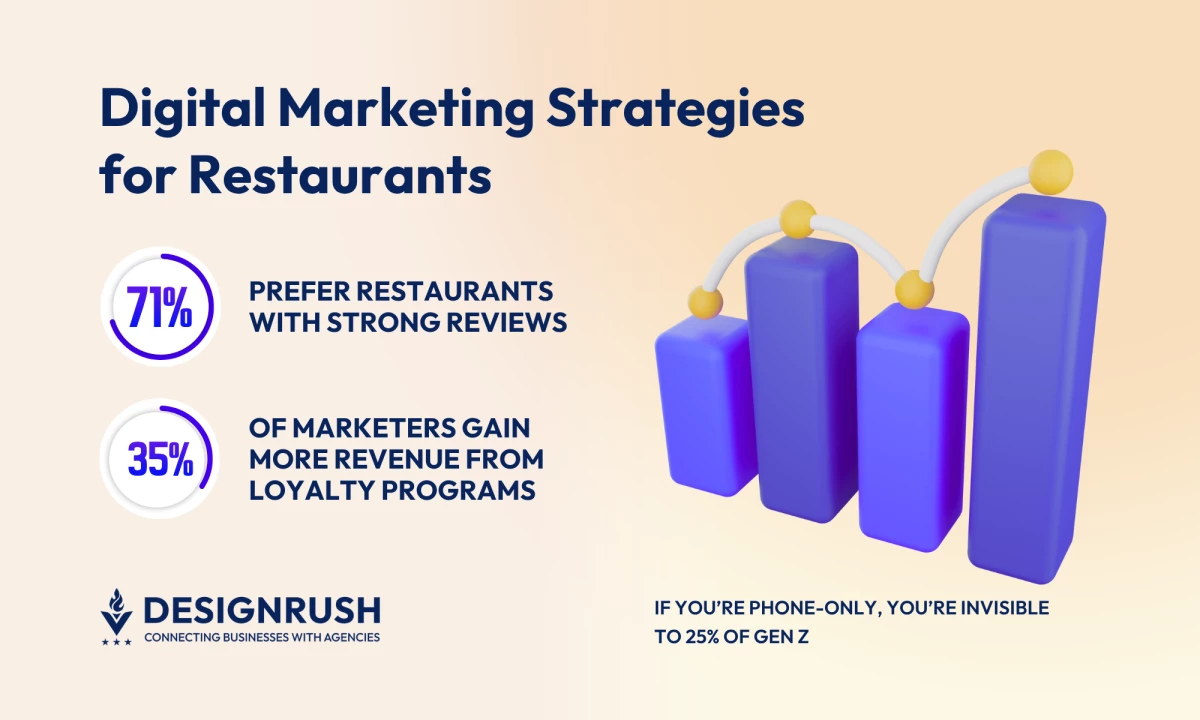
HungerRush data shows that 71% of diners are more likely to visit a restaurant with strong reviews about food quality and taste. Poor or unanswered reviews block that growth.
Here’s how to get the same results:
- Ask for reviews right after a positive dining experience.
- Answer reviews within 24 hours and keep responses polite and helpful.
- Share standout reviews on your website or social channels.
- Monitor feedback regularly to spot recurring issues or trends.
- Use insights from reviews to train staff or adjust menu offerings.
As Nick Fernandez, CEO of Upsway Marketing, tells DesignRush,
“Online reviews are one of the most cost-effective growth tools available. Treat them like digital word-of-mouth but know that your response often matters more than the review itself.”
3. Optimize for Local SEO
Local discovery has outgrown Google Maps.
Diners now find restaurants on TikTok Nearby, Yelp’s AI Assistant, Apple Maps, and even AI search answers.
I treat this as entity SEO: one consistent set of facts, menus, photos, and Q&As everywhere guests look.
How to dominate across platforms:
- Keep your Google Business Profile complete with menus, photos, and weekly updates.
- Post geo-tagged TikTok Nearby videos with dish names and neighborhood mentions.
- Refresh Yelp photos and popular dishes as its AI now answers diner questions.
- Use Apple Business Connect to add menus, showcases, and reservations for stronger visibility.
- Add schema markup and FAQs on allergens, parking, and family options to appear in AI search results.
4. Develop a Mobile-Friendly Website
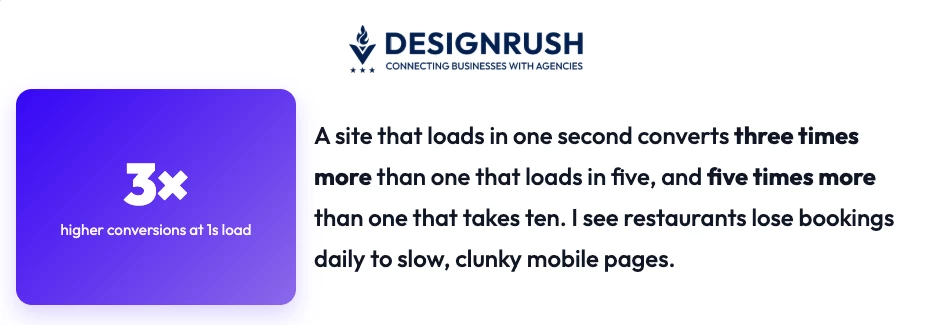
A site that loads in one second converts three times more than one that loads in five, and five times more than one that takes ten. I see restaurants lose bookings daily to slow, clunky mobile pages.
Caleb Bradley, CEO and founder of Bighorn Web Solutions, is absolutely right when he says,
“Many restaurants underestimate the importance of delivering an app-like experience on their websites that is fast, easy to navigate, and optimized for mobile users.”
Checklist:
- Use a responsive design so your site works well on all screens.
- Make menus and booking buttons easy to find and tap.
- Optimize page load time by compressing images and enabling browser caching.
- Make phone numbers and “Reserve” buttons clickable directly on mobile.
- Test your site regularly on different devices and fix any issues.
5. Leverage User-Generated Content (UGC)
We've seen many restaurants that post on Oysterlink utilize clever ways of incorporating UGC into their digital marketing strategies.
For instance, a boutique sushi bar, spent nothing on ads for six months. Instead, they ran a “Tag Your Table” campaign that turned 300 diner photos into 50K organic impressions.
When your guests become your marketing team, authenticity follows.
Here’s an example of UGC for a restaurant:
What makes UGC persuasive is a triangle:
- Aesthetics get the stop.
- Authenticity earns trust.
- Timing (posted right after dining) triggers action.
How to spark it organically:
- Add table cards that say “Tag @handle + #YourDish” to prompt instant shares.
- Use Wi-Fi splash pages with “Share your plate” so every guest sees it.
- Create a photo spot like a neon logo or styled booth to spark posts.
- Have hosts thank guests who share to build loyalty and repeat content.
- Feature top posts on Google, Yelp, Apple, and social to boost visibility.
6. Create Valuable Content
I tell every chef-owner the same thing: your story is your marketing strategy, and your personnel can shape that story.
Apart from the usual blog posts and short recipe videos, behind-the-scenes features, for example, make your brand relatable, and relatable sells.
Every piece of content should either teach, entertain, or humanize your team.
Tips that work:
- Publish stories about local ingredients or seasonal dishes.
- Share chef tips or quick recipes.
- Add short videos with sizzling sounds and close-ups of plating.
- Include your city and cuisine type for local SEO.
- Write like you talk to regulars; optimize later.
7. Use Social Media Effectively
Showcase your food, atmosphere, and team through engaging visuals and consistent interaction on social media. Social media works when it communicates culture rather than just menu items.
In terms of format, short-form videos are the way to go, especially in what I like to call the TikTok attention span economy we're all part of.
After all, a whopping 73% of people prefer short-form videos, so they’re your best tool to capture attention and bring your menu, space, and service to life online.
What works best:
- Follow the 3-beat video pattern: 0-2s hook, 5-20s value, 3-5s call-to-action.
- Use real staff plating food with prices/date overlays for proof.
- Post polls or duets like “Choose tonight’s special.”
- Pin “Reserve” or “Get Directions” links in your bio.
- Track which posts get the most engagement to guide future content.
8. Collaborate With Influencers
A local bistro that posted on Oysterlink had connected with a lifestyle vlogger known for uncovering “hidden gems.” Reservations jumped 32% in three days.
It proved what I’ve seen time and again: the right influencer can translate your experience into something people feel compelled to try.
Big food influencers are great for awareness, but micro-influencers (10K-100K followers) usually drive stronger ROI. Their audiences are local, engaged, and cost-efficient.
- ≥60% followers within a 15-mile radius (ask for proof via analytics screenshot).
- Real comments, not giveaway bots.
- Family-friendly, on-brand tone.
- Deliverables: 1 feed video + 3 stories + 1 map pin mention.
- Right to reuse content in ads for 30-60 days.
9. Implement Email Marketing
Email remains the most reliable repeat-visit engine. It costs little, converts high, and isn’t hostage to algorithms.
Statista data shows email drives $36 ROI per $1 spent. A simple “We miss you” email to guests inactive for 60 days reactivated 23% of lapsed diners.
What to do:
- Add sign-up forms to your website, social media pages, or checkout counter.
- Offer a small incentive, such as a discount or free appetizer, to encourage sign-ups.
- Segment your list so every message feels personal and relevant.
- Send short, regular updates about new dishes or events.
- Track open and click rates to see what actually drives visits.
10. Run Targeted Ads
Advertising still rules when focused. WARC reports top campaigns achieve a 4.34:1 median ROI, the best since 2017.
I’ve seen the same in restaurant campaigns that stop chasing everyone and start reaching the right people.
This focused approach helps you spend your budget efficiently while attracting guests who are already looking for your type of cuisine.
When you focus your spend, clicks turn into real reservations.
Local ad stack that works:
- Capture demand with Google Performance Max tied to directions, calls, and bookings.
- Harvest high intent on Yelp CPC by targeting cuisine and neighborhood searches with menu carousels.
- Create demand nearby through TikTok radius targeting with reservation links.
- Close the loop with Waze ads that catch commuters and lunch-hour detours.
11. Offer Online Booking
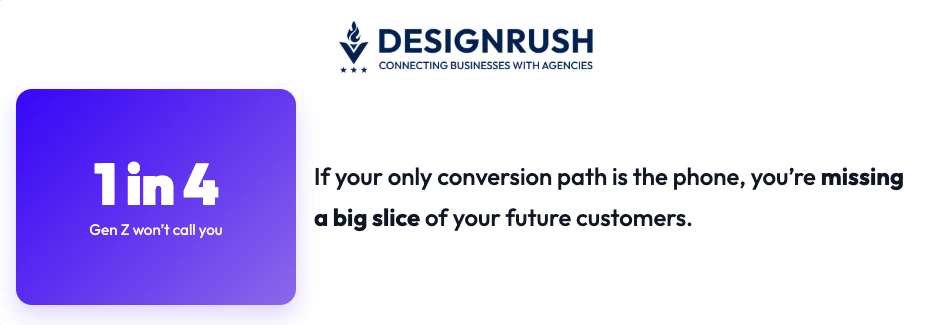
A 2024 study found that nearly 25% of Gen Z avoid phone calls entirely, and this generation makes up almost a quarter of the global population. If you’re phone-only, you’re losing them.
I've seen restaurants solve this by adding online booking with real-time availability, auto confirmations, and instant replies. Simply put, that's the new standard. It meets modern expectations: no waiting, no missed calls.
What to implement:
- Prominent “Reserve a Table” button on every page increases conversions by making booking effortless.
- Tools like OpenTable, SevenRooms, or TableAgent with SMS confirmations cut no-shows and give guests instant reassurance.
- Track booking trends to adjust staff and seating improves flow and service quality.
- Sync with Google and Apple reservations for full visibility captures guests wherever they plan.
12. Create a Digital Loyalty Program
Loyalty programs keep customers returning and increase average spend. They also produce measurable returns.
In 2024, nearly 35% of marketers and loyalty professionals said their programs generate five to seven times more revenue than they cost.
How to see results:
- Use a loyalty platform linked to your POS or online ordering to track every visit.
- Reward points or perks for each purchase to keep customers coming back.
- Promote the program on your site, social media, and receipts to boost sign-ups.
- Send personalized offers based on order history to make rewards feel relevant.
- Review participation data to see which perks drive the most repeat visits.
13. Integrate Online Ordering and Delivery
Around 70% of diners prefer ordering online for speed and convenience. But my key is to own the experience, not just rent it from delivery apps.
Jordan Silverstein, Executive Vice President at YourMenu, highlights this perfectly:
“If your restaurant doesn’t offer first-party ordering, you’re missing out on a huge revenue stream. And if you rely only on third-party platforms, you’re giving up about 30% of each sale in fees.”
I’ve seen that number devastate profit margins more than any paid ad budget ever could.
Restaurants that hire via Oysterlink commonly embed ordering systems directly into their websites so the brand controls the data, margins, and loyalty tracking. Apps then extend, not replace, reach.
Here's how to do the same:
- Add online ordering to your site before joining aggregators.
- Keep menus synced with live prices and clear allergen info.
- Simplify checkout to two steps max.
- Track order times and reviews for service quality.

DesignRush ranks agencies worldwide to help you find a qualified partner. Visit the Agency Directory to find top-rated digital marketing companies, as well as:
- Top Restaurant Digital Marketing Agencies
- Top Social Media Agencies for Restaurants
- Top Restaurant PR Agencies
- Top Restaurant Website Design Companies
- Top Food and Beverage Marketing Agencies
DesignRush's experts also recognize the most innovative design projects across the globe. Visit our Awards section for the best & latest in restaurant logo designs.
Digital Marketing for Restaurants FAQs
1. What is the most effective digital marketing strategy for restaurants in 2026?
Local SEO remains the most effective starting point. A complete Google Business Profile, strong reviews, and accurate data directly impact visibility and foot traffic. Restaurants with optimized local listings and consistent updates outperform competitors that rely only on ads.
2. How often should restaurants post on social media?
Aim for at least three to five posts a week and one story or reel daily. Consistency builds visibility, while engagement signals like polls, comments, and tags help platforms prioritize your content in local feeds.
3. How long does it take to see results from digital marketing?
Organic growth channels like SEO and content marketing take two to three months to gain traction, while paid ads and email campaigns deliver results within weeks. The fastest results come from integrating both for immediate visibility with long-term consistency.