Accenture, Cognizant, Capgemini, IBM, Tata Consultancy Services - these are among the top system integrators enterprises select to unify technology ecosystems, streamline operations, and implement scalable infrastructure solutions that support secure and efficient business growth.
Organic rankings are determined by five factors: top services, reviews, portfolio, awards/press, and team expertise. Sponsored listings pay for a placement that appears above organic positions. Sponsorship does not affect star ratings or review content - read more on our methodology page.
brands you trust, products you love
Achieve your business goals with a leading software development company.As a well-established European software development company, Mendelio has earned the trust of its many customers operating all over the EU. Our team can analyse and fully understand your needs to start delivering the best possible...
Top Services:
- eCommerce Development
- WordPress Website Design
- Web Development
- Software Testing
- AI Development
- Show more
- Location
- Iași, Romania
- Number of Employees
- 50 - 99
- Minimal Budget
- $1,000 - $10,000
Turning Ideas Into Apps | Your Vision, Our Innovation
Profusion Systems is a leading mobile application and software development agency that turns creative concepts into innovative, user-friendly solutions. Founded in 2012, the agency specializes in custom software, cloud migration, and chatbot development, catering to mid and large-sized businesses. With a...
Top Services:
- Software Development
- Cloud Consulting
- Mobile App Development
- Web Development
- Software Testing
- Show more
- Location
- Downers Grove, Illinois
- Number of Employees
- Under 49
- Average Hourly Rate
- $35/hr
- Minimal Budget
- $10,000 - $25,000
Transform Your Business With Andwebs.
Discover our innovative solutions, tailored to meet your unique business needs, from ERP systems to custom software, we've got you covered...
Top Services:
- Software Development
- Web Development
- IT Services
- Location
- Sao Paulo, Brazil
- Number of Employees
- Under 49
- Average Hourly Rate
- $29/hr
- Minimal Budget
- $1,000 - $10,000
The Right Technologies, Not Just More Technology.
WorkSmart IT Services is a client-first IT ally for growing businesses. Headquartered in Durham, North Carolina with offices in Charlotte and Atlanta, we help organizations make sharper decisions, reduce risk, improve resilience, and turn technology into measurable business momentum...
Top Services:
- Managed Services
- IT Services
- Cloud Consulting
- Cybersecurity
- IT Compliance Solution
- Show more
- Location
- Durham, North Carolina
- Number of Employees
- 50 - 99
- Average Hourly Rate
- $250/hr
- Minimal Budget
- $1,000 - $10,000
Engineering software, AI, and IT that actually scales.
Eden Tech Innovation is an India-based IT services company building production-grade software, AI, and cloud solutions for businesses worldwide. We work across custom software and SaaS, applied AI and automation, web and mobile development, cloud, DevOps, and cybersecurity. From a multilingual voice-AI...
Top Services:
- CRM Consulting
- IT Services
- IT Compliance Solution
- Cybersecurity
- Cloud Consulting
- Show more
- Location
- Dharwad, India
- Number of Employees
- Under 49
- Average Hourly Rate
- $15/hr
- Minimal Budget
- $1,000 - $10,000
- Portfolios Count
- 3 Projects Listed
Operational Clarity Across Systems, Workflows, and Decisions
Detroit-area operations consulting firm helping mid-sized life sciences, ecommerce, and field organizations align workflows, systems, data, and technology...
Top Services:
- IT Services
- Business Consulting
- ERP Consulting
- AI Development
- Software Development
- Show more
- Location
- Detroit, Michigan
- Number of Employees
- Under 49
- Average Hourly Rate
- $50/hr
- Minimal Budget
- $1,000 - $10,000
Your Partner In Digital Transformation
ACME ONE is a Dubai-based technology consulting and software development company helping startups and enterprises build scalable digital products and modernize operations through high-performance software solutions...
Top Services:
- AI Development
- Web Development
- eCommerce Development
- Software Development
- Mobile App Development
- Show more
- Location
- Dubai, United Arab Emirates
- Number of Employees
- 100 - 249
- Average Hourly Rate
- $30/hr
- Minimal Budget
- $10,000 - $25,000
Build. Scale. Deliver.
Colossus is a professional services & staffing firm with deep roots in intelligence, defense, and enterprise cybersecurity. We advise, assess, and engineer programs across critical verticals including Healthcare, AI, Government, and Manufacturing...
Top Services:
- Cybersecurity
- IT Services
- Managed Services
- Cloud Consulting
- Staff Augmentation
- Show more
- Location
- Boston, Massachusetts
- Number of Employees
- Under 49
- Average Hourly Rate
- $175/hr
- Minimal Budget
- $10,000 - $25,000
Web&Mobile Apps
At InternetStars Agency, we specialize in leveraging cutting-edge technology to provide businesses with complete mobile app solutions. From eCommerce platforms to marketing strategies and everything in between, we can be your definitive guide on the path towards truly revolutionary innovation...
Top Services:
- UI/UX Design
- Mobile App Development
- Cloud Consulting
- DevOps Consulting
- eCommerce Development
- Show more
- Location
- Łódź, Poland
- Number of Employees
- Under 49
- Average Hourly Rate
- $59/hr
- Minimal Budget
- $1,000 - $10,000
Coding Your Vision To Reality
Kamil Ussat is a professional IT company delivering end-to-end web solutions. From modern, responsive design to complex custom development. Our team of experts can handle any challenge with confidence while combining creativity with technical excellence to build scalable, reliable, and user-focused digital...
Top Services:
- Web Development
- Mobile App Development
- Software Development
- Web Design
- UI/UX Design
- Show more
- Location
- Ashgabat, Turkmenistan
- Number of Employees
- Under 49
- Average Hourly Rate
- $50/hr
- Minimal Budget
- $1,000 - $10,000
Your Gulf Coast Business Deserves to Be Seen.
Blue Heron Marketing is Gulf Coast premier full-service digital marketing agency, headquartered in Gulf Shores, AL. We help local and regional businesses grow online through Google Ads (PPC and LSA), Meta/Facebook Ads, SEO, Google Business Profile management, content marketing, and social medi...
Top Services:
- Advertising
- PPC
- SEO
- Content Marketing
- Social Media Marketing
- Show more
- Location
- Gulf Shores, Alabama
- Number of Employees
- Under 49
- Minimal Budget
- $1,000 - $10,000
One team. 24/7 monitoring. SOC 2, HIPAA, CMMC, ISO 27001, FFIEC all under a single SLA.
Fifteen years in IT infrastructure and cybersecurity, working with businesses where downtime is expensive and compliance isn't optional. That background shapes how we think about every engagement.EFROS provides managed IT operations, cybersecurity, 24/7 SOC monitoring, system integration, incident...
Top Services:
- Cybersecurity
- Managed Services
- IT Services
- IT Compliance Solution
- Cloud Consulting
- Show more
- Location
- Sheridan, Wyoming
- Number of Employees
- Under 49
Enterprise Cybersecurity for MSPs. Without the Complexity
AI Cyber Experts helps MSPs deliver enterprise-grade cybersecurity through a unified security platform, co-managed services, and AI automation. Simplify your security stack, reduce costs, and scale operations with fully white-label solutions...
Top Services:
- IT Services
- Cybersecurity
- Managed Services
- Digital Marketing
- Branding
- Show more
- Location
- Durham, North Carolina
- Number of Employees
- Under 49
- Average Hourly Rate
- $399/hr
- Minimal Budget
- Under $1,000
AI Agents & Workflow Automation
EntryHub helps businesses automate repetitive workflows with AI agents, Power Automate solutions, and custom Python development. From process audits to fully automated pipelines we turn manual work into scalable systems...
Top Services:
- IT Services
- AI Development
- Software Development
- Cloud Consulting
- Digital Strategy
- Show more
- Location
- Bratislava, Slovakia
- Number of Employees
- Under 49
- Average Hourly Rate
- $35/hr
- Minimal Budget
- $1,000 - $10,000
Custom software for Brazilian companies
Epicora is a Brazilian software house based in Chapecó, Santa Catarina. Since 2023 we have delivered more than 60 projects for companies that outgrew spreadsheets, off-the-shelf systems and legacy software nobody wanted to maintain...
Top Services:
- Web Development
- Software Development
- AI Development
- Mobile App Development
- Staff Augmentation
- Show more
- Location
- Chapecó, Brazil
- Number of Employees
- Under 49
- Average Hourly Rate
- $60/hr
- Minimal Budget
- $1,000 - $10,000
AI automation for businesses that want results, not roadmaps
Rift Automation Solutions builds AI-powered automation systems for UK SMEs from missed call text-back and lead follow-up to CV screening, invoice chasing, and appointment booking. We replace manual tasks with intelligent workflows, so businesses save time, capture more leads, and grow without hiring...
Top Services:
- AI Development
- Business Consulting
- CRM Consulting
- Customer Support
- Phone Answering Services
- Show more
- Location
- Birmingham, United Kingdom
- Number of Employees
- Under 49
- Average Hourly Rate
- $150/hr
- Minimal Budget
- $1,000 - $10,000
Customers Trust Us To Accelerate Growth
Dextra Labs is a specialist AI Consulting and AI advisory firm (technical due diligence) serving enterprises, tech startups, SMEs for AI led services & Venture Capitalists (VCs), PE firms, M&A Teams, Strategic Investors, Deal aggregators, looking for wise Investment decisions. We serve in Singapore, USA...
Top Services:
- AI Development
- Software Development
- DevOps Consulting
- Business Consulting
- IT Services
- Show more
- Location
- Singapore, Singapore
- Number of Employees
- 50 - 99
- Average Hourly Rate
- $50/hr
- Minimal Budget
- $1,000 - $10,000
AI, Web & Mobile Software Solutions
Dev House Australia is a boutique software development company delivering custom AI, web, mobile, and cloud solutions for modern businesses. Backed by 100+ engineers and global delivery experience, we help startups and enterprises design, build, and scale high-performance digital products with a focus on...
Top Services:
- Design Services
- eCommerce Development
- Blockchain
- Software Development
- Mobile App Development
- Show more
- Location
- Sydney, Australia
- Number of Employees
- 50 - 99
- Average Hourly Rate
- $29/hr
You Bring The Vision. We Build The Technology.
Probits is a software development company helping Australian businesses and startups turn ideas into scalable digital products. We provide end-to-end software development services, including custom software, MVP development, web and mobile apps, SaaS, AI solutions, workflow automation, system integration, and...
Top Services:
- Software Development
- Mobile App Development
- Blockchain
- DevOps Consulting
- Cloud Consulting
- Show more
- Location
- Surry Hills, Australia
- Number of Employees
- 50 - 99
- Average Hourly Rate
- $40/hr
- Minimal Budget
- $1,000 - $10,000
911 IT delivers managed IT, cybersecurity, cloud, compliance, business continuity, and VoIP services tobusinesses across Utah, Wyoming, and Arizona...
Top Services:
- Managed Services
- Cybersecurity
- IT Services
- IT Compliance Solution
- Customer Support
- Show more
- Location
- South Jordan, Utah
- Number of Employees
- Under 49
- Average Hourly Rate
- $38/hr
- Minimal Budget
- $10,000 - $25,000
Quantum Bases | AI Security, Build web3 smart contract audit & compliant KYC Infrastructure
Quantum bases is specialized in security-first development: auditing AI-generated code, building blockchain infrastructure, and architecting compliant KYC systems for fintech and Web3 products...
Top Services:
- Blockchain
- Software Development
- AI Development
- Software Testing
- SEO
- Show more
- Location
- Lahore, Pakistan
- Number of Employees
- Under 49
- Average Hourly Rate
- $30/hr
- Portfolios Count
- 4 Projects Listed
Software, data & AI consulting from Sarajevo
RUBICON is a software, data and AI consulting company founded in 2013 in Sarajevo, Bosnia and Herzegovina, serving clients across Europe and North America...
Top Services:
- AI Development
- IT Services
- Software Development
- Mobile App Development
- Big Data Analytics
- Show more
- Location
- Sarajevo, Bosnia and Herzegovina
- Number of Employees
- Under 49
- Average Hourly Rate
- $50/hr
- Minimal Budget
- $25,000 - $50,000
Web and Mobile Application Development Company
Welcome to MicraSol LLP - Shaping the Future, One Idea at a Time...
Top Services:
- UI/UX Design
- Web Development
- Mobile App Development
- Digital Services
- Graphic Design
- Show more
- Location
- Surat, India
- Number of Employees
- 100 - 249
- Average Hourly Rate
- $25/hr
- Minimal Budget
- $1,000 - $10,000
- Portfolios Count
- 5 Projects Listed
Professional Technology Assistance
At Mannex IT Solutions we pride ourselves on our professionalism, attention to detail and commitment to excellence...
Top Services:
- IT Services
- Cloud Consulting
- Cybersecurity
- Managed Services
- Customer Support
- Show more
- Location
- Johannesburg, South Africa
- Number of Employees
- Under 49
- Average Hourly Rate
- $31/hr
- Minimal Budget
- Under $1,000
All IT Solutiona
Looking for IT Support Services and IT Solutions Company in Dubai UAE? Bluechip Computer Systems LLC is the best IT company in Dubai...
Top Services:
- IT Services
- Cybersecurity
- IT Compliance Solution
- DevOps Consulting
- Customer Support
- Show more
- Location
- Dubai, United Arab Emirates
- Number of Employees
- 100 - 249
- Minimal Budget
- $10,000 - $25,000
Digitizing Dreams, Expanding Horizons.
We are a technology company working on ambitious projects with diversified clients to make enterprises and businesses stand out from the crowd.Step into the world of technological mastery with Softinator TechLabs, where we bring your digital dreams to life. As pioneers in AI, Mobility, Web, Cloud...
Top Services:
- Mobile App Development
- Cloud Consulting
- Software Development
- AI Development
- IT Services
- Show more
- Location
- Mumbai, India
- Number of Employees
- 50 - 99
- Average Hourly Rate
- $25/hr
- Minimal Budget
- $10,000 - $25,000
Shield your Business from Cyber threats.
Founded in 2016, SSM Networks has grown into a trusted security partner for businesses across India and internationally. Our expertise spans Cloud Security, Network Security, Endpoint Protection, Email Security, and AI-driven Threat Intelligence. With over 300 corporate clients...
Top Services:
- Cybersecurity
- Cloud Consulting
- IT Compliance Solution
- DevOps Consulting
- IT Services
- Show more
- Location
- Pune, India
- Number of Employees
- Under 49
- Average Hourly Rate
- $1999/hr
- Minimal Budget
- Under $1,000
- Portfolios Count
- 2 Projects Listed
We Always Make the Idea Better.
We Are The Future (WAF Agency) specializes in creating software products from scratch, as well as supporting, debugging, and enhancing existing projects. Our clientele primarily consists of international companies seeking innovative technical solutions. We pride ourselves on delivering cutting-edge software...
Top Services:
- IT Services
- Software Development
- Mobile App Development
- AI Development
- Software Testing
- Show more
- Location
- Vinnytsia, Ukraine
- Number of Employees
- 50 - 99
- Average Hourly Rate
- $20/hr
- Minimal Budget
- $1,000 - $10,000
Commitment to Tailored IT Management.
Stiqibit solutions is a specialized IT services company with a unique approach to providing embedded IT department solutions for impact investment firms and philanthropic organizations. Our focus on Apple-powered environments, cybersecurity, and tailored IT solutions uniquely tailored to our clients' vision...
Top Services:
- IT Services
- Location
- San Francisco, California
- Number of Employees
- Under 49
- Average Hourly Rate
- $195/hr
- Minimal Budget
- $10,000 - $25,000
Your R&D partner in AI and Cybersecurity.
At Accendum, we are more than a company we are a proud testament to the power of the research community to drive innovations. Founded by a group of AI and cybersecurity researchers, we are driven by a shared commitment to excellence and a passion for advancing technology. Contact us to know more...
Top Services:
- AI Development
- Cybersecurity
- Software Development
- Mobile App Development
- IT Services
- Show more
- Location
- Norfolk, Virginia
- Number of Employees
- Under 49
- Average Hourly Rate
- $60/hr
AI-Powered Growth & Business Intelligence
EProfileTech helps businesses improve growth through AI-powered marketing, lead generation, data intelligence, and digital automation solutions. We focus on helping brands improve customer targeting, workflow efficiency, sales engagement, and online visibility using modern business technologies and...
Top Services:
- Web Development
- WordPress Website Design
- Web Design
- SEO
- Digital Marketing
- Show more
- Location
- Dover, Delaware
- Number of Employees
- Under 49
- Average Hourly Rate
- $46/hr
- Minimal Budget
- $1,000 - $10,000
AI that runs the busywork for small businesses audits, automation, and content.
Most small businesses know AI could save them hours they just don't know where to start. BizSuite by J&B Enterprise fixes that. We run a $997 AI Audit that maps every repeatable task in your business and ranks what to automate first, then build and operate the systems: lead-gen, AI video clipping, and...
Top Services:
- AI Development
- Mobile App Development
- Software Development
- Software Testing
- IT Services
- Show more
- Location
- Austin, Texas
- Number of Employees
- Under 49
- Average Hourly Rate
- $149/hr
- Minimal Budget
- Under $1,000
We Build The Software Your Business Runs On
SQ Tech Partners is a a software an4edsd digital agency business automate and grow ,custom software , helping US & UK business globally service . we wok in global with business in global markets, delivery practical, result-driven technology solution that improve efficiency and drive business growth...
Top Services:
- Web Development
- eCommerce Development
- Software Testing
- Mobile App Development
- Software Development
- Show more
- Location
- Rawalpindi, Pakistan
- Number of Employees
- Under 49
- Average Hourly Rate
- $30/hr
- Minimal Budget
- $1,000 - $10,000
- Portfolios Count
- 4 Projects Listed
Software House focused on your success
At CosmicWeb, we specialize in creating custom web applications from scratch. Not only do we tailor our solutions to meet the individual needs of our clients, but we also ensure that the collaboration process is as comfortable as possible for them. Our team of experts is skilled at listening to our clients'...
Top Services:
- Web Design
- Web Development
- Wearables
- IoT
- Software Testing
- Show more
- Location
- Krakow, Poland
- Number of Employees
- Under 49
- Average Hourly Rate
- $40/hr
- Minimal Budget
- $10,000 - $25,000
Custom Software, AI and Digital Products Built Around Real Business Needs.
EVDSOFT is a Türkiye-based software company building custom applications, AI-powered business platforms, SaaS products, e-commerce systems and modern web experiences. We combine software engineering, automation, API integrations and practical AI to solve operational problems for growing businesses. Our work...
Top Services:
- Digital Services
- Web Design
- Web Development
- Advertising
- Social Media Marketing
- Show more
- Location
- Istanbul, Turkey
- Number of Employees
- Under 49
- Average Hourly Rate
- $50/hr
- Minimal Budget
- $1,000 - $10,000
Bring ideas to life
In a world where business strive for greatness,Reiziger consulting stands as your beacon of guidance and support.Our passion lies in nurturing your ambitions,fostering innovation,and sculpting success stories. Join us as we pave the way for your business to reach the pinnacle of achievement...
Top Services:
- Creative Services
- Staff Augmentation
- IT Services
- Mobile App Development
- Blockchain
- Show more
- Location
- Bratislava, Slovakia
- Number of Employees
- Under 49
- Average Hourly Rate
- $42/hr
𝗲𝗠𝗮𝗻𝗮𝗴𝗲𝗿 IT Ltd is a Promising Software & Digital marketing Solution company.
eManager IT Limited provides digital marketing, branding, website development, and software solutions in Bangladesh. We help businesses strengthen their online presence, attract customers, and manage operations efficiently. Through creative content, targeted advertising, and ERP and CRM systems, we deliver...
Top Services:
- Digital Services
- Branding
- Digital Strategy
- Video Production
- Web Development
- Show more
- Location
- Dhaka, Bangladesh
- Number of Employees
- 100 - 249
- Average Hourly Rate
- $50/hr
- Minimal Budget
- $1,000 - $10,000
Strategize. Create. Succeed.
Notionhive is a globally-acclaimed agency that helps brands take their digital marketing game to the next level...
Top Services:
- Digital Marketing
- Web Design
- Social Media Marketing
- Web Development
- SEO
- Show more
- Location
- Dhaka, Bangladesh
- Number of Employees
- 50 - 99
- Average Hourly Rate
- $25/hr
- Minimal Budget
- $1,000 - $10,000
AI strategy and delivery that works in production, not just in demos.
We help organisations close the gap between what AI could do for their business and what it is actually doing with the strategy, engineering, legacy modernisation, and enablement to make it work in production...
Top Services:
- Software Development
- Mobile App Development
- Web Development
- Managed Services
- eCommerce Development
- Show more
- Location
- Cape Town, South Africa
- Number of Employees
- 100 - 249
- Average Hourly Rate
- $99/hr
- Minimal Budget
- $1,000 - $10,000
The Original AI First Company!
The Original AI Company | Generative AI Provider...
Top Services:
- AI Development
- Blockchain
- Mobile App Development
- Software Development
- IT Compliance Solution
- Show more
- Location
- Ahmedabad, India
- Number of Employees
- 100 - 249
- Average Hourly Rate
- $20/hr
- Portfolios Count
- 5 Projects Listed
Driving Innovation Delivering Excellence
TO THE NEW is a digital technology services company providing innovative product engineering solutions to diverse industries across the globe. We design and build digital platforms with Cloud, Data, and AI as the main pillars...
Top Services:
- Web Development
- eCommerce Development
- UI/UX Design
- Software Testing
- Blockchain
- Show more
- Location
- Singapore, South Africa
- Number of Employees
- 1000 & Up
- Average Hourly Rate
- $30/hr
- Minimal Budget
- $1,000 - $10,000
Secure. Connect. Grow. Technology Solutions for Australian Businesses.
Byteway is a Melbourne-based managed IT services and telecommunications provider helping Australian businesses improve security, productivity, and business continuity. We specialise in managed IT support, cybersecurity, Microsoft 365, cloud backup and disaster recovery, business internet, VoIP phone systems...
Top Services:
- Cybersecurity
- IT Services
- Managed Services
- Cloud Consulting
- Business Consulting
- Show more
- Location
- Port Melbourne, Australia
- Number of Employees
- Under 49
- Average Hourly Rate
- $10/hr
Digital Solutions to Help Your Business Grow
We are a technology solutions company creating better solutions for our clients from all around the world. Our work with industries spanning across sectors like mobility, supply chain, software, web development, innovation and automation, artificial intelligence, you name it and we might have a solution for...
Top Services:
- IT Services
- Mobile App Development
- Software Development
- Web Design
- Web Development
- Show more
- Location
- Harrisburg, Pennsylvania
- Number of Employees
- Under 49
- Average Hourly Rate
- $85/hr
Building Digital Growth.
At LN Solutions , our mission is simple: to empower businesses with the tools and strategies they need to succeed online. Whether it's creating stunning websites, implementing effective digital marketing campaigns, or developing custom software solutions, we are here to help our clients achieve their goals...
Top Services:
- Digital Services
- Web Development
- Social Media Marketing
- eCommerce
- AI Development
- Show more
- Location
- Schaumburg, Illinois
- Number of Employees
- Under 49
- Minimal Budget
- Under $1,000
We Do It With Passion
NCCPLUS Vietnam Joint Stock Company is a Vietnam-based software firm specializing in IT outsourcing. It provides services including mobile and web development, cloud and microservices, game and blockchain development, software testing, AI, IoT, and VoIP. With over 10 years of experience, NCC has built strong...
Top Services:
- AI Development
- Software Testing
- Blockchain
- Mobile App Development
- Software Development
- Show more
- Location
- Hanoi, Vietnam
- Number of Employees
- 250 - 499
- Average Hourly Rate
- $20/hr
- Minimal Budget
- $1,000 - $10,000
Transformamos ideas en experiencias digitales
DigiSpherix is a Mexican digital agency specializing in modern web design, Android app development, digital marketing, and Odoo ERP implementation. We help businesses establish a strong online presence with fast, responsive, and visually compelling websites built with the latest technologies. Based in Mexico...
Top Services:
- Web Design
- UI/UX Design
- eCommerce Development
- Web Development
- WordPress Website Design
- Show more
- Location
- Guadalajara, Mexico
- Number of Employees
- Under 49
Custom software, AI agents, apps & websites for growing businesses in Orlando
Komitis Lab is a bilingual software studio in Winter Garden, FL, serving Orlando and Central Florida. We build websites, online stores, mobile apps, custom software, and AI agents for small and mid-sized businesses that have outgrown templates and spreadsheets. Fixed prices published upfront, full ownership...
Top Services:
- Mobile App Development
- Software Development
- eCommerce Development
- Digital Marketing
- IT Services
- Show more
- Location
- Orlando, Florida
- Number of Employees
- Under 49
- Average Hourly Rate
- $100/hr
- Minimal Budget
- $1,000 - $10,000
Get your Dealership Found on Google, ChatGPT, Gemini, and Copilot
Real Dealership Experience. Real Results. Digital marketing (SEO, AEO, SEM & Social) built to sell more inventory...
Top Services:
- Digital Marketing
- Web Design
- SEO
- AEO
- Digital Strategy
- Show more
- Location
- Raytown, Missouri
- Number of Employees
- Under 49
- Minimal Budget
- Under $1,000
Rediscovering Possibilities.
Epsum Labs Private Limited is a leading technology company offering a diverse range of innovative services and products tailored for industrial and commercial sectors...
Top Services:
- Product Design
- Web Development
- eCommerce Development
- IoT
- AI Development
- Show more
- Location
- Bhubaneswar, India
- Number of Employees
- 50 - 99
- Average Hourly Rate
- $20/hr
- Minimal Budget
- $1,000 - $10,000
- Portfolios Count
- 3 Projects Listed
Delivering Work With Faith
Capanicus is VoIP Call Center Software development Company, Our Team has 16+ years of exprience in software development, technology, consulting, system integration, cloud computing, mobile app development, and data analytics. Our team make sure sure that your business prospers in digital era by combining the...
Top Services:
- AI Development
- IoT
- Mobile App Development
- Software Development
- Call Centers
- Show more
- Location
- Mohali, India
- Number of Employees
- 50 - 99
- Average Hourly Rate
- $25/hr
- Minimal Budget
- $1,000 - $10,000
- Portfolios Count
- 2 Projects Listed


































Explore IT Services Specializations
- AWS
- Data Science
- Enterprise Architecture Technology
- Finance
- Google Apps
- Government
- Hadoop Consulting
- Healthcare
- IBM
- IT Consulting
- IT Outsourcing
- Marketing Automation
- Master Data Management
- Microsoft Office 365
- Microsoft SharePoint Consulting
- MongoDB
- NetSuite Consulting
- OpenText
- Productivity & Collaboration
- SAP Consulting
- Startups
Popular Services
Everything You Need to Know About the System Integration Companies
What does a system integrator company actually do?

A system integrator connects all the different software and systems a business uses, so they work as one. Instead of tools operating separately, they make data flow automatically between them.
Most companies use multiple systems at the same time. CRM for sales, ERP for operations, accounting tools, marketing platforms, and inventory systems. Without integration, teams manually move data between them. That creates delays, errors, and duplicate work. System integration service providers remove that friction.
Their work usually happens in stages:
- System integrator companies analyze your current setup. They map all systems, data flows, and gaps. They identify where data breaks, where manual work happens, and what needs to be connected.
- They design how systems should communicate. This includes defining what data moves, how often, and in what format. They decide whether to use APIs, middleware, or custom-built connections.
- After that, they build and implement integration. This can include:
- Connecting systems through APIs
- Creating custom logic to transform data between systems
- Setting up automation so processes run without manual input
- Ensuring real-time or scheduled data syncing
- Once built, they test everything. System integration agencies validate that data flows correctly, systems stay stable, and performance holds under real usage. This step prevents failures after launch.
- After launch, they continue to support and improve the system. They monitor performance, fix issues, update integrations when tools change, and expand the system as the business grows.
What is the difference between a system integrator and an automation company?
A system integrator company connects different systems so they can share data and work together. An automation company reduces manual work by automating tasks and processes.
A system integrator company solves the problem of disconnected tools. An automation company solves the problem of repetitive work. In many cases, automation depends on integration first. If systems are not connected, automation cannot run properly.
Many services overlap, but the core difference is focus. Integration connects systems. Automation uses those connections to execute tasks.
| Factor | System integrator company | Automation company |
| Main goal | Connect systems | Automate tasks |
| Focus | Data flow and system communication | Workflows and processes |
| What they fix | Disconnected tools | Manual, repetitive work |
| Typical work | APIs, middleware, system architecture | Workflow tools, triggers, rules |
| Example | Connect CRM with ERP | Auto-send invoice after sale |
| Dependency | Foundation layer | Built on top of integration |
What can top system integration companies do for your business?
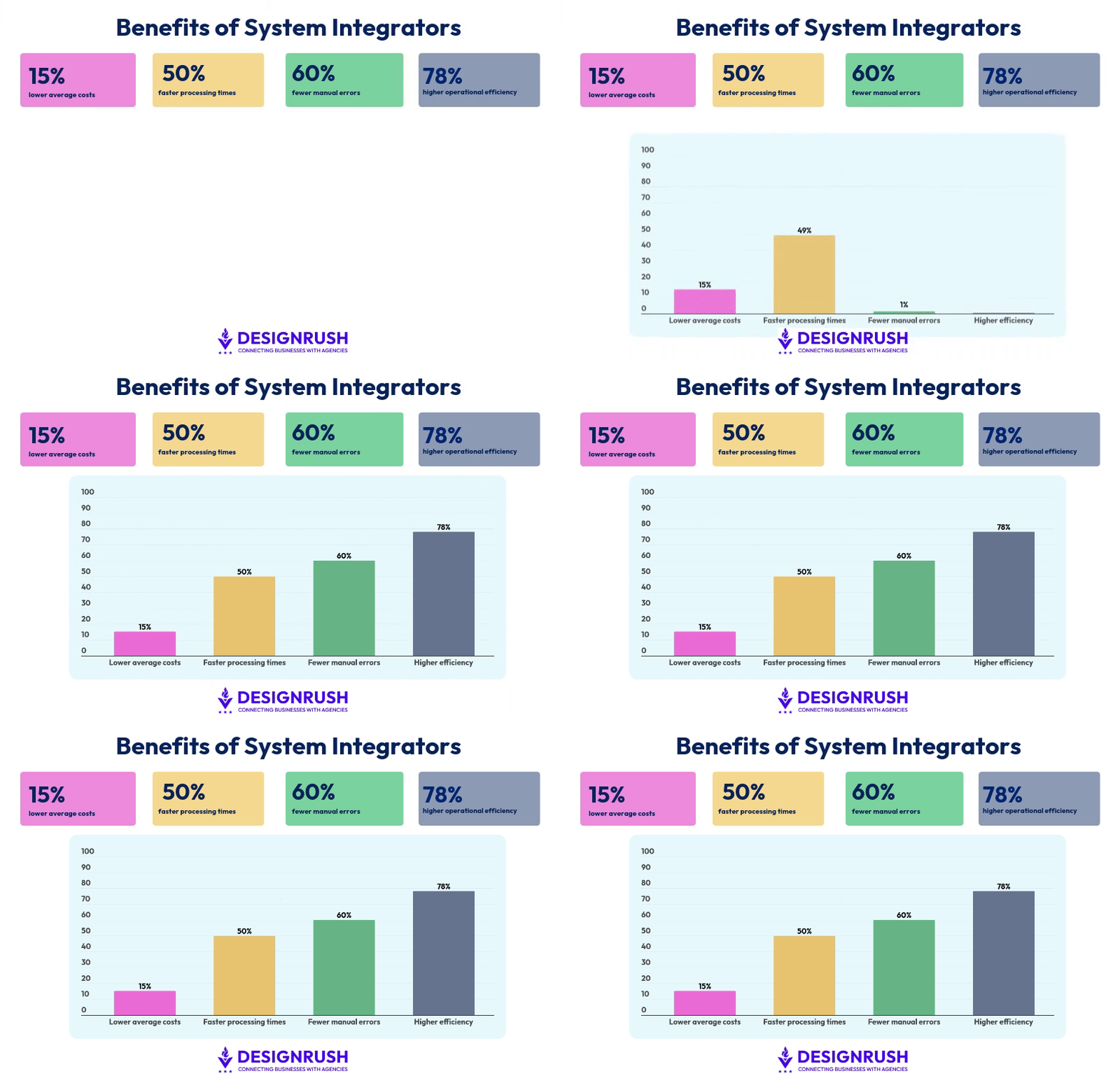
Top system integration companies connect all your systems, so they work as one. They link tools such as CRM, ERP, inventory, and finance, so data flows automatically instead of being entered manually. That removes data silos, reduces errors, and keeps the business running as a single system instead of separate parts.
Here is how system integrators impact your business:
1. Lower operational costs
Disconnected systems create hidden costs through manual work, duplicate tools, and constant fixes. Integration removes that overhead by automating data flow and simplifying your setup.
These improvements show up directly in cost reduction across daily operations:
- 15% reduction in average costs across the organization
- Up to 20% lower administrative costs in sectors like healthcare
- Up to 80% savings in data processing in cloud-based integration setups
2. Higher employee productivity
When systems are not connected, employees spend time copying data between tools. Integration removes that work and speeds up daily operations.
The impact shows in higher output, faster execution, and less wasted time:
- 35% to 45% productivity increase for technical teams by year three
- Up to 78% improvement in operational efficiency with integrated ERP systems
- 50% faster processing times across core business workflows
3. Stronger return on investment (ROI)
Software only delivers value when systems are connected. Integration ensures your tools actually work together and produce measurable business results.
The return shows through higher efficiency, faster payback, and stronger long-term performance:
- 30% improvement in overall ROI from integration projects
- Up to 328% ROI over three years, with payback in 4.2 months
- 10.3x ROI for companies with mature integration compared to fragmented systems
4. Better data accuracy and decision-making
Manual data entry creates errors and delays. Integration creates a single, reliable source of data that updates in real time.
The result is cleaner data, fewer mistakes, and faster access to insights.
- 60% reduction in manual errors in systems like CRM or claims management
- 91% improvement in inventory optimization with integrated systems
- 50% less data engineering effort, enabling 75% faster time-to-insight
How can you choose the right system integrator?
Choosing the right system integrator directly affects whether your project runs smoothly or ends up with delays, budget overruns, and broken systems. The right partner understands both the technical side and your business goals. The wrong one only writes code without understanding how your systems should actually work together.
Follow these steps to make a solid decision:
- Define what you need to integrate
List all systems, tools, and data flows. Be clear on what needs to connect and what outcome you expect. A vague scope leads to wrong estimates and poor execution. - Check relevant experience
Look for companies that have done similar integrations. Same industry, same tools, or similar complexity. General experience is not enough. - Evaluate technical expertise and certifications
Confirm they work with the platforms you use. Check cloud (AWS, Azure), vendors (SAP, Salesforce), and security standards. No proof means higher risk. - Review past projects and case studies
Focus on real results. What systems did they connect, what problems did they solve, and what impact did they deliver? Avoid vague marketing examples. - Assess their integration approach
Strong system integration firms explain how they plan, build, test, and deploy integrations. They should talk about APIs, data mapping, testing, and fallback plans clearly. - Understand communication and project management
Integration projects involve multiple teams. You need structured communication, clear timelines, and defined responsibilities. Lack of this causes delays. - Ask about post-launch support
Systems change over time. Confirm how they handle maintenance, updates, and scaling. No support plan means long-term problems. - Compare cost vs value, not just price
Low cost often means shortcuts in planning, testing, or support. Look at the total cost, including maintenance, delays, and risk. Cheap integrations fail more often.
What questions should you ask system integrator companies before choosing one?
Asking the right questions helps you separate companies that truly understand integration from those that only sell development hours. A good integrator should be able to explain their experience, how they work, and how they will handle your specific case without vague answers.
Relevant background
- What similar integration projects have you completed, and for which industries?
- Which platforms, systems, or tools do you specialize in (ERP, CRM, cloud, etc.)?
- Can you share case studies with measurable results from past integrations?
- What certifications or partnerships do your team members have?
Services and processes
- How do you approach system integration from planning to deployment?
- How do you handle data mapping, transformation, and validation?
- What testing methods do you use before going live?
- How do you manage communication, timelines, and project updates?
Related to your project
- How would you approach integrating our specific systems and tools?
- What risks or challenges do you see in our setup?
- What timeline and cost range do you estimate for this project?
- What kind of support do you provide after launch?
Sources
DesignRush sustains a directory of over 40,000 agencies categorized by service category, location, expertise, and reviews. We build our database in two ways:
- Our dedicated team of agency experts actively searches the web for top-performing companies. We then pull information from their websites, online presence, and client testimonials to verify their status and qualifications prior to listing.
- The agencies listed get notified of their profiles on the website, and they can choose to claim them or not, which suggests their availability for more collaborations.
Agencies can also reach out to DesignRush and must go through the verification process prior to being listed.

Why companies trust DesignRush
Every agency is independently vetted before it can be listed or ranked
 4.8
4.8 4.8
4.8Some agencies pay for sponsored placement, clearly labeled and held to the same vetting standards.
5 Frequently Asked Questions About System Integrator Companies
Who needs system integrator company services?
Any business that uses multiple software systems and needs them to work together needs a system integrator. When systems are disconnected, data duplicates, processes slow down, and errors increase.
Typical use cases:
- Mid-size and enterprise companies that have multiple tools (ERP, CRM, HR, finance) that must share data
- Companies running legacy systems with outdated software that does not connect easily with modern tools
- Fast-growing businesses that are adding new tools quickly and losing control over data and workflows
- eCommerce and retail companies that need to sync orders, inventory, payments, and customer data in real time
- Manufacturing and logistics companies that require tight coordination between supply chain, inventory, and operations systems
- Finance and healthcare organizations that handle sensitive data and need secure, compliant integrations
- Companies undergoing digital transformation that move to cloud systems, automation, or new platforms
Clear signal you need an integrator:
- Data is entered manually into multiple systems
- Reports do not match across tools
- Teams rely on spreadsheets to “connect” systems
- Processes break when one system changes
- Scaling creates more errors instead of efficiency
At that point, integration is no longer optional.
How much do system integrator companies charge for their services?
System integrator services typically cost $15,000 to $1,500,000+, depending on how complex your systems are and how many platforms need to be connected.
Here is how pricing usually breaks down:
- Simple integrations (2 systems): $15,000 to $75,000
- Mid-level integrations (3–5 systems): $75,000 to $300,000
- Enterprise-wide integrations (5+ systems): $300,000 to $1,500,000+
Cost also follows a clear structure across the project:
- Planning and architecture: 10 to 20% of the total cost
- Development and setup: 50 to 70% of the total cost
- Testing and QA: 15 to 25% of total cost
- Training and rollout: 5 to 15% of total cost
There are ongoing costs that most companies ignore at the start. After launch, expect:
- Support and maintenance: 15 to 25% of the initial cost per year
- Cloud, tools, and licenses: Ongoing monthly or annual fees
- API and data usage costs: Depends on volume
Costs increase fast when systems are outdated, data is messy, or real-time processing is required. Legacy systems alone can add 20-50% to cost, and most companies should plan an extra 20-30% buffer for unexpected issues.
What is a typical timeline for system integration projects?
Most system integration service providers require from 3 to 18 months for their projects, depending on the number of systems, data complexity, and business size.
Here is how timelines usually break down:
- Small to mid-size projects: 3 to 9 months
- Large enterprise projects: 6 to 18 months
- Simple integrations (2 systems): 6 to 12 weeks
- Complex integrations (multiple systems): 9 to 18+ months
How system integration companies execute the project also affects speed:
- Phased rollout: 4 to 12 months, lower risk, more stable
- Big bang (all at once): 3 to 6 months, faster but higher risk
Several factors directly impact the timeline:
- Data cleanup and migration can take 15 to 20% of the total time
- Custom features add 3 to 6+ months
- Legacy systems slow everything down
- Testing and go-live add 1 to 2 months if done properly
Delays are common. Around 43% come from technical issues, and 40% from changing scope during the project.
How much downtime does system integration require?
Most system integrations require little to no downtime if planned correctly, but in practice, expect a few hours to a few days of disruption during final switchovers.
Downtime depends on how the company executes the project:
- Parallel integration (best case): Near-zero downtime
The new system runs alongside the old one, and then the switch happens quickly - Phased integration: A few hours at a time
Work is done in small parts during planned maintenance windows - Full cutover (big bang): Hours to several days
The entire system is replaced at once, with the highest risk of disruption
Several factors increase downtime risk:
- Legacy systems: Harder to connect, more failures
- Poor planning: No fallback or rollback options
- High system dependency: If one system fails, others stop
- No testing environment: Issues appear during live use
Strong teams reduce downtime by using backups, testing in advance, and scheduling work during low-activity periods. In well-managed projects, operations continue with minimal interruption.
What kind of support do system integrator companies provide after the project is finished?
System integration service providers do not stop at launch. They provide ongoing support to keep systems stable, secure, and working as expected. Without this, integrations break over time as systems update or data grows.
Post-project support usually includes:
- Fixing errors, broken connections, or data sync issues that appear after launch
- Tracking system health, fixing slow processes, and improving speed as data volume grows
- Adjusting integrations when connected platforms change or update
- Patching vulnerabilities and maintaining data protection standards
- Helping internal teams resolve issues and answering day-to-day questions
- Adding new features, connecting new systems, or expanding integrations as the business grows
- Providing guides and training so teams can use and manage the system properly
Most companies charge ongoing support as 15–25% of the initial project cost per year. Without this support, systems degrade, errors increase, and internal teams take on hidden maintenance work.
Latest Trends Related to System Integrator