
Our directory highlights top software development companies that create tailored software solutions for global brands. Explore our listings to compare agencies, evaluate technical expertise, and find the right partner to build scalable, high-impact digital solutions for your business.
Find the Best Custom Software Development Companies
8,541 Companies - Rankings updated: April 01, 2026
We evaluate every agency on DesignRush for technical expertise, delivery quality, and verified feedback to help businesses find reliable software development services. Some listings may be paid.
Simplifying complex applications with research-driven approach.
Simplifying complex applications with a research-driven approach. [... see all Octet Design Studio reviews ]- Location
- Newark, Delaware
- Number of Employees
- Under 49
- Average Hourly Rate
- $35/hr
- Minimal Budget
- $10,000 - $25,000
- Portfolios Count
- 10 Projects Listed
Great software, zero headaches
Great software, zero headaches [... see all Altamira reviews ]- Location
- Bratislava, Slovakia
- Number of Employees
- 100 - 249
- Average Hourly Rate
- $50/hr
- Minimal Budget
- $50,000 & Up
- Portfolios Count
- 37 Projects Listed
Your Custom Product Lab
We are a leading app design and development company headquartered in Texas, with a dedicated development center in India. With over 75 talented employees, we have successfully delivered 100+ projects across various industries. [... see all Simublade reviews ]- Location
- Houston, Texas
- Number of Employees
- 100 - 249
- Average Hourly Rate
- $25/hr
- Minimal Budget
- $25,000 - $50,000
- Portfolios Count
- 13 Projects Listed
A Canada-Based Mobile App Development Agency for Scalable, Beautiful Apps
iTechnolabs builds stunning, scalable mobile apps for startups and enterprises. From UI/UX to deployment, we deliver North American quality with global efficiency. 300+ apps launched, 95% client retention - partner with us to turn your idea into a powerful digital product. [... see all ITechnolabs reviews ]- Location
- Calgary, Canada
- Number of Employees
- 100 - 249
- Average Hourly Rate
- $18/hr
- Minimal Budget
- $10,000 - $25,000
- Portfolios Count
- 18 Projects Listed
Experience the Best in Mobile Entertainment
At Inventco Software, we craft top-tier media apps that redefine user engagement. Pioneers in media app development, we seamlessly blend mobility and entertainment, ensuring your brand resonates universally. [... see all Inventcolabs Software reviews ]- Location
- Somerset, Massachusetts
- Number of Employees
- 50 - 99
- Average Hourly Rate
- $25/hr
- Minimal Budget
- $1,000 - $10,000
- Portfolios Count
- 67 Projects Listed
Managed IT Support & Consulting Services Company
Rivell is a leading Managed IT Services Provider (MSP) based in New Jersey, serving clients in North America. With a team of experienced IT professionals, Rivell offers a comprehensive suite of IT solutions tailored to meet each client's unique needs. [... see all Rivell reviews ]- Location
- Mantua Township, New Jersey
- Number of Employees
- Under 49
- Average Hourly Rate
- $40/hr
- Portfolios Count
- 4 Projects Listed
The lab for your digital transformation
Enlab Software is a dedicated offshore software development in Vietnam, delivering enterprise solutions with top notch quality and complete transparency and integrity. Our tech stacks: .NET, Node.js, Python (Django/Flask), Microservices, Angular, ReactJS, Vue.js, Flutter, Azure, AWS, MongoDB, etc. [... see all Enlab Software reviews ]- Location
- Da Nang, Vietnam
- Number of Employees
- 50 - 99
- Average Hourly Rate
- $25/hr
- Minimal Budget
- $10,000 - $25,000
- Portfolios Count
- 8 Projects Listed
Solving complex problems with design and technology since 2005.
We create digital products that streamline operations, grow your audience, and boost business success. Partnering with visionary brands, we transform ideas into impactful solutions using innovative design and technology. Discover how our Software Development expertise can elevate your next project. [... see all Infinum reviews ]- Location
- Zagreb, Croatia
- Number of Employees
- 250 - 499
- Minimal Budget
- $50,000 & Up
- Portfolios Count
- 24 Projects Listed
Dedicated Teams That Build Complex Software Systems
SiliconMint designs, develops, and supports mission-critical software systems. Based in San Francisco, SiliconMint has offices in New York and Europe to serve clients across the globe. [... see all SiliconMint reviews ]- Location
- San Francisco, California
- Number of Employees
- 50 - 99
- Average Hourly Rate
- $55/hr
- Minimal Budget
- $25,000 - $50,000
- Portfolios Count
- 7 Projects Listed
Software Outsourcing & Development | 500+ Active Clients
Founded in 2009 by Nacho de Marco and Paul Azorín, BairesDev provides top 1% tech talent to a range of clients, from startups to Fortune 500 companies. [... see all BairesDev reviews ]- Location
- San Francisco, California
- Number of Employees
- 1000 & Up
- Average Hourly Rate
- $50/hr
- Minimal Budget
- $50,000 & Up
- Portfolios Count
- 5 Projects Listed
Improve your product’s usability & realize your business goals
At Adam Fard Studio, we design FinTech, EdTech and SaaS products from sketches and ideas all the way to a coding-ready polished design. After launch, our UX design agency creates solutions to address product usability, dwindling conversion rates and the ever-present challenges of user-retention. [... see all Adam Fard Studio reviews ]- Location
- Berlin, Germany
- Number of Employees
- Under 49
- Average Hourly Rate
- $80/hr
- Minimal Budget
- $10,000 - $25,000
- Portfolios Count
- 10 Projects Listed
Best Outsourcing on Mobile & Web Development
DIGIEGGS is a software and consultancy company specialising in new generation software and project development. Has developed many projects from comprehensive projects to company-specific projects and provides various consultancy supports to many companies. [... see all DIGIEGGS reviews ]- Location
- İzmir, Turkey
- Number of Employees
- Under 49
- Average Hourly Rate
- $40/hr
- Minimal Budget
- $10,000 - $25,000
- Portfolios Count
- 22 Projects Listed
Your tech hive
We worked with early-stage startups on launching and scaling their MVPs, with SMEs and corporations on digitalizing their business and crafting groundbreaking software. AWS-certified partner with offices in Europe and USA. In 2020 we were awarded by Deloitte for Technology Fast 50 in CE. [... see all JSGuru reviews ]- Location
- Banja Luka, Bosnia and Herzegovina
- Number of Employees
- 50 - 99
- Average Hourly Rate
- $50/hr
- Minimal Budget
- $10,000 - $25,000
- Portfolios Count
- 11 Projects Listed
Software Design Excellence
Napollo Software Design established in Q1, 2011 is an ISO 9001:2015 Certified leading Technology Group from New York USA. Head quartered in Manhattan with international offices in Dubai, Oslo, Mecca, Lahore, Islamabad & Upcoming new office in Sydney. [... see all Napollo reviews ]- Location
- New York City, New York
- Number of Employees
- 100 - 249
- Average Hourly Rate
- $35/hr
- Minimal Budget
- $1,000 - $10,000
- Portfolios Count
- 43 Projects Listed
Top Mobile App Development Company in Dubai UAE
DeviceBee stands out as one of the top AI app development companies in Dubai, renowned for delivering intelligent, scalable mobile apps tailored for iOS and Android platforms. With a strong emphasis on innovation and user-centric design, DeviceBee has earned a reputation for professionalism, [... see all DeviceBee Technologies reviews ]- Location
- Dubai, United Arab Emirates
- Number of Employees
- 50 - 99
- Average Hourly Rate
- $60/hr
- Minimal Budget
- $10,000 - $25,000
- Portfolios Count
- 53 Projects Listed
Promising great service at competitive rates!
Imaginary Cloud, boasting over a decade of experience, achieved recognition as one of the Top 100 Fastest Growing Companies and Top 1000 Global Companies in both 2020 and 2021. In 2021, it secured the title of the UK's Top B2B Company. [... see all Imaginary Cloud reviews ]- Location
- London, United Kingdom
- Number of Employees
- 50 - 99
- Average Hourly Rate
- $50/hr
- Minimal Budget
- $1,000 - $10,000
- Portfolios Count
- 7 Projects Listed
The Development Partner for SaaS, Sport & FinTech Leaders.
Coderfy is TOP-rated full-cycle web solutions company focused on:- custom software and web applications- mobile apps and custom AI chatbots- web design and website development at a fair price - full-stack web development, CRM and ERP systems, outsourcing including PM and BA services [... see all Coderfy reviews ]- Location
- Kyiv, Ukraine
- Number of Employees
- Under 49
- Average Hourly Rate
- $40/hr
- Minimal Budget
- $10,000 - $25,000
- Portfolios Count
- 26 Projects Listed
Premium Mobile App Development and AI Solutions
We work with Startups and Businesses with enterprising new ideas. Delivering Premium Mobile app development and AI Powered Software solutions. Our agile development model ensures speed of delivery and scalability, while our AI-powered solutions enhance functionality and user experience. [... see all WDI reviews ]- Location
- Mumbai, India
- Number of Employees
- 100 - 249
- Average Hourly Rate
- $25/hr
- Minimal Budget
- $25,000 - $50,000
- Portfolios Count
- 86 Projects Listed
Recommended by 96% CEO, CTO and COO Globally
At SPEC INDIA, we are Empowering businesses with AI in the digital world. With more the 36+ years of experience in the tech space we have been delivering bespoke software solution that power businesses worldwide. Our commitment and assurance of quality makes us stand out in the market.. [... see all SPEC INDIA reviews ]- Location
- Ahmedabad, India
- Number of Employees
- 250 - 499
- Average Hourly Rate
- $25/hr
- Minimal Budget
- $10,000 - $25,000
- Portfolios Count
- 54 Projects Listed
We do everything WordPress!
WisdmLabs specializes in building high-performing eCommerce websites on top of WooCommerce. We are one of the few WooCommerce Development Companies worldwide to be certified as a Platinum Level WooExpert and the only Subscription Migration Partners with WooCommerce [... see all WisdmLabs reviews ]- Location
- Newark, Delaware
- Number of Employees
- 100 - 249
- Average Hourly Rate
- $60/hr
- Minimal Budget
- $1,000 - $10,000
- Portfolios Count
- 7 Projects Listed
Empowering Businesses with Custom App and Software Solutions
iQlance is a leading web &mobile app development company with a strong presence in Dallas, USA. With extensive experience in crafting and deploying innovative mobile applications and software, we focus on creating customer-centric product designs that deliver seamless user experience. [... see all IQlance Solutions reviews ]- Location
- Dallas, Texas
- Number of Employees
- 50 - 99
- Average Hourly Rate
- $25/hr
- Minimal Budget
- $10,000 - $25,000
- Portfolios Count
- 21 Projects Listed
Crafting Tomorrow's Media Apps, Today.
At SemiDot Infotech, we're at the forefront of media app development, offering scalable and customized solutions for the entertainment sector. Our expertise spans across image editing, video and music streaming, gaming, enterprise mobility, and content aggregation. [... see all SemiDot Infotech reviews ]- Location
- Boulder, Colorado
- Number of Employees
- 50 - 99
- Average Hourly Rate
- $20/hr
- Minimal Budget
- $1,000 - $10,000
- Portfolios Count
- 30 Projects Listed
Award-Winning AI-Driven Digital Product & Software Engineering Company
Apptunix is a global product engineering company founded in 2013, delivering AI-powered, enterprise-grade software for innovation and scale. With offices in the USA, UK, UAE, and India, we serve enterprises, governments, and startups in over 50+ countries. [... see all Apptunix reviews ]- Location
- New York City, New York
- Number of Employees
- 250 - 499
- Average Hourly Rate
- $25/hr
- Minimal Budget
- $25,000 - $50,000
- Portfolios Count
- 23 Projects Listed
Reforming Tomorrow's Tech
Empowering California Businesses with Bespoke Web Design and Development Services. [... see all Tech Reforms reviews ]- Location
- Los Angeles, California
- Number of Employees
- Under 49
- Average Hourly Rate
- $30/hr
- Minimal Budget
- $1,000 - $10,000
- Portfolios Count
- 11 Projects Listed
AI-Native App & Enterprise Software Development Company
TechAhead, a global leader in AI-powered custom software development & cloud engineering services, trusted by Fortune 500 companies and enterprises worldwide. We are a Great Place to Work-certified company with 240+ experts and 16 years of experience in engineering innovative, scalable applications. [... see all TechAhead reviews ]- Location
- Agoura Hills, California
- Number of Employees
- 100 - 249
- Average Hourly Rate
- $50/hr
- Minimal Budget
- $50,000 & Up
- Portfolios Count
- 26 Projects Listed
We are working with the Top 1% of Ukrainian Talents! Trusted Talents - Ready to Join Your Team!
Meduzzen is a results-driven IT outsourcing and outstaffing company that provides high-quality, custom software development services for startups, growing businesses, and established enterprises worldwide. [... see all Meduzzen reviews ]- Location
- Odesa, Ukraine
- Number of Employees
- 100 - 249
- Average Hourly Rate
- $35/hr
- Minimal Budget
- $10,000 - $25,000
- Portfolios Count
- 9 Projects Listed
Your reliable software provider
AKitoGroup is a software development company that specializes in providing cutting-edge engineering solutions to businesses and enterprise clients, assisting them in untangling complex issues that arise during their digital transformation and evolution journey. [... see all AKitoGroup reviews ]- Location
- Riga, Latvia
- Number of Employees
- Under 49
- Average Hourly Rate
- $45/hr
- Minimal Budget
- $10,000 - $25,000
- Portfolios Count
- 6 Projects Listed
Mobile & Web App Production Company
We help market leader bring web and mobile product to market within 3 months! [... see all Purrweb reviews ]- Location
- Walnut, California
- Number of Employees
- 100 - 249
- Average Hourly Rate
- $45/hr
- Minimal Budget
- $10,000 - $25,000
- Portfolios Count
- 36 Projects Listed
Your Trusted IT Partner
"Attract Group is a full-service software development company specializing in custom CRM and ERP systems, web/mobile design and development, and custom e-commerce solutions (when common CMSs aren't enough). It also can help with iOS and Android/Flutter apps. [... see all Attract Group reviews ]- Location
- Amsterdam, Netherlands
- Number of Employees
- Under 49
- Average Hourly Rate
- $35/hr
- Minimal Budget
- $10,000 - $25,000
- Portfolios Count
- 22 Projects Listed
Expert design & development team, turning product usage into the best experience
Expert design & development team, turning product usage into the best experience [... see all Goodface reviews ]- Location
- Bromley, United Kingdom
- Number of Employees
- Under 49
- Average Hourly Rate
- $55/hr
- Portfolios Count
- 14 Projects Listed
Chimpare is a Global Leading Software Development Agency
We are a digital agency that provides end-to-end solutions to startups and enterprises alike, including Mobile App Development, Web Development, Software Development, AR/VR Development, Game Development and Blockchain Development Services. [... see all Chimpare Designs reviews ]- Location
- New York City, New York
- Number of Employees
- Under 49
- Average Hourly Rate
- $40/hr
- Minimal Budget
- $10,000 - $25,000
- Portfolios Count
- 33 Projects Listed
The undisputed authority on BLE Bluetooth IoT and AI App Development
We are the undisputed authority on Bluetooth BLE, IoT, and AI applications. Our Bluetooth and AI applications have proven to be very effective to clients across the United States and Europe. Call us for a free technical consultation and evaluation of your project. [... see all Quartus Technology, Inc reviews ]- Location
- Westport, Connecticut
- Number of Employees
- 50 - 99
- Portfolios Count
- 16 Projects Listed
Data-Driven UI/UX, Branding & Product Development Agency in the U.S.
StrategixDesign build revolutionary digital experiences for businesses worldwide. Our forte includes data-driven marketing, branding, digital product development, content marketing and more. From home-based startups to multi-million dollar brands, we've helped them all disrupt their domains. [... see all StrategixDesign reviews ]- Location
- Albany, New York
- Number of Employees
- 100 - 249
- Average Hourly Rate
- $65/hr
- Minimal Budget
- $10,000 - $25,000
- Portfolios Count
- 38 Projects Listed
Driving Change Through Technology - Apps, Ecommerce, Staff Aug, BPO, Next Gen Tech and more!
Working with Trango Tech means you access a team of 200+ seasoned experts delivering transformative Software Development solutions—custom platforms, mobile apps, and enterprise systems. Clients trust our innovative approach to digital product engineering and seamless technology integration. [... see all Trango Tech reviews ]- Location
- San Jose, California
- Number of Employees
- 100 - 249
- Portfolios Count
- 17 Projects Listed
Software Testing Agency - Helping Businesses Attain Impeccable Software Quality Since 2015
We help businesses gain confidence in their products on a demo day, spot critical bugs before they travel to prod, and speed up software releases in a secure way. Our QA team is skilled in manual and automated testing of web2, web3, mobile, SaaS, and games.So far, weve tested over 300 projects. [... see all QAwerk reviews ]- Location
- Kyiv, Ukraine
- Number of Employees
- Under 49
- Average Hourly Rate
- $40/hr
- Minimal Budget
- $10,000 - $25,000
- Portfolios Count
- 12 Projects Listed
Trusted software engineering and IT consulting company
We deliver cutting-edge, scalable, and fully functional software products and ecosystems that help clients achieve their specific objectives. [... see all Yalantis reviews ]- Location
- Warsaw, Poland
- Number of Employees
- 500 - 999
- Average Hourly Rate
- $45/hr
- Minimal Budget
- $25,000 - $50,000
- Portfolios Count
- 24 Projects Listed
We craft digital experiences that spark joy
Calibrate designs and builds websites, dashboards, mobile apps, and enterprise tools in a cost effective and scalable manner. [... see all Calibrate reviews ]- Location
- Chicago, Illinois
- Number of Employees
- Under 49
- Average Hourly Rate
- $72/hr
- Minimal Budget
- $25,000 - $50,000
- Portfolios Count
- 26 Projects Listed
Empowering Your Digital Future with Innovative IT Solutions
At Quantum IT Innovation, our team excels in AI, Big Data, RPA, and Mobile App Development for iOS, Android, and Cross-Platform. We also offer expert SEO, PPC, and Social Media services to drive your business forward in the USA, UK, Canada, Ireland, UAE, Australia, India, & across the globe. [... see all Quantum IT Innovation reviews ]- Location
- Noida, India
- Number of Employees
- 100 - 249
- Average Hourly Rate
- $10/hr
- Minimal Budget
- Under $1,000
- Portfolios Count
- 100 Projects Listed
We Develop Impactful Product!
Leading global software firm. Harnessing emerging tech for intelligence. [... see all Netro Systems Ltd reviews ]- Location
- Garstang, United Kingdom
- Number of Employees
- Under 49
- Average Hourly Rate
- $50/hr
- Minimal Budget
- $1,000 - $10,000
- Portfolios Count
- 9 Projects Listed
IT Staff Augmentation & Tech Recruitment Services
Looking for top-notch tech talents? We connect you with IT staff augmentation and tech recruiting services, ensuring you get the best-fit talent for your unique needs. [... see all JayDevs reviews ]- Location
- Vilnius, Lithuania
- Number of Employees
- 100 - 249
- Average Hourly Rate
- $45/hr
- Minimal Budget
- $1,000 - $10,000
- Portfolios Count
- 15 Projects Listed
FinTech Unleashed: React Native Excellence by Andersen
Choose Andersen for top-tier React Native development in the FinTech industry. Trust our 190+ experts to ensure 100% compliance with industry standards. [... see all Andersen reviews ]- Location
- Dallas, Texas
- Number of Employees
- 1000 & Up
- Average Hourly Rate
- $50/hr
- Minimal Budget
- $50,000 & Up
- Portfolios Count
- 18 Projects Listed
Connect the dots between your idea and execution
From concept to creation, we specialize in exceptional web apps, platforms, and B2B marketplaces. Our expert team transforms ideas into innovative digital solutions for SMEs, startups, and established companies, disrupting and defining markets. [... see all Two Dots Media reviews ]- Location
- Bijeljina, Bosnia and Herzegovina
- Number of Employees
- Under 49
- Average Hourly Rate
- $32/hr
- Minimal Budget
- $10,000 - $25,000
- Portfolios Count
- 5 Projects Listed
Bridging Innovation and Transformation in AI Development and IT Services
Cloud Primero, a global IT services and AI Development company, specializes in reimagining businesses through big data, cloud services, and custom applications. With expertise in AI, mobile and web development, enterprise solutions, and tech talent outsourcing, we focus on aligning technology with [... see all Cloud Primero reviews ]- Location
- Rotterdam, Netherlands
- Number of Employees
- 250 - 499
- Average Hourly Rate
- $35/hr
- Minimal Budget
- $1,000 - $10,000
- Portfolios Count
- 4 Projects Listed
Your Partner in WEB3 and Advanced AI for Enterprise Development
Solu Lab is a prominent company based in the USA and Canada, specializing in various cutting-edge technologies such as smart contract development, blockchain, chatbot solution, mobility, AI, and IoT development. [... see all Solu Lab reviews ]- Location
- Los Angeles, California
- Number of Employees
- 50 - 99
- Average Hourly Rate
- $30/hr
- Minimal Budget
- $10,000 - $25,000
- Portfolios Count
- 7 Projects Listed
Software Development Partner
Dev.Pro is a software and smart contract development partner that allows innovative technology companies to amplify their growth ambitions and expedite time-to-market. [... see all Dev.Pro reviews ]- Location
- Charlotte, North Carolina
- Number of Employees
- 500 - 999
- Average Hourly Rate
- $40/hr
- Minimal Budget
- $25,000 - $50,000
- Portfolios Count
- 6 Projects Listed
Your Go-to Software Development Company
Sirin Software: A Florida-based IT partner with an R&D center in Kyiv, Ukraine. Since 2014, we excel in Software, Hardware, Firmware, IoT, AI, Cloud, and Mobile Development. Trusted worldwide for excellence and innovation. [... see all Sirin Software reviews ]- Location
- Kissimmee, Florida
- Number of Employees
- 50 - 99
- Average Hourly Rate
- $40/hr
- Minimal Budget
- $10,000 - $25,000
- Portfolios Count
- 29 Projects Listed
Partnership that works for you
At Software Development Hub, we specialize in enterprise software development, offering expert web & mobile app solutions since 2014. Our agile approach spans various domains and technologies. Connect for a free estimate: info@sdh-it.com [... see all Software Development Hub reviews ]- Location
- Hamburg, Germany
- Number of Employees
- 100 - 249
- Average Hourly Rate
- $38/hr
- Minimal Budget
- $25,000 - $50,000
- Portfolios Count
- 17 Projects Listed
Customized software for small and medium enterprises with a focus on top-notch engineering.
We're a technology company that's part of the "new economy." We combine our technical expertise in computer programming, custom software design and Internet services with other areas of business services to help clients develop new information technologies. [... see all 1artifactware reviews ]- Location
- Randolph, Massachusetts
- Number of Employees
- Under 49
- Average Hourly Rate
- $75/hr
- Minimal Budget
- $10,000 - $25,000
Faster and Better
Beetsoft is an IT Consultancy, Outsourcing, Annotation and BPO company based in Vietnam and Japan. We cater to SME and MNC’s all around the globe by providing high-end services at a very reasonable price. [... see all BeetSoft reviews ]- Location
- Hanoi, Vietnam
- Number of Employees
- 500 - 999
- Average Hourly Rate
- $16/hr
- Minimal Budget
- $1,000 - $10,000
- Portfolios Count
- 20 Projects Listed
A Creative Extension Of Your Business
At Noetic Brands where design meets technology to create meaningful digital experiences. Driven by research, expertise, and a passion for innovation, we craft solutions that elevate brands and engage audiences. [... see all Noetic Brands reviews ]- Location
- Toronto, Canada
- Number of Employees
- Under 49
- Average Hourly Rate
- $120/hr
- Minimal Budget
- $10,000 - $25,000
- Portfolios Count
- 15 Projects Listed







Software Development Specializations
- .Net
- Agile Consulting
- AgTech
- ASP.NET
- Automotive
- Banking
- Biotech
- C#
- Cloud Application Development
- CRM Development
- Cryptocurrency
- Data Mining
- DeFi
- Eastern Europe
- Educational
- Enterprise
- Fintech
- Flutter Development
- Foodtech
- for Small Business
- Gaming
- Golang
- Google App Engine
- Government
- Healthcare
- Hospitality
- HR Tech Solution
- Java
- JavaScript Development
- Laravel
- Legal
- Machine Learning
- Manufacturing
- MVP Development
- Nearshore
- Node.js
- Offshore
- Outsourcing
- Performance Testing
- PHP
- Python Django
- Real Estate
- Robotics Process Automation
- SaaS Development
- Salesforce Consulting
- Smart Contracts
- Software Consulting
- Software Maintenance
- Startups
- Unity
Services Related to Software Development
Everything You Need to Know Before Hiring a Custom Software Development Company
Why should I hire a software development company?
Hiring a custom software company is a strategic way to reduce cost, accelerate delivery, and access scarce technical talent.
Organizations invest in custom software to address specific business needs that generic platforms cannot address.
Through tailored software solutions, companies improve operational efficiency, accelerate product development, and unlock innovative solutions that create competitive advantage.
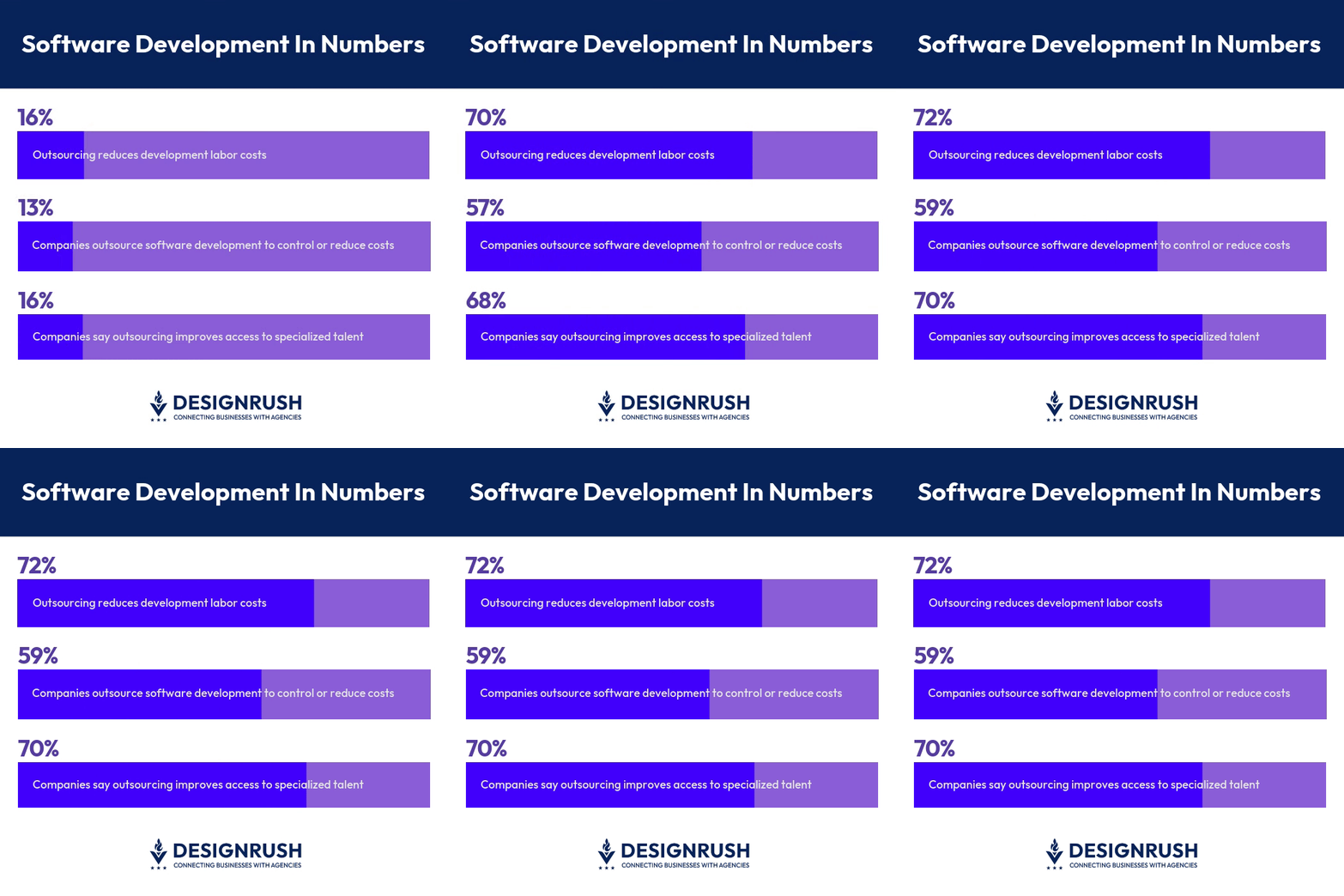
Cost efficiency is a primary driver, as studies show that companies can reduce development labor costs by 72% by outsourcing, compared to fully in-house teams, mainly by avoiding recruiting, benefits, infrastructure, and idle capacity costs.
As a result, 59% of companies outsource software development primarily to control or reduce costs.
Speed is another major advantage of hiring a custom software development company, as outsourced and agency-led teams can deliver a custom software solution 25%-50% faster due to established processes, reusable components, and experienced project management practices.
This is especially valuable for product development initiatives with aggressive timelines.
Furthermore, this matters when the average time to hire a senior software engineering professional exceeds 40 days, and often even longer for specialized skills such as artificial intelligence, cloud computing, or security.
Access to talent is critical in a tight labor market.
According to statistics, the global developer population exceeds 28 million engineers, yet skill shortages persist.
70% of companies say outsourcing improves access to specialized or innovative talent, including artificial intelligence (AI), cloud, and cybersecurity expertise.
Finally, the best software development company can provide scalability and risk reduction. You can scale teams up or down without long-term headcount commitments, while benefiting from their technical expertise, proven QA, security, and delivery frameworks.
How do I verify an agency's technical stability?
Focus on measurable proof of delivery, people, and process, not marketing claims.
Start with the delivery track record
Ask how long the agency has been providing custom software development services, including web development, mobile app development, and broader app development initiatives, and request multi-year client references.
Software companies that have been in business for 5+ years and have repeat clients are statistically more stable.
Studies show that 65-70% of long-term outsourcing relationships that are over 3 years long persist because vendors consistently meet delivery and quality expectations.
Examine team stability and turnover
According to various reports, healthy software firms maintain annual developer attrition below 15-20%; higher churn increases project risk, knowledge loss, and defects.
By contrast, the global tech average turnover often exceeds 25% in unstable or low-cost shops.
Review engineering practices and metrics
Ask about deployment frequency, defect rates, and test coverage. High-performing teams deploy weekly or more frequently and use automated testing, which reduces production defects by 40-60%.
Confirm the use of code reviews, CI/CD, and version control, as these are baseline practices used by over 80% of mature development teams practicing agile development.
Validate security and compliance maturity. Top software development companies that handle serious products follow standards like ISO 27001 or SOC 2.
Organizations using formal security frameworks experience approximately 50% fewer security incidents.
What should I look for in a software company?
When evaluating a software development agency, focus on evidence of delivery, talent quality, and operational maturity, supported by measurable indicators.
- Proven track record matters most
Look for firms with 5+ years in operation, relevant case studies in custom software, web development, or mobile app projects, and repeat clients. According to Deloitte, 65-70% of successful long-term outsourcing relationships persist because vendors consistently deliver on quality and timelines. - Assess technical talent and stability
Ask about team composition and turnover. Healthy agencies maintain annual developer attrition below 15-20%, protecting the long-term quality of product development. Higher churn increases delivery risk and defect rates. - Evaluate engineering practices
High-performing teams use CI/CD, automated testing, and code reviews. Google's DORA research shows teams that deploy weekly or more frequently and use strong automation face 40-60% fewer production defects and significantly faster recovery from failures. - Review security and compliance
If your product handles sensitive data, the company should follow standards such as ISO 27001 or SOC 2. IBM reports organizations with mature security frameworks suffer nearly 50% fewer security incidents and lower breach costs. - Confirm communication and transparency
Clear reporting, documented processes, and realistic estimates matter, as over 45% of failed software projects fail due to poor communication and unclear requirements.
What are the hidden costs of software development?
The actual cost of software development extends far beyond the initial project estimate, and these hidden costs are well-documented across the industry.
McKinsey research from 2023 shows that IT projects exceed budgets by an average of 45% and schedules by 7 months.
Scope creep is the most common driver
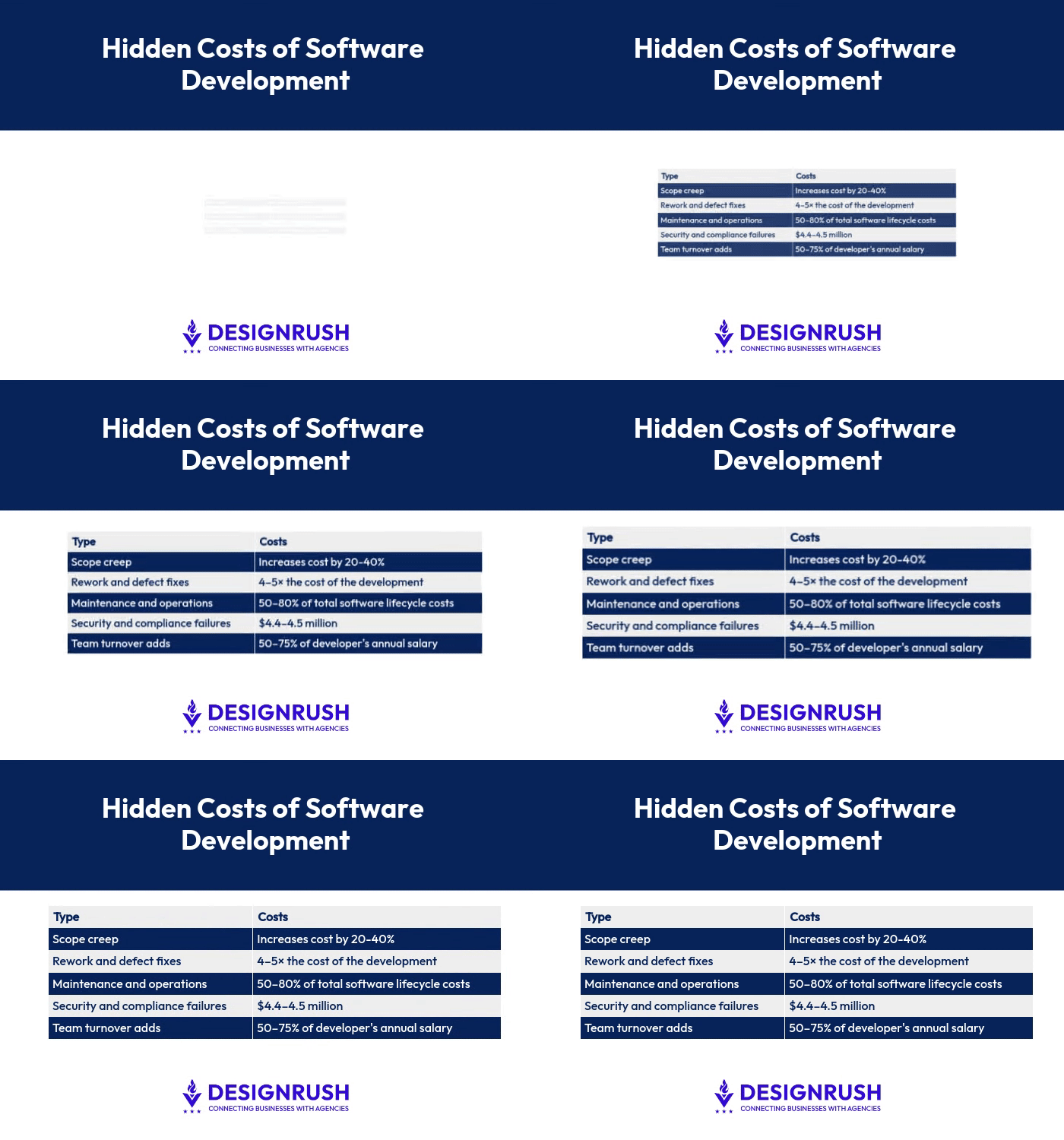
Research from the Project Management Institute shows that 52-70% of software projects experience scope changes, increasing total cost by 20-40% on average when requirements are not clearly defined upfront.
Rework and defect fixes are another major cost multiplier
According to the IBM Systems Sciences Institute, fixing a defect after release costs 4-5× more than fixing it during development, and up to 100× more than addressing it at the requirements stage.
Studies show that rework can consume 30-50% of total development effort if quality controls are weak.
Maintenance and operations are often underestimated
Multiple industry analyses show that 50-80% of total software lifecycle costs is spent after launch on maintenance, enhancements, and support, especially for systems using cloud computing, integrations, or the latest technology stacks.
Security and compliance failures are especially costly
IBM's Cost of a Data Breach Report found that the global average breach now costs nearly $4.4-4.5 million, excluding reputational damage and lost customers.
Team turnover adds a hidden expense
According to various agencies, replacing a developer typically costs 50-75% of their annual salary due to recruitment, onboarding, and lost productivity
What questions should I ask companies before hiring one?
Before hiring a software development firm, ask potential candidates the following questions:
Relevant Background
- How long have you delivered custom software development, mobile app development, or web development projects, and what percentage of your clients are repeat customers?
- Can you share case studies similar in size, industry, or complexity to my business needs?
- What is your average developer and project manager tenure (turnover rate)?
- What certifications, security standards, or compliance frameworks do you follow (e.g., ISO, SOC 2)?
Services and Processes
- What is your standard development methodology (Agile, Scrum, hybrid), and how often do you deliver increments?
- How do you handle quality assurance across app development and backend systems? What percentage of testing is automated vs. manual?
- What tools do you use for project tracking, code management, and CI/CD?
- How do you manage scope changes and control cost overruns?
Related to Your Project
- What team roles will be assigned to my product development project, and will they be dedicated or shared?
- What risks do you foresee in my project, and how would you mitigate them?
- Who owns the IP and source code, and when does ownership transfer?
- What does post-launch support look like, and what are the ongoing costs?
Why Companies Trust DesignRush
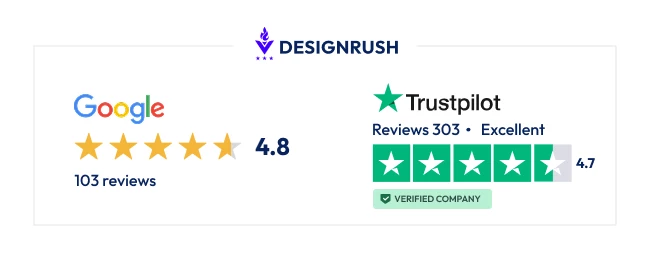
Rated 4.8 on Google and 4.7 on Trustpilot, DesignRush Agency Directory is a reliable resource for finding software development companies. We owe this to our executive selection team, which follows a strict screening process when featuring agencies on the platform, assessing key performance indicators, like portfolio, client reviews, and industry reputation.
Sources
DesignRush sustains a directory of over 40,000 agencies categorized by service category, location, expertise, and reviews. We build our database in two ways:
- Our dedicated team of agency experts actively searches the web for top-performing companies. We then pull information from their websites, online presence, and client testimonials to verify their status and qualifications prior to listing.
- The agencies listed get notified of their profiles on the website and they can choose to claim it or not, which suggests their availability for more collaborations.
Agencies can also reach out to DesignRush and must go through the verification process prior to being listed.
Software Development Companies FAQs
What are the services of custom software development firms?
These firms typically provide services that support the entire software development lifecycle, including:
- Custom software development: Producing digital solutions tailored to your business needs, processes, and IT infrastructure. Examples of these include CRM, ERP systems, and inventory management apps.
- Web application and website development: Building digital experiences that run on website browsers, such as eCommerce and customer portals, ensuring seamless user experiences.
- Mobile app development: Developing native or cross-platform apps for iOS and Android to reach customers on mobile devices.
- Cloud services and infrastructure: Creating and managing the infrastructure of apps running on cloud platforms (AWS, Azure, GCP).
- Quality Assurance (QA) and testing: Running manual and automated testing to ensure that the software performs according to industry standards in terms of security, usability, and reliability before release.
- Emerging tech implementation: Implementing AI/ML, blockchain, IoT, analytics tools, and automation modules. Nearly 84% of developers are now using or plan to use AI tools in workflows.
- DevOps and automation: CI/CD pipelines, infrastructure as code, and process automation to accelerate delivery and reduce downtime.
- Systems integration: Connecting different software through custom APIs, third-party tools, and other solutions, so it efficiently functions as a unified system.
- IT and software consulting: Guiding businesses on selecting new solutions or optimizing current systems through strategic planning, technology evaluation, road mapping, and requirements analysis.
- Software prototyping and MVPs: Developing the early minimal-feature versions of software to validate ideas before a full build.
- Maintenance and support: Bug fixes, version updates, performance monitoring, and long-term support.
How much does a software development company charge for its services?
The cost of software development services depends on the tech stack, core functions and features, compliance and integration requirements, project complexity, and engagement model.
Developers in North America will charge more than those in Europe or Asia, so you should budget for $120-$200/hr for American developers and $25-$150/hr for a software developer from Asia or Europe.
Custom software development cost estimates based on project complexity:
| Project type | Cost |
| Simple App / MVP (minimal features) | $50,000-$150,000 |
| Medium Complexity (CRM, marketplace sites) | $150,000-$500,000 |
| Large Enterprise Software | $500,000-$2,000,000+ |
| Examples (ERP/Complex Platforms) | $200,000 and up |
How do I determine if a global company is the right size for my project?
To determine if a global software development agency is the right size for your project, match project complexity and scale to company capacity.
Choose a large/global agency with 1000+ staff, if your project:
- Is complex or enterprise-grade, includes multiple software solutions, integrations, and compliance
- Requires multiple roles in parallel (project management, UX/UI design, backend, quality assurance (QA), DevOps)
- Needs 24/7 support, multi-time-zone delivery, or long-term maintenance
Large software development companies reduce delivery risk for complex programs but typically charge higher rates and use more structured processes.
Choose a small or mid-size agency with 10-200 staff if your project:
- Is an MVP or mid-scale build
- Requires speed, flexibility, and direct access to senior talent
- Has a tighter budget and well-defined scope
Who owns the Intellectual Property (IP) and source code at the end of the project?
In most software development projects, the client owns the Intellectual Property (IP) and source code upon completion of the engagement, unless the contract explicitly states otherwise. Standard practice dictates that the ownership of the source code, documentation, design elements, and custom deliverables belongs to the client upon full payment. Contracts typically use "work made for hire" or an IP assignment clause to formalize this.
Third-party or open-source components, however, are not owned by the client. Instead, they are used under their respective licenses. Some agencies retain ownership of pre-existing frameworks or reusable tools and grant the client a license to use them. You should also know that IP ownership is not automatic. To avoid disputes, ensure the contract clearly states full IP and source-code ownership transfers to you upon payment, with no usage limitations.
What tools and frameworks do software developers use?
They use various tools and frameworks, depending on the type of digital product they’re building. But the most common include:
- Full-stack JavaScript: MERN, MEAN, Jamstack (ex, Next.js)
- Backend: Java-Spring, Python, Django, Ruby on Rails, LAMP
- UI and Cross-Platform Development: React, Angular, Vue, Qt
- Languages: JavaScript, TypeScript, Python, Kotlin
- AI and Data-Driven Development: Python, Hugging Face, LangChain, Apache Spark, Kafka, Kubeflow, Lite, ONNX, Replit
- QA and Testing: Selenium, Cypress, Jenkins, GitLab, JMeter, OWASP ZAP, Testim, Mabl
About The Author and Expert Reviewer

Selina Garcia has authored 500+ articles and edited 50+ published books in economics, law, and history. Her unique blend of experiences allows her to approach content creation from a well-rounded perspective. Currently, Selina applies her expertise to producing insightful articles on IT, software, and applications for DesignRush.

Sergio is a technology leader with over six years of experience managing global teams and delivering projects across fintech, sportstech, and B2B platforms. At DesignRush, he drove product growth and development execution, building tools that speed up processes by 95% and cut costs by 35% while maintaining full uptime.
Latest Trends Related to Software Development
-preview.jpg)
Software Development
In-House vs. Outsourcing Software Development: What to Choose for Your Company
1,982