Partner with the best B2B web design agencies to enhance brand credibility, qualified leads, and conversion rates through streamlined experiences. Compare by expertise and budget.
Discover Leading B2B Web Design Companies
216 Companies-Rankings updated: September 03, 2026
DesignRush vets all listed B2B web design agencies based on their proven expertise, portfolios, and verified client reviews.
Maayasthra is a strategic design and digital partner helping global enterprises turn complex business goals into distinctive brands, high-performing products, and impactful digital experiences through clarity, precision, and long-term collaboration...
Forjwell is a premier technology and product development firm built for founders who demand clean, scalable digital solutions. We specialize in transforming raw ideas into refined, high-traction platforms, offering deep expertise across mobile and web app development, custom software, and immersive game...
Internauts is a Neurodigital design studio that helps organizations create brands and digital experiences built around how people actually think, feel, and make decisions. The studio combines branding, UX/UI design, accessibility, AI-aware experiences, and cognitive design principles to reduce friction and...
Empowering startups, small businesses with expert development services. Grituz is your trusted innovation partner for web and mobile app development, proudly based in India and serving ambitious startups and businesses globally. Our purpose is evident: to fuel your journey of growth by seamlessly integrating...
We help ambitious brands attract more customers, boost visibility, and scale revenue through strategy-driven digital marketing and eCommerce solutions. From SEO to CRO, we focus on results that matter the growth and conversions...
Squadkin is a premier provider of web development and digital marketing services, serving businesses and brands worldwide. Our team, with over four decades of experience, has successfully assisted numerous billion-dollar organizations in seamlessly managing their growth and design operations...
Technology Partner for Software Development & 360° Digital Growth
The Yellow Strawberry is a full-service software development & 360° digital marketing agency. We craft custom mobile apps, web solutions, and growth-driven digital strategies to help brands scale and succeed in todays competitive digital landscape...
At SayOne, we design and develop technological solutions to assist our clients optimize their business operations and increase income. We have over ten years of experience completing over 200 projects for clients globally...
We provide end-to-end digital technology and marketing solutions. This includes website development, content marketing, SEO, paid advertisements, conversation rate optimization, business process automation, etc...
Developers who are certified in a range of areas can offer the following core solutions: consulting and strategy, user experience (UX) design, e-commerce store development, headless commerce development, performance optimization, marketing automation and sensing, and managed support...
The TISA is an AI software development and product engineering company positioned as an enterprise AI and product engineering partner. Its services focus on building AI agents, intelligent automation, AI-powered SaaS products, integrations, and scalable software systems...
iCode49 Technolabs stands out as a premier provider specializing in the meticulous development of cutting-edge iOS and Android mobile applications uniquely crafted for both startups and global brands. Our expertise lies in driving innovation within the ever-evolving mobile landscape, where we leverage our...
Rudra Innovative Software build services in Custom Software and Mobile application development, with Agile development processes. We have a team of experts working to provide a fully-managed, white-glove service that allows our customers to focus on their business...
GoLiveQuick is a founder-led studio designing custom WordPress websites, WooCommerce and Shopify stores and advanced digital platforms for ambitious brands worldwide...
Frequently Asked Questions About B2B Web Design Agencies
What are the typical B2B web design services?
Agencies provide comprehensive B2B web design services, covering the entire website design and development process from ideation to launch. It typically includes:
Website audit: Analyzing a website's UX design, content, SEO performance, accessibility, and technical health to identify critical issues and opportunities.
Discovery and strategy: Conducting stakeholder interviews, audience and competitor research, and a website strategy aligned to business goals.
Information architecture and UX design: Building the sitemap, navigation, user journeys, wireframes, and conversion paths based on user intent.
UI design: Crafting the website's visual design, component library, and design guidelines to ensure consistent branding.
Custom B2B website development: Building the website's front-end and back-end, including server-side logic, database management, and content management system (CMS) setup.
System integration: Connecting the website with the business's existing IT environment, including customer relationship management (CRM), enterprise resource planning (ERP), and product information management (PIM) solutions.
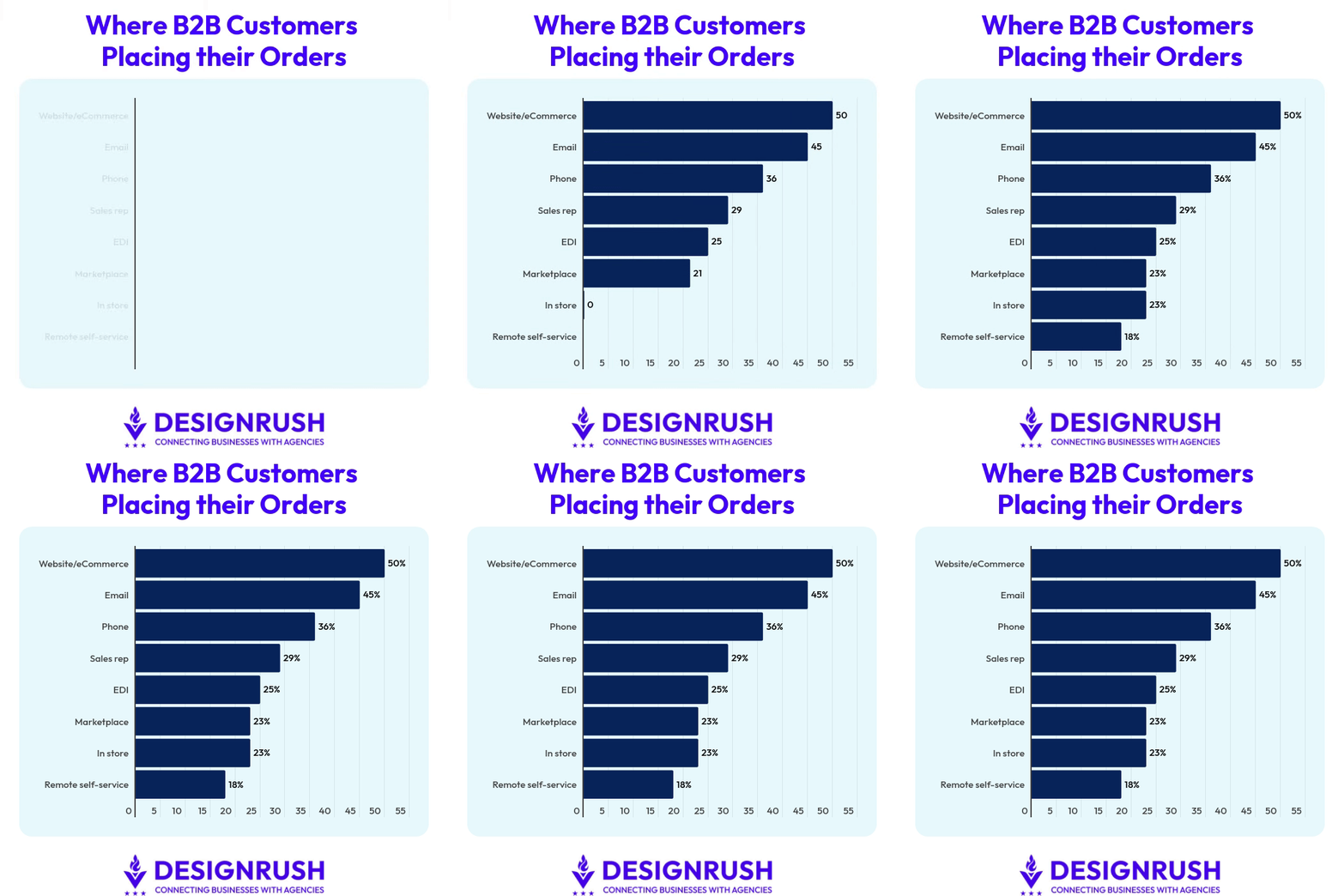
B2B eCommerce: Developing commerce portals and platforms that streamline procurement flows, manage bulk orders, and enable customized pricing.
Website maintenance: Providing post-launch maintenance and support to ensure that the website performs optimally, including debugging, security patching, and design refinement.
Many B2B website design agencies also offer digital marketing services, including search engine optimization (SEO), AI-powered search (AEO/GEO), content marketing, conversion rate optimization (CRO), branding, and paid advertising.
What is the difference between B2B web design and B2C web design?
The primary difference between B2B web design and B2C web design is the target audience.
B2B websites target organizations and business executives, supporting the longer, higher-stakes buying journey. In contrast, B2C websites target individual customers, enabling faster and more personal purchases. Here are more details about each:
B2B Web Design
B2C Web Design
Target audience
B2B client's buying committee (executives, sponsor, and users)
Individual customers
Primary focus
Enable evaluation and reduce risk with clarity, proof, and decision support
Drive purchase intent with brand, emotion, and convenience
Content and messaging
Business value and ROI, brand differentiation, use cases, and evidence (e.g., case study)
Benefits, lifestyle, social proof, promotional
Sales cycle
Long and complex, involving multiple steps and stakeholders
Short and impulsive, involving only the individual buyer
Conversion goals
Request demo or quote, contact sales, book a call, download whitepapers
Purchase, add to cart, subscribe, signup
How long does a B2B web design project take from kickoff to launch?
A B2B web design project can take 1 week to over 6 months, depending on the content availability, tech stack, feedback process, and the complexity of the design, features, and functions.
Below is an estimated timeline of various B2B web design projects:
Landing pages can take about 1-2 weeks, as they typically require one page and use existing brand assets.
Startup websites have a timeline of 2-6 weeks for basic visuals and content, but it can take 6-12 weeks if it requires brand strategy and visual identity development.
Website redesign projects take 3-12 weeks when existing assets are reused but can last 10-16 weeks for a visual identity rehaul, including new logos and branding elements.
Corporate B2B websites with simple layout, navigation, and features may need 4-10 weeks.
SaaS marketing websites with multiple use cases, custom UX design, CRM integrations, and SEO may require 8-12 weeks
B2B eCommerce solutions will need 12-16 weeks and include payment integration, filtering logic for large product catalogs, and role-based access.
Enterprise platforms and web applications range from 4-6+ months, often having complex features and functions, advanced security controls, cloud infrastructure planning, and multiple system APIs.
Should you build a custom B2B website or use a template?
The answer depends on your goals, requirements, budget, timeline, and how differentiated the user experience needs to be.
Build a custom B2B website if:
Brand distinction and tailored user experiences are competitive advantages.
You need unique user flows or functionality beyond what a theme or template can handle (e.g., multi-step forms and complex integrations).
You require deep technical control over performance, architecture, and future extensibility.
You have strict compliance, security, or accessibility requirements.
You expect high traffic, multiple audiences, or frequent iteration, and you want a foundation built for long-term scalability.
Use a website template if:
You are a startup or small business with a limited budget and want to release a site immediately.
You are validating product market fit or launching a new offer and want to move quickly.
The site is simple by design, such as a landing page or brochure site.
How do you know if you need to redesign your B2B website?
When performance, strategy, or technical constraints start limiting your growth, then it is a sign that you need to redesign your B2B websites. This includes:
KPIs are declining: Organic traffic, rankings, engagement, conversions, and lead quality are down compared to historical baselines, indicating UX friction, slow performance, poor navigation, or mismatched messaging.
No longer follows modern expectations: Not truly mobile responsive, weak page performance (Core Web Vitals), or lacking accessibility practices aligned to the latest WCAG standards.
Maintenance is difficult: Simple edits require developer support, CMS is outdated, and inability to integrate with latest systems are making your website difficult to scale.
Strategy misalignment: A B2B website that has confusing messaging, incomplete services and products, or no longer supports your current go-to-market motions.
A good rule of thumb is that if your team finds the website frustrating (e.g., slow-loading pages, confusing navigation, and poor navigation), then your B2B buyers most likely do, too.













 Proposals